Music Reviews
A chapterized collection of Murray Bramwell’s music reviews, arranged by decade.
Contents
1980s
Sisters
Published: 1986-02-28
Kate and Anna McGarrigle Festival Theatre
Kate and Anna McGarrigle first gained attention as songwriters in the early Seventies when Maria Muldaur recorded Kate’s “The Work Song”, and Linda Ronstadt used-Anna’s “Heart like a Wheel” as the title song for her 1974 album.
The McGarrigles began recording their own material in 1975, rapidly gaining attention for their fetchingly artless vocals and whimsical arrangements. On this tour, eleven years later, the McGarrigles are still being whimsical and fetchingly artless and it mostly works.
Their Sunday night concert in the Festival Theatre was late starting due to something called technical problems but when the band filed on stage there was still a hum coming out of the right speaker bank loud enough to entice humpback whales into shallow waters. It is simply not good enough to have poor sound systems at venues like the Festival Theatre and it certainly doesn’t help a group like the McGarrigles to deliver their delicate brand of country/pop/blues/cajun/music hall/ballad to the faithful.
The band opened with “Dancer with Bruised Knees” featuring some fine violin work from Joel Zifkin and giving us a chance ‘to take a look at the performers. For one thing there was an extra McGarrigle - three for the price of two. Jane, listed as tour manager, seems to be the group minder, providing soothing jokes when things get ragged and adding a strong third’ voice to the occasionally fragile voices of the others.
Her presence anchored the performance which was just as well because Kate’s amateur hour stage manner was threatening to become somewhat arch. “We don’t introduce our songs,” she, said a shade too tartly, “because we already know them.” Things began to settle down with a couple of songs from their early albums - “First Born” and “NaCl” and the McGarrigles stopped rolling their eyes and staring at microphones as if they’d never seen anything like them on their maple syrup farms in Quebec. By the time they got to “Naufragee du Tendre” (Shipwrecked) the band was hitting its straps as well. The rhythm section with Gerry Conway on drums and Pat Donaldson on bass have been associated with the McGarrigles since their second album but their presence is much more evident these days. Former members of Fotheringay - part of the Fairport Convention group of companies - they bring those Fairport signatures, chunky drumming and resonant striding bass lines, to the overall sound.
The McGarrigles played a delightful range of songs including the winsome “Sun, Son (Shining on the Water)” with some spacious synthesiser fills from Anna. They also sang Cajun songs, traditional ballads, songs about airline pilots, oil riggers serenading teenage runaways and songs like “Love is” - “Love is a twelve bar blues / Love is blue suede shoes / Love is a mind confused” which as with so many McGarrigle compositions has a lyric which is too cute for daylight but sung with sparkingly clear country vocals and Sankey hymn. piano chords garnished with Jorn Reissner’s nicely understated guitar lines, is all too appealing to resist.
After interval the speakers were still humming but so was the band. They began with a splendid version of Loudon Wainwright’s “Swimming Song” complete with banjo, mandolin and accordion accompaniment which they followed with some new songs which will have McGarrigle fans rampaging to their sixth album whenever it appears.
By the time they got to “Heart like a Wheel” all three vocals had blended exquisitely. After a spirited version of “Love Over and Over” and an encore by the three sisters singing “Mendocino” with Kate’s lead vocal combining beautifully with the piano, no one needed convincing that the McGarrigles can make their music sound sweet - even if they can hardly be called mcgarrulous with a crowd of folks in front of them.
“Sisters” The Adelaide Review, March, 1986, p.9.
Anderson shows the essence of pop amid hi-tech legerdemain
Published: 1986-03-28
Very few performance artists have made the leap to pop with such spectacular success as Laurie Anderson whose concert in Adelaide’s Festival Theatre opened her Australian tour and coincides with the release of her newest album, Home of the Brave.
All of the paradoxes of Anderson’s achievements are evident in her opening monologue, Progress. The eclectic, hi -tech relativism of her work exactly mirrors the processes she rails against as heartless progress. Anderson’s is a triumph of style - it is the very essence of pop, finding the most appealing musical and aural effects to suggest meanings which never quite compute.
So the overall effect of her show is curiously inert, like a live video clip- a form now notorious for its mischievous parataxis. Anderson’s work is technological legerdemain and because it uniquely combines a pop concert with the highest production values of theatre, the result is compelling for audiences.
The show consists of tapes and pre-programmed material- that haunting, melancholic, mantric sound that is Anderson’s signature - overlaid by vocals, keyboards and other treated sounds produced by Anderson beating parts of her body, thrumming on microphone stands and even, it seems, the boards of the stage itself.
As she literally mics her own body, Anderson becomes an electronic hand· maiden, vulnerable and spikily elvish as the gigantic screen behind her projects animations, action replays and visual cliches - all the unprocessed data that simultaneously means more and less than it should.
The best moments are familiar pieces such as the memorable Big Science. Gravity’s Angel and the witty anti-love song, Sweaters, and new ones such as Baby Doll with splendid back-up vocals from Phillip Ballou and Bennie Diggs.
So much of Anderson’s appeal is in the way she co-opts the most familiar American pop - it is like a monologue from the Shangri La’s run through a vocoder - and her use of musicians such as Peter Gabriel nicely located her concern for musical accessibility.
This is the strength of Anderson’s work and why, finally, her work is so unobjectionable. She does not just comment on pop, she is pop. When we see footage of her dancing with William Burroughs, it is her last tango with the avant garde.
The staging of Anderson’s show is a tribute to the performer and lighting designer, Patricia Connors, and to projectionist James Hobberman. There are no glitches, no glaring into the foldback, no rock-and-roll tantrums.
Instead, Anderson and keyboard player, David LeBolt close the show with O Superman - still her most perfect composition with its chilling augury of peril - and the credits roll on the screen like a movie. There is, of course no encore. The price of this impeccable performance is that the product is hermetically sealed - like airline food in heaven.
Murray Bramwell
The National Times, March 28, 1986, p.33.
Wagner’s Depths Explored
Published: 1986-06-13
The Flying Dutchman by Richard Wagner; director Bernd Benthaak; with the Adelaide Symphony Orchestra. conducted by John Matheson; at the Opera Theatre. Adelaide, until June 21. Cast: Malcolm Donnelly, Beverley Bergen, Arend Baumann and Thomas Edmonds.
Commentators have often been swift to chide and slow to bless The Flying Dutchman when comparing it to the consummate accomplishment of Wagner’s later work.
Certainly its mechanical division between aria, recitative and ensemble is typical of operatic form which Wagner himself was later to overhaul and redefine.
Writers such as Ernest Newman have bemoaned The Flying Dutchman’s “unimpressive stretches of unmusical declamation” while others have remarked that it lacks the “endless melody” of The Ring and Tristan.
There are a few worries with the narrative as well. Wagner’s inspirations for the opera appear to have been various - he had read Heine’s version of the story but appears to have rendered the tale more earnestly, perhaps in partial identification with the luckless Dutchman.
By the age of 30 Wagner had been pushed from pillar to post in his bid for recognition and reliable patronage. He was homesick for Germany and most significantly he began to cleave to the romantic theme that became a hallmark in his work - redemption through the constancy of a woman’s love.
It takes a nimble interpretation to steer through the potential silliness of this particular exemplum of salvation through love, because Wagner has not made crucial details sufficiently clear.
Senta’s motivation in devoting herself to the Dutchman is hazy to say the least and the uncertain status of her betrothal to the flabbergasted Erik further complicates things.
Also, while no one expects consistency in operatic plots, it is hard not to think that her father Daland is rather obtuse in failing to recognise the Dutchman from the full-length portrait he has in his own living room.
Nevertheless The Flying Dutchman is full of splendid set pieces which Benthaak’s production does much to highlight.
The Adelaide Symphony Orchestra under John Matheson extracts all of the colour and sense of portent from the overture that one could wish for and Geoffrey Harris’ fluent Steersman’s song is one of the real pleasures in Act I.
Baritone Malcolm Donnelly, while looking more like a prosperous grocer than a gaunt and spectral seafarer, nevertheless brings a gravity and assurance to his performance which unfortunately is not always matched by Arend Baumann’s often fluttered bass as Daland.
Ken Wilby and Mark Thompson’s ambitious designs are cumbersome, with Daland’s ship in perilously close proximity to the Dutchman’s but their massive scale and the murky lighting successfully compound the sense of a ghastly dream evoked by the music in Act 1.
The Spinning Chorus in Act II (like the sailors’ chorus later) offers some of the best chorus work heard in State Opera productions in recent years.
Wilby and Thompson’s costume designs in browns, fawns and cream are particularly effective. The set however is more cluttered Vermeer than Norwegian maritime.
Beverley Bergen’s Senta is a mixed success. Her aria declaring her devotion to the Dutchman and vowing to break the curse upon him begins strikingly as she moves from frozen tableau into passionate conviction. But, as the intensity increases, her facility diminishes and her performance becomes uncomfortably strained.
Act III brings all of the composer’s haunting motifs together with the garbled threads of his narrative.
The set made up of iron scaffolding and lead-lined windows depicts a dockside warehouse which enhances the eeriness of Senta’s conflict as she gives the heave-ho ·to earthly Erik and prepares to heave to with the other-worldly Hollander.
The trio with Senta on an iron staircase drawn by the beguiling voices of Donnelly and Edmonds is so compelling in its visual symmetry and thematic simplicity that we are not prepared for Benthaak’s truncated ending.
While Wagner’s idea of the transfiguration of the two lovers, after Senta has leapt from a cliff top to be with the Dutchman, is likely to be problematic for modern audiences, Benthaak short-circuits the work completely with Senta’s abrupt and banal suicide.
The audience is thus refused the resolving gratification of Wagner’s closing themes.
After all, by this stage we have waded too far into Wagnerian waters to be content with anything too existentially downbeat.
Nevertheless, Benthaak ’s production of The Flying Dutchman is a memorable and satisfying one and the State Opera celebrates its 10th anniversary season with a distinguished performance.
The National Times, June 13, 1986, p.31.
Sharp and Shiny
Published: 1986-11-30
Joe Jackson Thebarton Theatre
When Look Sharp, Joe Jackson’s first album appeared in 1977 all manner of sobriquets were bandied about his distinctive sound - “powerpop” and “spiv rock” among them. Like Graham Parker and Elvis Costello, he offered a churlish wit and a tight rock sound - urgent, knowing and non-sectarian.
Of the three only Jackson has conquered America. Parker sounded too much like a New Yorker to begin with and nobody ever got over Elvis Costello’s ironic remark about Ray Charles, despite the fact that no-one whose real name is Declan MacManus could fail to understand racial oppression. Meanwhile Joe Jackson moved like a chameleon from the sharp pop trio of his first and second albums to the scatty urbanities of Jumping Jive and the stylish Ellington white piano and small big band sounds of Night and Day and Body and Soul.
Jackson, based in New York and refusing to tour, was starting to look like a rocker turned smoothie – not exactly Marvin Harnlisch but with less of the pasty brashness that distinguished his first band.
“So this is the Thebbie,” Jackson noted drily to a full house already in fibrillation from the drum machine fanfare turned on for our Joe. In designer plastic mac and hello porkpie hat, Joe Jackson, man of mode and monde, put down his luggage and the band moved into “Wild West” from the recent three sided Big World set.
Next came “Right and Wrong”, perhaps the catchiest tune in the latest batch and indicative of Jackson’s sense of issues - no shibboleths from Joe, only questions jabbing into the underbelly of rhetoric. The band wasted no time as they geared into the Big World title song. Now sans hat and mac, Jackson ambled easily from piano to microphone while a bank of green lights provided an eerie mood for his keyboard peregrinations. The format was not quite full circle to Look Sharp but it sounded like it as Jackson faithfully reproduced the bright, direct-to-disc sound of Big World. Clearly, it was meant to be an album that could travel, even if its multilingual cover seemed a bit showy to the ethnocentric.
The band, well mixed and loud without bringing blood to the earlobes, was hitting ail the right buttons. Rick Ford’s bonehard six string bass lines conspired resiliently with Gary Burke’s simian but effective backbeat while New Yorker Tom Teeley coaxed a vintage rock sound from his red Fender and showed his versatility with some classy Djangoisms, some slow smoky blues and even a touch of classy thrash when required.
For no particular reason backprojections indicated that Jackson’s long set of nearly thirty songs was divided into four sections. The first two spanned the later albums; the third included Jackson stepping into Ugly American tourist costume for “Jet Set”, recovering composure for his scathing attack on Tabloid England- “Sunday Papers”, then stretching out with jazzy melancholy in “Tonight and Forever”. Part four opened with a zippy melody from Jumping Jive with Jackson’s melodica doing a fair imitation of soprano sax and the band showing enough riffs and frills to suggest the most bonsai big band we’ve heard in a while.
Highpoints among the highpoints included a spacey re-interpretation of “Steppin Out”, a lambent “Shanghai Sky” and complex medleys of “Chinatown” /“Another World” and the wistfully cynical “Will you be my Number Two”/“Breaking Us in Two”.
The theatrics of the show – a triumph of lighting and pace - showed Jackson as an accomplished performer; always at ease but with an art that conceals itself. His pretence at not remembering the lyrics of his hit “Real Man” was a forgivably indulgent irony. Moving from piano keyboard and mini synthesisers to accordian and melodica, Jackson played a series of unchic instruments with astonishing effect and in generous interaction with his first-rate band.
Lanky and quietly amiable, Jackson is certainly no angry young spiv, if he ever was. In his baggy silk suit he looked for all the world like Herge’s Tin Tin, further proof that you don’t need to eat your- vegetables to make it in British pop.
In two and a half hours Jackson showed us his musical and thematic range. It is polished, even at times florid but it retains a clarity rare in the muddled and ponderous lyrics of much contemporary pop. The show was a touch over-rehearsed but if we had a sense of perfect replica that’s a big world better than a cheap imitation.
“Sharp and Shiny” The Adelaide Review, No.33, December, 1986, p.32-33.
Swanky
Published: 1987-02-28
The Eurythmics Memorial Drive
Last time the Eurythmics were in Australia they were Tourists. The Tourists, it must be said, were never much chop. One of their singles scraped into the Top Ten but no one would have thought that Gorbals rocker, Dave Stewart, and the singer in the Mary Quant tat, Annie Lennox, would do more than sink without trace when the band dispersed in 1980.
Instead, with five hit albums in a row, the Eurythmics are here again on their aptly named Revenge tour. It need hardly be said that Lennox and Stewart have done very well, and it shows. The band is at the height of its box office powers and nothing has been stinted in staging the live incarnation of the Eurythmics’ particular patent on glamour.
The Memorial Drive concert was a creditable example of the trains running on time but mostly the Eurythmics were dead on arrival. The sound was both huge and clear, the lighting rig was awesome; not a gremlin, not a hiccup.
The whole show was choreographed down to the last spontaneity. But if this is revenge, then it isn’t so sweet.
The Eurythmics have always capitalised fully on the photogenic Annie Lennox. The opulent video clips· and fashion studio album covers have all conspired to establish an image reducible to few enough elements to be registered as a trade mark. Lennox, cropped, elegant, androgynous, cultured, is counter-pointed by Stewart, shaggy, proletarian, the rock and roll throwback. As in their recent clips, the band overdress in black and white outfits with the leads strutting and swanking in their familiar leather frockcoats. The Eurythmics, we are reminded, are expensive and they enjoy success.
From the moment the black stage curtain opens with a gigantic zipper, the performance is poised on ambiguity – it is zany but before we wonder if it is really striptease after all, the band has launched into “Sex Crime” in a blizzard of white spotlights. With “I Love You Like a Ball and Chain” they were well into their stride when we were treated to the first of reed player Jimmy Zavala’s magnificent harmonica solos. Then clouds began boiling on the stagescreen as Lennox moved into “Here Comes the Rain Again” and Dave Stewart got busy on his colour co-ordinated Fender, reminding us how much his riffs stitch together the Eurythmics’ sound. Ever the musical magpie, Stewart gives us what oft we’ve heard but ne’er so well expressed. The core of the set was the Revenge album- “Let’s Go”, “Thorn in My Side”, “When Tomorrow Comes” however it is the Be Yourself Tonight material that shines best in performance, notably “Conditioned Soul” and “It’s All Right (Baby’s Coming Back”). “Would I Lie to You?” came closest to making the flesh actually creep and “Who’s That Girl?” from the Touch album, had devotees swaying and crooning as Lennox steered her cordless microphone towards the crowd.
In addition to the splendid Zavala on saxophone, Chucho Merchan played bass like an insolent wine waiter, ex-Blondie drummer Clem Burke judiciously mixed acoustic and Simmonds drums and Patrick Seymour laid keyboard flourishes into every available crevice. In his solo he gave us a Bach Toccata and Fugue just to show us he learnt something at Oxford. So it was left to Dave Stewart to carry the torch for rock and roll as he unleashed solo after solo echoing Townshend and Clapton and resembling neither, although he actually quoted from other gifted eclectics.with a rousing serve of “Norwegian Wood” on electric 12 string and a few salty bars from “She’s a Woman”.
After a carefully timed encore of the unremarkable “Missionary Man”, Annie Lennox ignited the crowd with “Sisters Are Doing it for Themselves” with Joniece Johnson, who gave depth to Lennox’s lead vocals throughout the set, playing the Aretha bits. They skipped and twirled and partyed on like sisters in triumph until Dave, now in his rhinestone bodgie leathers, in a dissonant moment (just like the record) reminded us that it is the blokes who play all the loud guitars. It would have been a great moment to stop, however mixed or opportunistic, because the song has, rightly, become an anthem. But instead we got the icky “Miracle of Love” and a moment of resonance got submerged as the Eurythmics had their two bob each way.
Lennox and Stewart have assembled a potentially great stage act but we witnessed a talented band, over-ripe and almost cynically over-rehearsed. That, of course, is the secret of pop success and as the song goes: “Sweet Dreams are made of this. Who am I to disagree?”
“Swanky” The Adelaide Review, No.36, March 1987, p.20.
Simply Red
Published: 1987-03-31
Billy Bragg Le Rox
Billy Bragg is the busker who turned busker. He used to wander the streets performing with a fifty quid electric guitar and a 60 watt amp on his back. Now he tours the world and performs at Le Rox with a fifty quid guitar and his 60 watt amp on the ground. There is much to be pleased about with Billy Bragg. At a time when record production takes an expensive month of Sundays and -results in digitally impeccable piffle, Bragg goes into Chappell Music’s studio for three afternoons and records Life’s a Riot for, Spy vs Spy, which went gold, as they say, and along with his subsequent albums and EP’s,- has earned him accolades in the English music press since 1983.
Bragg’s records sound like they have been.recorded in a bucket but what you hear is what you get - anywhere. It is a riot of guaranteed minimum product and, like punk music, it is intended to shove it straight up all the woofing and tweetering aural pedants. Bragg is a musical Leveller. He sells his records for £3.99 or less and makes sure the price is etched into the artwork so no-one can put an adhesive - nice-price increase on it.
At Le Rox, where the sound crew took all night to get audible bass lines ‘out of the Every Brothers’ opening gig Billy Bragg, the electric Luddite was in his element. He stepped on stage vamping his raggedy guitar while his amp distorted like an early SO’s hearing aid. The Bragg sound is completed by his music hall vocal, one we’ve heard before in English pop with Mike Sarne, Freddy and the Dreamers, Ray Davies and, more recently, the remarkable Ian Dury. Observers will remark that it is simply a working class accent but there is a disturbing touch of parody to it - a kind of cloth cap Stepin Fetchitt.
This may be the Billy Bragg paradox. The more anti-pop he becomes in his unbelievably ordinary green polo shirt, unbelievably ordinary jeans and sneakers and his Tommy-at-the- Somme haircut, the more the New Wave fellow travellers at Le Rox bestowon him, if not radical, then at least Wobbly, chic. In a nearly two hour set BB went through the catalogue - opening with the rancid little mantra “Did you ever love someone you shouldn’t” repeated often enough to become downright sinister. “The Milkman of Human Kindness” and “Greetings to the New Brunette” followed and drew warm recognition from the full house crowd. Then with “World Turned Upside Down” we got, the first of a series of history lessons about the lessons of history. Despite his effortless stage presence and artful lack of art in his lyrics, Bragg seems sometimes not to realise his strengths. The chat begins to ramble and we are reminded of Billy Bragg’s association with the so-called Red Wedge bands of the Labor Party hustings calling on doleboys and girls to vote. All that’s fine but in commenting on the local scene he underestimated our disenchantment with ALP backsliding. ‘You are insulting us!’ someone snapped at Bragg, and while nothing was further from his mind, he was.
Bragg is best when his songs remain elliptical, haunting, sly and unadorned with explanation. He can turn out rock riffs with astonishing ease - his “l Heard it on the Grapevine” was a marvel. But it’s his vignettes of curdled romantic love in “The Saturday Boy” and “Myth of Trust” that actually delve the social and economic alienation that he so clearly perceives.
New songs like “Valentine’s Day is Over” showed Bragg is still more than able to extrude a lyric, but rallying choruses from “To Have and Have Not”, “The Man in the Iron Mask” and “Think Again” were the ones that hit the mark.
As he worked through three encores Billy Bragg really got brewing: “A New England” - “I don’t want to change the world/I’m not looking for a New England/I’m just looking for another girl” - was followed by the bitterly satiric “The Home Front” and the melancholy “Between the Wars’. With his mate Wiggsy on hand to tune guitars it was a disappointment that Bragg didn’t call on him earlier than the final encore for a few extra chords. Bragg can coax a sweet, almost folksy 12 string sound, as his recordings of “Walk Away Renee” and the Byrds-like “Ideology” attest, but his set was more thrash than shading for the most part.
It isn’t often that performers declare themselves as openly and intelligently as Billy Bragg. He is heroically at the confluence of punk, folk and rock and roll, a kind of Bo Diddley of the barricades, and he reflects the sort of political seriousness that only Margaret Hilda Thatcher could engender. lt may be hard to believe that “There is Power in a Union” after the British Miners got the icepick but there is no doubt that he is dinkum.
When he says that no-one changed the world from the concert stage he is probably being too modest. When he points to the audience and asks “which side are you on?” - from most performers it would seem an impertinence. From Billy Bragg it sounds like a fair question.
“Simply Red” The Adelaide Review, April, 1987. np.
Getting Close to Royalty
Published: 1987-06-01
The Pretenders Thebarton Theatre
In many ways Chrissie Hynde is soul companion to songwriters Ellie Greenwich and Carole King, who between them produced most of the definitive popular music released in the early sixties by Liberty Records and Phil Spector’s own Philles label. Like Leslie Gore, Sandie Shaw and Dionne Warwick, Chrissie Hynde’s music is Aching Pop - soulful, histrionic and bitterly aware of the chains of love.
The last time the Pretenders toured in early 1982 they gave one of the worst concerts ever seen in Adelaide. The band was ragged and sullen and Hynde shrieked and pouted at everyone in sight. The grim news that guitarist James Honeyman-Scott and bassist Pete Farndon both died of overdoses within ten months of the gig gave some explanation but Hynde herself seemed unable to marshal her volatile talents either as writer or performer.
The Pretenders’ first album was one of the marvels of 1980. In its fusion of punk, pop and hardline rock, it showed popular music’s remarkable capacity to adapt, mutate and conquer. Their second album was a more mixed effort but then, by that time, so was the band. The third album brought in Robbie Mcintosh on guitar and Malcolm Foster on bass and was aptly named Learning to Crawl. The current album, Get Close, sees Hynde at her most confident and commercially resilient. Martin Chambers, who played drums and if their last concert was anything to go by, also refereed the. band through its indulgences and tragedies, was unceremoniously fired (a fact daintily omitted from the programme notes) and now Hynde is the only true Pretender.
But, in a sense, she always was. The band always reflected her sensibilities, the pungent lyrics, her experiences, and back in Adelaide in 1987, Chrissie Hynde showed that given half an hour to find her feet she can deliver great rock and roll. As the band straggled through “Message of Love”, “The Adultress” and, after a nervy dedication to Honeyman-Scott, “The Kid”, the crowd was feeling fidgetty. You didn’t need to own a CD of Get Close to feel that the sound mix was like kapok and Hynde nervously off-key. Malcolm Foster on bass plunked every which way and continued to ramble all night while Robbie Mackintosh kept cranking out· riffs like malfunctioning incendiary devices. The lighting was great from the word go, with mauves, scarlets, blues and banks of criss-crossing colour which, with carefully differentiated sound, should have been galvanizing.
A few phrases from John Lennon’s “Don’t Let Me Down” led into ‘Light of the Moon’ from Get Close and Chrissie Hynde finally started moving her stetson in time with her considerable talents. Perhaps the initial rattliness was a calculated effect because there’s nothing like a shoddy start to make you grateful when a band hits its straps. In “Private Life “ Hynde’s plangent lyric found its correlative in Rupert Black’s mesmeric keyboards and Blair Cunningham’s clipped, even drumming. At least, having given Chambers the heave-ho, Hynde found a drummer with power and intelligent detail in Cunningham. “Hymn to Her”, the band’s single, followed, with Hynde’s vocals gathering expressive energy as the band led straight into “Chill Factor”.
A nostalgic return to halcyon Pretenders material with “Stop Your Sobbing” contrasted with Hynde’s apocalyptic blues polemic about her native Cleveland, “My City was Gone”. From Learning to Crawl,-the song showed the band, particularly Robbie Mackintosh, really learning to swagger, with RnB worthy of The .Stones, which of course means boogie ripped off from only the very best of black Chicago. “Mystery Achievement”, another ineffable triumph from the first album, got a disappointingly gabbled treatment, but “Middle of the Road”, with its delectable guitar chords and witty lyrics made amends. With “Precious”, the band reassured us that it really can cope with playing the greats from Chrissie Hynde’s past life.
The sound hadn’t really got itself together by the encore, but The Pretenders had. ‘Don’t Give Me Love’! again reminded that Chrissie Hynde could make a living any day as a. Top 40 songwriter. Then she crossed our palms with the obligatory “Brass in Pocket”, which, like the best live performances came through not only with sweet familiarity but also with the shock of revelation. The audience, fitful and undemonstrative most of the night, bayed for more, and Chrissie Hynde climbed her stage staircase once more and sang “The Wait” with the rightful air of a Pretender who need wait no longer.
“Getting Close to Royalty” The Adelaide Review, June 1987, pp.12-13.
Celt Following
Published: 1987-11-30
The Chieftains Festival Theatre
Even when they’re just tuning their instruments the Chieftains sound better than most bands. Their mellifluous harmonies have been generating journalistic blarney for more than twenty four years, in which time the group has produced some fifteen albums including some very successful music for films.
In their time the Chieftains have rubbed tin whistles with just about everyone- Eric Clapton, Van Morrison and Mike Oldfield for instance. They even played the curtain-raiser for the Stones at Slane Castle and the Pope at Phoenix Park.
Under the careful guidance of Paddy Maloney, the Chieftains’ chieftain, they have become the most successful Irish export since Guinness.
They’ve played the Great Wall of China and are currently involved in a project with the musically shameless James Galway. Politically the band makes a virtue of appearing non-aligned, playing up the fact that their harper, Derek Bell, is an Ulsterman among Dubliners. But the force of their devotion to Irish national music and, in particular, Maloney’s dedication as performer and record producer, has done much for the gaelic and republican causes.
Their most recent ceilidh at the Festival Theatre was a more subdued outing than usual. For a start, a good hour of the show was handed over to Mary Black, formerly of De Danaan and now the Sheena Easton of Irish pop.
She was a popular choice for many in the audience and has a winsome contralto reminiscent of the best of Judy Collins. Unfortunately, her repertoire of contemporary folk club songs lacked sparkle.
Kicking off with Eric Bogle’s Leaving the Land, she then sang a few that had been very good to her over the years - Song for Ireland, The Rose of Allendale, Ellis Island and her latest inoffensive little bijou, Katie, Not even Anachie Gordon did more than skim the dark waters of balladry.
Guitarist and composer Declan Sinnott and Patrick Cowley on keyboards provided fine accompaniment but despite their undoubted talents Mary Black and band were a bit low on Irish ergs.
Which could be said of the main men as well. The Chieftains have made a few bob by now but they sure haven’t splurged it on their stage wardrobe. Of course that doesn’t matter except that the whole show ran a shade too much on charm and’informality to really get down to business. The opening medley including Gray’s Pipe and the Flags of Dublin quickly displayed the talents of Matt Molloy, late of Planxty and new to the Chieftains but not new to the B-flat flute. Maloney’s whistles and uileann pipes were matched by Derek Bell on harp while Martin Fay and Seane Keane can play the fiddle in their sleep and just about did.
The programme was larded with bohdrim player, Kevin Conneff’s endearingly fragile tenor. He meandered through the execrable verses of Here’s a Health to the Company Man then during the Independence Hornpipe a local Irish dancer joined the fray in a rare moment of colour and movement.
The Chieftains started to get beyond the preliminaries with an all too short conflation of screen·themes ’including The Grey Fox, the Ballad of the Irish Horse and Barry Lyndon which highlighted how important the band has been in bringing Irish music to a mass audience.
After showing us what they’d learnt in China; including some startling hammer dulcimer sounds from the gifted Derek Bell, the band without looking at their watches ambled into the home straight with a marathon version of Drowsy Maggie. As each stepped forward the solos ranged from the sublime to the soporific. Molloy’s flute’ again excelled, Keane fiddled but didn’t really get it right, Fay feigned and Derek Bell played Scott Joplin just for something completely different. Then Mary Black came back· for an encore and the band played heighho. Back to the diamond mine.
The sound mix was a treat and band’s personalities blend most amiably but unlike earlier shows, the set lacked depth and some of the Chieftains’ usual Authority. This time round the Chieftains rule, but only OK-ish.
“Celt Following”, The Adelaide Review, No.45, December, 1987, p.32.
This Year’s Model
Published: 1988
Elvis Costello and the Confederates Thebarton Theatre
In his warm-up set Nick Lowe, King of the rockpile, warned that Elvis Costello’s concert in Adelaide would be no ordinary gig. After months on the road from Atlanta, Georgia through Europe, Japan and Australia, Adelaide was the band’s last stop before heading, variously, home.
Lowe obliged with a modest draught of his bubbly pop - Cruel to be Kind, Without Love and, befitting an erstwhile son-in-law of Johnny Cash, he moved his vowels from London to Tennessee to sing I Knew the Bride when She Used to Rock and Roll from his Cowboy Outfit album.
A fanfare of synthesisers opened the second half and Elvis Costello capered on with his acoustic guitar for a solo version of Girls Talk from his Trust album.
Costello emerged in the power pop days of the late Seventies along with Joe Jackson and Graham Parker. Jackson has gone into torch ballads and Ellington, Parker, regrettably, has gone into obscurity and Elvis Costello has become nearly as musically eclectic and prolific as Bob Dylan.
Dressed like the Milky Bar kid in frock coat and diamante bootlace tie, Elvis is like an egghead hoodlum. Like Dylan he arrogantly chose the pseudonym of a legend and, also like him, he has lived up to his own promise. Costello has to be one of the most inventive composers and performers to be found anywhere.
And that is even before we get to the band. Having deflected the Attractions, his regular backing group for the past decade, Costello has got together a bunch of demi-gods called the Confederates which includes Southern Gentlemen James Burton and Jim Keltner, with Jerry Schiff on bass, Austin Delore on keyboards, including Wurlitzer and Hammond, and Nick Lowe again, on rhythm guitar and vocals.
When the Confederates opened fire with Tokyo Storm Warning and the mixers frantically twiddled the knobs and switches to contain the cavernous sound, you knew it wasn’t going to be one of those fifty minute phone-ins Elvis used to be notorious for. With Pouring Water on a Drowning Man and Brilliant Mistake the band moved from rockabilly to mainline Costello like licks of lightning.
When the other Elvis, the one from Graceland, used to go on the road the first phone-call was for guitarist James Burton. On stage his speed and precision at the frets of his Fender is only matched by Jim Keltner’s drumming. Session drummer to the famous, Keltner sat hunched over his rig and not only never missed a beat all night but played like there were three of him. It was all solid bass drum and crisp snares and cymbals - no bomblast, just relentless, classic rock and roll.
Elvis sang so many new songs that it was hard to keep track. With Let Him Dangle, a bitter account of the execution of an innocent, Costello began to bring a vehemence and passion to his singing which is singularly unnerving.
In the first set with the Confederates Costello sang songs from King of America - I Wear it Proudly, The Poisoned Rose and The Big Light, then Are You Straight or Are You Blind and Uncomplicated (with Elvis spraying Stratocaster feedback everywhere) from his recent Blood and Chocolate album.
Back on his own with an acoustic guitar sound the size of a house, Costello sang his classic Watching the Detectives and, with a one-line quote from Alison, it was adieu, apparently.
Then, after the crowd peeled the paint off the roof, Elvis returned to perform the longest encore since Melba. He opened with I Want You · extemporised into a mantra of yearning the like of which we haven’t heard since John Lennon’s brand of open-heart self-surgery. In a great show this was one of the best moments.
Oliver’s Army, Costello’s tilt against the military has lost none of its chipper sarcasm. This was followed by new songs Feline Tormenter and the Randy Newman-ous God’s Comic.
Even though Costello had not brought along his chocolate wheel to spin for requests, the crowd was getting fidgety for favourites. For the long-awaited Pump it Up, from This Year’s Model, Elvis hit the switch on the rhythm machine and cranked up the Stratocaster for a raucous performance that detoured into Subterranean Homesick Blues before surfacing again. Elvis switched to keyboards for the winsome Veronica and the gentle ballad Hide Your Love. Then he out-moondanced Van Morrison with a version of Jackie Wilson Said.
When he got round to the full version of Alison it meandered into an Irish dirge of revenge against Thatcher and her ilk reminding us that not only is Elvis married to a member of the Pogues, but his real name is Declan McManus.
With the ground crew at Thebarton looking nervously at their watches Costello renewed his alliance with the Confederates to go way over the curfew for the final set. Starting with Lovable from the new album and band was by now a juggernaut of rock and roll - loud, immaculately clear and playing in preternatural accord.
They breathed life into country hokum like Merle Haggard’s Tonight the Bottle Let Me Down and Jim Reeves’ He’ll Have to Go, and, with Elvis strumming the strings off his Gibson, Nick Lowe came forward to duet on his What’s So Funny About Peace Love and Understanding? One more neanderthal rocker - Leave My Kitten Alone, a new slow march - Day is Done and then Elvis wrapped his mangled vowels around the cornpone grinder That’s How You Got Killed Before. After two and three quarter hours he and the Confederates finally punched the clock.
Though he hadn’t intended to, Costello had come close to playing a history of rock and roll. He performs like a coiled spring, his energy seems limitless and the intensity is scary.
Admirers who have been wondering whether he has been losing direction lately need not worry.
“This Year’s Model”, The Adelaide Review, No.46, January, 1988, pp.21-2.
Orchestral Manoeuvres
Published: 1988-06-01
Murray Bramwell talks with Chief Conductor Nicholas Braithwaite and General Manager Michael Elwood about the Adelaide Symphony Orchestra, its past, present and, most importantly, its future.
It is the second night of the Adelaide Symphony Orchestra’s Masters Series for May. Austrian pianist Walter Klien is playing a solo section from Mozart’s Piano Concerto No. 27 in B flat major with fluid elegance while Concertmaster Ladislaw Jasek and his associate Alan Smith beam with comradely encouragement. It is one moment of many in the evening’s programme (works by Australian composer Brian Howard, Mozart and Tchaikovsky) that indicates that the Adelaide Symphony is not only playing its socks off these days, it is also greatly enjoying doing it.
There is much to be pleased about, of course. The appointment of Nicholas Braithwaite-as Chief Conductor has proven to be the best idea anyone has had in years and the orchestra itself has distinguished· itself on every outing all year. It scrubbed up well during the Festival, playing four separate concerts under guest Australians Barry Tuckwell, Brenton Langbein and Mark Elder, as well as Richard Bonynge· for Dame Joan’s mad scenes. Then there were four performances under Stuart Challender of The Fiery Angel with the State Opera.
In each case whatever else was being said about the night’s music the orchestra received warm notices. This year’s season began strongly in April with guest soloist Mark Peskanov playing the Tchaikovsky Violin Concerto and the orchestra distinguishing· itself with a much-praised performance of Shostakovich’s 8th Symphony - and as we go to print the innovation of a concert version of Act I of Wagner’s Die Walkure is imminent. Not bad at a time when former aviator, and now Minister for the Air Waves, Senator Evans has been more than muttering about devolving the State Orchestras to help pay the ABC’s phone bill. But that particular war is not yet over. At a time yet unspecified three years hence the General Managers of the state orchestras will be meeting again to discuss by whom and how the considerable expenses of running the six Australian orchestras will be met.
The ASO’s General Manager, Michael Elwood, would be the first to say that while the orchestra is on a roll at the moment there are many questions about funding, programme, subscription sales and venues to be discreetly chewing the nails about. The Adelaide Symphony Orchestra began back in 1936 with seventeen musicians. It was formed to do live radio work for the ABC - everything from signature tunes to light entertainment programmes. But the orchestra was officially established in its concert-giving role in 1949. That began a remarkable period during which Australian audiences were treated to the best of the world’s musicians. Performers sailed to Australia and performed extensively throughout the country. Many Australians will not have forgotten concerts from Klemperer, Sir Malcolm Sargeant, even Stravinsky, and many others. It was in this time that the unshakeable loyalty of the subscribers began.
But as Nicholas Braithwaite observes, all that was changed utterly by the LP record and relatively inexpensive jet travel. Both upped the ante and made the music of Europe arid North America, paradoxically, easier to reach but harder to import. The issues that now face the orchestra have been developing over the past ten years - since the salad days for the orchestra under Elyakum Shapira ended. When the Festival Centre opened in 1973 the subscriber list increased by a thousand as the format changed from the traditional three concerts in the Town Hall to two in the Festival Theatre.
After Shapira left in 1979 the orchestra worked with a series of guest conductors but no-one was really minding the store and Central Casting in Sydney was making all the decisions irrespective of their suitability to Adelaide and its audience. People got bored with the programme and as the orchestra lost morale, it lost some of its lustre as well. So when General Managers were appointed for the six state orchestras it was not before time. Braithwaite sees this as a crucial change:
“Before that, management was in direct line toand from Sydney and had no autonomy at all.The changes have created a different philosophy and we’re going to see more and more change. Orchestras are going to have a much more indepedent voice about how things are done in their town.”
The renewal of Braithwaite’s two year term will also make for better dealings with the orchestra. Now that he and his family have settled in Melbourne - he has taken the position of Dean of Music at the Victorian College of the Arts - his three months of work can be judiciously distributed. “When conductors come in for the minimum time it means that the conductor and the orchestra are nose to nose for three months. That’s too much continuous confrontation for the health of the relationship. It needs to grow all the time and over-exposure harms that. Spreading the three months throughout the year will be better for the audience, the orchestra and me.”
With the establishment of a good working relationship between the affable, energetic Braithwaite and the quietly astute Elwood two other important new appointments have been Kerry Comerford as Marketing Manager and Rosemary Boyle as Promotions Officer. The question of programming and subscription sales is their most important imperative.
Elwood comments:
“We have tried to make the Masters Series more popular and I have tried to redress imbalances in repertoire. There were years when there were no Brahms symphonies, no Haydn and Mozart and people wanted to hear them.”
At the same time Braithwaite has a commitment to broaden the repertoire -
“People like what they know which poses a problem for us because we get in an ever-decreasing circle. It’s a hard balancing act to give people what they know and what they like and at the same time trying to broaden the outlook as well. At the moment we feel we have to establish the confidence of the audience first. But I feel totally committed to the idea of performing modern music, otherwise music will become a museum and will die out like the dinosaurs. It is a question of finding the right forum to display modern music - not just Australian but from elsewhere. Modern work tends to be a ghetto anyway; we don’t want an Australian ghetto as well! One of the audiences is the 1812 ·Overture audience but I don’t think we are playing enough for the squeaky gate audience and they may not be the same. It may not be a good idea to force the 1812 audience to listen to the squeaky gate music and vice versa. We have to identify areas and venues and decide where in the series works can go.“
That is not easy, especially with limited resources for promotion compared to the teams of Education officers operating in the eastern states. Elwood ponders the outreach Meet the Music programme on Wednesday nights at the Town Hall:
“It was designed on a formula - a 20th century concerto, an Australian work and a mainstream popular symphony. It’s been put to me that it is neither one thing or the other - but I’ in not sure whether that is relevant or not. The problem is not that the music is unlistenable - works like Szymanowski’s Sinfonia concertante and Lutoslawski’s Cello concerto are marvellous - it is just that they are unknown.”
With the terrifying statistic that 80% of their subscribers are over the age of sixty Michael Elwood is looking squarely at the business of finding a younger audience for his orchestra.
“The biggest problem we face is to find the audience that sold out the Kronos Quartet performances in the Festival-and the audience which turned out, for whatever reason, snob appeal or whatever, for the Chicago Symphony. Where are they for the ASO? So does Adelaide not value its orchestra and regard it as strictly second eleven?
Nicholas Braithwaite is quick to reply:
“Absolutely, yes. And they’re wrong. People always think the local team is not as good as the one from somewhere else. The other thing is that people listen to their CD’s and then come along to our concerts. Their CD’s are the Chicago Symphony, Berlin or whatever, done over three weeks in a studio with every slight imperfection taken out – and people regard that as the definition of the standard. The Chicago Symphony wouldn’t maintain that that is the standard they play to! Schwarzkopf put it very well when she said I’m not afraid of my competitors, but I can’t compete with my own recordings.”
Nicholas Braithwaite has appeared with orchestras in Europe, Scandinavia and Canada, as well as Australia and New Zealand. He toured as Associate to Solti with the London Philharmonic, is still Principal Conductor with the Manchester Camerata and has a distinguished association with the English National Opera. He is also very forthright in his regard for the ASO and other Australian orchestras:
“It was interesting with Chicago. I heard them in Melbourne this year. They are a first class orchestra but not very much better than what you hear in Australia and infinitely more numerous which tends to make an orchestra sound better: There were a huge number of strings which we don’t have the money to do. If we could put the number of players on the stage that Chicago had this orchestra would sound just as good. I think that there’s an ensemble of international standard here in Adelaide - something to be extremely proud of.”
One impediment to the ASO gaining wider acceptance that Braithwaite and Elwood have both identified is music criticism in Adelaide. They feel strongly that the orchestra deserves a better press.and that local reviewers are more preoccupied with maintaining their authority than reporting the event with any accuracy.
Says Braithwaite -
“For local critics to establish themselves they seem to have to knock people down in the process.·Reviewers are crucial to establishing audience confidence. They have the power to prevent that happening, although they would be appalled to think that was possible - there is no basic evil intention, just a lack of understanding of the effect that they have. I don’t deny the critics their role but when you know you’ve achieved something first class and it is unfavourably reviewed then it is demoralising because for those in the 20 to 45 age range it only confirms that they should stay away.”
It is clear, both watching the ASO in performance and talking to Nicholas Braithwaite, that he and the orchestra have taken a shine to each other. The enthusiasm he has for his task is infectious and he means it to be:
“There’s a real wave in the orchestra at the moment and it is very important to us that it gets across because if people come to really believe in this orchestra there will be an atmosphere where we can’t go to Government and say we need sixteen extra chairs on the stage to- bring us up to basic size and it will increase the standard and standing of the orchestra. And if it is perceived as doing a terrific job it will be listened to. I feel strongly about this and I can say it because I am a newcomer. I find this a really happy orchestra, who get stuck into the work - and work much harder than most I’m associated with. And they are playing to a really terrific standard. That’s something we’ve got to make people understand.”
“Orchestral Manoeuvres” The Adelaide Review, June 1988, pp.10-11.
Miles Ahead
Published: 1988-06-01
Miles Davis Thebarton Theatre
Miles Davis is unique. His forty year career in jazz has been spent at the most avant part of the vanguard. As a teenage prodigy he was, after Dizzy Gillespie, the most distinctive trumpeter in New York, or Paris, or anywhere. At the age of sixty-one he still presides over a band which is bursting with invention.
Inexplicably, on his first Australian tour, Davis attracted a less than full house for his one Thebarton concert. But those who were there won’t be forgetting it in a hurry.
The list of his musical collaborators spans the history of progressive jazz - Parker, Coltrane, Evans, Hancock, Corea, Shorter, Zawinul, McLaughlin, Jarrett, Liebman, and others, have laid the polyrhythms and polytonalitics over which Davis has played his essentially unchangeable, painterly trumpet lines.
Davis’s concert began with the opening phrases of In A Silent Way and switched straight into a non-stop three hour set of complex riffing over the most relentless rhythm in electric music. As in his live recordings at Fillmore in 1971 and the Osaka concerts in the late 1970’s, the Davis band played compositions end-to-end, no intros, no chat, just a seemingly endless serve of material from the recent You’re Under Arrest and Tutu albums.
It is an uncompromising sound, obsessive, loud and insistent. Ricky Wellman’s rock drumming is garnished and paced by Marilyn Mazur’s rippling percussion while Daryl Jones provided a nimble, bone-hard bass. On keyboards Robert Irving III and Adam Holzman (the only one of his session musicians on the tour) traded splashing synth and piano phrases as Kenny Garrett on sax and young West Indian guitarist, Foley, formed yet another paired sound.
Over all this, Davis played his amplified trumpet-bursts of rapid notes and the sinuous lyrical lines that make his work so singular. Eccentric, self-absorbed, he pads about the stage, pointing his trumpet at the floor-boards as he plays, moving to the edge of the stage for others to take solos and tinkering with a bank of keyboards to produce that skinny Farfisa organ sound he has used more recently to set washes of simple chords against increasingly strident guitar riffs.
One of the strongest rock influences on Davis has to be Jimi Hendrix and Foley’s fuzzbox feedback guitar is used almost like an additional reed in duets with Garrett.
But unlike straight rock, Davis’s music weaves, shuffles and turns back on itself. It sets up funk patterns that never resolve with the cross lines of trumpet and reed. It circles, ponders, worries a theme and opens up, only to abruptly pull back into contrapuntal tetchiness again. It is both maddening and exhilarating and must surely be the music of the late 20th century spheres.
The sound, splendidly managed by the band’s engineers, was loud but uncannily clear and the lighting and staging was up to the best standards of rock and roll. We had waited a long time to hear Davis in Australia and the concert was a credit to local promoter Trevor Hunt. That it was so far short of selling out indicates that great jazz in Adelaide may in future need to be under the umbrella of Festival subsidy.
Among a welter of material, the band played versions of Portia, Splatch and Perfect Way from Tutu and a wistful rendering of Cyndy Lauper’s Time after Time. Some of the audience waited in vain for Round Midnight and Sketches of Spain and turned on their heels before the set was over. Miles Davis, in his silver suit and heavy shades, still manages to surprise and dismay even the faithful.
Frailer now, he sends his band out on some of the more dangerous missions but none were more musically memorable than Miles Davis’s own raids on the inarticulate.
“Miles Ahead” The Adelaide Review, No.52, June, 1988, p.24.
Relative Success
Published: 1988-06-01
Clannad Festival Theatre
As their name suggests, Clannad is a family affair. Paul, Ciaran and Maire, the Brennan siblings, combined with their twin uncles Noel and Padraig Duggan in 1970 to form one of Ireland’s foremost folk outfits.
A lot has happened to Clannad since they first started winning the battle of the bodhrans back in Gweedore, Donegal. Maire’s husky vibrato lead vocals, harmonised with the choral voices of her near and dear, have made the Clannad sound distinctively, sepulchrally Irish.
It was in 1980, when their fifth album Fuaim (Sound) was released, that their hallmark blend of vocals and synthesisers became fully evolved - . then Clannad went into the film business. The lilting sweetness of Maire’s voice layered over bass synths made the traditional air Mhorga’s Na Horo Gheallaidh into the best-selling Theme from Harry’s Game. It was like Fleetwood Mac, New Age music and wistful trad-folk all rolled into one. It went to Number Five in Britain and commercial recognition in the US was not far off.
Clannad followed with the increasingly ornate Macalla (Echo) album and their latest, Sirius, recorded in Wales and gussied up on the West Coast by Greg Ladanyi and a Who’s Hum of near-celebrity vocalists like Bruce Hornsby and Steve Perry.
Opening with the majestic Caislean Or, the band made it clear that the Brennans and the Duggans intended to make the most of friends of the family, Ian Parker and his battery of keyboards, drummer Aaron Ahmun and former Bryan Ferry henchman, Mel Collins on tenor and soprano sax.
There were synthesisers everywhere and the drums were mic-ed to the teeth. Clannad certainly do not lack what is called a fat sound. After Skelligs and The Wild Cry they sang their own Second Nature from Sirius and like much of the late work of Fairport and Steeleye Span, Clannad wasted their splendid talents on mediocre pop. Despite Mel Collins’ soaring Baker Street sax work and plenty of bombast from Parker’s keyboards, Something to Believe In, another new song, was also hard to credit.
A cluster of instrumentals from the soundtrack of Robin of Sherwood provided some of the best music all night. Lady Marian opened with incandescent harp and synthesiser duets and then the flute work from the multitalented Paul Brennan gave the medley of Miss McDermott and Royal some lovely shading. The final piece, Action, got the band opened up again, but not to best effect as the heavy drum and keyboard sounds turned Clannad into Emerson, Lake and O’Reilly again.
It is as though the band doesn’t trust the core of their work enough, or else, after so long together, they are tired of the traditional nexus. But it is songs like Buchaill on Eirne, with deft acoustic guitar work from Paul and Uncle Padraig that really are the money in the bank.
After The Turning Tide and Closer To Your Heart, the band performed the Theme from Harry’s Game with disarming understatement, only to dissipate the mood with their worthy, but overblown anthem to Greenpeace, Sirius.
Clannad are a great band and they have matched traditional and high tech instruments beautifully although too often they created special moments - an unaccompanied Gweebara ditty or a winsome air - and then obliterated them with undistinguished sub-Stevie Nicks pop.
But when they hit the home straight with the traditional favourite Dohbar Do, Padraig finally plugged in his mandala and Paul got his whistle into gear. Mel Collins, a consummate reed player, played something Irish at last and Clannad achieved what they had been nudging at all night. They gave us unsentimental indomitable Gaelic music that could only be called electric.
“Relative Success” The Adelaide Review, No.52, June, 1988, pp.24-5.
Eminence Greasy
Published: 1988-10-01
Murray Bramwell talks to Doug Thomas about The Greasy Pop Empire.
Doug Thomas is about to move into the middle-sized big time. He hopes. After eight years his independent record label, Greasy Pop
(which has released nearly fifty catalogue items - more than 70,000 singles, albums and cassettes - to the perimeters of the known world) has signed a pressing, promotion and distribution deal with Festival Records. The idea is to get that company's considerable promotional resources behind two Adelaide bands, the Exploding White Mice and the Mad Turks from Istanbul.
It is an important step for Thomas's tenacious little company. Greasy Pop has always lived on its wits but on this deal Doug could lose a large piece of shirt. It has meant considerable expense upfront.
"The Exploding White Mice album has set me back six months. It owes me a lot of money. I paid for all the recording. It's a big investment and right now I owe the pressing plant and the printer, and royalties are due for three or four albums which have sold a couple of thousand copies each."
Nevertheless, Thomas is managing to look calm about it. Especially since after only five weeks the Mice album has been doing very good business interstate without systematic Top Forty airplay or the benefits of video saturation, and these days the Greasy Pop label has consolidated a brand loyalty not only in Australia but internationally - a just reward for perseverance.
It all started back in 1980 when the Dagoes, a band for whom Thomas played rhythm guitar, decided to make a record. Doug formed a company and paid for recording costs and the returns were ploughed back for their second venture "a massively expensive double EP. We blew thousands of dollars on that record. There were recording costs over months, two lots of mastering, and a massively expensive masterly executed Andrew Mc Hugh cover." Thomas pauses for an aside-
"Andrew's one person who has supported me all the way through and if it weren't for Andrew and the Empire Times Press I doubt that the company would exist." He also wryly thanks his unnamed bank manager for his forbearance.
After the success of the Dagoes records, Thomas recalls, other bands began to come forward.
"They'd come to me and say they wanted to make a record. I'd say: 'fine but I haven't got the money to do it - all my money's in vinyl, in stock. Save up gig money. You'll probably need $1500 or $2000, less if it's a single. Then give me the tape and I'll get it manufactured. I'll see it through from there.' I've always seen myself as the middleman. To me the music is the important part. I'm just the business man, and a shoddy one at that. But I've held it together - for eight years."
Thomas isn't the only independent in the business but his peers are all in Sydney companies such as Citadel, Redeye and Waterfront - or Melbourne, where A Go Go Records is based. So is it tougher operating out of Adelaide?
"It is quite isolated here. The musical centre of Australia is Sydney. But creatively it is happening here. Some of the most vital music in the country has been coming out of Adelaide in the past three years. Bands like The Garden Path and The Lizard Train are on a par with anything in the world. I'm very proud of those records and constantly frustrated that their sales figures haven't backed up my judgement of them musically."
"I don't have the resources to promote them. And radio in Australia is a closed shop. All the alternative stations play our stuff. But on commercial stations there is no rock and roll radio - there's no AM radio left in Adelaide or Top Forty. There's SA-FM, sure, they assist and give me the cursory night-time plays and have picked up a couple of my releases and played them. But basically my releases don't fit their programming which is quite bland - and I don't release bland records."
So what is the Greasy Sound?
"There is a sense of performance. It sounds like there are people involved, performing songs they believe in. If someone gives me a demo I can pick straight away if it has been worked and worked and worked on. You can hear if something is just awash with overdubs because it has usually lost all its life on the first hearing anyway.
A good song has a hook, lyrics which are not stupid and it's got that snap. It has got to have life which also has to transfer to the vinyl. When I recorded with the Spikes we did Colour in a Black Forest in two days. I like to work quickly, go into the studio and bang it straight down. The more you delay the more tired the band gets.
Everything you hear on the radio has been done over and over until every person or computer chip playing it is screaming to stop. They're saying we've done it till we hate it."
"I like pop music of all forms whether it be one person with an acoustic guitar or seventeen with wild electric guitars and drums. The Sex Pistols, Radio Birdman and the Saints are influences but I go back to the Sixties to bands like The Masters Apprentices, the Easybeats, the Troggs, the Pretty Things, the Stones and the Kinks. In Australia we are very lucky, we get music from everywhere.
“Although I tend to dismiss English music now. I haven't heard anything original in ten years. The Punk movement was basically from the Stooges and the New York Dolls from America. It was picked up and repackaged by clever people like Malcolm McLaren. The English are the chameleons of rock and roll, I don't think they have anything original to offer. I guess my taste is a bastardisation of everything I grew up with, with some kind of weird hippie ideal as to 'honest' music, not fabricated stuff."
The paradox of Greasy Pop is that many of the recorded bands are better known in Stockholm or Amsterdam than they are in Adelaide. A large proportion of Greasy stock goes straight out of the country. Thomas doesn’t do mail order selling, it is fiddly and expensive. Instead, he works with distributors in Melbourne and companies like Rough Trade in London who move his stock to France, Germany, Holland and Scandinavia as well as to the US.
There are risks involved when overseas licenses haven't been properly secured, as Thomas explains:
"It not so much a matter of bootlegging as outright lying and thieving. A company in the US owes us royalties for five to six thousand copies of the Mice's Nest of Vipers album. It's the 'cheque's in the mail' syndrome. This company also released the Screaming Believers and the Spikes."
Thomas had his suspicions all along but sometimes, he argues, it is a reasonable risk if it enables bands to get their recordings distributed overseas, especially if they have already covered costs with Australia sales. The Nest of Vipers, for instance has already been a tidy little earner. It has sold more than six thousand copies Australia-wide which, for an independent, is a hit.
But the overseas market isn't always so perilous. The Lizard Train so impressed a Swedish promoter that he flew the band to Stockholm for a rock festival and then organised a three month tour for them. Mercifully, Thomas remarks, the tour broke even and now the band will visit again, and more importantly will sell more records in Sweden.
Another band, Liz Dealey and the Twenty Second Sect, have attracted a lot at interest from the Megadisc company in Holland who have already released the Triffids, Celibate Rifles and the Screaming Believers. Megadisc are offering to licence the band and give them an advance on further recording. The Twenty Second Sect can hardly get work in Adelaide. Thomas, a vociferous advocate of his fellow musicians, still finds these ironies unendurable.
For this reason the Festival link is an important one. "It is a step into the mainstream, not mainstream music but the mainstream industry. You have to join the industry if you want to sell records and get airplay. It's magic how all of a sudden radio is interested when they're not on an independent label."
Greasy Pop records and tapes have always been cheaper than mainstream list prices and Thomas keeps a close eye on quality control. In many respects Greasy Pop is a cottage industry. Thomas operates from home, although he is moving into offices in Magill. and he attends to distribution in Adelaide himself.
A former owner of a record store he knows the trade and makes sure that local retailers are well supplied. He's a stickler for detail as well. One of the problems in manufacturing records through Adelaide is that there are no facilities for gluing covers. Thomas didn't like the way the people he hired did the hand gluing so now he does most of it himself.
As for video, Thomas has got nothing against it, except the prohibitive cost. "l can't warrant putting anything from $1500 to $5000 into one song. I can make an album for that! A video will seldom be played more than once so it becomes far too expensive. I could take a half-page ad in the Advertiser for a week and that would be more effective."
Doug Thomas had been waiting for a question about the Greasy Pop ethic and he just happened to have a press statement handy. He reads aloud:
"l can't argue for pop music as a new art form. It has been with us under countless aliases for many years. It has been disguised, diluted, synthesised, programmed and horribly overproduced so that now the accepted pop norm is a mechanical disco beat. To me pop music is 4/ 4 time and Adelaide is one of the few places where pop is being made with energy and an honest presentation of the melodies. The only thing new in pop music is the spirit which creates it."
Pausing for a moment, he says "I like that. I wrote that to go with the release of two albums by unknown bands - the Handmedowns and Morning Glory. They are barely known in Adelaide, how do I get them through to the rest of the world?
People ask me all the time, what kind of music is it?' I get tired of saying Power Pop, Paisley Pop, Psychedelic Pop, Garage Pop. It's Pop Music. That's the struggle for me, just to get people to listen. But I think I'm starting to break through."
“Eminence Greasy”, The Adelaide Review, October 1988.
Retrieved April, 2026.
Medium Cool
Published: 1988-10-31
Mick Jagger
Thebarton Oval
With the Stones on the brink of their silver jubilee it would be hardly surprising if some of the faithful at the Mick Jagger concert at Thebarton Ovalwere grandparents. It was rock of ages for all ages as Jagger and the showband served up a concert -of vintage, even antique, Stones, and late Mick from his recent-ish Primitive Cool album.
Heralded by a thunderous bassdrum roll, ’the band came on stage looking like bikies, bandits, Las Vegas musos and ads from Country Life. It’s like the Village_People- there’s one of everything. Even one of the Stones. Mick hits it with “Honky Tonk Woman” and, fifteen years on, he looks slim and expensive in his lemon silk jacket and Isadora scarf. As the band play tight and loud Jagger works the huge stage which extends right around into the crowd so he can get closer to the congregation. His routine hardly needs description - Jagger owns the patent.
He is as good as ever but you keep wondering whether the guitarist in the dark glasses might not be a rejuvenated Keith Richards. No, not that rejuvenated.
Jagger moves to the new stuff – “Throwaway”- a pretty good description really. The crowd don’t know that one and pause a bit. Then “One More Night” and, even better, “Ruby Tuesday”, hit them between the buttons. The Stones’ “Harlem Shuffle” and “Lucky in Love” from “She’s the Boss”, get the band into gear with lead guitarist, Joe Fatriani enticing a funky, grainy sound relentlessly counterpointed by Suzie Davis and Phil Ashley on keyboards, Doug Whimbish’s fat bass and Simon Phillips’ indefatigable power drumming. Charlie Watts would collapse a lung if he played like that.
In the title song, Primitive Cool, Jagger gets a little serious for a moment - “What did you do in the Fifties, Daddy?” It doesn’t suit him - great riffs from the band but the lyrics remind you of “Abraham, Martin and John”. A medium big chill runs through the crowd with “You Can’t Always get What You Want”. The band is hot, so is Jagger. But it is like community singing, the crowd swaying to the sanitized gospel of pragmatic hedonism.
“We’re gonna play some blues fo’ ya,” Mick bellows in his South London/ Alabama dialect and then proceeds to grind through “Little Red Rooster”. When he played the harp as well I was ready to donate money. “One Hit to the Body” followed, then the Hendrix classic “Foxy Lady”. Jagger sang it well in tribute.
The recent “Party Doll” featured Mick on acoustic guitar but was without the aid of the Chieftains’ pipes. Someone pressed the bagpipe button on the Fairlight instead. With an excursion into Aussie balladry, “The Wild Colonial Boy”, Jagger conjured up his execrable Ned Kelly. But it was a nice touch and it showed he didn’t think he was in Kansas City.
After departures, costume changes (more silk, a touch of leather and some Nuigini hand-prints) Mick and the band reconvened for some slick versions of “Get Off My Cloud”, “Bitch”, a spacey rendition of “Gimme Shelter” (the best of the night), “Brown Sugar” and “Start Me Up”. From there it was only “Rock and Roll (And I like it)” and Aerobic “Jack Flash”. This is classy Eighties pop and Jagger put his back into it. Then he sang “Satisfaction” like an artefact. Again, it was faultless in execution but it lacked … well, passion. It was as though we were communing at some rite of perpetual youth and Mick Jagger has not so much been reborn as Reeboksed. I still kept looking out for Keith and Charlie.
“Medium Cool” The Adelaide Review, November, 1988. p.26.
Reich and Roll
Published: 1989
Schnell Fenster Adelaide University Union
It is the sacred duty of university unions to promote bands before their time. In 1975 an unknown band called Split Enz played to thirty-seven people in the Matthew Flinders Theatre and in December 1988 Schnell Fenster, presently the wrong half of the Enz, played to little more than a hundred punters at the Adelaide Uni Union.
None of this would ruffle the confidence of Phil Judd, composer, singer, guitarist, trumpeter and photo- realist painter. He’s seen both ends of the show business and has a habit of leaving bands just when they have a megahit to deal with.
When they first toured their Mental Notes album in 1975, Split Enz were a strange spectacle. At that stage Roxy Music and Bowie were still in full glitter while the Enz were wearing skewwhiff pastel suits and·black toecap shoes. When glam hair fetishism was reaching new heights, Judd and Fenster drummer Noel Crombie (then percussionist and bird whistle soloist) were into tonsorial mutilation not even their mothers could love.
Like Crombie, Judd came through Auckland’s Elam art school and in the early days of Split Enz his was the distinctly Marat/Sade influence. Judd compositions like Mental Notes, Titus and Time for a Change marked the Split Enz sound - layers of Eddie Raynor’s keyboards all glooped through echo with plaintive vocal oyerdubs. It sounded like everyone and no-one and attracted Roxy’s Phil Manzanera enough for him to produce the remixed London release, Second Thoughts.
But when the Finns started to come to the fore with their neo-Beatle melodies and Split Enz finally got the recognition they deserved, Judd headed for the garret and ‘solo projects.’ Never acrimonious, the departure simply marked a pattern which repeated itself after Judd’s early 80’s band, the Swingers, scored one of the biggest singles in Australian pop with Counting the Beat. Again, Judd called it a day, returning to the studio a year or two later for a solo album which vanished without a ripple.
Schnell Fenster consists of original Enz members Crombie and Nigel Griggs and guitarist Michael den Elzen. Opinions vary as to whether the group’s name translates as quick window or fast glass. But either way it’s quirky and the music is certainly nobody’s Krauted House.
In a tight, loud, effortlessly managed set at Adelaide Uni the Fensters played to the first of the faithful from the Sound of Trees debut album. The sound is an amalgam of Squeeze, Rupert Hine, even Robert Palmer when he was looking for clues with Gary Numan, but, as always with Judd, it is entirely idiosyncratic.
Crombie, a proficient drummer these days - no more washboard and tambourine shenanigans for him - counts the beat with Griggs on bass while Michael den Elzen pours on the incendiary guitar. From the funk of Love-Hate Relationship to the spacey Sound of Trees and little-deuce-coupe rhythms of White Flag, Schnell Fenster play great rock.
Judd, no longer shaven, looks dangerously Wildean with his thick side-parted bob haircut. The publicity shots show the band wearing checks without balances but in concert it was all late 60’s retro. Not your Hoodoo Gurus Jughead hippie but something altogether more psychedelicate. Varilights splashed across the heavily textured backcloth while den Elzen extruded plangent guitar riffs to blend with Judd’s eerie vocal.
On the verge of falsetto he scatted through Skin the Cat and Run a Mile. Then after swinging back to Counting the Beat, the Fensters headed home on Never Stop with one foot on the wahwah pedal and Judd’s trumpet heading convincingly into Miles Davis territory before being hauled back by the band’s relentless rock beat.
It would be good to be able to herald Schnell Fenster as next year’s flavour but that might not be what Judd, the reluctant rock star, has in mind. All the more reason to catch them while you can. They are a window worth watching as a hundred lucky people in Adelaide will also tell you.
“Reich and Roll” The Adelaide Review, No.59, January, 1989, p.20.
Kelly Country
Published: 1989
Paul Kelly and the Messengers Thebarton Theatre
Reviewed by Murray Bramwell
Paul Kelly has to be one of our most eclectic songwriters. The influences crowd in from all directions. Irish folk, American country, Dylan, Guthrie, Costello, even bands like UK Squeeze- they all seem to be in there somewhere. Not that there is anything derivative about Kelly, it’s just that he has such good attennae for all the sounds that sound good.
He has been making great pop music since the year dot. Or at least since 1981 when Talk, the first Paul Kelly and the Dots album was released, followed the next year by Manilla. Then, in 1985, he delivered Post, with what were to be the first versions of Incident on South Dowling, White Train and Adelaide. But it was the double set, Gossip, in 1986, that really showed what Kelly and the Dots, now Coloured Girls, could do. And that was no fluke either -Under the Sun, a year later, contained even stronger material with classics like Dumb Things and Same Old Walk.
Now Kelly and the Messengers (the Coloured Girls have transmogrified again) are touring their latest album, So Much Water So Close to Home, in a whistlestop tour from the East to the very West. A sizable home town crowd greeted Kelly at Thebarton Theatre for his single Adelaide concert and despite the bus trip from Melbourne and shredded vocal cords from the ’flu, he and the Messengers showed why anyone with any taste would rate them among the best bands in Australia.
Opening with the wistful South of Germany, Kelly took a stanza or two to get his bearings while the team at the sound desk gradually got control of the airwaves. Or at least most of them - Steve Connolly’s fine guitar work got scrunched in a very trebly mix and Kelly’s vocals in the lower register disappeared into the soup as well. Although none of that actually stopped Same Old Walk, Don’t Harm the Messenger and Stories of Me, all performed in rapid succession, from sounding like nearly a million dollars. Kelly’s band -Connolly on guitar, Peter Bull on keyboards, bassist Jon Schofield and drummer Michael Barclay- play as though they share the same ganglia while Paul Kelly himself is about as unpretentious as a rock and roll maestro can be.
For the tour Kelly has added percussionist Ray Pereira and Chris Wilson, lead singer from support band, Crown of Thorns. Wilson played soaring harmonica solos all night, and breathed life into Cities of Texas and the all-stops version of Darling it Hurts, in particular. Solos blossomed throughout - Connolly in She’s a Melody and Peter Bull’s piano in Everything’s Turning to White, Kelly’s eerily truncated version of Raymond Carver’s equally eerie story, So Much Water So Close to Home.
Paul Kelly’s lyrics, always crisp and inventive, continue to astonish. His use of the Carver story is apt because many of his songs are like miniature stories using a variety of narrators- like the mother of seven in South of Germany or the young battered woman in Sweet Guy. He can capture local detail, as in Adelaide or Randwick Bells and he can sing like St Augustine with such disclosures as Stories of Me and Careless, one of the best of the new set.
He has also written some of the best political anthems around. When someone yelled out for Billy Baxter, Kelly genially suggested they go home and play the record instead. Then he played Special Treatment, a song about black oppression Woody Guthrie would be proud to own. Jundamurra followed, about the black rebel who became a legend in the Kimberleys last century. The band roared, driven by Barclay’s tireless drumming and Connolly’s guitar -one minute Duane Eddy , Hank Marvin the next. The Messengers seem to cover the Nashville Skyline, that is when they are not suddenly, led by Peter Bull’s accordion, sounding like Planxty.
Perhaps it is to his credit that Kelly presents his material with so little fuss but you rather wish he’d go for a bit more shading sometimes. For about the last third of the set the band played full-on rock and roll instead of interspersing some of Kelly’s more pensive compositions . Finishing with the Most Wanted Man in the World, he was almost out of voice for the encores. Peter Bull played a Mexican lament on the accordion while Kelly had a gargle before closing the show with an Apocalpse Now rendering of The Execution. The lighting, inventive and striking throughout, really began to shine and the Messengers finished on full throttle. But after all this juggernaut rock, people still hung back for a bit more Paul Kelly, for something on his acoustic guitar, something a bit awkward and artless and singular, like the singer himself. Maybe nothing quite as obvious as Adelaide, but perhaps a few lines of Randwick Bells, just to ring the changes.
Commissioned by The Adelaide Review but not published. 1989.
Fully Employed
Published: 1989-02-10
UB40 Thebarton Theatre
UB40 have always been a very democratic band. Apart from taking their name from no less of a leveller than the English unemployment benefit application form and holding the thin multi-coloured line against the doughy racism of National Front skins and oi’s at the turn of the decade, UB40 have worked well as a unit. There have been no line-up changes since they began more than ten years ago, song royalties are credited to the whole band and they get on so famously they plan to set up their own village in Jamaica.
This eight piece reggae band which hails from Balshall Heath in industrial strength Birmingham has consistently purveyed a likeable mix of street politics and goodtime music that has an irresistible rhythm and splendid production values. They claim to have kept the pop in reggae and their social message is strictly the here and now. There are no transcendental Rastifarian anthems to the Lion of Judah from this band.
It is a balmy January night and the full-house crowd at Thebarton Theatre is more than ready for the main event. The varilights go into a spin, the syncussion starts to splash and the keyboards begin humming. UB40 is touring as an even dozen - there are two extra horns and two women singers, Dee Johnson and Lin Sandiford. They begin with the overture from the latest album - Dance with the Devil. Drummer Jimmy Brown starts tangling with the snares and the horn section led by Brian Travers, with occasional help from Astra on trumpet, begin the signature chords counterpointed by Michael Virtue on synths and Earl Falconer’s unswerving bass. The dry ice is already thick on the ground as banks of lights rotate from deep blues to orange. The Adelaide crowd is already off its face with the first number. The silent reggae army is marching.
Ali Campbell comes forward for the vocals on Keep on Moving from the Signing Off album. Astra followed with some serious toasting (a much more subtle word than rapping) and the band began the first of its list of hits from their covers collection, Labour of Love - the apparently irredeemable Neil Diamond oldie, Red Red Wine. With cascades of keyboards and warm harmonies it is not surprising it was a hit in twelve countries four years ago and last month even the Yanks caught on.
A switch of lights, more dry ice and the band was nearly enveloped in purple haze for an early number Please Don’t Make Me Cry. A soaring sax solo from Travers distinguished that one too. Cherry Oh Baby, also from Signing Off came next and then the new track Where Did I Go Wrong. They didn’t nor with the catchy Come Out to Play. Astra stepped up for some more hyperactivity and back for Ali Campbell’s Sonny Bono and Dee Jensen’s Chrissie Hynde in I Got You Babe. Everybody can sing in this band. Percussionist Norman Hassan led the charge with the old Slickers number Johnny Too Bad and bandleader Robin Campbell announced a song for the Black People of South Africa. A simple anthem, but like all of UB40’s material, neatly crafted and politically succinct. The house lights came up and microphones stretched into the crowd for the Amandla choruses. When UB40 say the people have power, you tend to believe them.
“Fully Employed” The Adelaide Review, No. 60. February, 1989. p.26.
Red and Blue
Published: 1989-04-01
Billy Bragg Dom Polski Centre
John Hammond Tivoli Hotel
A lot has happened for Billy Bragg in the two years since he toured last. He has performed in the Soviet Union, toured the US with Michelle Shocked, and his latest album, Workers Playtime, has everywhere sold well at its user-friendly budget RRP.
It is only to be expected that the one-time busker and all-time prolo model would be smoother and more urbane this visit, presenting a set designed for bigger rooms and bendier ideologies. It was Bragg who said that the revolution is only a T-shirt away, so it must bemuse him hugely that his own pop hammer and sickle merchandising can’t keep up with the demand.
The familiar 60 watt portable amp from his busking days was carefully placed at centrestage - but this time only for its iconography. Nowadays Bragg’s guitars are radio-controlled from the sound desk and he plays through a bank of speakers big enough for Guns ‘n’ Roses.
Arriving late from a time warp in Hobart, Bragg got down to work with selections from the early albums- It Says Here and St Swithins’ Day hit the spot as did the recent, She’s Got a New Spell, St Valentine’s Day is Over, new last time and one of the best cuts from Workers Playtime, gained even more depth in performance. North Sea Bubble, a new song, is a less catchy opus warning against overheating the All Ords.
In a deliberate attempt to liberate an oldie-but-goodie from the defiled hands of history, Bragg sang Jerusalem with resonance. It was powerful stuff but the sort of thing that can add goose steps to the goose bumps and therefore better left alone. Anyway, he’s not short on anthems himself- There’s Power in the Unions, A World Turned Upside Down and A New England all figured. But not, regrettably, his splendid skiffle version of Who’s Side are You On?
Billy Bragg has always stressed that the personal is political and Levi Stubbs’ Tears, Greetings to the new Brunette and Between the Wars all lit the touch papers. Then Bragg extemporised on safe sex and quality inter-personals, as well as Chernobyl and remembering to vote - but he knows how to keep his text nimble and likeable.
In collaboration with Cara Tivey on keyboards and his ubiquitous cobber Wiggy on the Other Guitar, Billy Bragg played Walk Away Renee, Must I Paint You a Picture, Life with the Lions and ended with the mordant, Great Leap Forward.
For more than ninety minutes he played, sang, exhorted and entertained, lending a voice to issues more complicated than a song can deal with but too important for troubadours to ignore. Looking like the young Trevor Howard, Billy Bragg is a red mole in broad daylight. And he’s still the milkman of human kindness.
It was the Bonzo Dog Doo Dah Band who first asked the immortal question - can blue men sing the whites? And for nearly twenty-five years John Hammond has been proving that they can. It is fitting that Hammond has been such a resolute keeper of the blue flame since his father, John Hammond Sr, did more than anyone to preserve on record the greatest exponents of American blues.
A scion of the Vanderbilt family, John Sr, after an expensive musical training from Juilliard, worked as an executive for Columbia Records and was responsible for signing Count Basie, Charlie Christian and Billie Holliday as well as fostering the posthumous reputations of Robert Johnson and Bessie Smith. Talent scout without peer, Hammond also snaffled both Bob Dylan and Bruce Springsteen for CBS.
John Hammond Jr, now in his mid-forties, is himself a peripatetic blues archive and whereas his solo albums for Vanguard in the mid-Sixties were often mannered and his vocal style unduly strangulated, he now inhabits the classic country blues repertoire with unaffected authority.
Travelling light with (what looked like) a custom Maton six string and a 1936 true clinks National Steel dobro, Hammond played two extraordinary nights at the Tiv, treating Adelaide’s appreciative blues brigade to note-perfect renditions of the Delta’s greatest hits.
He certainly covered the waterfront. Opening with John Lee Hooker’s Ride Till I Die and Sonny Boy Williamson’s Help Me, he also played the masterworks of Willie Dixon, Howling Wolf, Sleepy John Estes and Bo Diddley. Keeping apparently impossible rhythm with his harmonica in a holder around his neck, Hammond negotiated contrapuntal intricacies in Blind Boy Fuller’s Step it up and Go and Lemon Jefferson’s See That My Grave is Kept Clean.
But it is the Mississippi Delta on which Hammond’s playing is centred. With flawless technique his National Steel recreated Skip James’s Hard Time Killing Floor and a mesmeric seven minute version of the Son House classic Preachin’ Blues. From the Robert Johnson canon came Terraplane Blues, Come On In My Kitchen, Red Hot Mama and, as a final encore, Love in Vain. John Hammond is an unassuming, fiendishly skilful reminder that the blues are America’s priceless gift to music in this century.
“Red and Blue” The Adelaide Review, No.62, April, 1989, p.25.
Puccini Springs to Life
Published: 1989-10-07
Murray Bramwell talks with General Manager, Bill Gillespie, and singers, Marilyn Richardson, Michael Lewis and Geoffrey Harris about State Opera’s latest production, La Boheme.
Not only has State Opera been moving out of the red, but with La Boheme, which opens at the Festival Theatre on Thursday, it appears to be in the pink. After the upheavals of the past several years,the company radiates a sense of calm and pleasing confidence. Just over a year after his arrival from the Pittsburgh Opera , Bill Gillespie has applied the kind of rational management that MBA graduates know about, but more importantly, his persistence and commitment to the company has re-established its stability and reputation nationally.
Having announced a surplus of $103,000 at the end of the fiscal year in June, State Opera have carved a quarter off their debt to the State Government which floated a three year loan rather than sink the company. Gillespie has secured significant levels of sponsorship, cut his ticket prices and looked hard at repertoire choices. Even before he arrived in Adelaide, the company’s board had announced a programme which included favourites like last year’s Carmen and, more recently, Fidelio and La Boheme.
Fidelio was in many ways a litmus test. The first of the productions to be staged in the Festival Theatre instead of at Her Majesty’s (formerly the Opera Theatre) it was performed in German with surtitles, ran a shorter season with larger houses and used sets on hire from the Australian Opera. Gillespie was pleased with the results - subscriptions were up, audiences rallied quickly to a shorter season and appreciated the chance to see a major work.
With La Boheme the company is even more bouyant. As Gillespie observes, even those who have little acquaintance with opera find Puccini irresistible and this production, on loan from the Victoria State Opera has already proven to be a strong one. Originally devised by the distinguished British director, John Copley, the recent Melbourne season featured Kiri te Kanawa as Mimi.
The cast for Adelaide is almost entirely new and not only is it distinguished but it will give local audiences a chance to hear some of its own as well as singers such as Marilyn Richardson, who, some years ago, performed regularly in Adelaide. Ms Richarson has received warm notices for her four performances as Mimi in Melbourne and will return to the Festival next year for the lead in Tristan and Isolde. Baritone, Michael Lewis, singing in his home town for the first time in seventeen years, will play Marcello, Adelaide-based tenor Geoffrey Harris will sing the part of Rodolpho and Roger Howells, Schaunard. Conal Coad will sing the bass role of Colline and Beverly Bergen, presently preparing to shift to mezzo-soprano roles will play Musetta, a part that she has sung often before, for the last time.
The State production is being directed by Lindy Hume.“I am thrilled that she’s coming back to Adelaide,” Bill Gillespie enthuses.“Lindy was John Copley’s assistant when he first did the production in Melbourne in 1985-86 so she has worked closely with him over the years. When he wasn’t available at this particular time - he has an engagement in San Francisco- he suggested we talk to Lindy about coming to stage it here, that he would feel comfortable artistically with that. So we are going to see a Copley production but it has been restudied by Lindy and she will be credited in the programme as director.”
“There will be differences in this production from the Melbourne version and the ABC broadcast. Lindy is terrific to work with and she’s really getting into the roles. These are not superficial ‘stand-here-and-sing’ sort of rehearsals.”
The singers agree. Michael Lewis originates from South Australia but has not sung here since the early Seventies. “It’s been a long time between drinks. It is strange that I have not been back to Adelaide sooner and that, even though it is one of the top box office operas, I’ve never sung the part of Marcello in La Boheme before. So this is a bit of a double whammy for me.”
“There is a very good feeling of camaraderie and enjoyment in what we are doing and that’s the vital key to the success of this piece. The whole opera is built on the friendship between Rodolpho and Marcello and when all four of the friends are together there is a sense of comradeship , we become a team- four guys thinking in one way rather than four individuals each going their own way.”
I’ve just finished working with Lindy in The Pearl Fishers in Sydney. It was very successful and I’d have to say it was the happiest show I’ve ever been on. Judging from this production, I’d say it stems from the way Lindy works with people. It’s very easy going.“
Geoffrey Harris makes a similar observation. “Lindy is very encouraging of a communal sense. It happens naturally but it enhances the production. Life is beginning to imitate art here !”
Michael Lewis sees the uniformity of experience in the cast as important. “We are all roughly the same age and have all reached a fair level of competence in our careers. It is magic that we are all on the same stage. It makes a production so much better when you don’t have those unfortunate tricks of casting where you get various people at various levels in their career -so there is often an unevenness.”
Soprano Marilyn Richardson, also, sees the work itself as encouraging this chemistry. “Unless you want to be really radical with Boheme, there is a limit to what you can do, and what you would want to do with it. The interest for me lies mainly in working with different people because it is fascinating how different temperaments bring different things from the same music. Lindy Hume has worked on that. “
“I also have to say that Boheme is that kind of opera. Everyone loves doing it. It is almost as happy-making as Mozart. It has a youthful quality about it.”
Michael Lewis is quick to emphasise the freshness of this particular production as well. “We are taking the spirit of the Melbourne production but not the letter. I am pleased about that. John Copley would do that anyway. I’ve worked with him many times and he would always mould the work with the people that he has. he did that it in Melbourne and this is a different group of people so it is a different work. I think this is going to better than Melbourne in many ways.”
“When I saw the schedule,” Geoffrey Harris admits, “I wondered if we had enough time. Now it seems we have a luxurious amount of time, everything is going so quickly. Everyone has their own ideas and we just do it.”
“I think,” he adds with a smile,“ We could put it on next week if we had to.“
“Bonhomie Helping la Boheme” The Advertiser, October 7, 1989, p.15.
1990s
Distant Strummer
Published: 1990
Tracy Chapman with Paul Kelly
Thebarton Theatre February, 1990.
Reviewed by Murray Bramwell
Every now and then you hear a new single that you just know is going to be a big noise. Like Rickie Lee Jones’ Chuck E’s in Love or Michelle Shocked’s Anchorage - or Tracy Chapman’s Fast Car. The interchange of guitar riff and lilting vocal is captivating - and the lyric, like Paul Simon’s The Boxer, is a miniature movie so perfect that it doesn’t need a videoclip.
Fast Car, it turned out, was just one of many driving forces on Chapman’s self-titled debut album. In no time she had gone from the folky coffee houses in Boston to become the sort of Grammy award winning product that goes on the CD rack next to Graceland. Then, in the latter part of last year came her follow-up, Crossroads, and some patterns- and repetitions -began to emerge. It seemed that nothing quite matched the impact of Across the Lines or the chill from Behind the Wall, or that mix of the public and the personal that so eloquently informed the first album. Instead, a formula was starting to show and a preciousness, petulance even, that sounded like an artist trapped inside a corporation.
In saying that Tracy Chapman in concert is a performer at odds with her material, her audience and her talent, I must immediately point out that the first night crowd were little short of rapturous. But that was as much in spite of her performance as because of it. Chapman’s dislike of interviews and public statements is well-known, it has almost become a hype itself. As in the old folky days it suggests integrity and independence of mind - but on stage it registers as a lack of definition and, curiously, a lack of spirit. The single spotlight on the solo performer invites a scrutiny that she cannot bear. “All you folks think you own my life/ Demons they are on my trail” she sings in Crossroads, lyrics that echo Robert Johnson’s hell-hounded blues of the same name.
The result is not a stage presence but an absence, a heart in hiding, proffering songs loaded with apparently personal meaning and political conviction, that seem to bear little connection to their author. What is this talk about revolution , what does she really think about the Amerika she excoriates in Across the Lines ? Billy Bragg wouldn’t have missed a chance to place the work in context. I’m not talking pulpit thumping here - just a nod and wink to show the troops you are not just going through the motions.
It can only seem ironic that she was singing Freedom Now, her song for Nelson Mandela, two days before his release. Considering he had been in the slammer longer than she’s been alive, she could have been a bit more animated about his impending liberation. The uninitiated could be forgiven for thinking that she was more concerned with whether she would have to drop the song from her repertoire.
That is unfair. But nevertheless, I was left feeling that, despite her new single proclaiming that she’s Born to Fight, her primary concern is with the Robin Norwood Women-Who-Love-Too-Much sentiments of This Time and For My Lover. That’s OK too but the only new songs she sang ,both unannounced, seemed to be third generation xeroxes of the same theme.
However, despite her mixed messages, there is no uncertainty about Tracy Chapman’s vocal power. She has a magnificent voice, rich, burred, with a touch of vibrato and reserves she seems to have hardly begun to call on.
When she hits her straps she can be extraordinary - on Baby Can I Hold You and Why ?, For You, Mountains of Things and, the unadorned Behind the Wall. Her guitar, affectingly simple for some, was to me simply insufficient. A band would have been nice- some of those tasty session persons that make her albums sound like six million dollars. By the time she finished her twenty song set with Talking About Revolution I am sorry to report that I thought she had strummed too much and said too little -and as for the encore, All That You Have is Your Soul, it’s not really the kind of sentiment that would have got Winnie Mandela very far.
Full marks to Tracy Chapman and her management for programming Paul Kelly and the Messengers who in a twelve song set proved for anyone left wondering, that they are one of the best bands anywhere. Drawing both from Under the Sun and last year’s So Much Water, So Close to Home, Kelly sang splendid versions of Same Old Walk, Careless, She’s a Melody and Everything’s Turning to White, his eerily truncated adaptation of Raymond Carver’s equally eerie story. Paul Kelly is a major talent and he deserves to be in an arts festival.
“Distant Strummer” The Adelaide Review, No.73, Festival edition, 1990, p.33.
New Season for Braithwaite
Published: 1990-04-01
The Adelaide Symphony Orchestra: Traditional Associations and New Departures
The ASO is moving into the Nineties with even more vitality than before. It is the “on” year for the Adelaide Festival, the orchestra is moving permanently to a handsomely refurbished Town Hall and for the first time they will have their own composer-in-residence with the arrival of Canadian- born Neil Currie.
Over the past couple of years the orchestra, under the stewardship of General Manager, Michael Elwood, and Chief Conductor Nicholas Braithwaite, has consolidated its subscription base and fine-tuned its musical offerings to the evident satisfaction of audiences. The three main streams in the programme - the Masters Series, the Meet the Music Series and the Studio Series - have successfully established a horses for courses approach which has enabled the demands from all sections of Adelaide’s musical community to be met.
In 1989, subscriptions for the Masters series have been up several percent and Michael Elwood is confident that the 1990 programme will prove equally enticing. Pianist Moura Lympany, a great success previously, will be returning, this time to perform the Schumann Piano Concerto and, although Dmitri Alexeev has played in this country before, he has not been heard on the Adelaide platform. He will present the Ravel Concerto in G.
The Georgian conductor, Jansug Kakhidze, joins countryman Yuri Bashmet, for the Bartok Viola Concerto in June. Other soloists include pianist Imogen Cooper, cellist Ralph Kirschbaum and the flamboyant double bassist, Gary Karr. At the podium will be Bryden Thomson from the UK, Muhai Tang from Beijing, who has now established an enormous following in Europe and the United States, and Eduardo Mata whose work with the orchestra back in 1986 will be warmly remembered.
“The Masters series needs to be a broad statement without going out to the avant garde or staying too close to the old chestnuts,” explains Michael Elwood. “Important works like the mainstream symphonies by Mozart, Beethoven, Brahms and Schumann, Schubert and, of course, Tchaikovsky, all need to be heard regularly. But there are more concerts which don’t follow the old format of an overture followed by a concerto and a symphony. It enables us to play more pieces, many of which are not of symphony length. It makes things less predictable. We have had many responses from the public indicating their pleasure at seeing an increase in attendances. Without making kneejerk reactions to any particular section, we seem to be getting the mix right.”
The Meet the Music format saw significant changes in 1989 which will continue for 1990 as well. A new time of 6.30 pm and a close co-ordination with the year 12 secondary school syllabus has focused the series and won hearts, minds and subscriptions. Performances, held in the Elder Hall were consistently sold out and Elwood is particularly heartened by the numbers of young people and families in attendance.
The repertoire includes works such as Vivaldi’s Four Seasons, Elgar’s Serenade, the Bach Violin Concerto in E, the Beethoven Third Symphony, Shostokavich Five and Tchaikovsky’s Piano Concerto No.1 - all from the Matric syllabus- but equally in evidence are lesser known composers, favoured over the last few years by the ASO, such as Szymanowski and the distinguished Australian, Peter Sculthorpe.
Both ASO regulars, Nicholas Braithwaite and Jorge Mester will conduct in the series- Braithwaite appearing with the violinist Wang Xiao Dong and Mester with pianist Ben Martin. Frans Helmerson will play the Haydn Cello Concerto under Sian Edwards, who turns her attention to the Shostakovich Five also. Composer Richard Mills will conduct his own Flute Concerto to be performed by Virginia Taylor and with the Saint-Saens Symphony No 3 he will also ensure that the new Town Hall organ will get an airing.
Ever since the foundation stone was laid in 1863 and it opened for business in 1866, the Adelaide Town Hall has been a significant focus not only for the civic life of the city but its musical life as well. But gracious though the building undoubtedly was, by the late 1970’s it had become evident that alterations were necessary if it was to remain functional and not simply become a Victorian curiosity.
Accordingly, the Adelaide City Council announced a four stage Master Plan with a projected completion date for the 1986 Sesquicentennial. Stage I saw the external renovations completed and Stage II refitted the civic areas including the Lord Mayoral offices and such. The Auditorium and Banquet Room were completed in time for the Adelaide Festival in 1988. The final stage has been to refurbish all the foyers and service areas. Effectively this has meant almost completely rebuilding the Prince Alfred Chambers on the second level to provide catering preparation areas as well as bar and eating facilities.
Some modifications have been made with the Adelaide Symphony Orchestra particularly in mind. Extra attention has paid to the staging, enabling an additional five meters of podium space and on the second floor, extensive provision has been made for artists’ rooms. The broadcast service areas have also been substantially improved. The cost for Stage IV alone has been $3.5 M and for the whole project the figure is said to be nearly $12M.
“With these changes the Town Hall has been made into a very glamorous venue,” Michael Elwood enthuses.“The foyers have been revamped so that that they wrap the Auditorium on all sides and the amenities, especially the toilet and rest room facilities, are now appropriate for the attendance numbers. Audiences will now find all the facilities they have to come expect in the way of bars, coffee service and food concessions.”
But while the creature comforts are important, especially since concert-goers have become used to the layout at the Festival Centre, the real bonus will be the quality of the sound they will hear when the Adelaide Symphony performs again in the Town Hall. As Nicholas Braithwaite observes, “While the Festival Theatre is a magnificent facility, the acoustic is a real struggle. Whereas the Town Hall is now a beautiful hall with a beautiful acoustic.”
The ASO makes it recordings in the Town Hall, some of which, including programmes of Poulenc, Shostakovich and some particularly brilliant performances of Bartok and Szymanowski by violinist Wang Xiao Dong, will be available on tape and compact disc in the near future. As Braithwaite notes, the Shostakovich could only have been recorded at the Town Hall. “All the slow, quiet violin writing in the Eighth is almost unperformable in the Festival Theatre because the acoustic is so dry.”
Michael Elwood agrees- “The Festival Theatre gives great clarity but there is no impact. I think with the return to the Town Hall the first thing people will realise they have been missing is the physical impact of the music, the sense of having music virtually all around them. They’ll certainly get in the Mahler Fifth in the first programme of the Masters. I think this a very plus. I do believe that we will come as close as we can to competing with the high fidelity of the compact disc. I hope we can encourage people to come to the Town Hall to hear a fantastically vibrant that is really going to get to them.” To compensate for the reduced capacity at the Town Hall -1100 compared to nearly 2,000 for the Festival Theatre- a third performance will be scheduled for each programme, to be played at the earlier time of 6.30 on Thursday evenings.
But the 1990 ASO season is not just going to pamper the ears with familiar masterworks it will also be showcasing the challenging new compositions of the Adelaide Symphony’s first Composer-in-Residence, Neil Currie. Originally from Vancouver he has studied both music and clinical psychology at the Universities of Saskatchewan, Alberta, British Columbia and the Toronto Conservatory before taking up residency in Australia based at the University of Sydney .
At thirty four Currie has already distinguished himself as a composer. His works include the Windmill series written for trombone, reeds, percussion and synthesisers, Fireflies written for the Australian Guitar Ensemble and Guiuwada which was performed by the Tasmanian Symphony Orchestra under Dobbs Franks. He is best known for Ortigas Avenue written in honour of Cory Aquino’s peaceful coup in the Phillipines in 1986.
During his two year stay with the ASO Neil Currie will write works for performance in both the Masters series and the Studio series. Initiated this year the Studio series has been held at the ABC studios in Collinswood where the orchestra has presented a range of contemporary works with introductory comments and discussion from music specialists and the composers themselves.
Michael Elwood is keen for the association between composer and orchestra to begin. After the Melbourne Symphony worked so well with Brenton Broadstock, he is equally confident of the benefits not only to the ASO but the Adelaide music community in general for Neil Currie to establish a presence in the city. “I see the relationship as an effective two-way thing. Composers in this situation are quite privileged because they have a live orchestra to work with. They have an opportunity of snatching time here and there to get a bit played and have a sense of the sounds they are making. The other important thing is that the musicians- who can sometimes have a reluctance, certainly an apprehension about playing new music, can get to meet the composer and discuss the work being prepared.”
Neil Currie is in full agreement-“For me it is the closest thing to Utopia for a composer to be able to work with an orchestra . I have worked with electronics but my traditional musical upbringing has won out at this stage so I really do prefer to work with live performers and acoustic instruments.”
Asked to characterise his compositions, Currie says, “A lot of my music sounds like dance music, it often has a steady and lively beat, lots of syncopation and a quite discernible beat. Its origins probably come from many years pounding clapped out pianos in a dance band !.” He is also a trombonist -is there a jazz element in his writing ? “There is a kind of jam session phenomenon. The instruments all comply to a particular set of chords, similar to a jazz vehicle which forms the harmonic basis around which individual instruments play their scales and arpeggios and various filigree work. That sort of idea operates in some of my compositions.”
“When composing at the beginning I don’t work on an instrument of any kind. “ I work with a musical fragment or idea and I’ll try and plan in my mind the course it might take and elaborate it into a composition of a particular length. When I have an idea for the larger scale form for this piece then I may go to the piano for some specific working out. I’m not ashamed to admit I do a fair amount of compositional work at the piano. It ultimately leads to a sense of clarity and of rhythmic and pitch certainty.”
“Then when I feel I’ve got a coherent draft I’ll key it into the computer and print out a rough score and in effect start over again, filling in gaps that are missing and taking adavantage of the clarity that is provided by having large clean sheets of paper. “
It is at that point that having an orchestra at hand would be something of a boon. “I have been one of the composers in Australia who has benefited from the national Orchestra Composers school which is held every year with one of the symphony orchestras. Four or five composers submit works and refine their ideas with the musicians for a eight or ten day period. I have found that to be a tremendously beneficial process because orchestration is heavily dependant on experience.”
Neil Currie is certainly a gregarious artist, as he says, “there won’t be anything arms length about my involvement in the Adelaide music scene.” He already has two or three pieces sketched for development when he arrives. One of his first public works will be the fanfare for the opening of the new Town Hall organ on March 1st. he also sees himself as an ambassador for contemporary music. “I’ll have some role in trying to bring the audience into the world of the composer and bridging that gap between my understanding of the work and their’s as intelligent, interested audiences.” “One of my own modus operandi is to use music to capture the spirit of an event like the folk songs in Ortegas Avenue or an Aboriginal song in Windmill, where I fragmented it subjecting it to a series of mathematical processes -which is another of my main musical tools. The Ortegas Avenue work was my response to a peaceful coup, an expression of the will of the people ousting an unpopular dictator. That is what working with Peter Sculthorpe has encouraged in me - a sense of bringing the world into my composition and to understand the importance of this me and for my listener, so that people will find it easier to share in my musical composition.”
Murray Bramwell
“New Season for Braithwaite” Symphony Australia, ABC Publications, 1990, pp.35-6.
Time Bandits
Published: 1990-05-01
Harry Dean Stanton and the Repo Men Tivoli Hotel
Reviewed by Murray Bramwell
With a distinguished list of flakey, downbeat movie roles to his credit, Harry Dean Stanton has moved from screen to stage for a whistlestop tour with his band the Repo Men. Comprising Jim Leslie on bass, drummer Stephan Mugalian, Jimmy Intveld on lead Fender and Nashville cat, Billy Swan as frequent lead singer, songwriter and general factotum, Harry Dean’s band is more like the Wild Bunch than anything as new wave and urban as repo men. As in Peckinpah’s movie these guys are time bandits, crooning old Tex-Mex, goitre-trembling rockabilly that’s older than the Thompson gun. Leastways, that’s where Harry Dean and Billy hail from. The rhythm section looked like LA musos who still can’t believe how they got there. Guitar ace, Jimmy Intveld, on the other hand, played like he was being paid by the yard.
It is weird to see Harry Dean Stanton in the leathery flesh since his touring garage band is something straight out of the movies. Stanton has been the genius of the cameo role - as sidekick, cop, crim, father, he was always precise, edgy, memorable. Then came the lead in Paris, Texas and he finally got his due- after all those years with Corman and Peckinpah, and movies like The Missouri Breaks. And Cisco Pike, a B-Grade number by Bill Norton with A-Grade work from Gene Hackman, Kris Kristofferson- and Harry Dean, as a strung-out mandolin player who overdoses the way musicians used to do in 1971. It was a scary, poignant performance and it made you look out even more for Stanton’s name in movie credits.
On stage at the Tiv, Harry Dean Stanton, mixed art and life impeccably. Hitching on their guitars the Repo Men could have been a West Texas snake-handling sect, rattling out a Chuck Berry soundalike -All Right in the Morning, then Mama Ain’t Got no Shoes and the holy roller, When I Get My Reward. At about this time Billy Swan broke a strang on his gittar and began to look a bit agitated- especially since he was upfront for the first of many of his own numbers. Harry Dean was looking sardonic. “We don’t have no spare gittars,” he mumbles, “we’re a cheap band.” Droll. He’s seen a few things, has Harry. He’s looked into life’s uglier orifices. Eventually an extra guitar materialises after Harry Dean has gallantly lent his axe to Billy for his country pop number, I’m Living My Life.
Time for a Mexican moment. Harry Dean’s thin tenor is matched with some of his desultory strumming and for a minute there you start to imagine kids setting fire to scorpions. Jim Leslie who had so far spent his time demonstrating his one-finger bass technique took the lead with a whiney number dedicated to his musical daughter, Amanda Lynn. Things picked up with Driving Wheel and some hot licks from Jimmy Intveld. Even the rhythm guys stopped wondering when Harry Dean was going to change chords.
In a moment of vocal adventure Stanton sang Blue Bayou just the way Roy Orbision would if he was reincarnated as a coyote. Cancion Mizteca followed, another Mexican ballad, sung by Harry Dean on the Ry Cooder soundtrack for Paris, Texas. Still on the Mexican theme, the Repos tried a four part harmony that came perilously close to landing at four different airports. A long likeable version of The Borderline brought the set to a close and the band ambled off.
The crowd at the Tiv know a good time when they are having it, so the Repo Men were recalled for five more - corkers including Billy Swan’s million seller, I Can Help, the Arthur Crudup classic, It’s Alright Mama, Dylan’s Knockin on Heaven’s Door from the Pat Garrett soundtrack and finally a full-on rocker, with Intveld leading the Repos through Bright Lights, Big City. Harry Dean looked mighty pleased in a quiet kind of way. So he should. I wouldn’t have missed it for pesos.
“Time Bandits” The Adelaide Review, No.76, May, 1990, pp.20-1.
High Fidelity
Published: 1990-07-01
Marianne Faithfull with Barry Reynolds Old Lion, June 1990
Reviewed by Murray Bramwell
I bought my first Marianne Faithfull LP. in 1964. I’d gone to the shop to buy the Stones’ Aftermath and somehow got distracted by As Tears Go By. It was a pretty feeble album really - breathless, nylon-string folk songs with recitations of Full Fathom Five and Jabberwocky to fill up the second side - but I had made a choice for Art (and the fetching cover photo) and there I was, stuck with it.I spent fifteen years wishing I’d bought Aftermath.
Then in 1979 came Broken English and I was vindicated. Surely one of the best records of modern times, it was an entirely new creation . Drawing from New Wave, Kurt Weill, and the confessional pop pioneered by Lennon and Ono -it sounded like none of them. With a voice as grainy and expressive as Lotte Lenya or even Eartha Kitt, Marianne Faithfull was no longer singing about a garden where the praties grow but a garden of earthly delights where les fleurs du mal grew instead.
She remade Working Class Hero, created (with musical collaborator, Barry Reynolds) rock incantations like Guilt, Witches’ Song. and, with lyrics from Heathcote Williams, popular music’s darkest love song, Why Did Ya Do it. And there were others- The Ballad of Lucy Jordan and Broken English, the title track, both classics.
Three more albums followed -not as distinctive in style but the strength of her work was still discernible. The last studio recording, Strange Weather, indicated a marked shift towards Brechtian cabaret with the world-weary Boulevard of Broken Dreams, and blues standards, via Berlin, such as Ain’t Goin to the Well and Trouble in Mind . There was also a remake of As Tears Go By. After more than twenty years of personal and public harrowing, Marianne Faithfull had turned a song of innocence into a song of experience. The end of exploration, it seemed, was to arrive and know the place for the first time.
Onstage at the Old Lion Marianne Faithfull is on her Blazing Away tour, accompanied by Barry Reynolds and laying ghosts from her legendary bad trip of 1969. Standing at the microphone under blue and red spotlights , a serious music stand to one side and on the other, Barry Reynolds with a heavily miked acoustic six-string, the chanteuse opened the set with a track from Dangerous Acquaintances, Falling from Grace. Straight off, complexities are established- the song is satiric, the style ironic, the singer herself, demure.
She began gradually - Strange Weather, a touch too slow, then two new songs Leonard Cohen’s Tower of Song and Conversation on a Bar stool, the latter written by Bono and The Edge but sounding like it might have belonged to an Irish tinker called Public Domain.
Then came the sea-change, not just the rock-style chord work from Reynolds or the fullness of the vocal but the sense of a song fully inhabited- I feel …Guilt. Nothing of the victim, not a response to pious yellow press diatribe but something, well, existential you’ld have to say- a slow blues about not treating yourself as you deserve. Gracious, actorly in manner, Marianne Faithfull has the kind of dignity that could be mistaken for insincerity but it is not that, it is a persona, a public presentation, in public terms, of things, not only too deep for tears but nobody else’s business either.
The title track from the new live album, Blazing Away, did rather less than that, but it was if the pressure was taken off only to be applied again with greater intensity for more of the anthems - Sister Morphine sung like a slow march to ground zero and Working Class Hero, undiminished for being sung by a blueblood. As Tears Go By became a sardonic singalong, Why Did Ya Do It, a black spell with a death-rattle guitar and Lucy Jordan a ten year history of feminism.
Closing with Times Square, Marianne Faithfull played three encores - a version of Broken English that confirms it as a great poem, with accompaniment that invoked the shades of Reynolds’s incendiary riffs from the album. When you consider the band on Blazing Away, Dr John, Garth Hudson, Lew Soloff et al, it is a wonder Barry Reynolds could deliver so much rock and roll without even a hint of overdub. Then, alone on stage, Marianne Faithfull concluded the set with the ballad, She Moved Through the Fair, not with that breathy affectation that still passes for sensitivity, but with the clear, lonely authority of an artist who knows a thing or two about the truth of art and life and was good enough to share it in a beer hall.
“High Fidelity” The Adelaide Review, No.78, July 1990.
Myth Match
Published: 1990-12-01
Eric Clapton Festival Theatre November, 1990.
Reviewed by Murray Bramwell
Eric Clapton has always set the standard. After the music papers announced that Clapton used a banjo string on his guitar, the shops sold out of banjo strings. Curiously, he has followed traditional American music and become an innovator in the process. Starting in the Yardbirds in 1964, Clapton has always been a purist. Just when the band was starting to get a bit fab he was off to join John Mayall’s Bluesbreakers. Laconic, quirky - he’s the one reading Beano on the album cover- and already a gifted guitarist, Clapton’s blues sound had the edge, even on very capable competition. Mayall found other good players, including the splendid Peter Green, but one of the best tracks his many bands ever made was Eric Clapton’s version of Robert Johnson’s Rambling on My Mind.
Cream came next and the official story is that it was a grandiose band that died of ego. Clapton himself subscribes to that view, telling interviewers that the band couldn’t hear each other on stage and didn’t care either. Listening to live recordings suggests otherwise. Cream -and the particular combination of Clapton and Jack Bruce -was producing a blues hybrid, at times the equal of Hendrix, which was leapfrogging towards the kind of jazz Ornette Coleman was making. In his solo adventures Jack Bruce has produced mixed work but it is clear that he was the eclectic one. It’s hard to imagine Clapton recording lyrics by Samuel Beckett.
Instead he was joining cabals of American musicians. The Allmans and then Delaney and Bonnie brought him into the mainstream of blues funk, with Mar-Keys horns and down home lyrics. The white negro from Surrey was now living permanently on Ocean Boulevard. A dozen albums followed all working the same territory- Chicago blues standards, creamy love songs, Atlantic R’n’B and forgettable B side compositions. Like Joe Cocker, the miracle was that Clapton was even still going. He’d seen the best minds of his generation go to cactus and for ten years he was walking wounded himself.
In the past five years Clapton’s work has continually strengthened and through numerous guest appearances and movie soundtracks he has found a new young audience just discovering 12 bar blues. Recent albums like Under the Sun, stylishly produced by Phil Collins, no longer sounded as if they had been recorded by seventy different musicians in twenty different studios- even if they had been, and the release of the massive retrospective, Crossroads, was also a timely reminder that Clapton is not just a white kid copying Howling Wolf, B.B. King and Muddy Waters, he is one of the foremost blues artists of our time.
And that is what he looked like on stage at the Festival Theatre. Touring the Journeyman album, possibly his best solo work yet, Clapton produced a state of the art concert.
Heralded by some portentous keyboards and a puff from the smoke machine, Clapton’s six piece band moved straight into the Jerry Williams song, Pretending. Spaciously arrayed the players laid the ground for the master. Greg Phillinganes on synths, Phil Palmer on second guitar, Tessa Niles and Katie Kasoon on vocals, drummer Steve Ferrone and mainman Nathan East on bass and strategic vocal - glided in effortless accord while Clapton coaxed from his black and white Fender the sinuous, singing guitar lines that are his hallmark.
Some elements of his playing you think you’ve heard before- B.B. King, Roy Buchanan, J.J. Cale, Jeff Beck- but not the way Clapton combines them. His guitar aspires to the condition of the soprano sax. When the new tech arrived, like Hendrix, Clapton was on to it - fuzz, wah-wah, anything that would bend, sustain, extrude and sweeten a note, he incorporated into his technique. While the jazz and rock heroes all try to play a million silly notes a minute, Clapton is supremely minimal, with a lyrical quality that soothes the ganglia at the same time that the rhythm section is thudding your rib-cage. This is the secret of blues rock, ministration in equal measure to body and soul.
After dedicating No Alibis to a dress circle full of sheepish members of the touring England cricket team ( routed by Hickey at the Oval that afternoon) Clapton added Running on Faith before launching into a dereggae-lated version of I Shot the Sheriff. But he was only kidding. After a spacy prologue the familiar rhythms of the Marley classic took over. Then, with white magnesium light pouring into the auditorium providing somewhat literal emphasis, the band switched to the signature chords of White Room. Changing guitars only once for some filigree acoustic work on Can’t Find My Way Back Home ( featuring Nathan East on vocal and upright bass) Clapton returned to Bad Love, one of his own songs from Journeyman. Punctuated by crisp drum work by Ferrone, the band create a cumulative series of crescendos and pauses, those moments, often marked by a shift in the lighting, when Eric is about to Hit the Pedal. It’s as inevitable as Christmas and he’s been doing it for twenty-five years but it still takes your breath away.
The Bo Diddley song Before You Accuse Me, a bit routine on record, proved to be a classic instance of Chicago blues with fine solos from both Clapton and Palmer. He was never Eric Bloodaxe and the nickname Slowhand is misleading because Clapton never really played fast, he is, instead, amazingly fluid. Interestingly, two of his croony love songs - Old Love and the gushy, Wonderful Night- were highlights. Turned by the whole ensemble into powerfully improvised slow blues, Clapton transformed two apparently unremarkable songs into unashamedly personal statements, both in the unguarded directness of vocals and the exquisite restraint of his guitar.
It was probably to be expected that, in conclusion, Clapton would Hit the Pedal with Cocaine, Layla and Crossroads- they do, after all, represent the great work. Those who came to see the Legend may have been disappointed that there were relatively few of the old classics in the set but no one could quibble with the lascivious riffs in Cocaine, the ensemble strength in Layla and the fact that the last word went to Robert Johnson. There was a great deal to like about this show - the absence of hype, Clapton’s generosity to an excellent band, the unobtrusive quality of the sound rig, the artful lighting and the sheer elation of seeing musicians play this well. Eric Clapton is no journeyman, these days he’s a bloody marvel.
“Myth Match” The Adelaide Review, No.83, December, 1990, p.47.
Jo Jo Gets Back
Published: 1991
The Black Sorrows Tivoli Hotel, December, 1990.
Reviewed by Murray Bramwell
The crowd at the Tiv waited a long time for the Black Sorrows to arrive but not as long as Joe Camilleri has. He’s made a lot of music in his forty two years. From the King Bees to Adderley Smith, from Lipp to the Pelaco Brothers he started on the ground floor of Australian music and has now elevated himself to the top of the heap. After leading the Falcons to the height of success, Camilleri’s current lineup, The Black Sorrows are an even happier idea. Last year’s release, Hold On to Me, was, along with Paul Kelly’s So Much Water So Close to Home, one of the best of the 89 vintage and personal shoppers were inclined to agree.
Touring this year’s model, the equally substantial Harley and Rose, Joe Camilleri and the Sorrows demonstrated to a packed house in the unsalubrious Tivoli that they are keepers of the flame. With the opening chords of Tears for the Bride -from the tender lines of violinist Jen Anderson, Camilieri’s supple vocal and Jeffrey Burstin’s plangent guitar sound to the soaring harmonies of the Bull sisters, the band meant serious business. They still thrive on live audiences and standing in the midnight hour the faithful and the newly converted listened avidly to the Sorrows’ playlist.
t was mostly recent and very upbeat - Fire Down Below from Hold On to Me and Angel Street and Never Let Me Go from Harley and Rose. Joe picked up his tenor sax for one , Jen Anderson a mandolin for the other. Then the band changed tack with Burstin and fellow guitarist Wayne Burt hitting the Delta chords as Camilleri leant at the microphone, harmonica at the ready, for a startling version of Robert Johnson’s Come On In My Kitchen. On Daughters of Glory he sounded like a young Bukka White, on Harley and Rose he was a tuneful Dylan, circa Lily, Rosemary and the Jack of Hearts.
Camilleri’s songs, co-written with Nick Smith, are riddled with familiar riffs and sentiments but he is the master of every idiom he inhabits- whether reggae or soul, r’n’b or country rock. It is no more weird for these songs to emanate from Melbourne, than for Gloria to come from Belfast or Roll Over Beethoven from Liverpool. The Black Sorrows have already produced their own classics -Chained to the Wheel with Vika Bull producing some of the hottest back-up singing since Helen Terry’s work with Culture Club, and The Crack-Up- Exile on Main Street out of Bob Segar- punctuated by Burstin’s nimble lead work and Camilleri’s yacketty sax. On the title track Hold On to Me, he chose soprano instead, unleashing a sweet sinewy solo that could break your heart if you weren’t careful.
The Sorrows were also not short on rockabilly -whether the recent original House of Light or the sterling Johnny Cash standard, Walk the Line. But it’s with the blues that the band really hit the spot. Driven by bassist Richard Sega and the steady foot of drummer Peter Luscombe, Camilleri sidled into some hallmark John Lee Hooker- complete with the grainy vibrato, the how-how-hows and the leery gutturals. This was no pastiche -well, certainly no more than Al Wilson or Eric Burdon might have done.
Wrapping up the set with some small group work with the Bull Sisters on Dear Children, with the guitarists on Brown Eyed Girl and the whole band for some generic soul/ gospel/ rock, Joe Camilleri took his leave. Every inch the bandleader he presides over a group of musicians who know their time has come. That they were playing a pub gig instead of Memorial Drive was just one of life’s little peculiarities. I’m inclined to think it’s one of its great sorrows.
“Jo Jo Gets Back” The Adelaide Review, No.84, January, 1991, p.26.
Symphony Australia
Published: 1991
The Adelaide Symphony Orchestra
Celebrating Mozart
Two centuries on Mozart’s compositions continue to be music to our ears. Conductor Nicholas Braithwaite and Concertmaster Ladislav Jasek talk with Murray Bramwell about what Mozart means to them.
Unless you’ve been living in a cupboard for the past year you will know that 1991 marks the bicentenary of the death of Mozart. Throughout Europe and North America commemorative programs of his music will be performed to audiences whose love for his work only increases with time. In Austria extensive celebrations are in prospect and large numbers of visitors will be making the pilgrimage to Vienna, Salzburg and other Austrian cities associated with the peripitetic Wolfgang.
When we consider the singularly unhappy circumstances of Mozart’s final years and his premature death in pitiful circumstances, the magnitude of public admiration for his music nowadays has an unavoidable irony about it. In his own lifetime his work was undervalued by envious rivals and a fatuous court and despite his tenacity and optimism his career was buffeted by ill-health, fickle patronage and financial uncertainty.
We can take no comfort in the romantic myth that suffering is a catalyst to creation. Even a passing glance at the facts suggests that Mozart died of neglect. Michael Levey in his biography, The Life and Death of Mozart, describes countless times when well-to-do audiences were happy to applaud but less willing to subscribe. One instance, in Leipzig, caused Levey to fume - “Two of Mozart’s finest arias -Bella mia fiamma, probably, and Ch’io mi scordi di te- two mature piano concertos and portions of two unidentified symphonies were included in a programme which may make posterity weep for envy of those who heard it, and for shame that humanity would not pay for such a privilege.”
The focus on Mozart in 1991 is valuable and timely. Singling him out gives the chance to acknowledge fully the scale of his achievement. Even though he died at thirty-six he had a prodigious writing life of thirty-one years in which he produced , according to Kochel’s diligent catalogue, 626 works -an output which in itself represents the pinnacle of achievement in the classical period.
The Adelaide Symphony Orchestra is not only presenting a series of four Mozart-only concerts during April and May, it has initiated a cluster of other events relating to the Mozart celebrations. The ASO will appear with the State Opera in its production of Don Giovanni in May and the Adelaide Chamber Orchestra and the Australian String Quartet will also be performing during this period. The Adelaide Festival Centre Trust will be coming to the party with a series of Mozart film screenings and there are plans to present a season of chamber music with players from the University of Adelaide’s Elder Conservatorium performing in the Festival Centre foyers.
ASO General Manager, Michael Elwood is enthusiastic about the Mozart program which is unique to the Adelaide concert season. “The idea came from the excitement when Walter Klien came in 1988. We virtually booked him on the spot. He is carrying several other Mozart concertos for other cities but only Adelaide has made it a specialty.”
Austrian born, Walter Klien has distinguished himself in both the classical and 20th century repertoire, touring regularly throughout Europe and North America. He has also recorded extensively - amongst some 65 recordings he has performed all of the Schubert sonatas and the complete Brahms and Mozart solo works.
Principal Conductor Nicholas Braithwaite will present all four of the Mozart concerts. “I first worked with Walter Klien in my very first job with the Bournemouth Symphony,” he recalls, “it was in the late 1960’s and we did a Mozart concerto then too. He’s a Viennese musician and the thing about them is that they really know about music. You have a soloist come who specialises in Mozart but you talk about a Puccini opera and he can play it to you from memory.”
“He was stunning then and I never worked with him again until the performance in Adelaide about two years ago. it went so well that at that time we suggested he come back to do the Mozart anniversary season with us. The concerto selections are his choice and then we had to decide what else to do for the four programs.”
“We went through all sorts of permutations like Mozart and Vienna, Mozart and his Contemporaries and so on,and we found that they were either too restrictive or dangerous in other ways. We looked at various programs other people had done recently and they do tend to show a great composer with a lot of other not-very-great composers. You can end up with a ragbag collection really.”
“In my opinion Mozart is the one composer above all others where you can do lots of different programs purely from his music without becoming saturated. After Walter Klien had selected the piano works, the question was then how to structure the rest of the program. We decided to do something really simple which was Symphonies 39, 40, 41 and the Requiem. They are the peak of Mozart’s creativity -it is a logical sequence of the three major achievements in the symphonic world in the 18th century plus the major choral work of the 18th century. It is a simple idea but we thought `Why not ?’ We then matched the concertos with the different character of the symphonies and built the program up from there.”
Nicholas believes that the success of Peter Shaffer’s Amadeus has contributed to a revival of interest in Mozart. An admirer of the play he saw the Peter Hall production five times. “The play, and the film, have done a magical service for music,” he explains, “because although we are all aware that many of the details are factually incorrect, Amadeus captures absolutely what it was like for Mozart to be Mozart at that time and what it was like for the people around him to be confronted by him. It showed his frustration at finding himself being judged for appointments to jobs by people whom he knew to be infinitely inferior to him and their fears to find themselves in the company of someone they knew to be so much better than they were.”
“I’ve come to Mozart’s work over a very long time. I started my musical life as a trombone player, interested in the music of Wagner and Tchaikovsky and Verdi. Over many years working with chamber orchestras Mozart has become a larger and larger part of my life and I expect that to go on growing.
“I think one of the reasons is that there is about Mozart a sense of balance and perfection which you don’t find anywhere else. Now, I don’t really believe in perfection- I believe in the search, but not in its realisation. But Mozart confounds me because in his music- and I would say I knew about a quarter of it well- there seem to me to be no imperfections.I find that difficult to come to terms with !”
“Mozart’s work is a perfect blend - when you get to the people who transcend their period and their time such as Mozart or Wagner, I think they blend the qualities of Classicism, Romaticism and Impressionism together. All of these elements occur in their music which is why they are so good. When it comes to externals it is easy to find labels but when it comes to internals, like the balance of a piece which may be the reason it is ultimately more successful than another composer of comparable melodic gifts, these labels dissolve. Then you find that Mozart is just as Romantic as Beethoven and Beethoven as Classical as Mozart.”
All the orchestral works in the program have personal associations for Braithwaite. “The Requiem interests me because as a trombone player it has a super part for trombone ! Also, I find the sheer sense of creative excitement in the Requiem very moving. Mozart was dying and it was left unfinished. Mozart did not dictate it from his deathbed, and certainly not to Salieri ,as suggested in Amadeus. He left sketches for others to complete. The excitement of that process,though, of getting the vision in someone’s mind on to a piece of paper, that stays with me when I do the Requiem. “
“I have conducted it twice before and the symphonies all have life-long associations with my early days with amateur orchestras. I’ve been doing them on and off ever since and I’m gradually learning to come to grips with them in the way I want to do them. The piano concerto in B Flat K 595 is also a return to a familiar task because we performed it in 1988 with Walter Klien on his last visit. “
For Nicholas Braithwaite, a conductor whose warmth and enthusiasm has made him popular with Adelaide audiences in his time with the ASO, the Mozart season, particularly with Walter Klien, is one he looks forward to -“ There is so much space in his playing, “ he notes admiringly, “that’s the element of classical perfection that Mozart gives you, the complete sense of timelessness and space in his music.”
Violinist Ladislav Jasek has been Concertmaster of the ASO for eight years. He came to Australia in 1959 to teach at the Elder Conservatorium in Adelaide and soon distinguished himself as a soloist with a number of Australian orchestras as well as with the widely regarded Elder Trio. He returned to Prague as Resident Soloist with the Czech Philharmonic and travelled throughout Europe. Australia became a base again in 1966 and he also worked a stint teaching at the University of Auckland in New Zealand. He has been guest Concertmaster with the Royal Philharmonic and the London Mozart Players. He was Concertmaster with the Elizabethan Theatre Trust Orchestra before taking the front chair with the ASO.
In conversation Ladislav Jasek’s affection for Mozart is immediately apparent. “My enthusiasm began when I was a child,” he recalls with a quiet smile, “I used to be a child prodigy myself. I started playing when I was five years old and I played my very first Mozart concerto when I was six. I studied it and performed it in my local village in Czechoslovakia. Later I played it professionally and performed all seven of the violin concertos. Also, not many years ago I recorded one of the Mozart concertos with our Adelaide orchestra.”
“I am an avid collector of records which began when I was very young. I started with 78’s and then LP’s and now compact discs. I have three full sets of Mozart piano concertos and also the symphonies. For me personally Mozart is a great joy and the Mozart season will give us a wonderful opportunity to play his work.”
“Mozart’s genius is his simplicity and yet he makes definite statements. The structure of his themes is simple yet precise. It is not possible to make any changes. You can find composers, even Beethoven, where some things, not necessarily could be added, but re-orchestrated or slightly changed. In Mozart that would be sacrilege. It is a statement -right there, that’s how it is. It is there like a law - a kindly law, not abrupt or strict, something you play with an equal loving care, which is what the music conveys.”
“There is a tremendous sense of humour in Mozart as well as something very profound, especially in the later work. I am refering to the symphonies and operas like The Magic Flute. There is a story of a Czech composer who was asked what he would do if Beethoven came into the room. He said he would bow very low in honour of Beethoven. And if Mozart came into the room ? He said he would get under the table and never come out !”
“Mozart was there, is here and will always be here. The only thing that we may change is our conception of how to perform him. I think, thank God, that we now go to the simplicity and play precisely what is there without adding any unwanted Romaticism and -talking as a string player - without any unwanted portamenti or glissandi. We keep to what is written without -again from the string point of view- any excessive vibrato. Then the beauty of the music is fully revealed as the composer intended. Mozart wrote with such ease that he could even write two or three things at the same time and never would one thing interfere with the others- such was his genius of mind and spirit.”
Jasek is also looking forward to working again with Walter Klien and is especially fond of the later piano concertos. his favourite is the Concerto in C, K467 -now sometimes called the Elvira Madigan after it was popularised by Bo Widerberg’s film in 1967. “You know that so-called relaxation music that people use ? When I really want relax I play the slow movement from 467. Sometimes when I go to sleep I simply switch off the light and play the tape I have of Vladimir Ashkenazy conducting the London Philharmonia. I have often thought to tell my children that when I have my funeral that they should play that particular tape for me because it is one of the most sublime pieces of music, by any standard, written by any composer.”
Commenting on his animated approach to music, Ladislav readily concedes -“It is part of the Slav race you could say. Ever since I showed my particular talent as a child I always believed that music is the deepest expression of the human soul and spirit- combined together through physical means- and that has to be obvious, not in an ostentatious manner, but expressed nevertheless.”
“This Mozart program is a happy event for the orchestra. We all love to play Mozart. I could not possibly imagine anyone in the orchestra not enjoying the series. In fact, we may have a problem because we have to reduce the orchestra size and already we are wondering who on earth will be left out. So we may do some rostering so everyone will have an equal chance to participate.”
“I remember the 200 year commemoration of the birth of Beethoven. I was in New Zealand and I performed all ten sonatas.” Then the violinist adds- “I wish I could perform all 35 or so of the sonatas and we could do all the concerti and symphonies.” With a wry smile, Ladislav Jasek interrupts his enthusiastic reverie. “But we have to be modest,” he concedes with a reluctant shrug, “ and look forward to these four concerts instead.“
Symphony Australia, 1991.
The Four Hoarse Men of the Apocalypse
Published: 1991-06-01
The Highwaymen Memorial Drive May, 1991.
Reviewed by Murray Bramwell
This is the age of the conglomerate. After the takeovers, the buy-outs and the barracuda raids have come rationalisation, employee-led rescues and all the other attempts at damage control. No less so in rock and roll. Lately, there’s been a whole lot of corporate huddling going on. Take the Travelling Wilburys for example - bigger than you know-who and not even deterred when Roy Orbison collected his dividend. In this time of re-issues, digital re-mastering and the chart supremacy of the ragbag movie soundtrack, the equivalent on the concert stage is bound to attract subscribers.
It’s a nice concept, value for money- and something of a novelty in live rock performance. So when The Highwaymen come along - in alphabetical order, Johnny Cash, Waylon Jennings, Kris Kristofferson and Willie Nelson- who wouldn’t hand over their valuables. Publicists would call this a legendary line-up. Two hundred and twenty six years of cowboy/rock/tex mex/rockabilly/ whiney Nashville history. This is the Mt Rushmore of country music, the four goodest ol’ boys you ever saw.
And four is a good symmetrical number- when ah think of the four suits the man used to say in The Deck of Cards, ah think of the four apostles. This time without their teaspoons, the substance-free Highwaymen look like the Wild Bunch in Florida, relaxed, solvent (even Willie) and happy to be sharing the weight.
The backing band opens up, a ten cylinder machine which is testimony of the pervasive influence of rock, even in what passes for heartland country music. The rhythm section lays a baseline which never falters in two hours while Reggie Young on lead guitar and Rocky Turner on pedal steel garnish with every idiom they can find. If someone needs a fiddle sound, Young hits a switch, for barrelhouse piano Bobby Woods pummels away at his Roland.
The set opened with the Waylon Jennings mock weepie Mammas Dont Let Your Babies Grow Up to be Cowboys. Jimmie Rodgers would have had a fit. But he wouldn’t have been surprised - each of the Highwaymen has contributed to the hybridising of country genres, modernising, popularising and ensuring that this rogue mutant idiot bastard music still finds a place deep in the cardiac tissue.
The chores moved quickly between singers- each taking a verse and all, plus some healing voices from the ten behind, on the hooks and bridges. It became as clear as piss in the sunshine that we were going to hear a lot of songs that have been very good to their owners through the years. Jennings amply introduced his theme from the Dukes of Hazzard , Cash got out his death-rattle croon for Folsom Prison Blues, Willie Nelson his nasal tenor for Blue Eyes Crying in the Rain and Kristofferson, without a second glance at the storm clouds over Memorial Drive, sang Help Me Make it Through the Night.
They may be a band but the Highwaymen maintain their separate identikits. The Mattel Willie Nelson has a stetson and a plait, Waylon is in black and white Gene Autry bad taste, Kristofferson, in rock leather and jeans, has trimmed up but you can put the same old TM next to Johnny Cash. In bible belt gothic he still looks like Elmer Gantry’s brother and his version of Ring of Fire still has a ring of half-truth about it. June Carter Cash, waiting in the wings, took a bow while Johnny mumbled awkwardly about her being the light of his life, or his spark-plug, or something to do with his ignition. The trouble with courtly tributes in country music is that they all sound like crash repairs.
Willie took the lead and then Kristofferson took the spotlight for Loving Her was Easier . Back to Willie for You Were Always on My Mind and then Kristofferson managed to mangle Me and Bobby McGhee with the wackiest tempo he could find.
That was the exception though. Cash, with some significant help from the band, brought his 1957 rockabilly hit Get Rhythm into present perfect- proving that he too was a Memphis Sun king. Kristofferson brought some social protest to the meeting with Johnny Lobo and Willie Nelson’s Still Still Moving to Me was a highpoint, fluid in both vocal and guitar. His rendition of I Love You So Much it Hurts Me strained credulity but prepared the unwary for a splendidly hokey Ghost Riders in the Sky, complete with yippie-yi-ays, which Johnny Cash disarmingly followed with Don’t Take Your Guns to Town.
Waylon Jennings worked the crowd with Amanda, Light of My Life and a string of his surreal honky tonk signature tunes. Waylon moves with thoughtful deliberation and likes to rest a lot between engagements but he moved like the wind with his joint homage to Presley and Flintstone jelly -Yabba Dabba Doo the King is gone and I am too. The gang of four then hit a mournful spot with Desperadoes Waiting For the Train and Johnny Cash closed the set. With I’ll Walk the Line surely ? Numb with disappointment, I momentarily lost the plot. I think it was Orange Blossom Special.
Encores all round. Cash was first. I’ll Walk the Line? Sorry. A Man Named Sue, subtle as a pit bull. Kristofferson rinsed us in the blood with Help Me Jesus. Waylon, a more secular soul, swayed lasciviously through Some Basics of Love. Willie, with hardly a thought for the IRS, sang On the Road Again. The Highwaymen had played for two and a quarter hours, the rain had fallen neither on the just nor the unjust, and the four hoarse men had been a revelation. I just want to know what happened to I’ll Walk the Line.
The Adelaide Review, No.89, June, 1991, p.29.
Kelly Country
Published: 1991-07-01
Paul Kelly and the Messengers with Archie Roach Tivoli Hotel
Reviewed by Murray Bramwell
Paul Kelly has to be one of our most eclectic songwriters. The influences crowd in from all directions. Irish folk, American country, Dylan, Guthrie, Costello, even bands like UK Squeeze- they all seem to be in there somewhere. Not that there is anything derivative about Kelly, it’s just that he has such good antennae for all the sounds that sound good.
He has been making great pop music since the year dot. Or at least since 1981 when Talk, the first Paul Kelly and the Dots album was released, followed the next year by Manilla. Then, in 1985, he delivered Post with what were to be the first versions of Incident on South Dowling, White Train, and Adelaide. But it was the double set, Gossip, in 1986, that really showed what Kelly and the Dots, now Coloured Girls, could do. And that was no fluke either- Under the Sun, a year later, contained even stronger material with classics like Dumb Things and Same Old Walk.
The 1989 album, So Much Water So Close to Home, Kelly’s finest album to date, displayed the Messengers at their tasty best and Kelly creatively more adventurous than ever. With American producer Scott Litt the band revealed a depth in their sound to match the lyrical density of songs such as Everything is Turning to White, Kelly’s intriguing double-take on a Raymond Carver short story.
Currently touring the new double album , Comedy, Kelly and the Messengers are indicating that changes are coming. The singer has said in recent interviews that separate projects are likely. The band, who accompanied Michelle Shocked early in the year, have their own plans for writing and recording while Kelly seems more confident than ever as a soloist. It’s all very mutual but -there were certainly no rifts apparent when Kelly and the Messengers recently blew the dust and most of the paint off the rafters at the Tiv. Eighteen months ago they played a likeable but patchy set at the Thebarton Theatre, this time round we are talking height of the powers.
Archie Roach first though. Kelly has been performing Roach’s Took the Children Away, an elegiac account of the compulsory fostering of Aboriginals in the 1950s, for a while now. The decision to include Roach’s band (which includes his wife Ruby) on the present tour, is an even better idea. Opening with Charcoal Lane, title track of the excellent album which Kelly produced, Archie Roach quietly demonstrated why he is rapidly becoming a creative and political force around the country. Softly spoken with a voice as good as Sam Cooke’s, he and his band were warmly received despite the electrical gremlins. Performing No,No,No, Native Born and Sister Brother, all from the album, Roach with his sweet, lilting vocals and assertive Nunga-pride lyrics showed how he might well be the one to mainstream Aboriginal music.
Ruby Roach also led with strong compositions of her own- Down City Streets and Black Woman, Black Wife. Archie might get the billing but this is a partnership. The sound rig for their set was woeful and it was clearly giving the singer grief when feedback from his guitar player mutilated Took the Children Away. These things, however, can be easily remedied. Next time round, Archie and Ruby Roach will really be in charge.
Paul Kelly began his hundred and fifty minutes with the domestic short story, Other People’s Houses, reminding us that he is one of the very few performers around who can write songs about social class. Stories of Me, in the perked up Comedy version, followed, then Brighter, also from the new album. A brace of tunes from So Much Water - You Can’t Take it With You and No You really brought the band on line. With No You, Steve Connolly’s guitar work flourished for the first of many times while Jon Schofield on bass and drummer Michael Barclay maintained the usual splendid rhythm department.
Kelly and the band kept stacking them on - Keep it to Yourself (like Don’t Start Me Talking, from the Positively Fourth Street school of retribution), Take Your Time and She’s A Melody. Keyboard player, Peter Bull let loose with an incendiary intro for To Her Door which was succeeded by John Cale’s Buffalo Ballet. After that Kelly took up his harmonica and sang a set of solos including his Gurindji land rights anthem, From Little Things Big Things Grow . With a tune borrowed from The Lonesome Death of Hattie Carroll and a chorus melody straight from God, Paul Kelly walks among the shades of Guthrie and Ochs, Zimmerman and Seeger. It is a marvellous song, one of his very best.Others in the solo set, the wistful I Can’t Believe We Were Married and Turning to White also proved that Kelly can more than hold a pub crowd on his own.
It was the best of both worlds, though, when the Messengers returned for Blue Stranger and a rock hard version of Dumb Things. All Downhill From Here and Wintercoat - with a fine lyric and Connolly playing the kind of throaty fuzz solos that David Cohen used to do for Country Joe and the Fish- added new pleasures as Kelly powered through the set finishing with a Smiths cover, some vintage rockakellybilly, a plangent unrecorded song- When I first Met Your Mother and a new rendering of Sweet Guy. Instead of the discrepant up-beat recorded version, Kelly put a slow blues to the dark lyric - with arresting effect. It was a powerful point to end things. In fact, Paul Kelly and the Messengers were enticed back for six encores- including Kelly’s song for Jenny Morris, Beggar on the Street of Love and standards, Under the Sun and The Execution, the latter driven as always, by Peter Bull’s synth and Steve Connolly’s searing guitar lines. Kelly had played thirty five songs from the canon in a performance that would be hard to fault. He is one of the most creative souls to come out of this city - someone should invite him to an arts festival.
The Adelaide Review, No.90, July, 1991, p.33.
The Rough with the Smooth
Published: 1991-10-01
Joe Jackson Thebarton Theatre Coppel/SA-FM
Elvis Costello and the Rude Five Entertainment Centre MTV/SA-FM
Reviewed by Murray Bramwell
Someone once said that after the Beatles made it big the pigeon-chested weaklings got all the best girls. That’s not entirely true - Buddy Holly had already made it despite his nerdy horn rims and so did English rockers like Adam Faith even though he, clearly, never ate his vegetables. In fact, the ectomorphs have ruled the earth since the beginnings of rock and roll. But it took runty little jokers like Dylan to set new benchmarks which the poms matched in imperial measure. Keith Richards, Townshend t-talking about his generation, Hendrix and the young Rod Stewart, they were all lording it, kicking sand in the face of Charles Atlas.
The late seventies saw a further flowering of weeds and while Malcolm McLaren adroitly ensured that spotty Johnny Rotten and his mate Sid got icon status, it was the triumvirate of Graham Parker, Elvis Costello and Joe Jackson who were the real McCoin. From the pubs and the lounges they came -ready-made geniuses, shaping two minute forty second power pop that put paid to the windy meanderings of art-rock. Queen survived the onslaught, Yes and Supertramp sank like Stones. New wave, some vaguely nouvelle publicist was calling it- these punchy little quartets with whiney vocals and a lot of spivvy energy. In his pork pie hat Joe Jackson looked like a barrow boy, Graham Parker in his dark glasses, like he’d never seen daylight and Elvis Costello, well, he was Buddy Holly back from borstal.
More than thirty albums on, all three are still in the hunt. This year’s Parker, Struck by Lightning, is a return to amiably acoustic form while Jackson and Costello have not only released new material they have been whistlestopping through the country performing it.
It was something less than a stroke of genius to have Joe and Elvis hitting town a day apart. By the look of the gaps in the Costello crowd at the Entertainment Centre I’d say Joe got most of the cherry. Not that we’re talking Tweedledee and Dum here. Since Night and Day, Jackson has gone for a creamy Manhattan sound, stepping out with a percussive, croony urbanity. Meanwhile Costello has produced album after album of lyrically brilliant , densely eclectic country honk. It was horses, you might say, for courses.
At Thebarton, Jackson performed the sort of splendidly suave set that has you almost hoping for a glitch. Solo at the Roland he opened with Stepping Out while the band appeared in fugue formation. On came Melinda Jostyn violin, harmonica and vocal, Sue Hadjopoulos on percussion, Graham Maby on bass - and It’s Different for Girls. Enter Dan Hickey on drums and guitarist Tom Teeley. Finally Ed Roynesdal took over the synths and the whole band swerved into a fast-ticking Got the Time. But even though Maby hit those famous bass-lines you wouldn’t exactly call it beat crazy.
In his mustard-coloured, teddy boy frock coat and burgundy baggies, Joe has clearly ditched the Dick Powell look. Relaxed, but measured, he started on the Laughter and Lust material - Obvious, Goin Downtown- pausing for some drolleries about lip-synching on Hey Hey it’s Saturday,and then into Hit Single. A double-header followed from Night and Day- Chinatown and Another World- featuring splashy keyboard work from Roynesdal and Teeley on fuzz guitar. There was a sharp shift to Look Sharp and to the newest standard, The Other Me.
The new material is unmistakeably Jackson but sometimes you can’t help feeling that he’s only moving the deckchairs around. It was the oldies that stopped the show in its tracks - Real Men and Precious Time. And for the encore, I’m a Man - fast but not entirely furious, not like the version on that double live set, no hernias here.
Once again Joe Jackson had played a pin-sharp set with a great band. Finally, alone again at the keyboard , he sang a dreamily-phrased version of A Slow Song , pressed the repeat button and while the riff infinitely restated itself, left the stage. It was like all the other carefully rehearsed repeat buttons in the show, in impeccable taste but curiously short on flavour.
By way of contrast, Declan Patrick McManus with the three members of his Rude Five performed an erratic, ecogentric set that could have benefited from a bit of Joe’s premeditation. In contrast to his show with the Confederates back in 1987, Costello favoured a rough and artless sound. A nice idea - Elvis jumping from Rickenbacker to Gretsch, playing lead on some very respectable grunge rock. But the sound in the Entertainment Centre, new home of the people’s music, was - from my balcony at least- all trebles and drums. Either the air traffic controllers at the sound-desk had their heads in a bucket or the acoustic in the Centre has a nasty problem. Every time Larry Knechtel hit the Hammond, former Attraction Pete Thomas his over-hyped drums or E.C. his wonderfully ironic guitar hero chops, the upper registers shrieked.
Fortunately, the shitty sound did not noticeably inhibit the faithful. As indeed it shouldn’t have. The new shaggy Elvis, compleat bodgie in shades and shiny shoes, was more personable than ever. A dry comic and a majestic talent he roared through twenty-odd songs- opening with She’s Happy Now. He really found his feet with This is Candy from the new album, Mighty like a Rose. Then he moved to the brilliant I Want You and went mellow with the Very Thought of You. Completely steering around King of America and Blood and Chocolate, Costello looked instead to Spike- and the latest work , with its new expression of anti-war sentiment, Playboy to a Man, and smoothies like The Other Side of Summer.
The high points were the solos -Let Him Dangle sandwiched in hard-driving medley with Watching the Detectives. Of the oldies Oliver’s Army hit the spot as did Almost Blue. In the encores- with Alison the aim was true and with God’s Comic it was divine. Closing the set Elvis hit the wah-wah pedal and he and the Rude boys worked hard to put some funk into the incomparable Costello rocker, Pump it Up. But, again, the sound mix stuffed things. The Pump don’t work - because the vandals took the handle.
The Adelaide Review, No.93, October, 1991, p.39.
Was It Rolling, Bob ?
Published: 1992-03-15
Bob Dylan with Bonnie Raitt
Entertainment Centre March, 1992
Reviewed by Murray Bramwell
Bob Dylan has toured Australia four times in his thirty year career- which to his many admirers seems like slightly less often than Halley’s Comet. It is hardly surprising, then, if expectations run high. We have a complex and cumulative sense of his work. Many of us have grown up with Dylan and like few other performers his songs, attitude and style remain with us. Dylan is now part of our nostalgia but, unlike most golden oldies, he is also part of our present lives -as his many remarkable records attest.
Throughout his moody, mercurial career Dylan has resisted the mantle of prophet, spokesperson and ideologue. He ditched his public role almost as soon as he began- to the dismay of the Left in the folk scene, for whom he was a particular jewel. Instead, for three decades he has been cranky, unpredictable, contradictory, zionist, christian fundamentalist, sexist, crazy, drunk, disappointing and bored- as well as brilliant, witty, inexplicably imaginative, inspirational, wise and profoundly memorable. Bob Dylan, you might say, is the master of the mood swing.
When he toured in 1986 with Tom Petty, Dylan astonished the Memorial Drive crowd with his ease. Tanned and affable he chatted to the crowd, played driving electric music with the Heartbreakers and then produced several acoustic sets which few will forget - an extended version of Hard Rain that, in the quality of the vocal and beauty of his guitar playing, reclaimed the song, and a rendering of In the Garden magnificent enough to momentarily set aside all those vexed questions about his religious mania. That tour set a benchmark for Dylan in middle-age. No-one expected to see the skinny punk from Highway 61, just a bit of good honest here-and-now and some pride and regard for his own creative gifts.
Taking the stage at the Entertainment Centre after we’d just seen a very likeable, rock-steady sixty minutes from Bonnie Raitt, Bob Dylan looked like a man sick to death of being Bob Dylan. Maybe he should franchise a series of nervy young ectomorphs to do tribute shows of his greatest hits. At least they’d look like the Dylan on the T-Shirts at the merchandising counter and they could do those feel-good anthem sessions where everyone holds up their zippo lighters and sits quietly together for a bit of sixties heaven.
Instead, Dylan is on what he himself has called his Never Ending Tour. His biographer Clinton Heylin has warned us about this. It had been running two years even then. Now it’s reached the four year mark and what you find is certainly what you get. The most notable thing about Dylan and his funk-rock quartet is that the tempos they are a-changing, to a point well beyond parody. When I think about it- opening with Most Likely You Go Your Way (And I’ll Go Mine) had a sense of augury about it. It took about two minutes to rattle that one off and before the band had finished their final chords Bob was off doing a 78rpm version of Oh Mercy’s Most of the Time. No studied pauses over lost love there- jeez, there’s a garage band version of All Along the Watchtower to get through. At least that one could take a good rock thumping, unlike Just Like A Woman, in doubletime with half-meaning and some Spike Jones steel guitar.
By now the audience was in some quandary. It was, after all, Him up the front there -although some weren’t even sure about that. The pub crowd were all standing up and the New Seekers people wanted to sit down on their forty-three dollars worth. Dylan may well have wondered if he was hearing a lot of requests for a song called Sit Down. Except that he hadn’t really been beamed down properly himself -oblivious to the audience and the task at hand. This was all too evident with the monumental hash he made of Stuck Inside of Mobile (With the Memphis Blues Again). Mumbling into the microphone he and the band reduced Blonde on Blonde to mud on mud. In defence of the band - with Dylan’s approach to rehearsal they may well have had three milliseconds to arm themselves for that one. I’ll Be Your Baby Tonight almost survived its careless delivery but Maggie’s Farm barely stopped for a gasp.
The contractual obligation concert continued. Switching to acoustic guitar, Dylan made sweeter business of She Belongs to Me, and two solos -traditional ballads of the kind Martin Carthy used to teach him back in 1963- tantalised us for a few minutes with something that had some presence and some point to it. Typically, the sit-down-in-front people, miffed at those still standing up, bellyached loudly through the few still moments in the whole night.
Dylan’s next task was to take eleven minutes of Desolation Row and scrunch it down to under three. It’s a ponderous piece and could use an edit but, with a thousand songs in his repertoire, why not choose something else -like Tangled Up and Blue ? Similarly the incomprehensible sunday-schooler God Sent the World (?) could have been improved on by almost anything on Saved or Shot of Love, let alone Slow Train Coming. I’ll Remember You, from Empire Burlesque, got desultory treatment but with a long string-band intro and an almost-samba rhythm he breathed new life into The Times They Are A-Changin’, which, almost uniquely, was given enough time, space and dignity to succeed. Highway Sixty One and Ballad of a Thin Man both got a lively rock drubbing with a fat bass and gutsy lead - perfectly fine if they’d been Johnny B Goode and Wild Thing. But you would never have known that these songs were ever weapons of satire or that they had anything to say about all those people tucking into hampers in the corporate boxes, that- as the line goes- something is happening here and you don’t know what it is…
A gibberish version of Rainy Day Woman served as the first encore and a denatured strum through Blowin In the Wind for the finale. The band, identities unknown thanks to the taciturn Dylan and the murk of the sound mix, played solid, acceptable rock and roll. If they got rid of their boffo lead singer they’d get a pub gig anywhere. It’s great that Bob Dylan doesn’t do a mortuary show and he wants to keep trying the new angles. But these ones were too oblique for anybody’s good and, when you wait for Halley’s Comet, you can’t help expecting a little more illumination than this.
03/15/9203/14/92
Funerals and Circuses
Published: 1992-04-01
by Roger Bennett Music by Paul Kelly Magpie Theatre, South Australia Director: Steve Gration Assistant Director: Kaarin Fairfax Designer: Kathryn Sproul Choreographer: Debra Batton Lighting: Laraine Wheeler Cast: Wayne Anthoney, Roger Bennett, Robert Crompton, Fille Dusseljee, Francis Greenslade, Michael Harris, Nick Hope, Paul Kelly, Kate Roberts, Mandi Sandilands, Lillian Sansbury, Simone Tur.
Rarely does a theatrical work speak to its audience as directly and potently as Funerals and Circuses. In the midst of the Adelaide Festival, with all its attendant sense of cultural consumption, is a play that is about our immediate reality. In the same week that ABC-TV created fierce public debate by screening Cop It Sweet, a documentary on police attitudes towards Aboriginals, and Mandawuy Yunupingu, lead singer of Yothu Yindi, was refused service in the Catani Bar in Melbourne’s St. Kilda, Funerals and Circuses presents us with a vivid account of racism in a South Australian community.
This play has not come out of nowhere. It continues and builds on a core of black writing in recent years begun by the powerful witness in Jack Davis’s work, plays by Bob Maza and Eva Johnson and the widespread and well-merited success of Bran Nue Dae. But Funerals and Circuses has learnt well from its antecedents and the process of its development has been a particularly creative one.
The setting is a small unidentified town where the lives of whites and Aboriginals are in daily, intimate encounter. This contributes much to the intensity of events - Nona, the daughter of the local cop Graham Royal, has married an Aboriginal, Ben Bean, which alienates not only the local whites but also Ben’s daughter Jessie. Ben’s sister Rose has a son, Joseph, a spirited youth who is often in conflict with official and unofficial white authority. Running the local bar on the best apartheid principles is Corey, while Pam McMahon and her racist tearaway son Kev operate the shop. Next door at the garage is Tony, friend to Ben and Joseph and therefore suspect as far as the white residents are concerned. The play, as the title suggests, begins with a wedding and ends in grief but it richly explores the attitudes and fears of the characters and in so doing brings the abstraction of racism into human terms.
Opening in promenade fashion, the crowd is invited to a madcap wedding celebrated with Paul Kelly’s nimble song Until Death Do Them Part. Having established a sense of frivolity, the vehemence of the racism -expressed when the guests are refused a nuptial drink at the local - cuts deep. The local cop is feckless, the white youths of the town homicidally out of control. A shadow falls over events when Rose fears her son Christopher is missing and Jessie decides to head out to a dreaming site just out of town. The play threads a complicated plot artfully, creating suspense and tension in the process.
Richard, a cousin from town, introduces a star-crossed theme when he quotes Romeo and Julietta Kev’s disillusioned girlfriend Julie. This theme of prejudice and vengeance imbues the play. It is the young who suffer most terribly - and the play does not stint in saying so.
Directors Steve Gration and Kaarin Fairfax have drawn fine performances particularly from the less experienced performers. There is a truth to their work which is powerfully eloquent. Writer Roger Bennett brings a shrewd comedy to the part of Ben Bean while Robert Crompton and Michael Harris are crucially convincing as Joseph and Richard. We experience vividly the vindictiveness with which they are treated. The desperate racism of Corey (Nick Hope) and Kev McMahon (Francis Greenslade) serve a key dramatic role in the play and Greenslade, in particular, contributes one of the finest stage performances. Wayne Anthoney as the cop skilfully epitomises the kind of easy-going approach to law enforcement which serves racism best while Lillian Sansbury and Simone Tur as Rose and Jessie, black women violated and betrayed by random violence, give performances which are precise, eloquent and harrowing in their detail.
Funerals and Circuses is unsparing in its depiction of injustice but it is also imbued with a radiant spirit. This is not in the form of easy sentiment but a sense of the unquenchable vitality of Aboriginal society and the careful protocol which unites it. Director Gration has maintained workable balances in the production , aided by a practical and appropriately detailed set, one of Kathryn Sproul’s best. The store fronts and shanties, petrol pumps and desert settings give specificity to the narrative and anchor the drama in an identifiable locale. Finally, mention must be made of Paul Kelly, gently offbeat as Tony and a vital contributor to the success of the show. His music - lyrical, slyly memorable and always shaped and integrated with the action - brings a kind of joy to the production. Funerals and Circuses is not an easy account of our times. It presents much to feel grief and shame for. But the simple gifts of Kelly’s Finale Song offer a kind of benediction that promises better. Not just because we wish it, but because good people have already striven for it.
“Funerals and Circuses” Lowdown, Vol.14, No.2, April 1992, p.55.
Song and Danse
Published: 1992-05-01
Angelique Kidjo Old Lion
Reviewed by Murray Bramwell
Slipstreaming behind Womadelaide comes another world music star. More middle-of-the-road than Remmy Ongala or Youssou N’Dour, Angelique Kidjo, late of the West African state of Benin is now an exponent of Paris pop. Her music is selling well here, Logozo the current album has gone top forty, one of the first world music releases to do so.
The appeal is clear enough. Kidjo’s sound is a stylish mix of percussion, smoky vocal, bright keyboard and guitar funk. It’s classy dance music with a smidgeon of social comment and plenty of flash production. The album has guest solos from the likes of Sting’s Blue Turtle people -notably saxophonist Branford Marsalis. Collaborating with her husband, bassist Jean Hebrail, Kidjo blends western pop with traditional swahili ballads and chants. The result is beguiling - echoes of Simply Red, even middle period Thompson Twins but always driven by intricate, cross rhythmic percussion.
On stage at the Old Lion Angelique Kidjo and her band were a formidable sight. In her trademark zebra skin tights Kidjo was in perpetual motion, coolly shadowed by percussionist and fellow mover, Jean-Paul Waboty of Zaire. Behind them Hebrail maintained a sternum-rattling bass along with drummer Jean-Philippe Fanfant and percussionist Pierre Chenisse while keyboard player Alain Bonin worked all his reed and brass programs and guitarist Joao Mota kept a steady foot on the wah wah. The combination of rippling rhythm and electric funk hasn’t sounded so good since Weather Report’s Sweetnighter days or maybe Miles Davis in the Tu Tu sessions.
Working through the Logozo material Kidjo built a wall of energy with Eledjire, grinning to the crowd- are you hot ? The bopping slowed with the ballad, The Day Will Come, a call for a united black South Africa. Kidjo is less proselytising than other West African performers and since moving to her Paris base is openly critical of the marxist regime in Benin. She rarely translates her lyrics even with songs like Kaleta, which despite an almost discrepantly sprightly tune is a plaintive reminder of the plight of suffering children.
The momentum resumed with Batonga, loud and mesmeric with Kidjo’s effortlessly pitched vocal threading above the beat, and then, at the bridge, she and Waboty went into an extended dance duet weaving, dipping and spinning in and out of the relentlessly unfolding rhythm. Malaika, a traditional Tanzanian chant broke the pace. Slow and richly sung, Kidjo’s performance celebrated influences from the legendary Myriam Makeba. With Tche-Tche and We-We, Kidjo and the band played unstoppable dance music the singer’s playful vocals intermingling with Bonin’s splashes of synthesiser and Mota’s insinuating funk . The riff from We-We remained almost maddeningly memorable days later. Logozo, the song of the tortoise, has a samba-like rhythm, with nimble percussion underscored by rich spreads of synthesiser. Like so much of Kidjo’s music it makes for irresistibly smooth pop.
The band closed their set with an extended version of Ewa Ka Djo - an endless propulsion of drumming with a vibrant vocal which Kidjo turned into dialogue with the crowd who ventured replies in approximately phonetic swahili. Hauling dancers on to the stage the singer remained a miracle of energy and verve throughout.
Returning for an encore, Kidjo quietened the mood with Senie, a love song sung in the Ewe dialect. The band and the crowd sang the bass line while Kidjo found yet another chamber in her lungs to launch her exceptional voice. Understandably the crowd noisily hung about for more- and more is what we got as the Angelique Kidjo band rocked out with Ekoleya, an anti-war song -although you’d hardly know it from the perky beat. More like Mick Hucknell really, with a bit of Kylie. Only better, much better. Angelique Kidjo may be giving a mixed message with her politics but her dance music is out of this monde.
The Adelaide Review, No.102, May, 1992, p.40
One of a Kind
Published: 1992-06-01
Paul Kelly Old Lion, May 1992
Reviewed by Murray Bramwell
I arrived late for Paul Kelly’s solo spot at the Old Lion. At ten thirty I was still watching Malvina Major’s splendid account of the expiration, via madness and grief, of Lucia, late of the Lammermoors. Moving from the studied contrivances of bel canto to the easy colloquialism of Paul Kelly calls for some rapid cultural gear changes but by no means a drop in expectation. Kelly’s music and lyric invention have steadily increased over the past few years to a point where you’d think widespread international success must be inevitable. He’s been making steady inroads into the US market lately and will consolidate this when he moves there to live later this year. He deserves to be feted but it may not happen. He is certainly not given to the kind of hype that goes with world-wide promotion nor does critical success necessarily translate into sales - as Randy Newman, Richard Thompson and a large legion of others readily attest.
There is also something definitively (but not restrictively) local about Kelly. His reference points are concretely urban Australian - St Kilda, Kings Cross, Randwick, the back porch wisteria on Kensington Road. It is the kind of precise detail that poets aspire to- William Carlos Williams achieved it in his native Paterson, Vin Buckley in the streets of Parkville - and it takes considerable force of imagination to make it stick.
Like Bob Dylan, Paul Kelly has reconstructed himself and like Dylan he flattered by imitation. As Dylan followed Guthrie so Kelly followed them both - harmonica holder, rockabilly balladry and all. But, again like Dylan, Paul Kelly has long since transcended his derivations. He’s written probably fifty songs that are first rate and, judging by his most recent performances - during the Adelaide Festival and now back to a full and very appreciative house at the Old Lion- he’s getting better all the time.
In this set, solo except for some shrewdly measured alto sax work from Kate McKibbon, Kelly stepped forward to the audience, confident in his work, letting the lyrics speak, revealing the strength and structure in his compositions. With slower tempos and richer phrasing, familiar songs become revelations - not unlike the new readings of classics on the recent Dylan bootlegs.
Armed only with a guitar -acoustic or electric -and some basic piano chords, Paul Kelly is hardly the virtuoso. His raggedy strumming is reminiscent of that other concert hall busker, Billy Bragg. Sometimes you hanker for the tasty musicianship of the Messengers. They knew the territory the same way the Band used to with Brother Bob, the Rumour with Graham Parker or the Heartbreakers with Tom Petty. But Paul Kelly’s willingness to go it alone is not a denial of any of that. This new rawness and readiness to take a chance is a gracious choice, a risk to be honoured.
Working his way through the canon Kelly plays non-standard standards and some new ones from the Hidden Things miscellany. He bangs out Sydney from a 727, then, slow and smoky, Before Too Long. At the piano there’s a hint of Tom Waits in the sly wonkiness of I Was Hoping You’d Say That and another new song, with a vocal to match McKibbon’s fine sax work, Brand New Ways. The rockers also take on new irony and resonance, even a routine lyric like Your Little Sister acquires an edgy worldliness.
In any of Kelly’s acoustic sets there are show-stoppers. His land rights anthem co-written with Kev Carmody, From Little Things Big Things Grow, is reliably one, Maralinga (Rainy Land) is another. This time it was Careless, playfully laced with harmonica, and Dumb Things, transformed into a wry confessional with a catchy bridge that had the crowd crooning in a momentary bout of community singing. It is partly a joke - and Kelly makes a crack about singalongs- but it is also a recognition that time and change has turned a song of innocence into a song of experience.
There is a warmth in Kelly’s work these days, a tenderness that makes songs like When I First Saw Your Ma as simple as sunlight. The lack of sentimentality is not accidental, it is a poet’s measure. On another tack is Deadly, a rap piece from Funerals and Circuses, Kelly’s collaboration with Magpie Theatre, which the singer has drawn back into his own repertoire and idiom.
Paul Kelly played a strong set, richer than ever. Among encores he sang Blue Stranger, the James Reyne classic, Reckless and, slowly picking at the keyboard, Know Your Friends. Kate McKibbon, stylish in her playing throughout, added her dash to From St Kilda to King’s Cross and then Kelly called it a night. He’d played maybe thirty songs and still had barely begun. I couldn’t help wondering what he might have done with Randwick Bells or Before the Old Man Died or Stories of Me - scraps of rhyme when you see them written, magicked into something else in performance. That is Paul Kelly’s considerable gift. From little and hidden things bigger meanings just keep on growing.
The Adelaide Review, No.103, June 1992, p.34.
Soul Survivor
Published: 1992-07-01
Wilson Pickett Thebarton Theatre
Reviewed by Murray Bramwell
It would have been interesting to know how many people who bought tickets for the Wilson Pickett show thought he was Irish. Certainly his fortunes have received some word-of-mouth resuscitation from Alan Parker’s 2-D movie about a Dublin pub band. Much mentioned but never seen, Mr Pickett served as a grail hero for the Commitments, a retro-soul tribute band playing note-for-note Stax and Atlantic hits from the mid sixties.
The fact is, that in its day, soul music, while piling up sales in the US and Europe, was pretty much eclipsed by the shift in rock taste led by the Beatles, the Stones and the Good Vibrations period Beach Boys. 1966 may have been the year that Mustang Sally went gold, but so did The Last Train to Clarksville, Revolver, Friday on my Mind, Aftermath and Wild Thing.
A quarter of a century on, the dues are being paid and the music is being recognised. Now we can also see that Plato was wrong. When the mode of the music changes the walls don’t crumble at all. In 1968 there was no radical social change despite the millennial preoccupations of song writers. Instead, a different bunch of opportunists got to make the money.
Invariably, a black commercial idea becomes a white commercial success. Jazz, blues, rockn' roll, soul, disco, rap, it's a long list. Even Alan Parker's Commitments, despite their proletarian lack of couth, are essentially in the lucrative tradition of the Monkees. It's hard to hang on to the patent - as Willie Dixon knew when, for a long time, the Stones, Yardbirds and Led Zeppelin pillaged without so much as a thank-you. Dixon eventually set up a trust for black musicians ripped off by white composers’. Chuck Berry undoubtedly felt the same about Brian Wilson’s Surfin’ USA and the Beatles’ Back in the USSR. No wonder he wanted everything COD. When he was forever getting caught with his luggage full of banknotes he was trying to get even. Whatever he owed the IRS was nothing to what the music industry already owed him.
And it’s probably the same for Wilson Pickett. He had some nice successes in the late sixties working with Bobby Womack and white soul gutarist Steve Cropper . Like Otis Redding, Pickett also made some cross-over to white audiences attuned to soul of the rubber variety. In an curious reverse-flip both he and Redding sang Beatles songs in the style of Joe Cocker. But the salad days were soon over for Pickett. Except maybe for Bryan Ferry’s arty revival of Midnight Hour, he became just another lost soul playing the lounges with all those songs which had been very good to him.
No doubt Wilson Pickett is only too pleased to be mistaken for an Irishman if it means that he can still play the circuit at the age of fifty-one. With his seven-piece band he worked the Thebarton crowd like a steak knife salesman. First of all, the showband- led by Curtis Pope on trumpet- got us hyped up with riffs from The Land of a Thousand Dances, home of those anthropological curiosities the madison and the watusi. Then second trumpeter David Akers, in a heritage-listed frilly shirt, sang My Girl- momentarily confusing us into thinking this was Wilson Himself. It wasn’t. But the band plunged on in their diversity. The young fry- guitarist Ronald Hinton, bassist Gail Parrish and Terry Scott on keyboards -looked like the Partridge family in dreadlocks. Up front, Curtis Pope led the push with his anabolic shoulderpads while Vernon McDonald, excellent but under-represented on tenor sax, could have passed for Malcolm X.
After what must have been twenty minutes of overture and will- you-please-welcomes Wilson Pickett appeared in a suit with oroton lapels. In the Midnight Hour. The voice is unmistakable. A high grainy tenor, not as sweet as Otis Redding, not as dangerous as James Brown. Pickett serenaded the audience like a singles bar lothario, a wall of brass behind him, tight rhythm from Gail Parrish and drummer Tyrone Green, Terry Scott- Booker to a T on keyboard- and Ronald Hinton on guitar looking like he’d like to get into some Metallica.
Dragging the folks on stage -under the benign gaze of a minder the size of a Toyota landcruiser- Wilson Pickett sang his greatest. Don’t Let the Green Grass Fool You, Don’t Knock My Love, Mustang Sally- ricocheting off into a medley with 634-5789, Steve Cropper’s famous phone number. With the crowd on its feet and twenty-odd people of all sizes and proclivities partying on stage, the joint was undeniably jumping. On went the hit list -Funky Broadway, Hey Jude, and a lewd, boppy version of Everybody Needs Somebody. The band was nimble as a wrestling troupe and Terry Scott hinted at hidden depths on the Roland.
Then after just under an hour Wilson Pickett was whisked from the stage. Like a Vice-President ,maybe -or a short-punch middleweight or a corrupt evangelist. The landcruiser steered the on-stage invitees back into the crowd and, after the audience bellowed long enough, Pickett returned for a reprise of In the Midnight Hour and some shrieks, mercies and na-na-na-nas from the land of dances. I want to hear it for my hard-working band, he roared- and the brass sent out another salvo. Pickett hauled another dozen devotees on stage and, towel over his shoulder, was swept back into the wings. The band left- but encouraged by the pandemonium, Scott, Hinton and Gail Parrish returned. They sounded like they were ready to start a palace revolution but Wilson and the other old guys were already heading back to the hotel. Tomorrow, after all, was another day for a hard-working band.
It was a short gig- vulgar and full of horseshit. It was also a golden hour and a bit of glitzy, exhilarating, soul-shaking music. I hope Wilson Pickett filled his suitcase with used notes, he deserved them. He may not be the King of Soul but he’s serious royalty -and he makes the Commitments sound like a pale imitation.
The Adelaide Review, No.104, July, 1992, p.40.
Receding Temples
Published: 1992-09-01
Hair By Gerome Ragni, James Rado and Galt McDermott Thebarton Theatre
Reviewed by Murray Bramwell
By the time Hair opened at the Biltmore Theatre in New York in April 1968 many of the major happenings of Hippie history had already… happened. More than a year earlier in January 1967, twenty thousand turned up (and on) for the Human Be-In in San Francisco’s Golden Gate Park. That was the year of the Summer of Love, photogenically documented with lots of groovy articles in those well-known organs of radicalism, Time and Life. One of the perplexing realities of the counter-culture was that its anarcho-syndicalist, pacifist libertarianism was such a cinch to market back to the squares.
If there were truly radical viruses abroad at that time- and there were in student politics, black power and the rapidly mobilising anti-war movement - they were still mostly carried by the media and the record industry. The music is especially interesting. Bastions of corporate America like Capitol and RCA were now making a fortune out of psychedelia and all manner of other brainrot. Commentators like Louis Menand have shrewdly observed the widespread trappings of the late Sixties ersatz-high society- light shows, day-glo, tie-dye, fish eye lenses. Whether you were in South Bend, Indiana, Manchester England, England or suburban Australasia you didn’t need a diagram to know what Lucy in the Sky with Diamonds was about, or eleven minutes of the Doors, or the Byrds’ Eight Miles High.
This spaced out music was coming from all directions. Lennon and McCartney had gone global with All You Need is Love and the Stones, surrounded by Afghan rugs, were aspiring to their own satanic majesty. But it was a hard-core of West Coast inter-galactics, musically inferior perhaps, but from the authentic Haight Ashbury heartland- bands like Jefferson Airplane, Big Brother and the Holding Company, Country Joe and the Fish , Quicksilver Messenger Service and the Grateful Dead- that were really carrying the torch. They all had surrealist names and album designs indecipherable to the optically uninitiated. They were the return of the Ghost Dance, a polymorphous caravanserai that made CBS richer than Scrooge McDuck.
It was around this time that the record industry started to understand market diversification. In such high times there was room for everyone. Friendly marijuana pop from the Loving Spoonful, the Monkees and the Association. Or, for those who just wanted to watch, there was Scott McKenzie’s San Francisco (Be Sure to Wear Some Flowers in Your Hair), The Mamas and the Papas’ California Dreaming and The Fifth Dimension (on the new, hip Andy Williams Show) taking you Up, Up and Away.
For me, that was about where Hair fitted in. It was like those false moustaches and sideburns advertised in the San Francisco Oracle for the compleat weekend hippie. It was bigger than God of course. The Hair album ranked number one in the US for twenty weeks in 1968 and then stayed in the charts for three years by which time it sold in excess of five million copies. Good Morning Starshine, Aquarius, Hair, all became singles hits- for such luminaries as Oliver, and the Cowsills and the Fifth Dimension. I ask you. Next to Disraeli Gears, Are You Experienced, or even Sunshine Superman and Moby Grape this stuff was, well - just show business. It had as much to do with the floral revolution as West Side Story had to juvenile delinquency.
On stage in the Thebarton Theatre, Hair, the stage show is an odd phenomenon. Even though it is now being presented in a snood of nostalgia, Hair has had a lively history in this country. Jim Sharman’s 1969 production was a challenge to popular entertainment in Australia, outspoken in sexual values and fiercely anti-war at the height of LBJ-ism. In its time, Hair’s nudity, ragged musicality and energetic theatricality were genuinely liberating to those who saw it and deeply abhorrent to those who hadn’t but regarded it as an invasion of visigoths anyway. As Sharman writes in the programme notes - Hair was ‘a long overdue revenge on a reactionary, uninspired regime that had outstayed its welcome.’
Unfortunately, nearly twenty five years on, Hair does little more than remind us how moribund music theatre has been since 1969. It is a monument to the one time that social and political issues actually impinged on Broadway (and its branch offices world-wide) - but it was a freak of business, one of those exceptions which so splendidly ensure the rule. Certainly few other works of popular entertainment had commented so openly on US foreign policy. Hair dealt with questions of race at a time when Governor Wallace and Mayor Daley held public office, it also embraced sexual liberation and tolerance - even if it flunked the basic feminist PC test. In fact, its achievement seems greater now than in its time, when it seemed so much part of the swim.
But that’s only because there is so little in the swim at the moment. These are peculiarly unimaginative times for theatre and its allied trades and part of that lack of imagination is reflected in the current impulse to haul sixties and seventies relics out of cryonic suspension.
Staged by David Atkins, Nigel Triffitt and Graeme Blundell with costumes by Laurel Frank, Hair combines some strong talents from the recent past but despite the restraint in presentation and a faithfulness to the spirit of the task, the show remains a curiosity. Triffitt’s set, a chrome and neon structure surrounded by dense rigging is decorated with indigenous psychedelia as well as sparklies for David Murray’s obligatory strobes. Laurel Frank’s costumes, archaeologically precise for the most part, also feature neo-hippie embellishments in the big production numbers.
In the leads, Justin O’Connor as Claude, Terry Serio as Berger, Melvin Carroll as Walter and Meredith Chipperton as Sheila, give spirited performances of songs that still carry some of their original wit and charm - Manchester England, Frank Mills, Air and others show Ragni and Rado’s off-centre lyrics blending creatively with McDermot’s often imaginative score. The band, led by Michael Kocent on keyboards, indicate that the past twenty years have been good for sound technology. If anything has energised this revived Hair it is the strength and clarity of the music.
Hair remains a mix of sub-standard pop and smart music theatre. The final cluster of songs- What a Piece of Work is Man, Good Morning Starshine and The Flesh Failures- which I only ever knew from the album, offer very different meaning in the context of the show where Claude, the conscripted hippie killed in Vietnam, is returned in a body bag to the arms of the tribe. In this production it remains a potent anti-war tableau. But, as with the rest of Hair, it just doesn’t travel. Despite the goodwill of this production, Hair is too ludicrously out of sync to be much more than post-modern space junk. Instead of provoking a spark of renewed vitality it only signals further cynicism.
The Adelaide Review, September, 1992.
Receding Temples
Published: 1992-09-01
Hair Gerome Ragni, James Rado and Galt McDermott Thebarton Theatre
Reviewed by Murray Bramwell
By the time Hair opened at the Biltmore Theatre in New York in April 1968 many of the major happenings of Hippie history had already happened. More than a year earlier in January 1967, twenty thousand turned up (and on) for the Human Be-In in San Francisco’s Golden Gate Park. That was the year of the Summer of Love, photogenically documented with lots of groovy articles in those well-known organs of radicalism, Time and Life. One of the perplexing realities of the counter-culture was that its anarcho-syndicalist, pacifist libertarianism was such a cinch to market back to the squares.
If there were truly radical viruses abroad at that time- and there were in student politics, black power and the rapidly mobilising anti-war movement- they were still mostly carried by the media and the record industry. The music is especially interesting. Bastions of corporate America like Capitol and RCA were now making a fortune out of psychedelia and all manner of other brainrot. Commentators like Louis Menand have shrewdly observed the widespread trappings of the late Sixties ersatz-high society- light shows, day-glo, tie-dye, fish eye lenses. Whether you were in South Bend, Indiana, Manchester England, England or suburban Australasia you didn’t need a diagram to know what Lucy in the Sky with Diamonds was about, or eleven minutes of the Doors, or the Byrds’ Eight Miles High.
This spaced out music was coming from all directions. Lennon and McCartney had gone global with All You Need is Love and the Stones, surrounded by Afghani rugs, were aspiring to their own satanic majesty. But it was a hard-core of West Coast inter-galactics, musically inferior but from the authentic Haight Ashbury heartland- bands like Jefferson Airplane, Big Brother and the Holding Company, Country Joe and the Fish , Quicksilver Messenger Service and the Grateful Dead- that were really carrying the torch . They all had surrealist names and album designs indecipherable to the optically uninitiated. They were the return of the Ghost Dance, a polymorphous caravanserai that made CBS richer than Scrooge McDuck.
It was around this time that the record industry started to understand market diversification. In such high times there was room for everyone. Friendly marijuana pop from the Loving Spoonful, the Monkees and the Association. Or, for those who just wanted to watch, there was Scott McKenzie’s San Francisco (Be Sure to Wear Some Flowers in Your Hair), The Mamas and the Papas’ California Dreaming or The Fifth Dimension (on the new hip Andy Williams Show) taking you Up, Up and Away.
For me, that was about where Hair fitted in. It was like those false moustaches and sideburns advertised in the San Francisco Oracle for the compleat weekend hippie. It was bigger than God of course. The Hair album ranked number one in the US for twenty weeks in 1968 and then stayed in the charts for three years by which time it sold in excess of five million copies. Good Morning Starshine, Aquarius, Hair all became singles hits- for such luminaries as Oliver, and the Cowsills and the Fifth Dimension. I ask you. Next to Disraeli Gears, Are You Experienced, or even Sunshine Superman and Moby Grape this stuff was, well- just show business. It had as much to do with the floral revolution as West Side Story had to juvenile delinquency.
On stage in the Thebarton Theatre, Hair, the stage show is an odd phenomenon. Even though it is now being presented in a snood of nostalgia, Hair has had a lively history in this country. Jim Sharman’s 1969 production was a challenge to popular entertainment in Australia, outspoken in sexual values and fiercely anti-war at the height of LBJ-ism. In its time, Hair’s nudity, ragged musicality and energetic theatricality were genuinely liberating to those who saw it and deeply abhorrent to those who hadn’t but regarded it as an invasion of visigoths anyway. As Sharman writes in the programme notes- Hair was `a long overdue revenge on a reactionary, uninspired regime that had outstayed its welcome.’
Unfortunately, nearly twenty five years on, Hair does little more than remind us how moribund music theatre has been since 1969. It is a monument to the one time that social and political issues actually impinged on Broadway (and its branch offices world-wide)- but it was a freak of business, one of those exceptions which so splendidly ensure the rule. Certainly few other works of popular entertainment had commented so openly on US foreign policy. Hair dealt with questions of race at a time when Governor Wallace and Mayor Daley held public office, it also embraced sexual liberation and tolerance - even if it flunked
the basic feminist PC test. In fact its achievement seems greater now than in its time, when it seemed so much part of the swim.
But that’s only because there is so little in the swim at the moment. These are peculiarly unimaginative times for theatre and its allied trades and part of that lack of imagination is reflected in the current impulse to haul sixties and seventies relics out of cryonic suspension.
Staged by David Atkins, Nigel Triffitt and Graeme Blundell with costumes by Laurel Frank, Hair combines some strong talents from the recent past but despite the restraint in presentation and a faithfulness to the spirit of the task, the show remains a curiosity. Triffitt’s set, a chrome and neon structure surrounded by dense rigging is decorated with indigenous psychedelia as well as sparklies for David Murray’s obligatory strobes. Laurel Frank’s costumes, archaeologically precise for the most part, also feature neo-hippie embellishments in the big production numbers.
In the leads, Justin O’Connor as Claude, Terry Serio as Berger, Melvin Carroll as Walter and Meredith Chipperton as Sheila, give spirited performances of songs that still carry some of their original wit and charm - Manchester England, Frank Mills, Air and others show Ragni and Rado’s off-centre lyrics blending creatively with McDermot’s often imaginative score. The band, led by Michael Kocent on keyboards, indicate that the past twenty years have been good for sound technology. If anything has energised this revived Hair it is the strength and clarity of the music.
Hair remains a mix of sub-standard pop and smart music theatre. The final cluster of songs- What a Piece of Work is Man,Good Morning Starshine and The Flesh Failures- which I only ever knew from the album, offer very different meaning in the context of the show where Claude, the conscripted hippie killed in Vietnam, is returned in a body bag to the arms of the tribe. In this production it remains a potent anti-war tableau. But, as with the rest of Hair, it just doesn’t travel. Despite the goodwill of this production, Hair is too ludicrously out of sync to be much more than post-modern space junk. Instead of provoking a spark of renewed vitality it only signals further cynicism.
The Adelaide Review, September, 1992.
Murph and the Magictones
Published: 1993-04-01
The Blues Brothers Band Thebarton Theatre
Reviewed by Murray Bramwell
There is a scene in the Blues Brothers movie when the eponymous Jake and Ellwood are putting The Band back together. They go to an empty dinner club to find a remnant of the group in musical purgatory -dressed in mulberry velour playing easy listening kitsch nobody wants to hear. Billed as Murph and the Magictones they epitomise the fate of all has-beens and nevers-were. Sadly, they also prefigure the “unique concept” of the Blues Brothers Band and Movie which has just concluded its national tour.
The Blues Brothers has been described as the most expensive Roadrunner cartoon ever made. Expanded from the Dan Aykroyd and John Belushi sketch on Saturday Night Live the movie blends homage to R’n’B- particularly the Stax sound of the Mar-Keys- with the kind of stunt slapstick that eventually led director John Landis to fatal disgrace in the twilight zone. Considered a wunderkind filmmaker after the success of Animal House, Landis really let go with the Brothers Blue. In an orgy of demolition he blew the budget from fifteen to nearly thirty-five million (1979) dollars.
The stunts were state of the art excess. In one scene Ellwood and Jake completely wreck a shopping mall. In the final chase there are three hundred collisions destroying more than sixty cars. Against warnings Landis ordered that his crew dynamite a petrol station (instead of using less explosive black powder) shaking an entire neighbourhood and blowing out the stained glass windows of a nearby church. The footage wasn’t even used in the final cut. When Landis saw the rushes of the Bluesmobile finally falling to bits he decided it wasn’t spectacular enough and demanded it be done again - at a further cost of several hundred thousand dollars.
These days, despite the cameos by James Brown, Ray Charles, Aretha Franklin and John Lee Hooker, The Blues Brothers has lost most of its charm. Devotees still get out the black suits, the fedoras and the ray-bans but, with Belushi gone and Aykroyd at the fat farm, the movie now looks pretty much like the Eighties - an expensive mess that is still being paid for.
Besides, even if you love the Blues Brothers movie- and many still do- it turned out to be a very extended overture to the Return of the Band. And since most people already know every crinkle of the movie they also know it takes forever to finish. The crowd at Thebarton cheered the songs as if that might hurry things along - or magically conjure up the musicians themselves. Others just sagged into boredom as the cars piled up, the tanks coverged on Daley Plaza and Steven Spielberg pretended to be a minor public official.
When the credits finally began to roll and the Blues Brothers Band took the stage it was as a trio- Donald Duck Dunn on bass, Leon Pendarvis on organ and Steve Cropper on guitar- playing a thumping version of the Booker T classic (and Cropper composition) Green Onions. At last, we thought. But then the rest of the band appeared and patience frayed when Duck Dunn began extensive introductions. Just play some music will yer, yelled a wit who’d had enough foreplay for one night. Dunn, unable to get the message, mugged- `I don’t understand yuh, ahm from the South.’ And on he went. Ten in the band - five original Blues Brothers - Cropper, Dunn, Matt Guitar Murphy, Blue Lou Marini and the Al Mr Fabulous Rubin, augmented by Pendarvis, Birch Slide Johnson on trombone, drummer Steve Potts, vocalist Larry Thurston and, direct from cryonic suspension, special guest Eddie Floyd.
The whole ensemble lurched into a presentable version of Baby Elephant Walk - smart keyboards and strong, crisp horns. These good ol boys can play. Thurston took over with Gimme Some Loving and reminded us by contrast that, legends though Jake and Ellwood may have been, they couldn’t sing for toffee. All the same Thurston was staying in second gear. Eddie Floyd, the main man you understand, was still in the wings. Thurston gave a creditable Taj Mahal-influenced version of She Took the Katy and then the band started pumping the band’s new Red White and Blues album with You Got the Bucks, a clone by Marini and the diffidently satiric Blues in an Air Conditioned Room.Cropper and the horns sloped off and Matt Guitar took the spotlight for My Grief is Gone- playing that kind of interminable B.B.King riffing technically known as mucking around. At this point a show that had taken two and half hours just to get going, started seriously falling apart. The band hashed their way through Sweet Home Chicago and the Blues Brothers theme, Can’t turn You Loose, while the drum rolls gathered for Mr Floyd.
He swooped in with a medley of Wilson Pickett numbers- In the Midnight Hour and Land of a Thousand Dances. The Blues Brother ring-ins jumped on the stage again - a cheer squad in suits and shades complete with a six year old munchkin in full regalia. Eddie and Cropper dialled up 634 5789 (that phone number that’s been very good to them over the years) and the band went through the motions. Pendarvis prodded at the keyboard, Mr Fabulous looked glassy-eyed. Eventually, Eddie Floyd, half throttled by his body jewelery, launched into a ten minute version of his Greatest Hit, Knock on Wood. He worked hard, did Eddie. He knocked on so much wood he was sweating through his coat. But despite all the effort, it was not, as they say, much chop.
Someone sent out a flare and Mr Fabulous arrived back for a blast of brass on Soul Man and the band once again shuffled off stage. Larry Thurston returned for the first encore, What She Did, then Eddie hit the lead and up came the Blues dancers for a rattly finale of Everybody Needs Somebody. Introductions all round and the band took a bow for the fourth time. But not even the infectious riffs of a soul classic could mask the fact that this band couldn’t save an orphanage. Undeniably talented and unfailingly genial, they were, nevertheless, trapped in a desperate concept. Doomed to being their own tribute band, they were too bored to shake a tailfeather.
The Adelaide Review, April, 1993.
Uncle Tom’s Cabaret
Published: 1993-05-01
Ain’t Misbehavin’ The Fats Waller Musical Show Festival Theatre
Reviewed by Murray Bramwell
While it is one of the great twentienth century art forms and an instance of American culture at its most inventive and vigorous, the blues sometimes gets the blues itself. With a shift to an African aesthetic many Black Americans no longer warm to the music of oppression, some would say defeat. And the shift in sexual politics in the past twenty years has left the blues looking more than somewhat phallocentric. But this music has a context and a politics and although within the genre there is plenty of dross it would be absurd to dismiss it as politically incorrect.
However, these are sensitive times and it is reasonable to consider what sort of images and ideas are being presented in black American music. These days there are still enormous pressures- economic and social- on the black American community . While some women are finding better days, many men are losing ground. They are also facing renewed stereotyping for violence and family neglect. This is not without considerable empirical evidence but it vastly oversimplifies the situation to blame the victims.
Everything from the LA riots to Public Enemy to The Color Purple has deepened racial confusion. So did the extraordinary public spectacle of the Clarence Thomas hearings. The recent SBS program on the effect of Anita Hill’s testimony reminded us of the complexities still for American persons of colour. What are clearcut issues for the white bourgeoisie raise old and painful stigmas for African Americans. Anita Hill displayed remarkable courage and was absolutely entitled to speak out. But it was bound to feed racist America’s old fears and fascination with black male sexuality. The prurient details, transmitted live by network TV, mutated questions of sexual misbehaviour into racial humiliation for both Hill and Thomas.
All this is to say that these are racially difficult times and people of goodwill in racist societies- whether in the United States or in South Australia- want to do better. We want to understand and change old habits of objectification, to recognise the workings of corrupt mythology and unresolved attitudes. There is a lot to learn and understand. This is where the entertainment business has much to contribute- whether it is through Bran Nue Dae or the movies of Spike Lee. And it is this that also makes you wonder why you’re sitting watching Ain’t Misbehavin’.
Thomas “Fats” Waller was a fine musician and entertainer and it is hard to see what he ever did to deserve the travesty that is Ain’t Misbehavin’- The Fats Waller Musical Show. Waller, a brilliant stride pianist and highly successful songwriter was a major exponent of classic blues. Recording for Okeh from the early twenties he was a contemporary of Mamie Smith, Ma Rainey and Louis Armstrong. He also wrote for and recorded with Bessie Smith and like these performers enjoyed commercial success - but always at a price. No matter how famous Armstrong or Bessie Smith or later, Billie Holiday became, they always played servants and lackeys in the movies, their smiles were as old and compliant as Mr Bojangles himself.
Another problem with classic blues, compared with the more direct lyricism of country blues, is that for every masterpiece - Bessie Smith’s Backwater Blues or Waller’s own Black and Blue and The Joint is Jumping- there was much that was unimaginative and derivative. What rescued Bessie Smith- and Waller himself- from the crudely salacious lyrics of the talented, but altogether-too-prolific Andy Razaf, was the performers’ wit, dignity and presence, something that not only distanced them from the banality of the material but gave it authority and subtlety it didn’t deserve.
Unfortunately Ain’t Misbehavin’ is not looking to give the music any political or social context beyond the denatured glitz of late Seventies Broadway. The show, devised by Richard Maltby jr and choreographed by Arthur Faria, has been on the road for fifteen years. This particular incarnation, directed by Jackie Warner, despite able musical direction from D.G. Ivey, is showing every sign of fatigue. Whatever energy it may once have had is reduced to bump and grind. Every fat lady wobble gag, every dizzy bimbo and country bumpkin cliche and every grope joke is wheeled out with stupefying obviousness.
As the Fats Waller persona , Frank A. Farrow III has an engaging presence, a fine baritone, but no room to move. He doesn’t play piano- instead he and the company chew through a list of numbers choreographed to death and reinforcing sexual and racial stereotypes with depressing repetition. Of the rest of the five person company- Gail D. Anderson does well with I’ve Got a Feeling I’m Falling, and in duet with Farrow, but Sharon E. Scott fails to recover from the weight-challenged vulgarity of Squeeze Me. Of Marion J. Caffey’s hyperactivity and Carla Renata Williams’ screeching, the less said the better.
A chance to give the smart, genuinely comic music of Fats Waller some flair and shading has been wholly lost. Instead, the performers, done up like pimps and retro-disco queens, laboured every irony and ground our faces in every entendre. I left at intermission after the particularly lame version of The Joint is Jumpin. Maybe something got turned around in the second half when they sang Black and Blue but I wasn’t going to risk it. There’s only so much misbehaviour anyone should have to take .
The Adelaide Review, May, 1993. p.36.
Uncle Tom’s Cabaret
Published: 1993-05-01
Ain’t Misbehavin’ The Fats Waller Musical Show Festival Theatre
Reviewed by Murray Bramwell
While it is one of the great twentienth century art forms and an instance of American culture at its most inventive and vigorous, the blues sometimes gets the blues itself. With a shift to an African aesthetic many Black Americans no longer warm to the music of oppression, some would say defeat. And the shift in sexual politics in the past twenty years has left the blues looking more than somewhat phallocentric. But this music has a context and a politics and although within the genre there is plenty of dross it would be absurd to dismiss it as politically incorrect.
However, these are sensitive times and it is reasonable to consider what sort of images and ideas are being presented in black American music. These days there are still enormous pressures- economic and social- on the black American community . While some women are finding better days, many men are losing ground. They are also facing renewed stereotyping for violence and family neglect. This is not without considerable empirical evidence but it vastly oversimplifies the situation to blame the victims.
Everything from the LA riots to Public Enemy to The Color Purple has deepened racial confusion. So did the extraordinary public spectacle of the Clarence Thomas hearings. The recent SBS program on the effect of Anita Hill’s testimony reminded us of the complexities still for American persons of colour. What are clearcut issues for the white bourgeoisie raise old and painful stigmas for African Americans. Anita Hill displayed remarkable courage and was absolutely entitled to speak out. But it was bound to feed racist America’s old fears and fascination with black male sexuality. The prurient details, transmitted live by network TV, mutated questions of sexual misbehaviour into racial humiliation for both Hill and Thomas.
All this is to say that these are racially difficult times and people of goodwill in racist societies- whether in the United States or in South Australia- want to do better. We want to understand and change old habits of objectification, to recognise the workings of corrupt mythology and unresolved attitudes. There is a lot to learn and understand. This is where the entertainment business has much to contribute- whether it is through Bran Nue Dae or the movies of Spike Lee. And it is this that also makes you wonder why you’re sitting watching Ain’t Misbehavin’.
Thomas “Fats” Waller was a fine musician and entertainer and it is hard to see what he ever did to deserve the travesty that is Ain’t Misbehavin’- The Fats Waller Musical Show. Waller, a brilliant stride pianist and highly successful songwriter was a major exponent of classic blues. Recording for Okeh from the early twenties he was a contemporary of Mamie Smith, Ma Rainey and Louis Armstrong. He also wrote for and recorded with Bessie Smith and like these performers enjoyed commercial success - but always at a price. No matter how famous Armstrong or Bessie Smith or later, Billie Holiday became, they always played servants and lackeys in the movies, their smiles were as old and compliant as Mr Bojangles himself.
Another problem with classic blues, compared with the more direct lyricism of country blues, is that for every masterpiece - Bessie Smith’s Backwater Blues or Waller’s own Black and Blue and The Joint is Jumping- there was much that was unimaginative and derivative. What rescued Bessie Smith- and Waller himself- from the crudely salacious lyrics of the talented, but altogether-too-prolific Andy Razaf, was the performers’ wit, dignity and presence, something that not only distanced them from the banality of the material but gave it authority and subtlety it didn’t deserve.
Unfortunately Ain’t Misbehavin’ is not looking to give the music any political or social context beyond the denatured glitz of late Seventies Broadway. The show, devised by Richard Maltby jr and choreographed by Arthur Faria, has been on the road for fifteen years. This particular incarnation, directed by Jackie Warner, despite able musical direction from D.G. Ivey, is showing every sign of fatigue. Whatever energy it may once have had is reduced to bump and grind. Every fat lady wobble gag, every dizzy bimbo and country bumpkin cliche and every grope joke is wheeled out with stupefying obviousness.
As the Fats Waller persona , Frank A. Farrow III has an engaging presence, a fine baritone, but no room to move. He doesn’t play piano- instead he and the company chew through a list of numbers choreographed to death and reinforcing sexual and racial stereotypes with depressing repetition. Of the rest of the five person company- Gail D. Anderson does well with I’ve Got a Feeling I’m Falling, and in duet with Farrow, but Sharon E. Scott fails to recover from the weight-challenged vulgarity of Squeeze Me. Of Marion J. Caffey’s hyperactivity and Carla Renata Williams’ screeching, the less said the better.
A chance to give the smart, genuinely comic music of Fats Waller some flair and shading has been wholly lost. Instead, the performers, done up like pimps and retro-disco queens, laboured every irony and ground our faces in every entendre. I left at intermission after the particularly lame version of The Joint is Jumpin. Maybe something got turned around in the second half when they sang Black and Blue but I wasn’t going to risk it. There’s only so much misbehaviour anyone should have to take .
The Adelaide Review, May, 1993. p.36.
Marvellous
Published: 1993-06-01
The Jim Rose Circus Sideshow Heaven
Reviewed by Murray Bramwell
A Rose is a ruse is a total freakout -as the packed and ogling house in Newmarket Heaven discovered when the Jim Rose Circus Sideshow made its only- shall we say- appearance in Adelaide. Out of Seattle, the Weimar of the New World, and late of the Lollapalooza road show in the US, Mr Rose and his associates do their very best to keep their audiences entirely captivated. We are not freaks, says Jim, we are human marvels.
Take Matt “the Tube” Crowley for example. The shy pharmacist from Montana set things going with a few condom tricks - up the nose and out the mouth perhaps, or put it over your head and inflate it till it bangs. Then there’s the angle grinder generating a savage arc of sparks into which Matt thrusts a face wrapped around a cigarette. He lights up with smile. To follow, Matt blows up a hot water bottle to the size of an armadillo and, cajoled by Jim Rose’s sneering banter, succeeds in blasting it to shreds.
Rose, the master of ceremonies has a few tricks of his own. Ouch, he screeches as Miss Beebie, the show’s stage manager, fires darts into his back. The Human Dartboard ! - he bellows, ouch. Meanwhile at stage left a crazed person draped in a fishnet veil and wearing a silk top hat is persuading a bank of synthesisers to sound like hurdy gurdies from hell.
The pace is relentless. Out with the darts and on with - Mr Lifto, a gangly, dangerously pale individual with pink hair and a variety of piercings. The son of a carnival performer we are told but a marvel in his own right. He slips out of his satin tutu and starts hanging tough. Irons from the earlobes- steam irons that is. Plastic Man. Irons and a concrete block from the nipples, stretched little dugs. Rose raves, Lifto looks passively into the middle distance as he puts a coat hanger through the nose. For modesty a screen is produced for Lifto’s pierce de resistance. From the prepuce, people. A brick descends in silhouette until Jim Rose storms through - are you having fun Adelaide ? Down comes the sheet and there is Mr Lifto, unaccommodated man, folks, hanging by a thread. To calm things down a bit Jim took the stage, swallowing razor blades and dragging them out again on a string.
After interval it’s the Torture King. Not to be outdone Jim staples a ten dollar note to his face. But the TK is pretty hard to beat. Chewing up a bulb - Osram pearl 75 watts it looked like- he turns to the human pincushion routine. He is not pre-pierced, shrieks Jim in a frenzy as the hatpins go through the arm and eyesocket, not to mention the one through his cheeks. He doesn’t say much, drools Jim, he’s …lugubrious. Beautiful, he coos, Science ! I will never exploit you Torture King says Jim. Then, spinning towards the crowd, he reprimands some for not watching. You’re not watching, he screams, you won’t get your money’s worth. Aha, the subtext. Like, who’re the real freaks here, eh Jim ? Tod Browning where are you tonight ?
The Torture King climbed a ladder of swords then hooked himself to a generator and made a fluoro tube in his mouth light up. When he put a circular fluoro on his head, Rose called the crowd to bow down before Electric Jesus. Just to get differently flakey.
At that point the veiled organist disrobes and drags himself to the full extent of his neck chain. He is tattooed with a jigsaw puzzle pattern across his entire body, shaven head and all. This is Enigma. Why? asks Jim ponderously, Why ? Enigma eats things - worms, maggots, crickets. Don’t eat that it’s been on the floor, screams Jim. Look at him- Jim’s spiel is in full flow now- twenty-four years old, apart from working in a music store what will he ever be able to do at fifty ? Enigma swallowed swords, lifted weights from his eyesockets and returned snarling to the Korg to provide crescendos for Jim’s straitjacket routine.
Matt the Tube came back for a spot of gavage. Tubing up the nose and into the stomach. Science ! exults Jim. The road to excess leads also to the palace of wisdom. But did William Blake know about 44 ounces of Vic Bitter being siphoned into the stomach and sluiced out again. You’re not watching. No Jim, not really. After Matt the Tube’s escapade Jim jumps into the audience which parts like the Red Sea. Panic is not the word. Everybody’s running from me like I killed the Lindbergh kid, he drily observes. Jim’s eyes bulge as he takes his `volunteer’ back on stage. To walk on top of him while he lies on a heap of broken glass. Get your ass in that glass is the mantra we are instructed to repeat. Jim rises up unbloodied and unbowed for his final rave. They don’t have an album so we can buy a T-shirt instead. All the gang come back out to sign shirts. All our pals from this Robert Crumb nightmare - Matt, Lifto, Enigma, the Torture King.
May all your days be circus days. Jim signs off like he’s Bing Crosby. The audience has just gawked at ninety minutes of the fastest, strangest, crassest and wittiest entertainment imaginable. Not since Archaos was in town have we seen anything like it. Jim Rose is the key to the enterprise. His patter is smart, his timing perfect, his rapport with the crowd a conspiracy with its voyeurism. This is comic book Artaud. The theatre of cruelty, he wrote, was the truthful distillation of dreams, the obsessions, the savageness, the fantasies, the utopian sense of life and objects. Get to see Jim Rose if you are ever visiting Heaven, Antonin, he’s one of yours.
The Adelaide Review, June 1993, p.40 .
Fiesta-ville
Published: 1993-07-18
Murray Bramwell
From September 10 -26 Adelaide and environs will be alive with the sound of fiesta. The Honda Adelaide Music Fiesta will be getting into gear on a number of fronts- jazz, country, popular, rock, dance, choral and a broad classical program. There will be a variety of international and interstate performers but the focus for Fiesta is also in showcasing and promoting local talent.
The Music Fiesta originated in 1991 with a festival of more than 140 events in a three week span. It attracted about 100,000 people back then. This time the organisers expect to more than double that number. It is a biennial event timed to alternate with the Adelaide Festival and this year, to avoid clashing with Womadelaide, it has been organised as a Spring event- a decision that fits well with a strong pitch from Tourism SA.
Many believe that Fiesta’s time is overdue -including Executive Director, Libby Ellis : “South Australia has had four specialist music schools for over twenty five years and we have some of the country’s finest musicians right across the spectrum. The Festival of Arts is wonderful, it brings in the talent of the world for three weeks. I see Fiesta as the complement, bringing the other side. For three weeks we show the talent of South Australia to the world. They are very complementary aims. We have the talent here but not the showcase - so performers have to go away.
“Fiesta is a South Australian music festival picking up the strengths of our lifestyle, our specialist music schools, our multicultural community, our vineyards, beaches and beautiful facilities. We are picking up all these things and placing the showcase on them.”
The program includes a day of free activities in Elder Park, an international busking competition in Rundle Mall, a street party in North Adelaide and events at the Bay. There will also be lunchtime concerts in shopping centres. While many events are still being finalised, some highlights of the Kenwood Classical Fiesta have already been announced. The season will begin in the Adelaide Town Hall with a performance by the Australian Chamber Orchestra with guest soloist Barry Tuckwell. They will present Dvorak’s Serenade for strings, horn concertos by Mozart and Roseeti and Britten’s Variations on a theme of Frank Bridge. Other recitals in the Town Hall include the University of Adelaide Wind and Brass ensembles with guest soloist Geoffrey Payne (principal trumpet for the MSO) offering a baroque program and selections from Grainger. Payne also appears with the Adelaide Youth Chamber Orchestra under conductor Piero Gamba.
In the Elder Hall the Australian String Quartet perform a program of Schubert, Beethoven and Peter Sculthorpe and in the Adelaide Town Hall Roger Woodward will present an evening of Chopin works - an event that is likely to prove a hot ticket.
St Peters Cathedral is to be the venue for Cathedral in Concert, a program ranging from Bach and Beethoven to Andrew Lloyd Webber. It will feature soloists David Shepherd, Jo Dudley and Leslie Lewis as well as some impressive choirpower from Pembroke School, St Peters Cathedral, St Peters Glenelg, St Cuthberts Prospect and St Andrews Walkerville.
Consistent with a high level of both quality and interest in choral music in Adelaide the Choral Fiesta is likely to attract strong interest. A combined choir from the Adelaide Chorus, Cantabile, the Mt Lofty Singers and Chandos Choral - 180 voices in all- will present Haydn’s Creation with soloists Thomas Edmonds, Felicity Baldock and Alan McKie. It will be conducted in the Town Hall under Piero Gamba. Elsewhere Cathy Weber’s Cantabile will present a variety of works in concert in the Norwood Town Hall and, again in the Cathedral, the Corinthian Singers and Melbourne’s Faye Dumont Singers will join forces for the first time.
Offenbach’s Orpheus in the Underworld will get a whirl from the students of the Elder Conservatorium and, in similarly lively mood, Co-Opera will give a contemporary tweak to an English translation version of Cavallo’s I Pagliacci in the Norwood Concert Hall.
A good example of the Fiesta showcasing local performers is the concert of the 1993 Adelaide Eistedfodd Award winners to be held in a Sunday afternoon program in the Adelaide Town Hall. Special guest soloist will be the 1992 winner, soprano Alison Farr.
Libby Ellis is especially keen on this event-“ I’d be inclined to think that there wouldn’t be one percent of Adelaide who has heard Alison Farr, a singer at present studying in Germany. This will give Adelaide a chance to hear her now, to say `we heard her when…, we saw her at Fiesta’“
It is providing a bridge- and an appreciative audience- for musicians of promise that interests the Fiesta organisers. There are hopes for Fiesta awards and scholarships to foster development and there has been good response from Adelaide’s music community many of whom are planning events for what is hoped to be a future Fiesta as soon as 1994.
In the Dance Fiesta performers from the Australian Ballet will be presenting new works from young choreographers. This will include a tribute marking the centenary of the death of Tchaikovsky.
Jazz enthusiasts will also be well served with appearances from Don Burrows and George Golla performing with young local musos and a full Sunday of jazz at the University of Adelaide. Using four different stages everything from trad to acid jazz will get a go from musicians including Errol Buddle and Friends and Andrew Firth who stirred a lot of dust at Montsalvat this year. Also performing will be the very classy Dale Barlow and Carl Orr and the University Big Band.
In the Town Hall, the Australian Jazz Quintet will gather from various Australian, European and Australian destinations for a reunion performance. It will be a nostalgic moment for many when Errol Buddle, Bryce Rohde, Jack Brokensha, Ed Gaston and others take the stage.
The Honda Adelaide Music Fiesta has gathered a large range of offerings. The organisers emphasise the accessibility of the fare and- with many tickets at eight and ten dollars and what they hope to be a top ticket of around twenty five dollars- that recession buzzword, affordable, gets honourable mention.
For Libby Ellis the Fiesta has two main aims - to provide enjoyment to a large community of music enthusiasts and to give encouragement to performers themselves. “We are breaking the blinkers,” she explains, “We deal with all kinds of music and within genres there are always divisions. People are starting to get together who would not usually do so. They are starting to talk to each other, and even better, to listen.”
The Adelaide Review, No. 116, July, 1993, p.33 -4.
06/18/9306/17/93o
More Fiesta
Published: 1993-08-01
Murray Bramwell
Further details have been announced for the Honda Adelaide Music Festival which opens on September 10 - 26. The classical program has already been released and word is that tickets for headliners Roger Woodward and the Australian Chamber Orchestra are already moving fast.
But Fiesta is nothing if not diverse as the just-released Dance and Country programs indicate. The dancers of the Australian Ballet will present a mixed offering of well-known favourites with new work from the younger choreographers. There will also be a tribute to Peter Ilyich Tchaikovsky to mark the centenary of the composer’s death. Those performances will be at Her Majesty’s Theatre on Saturday September 25 and on the following Sunday afternoon.
In a different mode is the Fred Astaire special, Change Partners and Dance. A cast of nearly sixty dancers led by popular names Barry Crocker and Geraldine Turner will trace the career of Astaire and collaborators Ginger Rogers and sister Adele. Written by Maureen Sherlock, directed by Rob George and compered by John Dean and Jane Doyle, the Fred Astaire tribute will showcase the combined talents of Hot Gossip, the Leigh Warren Dancers, the Tom Fairley Dancers and the Australian Drill Team. This return to the heady days of tap will be on Saturday September 18 in the Entertainment Centre.
In addition to an evening of dance with performers Tom Fairlie, Carmel Vistoli and Caroline Benson there is the National Ballroom Dancing Competition featuring dancesport exponents from around the country. The event promises steep competition for the richest prize pool ever offered in South Australia. Music will be performed live under the direction of international bandleader Ross Mitchell.
Traditional and contemporary dance forms combine at the Old Lion with music from Africa, the West Indies and Australia when African Waza performs with calypso steel drums and Ngarinderi Narungga Dreaming. At the Royalty Theatre the Latin American band Caramba feature in a night of Spanish music and dance presented by Ochita and the Spanish Dancing Academy of Australia. Meanwhile at the Old Lion on September 24 and 25 a program of traditional Brazilian, Chilean and Peruvian dance will be offered by Sabor Latino, Rio Samba, Clave Latina and Konalien.
There is plenty for country fans during Fiesta. Mo Award and Australasian Country Music Award winner Deniese Morrison will play at the Royalty supported by local singer Beccy Cole along with Margi Miller and Tracey Coster. Gospel singer Jimmy Little with his Country Bumpkin band leads a Country Gospel session also at the Royalty. The support includes Jim Hermel, Dallas List, Roger Redpath, Danny and Lea and Michele Stuart. Twice the Concert, scheduled for the Town Hall, brings together acoustic favourites Doug Ashdown and Mike McClellan for the first time in ten years and bush favourite Ted Egan will perform at the Old Lion with local band Kelly’s Revenge.
With the announcement of a Government underwriting by Tourism Minister Mike Rann, Fiesta has been acknowledged as a major lure for interstate visitors as well as the South Australian community. Executive Director Libby Ellis and the organisers of are anticipating that more than 250,000 people will turn out for the proposed events. The variety and quality of the classical, choral, jazz, dance and country programs already announced certainly suggests that the Adelaide Music Fiesta is on a roll.
The Adelaide Review, August, 1993.
Paul Kelly and his songs
Published: 1993-09-01
Available as PDF: Paul Kelly and his songs.pdf
Murray Bramwell
Look around you; we’re living in amazing times They are not so important-your little crimes ‘Keep it to Yourself’
Things sometimes have a habit of going full circle. Take Paul Kelly for instance. In Adelaide, his home town, he began writing in his teens, poetry at first and then prose. For a time in the late 70s he coedited the magazine Another One For Mary. Now he has a book of lyrics due for publication by Angus and Robertson in October.
What is exceptional is that in the intervening fifteen years and especially in the last decade, Paul Kelly has achieved eminence, not in the literary circles that in another epoch he would have been destined for, but as a leading singer-songwriter not only for a tenacious local audience but in the United States and, increasingly, Europe. Since 1981 he has recorded nine albums, each one surpassing its predecessor. He has led several bands first the Dots, then the Messengers (nee Coloured Girls), one of the more legendary associations in recent Australian music which ended last year when Kelly began performing solo.
It is a hoary platitude to say that songwriters are the poets of the age. People began proclaiming that when Adam was a teenager and the list was usually compiled from the early 60s folk boomers-Bob Dylan, Phil Ochs and, a little later, Joni Mitchell and Paul Simon. The Beatles’ artier work got attention, especially anything identifiably by John Lennon. There was also belated mention of Chuck Berry and, since he was a real writer already, Leonard Cohen. Popular music has flourished for a full twenty years further, but the status of the huge variety of recorded work is still unclear. Everybody listens to some aspect of it and as time goes on, each of us is carbon-dated by our favourites.
But despite the enormous impact of pop music, it remains a kind of guilty pleasure and its commercial self- reliance is seen as proof of its philistinism. Occasionally someone like Camille Paglia will say something fatuous about Madonna, the way the English music establishment used to patronise the Beatles, but by and large the genuine eclecticism of the community is ignored . Instead there is a schizoid stand-off between the subsidised arts and what is called commercial entertainment and (despite the efforts of postmodernism to hijack the vocabulary with a no-blame patois of its own) the weary perpetuations of high and lowbrow remain. The result is that a major aspect of contemporary culture is disenfranchised and our notions about late twentieth-century art-witness our arts festivals-remain substantially denatured. Perverse romantic notions persist about the incompatibility of creative integrity with wealth and fame despite the examples of Picasso and Pavarotti. And the upshot is that many of our finest artists like Dickens and Puccini in their day-are so prominent as to become invisible.
In the present literary landscape, that could describe Paul Kelly. He is not alone; there is plenty of Australian-based songwriting talent about - the Finn brothers, Deborah Conway, Kev Carmody, G W McLennan, Joe Camilleri and others. But there are few who can touch Kelly for the thrift and flair of his writing and the alchemy of lyric and melody.
Although Kelly began recording in 1981, it is his third album , Post, recorded in 1984, that marks a consolidation of recognisable styles. In an interview with me late last year Kelly observed:
“That record was a turning point for me-with songs like ‘From St Kilda to Kings Cross’ and ‘Incident on South Dowling’. When I first wrote that one I thought: how the hell am I going to sing this ? I laughed when I wrote it because it seemed so black. But I did go ahead and sing it and I learned something from that: you can sing anything. I think I got some idea of the distance of the writer and the song from that one. I thought: I’ll just put the song out there and sing it. It felt strange singing it at first because it seemed a sick joke but it freed me up to write about really anything.”
My baby was dying Turning so blue Four feet from me dying My head was like glue …
I was watching a movie where someone looked dead Now people they whisper Now people they stare They say I couldn’t save her Even though I was right there We lived on the first floor We lived in two rooms Now my poor baby She lives with the worms.
‘Incident on South Dowling’ Typically, in trying to extrude a line or two from Kelly’s sinuous lyric you end up quoting nearly all of it. What can’t be evoked is Kelly’s dirgelike vocal set against Chris Bailey’s doleful harmonica and the jaunty counterpoint from drummer Michael Barclay.
While Kelly is not the only one to use particular locations in songs, his evocations of Melbourne, Sydney and Adelaide are distinctive and convincingly achieved.
“It’s straight from Chuck Berry,” he notes. “We get bombarded by these places all the time, especially American places. I love the way that some of Chuck Berry’s songs are lists. He uses brand names, subjects at school, names of towns. I wanted to map out my territory the same way. I like using place names as a short cut, a quick way of describing something. Rather than say there is a road that goes along the beach with palm trees on it and a big hotel where people drink on a Friday night, you say The Esplanade.
“A lot of people will know that and if they don’t know it, it doesn’t matter anyway. It’s just a bonus to the emotions of the song. You don’t need to know what the name means. Whatever the name means The Esplanade becomes a mythical place just like Memphis was to me. Kansas City-I’ve never been there in my life but I certainly knew what that song was about. I knew what Memphis was about-not about the town but about a father who’s lost his daughter. People ask: how will Americans get your song? Well I’ve been getting American songs for years without living there.”
It is not hard to spot influences on Kelly’s work. Despite the fact that he emerged out of the punk and power pop of the late 70s - epitomised in Australia by bands like Jo Jo Zep, Radio Birdman and the Sports - Paul Kelly’s songs belong to the strong narrative tradition of balladry and the American populist folksingers who adapted the form directly as a political call to arms.
But it is his capacity to vary points of view that makes his songs rich and intriguing. ‘South of Germany’ is told from a woman’s perspective in the fragmented style of English Napoleonic war balladry. In Everything’s Turning to White’ Kelly builds a son out of the Raymond Carver short story ‘So Much Water So Close to Home’. The disconcerting indifference of a group of hunters, who find the violated body of a young woman and leave her in the water while they go fishing for the weekend, is intensified in the song told from the perspective of the wife of one of the men.
I went to the service a stranger; I drove past a lake out of town There’s so much water so close to home When he holds me now I’m pretending Nothing is working inside And behind my eyes, my daily disguise Everything’s turning to white . “I’ve got widespread likes in music,” says Kelly, “and I like to expand the way I write. For some reason writing narrative ballads is one of the things I can do. I’m sure that comes from folk music from Woody Guthrie and early Bob Dylan. In that tradition there is no surprise, there is nothing special in swapping points of view; men singing from the. view of women and vice versa, young people singing from the point of the old, people not working singing from the point of view of a miner. It’s accepted that if you sing a song you sing it from inside that person’s character. It’s never become a part of rock and pop. That’s more an expressive form where the I is close to the actual person singing. You don’t assume that there is a big jump from the person singing and the voice of the song.”
It is exactly that capacity to make the jump that has made Kelly’s work so much more substantial. It has also broadened his range immensely. For instance, his commitment to and involvement with Aboriginal land rights developed from the song ‘Maralinga (Rainy Land)’ on the 1987 Gossip album. Kelly explains:
“I wrote Maralinga straight from the newspaper, the old Nation Review-an article by Bob Ellis on the Royal Commission into Maralinga. I’d had Rainy Land as a title in a notebook for a long time. From poems by Baudelaire-‘I’m the king of the rainy land’, a poem about a bored prince. I thought it was a good title for a song, I didn’t know what sort. I read this article and thought- Maralinga, Rainy Land. A lot of the phrases in the song were straight from the article, like “the big black mist began to roll.” Yami Lester was quoted and so was Milli Puddy. She didn’t speak English but her husband did. They were separated and the way he proved he spoke English was to sing this old Bible song he’d learned at the mission.“
My name is Milli Puddy They captured me and roughly washed me down Then my child stopped kicking Then they took away my man to town They said do you speak English He said I know that Jesus loves me so Because the bible tells me so I know that Jesus loves me so Because the bible tells me so This is a rainy land This is a rainy land No thunder in our sky No trees stretching high But this is a rainy land
‘Maralinga (Rainy Land)’ “I didn’t know Yami Lester or any of the other people when I wrote that song. But I’ve stayed friends with him since. He liked the song.”
The song connected Kelly to the Nunga community. He was already friends with Bart Willoughby from the band No Fixed Address based in Melbourne and got drawn into playing benefits and Land Rights concerts. We met Kev Carmody and, when they first toured the US with Midnight Oil, Yothu Yindi. Later he co-wrote songs with them.
“Yothu Yindi invited me up to Arnhem Land in 1990 when they were working on songs for their second record. They’d done the first one with one side traditional and the other side more Western rock ‘n’ roll. With their second album they wanted to mix the two together more. They asked me to come up and work on some of the arrangements and preproduction. We had a week or so in the bush just sitting around with guitars, didgeridoo, clapsticks, congas. Then we went into the rehearsal room in Darwin and most of the songs ended up on the record.
“I also wrote a song with lead singer Mandawuy Yunupingu. He asked would I write a song about the treaty and he quite definitely wanted to write that song with me. It was a definite plan on his part. He has what he calls the philosophy of the two ways-the white way and their way, the traditional way. It is the way he runs his school. The children learn traditional culture and Western culture as well. Even his band is set up that way with black and white members. He was very keen to write a song about the treaty because the issue had been in the news in 1988 but was put on the back burner. He wanted to write it with a prominent songwriter and also a white fella. I was the man!
“It was funny because we approach songwriting so differently. He comes from an educational, didactic philosophical viewpoint. He has a very coherent world view. I don’t write like. this. I write about characters. I write from a little detail or what someone has said. I’ve never been able to write a propaganda, teaching song. But that’s where Manduwuy comes from.” It may not have been his express intention but nevertheless Kelly has written songs that are already etched in current consciousness. Songs such as ‘From Little Things Big Things Grow’, co-written with Kev Carmody, which chronicles the dispute at Wattie Creek between the Gurindji people led by Vincent Lingiarri and the Vestey company-
Vestey man said I’ll double your wages Seven quid a week you’ll have in your hand Vincent said uhuh we’re not talking about wages We’re sitting right here till we get our land Vestey man roared and Vestey man thundered You don’t stand a chance of a cinder In snow Vince said if we fall others are rising
From little things big things grow
… Eight years went by, eight long years of waiting Till one day a tall stranger appeared in the land His name was Whitlam and he came with great ceremony And through Vincent’s fingers poured a handful of sand
From little things big things grow The melody has more than an echo of Dylan’s ‘Lonesome Death of Hattie Carroll’, especially garnished as it is with rudimentary harmonica. But the song is a classic with an assurance that, far from being derivative, indicates one in complete command of the idiom. Another song is based on a newspaper article from Derby, Western Australia quoting a pastoralist complaining that Aborigines were getting special treatment. With a characteristically blithe tune Kelly ironically catalogues the history of special treatment- My father worked a twelve hour day As a stockman on a station The very same work but not the same pay As his white companions He got special treatment Special treatment Very special treatment Mama gave birth to a stranger’s child A child she called her own Strangers came and took away that child To a stranger’s home She got special treatment Special treatment Very special treatment. The apparent simplicity of the lyric is deceptive. Kelly wrings little ironies and wry ellipses with increasing fluency in his work-especially evident in his May 1992 Live set where, unplugged, unadorned and often slowed down, many of his standards were given refreshed, sinewy new readings.
But while Kelly proves his abilities and considerable stage presence as a soloist he continues to diversify with collaborations. His association with Archie Roach, including as a producer of his album, has been mutually fruitful. He has also written for and with Jenny Morris and Vikka and Linda Bull, vocalists with The Black Sorrows. A more radical departure has been his involvement as composer, musical director and actor in Funerals and Circuses, Magpie Theatre’s project for the 1992 Adelaide Festival.
Paul Kelly first met the director Steven Gration who was then based in Darwin with the Corrugated Iron Youth Theatre group. Gration recalls the occasion: “Darwin is an informal, outdoor place, especially in the dry season and you often bump into visiting rock stars in the coffee shops. I introduced myself and talked about the storytelling quality and sense of character in his songs. I asked him if he’d ever thought about writing for the theatre. He said not really but if l heard any songs of his I liked to let him know and he’d give me permission to use them.”
Gration had more in mind than that but it wasn’t until he moved to Adelaide and began preparations for a play with a Nunga theme-to be written by Roger Bennett, a playwright he’d known in Darwin- that the director contacted Kelly again.
“I didn’t even have a script at that time,” Gration recalls, “I just had an idea. Paul asked me to send a booklist of the sort of things I like to read. I sent a wide list ranging from Latin American novels right through to sporting books. I think the one that really got him in was one of my favourite, The Complete Leg Break Bowler. I was a leg-break bowler as a kid and it turned out he was too.”
The combination of the theme of the play, the opportunity to perform in the Adelaide Festival and the masonic handshake of a fellow cricketer brought Kelly in. He wrote sixteen songs for the production and played the part of Tony, an aspiring musician stuck in a country town running his father’s petrol station. The project was deservedly one of the critical highpoints of the festival. Gration notes not only the singer’s generosity and patience in teaching the songs but his astute suggestions for developing and clarifying the script. Kelly, for his part, is full of praise also.
“I went into it not knowing how it would turn out. We all did. Steven Gration had the vision and the confidence. He pulled all the elements together and they were pretty disparate-the people he chose and the styles. For me it was a really enjoyable experience. It helped my songwriting even further. I got to write some funny songs. The songs were part of a larger theatrical effect that was the thing I enjoyed most, that feeling after opening night. It was like being part of a giant clock.”
Since its first season Kelly pledged to make himself available for a further run and now in September and October of this year Funerals and Circuses will play in Melbourne and Canberra. With the release of his book as well as theatrical appearances Paul Kelly is in danger of becoming a renaissance person.
But while these diversifications may suggest some gentrification, Kelly’s achievements are centrally in popular music and with audiences who are largely unaware of literary and theatrical coteries. While Kelly does not foster the kind of common-bloke appeal of someone like Jimmy Barnes, nevertheless his perceptive, direct songs have attracted a diverse and loyal following.
During his solo tour last year it was clear that his audiences know the canon well and are responsive to the subtleties of interpretation, his nonstandard approach to standards, even the occasional self-parody. Armed only with a guitar-acoustic or electric-and some basic piano chords, Kelly is hardly the virtuoso. His raggedy strumming is reminiscent of concert huskers like Billy Bragg. Enthusiasts for the Messengers could not be blamed for the occasional yearning for the quartet’s strong driving rock sound. Fortunately they are well represented on disc. Nowadays Kelly is very much out front, making it new, owning the songs and giving them full measure. It is a risk that has worked.
Paul Kelly has probably recorded fifty songs that could be called first-rate, a high strike rate in the one-hit wonder world of popular music. In the recent solo Live set the range of his work is strongly apparent. I’ve already mentioned the Nunga songs. Others- like ‘When I First Met Your Ma’ and ‘I Can’t Believe We Were Married’ wistfully capture past relationships. Love songs like ‘Randwick Bells’ and ‘Wintercoat’ have a clarity and emotional focus that is memorable. Kelly always knows how to pitch things, never cloying, never glib. He has a poet’s instinct for economy and understatement. Even the more confessional songs are both rueful and generous to others-‘Dumb Things’ for instance:
I lost my shirt, I pawned my rings I’ve done all the dumb things I melted wax to fix my wings I’ve done all the dumb things I threw my hat into the ring I’ve done all the dumb things or ‘Careless’: How many cabs in New York City, how many angels on a pin? How many notes in a saxophone, how many tears in a bottle of gin? How many times did you call my name, knock at the door but you couldn’t get in? I know I’ve been careless I’ve been wrapped up in a shell nothing could get through to me Acted like I didn’t know I had friends and family I saw worry in their eyes, it didn’t look like fear to me I know I’ve been careless (I lost my tenderness) There are indications of new approaches in recent songs like ‘Just Like Animals’, in the playful wonkiness of’ I Was Hoping You’d Say That’ and the airy lyricism of ‘Invisible Me’. Kelly has never sounded better and while plenty of people have been alerted to his singular talent he deserves more. The publication of his lyrics is a good move especially if it brings more people to his recordings. On the page his writings can seem slight, just scraps of rhyme. But they are magicked into considerably more in performance. That is Paul Kelly’s uncommon gift. And you can find him at a store near you.
Murray Bramwell is a writer and drama critic. He is the coauthor of Wanted for Questioning (Allen & Unwin).
Sitar Struck
Published: 1993-10-01
Alan Posselt and Aneesh Pradhan
Elder Hall
Reviewed by Murray Bramwell
Derived from the Persian “seh-tar” meaning three stringed, the sitar- multi-stringed, long-necked lute from Northern India- has been a featured instrument of the classical Hindustani tradition since at least the sixteenth century. Apart from musicologists and Indianists, Western audiences only began turning ears to its ineffable cadences in the late 1950s when Ravi Shankar gave his first recitals in London and New York.
By the early sixties folkies like the ubiquitous Davey Graham were playing and recording guitar “ragas” but it was George Harrison’s solo on the Rubber Soul album that sent the sitar global. Cranking through a few runs on Norwegian Wood, George gave a hint of what was to come. Love You To, on Revolver, indicated he was getting the hang of things and by the time he recorded Within You Without You for Sgt Pepper half the pop musicians in London had their leg over a sitar. Brian Jones, Traffic and Eric Burdon’s band, for instance. On the West Coast there was Richie Havens and when the Byrds went Eight Miles High they took an electric sitar.
It was no accident that the modal weavings of Indian classical music came to prominence at the same time as psychedelics. It wasn’t just Timothy Leary’s Millbrook soirees that used ragas for their lysergic adventurings. Every provincial kid in the world was putting Portrait of Genius on the turntable before trying out some high-grade dried banana peel. Understandably Ravi Shankar was unimpressed with becoming Captain Trips, even though he himself produced some rather interesting movie music for Conrad Rooks. After performing at both Monterey and Woodstock, Shankar withdrew from the pop circuit and gradually the fad for things Indian turned to rhinestone cowboys instead.
The jazz fusion musicians turned out to be the true carriers of the flame - John McLaughlin with his Mahavishnu and Shakti projects and talented Shankar proteges like the late Collin Walcott whose splendid group Oregon once performed to thirty seven people in Adelaide. Now Indian music comes to us from the Festival and Womad circuit - virtuosi such as Ali Akbar Khan and L. Subramaniam continue to amaze audiences of Subcontinent nationals and Western enthusiasts alike.
It was no surprise to find just such a mixed audience at the Elder Hall for the sublime sitar and tabla recital given by Australian Alan Posselt and renowned young Indian musician - and, I’m told, star of his own Taj Mahal teabag commercial- Aneesh Pradhan. Originally a classical guitarist, Posselt, who studied sitar in India with Ustad Alludin Khan (father of Ali Akbar Khan) has also reached great proficiency with sarod and other Indian classical instruments.
They performed three works consisting of ragas, the basic melody line, and talas, their rhythmic counterpoint. Raga Madhuvanti began first in tintala or slow tempo, shifting to jhaptala- fast tempo- and returning to tintala to conclude. For nearly an hour Posselt gathered the room around him, building rhythms to intense energy and releasing them again into melodies of subtle delicacy. His technique, while not as breathtakingly fluid as Shankar, is nonetheless remarkable. And Aneesh Pradhan’s tabla work is brilliantly deft and fluent.
The second item, Raga Eshri proved to be even more accomplished as Posselt moved from slow tempo to ever more intricate cross rhythms while Pradhan’s hands turned to a blur of speed and sound on the tabla. It is not surprising that ignorant listeners like me are inclined to compare the vivacity and freedom of Indian music with the improvisations of jazz and blues but in fact the motifs and scales have to be painstakingly learned. “It’s almost scientific,” Shankar once said, “but at the same time you’re free as a bird.”
Alan Posselt and Aneesh Pradhan were just such scientifically free birds- and the audience did its share of flying as well. The evening concluded with Raga Bhairavi, a total of two hours aural pleasure. David Arbon’s sound rig was excellent and 5UV taped the performance which will go out on Global Rhythm in the Saturday midday slot. Watch the 5UV program guide for details.
Commissioned October, 1993 for The Adelaide Review but not published.
Multifoliate
Published: 1994
Jim Rose Circus Sideshow
Old Lion
Reviewed by Murray Bramwell
O Rose, thou art sick. Blake didn’t know the half of it. From Seattle, Washington, grunge mecca of the New World, the Jim Rose Circus Sideshow returned to Sunday night Adelaide to bring worms visible and invisible from his garden of unearthly delights. Too big for Heaven this time, Jim packed us into the Old Lion for the gawp of our lives. Looking around we looked normal enough. People who eat fresh fruit with their own teeth, people with jobs, people entrusted to handle machinery and sign invoices.
But Jim knows better. Wired from the first nanosecond, he hits the crowd like a preacher on speed. This is a medicine show for the sick at heart, live tabloid. An ogle-fest, people. This is Oprah with goitres. Jim likes to take the offensive. You look like a jaded fuck, he shrieks into his hand mike, leering into the face of a paying customer in row three. Check out this spoon, he demands. When the punter gets over-forensic, Jim is volcanic with sarcasm. Don’t patronise me, he sneers. Retrieving the cutlery in question, he spears it so far into his nasal cavity you expect it to reappear through his fontanelle.
Jim knows how to pace things. Forget the spoon. Where’s Bam Bam the Strong Man ? A chubby fellow in owlish glasses Bam Bam puts his hand in a racoon trap and then does the old Mat the Tube trick of inflating a hot water bottle like a balloon. It reaches the size of a tyrannosaurus pancreas then shreds all over the groundlings. Bebe, Queen of the Circus follows, reminding us that Jim is an EO employer and that it’s a cinch to walk barefooted on a ladder of blades. Jim croons to her with his carny spiel, promising her that should she expire on the knives he will `exhibit, I mean raise’ (he corrects his swinish lapse) her child as if it were his own. Bebe wraps some neon around her person, sticks a fluoro in her mouth and, with a little sizzling voltage, lights up for an encore.
Jim grabs Sonia from the crowd to smash up some bottles with a hammer. Audience participation time and who will refuse the MC ? Get your ass in the glass we shriek with the cheery unison of a lynch mob. I do it for you croons Jim, phantom of the opera, Barnum ghoul, the human dart board. Then to finish off Act One things get a further lift, you might say.
Last year’s pilgrims, or anyone watching that dolt Vizard, already know what’s imminent when out comes the obsequious Lifto, masochist and piercee. Warming up with the superglue-on-the-fingertips- ripped-off-the-bowling-ball trick, Mr Lifto does his other familiars. The coathanger through the septum, the hook through the tongue, the nipple-lift with the concrete block, the irons from the earlobes while Jim sashays him across the stage. Lifto mugs and swoons like an ill-used lover, like a lanky Blanche Dubois. Jim whiffles his moustache like a Southern Colonel with unspeakable proclivities. And speaking of the unspeakable. Lifto’s finale. The secret’s out again. The old pizzle push-up. Two steam irons hanging off the Prince Albert ring and Lifto rolls back his eyeballs. Abject, scarified, Lifto is inscribed with shame. His, ours. Everyone except the cheery huckster, Jim Rose- beastmaster and timekeeper. We have had thirty five minutes. A fifteen minute break and there are fifty five well-calculated minutes of gaping still to go.
Jim staples twenty dollars American to his forehead by way of getting Act Two underway. Then he unravels the Enigma, a tattooed Caliban who has been tormenting a stack of Korgs with mesmeric conviction since the show began. Enigma eats some lightbulbs and drools them down his chin. Jim explains Enigma’s supremacy over the gag reflex as the jig-sawed one swallows an intestinally improbable amount of sword. Jim treats him badly and Enigma squirms ever more parodically. He’s a creepy fellow Enigma. But then so is the Armenian Rubber Man. He squeezes his hypermobile shoulderblades through a stringless tennis racquet while Jim waxes pentecostal with hysteria. By contrast Mark the Knife is a fresh looking college type. He juggles knives, bowling balls and chainsaws and for the finale balanced a lawn mower in his mouth while Jim threw lettuces into the blades.
This year’s sideshow carried the same mania as Jim’s last visitation. Given to prophecy Jim reminded us that while five hundred appeared unto him last time the present crowd was more than double. Jim likes these millenarian touches- especially as a build up for his T shirt sales hype. If these T shirts do not treble in value in fifty years then your money will be cheerfully refunded. Jim should worry. He sweated and cursed, warbled and moaned. He explained, boasted and exulted. Science! he would shout positivistically. Do not try this at home, these people are professionals.
Personally, I missed Matt the Tube, the softly spoken pharmacist from Montana and things seemed quiet without the Torture King. But there you go. Enigma haemorrhaged his keyboards one last time, Barkey Ray’s Fender hit the death rattle and the Sideshow brought its revels to an end. On they trooped for the bow. These American gargoyles, harbingers of murky desire, travesties of appetite. May all your days be circus days, coos Jim, like we’ve just seen the Tin Man and Dorothy- and not the Elephant Man with a wrecking ball on his prepuce. It’s no good wiggling your shoes. There may be no place like home. But Jim’s made sure you’re never getting back to Kansas now.
The Adelaide Review, 1994.
Open G
Published: 1994
Graham Parker The Office
Reviewed by Murray Bramwell
When, in 1975, he sent a demo tape into Charlie Gillett’s show on Radio London, an unknown service station worker named Graham Parker helped jump-start English music. Weary with disco and reeling from lugubrious concept albums, listeners were suddenly swept by a New Wave. Short songs with sharp lyrics and pumped up rhythm were back. Power pop somebody called it, others called it punk. Whatever it was, it unleashed a burst of new talent which threatened to outflank the British invasion of a decade earlier.
Out of the ruck -and beyond the publicity aura of Malcolm McLaren’s Sex Pistols - came bands like The Clash and the Police. And, also- the Auden, Spender and MacNeish of their generation- Elvis Costello, Joe Jackson and Graham Parker. Each has gained enduring distinction. Costello as a prolific and uncompromising composer and performer, Jackson as a jiver turned piano crooner and Parker as a songwriter with a legendary band who kept on producing great albums which nobody much got around to buying.
Performing solo for a series of Australian concerts, Graham Parker is promoting his latest CD, 12 Haunted Episodes. It has songs for older people, he remarks drily, people who have babysitters. He confides to the diehards gathered at the Office that he has been listening to the Seattle grunge sound and made the discovery that all the songs are in open G tuning. So I’ve got with this idea, he drawls with sarcastic London adenoids- “in a David Blue-Donovan-James Taylor kind of way.”
Those who saw Parker lead the Rumour through two hypermanic tours in 1978 and 1979 will know what he means by heat treatment. But even when he was squeezing out the sparks his music never lacked nuance- as tracks like You Can’t Be Too Strong eloquently indicated. And with the live acoustic album, Alone in America, GP also anticipated, by several years, the current fad for things unplugged. So, up on stage -with a sunburst acoustic Maton, a harmonica and Seattle open tuning- Graham Parker never looked or sounded better. Or more himself.
He’s still a scrawny little ectomorph and we still don’t know for sure that he owns a pair of eyeballs, but at least these days the lenses in his trademark aviators are rose-coloured. He opens the set with Watch the Moon Come Down, then, from Mona Lisa’s Sister, a soulful version of Back in Time. A quick plug for the new album- “it’s still pretty good stuff” - and he sings its crappiest track, Pollinate. Force of Nature works considerably better, as does the title song , even with some Van Morrison dit-dit-didits between stanzas. Then he mixes it around again, Success, a catchy tune from Mona Lisa, and a dreamy reading of Temporary Beauty, confidently and winningly performed, ballad in plain G.
He makes a joke about the song being turned into elevator music and goes up the escalator for a sweetly edged version of Love Without Greed and another new one, See Yourself. By now Parker is enjoying the space and he unwinds into a lengthy anecdote about pranging his Lancia on an English motorway. It is a pub rocker’s confession, a droll account of fly-boy hubris. Or, as he puts it -“a yob song about getting slashed.” The song never made it on to Squeezing Out Sparks. Instead, it went to Dave Edmunds and Parker reclaims it with relish. Crawling From the Wreckage. A song of insentience becomes a song of experience.
Things are going nicely and Parker is now open to suggestion. He calls for requests. Various titles are called out . Someone behind me wants Cupid. I hear this croaky voice yell out Protection and realise it’s mine. What was that song -I’m not crying for attention, I’m screaming to be heard ? Well, damn it anyway. I can’t manage to project over all those others who want White Honey.
He plays eleven requests. All sorts. Gypsy Blood, Hotel Chambermaid, Between You and Me -the demo that started it all. Howling Wind. Love Gets You Twisted- slowed down and metaphysical, the reggae inflections of Start a Fire and, one from The Real Macaw, Can’t Take Love For Granted.
Others get a go, but no votes for Protection. I’m temporarily exhilarated by Don’t Let it Break You Down mutating into the old Who song, Substitute. It is both sardonic and elegiac, smart but full of feeling. And, chimes before twelve, Parker vamps his way through Discovering Japan- “my watch says 8.02 but that’s midnight to you.” Scheduled to play for an hour Parker has stretched it to more than two. More chunky chords and he’s away again. It’s only a bit of electric strum but you can hear the ghostly chords of the Rumour - Brinsley Schwartz’s electric glide, Goulding and Bodnar, the symbiotic rhythm section, Bob Andrews on keyboard. Just can’t get, just can’t get, just can’t get no… Protection. Is there a better hymn to paranoia than this three minute marvel ? Kafka and Marcuse. Beckett on speed. “It’s not the knife through the heart that tears you apart,/ It’s just the thought of someone sticking it in.”
Graham Parker plays several encores - an even more grown-up version of You Can’t Be Too Strong and, his anthem from the no future days, Don’t Ask Me Questions (there ain’t no answers in me). Hearing him perform so engagingly from across maybe a dozen albums I’m not sure he can pull that one on us. In an era when the erstwhile trade on nostalgia and the has-beens run on self pity, Parker is, as ever, his own man- self-possessed, inventive, articulate, funny. He has written three or four dozen first rate songs and he still has his own teeth. I’d say that’s some kind of answer. And he knows the secrets of open tuning.
Commissioned by The Adelaide Review but not published.
Words and Unheard Melodies
Published: 1994-02-02
Lyrics
Paul Kelly
Angus and Robertson
Reviewed by Murray Bramwell
Books of song lyrics are still quite rare. One thinks of The Beatles collection, whimsically decorated by Alan Aldridge, or the various editions of Bob Dylan songs. In the latter case there were frequent revelations. Dylan only occasionally provided lyric sheets with his album releases and we long term listeners found we had cherished some fascinating mishearings over the years. To read the actual wording (although Dylan watchers note that the Great Man often alters them for publication) twenty five years after the release of say, Visions of Johanna, can be deeply disconcerting. You tend to decide, in good postmodern fashion, to stick to your initial deciphering because somehow it seems right anyway.
But none of this is likely to happen with the publication of Paul Kelly’s song lyrics since he has always obligingly included them with record releases. So why a book ? Would people buy the book who didn’t know the albums ? And if they did, what would they make of them ? Would they be people who buy “poetry” - and who, for that matter, are they ? There is some evidence to suggest that everybody wants to publish poetry but nobody wants to read anyone else’s.
Let me say immediately that the release of this volume is a way of paying much deserved attention to Paul Kelly’s accomplishments and if it returns readers to his recorded work then that is an excellent thing. If it also catches the attention of people unfamiliar with his work- the newly-healed deaf, perhaps, or people who have been locked in cupboards or stranded at McMurdo Sound- then that is a bonus.
What disconcerts me is the strategy taken in Robert Adamson’s brief introduction. First he tediously reminds us that the first poets performed with lyre accompaniment so that Kelly is more traditional than the contemporary poet ever is. That, if I may say, is not only unilluminating it is a cliche with hair on it. Then Adamson cites Imre Salusinszky “of the University of Newcastle” (to emphasise the credentials of the opinion) that Paul Kelly should be included in anthologies of Australian poetry. Well of course he should. But, on the other hand, why the hell would he want to be ? Paul Kelly does not need to publish books to prove he is one of the country’s leading artists- and a highly successful one. It is high time it was recognised that poetry as a published form is in serious decline. It is a marginal activity. What new fiction has not annexed from it has been ceded to the recorded music industry.
And not recently either. Over more than thirty years there has been a huge amount of writing covering every speck of human experience in a variety of languages. But the torch of communication has not been the book it has been the cassette. From Bob Marley to Joni Mitchell to Youssou N’Dour to Public Enemy to Bjork to whoever you want to name, poetry is alive and well and travelling in the constant company of rhythm and music. Similarly in Australia, Deborah Conway, the Finn Brothers, the Painters and Dockers, Nick Cave, The Beasts of Bourbon, Dave Graney are just a few of the new, or not so new, writers.
As is Paul Kelly. Kelly’s links are especially with the ballad- the traditional variety and the revival of the radical folk scene of the Fifties and Sixties. He has debts to Phil Ochs, Tim Buckley and Bob Dylan. But also, he will tell you, Chuck Berry, John Lee Hooker and the power pop of the late seventies.
As Lyrics indicates, Paul Kelly’s writing has gathered tremendous steam over nine albums. But it was always classy. The collection is set out in chronological order- from Post onwards. Opening with From St Kilda to Kings Cross is a strong start for anybody’s money-
“I want to see the sun go down from St Kilda Esplanade
Where the beach needs reconstruction, where the palm trees have it hard
I’d give you all of Sydney harbour (all that land and all that water)
For that one sweet promenade.“
Incident on South Dowling, is spare and unsparing in its strung out account of an overdose. Adelaide evokes the sundering of home ties. Then again, Give Me One More Chance could be vintage Hank Williams. On Gossip it is the candour of Before the Old Man Died and the tenderness of Randwick Bells that strikes the reader, as they do in Kelly’s fine arrangements on the album as well. Then, Maralinga (Rainy Land) the first of Kelly’s land rights anthems, records historical particulars - “My name is Yami Lester…My name is Edie Millipuddy.”
The collection is a reminder of how many first rate songs Paul Kelly has written- Dumb Things, Same Old Walk, and Special Treatment from the Under the Sun period. Almost everything from So Much Water So Close to Home- but especially Careless, South of Germany and Everything’s Turning to White. And, written at the same time, the shrewdly framed Other People’s Houses. Winter Coat and From Little Things Big Things Come (co-written with Kev Carmody), express the range of gifts on the Comedy album. Lyrics gathers together songs from Funerals and Circuses, Kelly’s highly memorable collaboration with Roger Bennett for Magpie last Festival. Recent works such as Just Like Animals also appear , it was one of the stand-out performances on Kelly’s double live set issued in 1992.
Lyrics is proof that Paul Kelly’s writing can more than hold its own on the page. But when you consider how delectably, surprisingly and memorably they entwine with his wry, original, sometimes breathtaking melodies it seems a pity to separate them.
I have no doubt about the claims made for Kelly as a poet.
But, writing this review to a background of albums - Hidden Things, Gossip, Comedy- and listening again to the music so integral to his achievement I am reminded that we- and Paul Kelly- are doubly blessed.
The Adelaide Review, No.123, February, 1994.
Full to the Brim
Published: 1994-04-01
The Guinness Celebration of Irish Music
Festival Theatre, April 1994
Reviewed by Murray Bramwell
Looking at my program for the first Guinness Celebration back in 1986 I am reminded of names in the line-up. It was an impressive two-night card- The Dubliners, Christy Moore, and Stockton’s Wing. Also, Maura O’Connell, Liam O’Flynn, Nollaig Casey and Arty McGlynn, all of whom were back for this year’s gathering. It is hard to believe that in just eight years there has been such a transformation in Irish music. With the huge success of U2 and, to a lesser extent, bands like Hothouse Flowers and the Waterboys, it has become a force in world music. Paradoxically, with performers such as Van Morrison and Elvis Costello, aka Declan McManus, identifying themselves ever more strongly with their Irish origins, the music is also defiantly regional.
The Irish sound, long cherished by nationals, expatriates and folk enthusiasts everywhere, has been steadily moving into the mainstream. Once it was only The Dubliners, The Clancy Brothers, The Chieftains and, lord forbid, Val Doonican. But the groundswell from the formation of Planxty in 1972 made room for the soft pop of The Fureys and more importantly the folk rock sounds of De Dannan and Clannad. From there came the New Age popularity of Enya and the collapse of those pedantic demarcation disputes that frequently splinter and enervate the folk scene.
The attention and success that Irish music now enjoys has given it a collective confidence and vitality that was everywhere evident in Jon Nicholls’ splendid 1994 Celebration. After some droll warm-up from comedian Brian Doyle harpist Maire Ni Chathasaig and guitarist Chris Newman took the stage. The legendary harpist Blind Carolan was the source for the first item, followed by a brace of jigs and some eclectic numbers. Maire Ni Chathasaig is the leading harpist in Ireland today, her technique is faultless and her scholarship is worn lightly - as in her amusingly informative introduction to a Celtic May festival song. Chris Newman betrays his longtime jazz associations when in pieces like A Sore Point and Out of Court he djangoed to Maire’s ringing harp sound.
Maura O’Connell, former lead singer for De Dannan, has been working out of Nashville since the late Eighties. Accompanied by two American guitarists, she showed she’d moved a step or two since her somewhat stodgy set back in 1986. Opening with the Paul Brady song, To Be the One, followed by Summer Fly, she gave a sardonic spin to Irish Blues, a little touch of sexual politics with some zippy fretwork from the Nashville boys. She closed with the some likeable pop -It Still Hurts Sometimes- evidence that her Grammy nomination was no fluke. But it was her unaccompanied version of the traditional favourite, The Water is Wide, that really caused shivers on the neck.
There are plenty of rock and reel bands these days. But there can be few with both the precision and thump of Four Men and a Dog. With Gino Lupari upfront on bodhran and face-pulling, the rest of the group play like demons. Cathal Hayden’s fiddle playing is nothing short of exceptional while Gerry O’Connor on banjo and guitarists Kevin Doherty and Arty McGlynn also hold their ground. Doherty even crooned a version of Woody Guthrie’s Rambling Man as the musicians moved form traditional jigs and reels to American ragtime and string band styles. Lupari, a huge fellow with an hilariously restless stage manner, also threatens to be the Ginger Baker of the bones and bodhran.
After interval came the evening’s true highlight - the set by Liam Flynn, Arty McGlynn, Nollaig Casey, and joining them, Andy Irvine. All fully paid up members of the pantheon, these musicians were impressive. McGlynn is one of the most skilled guitarists on the music scene with credits back to Van Morrison and Planxty, his wife Nollaig Casey is a superb fiddle player and Liam O’Flynn, co-founder of Planxty, has to be the best uilleann piper on the planet. With The Irish Bog and Maugham’s Return the trio showed their spell-binding best, the tender melancholy of the pipes matched effortlessly by the other instruments.
With Donal Lunny having to leave the tour early, Andy Irvine teamed up with the O’Flynn trio instead. This proved a most fortuitous circumstance. Irvine led with the emigration song, A Storm Free, and working with his trademark bouzouki and mandola, he pitched in with jigs like Alastair’s March and Paddy’s Wack. But it was his own songs that touched most. The West Coast of Clare may be as shamelessly sentimental as Irvine says but it was given a memorable rendering by the group. Irish traditional music and its creative hybrids have never looked more vigorously alive than here.
So, for me, the smooth pop sound of headliners Mary Black and the Black Dogs seemed less satisfying even though the opening number Ellis Island amply revealed the sweet clarity of Black’s voice and the easy unity of her six piece band. Dressed in crofter chic, Black capered at the microphone for Past the Point of Rescue and a tuneful, if slightly over-sweet, version of Ewan McColl’s School Day’s Over. She sang contemporary songs like Carolina Road, Bright Blue Rose and Sandy Denny’s By The Time it Gets Dark. But it was the De Dannan weepie, Song For Ireland that really hit the button.
The finales from the entire ensemble were a sight to behold - eighteen musicians on stage and no-one getting in anyone else’s way. They sang the Luke Kelly song Will You Come to the Bower, thumped out jigs with an arsenal of pipes, fiddles and guitars and Maura O’Connell led some croony community singing. For the last show of the tour Jon Nicholls took a bow and danced a jig, as well he might with a success like this. His Guinness Celebration is an established fixture- look for it in 1995.
The Adelaide Review, No.126, April, 1994, p.32.
Alive and Brilliant
Published: 1994-06-01
Deborah Conway Norwood Town Hall
Reviewed by Murray Bramwell
With the solo albums, String of Pearls and last year’s Bitch Epic, Deborah Conway has been proving that, sponsorship from Poppy notwithstanding, she is more than a pretty lip gloss. Since leaving the fabled Do Re Mi she has moved up the octave with fruitful collaborations with Richard Pleasance, Paul Kelly and most recently, guitarist Willy Zygier.
Surrounded by her band, the Mothers of Pearl, the quartet Strings of Pearl, percussionist Paul Edzell and back-up singer Tina Kopa, Deborah Conway recently wound up her Epic Theatre tour in Adelaide. After a series of pub engagements Conway has been playing theatres with a crisp, stylish stage show reminiscent of smoothies like Joe Jackson. Epic Theatre, she disarmingly informs us, recalls Sunday afternoons in Melbourne- when, after the roast and the World of Sport, came the gladiator movies and the sword and sandal dramas of the Epic Theatre.
Opening with synth and string fanfares the band found splendid accord in the rallying choruses of Alive and Brilliant. Conway began as she meant to continue- in confident voice and with a stage presence that you might call, well, theatrical. In variously coloured Mao suits the ensemble have a carefully considered dash about them. But Conway, the former Southern Comfort girl with her hair fetchingly awry, is nobody’s object. In charge, and in touch with an enthusiastic audience, she is very much the emancipated woman. She raises the temperature with I’m Not Satisfied and sings a rich, sinewy version of String of Pearls, guitar at first and extending to the full band. Then more from the same album -Buried Treasure, a boppy take of It’s Only the Beginning, a bluesy version of Only Girl- smoky vocals and tasty guitar from Zygier - and an achy reading of White Roses, with quartet strings tugging the heart and a lambent trombone solo from the versatile keyboards player.
In blonde wig and padded-up gold lame, Conway out-Basseys Shirley with the full-throttle kitsch of Goldfinger and then emerges -“Silk worm to cabbage moth” in a white muslin shift for the jazzy, Joni-influenced Madame Butterfly’s in Trouble. You are reminded how many first-rate songs Deborah Conway has written when she moves from the defiant Now That We Are Apart to the hand-in-glove melody of She Prefers Fire and the classic pop cadences of Today I’m a Daisy.
For the encore it has to be Man Overboard, that perfect capsule of Eighties pop. And then the band, on all cylinders, for Holes in the Road. Conway closed with an extended account of Under My Skin, song of co-dependence- I’m just a girl who can’t say nuh,nuh- but in its soaring rock vocal, also a song of triumph. The band peeled off one by one, down to the last rattle of percussion and stage blackout. Deborah Conway’s epic concert is smart, funny and musically well-judged. A gem you might call it. Or a string of pearls.
The Adelaide Review, No.128, June, 1994, p.32.
Alive and Brilliant
Published: 1994-06-01
Deborah Conway Norwood Town Hall
Reviewed by Murray Bramwell
With the solo albums, String of Pearls and last year’s Bitch Epic, Deborah Conway has been proving that, sponsorship from Poppy notwithstanding, she is more than a pretty lip gloss. Since leaving the fabled Do Re Mi she has moved up the octave with fruitful collaborations with Richard Pleasance, Paul Kelly and most recently, guitarist Willy Zygier.
Surrounded by her band, the Mothers of Pearl, the quartet Strings of Pearl, percussionist Paul Edzell and back-up singer Tina Kopa, Deborah Conway recently wound up her Epic Theatre tour in Adelaide. After a series of pub engagements Conway has been playing theatres with a crisp, stylish stage show reminiscent of smoothies like Joe Jackson. Epic Theatre, she disarmingly informs us, recalls Sunday afternoons in Melbourne- when, after the roast and the World of Sport, came the gladiator movies and the sword and sandal dramas of the Epic Theatre.
Opening with synth and string fanfares the band found splendid accord in the rallying choruses of Alive and Brilliant. Conway began as she meant to continue- in confident voice and with a stage presence that you might call, well, theatrical. In variously coloured Mao suits the ensemble have a carefully considered dash about them. But Conway, the former Southern Comfort girl with her hair fetchingly awry, is nobody’s object. In charge, and in touch with an enthusiastic audience, she is very much the emancipated woman. She raises the temperature with I’m Not Satisfied and sings a rich, sinewy version of String of Pearls, guitar at first and extending to the full band. Then more from the same album -Buried Treasure, a boppy take of It’s Only the Beginning, a bluesy version of Only Girl- smoky vocals and tasty guitar from Zygier - and an achy reading of White Roses, with quartet strings tugging the heart and a lambent trombone solo from the keyboards.
In blonde wig and padded-up gold lame, Conway out-Basseys Shirley with the full-throttle kitsch of Goldfinger and then emerges -“Silk worm to cabbage moth” in a white muslin shift for the jazzy, Joni-influenced Madame Butterfly’s in Trouble. You are reminded how many first-rate songs Deborah Conway has written when she moves from the defiant Now That We Are Apart to the hand-in-glove melody of She Prefers Fire and the classic pop cadences of Today I’m a Daisy.
For the encore it has to be Man Overboard, that perfect capsule of Eighties pop. And then the band, on all cylinders, for Holes in the Road. Conway closed with an extended account of Under My Skin, song of co-dependence- I’m just a girl who can’t say nuh,nuh- but in its soaring rock vocal, also a song of triumph. The band peeled off one by one, down to the last rattle of percussion and stage blackout. Deborah Conway’s epic concert is smart, funny and musically well-judged. A gem you might call it. Or a string of pearls.
The Adelaide Review, No.128, June, 1994, p.32.
Digital Sound
Published: 1994-07-01
Leo Kottke Norwood Town Hall
Reviewed by Murray Bramwell
It is one of the ironies of modern times that the music that made a heap of money for William Ackerman and became known generically as Wyndham Hill, was pretty much invented by Leo Kottke. Not that Ackerman’s own watery tinkerings and the no-sudden-loud-noises ambient style of his record label bear comparison with the vigorous driving twelve string rhythms that are the Kottke hallmark.
It also has to be said that Kottke’s music, style and personality are just too danged idiosyncratic to accommodate the smooth niche marketting of Wyndham Hill. Ever since his debut album for Takoma appeared about twenty-five years ago, Kottke has been producing records that don’t quite fit the demographics. There’s the guitar sound, not quite blues or folk or raga. And the vocals, that even the singer himself compared to a dying frog, or was it a raccoon in extremis. Maybe it’s all the fault of Athens, Georgia, home of that other weirdo lyricist
- Michael Stipe of REM.
If you are wondering what Leo Kottke is up to these days, the answer is- much good. He has reputedly re-worked his playing techniques after developing repetition injuries (Fairport fiddler Dave Swarbrick was similarly forced back to the soundboard to re-jig) and has just finished a national tour promoting his newest album, Peculiaroso. Produced by Rickie Lee Jones, who is also touring soon, it is as fine as any he has released.
In performance Kottke is both brilliant and dotty. It’s no accident that he was a regular on Garrison Keillor’s Prairie Home Companion because he is a match for Keillor in the shaggy dog narrative department. After opening with a flawless version of the jaunty instrumental Peg Leg and a spacious revival of the Platters’ hit Twilight Time, both from the new album, Kottke whimsically pondered about the protocols of talking to the audience at the beginning of a concert. Relaxed, and gently comic, he plays the rube while making Noam Chomsky jokes.
Then he picks up his 12 string to play fingerbusters that sound like three Leadbellys and John Bonham. The voicebox is invoked for the Randall Hylton tune, Room at the Top of the Stairs, a ragtime country crooner from Peculiaroso. Even better was his classic reading of the Byrds’s Eight Miles High, the fluid, wistful playing matching his burred vocals in elegiac recollection of higher times.
Kottke summons pictures of small-time USA, kids living out of sync, mischief in the bible-belt. His daffy stories have the same curdled satire that lurks in Keillor’s not quite benign memoirs. His new song, Parade, captures it too. Like a kind of West Texas Randy Newman with a refrain that hints of Joni Mitchell’s Tin Angel.
One thing you can do when you watch Kottke perform live is count his fingers. He keeps them tucked under so you can’t be sure, but I’d guess eleven on the left hand and thirteen on the right. He seems to sprout more whenever he reaches for the 12-string and lose a couple for the bottleneck tunes which, by the way, are rivalled only by Ry Cooder.
Kottke played sublimely and nattered amiably for ninety minutes. He told a lovely story of Joe Pass being serenaded by the Georgian Film Actors at the 1992 Adelaide Festival and dedicated his concert to his memory. For an encore he played one more of his mighty fingerplunkers- Vaseline Machine Gun, or was it Jack Fig ? Or that bicycle thing. It doesn’t matter. From the first album to the peculiar present, for Leo Kottke that circle remains unbroken.
The Adelaide Review, No. 129, July, 1994, p.28
Fine Graney
Published: 1994-10-01
Dave Graney and the Coral Snakes The Synagogue
Reviewed by Murray Bramwell
Dave Graney’s second coming to the Synagogue is nothing less than revelation. Riding their current album, You Wanna be There But You Don’t Wanna Travel, Graney and his band the Coral Snakes are in supremely confident form. As well they might be, they are as good as anything you’ll find in current music.
Taking the stage in black suits the Coral Snakes are crisp and fluent - like the Messengers, or Ian Dury’s Blockheads. Opening with an overture from Unbuttoned, the bonus appendix to You Wanna Be There, the band sets the style - heartbeat rhythms from drummer Clare Moore and Gordy Blair on bass, jazzy turns from Robin Casinader on keyboards and Rod Hayward’s guitar, a model of sinewy understatement. Grooving to the mock-cool of The Confessions of Serge Gainsbourg, Dave Graney makes his entrance. It is safe to say there is no-one in modern music quite like him. A tiny fellow, he is Tintin in lycra. Favouring as he does the acrylics and stylings of the early seventies Graney has established a trend you might call ACTU 73. In a purple suit with a black body shirt and classic cover-the-shoes tubular bells, this man could have sold you a Monaro or a Kingswood HG.
As Serge segues into Graney’s mordant signature, You’re Just Too Hip Baby, the crowd is bobbing as one. Dave stares implacably back, his arms moving in slow hypnotic tai chi gestures. We haven’t seen irony this deadpan since Bryan Ferry. `You take a feather from every bird you see/ you’ll never fly,’ he croons in a voice and a persona that seems to have taken a feather from everyone from David Ackles to Tom Waits to Stan Ridgeway to Stephen Cummings. Except Graney and his band definitely know how to fly.
Drawing influences from fifties hipsters and the American new cinema of the seventies, Graney introduces his Melbourne fantasy of Alfredo Garcia. Warren Oates in Spencer Street with a banged up Holden- “There with no grace of no god you go/through the united states of Warren Oates.” Then its tabloid photography, Graney as Weegee - Three Dead Passengers in a Stolen Second Hand Ford. With a tune lilting like The Smiths in a happy moment, Graney describes a scene from his part of country South Australia. Outside of Keith near the border, the best minds of his generation “laughing like fools as they reversed into the night.”
But while he likes to spike his songs with local iconography Graney’s lyrics can also be as classically pop as Joe Jackson, especially when it is augmented with Casinader’s chiming piano work. A cluster of ballads - There Was a Time, I’m Just Having One of Those Lives, You Wanna Be There But You Don’t Want to Travel- all distinguished by the grace of their melodies, the Graney wit and the length of their titles, confirms the band’s claim to versatility.
That’s all the ballads, Dave shouts to the swooning throng, cueing the band to hit the pedal for the driving thump of Won’t You Ride With Me- tasty guitar runs from Hayward and faultless upbeat from Clare Moore. More from the current album, New Life in a New Town and then You Wanna be Loved (a dense little meditation on social tyranny with three-part harmonies from the sinuous Snakes) paves the way for the hypnotic repetitions of Graney’s beat classic, Night of the Wolverine. Pausing to glare about the pesky feedback which they had battled valiantly all night, Dave leads the Coral Snakes to The Stars Baby, The Stars and the band pulls out the stops for I’m Gonna Release Your Soul, Hayward on wah-wah and rococo flights from Casinader.
For the encore Graney unbuttoned again with the toxic tongue-in-cheek of It’s Your Crowd I Hate. After more jokes about the Australian Doors, attempts to channel Jim and an elaboration of his death-bath theory Dave played a cover. A rockabilly version of Robert Johnson’s anthem to the gun lobby, 32-20 Blues- which Graney transforms with wicked irony and some extempore wolverine howling from that other loathsome king of the beats, Allen Ginsberg.
Graney and the Coral Snakes closed the set with as much octane as they started. Dave chose a spiritual message to match his balletic martial arts benediction - “The Word is Nah, close sesame, the word is Nah.” He’s a sharp little ectomorph, with a great band. Let this man into your life. He’s says he’s gonna release your soul.
The Adelaide Review, No. 132, October, 1994, p.32.
Wise Blood
Published: 1995
Nick Cave and the Bad Seeds
Thebarton Theatre, December 1994.
Reviewed by Murray Bramwell
More first feature than support act, Dave Graney and the Coral Snakes are having one of their lives. Most of the full-house crowd at Thebarton are inside to see them. The hypnotic sound of the Confessions of Gainsbourg surges into the Graney signature, You’re Too Hip For Me Baby. Dave is the usual triumph of man-made fibre, doing his tai-chic workout while the band goes about its reliable business. Under blood-red lights Graney sings You Wanna Be There But You Don’t Wanna Travel. Robin Casinader’s keyboards chime above a murky sound mix. The foldback is obviously fine- Graney is gliding confidently, oblivious to the fact that bassist Gordy Blair is trapped inside a forty gallon drum.
The band work through the list- Warren Oates, Won’t You Ride With Me, and the enticing repetitions of There Was a Time. Then Dave starts his attenuated Australian Doors joke. The ironists get it but this is a mixed crowd and you wonder whether maybe some of the Cave people think that even a channeling tribute band is better than no Jim at all. Just to add to the ambiguity, Dave curls his lip around It’s Your Crowd I Hate before opening into the final cluster- You Wanna Be Loved, his classic Beat lyric, Night of the Wolverine, The Stars, Baby, The Stars and I’m Gonna Release Your Soul. The crowd roars, and the Coral Snakes look pleased even though we missed out on most of Rod Hayward’s guitar. It has been good Graney all the same. There are no encores. The order of service is tight.
It’s time for Saint Nick. And where else but Thebarton Theatre on an Adelaide Sunday evening would you look for the laying on of tongues, for the snake-handling pentecost of Nick Cave and the Bad Seeds. This is the Night of the Hunter, rock and roll Apochrypha. This, as the Ass said to the Angel, is Revelation. The backcloth announces the band’s name- in blotchy blown-up type. I’m told that this favoured graphic of the underground press is currently available as a computer font. Smudgy Remington is now known as American Typewriter.
Through the reds and blues of the dim stage the band take their places. Thomas Wydler in back on the drums, Martyn Casey on bass, Conway Savage ready at the keyboard to transmit through hair and fingertips. Group linchpin, Mick Harvey, on guitar and synth, surveys the crowd from the OP side while guest Seed Jim Sclavunos gets ready to do some Roland Wolf.
Through the metallic, rippling keyboard chords- reminiscent of Barry Reynolds’ arrangements for Marianne Faithfull’s Broken English- comes Nick Cave, a stovepipe Rimbaud in a stovepipe suit. Cave swings his hank of dark hair. A lot has happened since we were last in Adelaide, he gruffly observes while the crowd goes palpable at the sheer idea of seeing the living ledge. A guy near me, stripped to the waist, is about to give himself an aneurysm bellowing his approval. One lung has punctured and the other one is flickering. His thorax and voice box unequal to the level of homage he has in mind, he switches from bellowing to a tinnitus-inducing whistle.
We are all enveloped- the old, the young, the halt, the lame, the lupine whistlers. Between the slicing piano and the hypnotic synth chords, between the essence and the descent comes - “I found her on a night of fire and noise/ wild bells rang in a wild sky…” The portentous opening lines of what may yet be Cave’s greatest song- Do You Love Me. Like the rest of Let Love In, Nick Cave’s current album, it is galvanising proof that the singer is, to coin a phrase, at the height of his powers. He is certainly at the height of something- his audacity, his mythology as a post-punk, post-Berlin cult fave, his triumph over chemistry. Here is the man who survived his own birthday party.
It is hardly new to say that Nick Cave is a confluence of the Romantic Gothic. But it is worth noting yet again how well he does it. His imagery is derived from the Old Testament and the mad bits from Blake. The devotion to dark ladies is Petrarchan, with all the gallantry of Nosferatu. We have heard these hoarse, erotically languid vocals before. Leonard Cohen’s S-and-M Sisters of Mercy for one, and James James Morrison Morrison- before The End said it all so prematurely. But neither Cohen nor the Doors at their overblown, legendary best could work a crowd with Cave’s atavism. Like Flannery O’Connor’s preacher from the Church with no Christ, Nick Cave has wise blood.
The Bad Seeds need no time to get bedded in. From the opening salvos they are in full cry, creating the hurricane of sound needed for the still centre of Cave’s demonic intimacies- “Do you love me, do you love me, do you love me ?” And then, insinuating the unspeakable - “Do you love me- LIKE I LOVE YOU…” The playlist is well-rehearsed with no frigging around between numbers. There’s the quirkily Appalachian-sounding, Papa Won’t Leave You Henry, then the shunting rhythm and sudden eruptions of Red Right Hand. And, from the classic repertoire, The Good Son. One more man is … gone. Certainly, next to me, Whistler is near dementia with adulation. Fingers sprouting from his mouth he is surely summoning every dog from here to Semaphore. Asked by the now hearing-challenged around him if all this is entirely necessary, he explains that he wants to hear himself on the live recording. Now who will be the witness/When the fog’s too thick to see ?
Let Love In is well represented- the flesh tearing cadences of Loverman and, the title track itself, Cave’s croony baritone somewhere between Johnny Cash and Graham Parker. Then the slow march chords of The Ship Song have the audience spellbound as Cave offers rest to the weary and the Bad Seeds crank up every available keyboard. Chorus vocals come from Mick Harvey, Sclavunos and Blixa Bargeld, former engine of the German avant garde band Einsturzende Neubauten. But any state of grace is temporary. City of Refuge and Jack the Ripper are taken to new intensities, the crowd to perilous levels of arousal.
And then lamentation. Go son , go down to the water. This is a weeping song, a song in which to weep. Again the drums and voices of the Bad Seeds create mass hypnosis. The solemnity of the song verges on the parodic. A flake like Jim Morrison couldn’t have carried this one. Nick Cave knows the drama of the liturgy, the pathos of repetition. Skinny gremlin that he is, he drapes his arm around the melancholy statue of Blixa Bargeld, pale valkyrie, punk child of Schiller.
Jangling Jack gets the treatment but despite its catchy hook it is rather B grade stuff. Unlike The Mercy Seat. The band play in such alchemic unison they are like a great steel drum. The ringing hammers of the younger Blixa are reintegrated into a rock sound of ego-melting proportions. The Periodic Table of Elements is acquiring a new entry.
The sinuous ironies and cowboy strains of Nobody’s Baby Now serve as first encore leaving us unguarded against the finale. From Her to Eternity. A six minute blitzkrieg, shades of David Byrne but with many more ergs. Atop Casey’s pulsing bass and Wydler’s kettledrum, Cave croaks his circling lyrics while Blixa punctuates with shrieks, Conway Savage chops at the keyboard and various guitars angle-grind into perfect chaos.
After seventy one minutes Nick Cave and the Bad Seeds leave the stage and don’t return. They play with such precision and intelligence you wonder what it would be like if they ambled a bit, Nick doing some talking, reading some poems - that kind of thing. There is something arm’s length about this, American Typewriter, over-calibrated. Although not for the Whistler, who is, as far as I can tell, now nearly unconscious, his eyeballs have rolled back, his whistle fingers limp at his sides. He’s either just been exorcised or he needs one. As for me, seventy-one minutes is just fine. I feel like my brains have been arc-welded. Any more and things could get Faustian.
“Wise Blood” The Adelaide Review, No.135, January 1995.
A Life of Bryan
Published: 1995-04-01
Bryan Ferry Paramount Theatre Entertainment Centre
Reviewed by Murray Bramwell
When they first appeared Roxy Music represented an outbreak of style. Even their name was confidently generic. Amidst the singing cowboys of California and the remnants of psychedelia had come a definite change of paradigm. Roxy Music, with their quiffs, their leopard skins, their gilded platforms and their beguiling, shuffling rhythms promised to deliver us from all those grievous angels and ladies of the canyon, the singer songwriters and pedal steel guitars. All that excess , shall we say, of sincerity.
There were a few portents- David Bowie’s Hunky Dory and the brilliant Kinks- but when the first Roxy Album appeared in 1972 it was like a new species. Not just the music - Brian Eno’s synths, Andy Mackay’s blaring reeds, Phil Manzanera’s fluid guitar- but the whole schmiel. The packaging, those cover concepts from Bryan Ferry and Nicholas deVille. The Roxy pinup women -in pink satins for the first album, in Mapplethorpe leather for the second. These fetishised sirens defied the pragmatic feminism of the seventies, but like all aspects of Roxy Sensibility they were subverted by their own parody. Their poppy poutings, like Ferry’s matinee idol affectations, were a complicated put-on- half in love with easeful fashion but at the same time highlighting its vacuous artificiality.
Ferry’s career sashayed through to the early Eighties with an impressive run of albums- the Roxys, brilliant with Siren and Avalon, the solo ventures in an upward spiral from the wonky cover versions on These Foolish Things to the consummate assurance of In Your Mind. There was more to come but the signatures began to blur. With Eno long gone and Mackay and Manzanera gradually dropped from the batting, Ferry worked with pickup bands -top guns from the session music aristocracy to be sure- but his early flair was yielding to a surfeit of postproduction.
Returning to Australian stages after more than a decade Bryan Ferry has some large cultural claims to make and, although modest in number, the Adelaide crowd showed the kind of enthusiasm this city has demonstrated for Roxy Music from the Beginning. But even though he has anticipated virtually every nuance of retro-chic from the windswept aviator look to the damply Wildean disdain ubiquitous in current English art rock, on the stage of the Paramount Theatre, the half size version of the Entertainment Centre, Ferry looks like a man more overtaken by history than in command of it.
It is scarcely a secret that he has been in a career doldrum- with delays and disappointing sales for his Mamouna album he released the covers album, Taxi, as a stopgap. He has also referred recently to difficulties in his private life. But, all the same, it comes as a surprise to see him putting together such a diffident and indistinct retrospective.
Opening with great promise with I Put A Spell on You , lead track from the Taxi album, Ferry and his six piece band get into groove. Following keyboard player Guy Fletcher’s fanfare and a serve of guitar on full sustain the rhythm section kicks in with unwavering precision. Then, into the Arabian-style tent with which the stage is framed, into the dense red and blue lighting and the usual wads of smoke, making one of his slow and sinuous entrances, it’s Bryan. He’s still got most of his dash- hair tossed to one side like a bodgie Errol Flynn. Dressed in careful style- leather trousers and bum freezer jacket- but no longer a decade ahead, he sings I Put A Spell on You and puts the first twenty rows into certain hypnosis.
Further back and on the side in this unlovely venue, the effect is less convincing. Despite an excellent sound mix for the mostly-unplugged support set from Wendy Matthews, the pesky acoustics of the Entertainment Centre are again in evidence. The bottom end is booming and the trademark Ferry crooning is getting buried. It is a setback but we persevere. The order of performance consists of alternating hymns ancient and modern. Slave to Love from Roxy, Your Painted Smile from the new album, Out of the Blue, then Mamouna. A cluster of classics follow - Casanova, Virginia Plain and Jealous Guy. Tossed off without introduction they seem at arm’s length. By now it is also apparent that the band is a veritable engine of funk but that is all we are getting. When Ferry sings Carrickfergus to solo piano accompaniment the variation is startling and refreshing.
The band takes charge with extended solos on The Thirty Nine Steps, the stand-out track from Mamouna. Melvin Davis virtuosic on bass, metronome beat from drummer Alvino Bennett, chunky guitar rhythms from David Williams and searing leads from Robin Trower, guitar whizz with Procul Harum, latter-day collaborator with Jack Bruce and now, co-producer with Ferry. They are a great band but I can’t understand Ferry touring without a sax player and for arranging the songs with so little concern for their complexity.
We know what we’ve been missing when, with minimal accompaniment, Ferry dreamily enunciates the opening lines of In every Dream Home a Heartache. The panegyric to an inflatable sex-aid is still chillingly sardonic. Extruding his meanings to twanging point Ferry’s performance is startling- Inflatable doll, lover ungrateful/ I blew up your body but- you blew my mind. On cue comes Robin Trower’s wall of wahwah, the kind of eyeball-melting rock that Roxy used to such sparing good effect with Manzanera and Ferry continued so successfully with Chris Spedding on the solo albums.
Closing the show with Love is the Drug and encores -Avalon, Let’s Stick Together and Do The Strand- Ferry kept to the Greatest Hits format of his Street Life compilation. We’d been given the Life of Bryan. The band played the chords and Ferry sang the lyrics. His performance of Dream Home had offered a glimpse of the stylist’s shading and wit, although, for most of the evening, it was in disappointingly short supply.
The Adelaide Review, No.137, April, 1995, pp.32-3.
Mo’ Better Blues
Published: 1995-05-01
John Hammond The Office
Reviewed by Murray Bramwell
On the cover of his album, Nobody But You, John Hammond poses in a dark suit and tie with a National steel-bodied guitar across his knee. The photo, sepia tinted, has been retouched to look like the sort of studio portraits record companies used in the thirties to publicise the likes of Blind Boy Fuller, Blind Lemon Jefferson, Willie McTell and Robert Johnson. There is an irony in Hammond’s smile but he’s entitled all the same. After nearly thirty years of performing John Hammond Jr, scion of the Vanderbilt family and son of the legendary Columbia A and R man, is as dinkum as any blues player around.
The good news is that Hammond tours here regularly- every year for the past three or four- and his recent set at the Office is absolutely up to standard. Imposingly tall, with patrician good looks and a courtly manner, he is the same age as Mick Jagger but could pass as ten years younger. And when he hooks up his harmonica and starts his familar acoustic guitar runs, the crowd is his for the duration.
Opening with a cluster of vigorous standards including Move on Up the Line, punctuated with strong harp accompaniment, Hammond then takes up the National for a sensational reading of the Sleepy John Estes classic, Drop Down Mama. This is followed by a long, languorous version of Come On In My Kitchen, hand in glove with the Robert Johnson performance but still powerfully Hammond’s own. No-one currently can capture those majestic metallic sweeps and cross rhythms as well as Hammond. It is shiver down the spine stuff. And, as if to top things further, he turns to the sweet, lyrical melancholy of Blind Willie McTell’s Mama T’aint Long ’Fore Day- “Blues grabbed me at midnight/ Didn’t turn me loose till day…” John Hammond not only gets it right, here his choice of repertoire is unerring as well.
But not all blues lyrics are as fresh as a Delta morning. Ride Till I Die, a variation on all that chauffeur, jockey, getting-in-the-saddle sexual boasting, is less impressive, despite some dazzling fretwork and gutsy harmonica. John Hurt’s Spoonful is more to my taste,and, back to the National - Johnson’s Walking Blues and the Muddy Waters classic Sail On, cut back to the bone, the long sliding changes and bends invoking the aching piano rolls from Leroy Carr’s original.
Hammond sings selections fom his recent albums -Hello Stranger, Someday Baby (You Won’t Worry My Life No More) but it is the Mississippi motherlode which provides the showstoppers - Travelling Riverside Blues, “She got a mortgage on my body,now/ and a lien on my soul” and the Skip James hymn to occupational health and safety, Hard Time Killing Floor. We have heard this playlist from previous tours but it gets richer in the repetition. John Hammond knows this music inside out and none better than his six minute finale, a ringing version of Preaching Blues. A Johnson composition originally, Hammond takes the Son House variant, with its eerie rhythms and high desolate vocals. He amplifies its impact with each repetition- his hands flying up and down the guitar neck, pulling the heavy steel strings back into tune even as he pounds them. It is exceptional virtuosity and a reminder that guitar blues is an art form that will outlast the century that produced it. We have the extraordinary recordings of Robert Johnson and his colleagues to thank for that. But for the chance to hear this living legacy the big apple goes to John Paul Hammond as well.
The Adelaide Review, May 1995.
Coming up at The Office this month - Deborah Conway on May 2 and,on the 26th, blues guitarist Dave Hole. Also, at Thebarton on May 27 Joe Jackson makes a welcome return and at Norwood Town Hall on May 30 , the Hilliard Ensemble, whose collaboration with Jan Garbarek on the hugely successful Officium album has brought them wide attention, will perform a range of vocal works spanning five centuries.
The Glory of Gershwin
Published: 1995-05-18
Larry Adler with Issy Van Randwyck
Musical Director- Kelvin Thomson
George Golla (Guitar) Craig Scott (bass)
David Jones (drums)
Festival Theatre, Adelaide.
Murray Bramwell
George Gershwin is quintessentially the American artist of the twentieth century. His music distilled the mood of his time,
first mainstreaming the bluenotes and syncopations of jazz into Tin Pan Alley then transmuting them into such Modernist classics as Rhapsody in Blue and his opera, Porgy and Bess. Gershwin’s music, like the Marx Brothers, Scott Fitzgerald or Dorothy Parker in the New Yorker, epitomises American cosmopolitanism- accessible, popular and irresistibly stylish. And, when he died, tragically of a brain tumour, George Gershwin hadn’t lived as long as John Lennon.
Larry Adler, on the other hand, has flourished splendidly into his ninth decade and currently he’s on a mission for George. It started with the compilation CD, The Glory of Gershwin, a gathering of performers which turned into a Who’s Humungous in popular music. Sting, with whom Adler had recently collaborated on his Summoner’s Tales album, put his hat in the ring- and Elton John, Lisa Stansfield, Cher, Jon Bon Jovi, Courtney Pine and others followed. George Martin produced and the record sold a heap. Mr Adler even won distinction in the Guinness Book of Records for the being the most senior citizen to record a number one album.
On tour with singer Issy Van Randwyck and a quartet led by Kelvin Thomson, Larry Adler not only confirms the glory of Gershwin but he gathers more than a little for himself. After a set from pianist Bernard Walz, the band takes the stage in darkness. First we hear the inimitable Hohner mouth organ, all fluency and shading. Then, Larry Adler, in fashionable black, enters from the wings, sits down at the piano, plays the signature chords with his left hand while in his right- from what a gangster once referred to as Adler’s tin sandwich- Gershwin’s sinuous melody is unleashed, and instantly recognisable. It’s Summertime and the living is easy.
Larry Adler’s celebration of Gershwin is a marvellous blend of music and memoir. His comments, intros and asides are as fascinating as they are droll. After all, he was there at the time. Friend of George and Ira, not to mention - although he makes sure he does- Cole Porter, Harold Arlen, Richard Rodgers, Frank Loesser, and more.
After Bernard Walz sets a more scholarly note with his opening selection- transcriptions of That Certain Feeling and Clap Your Hands, followed by a spirited rendering of Three Preludes- singer Issy Van Randwyck joins the band with The Man I Love, S’Wonderful and They Can’t Take That Away From Me. In good voice, if somewhat uncertain in her microphone technique, Miss Van Randwyck could probably ditch the pink boa and other flapperings, which not only constrict her movement but lend a kitsch aspect to the event. The freshness of the Glory of Gershwin recording project is in the directness of the readings, unencumbered by nostalgia or pastiche. Now on stage, everyone can take their cue from Larry. This is not a show which needs much colour and movement.
While Gershwin songs like I’ve Got a Crush on You represent the best of the seamless pop of their day it is the Porgy and Bess material which shines -
My Man’s Gone Now, It Ain’t Necessarily So, and, new for the tour, Adler’s superb exploration of Bess, You is My Woman Now. Seated in a chair, urbanely coaxing amazing sounds from an instrument no-one took seriously until he took it to the concerts halls of Europe, Larry Adler has still got plenty of of somethin’.
The second half strains with Issy Van Randwyck’s opening set- Vodka, American Folk Song and Treat Me Rough- and Adler’s return provides welcome focus. Somebody Loves Me works well, as does Van Randwyck’s track from the album, I’ll Build a Stairway to Paradise. But it is Adler’s tranquil recollections of Gershwin and the almost elegaic recital of Rhapsody in Blue- with Bernard Walz at the piano- that is the highlight. To think that this man performed with George Gershwin himself more than half a century previously. It is like shaking hands with the man who shook hands with Napoleon.
“Rhapsody in blue notes” The Australian, May 18, 1995, p.13.
Joe Cocker
Published: 1995-09-13
Festival Theatre
Adelaide
Murray Bramwell
It was once just a Lennon and McCartney throwaway. With a Little Help from My Friends, a Ringo song that George Formby might have written. Then, out of nowhere , came a version that transformed it into a soul gospel classic. Joe Cocker, gas fitter from Sheffield, had discovered some serious pipes of his own and was being hailed as the rival of Ray Charles and Otis Redding.
Celebrating twenty five years in the biz and embarking on his tenth tour of Australia, Joe Cocker has never been in better fettle and fans will be delighted. His current album, Have a Little Faith, is his strongest since he became a civilised man. After the rip-offs and chaos and the patchy albums with song selections which seemed to have landed by parachute, Joe Cocker is a leading performer in the adult-oriented charts. Astute management and top production values have positioned him, as they say. He is major product. The mad dog has come in from the noonday sun.
On a circumnavigating twenty six gig tour Cocker and his seven member touring band have put together a show as assured and smartly-produced as the album. In a spray of burgundy varilights-or should that be grapella ?- Joe opens with Let The Healing Begin. Choppy drum rhythms, gliding keyboards garnished with elegant guitar Knopflerisms. It could be Fleetwood Mac. Except, at the centre of the careful choreography, the superb sound rig and the high-tech magenta and baize green lighting is Joe Cocker, survivor, in classic pose - arms splayed back, chest pushed forward like a bullfinch, his grizzled features scrunched in concentration as he sings his songs of experience.
The themes are all about making it through. A little faith, simple things, shelter from the storm- with, of course, a little help… The music combines the balm of gospel with the grit of rhythm and blues and the voltage of rock and roll. We, he reassures us, can stand a little rain.
Without comment or introduction, Cocker powers through the classic repertoire- Feeling Alright, and a colossal version of Hitchcock Railroad, Ken Strange thundering on piano and the back-up vocals from Stacy Campbell and Maxine Green reaching up where Joe’s used to belong. John Hiatt’s Have a Little Faith is spacious and affecting, Cocker’s newest greatest hit. Other signatures get an airing- Up Where We Belong, the Grammy one, and Keep Your Hat On, belted out like Randy Newman had never heard of irony.
Anchored by the heavily-miked thump from drummer Jack Bruno, Warren McRae’s steadying bass line, Ken Strange as the ghost of Leon, Steven Grove doubling on keyboards and yakkety-sax, and Paul Warren on skitey hot-lick guitars, the musicians provide a frame of showband virtuosity. Too Cool is their chance to open out, while Joe changes his shirt and lights come down for the piano and bass version of You Are So Beautiful. The phrasing is there but Cocker, ever grainy and expressive in the middle registers, poignantly strains over “to me”. The crowd goes wild - heard melodies are sweet but sometimes those unheard are sweeter.
“Mad Dog Survivor” The Australian, September 13, 1995, p.14.
Finding the Pulse
Published: 1995-11-01
The Blackeyed Susans Crown and Anchor
Reviewed by Murray Bramwell
“You realise you are about to hear the best band in Melbourne.” I am lip-reading a friend’s emphatic prediction while G.T. Stringer wind up their set in the bonsai confines of the Crown and Anchor. Led by sax player Trevor Ramsay the band is sharp and accomplished. More evidence of the depth in the batting in Adelaide. A plug for their new CD and the crowd gives them a well-deserved hooray.
The Blackeyed Susans are providing the main course. It is their second appearance in Adelaide in a month. “We are doing a tour of Grenfell Street,” drawls singer Rob Snarski with leaden irony. The turnout at the Crown and Anchor is modest but well-primed to hear Melbourne’s best band. Tomorrow night many will be at the Producers for a second helping.
What began as a garage band for Triffids-on-their-days-off has now consolidated into a permanent fixture. Neither tropical flowers nor a Victorian melodrama, the beguilingly named Blackeyed Susans deliver dense, sardonic music, carefully crafted in the studio and full of bottle in its live incarnation. With Mouth to Mouth, their current (and enthusiastically received) album, the band has secured a line-up based around Snarski and songwriter Phil Kakulas with Kiernan Box on keyboards and Dan Luscombe on guitar. David McComb has left the fold but his songs and collaborations continue to strengthen the enterprise.
The Susans open with Glory Glory beginning as they mean to continue. The sound is tight and loud. Drummer David Folley (on loan from the Killjoys) plays the stuff as though he has written it, Kakulas puts in the no-nonsense bass while Kiernan Box creates a swirling Hammond sound matched -not, as on the album, with the smooth pedal sound of Graham Lee, but a thriftily incendiary Fender line from Dan Luscombe. Snarski’s plaintive baritone croons above the band …“Marie has left the building.” His voice is full of nuance. A hint of the Smiths maybe, or Everything But the Girl. Even a ghost from Graceland.
The band gets to business. As it Was , the strong opening track from Mouth to Mouth has Box and Luscombe in serious dialectic while Snarski bites lyrics on loan from the Old Testament- ‘As it was, so it shall be.’ The effect is rather like the thousand hammers of the Bad Seeds, a surging, chiming sound. Like Blonde on Blonde with steroids. Ocean of You, complete with flamenco rhythms from Snarski’s Maton, changes tempo but not the temperature. A Curse on You follows, Luscombe throttling his Fender while Kiernan Box throws the keyboard into overdrive. It all goes a halfturn closer to chaos with Please Don’t Stop Me, the guitar disintegrating into a feedback from Hades while Snarski mixes in his effortlessly versatile vocals.
The Susans’ current single, Mary Mac, a mordant study of a phone sex worker, gets a harsher reading in live performance. As does Sheets of Rain, bereft of the mandolin filigree of the studio version. The Mouth to Mouth material stands strongly in the band’s list.I Can’t Find Your Pulse, brilliant on disc, takes on even more life-threatening proportions as Snarski builds the guignol over a sinister bass and drumbeat. The Morricone effects on the album are traded for Luscombe’s death-rattle guitar while meagre piano chords mingle with Snarski’s well-judged theatrics. It is an excellent song, its angst dangling between metaphor and postmortem.
With no sign of flagging the band work the best of their last two albums- Let’s Live and She Breathes In from this year’s model. And, from All Souls Alive, Snarski wraps himself around Apartment No.9 and a satirically laced version of Leonard Cohen’s Memories. Closing the set with Dirty Water the Susans have given us a fine serve of their work. But encores are mandatory on such occasions and even Snarski seems keen to perform his own request- This One Eats Souls.. With only Kiernan Box on piano, Snarski’s expressive vocal insinuates itself into Kakulas and McComb’s creepy lyric. “This one goes to market/ This one went to bed with someone you know…You may lose your way in the night/But by the end it is perfectly clear that/This one eats souls.”
For a last encore Snarski demurs at Suspicious Minds but closes with a Presley song all the same- If I Can Dream. The Blackeyed Susans have again graced Adelaide with some of the most intelligent music around. If they are not the best band in Melbourne I’d like to know who is.
The Adelaide Review, No.145, November, 1995, p.30.
Ray Davies
Published: 1995-12-12
Her Majesty’s Adelaide
Murray Bramwell
Just when you thought nostalgia isn’t what it used to be- along comes Ray Davies. Except that this one-Kink show, which has been touring the known world since its acclaimed debut at the Edinburgh Festival, is much more than a greatest hits fest. Drawing from Davies’s recent “unauthorised autobiography”, X-Ray, the two hour show is an intelligent, wonderfully wry mix of music and memoir.
Raymond Douglas Davies is the exceptionally talented leader of an exceptional band. When the Kinks first released You Really Got Me, the blend of brother, Dave Davies’s gutsy guitar and Ray’s nasally-challenged vocals equalled instant hit. And defined mod style.
While much is made of the Beatles and Stones, it is the Kinks who are the godfathers of English pop, influencing everyone from contemporaries, like the Who and Small Faces, to Eighties groups like XTC and Madness. And now, more than thirty years after their foppish looks and sly social criticism made the Kinks so singular, they receive open homage from bands like Oasis and Damon Albarn’s London band, Blur.
Onstage, Davies is full of beans. Notoriously reclusive and ambivalent about his pop success, the current project has clearly energised him. The success of X-Ray is surely part of the reason. In a genre dominated by lumpy ghostwriting, Davies has written a highly imaginative exploration of memory and the curious relation between past and present. Framed as an interview in the 21st century the book precisely, sometimes harrowingly, recalls the experience of success at twenty, the rapacity of the music industry and the anxieties of talent.
Alternating between cut-down, semi-acoustic performances of the songs, accompanied by guitarist Peter Mathison, and readings from X-Ray, Davies gives a potted history of his life in art. Opening with Dedicated Follower of Fashion and Sunny Afternoon, his vocals are initially ricketty but he has the audience, some of them Muswell Hillbillies themselves, singing lyrics now permanently embedded in the DNA of most forty-fivesomethings.
Davies has written many great songs and familiar as they are, performed in his keening, expressive style, they are still fresh- Autumn Almanac, Tired of Waiting, Set Me Free and See My Friends. There are new songs as well- 20th Century Man, variation on his ubiquitous Village Green theme, and The London Song, a celebration of the villages of Hampstead, Highgate and Muswell Hill.
Some of the new songs are as much elaborations of the readings as discrete works. Americana (Big Fat Cowboy) for instance, garnished with some tasty electrics from Mathison, is an extended talking blues about the Kinks in the new world. But To the Bone and She Was Really Animal are A-grade Ray. As are, we are powerfully reminded, the inimitable Lola and the lambent Waterloo Sunset.
Selecting the gentler sections from his often ascerbic book, Davies closes with an account of a meeting with his father at Streatham Ice Rink where the Kinks had just performed their Number One Hit- You Really Got Me. And he sings Days. Thank you for the days. Make that -thank you for the Davies.
The Australian , December 12, 1995 . p.12
Making Gravy
Published: 1995-12-31
1996
Paul Kelly
with Paul Brady
Governor Hindmarsh
Reviewed by Murray Bramwell
Paul Kelly has played here four times this year and each time he’s been full of surprises. The January gig at Heaven brought a five piece line-up plus a set from the Blackeyed Susans. Then, fresh from the Womad train, he played a full house at Festival Theatre with fabled pedal steel player and national broadcaster, Lucky Oceans. The Norwood Town Hall show featured Renee Geyer, whose fortunes have lifted since Kelly wrote songs for, and produced, her recent albums. And, now back on tour and performing in the amiable setting of the Governor Hindmarsh, Kelly is sharing the bill with Irish singer/songwriter -and Bob Dylan’s “secret hero” -Paul Brady.
It is a happy association which began when they met in Boston this year. While others of his contemporaries, particularly recording associate Andy Irvine and Planxty alumni like Donal Lunny and Matt Molloy have been here many times on the Guinness express, this is Brady’s first visit. Way overdue, if you ask any of his many Australian admirers.
It was clear that many know Brady’s work as he settles into his opening number- Nobody Knows from the 1991 Trick or Treat album. A rather bookish fellow with a shock of sandy hair Brady casts a glowering look at the chatterers at the bar but soon settles into a likeable set of his own tunes accompanied by driving acoustic guitar and filigree electric piano.
Lakes of Pontchartrain is a lovely ballad, closest in mood to the melancholy traditional fare with which he first made his name. Deep in Your Heart, sung in his sweet Dublin tenor, is another notable. Then comes a song which has been very good to him, as they say in the lounges- Luck of the Draw, title track for Bonnie Raitt’s multi-platinum album. And, to conclude, The World is What You Make it from last year’s Spirits Colliding CD.
Home town crowds are getting ever more fervent for Paul Kelly. Standing up the back at the Governor Hindmarsh is like standing on the hill at the cricket. One guy has brought his marine band harp with him, to play along. What is this - karaoke harmonica night ? Despite some bemused looks nobody seems to mind the quadrophonic harmonica too much. Meanwhile Kelly works his recent repertoire. I Can’t Believe We Were Married segues into an extended organ solo from keyboard player Bruce Haymes. Shades of the Susans, and the baddest seed, Conway Savage. Funny that, because now Kelly sings one from the Nick Cave songbook- Nobody’s Baby Now. Measured, elegiac- it is a perfect baton change. I’ll Be Your Lover Now is a new song with back-up vocals from Haymes. It is familiar Kelly fare, well-constructed, catchy. The harmonica bloke picks it up fairly quickly.
Fortunately he keeps his peace while the nation’s foremost songwriter unveils his ballad about the nation’s foremost bushranger. Ned meet Paul. Haymes on accordion and Kelly opens out a complex new song, Our Sunshine. Good on you Mr K, someone mutters on the hill as Haymes moves into some weirdly discrepant accordion for Kelly’s re-reading of Everything’ s Turning to White. A slower than slow blues, darkness at noon, the affectless accordion underscoring the cruelty of the Carver theme.
Then a song for old men- Papa Doc, Mao, Joe Stalin, Kelly suggests- Before the Old Man Died, Haymes brilliant on piano. And with the first test a week away, Behind the Bowler’s Arm- Paul Kelly’s anthem for the Australian summer. The hill is swaying, as they are for Kelly’s ol’ browneyes version of Sinatra’s All the Way, complete with extended harmonica break. Mr Karaoke puts his harmonica away for this one. Instead he’s holding up his bic lighter in solo tribute. Careless and Wintercoat also receive crooning treatment, augmented by Haymes’ splendid chiming piano. And to close the set, two new songs: Melting , a song about ice cream and Kelly’s new single, also available on the Grace Brothers/ Myer Christmas album- a fine new song about families and regret, How to Make Gravy .
The encore is Reckless, the boys on the hill singing in beery unison. That Paul Kelly can sure stand a little Reyne. But the highlights are the duets with Paul Brady. Arthur McBride, the provo anthem Brady has refused to sing in recent times, resumes the playful rebellion that infused Brady’s first memorable recording of it, back in the late seventies with Andy Irvine. It is a fine reading, Kelly in good voice with Haymes on accordion and Brady’s keening Dublin accent shaping the narrative with sardonic pleasure. Then, to return the favour, another song for the times, the Kelly and Carmody classic, From Little Things Big Things Grow, with its jaunty optimism and melodic tralalas from an enthusiastic Brady, it brings a roar of recognition from the crowd -and a reminder that Paul Kelly is our poet true.
Commissioned by The Adelaide Review but not published.
Published: 1996-02-02
Joan Armatrading Festival Theatre Adelaide
Murray Bramwell
There are few singer/songwriters as singular as Joan Armatrading. Over seventeen albums she has not only put a patent on her lilting vocal, she has consistently explored themes where most other lyricists fear to tread. While she can write perky tunes with the best of them, it is her investigations into the telltale heart which have made her an audience favourite. She writes grown-up pop: about jealousy and betrayal, about women who love too much, about showing some emotion and putting some self-esteem back into me, myself, I.
Joan Armatrading’s songs charted the pulse of the women’s movement - Back to the Night and the subsequent self-titled album were drums that many marched to. Not that they were especially heavy on doctrine. Rather, in the ambiguity of gender and the focus on the complexities of relationship they subverted the stereotypes of romantic love. And she has continued to make raids on the inarticulate and inexpressible, as the excellent 1988 album, The Shouting Stage, attests.
Back touring in Australia for the first time since then, Armatrading is full of surprises. She has a cracking eight piece band -including a violinist and cellist- and her current album What’s Inside, her first for new label BMG, is full of riches. Opening with I Can Walk Under Ladders, the singer has the audience in her thrall from the first. Dressed in stylish basic black, with her spiky hair at shoulder length, Joan Armatrading is as self-possessed as ever. The band -led by Simon Baisley on guitar, Gary Spacey-Foote on tenor sax and Natalio Faingold on keyboards begin to construct a hard, jazzy sound which gains ever more assurance as the night progresses.
When Joan Armatrading takes up one of her battery of Fenders and Gibsons we are reminded that, even now, few women play electric guitar with such an air of forthright emancipation. The first section of the show is devoted to the classic works, performed without introduction. Ladders, Down to Zero, Let’s Go Dancing, Love and Affection.
Then for some unchained melody, Armatrading brings on cellist Laura Fairhurst and violinist Prabjote Osahn on to play an acoustic set from the new album. Opening with Merchant of Love, nicely garnished by Faingold’s piano, the blend of strings and voice is well-judged. Everyday Boy and the more upbeat, Back on the Road, follow. Shapes and Sizes, recorded on the album with the Kronos Quartet, has some splendid violin flourishes from Osahn while Fairhurst’s honeyed cello lines harmonise with Armatrading’s playful vocal.
Trouble, a gentle tribute to the singer’s mother, and In Your Eyes complete what Armatrading calls “the sitting down part”. On their feet for Drop the Pilot, the band goes into full cry in a hard funk re-reading of Kissin’ and A Huggin’. The baton passes from Baisley’s fluid guitar to Spacey-Foote’s spirited sax and Jeremy Meek’s solo on six-string bass. The ensemble playing is first class as the band swings into a fast, beaty version of Show Some Emotion. Closing the set with a rocking version of Me Myself I, Joan Armatrading shows that all three of her selves are sparking. For the encore, only the lambent strains of Willow could cap such a night. Joan Armatrading is stepping out again, and it’s great to see.
30/1/96
The Australian, February 2, 1996, p.8.
Artful Dodges
Published: 1996-03-01
Adelaide Festival
Living Yesterday Tomorrow
Malcolm McLaren
Her Majesty’s
The speaker for the evening takes the stage. Strolling towards the lectern in a baggy black suit and a peach coloured open-neck shirt, shuffling papers and lugging an attache case, he looks like a dotty art theory lecturer. This is Malcolm McLaren ? The Fagin of punk, Alfred Jarry of the Kings Road, bagman for the Sex Pistols ?
With his tousled Harpo curls, his languorous eyelids and drawling delivery he could be a toned-down Quentin Crisp, or some chum of Clive Bell’s here to inform us about the works of Stanley Spencer. Instead Malcolm McLaren, who turned fifty in January, has come to tell us he is the last romantic- choosing for theme: traditional sanctity and loveliness. Well almost. He is certainly more Wilde than angry these days and his meditations on life and work are now more inflected by aestheticism than by Alexander Trocchi’s sixties situationists
Not that any of this is a bad thing or at all uninteresting. McLaren has always been a very good talker-about-himself and as consultant to everyone from Steven Spielberg to the Polish government he is still an acute reader of the zeitgeist.
I don’t know how all this will go, he muses at the opening of the show- in Perth I talked until one in the morning. Yeah yeah, we think, a bit of Malcolm hyperbole. Apparently not. The McLaren disquisition runs for just on four hours- with slides, asides and whatever questions you have left. There is little visible artifice and a strong sense of the extempore, but an evening with Malcolm McLaren is rarely dull. It’s like have a very long cup of coffee with someone who, while greatly liking the sound of their own voice, is also worth the attention.
His narrative begins with childhood and an enmeshed relationship with Rose Isaacs, his wealthy Jewish grandmother. Dickensian analogies abound as, Fagin to his Oliver, she encourages the freckly child to behave with impish indifference to the requirements of school and society. The neurotic fix on his gran lasted until his early teens -according to McLaren he slept in her bed until he thirteen, fawning to her delusions and serving as her confidante. His mother he hardly knew, or so he says. His father he met for the first time a few years ago.
As he recounts his personal mythology it is Art School which opens him to the world- and one which gives him licence. This was the period when all of English pop was emerging from the art schools- Brian Jones and Keith, Ray Davies, Pete Townshend, all the fine young cannibals. It was then that McLaren met his Yoko- designer Vivienne Westwood, who led him into the Chelsea scene of happenings and fashion.
Pointing his electronic slide changer towards the screen at arbitrary intervals, he narrates the metamorphosing history of 430 Kings Road, McLaren and Westwood’s shop turned gallery, turned crucible of style. 430 transmogrified from the Teddy Boy timewarp Let it Rock to become, in turn, Too Fast to Live, Too Young to Die, the notorious SEX shop, Seditionaries: Clothes for Heroes, World’s End and Nostagia of Mud.
Malcolm McLaren reminds us through this succession of concepts and boutique facades that for him music was merely an accessory to selling T-shirts. It is the haberdashery that fascinates him, son and grandson of London tailors, paramour of Westwood of Chelsea. Never mind the chord changes, feel the zips and safety pins.
In his revisionist history the Sex Pistols are little more than a footnote. Depicted as a slightly more rodenty version of the Bash Street Kids, the Pistols are good for a few oneliners- Steve Jones is the artful thief, John Lydon Rotten is despised for his Catholic repression, Glen Matlock is the wimp sent to Coventry and poor, pathetic Sid, is merely an artistic aside, exemplum of the Pistols’ parody of themselves. The nasty facts-Sid and Nancy and all that sad jazz- are overlooked, as is any reference to the lengthy litigation between Lydon and McLaren about who owned the rights to the name Rotten.
More upbeat are the descriptions of the Buffalo Gals fashion show (with matching hiphop hit single) and McLaren’s excursions into aural merchandising with Fans and Paris. Depending on your point of view, McLaren’s narrative is either a portrait of stupefying superficiality or he is the harbinger, like Warhol and Madonna, of true postmodern flux. He is probably both. He believes in beautiful things, he can explain his t-shirts down to the last inverted swastika (they are now in the V and A Museum in London). He is at his proudest describing the outfit that made Adam Ant an overnight sensation.
An evening with Malcolm McLaren is a strange and contrary thing. He is generous in his time and candour, he is self-serving in his selective memory. He is charming and undoubtedly smart and although given the chance to parachute out at eleven o’clock I happily stayed till the end. Mind you, running on till 12.30 in the morning, with plenty of wind still in his sails, you wondered whether Malcolm McLaren might become an overnight sensation all over again.
The Adelaide Review, No.150, March, 1996, p.27.
Simply Red
Published: 1996-04-01
Entertainment Centre Adelaide
The last time I saw Simply Red they were touring the second album Men and Women. Their mix of reggae, soul and Brit pop had, even with their debut Picture Book, made immediate impact. The band was on its way and they knew it. Singer Mick Hucknall set the pace; brash, cocksure and blessed with vocal gifts to rival Marvin Gaye and Sam Cooke. Like other UK stylists such as Eric Burdon, Joe Cocker, Paul Young and Boy George, Hucknall was to take the action back to the heartland on its own terms. The sound had come from the studios of Chess, Motown and Atlantic but the urgency came from England’s post-industrial north.
Twenty three million albums on, the band is synonymous with Hucknall. Spending time equally between Manchester, Paris and Milan, his Simply Red is now also Simply Rouge and Simply Rosa. Made-over for his New Flame and Stars incarnations, Hucknall has gone from doughboy to doge, his carroty curls smoothed into shoulder length cascades, his flowing robes a fantasia from Maxfield Parrish.
On a world tour with the new album, Life, Simply Red is absolutely in the pink. Mick Hucknall is looking relaxed and affable and a lot more real. Rather more the apple-cheeked Mancunian than the Milanese medici, he leads a seven piece band through a repertoire which has made them rulers of Europe.
Opening with It’s Only Love, Hucknall’s keening tenor dominates as he soars effortlessly above the band driven by bassist Steve Lewinson and Velroy Bailey on drums and supported by back-up singers Dee Johnson and Sarah Brown. Life predominates in the early part of the set. So Many People, So Beautiful and Never Never Love with pivotal work from the old firm -original member, Fritz McIntyre’s ubiquitous keyboards and longtime associate Ian Kirkham’s well-judged sax.
Duetting with Heitor T.P. on acoustic guitar, Hucknall unleashes his pop masterpiece, Holding Back the Years, fresher than ever in its pared down lyricism. The older material is still distinctly strong -Red Box and The Right Thing get the band firing, although even such ho-hum songs as Thrill Me and Hillside Avenue are given room to expand, displaying both Hucknall’s ranging vocals and the unity of the band.
The crowd is swooning with Stars - punctuated by a firmament of pinlights on the backcloth-and brought to the boil with Money’s Too Tight. Hucknall doesn’t miss a beat, working the crowd to the final encore with genial ease. Signing off with Fairground, Simply Red is in full furl. Not as dangerous as their early promise, they are still indisputably a great pop unit. And if Mick Hucknall ever decides to shoot for more, they could really catch a fire.
The Australian, April 15, 1996.
Adelaide Music
Published: 1996-04-16
Simply Red
Entertainment Centre
Adelaide, 15 April, 1996
Murray Bramwell
The last time I saw Simply Red they were touring the second album Men and Women. Their mix of reggae, soul and Brit pop had, even with their debut Picture Book, made immediate impact. The band was on its way and they knew it. Singer Mick Hucknall set the pace; brash, cocksure and blessed with vocal gifts to rival Marvin Gaye and Sam Cooke. Like other UK stylists such as Eric Burdon, Joe Cocker, Paul Young and Boy George, Hucknall was to take the action back to the heartland on its own terms. The sound had come from the studios of Chess, Motown and Atlantic but the urgency came from England’s post-industrial north.
Twenty three million albums on, the band is synonymous with Hucknall. Spending time equally between Manchester, Paris and Milan, his Simply Red is now also Simply Rouge and Simply Rosa. Made-over for his New Flame and Stars incarnations, Hucknall has gone from doughboy to doge, his carroty curls smoothed into shoulder length cascades, his flowing robes a fantasia from Maxfield Parrish.
On a world tour with the new album, Life, Simply Red is absolutely in the pink. Mick Hucknall is looking relaxed and affable and a lot more real. Rather more the apple-cheeked Mancunian than the Milanese medici, he leads a seven piece band through a repertoire which has made them rulers of Europe.
Opening with It’s Only Love, Hucknall’s keening tenor dominates as he soars effortlessly above the band driven by bassist Steve Lewinson and Velroy Bailey on drums and supported by back-up singers Dee Johnson and Sarah Brown. Life predominates in the early part of the set. So Many People, So Beautiful and Never Never Love with pivotal work from the old firm -original member, Fritz McIntyre’s ubiquitous keyboards and longtime associate Ian Kirkham’s well-judged sax.
Duetting with Heitor T.P. on acoustic guitar, Hucknall unleashes his pop masterpiece, Holding Back the Years, fresher than ever in its pared down lyricism. The older material is still distinctly strong -Red Box and The Right Thing get the band firing, although even such ho-hum songs as Thrill Me and Hillside Avenue are given room to expand, displaying both Hucknall’s ranging vocals and the unity of the band.
The crowd is swooning with Stars - punctuated by a firmament of pinlights on the backcloth-and brought to the boil with Money’sToo Tight. Hucknall doesn’t miss a beat, working the crowd to the final encore with genial ease. Signing off with Fairground, Simply Red is in full furl. Not as dangerous as their early promise, they are still indisputably a great pop unit. And if Mick Hucknall ever decides to shoot for more, they could really catch a fire.
“Vintage Red holds back the years” The Australian, April 16, 1996. p.15
Unplugged
Published: 1996-05-01
Fairport Convention
Royalty Theatre
Reviewed by Murray Bramwell
Fairport Convention are a bit like the family axe. It has had so many replacement heads and handles that it is hard to know whether you recognise it after all these years. Twenty six albums later-more than forty if you add up all the solo ventures- Fairport continues to lay claims to being at the still centre of the turning world of British traditional music. They run their own record label, Woodworm, based in the Oxfordshire town of Banbury and convene annually at the Cropredy Festival, now established as the largest folkie kneesup in Europe.
Twenty-nine years ago Fairport single-handedly changed traditional music. They pumped its veins full of electricity and took it on such trippy excursions as A Sailor’s Life and Sloth. Now, in the current mode, they are offering their acoustic option. Sans ace drummer Dave Mattacks, the touring band consists of Simon Nicol on guitar, Maartin Allcock on guitar and bouzar, fiddle player Ric Sanders and Dave Pegg on bass.
Shambling onstage at the Royalty Theatre the band potter with their chairs and their drinks and begin to chat. There is extended introduction and much boisterous bonhomie until eventually they set to with Slip Jigs and Reels from The Jewel in the Crown, last year’s studio album. It is good ersatz folk -resonant harmonies from Nicol and Allcock, plaintive cadences from Sanders and vigorous thrumming from Pegg’s five string electric. The band is unsettled with the lack of foldback and continue to fuss about on stage while Ric Sanders introduces the Stephane Grappelli-ish instrumental, Woodworm Swing.
The Hot Club of Banbury acquit themselves stylishly well but the old Jangling Rhinoheart sound- as Sanders, with laboured wit, refers to it - has been pretty much plundered already. Jim Kweskin did it thirty years ago, Dan Hicks, twenty. It is a reminder that like their rivals Steeleye Span, Fairport have a repertoire problem almost as soon as they move out of the Childe ballad archive. Richard Thompson built his songwriting gifts on the folk of ages, as did the gifted Sandy Denny, but no-one else in the Fairport lineage has really been able to manage it.
Paul Metsers’ There Once Was Love is a find however, a contemporary ballad which gives the band a chance to focus. Nicol’s vocals are a little hoary but Sanders and Allcock are splendidly fluent. The rest of the first half is devoted to a slow moving instrumental Portmeirion, followed by an unimaginative exhumation of the McGarrigle sisters’ standby, Foolish You and more jigs and reels with Mock Morris Ninety.
Perhaps it is the venue; the Royalty is a daunting bit of old proscenium empire. Perhaps it is the fact that the audience, though appreciative, is modest in number and the band is looking for a bit more action. Maybe it is that we are all as sober as judges at a temperance meeting. Whatever it is, despite the talents of the band, this gig is foundering.
Determined to do our bit for the cause we went round the corner to King William Street to find an inspirational ale. On return we find that interval has been extended while the band do more sound checks. They then amble into the second half with a bundle of jigs and more banter. It is at this point that I have that sinking feeling that Fairport are not going to get this together.
Simon Nicol introduces Crazy Man Michael, the Thompson /Swarbrick original from the band’s 1969 masterwork, Liege and Lief. It is a good chance to ground the proceedings and is well-suited to the acoustic setting. But despite the beauty of their sound the band is determined to undermine its own success. When Allcock is taking a solo, Sanders is pulling focus with silly faces, Dave Pegg stands upstage chatting to Nicol and overall the band gives an excellent facsimile of a group who could perform their repertoire in their sleep.
The stage chat is now wearing thin. All that false cheer about pie floaters and whatever- while the band takes forever to get to the next item. The audience is getting uncomfortable with the sub-Python wit, do these guys think they are the Goodies or what ? And when we don’t pick up the ball, the zany grins tighten and like all bad comics they start to turn on the crowd. Is there anybody out there ? asks Nicol tetchily, is this the soundcheck ?
The tunes keep trickling. A Surfeit of Lampreys, Maartin Allcock’s nimble tune taken like a baton from Sanders to Pegg and back to Allcock again. All momentum is lost though as they dawdle between numbers, introducing the truly execrable faux ballad, The Naked Highwayman. James Taylor’s The Frozen Man atones with its delicate tune and quirky cryonic theme and Allcock’s tune Lalla Rookh is another highpoint- if lost again in a tedious catalogue of banjo jokes and blue humour. The Hiring Fair, a Ralph McTell original, stretches lugubriously, pleasingly decorated but essentially prosaic.
It is Liege and Lief which again anchors things as the band concludes with an extended version of Matty Groves, the Appalachian variant of Little Musgrave. The heavy strumming from Nicol and Allcock’s intricate fretwork join forces with the soaring melody from Sanders and Pegg’s resolute bass rekindling the dark energy of one of Fairport’s all-time signature tunes.
The band are sounding fresh yet it also conjures up the splendid Fairport legacy -Sandy Denny’s wraith like vocal and Thompson’s saturnine guitar. Maybe it is finally happening. Fairport sounding like Fairport, giving the work some space, letting the intrinsic drama of balladry take effect. In short, taking themselves a bit seriously. But no, Sanders is still pulling nerdy faces and Nicol is doing the Lord Arnold dialogue in different voices. This powerfully grim ballad doesn’t need embellishment. And it certainly doesn’t need the Four Stooges.
Then, as they round the bend into the tandem jig Dirty Linen ,with Sanders in full flight, Dave Pegg, who has been capering about all night, apparently good-humouredly, suddenly lunges to the microphone and bellows to the sound desk - Turn up the violin, you f-ing c’s. Chucks his bass clattering on to the nearest chair and exits stage right. Is this happening ? Did he just say that ? Is the real show suddenly going to happen in the next four seconds ? Did this merry bunch of happy-go-lucky Banbury boys just call the sound engineer a f-ing c. ? The bloke from the local Fairport fan club comes on stage apparently unaware that the sound engineer is a f-ing c. And we give the band an extra big round - if partly to see what will happen next. Will Dave Pegg come back and call us us all f-ing c.’s. For being so …so, reticent.
The band comes back and plays Meet on the Ledge as if no-one is, or has ever been, a f-ing c. But the sound person is still looking ashen and the promoter has headed back stage, presumably to have to a word in Mr Dave’s peg-like ear. The man from the fan club comes back onstage. That’s it he says, ethereally. He confides knowledgeably that the band never play after Ledge. It’s their signing-off tune. That -and the old f-ing c. battlecry ? - we wonder.
Promoter Lee Miller did a good job bringing Fairport to town and she deserved better. The sound was fine and if there were foldback problems they didn’t notably alter the performance. What did affect the show was the fact that Fairport played sixteen songs in the time it would take to perform two dozen. Never mind Meet on the Ledge. They took us to the brink then frittered their talents and wasted our time. There’s an excellent live album just out -Old New Borrowed Blue. It’s worth a listen because it’s the show we should have had. They’ve cut out all the stage prattle. And no-one gets to be a f-ing c.
The Adealide review, No.152, May, 1996, pp.22-3.
Marshall Arts
Published: 1996-05-01
Link Wray
The Tivoli
Reviewed by Murray Bramwell
It was Plato who said that when the mode of the music changes, the walls of the city crumble. He was talking about Link Wray, of course, and the D chord which in 1958 changed everything. The record was Rumble and with its majestic sweeps and menacing repetitions it secured the electric guitar as the twentieth century’s preferred instrument of hedonism.
With brothers Doug and Vern, Lincoln Wray has played every kind of music since the late Forties -rockabilly, white gospel and then rock and roll. But Rumble was a change in the mode. As a teenager Bob Dylan went to hear Link play in Duluth, Paul McCartney played the hit single incessantly and Pete Townshend, in a recent program note for the re-release of the Wray oeuvre, credits ol’ Link as the being the reason he took up rock guitar.
Onstage at the Tivoli, Link Wray proves that he is still one of a kind. He is etched in rock history but he’s back on the road. His music is on the Pulp Fiction soundtrack and the elite continue to sing his praises but the word is that Wray has been having some hard times lately. It is the sad old broken-record story of copyrights and wrongs, the close encounter with venial practice which made twisted wrecks of everyone from Chuck Berry to Ray Davies. But to his credit, it has not touched the impeturbable spirit of Link Wray.
Dressed in black leather biker’s jacket with slimline shades and his hair pulled back in a long black ponytail, Link Wray is the essence of Cool. The Tiv is shaking with the volume as the Fender bender hits the big notes for his fifties hit Rawhide. The band are already in full throttle. Drummer Rob Louwers’ galloping beat, bass lines from Eric Geevens which, like his moppy haircut, come via the Ramones -and Link, showering high notes like sparks and then sliding into those slow lascivious chords that would have any self-respecting Southern Baptist reaching for the lynch rope.
Fed through a Marshall amp, Wray’s battered red guitar encompasses every idiom from rock and roll through surf music to thrash. The shade of Jimi Hendrix hovers, you hear the Stones and the Who, but only to remind us that Link was there first. Turning to crooning rockabilly with I Can’t Help It, Wray is suddenly back at Sam Phillips’ Sun label where Elvis Presley first made records.
There is a simultaneity about it all- classic rockabilly with all the hard rock trimmings. All effortlessly performed with Wray’s slow laconic smile. He grins encouragement to his hard-working sidesmen, young enough to be his grandsons. He wants the sound up. I’m from the old school, he drawls, I want it loud in the house. Any louder and our faces will melt. And the air traffic controller at the sound desk seems disinclined to shred his speakers as early as the second number. Link just smiles his elderly smile.
Link breaks a string. His rule: no stops for repairs and there’s no spare instrument. He’s strictly a one Fender guy. So, like a Formula One mechanic, on comes the roadie to change the string while Link keeps grinding his way through the second chorus. It’s not easy changing a guitar string while someone is still pounding sound out of the other five. And adding to the absurdity, Link’s lyrics are particularly hokey and sentimental just when this hulking roadie is kneeling at his side. It’s a serenade - the very idea has him in stitches.
The early material dominates. The cocky rhythms of Run Chicken Run, the bombast of Jack the Ripper. Bruce Springsteen’s Fire is the first number to post-date the death of JFK and even then it is followed by by an all stops version of Mystery Train, a Presley classic like That’s All Right Mama, the Arthur Crudup standard, which comes next. Wray plays some lacerating riffs then calls on Ian Nancarrow from support band, The Others. Nancarrow, who at the earlier soundcheck brought in his original 1958 single of Rumble for signing, plays a swooping harp solo while the Great Man beams beneficently.
As he swaggers through Jailhouse Rock, we are reminded that Link Wray is the genuine article. A tiny fellow with pipe cleaner legs he makes the moves from a bygone era. But the sound, especially with his hip young rhythm section, is perpetually, electrically current. He closes the set with Rumble. Of course. A blistering six minutes of his greatest hit -ricocheting in all directions but held steady by the mighty architecture of the D chord. Link grins to the audience, shakes hands with the front row and lowers his guitar down for the punters to have a strum- as if anyone could put the notes together and work the tremolo like Link Wray.
For encore he plays another favourite. Dinnah dinnah dinnah dinnah- Bat-maan. Sixties TV kitsch with Eric Geevens going out on a limb with the Hohner bass and drummer Louwers adding threshing cross rythms to the main beat. The encore threatens to become a second set as Born to Be Wild, the old Steppenwolf hit, gets Link heading on the highway for more and better. Hoarsely belting out the words, Link Wray is an old rocker with one good lung who, at sixty seven, is old enough to know better. But he is also a man of great presence and dignity. He played to a few hundred at the Tiv as if we were a first night at Madison Square Garden. Even when we get our hearing back we won’t forget the night that Link Wray got the motor running.
Coming up in May
May 1 Max Gillies Live at Club Republic at Her Majesty’s
until May 11.
State Theatre’s production of David Williamson’s prescient footydrama The Club opens at the Playhouse on May 4 . Rosalba Clemente directs. Featuring Don Barker, David Field and Syd Brisbane.
Sweetheart of the Rodeo, Emmylou Harris plays at Thebarton Theatre, May 4. Have a listen to her new CD Wrecking Ball
Alexei Sayle with good friend Bobby Chariot do their stuff 17 May at Thebarton.
Also on the 17th, The Guinness Celebration of Irish Music returns to Her Majesty’s at 7.30. Featuring, among others, Frances Black, Four Men and a Dog and the wonderful Arty McGlynn and Nollaig Casey.
Jethro Tull perform at the Entertainment Centre (or another venue to be announced) on the amended date of May 20. Ian Anderson will play all the heavy horses and the new album, Roots to Branches.
May 21 One Man Guy, Loudon Wainwright returns to the Office with more songs, observations and bulletins from the Far Side.
The Adelaide Review, No.152, May, 1996, pp.22-3.
Clannad
Published: 1996-10-03
Festival Centre
Adelaide, October 1, 1996.
Murray Bramwell
As their name suggests, Clannad is a family affair. The Brennans and Duggans. Or more precisely - Maire Ni Bhraonain, her brother Ciaran and twin uncles, Noel and Pol O Dugain, who form the core of a band which has variously included a songwriting brother, Pol, and a singing sister, Eithne, now known to more than thirty million record buyers as Enya.
For twenty five years and over twenty seven albums this band from County Donegal has forged a honeyed, Celtic folk pop sound which has infused contemporary music. Keepers of the traditional flame, they have blended keyboards with whistles, harps with fenders and whispery harmonies with each other. Clannad, like the Chieftains and Planxty, are the springboard for such re-formed Irish patriots as Van Morrison and Sinead O’Connor as well as, of course, the Shepherds Moon etherealisations of Enya.
There are other debts to Clannad. Most importantly they have made Gaelic available to popular Irish culture as well as a wider international audience. When theTheme from Harry’s Game made the British top five it was a significant political achievement by other means.
On this world tour Clannad is currently a ten piece band showcasing their new album Lore, lushly produced by Hugh Padgham and featuring songs from Ciaran and Maire. Their record company has also released a silver jubilee triple pack of signature work from the eighties including albums Sirius and Magical Ring.
It is the druidic chanting of Newgrange which opens the show. The musicians are sprayed by buttery spotlights and backlit by projections of rune-ish images. Maire’s lilting lead vocal is buoyed by the Duggans’ acoustic guitars and the sound is enveloped by synths and drumbeats. The sibilant siblings chant hypnotically and Clannad asserts its trademark. But its familiarity is also its limitation. The studied atmospherics, once so fresh, now verge on self-parody.
The sprightly mandolins on the traditional tune translated by Ciaran as The Apple are more the ticket, as is the Scottish air Alasdair MacColla given some likeable thump from drummer Paul
Moran and electric guitarist Ian Melrose. New works- Broken Pieces by Maire, A Bridge from Ciaran and Noel Duggan’s elegy to the Cherokee, Trail of Tears - are ably performed but undistinguished. Second Nature is stronger pop, but the audience lifts when whistle and uilleann pipes player, Vinnie Kilduff, steps forward for two splendidly simple solos with Ciaran on guitar and vocalist,Bridin Brennan on bodhran.
Maire’s unaccompanied Donegal air, Gaothbearra is winsome, as is her surprisingly hesitant rendering of Yeats’s Down in the Salley Gardens. The band regroups for the hit tune In a Lifetime, Seanchas, the title track from Lore, and a refreshingly rollicking ramble with Dulaman.
The medley from Legend - Robin the Hooded Man, Herne and Darkmere - despite Maire’s lovely harp and filigree sax work from former Bryan Ferryman, Mel Collins- veers into kitsch, with bombastic synth fills from Ian Drinkwater and a generally tinkly preciosity. Then there’s a perfect replica Harry’s Game to draw proceedings to a close.
Clannad encore with a boppy drinking song, Not Yet Daytime and the musicians have a last lash to remind us of the band’s hidden depths. But this is Clannad for the faithful, all polished surfaces and no surprises. Perhaps they will stretch out as the tour progresses, but having so singularly lifted the standing of Celtic music, Clannad now sound uncomfortably like an Irish elevator.
The Australian, October 3, 1996.
Alexander’s Ragtime Band
Published: 1996-11-01
Balanescu Quartet Mountadam Vineyard
Reviewed by Murray Bramwell
Since the release of their 1992 recording Possessed, the Balanescu Quartet has held a variety of music enthusiasts in their thrall. For some their spirited, rhythmic playing conjured associations with folk and Romany styles. The miked-up sound appealed to the rock and jazz fusion crowd. And their witty re-drafts of composers such as David Byrne and the German proto-techno band, Kraftwerk, made fashion victims of us all.
Attending the Barossa Music Festival to perform works showcasing the eponymous Possessed, with Meryl Tankard’s ADT, the quartet led by Alexander Balanescu and co-composer Clare Connors also perform their own recital on the Monday holiday of the festival’s first weekend.
Originally, the music for ADT was to have been performed by the New Leipzig Quartet but Balanescu vetoed the idea preferring to perform his compositions himself. Instead, a link was planned for simulcast performances -the Tankard dancers in Lehmann’s Winery and the quartet in a soundproof booth in London. This prohibitively expensive notion was then followed by Plan C. Sponsors, Santos and Adam Wynn’s Mountadam company, dipped into their pockets and the quartet flew out for just four days to add their own galvanising sound to the Barossa’s splendid festival.
The ADT project at Lehmann’s is in every sense a success. Characteristically, Meryl Tankard and her collaborator Regis Lansac have recognised the quality and potential of Balanescu’s music and created a production which nicely matches the informality and spontaneity implied when wineries are suddenly turned into performance venues. There is a playful air to the solo and duet work- sketches and impromptus which give added impact to the swooping, erotic energies of the main work, the intricately aerial Possessed. Throughout, the dancers and musicians show an easy rapport and a refreshing willingness to give each other space. It has been a unique event for all concerned.
The quartet’s lunchtime performance at Mountadam begins in easy style with some prefatory remarks from Balanescu. Heavy set in his baggy dark suit ,buttoned white shirt and signature brown fedora, he looks more like a bootlegger than a bandleader- especially surrounded by roof-high stacks of Wynn’s hooch, oak barrels enticingly marked with chalk runes- PN, Cab M.,Shiraz.
The group opens with East from last year’s Luminitsa album. They begin with a lyrical bar or two from Clare Connors on violin, melancholy Romanian riffs which are suddenly undercut by David Cunncliffe’s repetitive cello lines, then followed in fugal rotation by heavy strumming notes from Balanescu and sinuous viola runs from fourth player David Hirschman. The sound is percussive and vibrant, reminiscent of some of Mahavishnu Orchestra and jazz violinists such as Jean Luc Ponty but still remaining within the parameters of the string quartet. If this sound is created from a single rib, though, it is probably the Kronos group’s blood-rush rendition of Hendrix’s Purple Haze.
The group also use overdubs- as in Still With Me . Verging on the lugubrious it has an eerie, dirgelike quality as Balanescu recites a chronology of Eastern bloc tyranny and revival. All things are left, left behind, he intones as piano trills, handclaps and ghosty voices blend in from somewhere near the sound desk. The grim recital from the death of Stalin to the blockade of Chechnya is set in contrast to the soaring optimism of the music and the reminder of that even the composer’s native Romania is in some recovery from forty years of madness.
Introducing the Kraftwerk section, Balanescu notes with irony that the German band predicted an end to acoustic instruments by 1980. The quartet prove them wrong but with plenty of voltage coursing through their woodwork nevertheless. Beginning with Robots the band gets into a mesmeric violin scrape which is then earthed by an unrelenting cello riff. Moving on to the Autobahn the quartet manage to create a torrent of sound, complete with Balanescu’s Kawasaki throttle imitation -but, as in all their work, there is a sweetness of timbre at the same time.
From Computer Love the focus shifts to Chain , a repetitious little link work, one of several written by Connors to be interspersed among the major thematic works on Luminitsa. The final item turns out to be the title composition itself. It opens with a duet between cello and violin. It is a playful tempo, like a skipping rhyme which develops an hypnotic intensity as Balanescu runs a heavy arm over the fretboard. This time a little too heavy and amidst the moulting bow strings a long curl of catgut hangs off his violin. With charming ease he announces that he has to restring and we wait while he leaves the stage to effect repairs. It provides time to reflect, admire a few more barrels and realise what singular music we are listening to.
Alexander returns, restrung, and the quartet starts up again. Luminitsa - meaning “little light of hope’ - is an amalgam of sounds with contrasts of tender melody and thrumming brooding tones. It is a paranoid rhapsody, perhaps, but as its title suggests, it reaches towards the light.
The quartet play two encores - Model, one last Kraftwerk excursion and The Right Don Giovanni , a short piece by Michael Nyman. The Balanescu Quartet have performed just over an hour and sent our ganglia rattling like pitchforks. Their concert has been affable, inventive and ringing with energy. I’m informed that a peevish review in the press that weekend suggested that the sponsors for Balanescu should demand their money back. On the contrary, they are to be commended. Their generosity enabled the warmly appreciative audience at Mountadam to hear one of the most interesting and accessible quartets in contemporary music.
The Adelaide Review, No.145, November, 1995, pp.29-30.
Broken German
Published: 1996-11-01
Marianne Faithfull
with Paul Trueblood
Space, October, 1996
Reviewed by Murray Bramwell
Marianne Faithfull has gone arty. It is not the first time. Even as a teenage waif, under the murky guidance of Andrew Loog Oldham, she was given to recitations of Jabberwocky and Full Fathom Five. She even returns to The Tempest again in A Secret Life, last year’s disappointing collaboration with Angelo Badalamenti. And, of course, she is no stranger to European cabaret- whether on The Boulevard of Broken Dreams or contributing some of the most memorable tracks on the late eighties Kurt Weill tribute, Lost in the Stars.
But now she’s gone the whole nein yards. Her current tour promises an Evening in the Weimar Republic, a showcase of Kurt Weill, Bert Brecht and Hans Eisler with a little help from Friedrich Hollaender and Noel Coward. No more pub gigs, none of that middle-aged grunge, Marianne Faithfull has gone legit. She’s in the thee-aytre.
There is a black chair and a table with a scarlet cloth, there is even a droll little string of lights from Martin Sharp. Ms. Faithfull is dressed in black brocade with a plunging cleavage, vertiginous high heels and a microphone cord that she negotiates like a coil of barbed wire.
Alabama Song opens, as it does on 20thCentury Blues, her current CD of the show. Faithfull’s voice is familiar as ever, rasping, vulnerable, defiant, and sardonic. Trueblood’s piano is bright and vigorous and Kurt Weill’s song rings with all the familiarity of the first Doors album. Want to Buy Some Illusions follows, with an ambling, crooning rhythm which suits the singer’s narrow but distinctive range. When she sings about romantic illusions there is a querulous edge to it all.
Introducing Pirate Jenny from Brecht’s Threepenny Opera, Faithfull enthuses over Irish playwright Frank McGuinness’s heavy-handed new translation and spends rather too long in explaining a song which so eloquently speaks for itself. Professor Faithfull, as she archly refers to herself, takes us on a rather shaky history of the Weimar period and even Trueblood’s eyebrow arches at the factual approximations. Better to get on with the songs- a quirkily phrased Salomon Song, an over-raucous Boulevard of Broken Dreams and an eerie reading of Complainte de la Seine.
The Ballad of the Soldier’s Wife, a grim Eisler/Brecht/Weill composition remains one of Faithfull’s best renditions of the German music theatre. The jaunty phrasing and the bitter satire sits well with her and she brings an intelligence closer to her own best form. More Weill works follow- Mon Ami, My Friend and a rather wonky Mack the Knife- along with Falling in Love Again and Noel Coward’s monde-weary 20th Century Blues.
Interestingly, the most engaging item is Harry Nilsson’s Don’t Forget Me, preceded by a truly macabre anecdote about the songwriter’s funeral. Apparently his coffin disappeared into the ground during the California earthquake, never to be seen again. It may be an urban myth but Marianne Faithfull tells the story without a flicker of irony.
Since the release of Broken English, Marianne Faithfull has established herself as a most singular writer and singer. Her literate, worldly lyrics and the smoky fragility of her vocals have made recordings like Guilt, Strange Weather, Sister Morphine and Blazing Away into classic portraits of a survivor, despatches from her own exquisitely annotated section of purgatory.
Watching her tottering around in her chaunteuse slingbacks doing a dotty version of Marlene Dietrich, I pined for her set at the Old Lion a few years ago when she and Barry Reynolds revisited the Faithfull canon. There too she played the faded Edwardian actress routine- the shy coquetry and the Venus in Furs aestheticism. But she created knowing ironies out ofWorking Class Hero and scurrilous comedy from Why’D Ya Do It. It was mannered and self conscious but, in the rough ambience of a beer hall, it worked brilliantly. It was unashamedly part of rock and roll. It wasn’t ersatz bohemianism, or kitschy salon pop.
The evening in the Weimar Republic has many enjoyable moments. Paul Trueblood is a fine pianist and Faithfull a likeable performer. She is astonishingly gracious, and unfazed with a sometimes pesky audience which is, in turn, unfazed by some notable eccentricities in the performance. But I’m disappointed that Faithfull has surrendered her hard won ground for this simulacrum of sophistication. When, at the Old Lion, she sang her sixties hit, As Tears Go By, it was unexpectedly stunning- a song of innocence transmuted into a slow blues. When she sings it as an encore this time it sounds pallid and denatured. Marianne Faithfull seems to have left the building. It is as though the spirit of Pirate Jenny has not made any real sense to her. Let alone the dark wisdom of Sister Morphine.
“Broken German” The Adelaide Review, No.158, November, 1996, p.39.
Making Gravy
Published: 1996-12-01
Paul Kelly with Paul Brady Governor Hindmarsh
Reviewed by Murray Bramwell
Paul Kelly has played here four times this year and each time he’s been full of surprises. The January gig at Heaven brought a five piece line-up plus a set from the Blackeyed Susans. Then, fresh from the Womad train, he played a full house at Festival Theatre with fabled pedal steel player and national broadcaster, Lucky Oceans. The Norwood Town Hall show featured Renee Geyer, whose fortunes have lifted since Kelly wrote songs for, and produced, her recent albums. And, now back on tour and performing in the amiable setting of the Governor Hindmarsh, Kelly is sharing the bill with Irish singer/songwriter -and Bob Dylan’s “secret hero” -Paul Brady.
It is a happy association which began when they met in Boston this year. While others of his contemporaries, particularly recording associate Andy Irvine and Planxty alumni like Donal Lunny and Matt Molloy have been here many times on the Guinness express, this is Brady’s first visit. Way overdue, if you ask any of his many Australian admirers.
It was clear that many know Brady’s work as he settles into his opening number- Nobody Knows from the 1991 Trick or Treat album. A rather bookish fellow with a shock of sandy hair Brady casts a glowering look at the chatterers at the bar but soon settles into a likeable set of his own tunes accompanied by driving acoustic guitar and filigree electric piano.
Lakes of Pontchartrain is a lovely ballad, closest in mood to the melancholy traditional fare with which he first made his name. Deep in Your Heart, sung in his sweet Dublin tenor, is another notable. Then comes a song which has been very good to him, as they say in the lounges- Luck of the Draw, title track for Bonnie Raitt’s multi-platinum album. And, to conclude, The World is What You Make it from last year’s Spirits Colliding CD.
Home town crowds are getting ever more fervent for Paul Kelly. Standing up the back at the Governor Hindmarsh is like standing on the hill at the cricket. One guy has brought his marine band harp with him, to play along. What is this - karaoke harmonica night ? Despite some bemused looks nobody seems to mind the quadrophonic harmonica too much. Meanwhile Kelly works his recent repertoire. I Can’t Believe We Were Married segues into an extended organ solo from keyboard player Bruce Haymes. Shades of the Susans, and the baddest seed, Conway Savage. Funny that, because now Kelly sings one from the Nick Cave songbook- Nobody’s Baby Now. Measured, elegiac- it is a perfect baton change. I’ll Be Your Lover Now is a new song with back-up vocals from Haymes. It is familiar Kelly fare, well-constructed, catchy. The harmonica bloke picks it up fairly quickly.
Fortunately he keeps his peace while the nation’s foremost songwriter unveils his ballad about the nation’s foremost bushranger. Ned meet Paul. Haymes on accordion and Kelly opens out a complex new song, Our Sunshine. Good on you Mr K, someone mutters on the hill as Haymes moves into some weirdly discrepant accordion for Kelly’s re-reading of Everything’ s Turning to White. A slower than slow blues, darkness at noon, the affectless accordion underscoring the cruelty of the Carver theme.
Then a song for old men- Papa Doc, Mao, Joe Stalin, Kelly suggests- Before the Old Man Died, Haymes brilliant on piano. And with the first test a week away, Behind the Bowler’s Arm- Paul Kelly’s anthem for the Australian summer. The hill is swaying, as they are for Kelly’s ol’ browneyes version of Sinatra’s All the Way, complete with extended harmonica break. Mr Karaoke puts his harmonica away for this one. Instead he’s holding up his bic lighter in solo tribute. Careless andWintercoat also receive crooning treatment, augmented by Haymes’ splendid chiming piano. And to close the set, two new songs: Melting , a song about ice cream and Kelly’s new single, also available on the Grace Brothers/ Myer Christmas album- a fine new song about families and regret, How to Make Gravy .
The encore is Reckless, the boys on the hill singing in beery unison. That Paul Kelly can sure stand a little Reyne. But the highlights are the duets with Paul Brady. Arthur McBride, the provo anthem Brady has refused to sing in recent times, resumes the playful rebellion that infused Brady’s first memorable recording of it, back in the late seventies with Andy Irvine. It is a fine reading, Kelly in good voice with Haymes on accordion and Brady’s keening Dublin accent shaping the narrative with sardonic pleasure. Then, to return the favour, another song for the times, the Kelly and Carmody classic, From Little Things Big Things Grow, with its jaunty optimism and melodic tralalas from an enthusiastic Brady, it brings a roar of recognition from the crowd -and a reminder that Paul Kelly is our poet true.
The Adelaide Review, December, 1996.
Truebadour
Published: 1997-02-01
Andy Irvine
Governor Hindmarsh
Reviewed by Murray Bramwell
Dressed in a Redbacks t-shirt and looking a little weary from day one of the Fourth Test, Andy Irvine fronts an enthusiastic crowd for his Saturday night set at the Governor Hindmarsh. No stranger to Australia, or the music scene here, he is on the summer festival circuit and winds up with the Canberra gathering at Easter.
Irvine remains one of Irish music’s true believers. Youthful devotee of Woody Guthrie, pupil of Rambling Jack Elliott, foundation member of Planxty, he has impeccable radical/trad credentials. He is also a charming performer and a gifted musician.
With his familiar tousled black hair and beard Irvine is relaxed but purposeful as he brandishes a variety of custom built instruments which he describes as ‘guitar-bodied derivations of the Greek bouzouki.’ And with these eight string wonders and a series of winsome open-tunings he performs a mixed repertoire of emigration ballads from Co. Antrim, a medley entitled Lintheads featuring textile worker songs from Belfast and North Carolina, and a genial song from days on the road with his former band Sweeney’s Men- My Heart’s Tonight in Ireland. Highlights of the first half are a song dedicated to the patriot James Connolly and a lovely long and winding ballad, The Highwayman.
For the second half it is a re-working of Woody Guthrie’s Pastures of Plenty -The Old Dusty Road, a Cecil Sharp find- Two Sisters, and a splendid version of Alistair Hulett’s tender elegy to Wittenoom asbestosis victims, He Fades Away.
For many Andy Irvine is fondly remembered for his 1976 duo album with Paul Brady and he performs two requests. The first is The Plains of Kildare, a spirited song of Stewball and his epic run against the Monaghan grey mare, performed, as ever, with Irvine’s gently burred vocal and chiming guitar style. And, to follow, for the second time at the Gov in two months, the provo anthem Arthur McBride. Paul Brady also sang it in duet with Paul Kelly recently. Let’s say the score between Brady and Irvine is one-all.
Andy Irvine has long incorporated Bulgarian and Romanian folk forms in his music and his own song, Baneasa’s Green Glade is a haunting tune which he follows with a horo, a sort of Romanian jig, in breakneck 13/16 time. Closing with his steadfastly Wobbly song, Never Tire of the Road, the singer returns for a well-chosen encore. First, a vivid narrative based on Mawson’s Antarctic journal which Irvine wrote after a previous visit to Adelaide, and, to conclude, and befitting a genial evening of musicianship and wit, an unaccompanied song of good cheer, Ballyhooly. With a set as thoughtful and accomplished as this one, let us hope it will be a while yet before Andy Irvine tires of the road.
The Adelaide Review, No.161, February, 1997, p.32.
First Person Singular
Published: 1997-02-01
Laurie Anderson
Her Majesty’s
Reviewed by Murray Bramwell
Laurie Anderson is describable in so many ways - performance artist, poet, singer, narrator, virtual diva, legend in her own website- that it is easy to overlook just how accomplished she actually is in all these arts, ancient and postmodern, and sciences, big and minimal.
Her current show, The Speed of Darkness, on loan from the Festival of Sydney, features many new, as yet unrecorded, angles of vision from the Innovative One. It is more than ten years since we saw her big screen, high tech show, prototype for Home of the Brave, with its video apparitions of William Burroughs and canny blend of Robert Wilson and Peter Gabriel. Hard-edged, pristine, curiously weightless, it brought the precision of theatrical production values to the rhythmic pleasures of rock and dance music. For some it was like aural tupperware, for others, like eating airline food in heaven.
At fifty years of age, Laurie Anderson is still at the pointy end of what used to be the avant garde. And her achievements are clearer. Recent albums such as Bright Red (Warner Music) produced by that prince of ambience Brian Eno, a CD-ROM entitled Puppet Motel and a flourishing internet site called Green Room all indicate that Anderson is not just up with the trends but state of the art.
On stage this time for the Speed of Darkness , Laurie Anderson is not exactly unplugged but she is looking very … economical. The screens are gone, and the baggy rocket scientist outfits. She leans over a keyboard into two craning microphones. It looks like a news conference, or an inauguration. Dressed in a chic spotted jacket with her hair softly spiky, she is agelessly elfin and aristocratically self-possessed.
Coolly, she takes up a plexiglass violin and draws several bow strokes. The theatre fills with a huge sound, like two Mahler Fifths. The stage speakerboxes are misleadingly compact. Anderson reaches to the keyboard and a hypnotic pulsing begins, a drum program insinuates itself, some bagpipe noises, and then, another thrilling Wagnerian scrape of the violin. It is show business of a very high order, this. Big Science, big music.
But this is not we are here for. “I remember where I came from”, Anderson intones in her breathless whisper, “I remember when my father died. When my father died/ it was like a whole library burned down” It is World Without End from Bright Red. Reading from a script book Laurie Anderson is in personal mode, the show is a monologue with a dance track, The Speed of Darkness is a meditation on the failure of information and the fragility of knowledge. Anderson describes a Cree Native American performing for a film crew. But he can’t remember the words of the dances, he is a fading signal, making up sounds, Hey-ey-a, hey-hey-ey-a.
And if we expected a geewhiz spruik for the internet we were wrong too. No piper at the dawn of Gates here. Anderson sets off another salvo of muttering synths and turns some reverb up on the left hand microphone- Can you feel my heartbeat ? she enquires synthetically. Is this, she asks, how technology is improving the world ? Maybe the Unabomber was right, she wonders and considers founding the Lead Pencil Club. Can this be ? -the audience muses. The Green Room homepage-holder, giving it all the digit ?
Anderson continues her narrative as the synths tick over, a musing there, an observation there. Hints on cooking bratwurst on a hotel lamp, the fall of the Berlin Wall, Alexander the Great trying to spend a coin with his own likeness on it. Computers are making us work harder. And everywhere, the Control Room. The new spin on an old idea, the fantasy of being in charge. On the Star Trek Enterprise, or on the not-so good ship Pequod. Call me html://Ishmael.
Laurie Anderson plays with ideas, dabbles in sound, she trafficks in the insubstantial, the fleeting. Switching on a vocoder she begins a dialogue between her own voice and one slowed down down like a shadowy witness on Sixty Minutes. She sings that old Cree song Hey-ey-a, hey-hey, ey-a. She closes with a song from Bright Red, a spectre of drowning, the world flooded by Muddy River. For an encore we have some pillow talk- or rather she puts a tiny pillow speaker in her mouth and vocalises a slow wah-wah as she gets out the old Mahler violin machine again. More big bowings, more Laurie Anderson signatures. Her work is playful, beguiling, it is meaningful and then elusive. It is, nowadays, less earnestly robotic and more pleasingly sardonic. Come to think of it, it is like eating airline food in heaven.
The Adelaide Review, No.161, February, 1997, p.30.
Tivoli Recitals
Published: 1997-04-01
Stan Ridgway Dirty Three Tivoli Hotel
Reviewed by Murray Bramwell
Stan Ridgway’s set at the Tivoli would have had the significance of the Second Coming - if he’d ever been a first time. Among the modest sized crowd, gathered on day seven of the century celsius, were ticket holders from the cancelled Stan show slated for February 1987. Ten years and one day it has taken us to get to Adelaide, Stan bellows good-naturedly. Yessiree Bob. We may have lost our premolars, fifteen percent of our hearing, John Martin’s department store and several levels of Moodies ratings since then, but Stan Ridgway’s Quintet brought us momentary forgetfulness of all of life’s tribulations.
Stan led with the great ones. The Big Heat, I Wanna be a Boss, Can’t Stop the Show, his voiceover singing style forever cool but, as ever, counterpointed by a deadpan carnie wit. With his necktie loosened and a cigarette in his hand, he hunches over the mike while a naked light bulb swings above his head like a scene from Sam Spade.
His band plays fast and loud and the acoustic mix is splendid. From Black Diamond, there’sWild Bill Donovan, founder of the CIA, sung like a heroic western ballad with harmonica garnishes and jaunty mocking choruses- American tabloid rockabilly. Big Dumb Town is another Ridgway signature. You’re a little too smart for a big dumb town. Big keyboard sweeps from Stan’s significant other, Pietra Wexstun, thudding bass from David Sutton. And Joe Berardi’s faultless drumming is like money in the bank. Stan is strumming on his Fender 12 string and lead guitarist Mark Schulz transmutes electricity into liquid glory.
If anything the standards have only gained over time- especially with the kind of octane Stan is able to summon in a room temperature of a hundred and five. Overlords is Woody Guthrie rock and roll, the kitsch weepie, Camouflage , sounds like a giant engine, and then there’s that steal from Robert Creeley’s micropoem- Drive She Said. Also, for true followers of the Stannard canon, from the wailing Wall of Voodoo, Mexican Radio.
The Quintet plays two encores - Tennessee Ernie Ford’s Sixteen Tons, Ring of Fire from the old Cash converter himself, and new songs Passenger and Crystal Palace. Ridgway doesn’t miss a beat, even the band seems incredulous at his energy and his salesman antics, sweet-talking the crowd like a defrocked TV evangelist. Ridgway is the James Ellroy of music. Check out his Drywall Project and other recent stuff now available through TWA records, Stan Ridgway is a continuing renaissance. For the final encore he gives us Jack Talked Like a Man on Fire. So, let me tell you, did Mr Ridgway. And yessiree Bob, I’ll be going back to hear him any old decade he happens to be passing through.
A band we may not see so often in future, judging by the demand in the US especially, is Dirty Three. When they are not being listed in US Rolling Stone’s best top five albums for last year or appearing on the Lollapalooza circuit, violinist Warren Ellis is touring, with increasing frequency, as a member of Nick Cave’s pod of Bad Seeds.
In a packed-out hot Sunday arvo set at the Tivoli, instrumentalists Dirty Three play their extraordinary blend of jazz grunge ragas. Led by Ellis, a frenetic gargoyle who looks like a cross between Marty Feldman and Christina Rossetti, the three - Jim White on drums and Mick Turner on guitar - they huddle down into a series of improvisations. Like ripples in a pond their modal, almost ambient sound gathers pace and intensity until before we know it we are in the eye of one of Warren Ellis’s melodic hurricanes, a place both terrifying and exhilarating.
Leaning at the microphone, Ellis introduces each piece with paragraph length titles that seem, like the music itself, to have just settled on him like some strange creature of pentecost- I Knew it Would Come to This, or I Really Miss You a Lot. Some have profane subtitles. All are accompanied by some likeably rambling front bar wisdom from Warren before he drapes his pale skinny arms back around his battered looking violin and plays something else spectacularly lyrical and psychotic.
The Three play tracks from Horse Stories- Hope, and the long elegy, Sue’s Last Ride. Turner blows his amp part way through the ride and the band stop for repairs. Ellis fills in with a spirited reel, reminding us that swirling around in the Dirty mix is a lot of traditional Celtic sound as well.
Dirty Three play Leonard Cohen, a fragile reading of Suzanne and a dervish-like Indian Love Song. Another, also from their debut album, we heard at last year’s Big Day Out- Everything is Fucked . Listening to it, you wouldn’t think so. Ellis closes with another Horse Story, Warren’s Lament. The encore- and the crowd is in the mood for many more -is The Dirty Equation.
I’m not sure how to factor this equation. Under all that stolly- guzzling and ordinary bloke-iness Dirty Three are a very un-ordinary band. Their music gathers the imagination of Sugarcane Harris, Ornette Coleman, the free jazz movement, cajun and Irish music and the dark genius of electric rock. The Dirty Equation is postmodern mathematics - and, as someone once said, it makes a beautful set of numbers.
The Adelaide Review, April, 1997.
Hot Days and Nights
Published: 1997-04-01
Big Day Out
Wayville Showground
Stan Ridgway
Dirty Three
Tivoli Hotel
Reviewed by Murray Bramwell
In five years Big Day Out, the Australian version of the Lollapalooza roadshow, has become a summer institution. Promoters Ken West and Vivian Lees have officially declared this year’s model to be the last. Big Day Out is no more. Now the legend can begin. And history will be kind to this rite of summer. It has been, in every sense, good value. For the price of a stadium ticket, fans get to party for twelve hours while taking in the frenzied musical offerings of some forty different acts.
In 1992 BDO showcased, among others, the neophyte soon-to-be superband Nirvana, Violent Femmes, Henry Rollins and Yothu Yindi. This year saw the return of 1992 originals You Am I, along with Beasts of Bourbon and Seattle heavies, Soundgarden. It also welcomed such current indie favourites as Osaka’s Shonen Knife, American bands The Offspring and Fear Factory, and from the UK, britpoppers, Supergrass and technopunks, The Prodigy. There is, as ever, a strong Australian contingent- Powderfinger, The Mavis’s, Dave Graney, and local heroes Mark of Cain and The Superjesus.
Unlike the interstate version, the Adelaide BDO has a touch of delinquency about it,. Scheduled at the end of January it coincides with the first week of term so Friday attendance sheets at most schools look downright pandemic. Perhaps it is this that gives the event such a sense of festivity and troop loyalty. Maybe the location, Wayville Showground, home of the Royal Show, also provokes a kind of subliminal transference. Whatever it is, the punters came in droves. 26,000 by four o’clock according to local catalysts, Dianne Joy and Peter Curnow, who can take a bow for the faultless logistics of this major event.
The Day this year was as hot as stink and it looked like water consumption was keeping apace with the usual lager frenzies. The various cliques and sub-sets mingled amiably. Skaters and urban surfers, unreconstructed punks and wilting goths, ravers and junior hepcats, even senior citizens like myself, all dispersed towards the five performance venues. Where’s the Pope and Buellah’s Fix opened the batting and both Mark of Cain and The Superjesus turned in excellent sets.
Among the international acts, the seven piece band, Rocket From the Crypt, looked like Mormons in alfoil. They played a sort of loose version of Devo while the guy in FBI raybans made the kind of moves Dave Graney gets silver medals for. Supergrass played weedy English pop and kept out of the sun. Singing Alright Time and Caught by The Fuzz, Gaz Coombes worked the crowd cheerfully enough. But they weren’t a patch on last year’s Elastica, I should coco. Shonen Knife, in matching pink lame, parlayed cute Osaka pop. But, as usual, the acoustics at Stage Three were unkind so they sounded like the Shirelles in a bucket.
We are going to play some textures you won’t have heard much today, announced Dave Graney, in red lycra polo shirt and unmatching check flares, as he and the sinuous Coral Snakes settled in for some soft and sexy sounds. The king of pop was very …regal and like Powderfinger produced the sort of quality that makes Homebake a very attractive concept.
The Prodigy, bridesmaids last time, proved to be this year’s Most Cool. Liam Howlett worked the instruments like a one-armed paperhanger while frontpersons Maxim Reality, Keith Flint and Leroy Thornhill breathed and poisoned, vogued and voodooed their music for the jilted generation. Having morphed their way through every musical style in five years, the Prodigy play a deadly mix of hellbent electronics and hungry punk. It’s only 7.15 and they’ve stolen the night.
The Offspring, Orange County’s finest, also appealed as they crashed through their Ixnay on the Hombre repertoire. Dexter Holland and Noodles would like us to think they’re mean and rancid but listen to their single All I Want. Those perky harmonies, the peroxide hair, it could be…the Police.
I passed earlier on what seemed to me a rather perfunctory outing from You Am I but nothing prepared me the yawning disappointment Soundgarden turned out to be. BDO originals they now seem musclebound by their own celebrity, playing pompous stadium rock alternating with prissy Matt Cameron solos like Black Hole Sun. They were still pontificating through Blow Up the Outside World when I headed back to the tunnel of sound at Stage Three. The Beasts of Bourbon are playing like it’s the first day of the world, while at the Grove, local alchemist, Groove Terminator is melding his floor of sound.
Big Day Out will be a hard act to follow. It is a major gathering of the clans. and now it’s finished. We are heading for the gates for a last time. Walking through the hot night air with twenty thousand other refugees, my mohawk by now tilting rakishly, I check out the various regalia around me. Mambo, Adidas, the N word. But more often, beloved and much-laundered t-shirts from previous legendary gigs. Ten points for Rage Against the Machine, fifteen for The Damned, thirty for Dead Kennedys. Best current merchandising, at slightly less than the carnivorous top price, Fear Factory. Pouring out into nearby Wayville we go- the tired, the battlesodden, and the alcoholically sorrowful. The mosh army of the lower middle class returns to the burbs. Whatever will we do next year- go back to school ??
Stan Ridgway’s set at the Tivoli would have had the significance of the Second Coming -if he’d ever been a first time. Among the modest sized crowd, gathered on day seven of the century celsius, were ticket holders from the cancelled Stan show slated for February 1987. Ten years and one day it has taken us for us to get to Adelaide, Stan bellows good-naturedly. Yessiree Bob. We may have lost our premolars, fifteen percent of our hearing, John Martins and several levels of Moodies ratings since then, but Stan Ridgway’s Quintet brought us momentary forgetfulness of all of life’s tribulations.
Stan led with the great ones. The Big Heat, I Wanna be a Boss, Can’t Stop the Show, his voiceover singing style forever cool but, as ever, counterpointed by a deadpan carnie wit. With his necktie loosened and a cigarette in his hand, he hunches over the mike while a naked light bulb swings above his head like a scene from Sam Spade.
His band plays fast and loud and the acoustic mix is splendid. From Black Diamond, there’sWild Bill Donovan, founder of the CIA, sung like a heroic western ballad with harmonica garnishes and jaunty mocking choruses- American tabloid rockabilly. Big Dumb Town is another Ridgway signature. You’re a little too smart for a big dumb town. Big keyboard sweeps from Stan’s significant other, Pietra Wexstun, thudding bass from David Sutton. Joe Berardi’s faultless drumming is like money in the bank. Stan is strumming on his Fender 12 string and lead guitarist Mark Schulz transmutes electricity into liquid glory.
If anything the standards have only gained over time- especially with the kind of octane Stan is able to summon in a room temperature of a hundred and five. Overlords is Woody Guthrie rock and roll, the kitsch weepie, Camouflage sounds like a giant engine, and there’s the steal from Robert Creeley’s micropoem- Drive She Said. Also, for true followers of the Stanard canon, from the wailing Wall of Voodoo, Mexican Radio.
The Quintet plays two encores - Tennessee Ernie Ford’s Sixteen Tons, Ring of Fire from the old Cash converter himself, and new songs Passenger and Crystal Palace. Ridgway doesn’t miss a beat, even the band seems incredulous at his energy and his salesman antics, sweet-talking the crowd like a de-frocked TV evangelist. Ridgway is the James Ellroy of music. Check out his Drywall project and other recent stuff now available through TWA records, Stan Ridgway is a continuing renaissance. For the final encore he played, Jack Talked Like a Man on Fire. So, let me tell you did Stan Ridgway. And yessiree Bob, I’ll be going back to hear him any old decade he happens to be passing through.
A band we may not see so often in future, judging by the demand in the US especially, is Dirty Three. When they are not being listed in US Rolling Stone’s best top five albums for last year or appearing on the Lollapalooza circuit, violinist Warren Ellis is touring with increasing frequency as a member of Nick Cave’s pod of Bad Seeds.
In a packed-out hot Sunday arvo set at the Tivoli, instrumentalists Dirty Three play their extraordinary blend of jazz grunge ragas. Led by Ellis, a frenetic gargoyle who looks like a cross between Marty Feldman and Christina Rossetti, the three - Jim White on drums and Mick Turner on guitar - they huddle down into a series of improvisations. Like ripples in a pond their modal, almost ambient sound gathers pace and intensity until before we know it we are in the eye of one of Warren Ellis’s melodic hurricanes, a place both terrifying and exhilarating.
Leaning at the microphone, Ellis introduces each piece with paragraph length titles that seem, like the music itself, to have just settled him like some strange creature of pentecost- I Knew it Would Come to This, or I Really Miss You a Lot. Some have profane subtitles. All are accompanied by some likeably rambling front bar wisdom from Warren before he drapes his pale skinny arms back around his battered looking violin and plays something else spectacularly lyrical and psychotic.
The Three play tracks from Horse Stories- Hope, and the long elegy, Sue’s Last Ride. Turner blows his amp part way through the ride and the band stop for repairs. Ellis fills in with a spirited reel, reminding us that swirling around in the Dirty mix is a lot of traditional Celtic sound as well.
Dirty Three play Leonard Cohen, a fragile reading of Suzanne and a dervish-like Indian Love Song. Another, we heard at last year’s Big Day Out- Everything is Fucked . Listening to it, you wouldn’t think so. Ellis closes with another Horse Story, Warren’s Lament. The encore- and the crowd is in the mood for many more -is The Dirty Equation.
I’m not sure how to factor this equation together. Under all that stolly guzzling and ordinary bloke-iness Dirty Three are a very un-ordinary band. Their music gathers the imagination of Sugarcane Harris, Ornette Coleman and the free jazz movement, with cajun and Irish music with the dark genius of electric rock. The Dirty Equation is postmodern mathematics - and, as someone once said, it makes a beautful set of numbers.
“Tivoli Nights” The Adelaide Review, No. 163, April, 1997, p.32.
Newfangled
Published: 1997-06-01
Guinness Celebration of Irish Music Thebarton Theatre
Reviewed by Murray Bramwell
In its eleventh year, Jon Nicholls’ touring Irish mini-festival is more of an achievement than ever. Like the Barossa Festival and Womadelaide it is a South Australian initiative which has established a format pleasingly familiar, keenly awaited, and widely regarded as a showcase of the best available.
Over a decade the Guinness Celebration has introduced audiences to talents who were already, or have become, major figures in the rapidly expanding Irish music industry. Christy Moore, Mary Black, Andy Irvine, Four Men and a Dog, Davey Spillane- all have brought their distinctive sounds. Others who, for me, have equally confirmed the gaelic gold standard include Altan, Sharon Shannon, Arty McGlynn, Maire Ni Chathasaigh and Eleanor Shanley.
In the constantly shuffling Guinness line-ups one name remains constant. Donal Lunny, co-founder of Planxty and Moving Hearts and, for some time now, elder statesman of the Dublin recording scene, has co-ordinated talent and programming for the whole shebang. Self-effacing, always generous to other musicians, Lunny has made a major contribution to the success of the event.
He also seems to be the architect of something of a paradigm shift in the 1997 model. Perhaps it is because of the unprecedented (and to me, inexplicable) success of Riverdance and its factional rival Lord of the Dance. Perhaps it is the increasingly commercial nature of international music marketing. Whatever the reason, Lunny’s celebration is far less traditional and far more revisionist this time round. Sure, there’s Ronny Drew from the rambunctious Dubliners singing McAlpine’s Fusiliers and Christy Moore’s No Passeran but the likes of Seamus Begley and Ronan Browne have been replaced by younger Cranberry-maybes like Tamalin and Lunny’s own showband Wheels of the World.
Featuring Nollaig Casey and Maire Breathnach on fiddles and some very funky uillean pipe from John McSherry, the Wheels have plenty to cruise with. But unlike say, Womad highlights, the Afro-Celt Sound System, who bring together distinctly traditional instruments with a techno mix, Lunny’s band has too little shading, and too much rhythm. Bass-heavy and using conventional percussion more than the bodhran, the Wheels sound perilously like Santana-plays-Donegal, or a Dublin version of Murph and the Magictones. This is harsh, I know, because the skill of the musicians is undeniable. But the murky mix at Thebarton seems like quite a come-down from the acoustically crisp sound at Her Majesty’s last year.
Australian singer Shane Howard, presently exploring his Irish connections on his album, Clan, sings Silvermines and a slow ballad, Gabrielle before joining with the Wheels of the World for Spirit of the Land. The band then follow with a fine instrumental, Mystic Slipjig, stylishly led by Maire Breathnach.
Ronny Drew’s rough old voice gives us Paddy Kavanagh’s If Ever You Go To Dublin in a Hundred Years or So and The Dunes, a grim Shane Macgowan song about the Famine. Later, he provides a marvellously Joyciferous recitation from that other author of the Dubliners.
Tamalin, a young Belfast band with more siblings than the Corrs, play a mix of poppy ballads and sprightly reels with John McSherry’s uillean pipes sounding splendidly like escapees from the Bar-Keys. Lead singer Tina McSherry sings a softly fetching original, In the Morning, but it is the more robust instrumental, Reconciliation, that shows the band to best effect in a set so brief that they seem to have hardly got into gear.
Singer Eimear Quinn, determined to show there is life after Eurovision, trills a warm version of Black is the Colour, marred only by a lot of Stevie Nicks shawl trailing. Steeleye Span standards, Lowlands of Holland and The Blacksmith- the former with some well-placed help from Nollaig Casey, the latter with the full engine of the Wheels of the World concludes a fine set.
Donal Lunny leads a likeable instrumental, Cavan Potholes, before introducing the flamboyant talents of Brian Kennedy. Irrepressible in a lurex shirt, Kennedy comes on like a weird cross between Bono and Barry Manilow. But his voice is extraordinary in both range and expression. Opening with the strongly republican ballad, The Four Fields he shifts to the undistinguished title song from his album A Better Man , and an assembly-line Van Morrison yodeller, Crazy Love.
Kennedy, ably supported by Calum McColl on guitar, also sings a lovely gaelic composition by, and with, Maire Breathnach, followed by the World Party anthem Put a Message in the Box.
As always, the entire retinue took the stage for the finale. All nineteen- I think I counted right- in rousing versions of Raglan Road and Ewan McColl’s Dirty Old Town -with Kennedy managing to pull focus from nearly every angle. His solo for The Wild Mountain Thyme is terrific however, matched by Eimear Quinn, and the band, under Donal Lunny’s excellent stewardship, playing like nineteen persons of one mind.
The Guinness Celebration is a great event and this year’s no less so. although I am sorry to see the traditional accordians, whistles and harps absent just at a time when acoustic miking is able to showcase them so brilliantly. And I’ve always been ambivalent about that species of sentimental pop which stalks Irish music- whether in Mary Black, or Brian Kennedy’s gaudy update of Patrick O’Hagan. But the Thebarton crowd loved this show and I loved most of it. I’d just like a bit more Altan next time, or Sharon Shannon or Ronan Browne or…
The Adelaide Review, June, 1997.
Angels and Devil Drivers
Published: 1997-07-01
The Mutton Birds Cartoons Club
Dave Graney ‘n’ the Coral Snakes Flinders Uni Refectory
Reviewed by Murray Bramwell
There are plenty of bands with unappetising names but there can be few less prepossessing than the Mutton Birds. They could have chosen something a bit more… lyrical. Even the Shearwaters sounds better. But, no. Just plain old muttons. A salty seabird and a possible sheep joke, that’s how they like it. And always have. Lead singer and principal composer, Don McGlashan has never been one to play it easy. From his beginnings in punk band, The Plague, to that arty mix of music and video, The Front Lawn, and on to his present band, the Mutton Birds, he has liked to do things differently.
Interestingly, for all their apparent lack of chic, the Mutton Birds have great commercial potential. Like other New Zealand bands. such as the original Split Enz and The Chills, they have a nervously haughty, take-it-or leave-it approach to performance. But, listen to the music. It is tuneful, stylishly crafted pop that only improves with acquaintance. When the Mutton Birds played at Womad (unfortunately eclipsed by Gil Scott Heron’s indulgently late running set) they made a strong impact with songs from their two albums- the eponymous first, and Salty, featuring such instant classics as In My Room, Queen’s English and Anchor Me.
At Cartoons for the launch of their excellent new CD, The Envy of Angels, the Mutton Birds are not in what you’d call full flight. The turnout is small and, although there are pockets of noisy devotees, many look like they’ve got a free ticket to a blind date. The band, now based in London and enjoying good recognition there, senses this and it seems to gradually depress them. You get the feeling they’ve decided that this is not a night to win the hearts and minds of Australians. There is an air of weariness and a whiff of contractual obligation, not helped by the fact that McGlashan has to valiantly front everything while the rest of the quartet goes into desultory withdrawal.
Opening with the title track of the album is also a bit sudden. Envy of Angels is a divine song. Poetic and elusive, with haunting minor chord progressions and trickling rhythms, it signals a set of songs which are the band’s best to date. McGlashan sings it in his sweet high tenor with harmonies from bassist Alan Gregg. Unfortunately the sound mix is ghastly, the bass booming intolerably and any vocal subtlety is all but buried. A cluster of new work follows- Straight to Your Head, April, She’s Been Talking. Then the creepy anti-gun song they first recorded back in 1992 : replete with elegiac euphonium, A Thing Well Made.
Trouble with You should have sounded brilliant, guitars from the Yardbirds, the vocals blending like early Hollies, or maybe even the Byrds minus Gene Clark. The band toils but the mix is too rough, even for a low tech guitar band like this. Don’t Fear the Reaper, the Muttons’ revival of that little pearl from Blue Oyster Cult, is a winner even against technical odds. And, even though new guitarist, Chris Sheehan,looks like a recent graduate from the Marc Hunter School of Pouting. He plays well but with an indifferent manner. The band seems to be missing foundation guitarist David Long, who in London reported homesick and headed back to the Antipodes.
The Mutton Birds play Anchor Me with tender voice and The Heater with creditable, if murky wattage. For encores there’s While You Sleep, another lambent tune from the new release and they close with Nature. It is not a great gig by any means but we get a tantalising glimpse of what they can do. With the demise of Crowded House and the Finns in retreat there is definitely a place for something Beatle-ish, something with a bit of XTC and UK Squeeze, even a touch of REM. The Mutton Birds have all of that. Listen to their album. Better still, buy it. They really are the envy of angels.
Never one to be bashful in live performance, Dave Graney plays to rapturous regard at Flinders Uni on a cold Thursday night. With the Coral Snakes in excellent form, Dave, in his Melvin Van Peebles blaxploitation pimp hat and duck-egg blue regency fop suit, tours us through his fine new opus, The Devil Drives, with additional servings of those soft ‘n’ sexy sounds from the recent past. He is nearly over his King of Pop hubris although there is plenty of encouragement from the crowd for all that naughtiness.
Opening with Feeling Kinda Sporty, Dave keeps the hat until the first chorus and then he’s down to the sideburns and Bon Brush moustache. He croons blithely through I Don’t Know You Exist and I’m Gonna Live in My Own Big World. He makes a joke about the Bolivar stink then luxuriates into a breathy Barry White voiceover for The Birds and the Goats. Dave is playing frilly acoustic guitar with cascades of percussion and piano from Clare Moore and Robin Casinader and those ever-steady bass lines from Gordy Blair.
Dave puts on his Mt Gambier souvenir t-shirt and slips into something uncomfortable. You’re Too Hip For Me Baby. He makes risible remarks about the Sturt football club and twirls the fingers of his right hand in King of Pop benediction. He plays the crowd like a stage hypnotist. Like the young Franquin, or Martin St James before the legals. Night of the Wolverine gets a reflective treatment while the standout track from the new album, Pianola Roll is fuller, with choppy cross-rhythms from Clare Moore. The set closes with the old groover, I’m Gonna Release your Soul and, Dave-turns-Faust, The Sheriff of Hell.
The last several Graney albums have at times verged dangerously on cheesey, ultra-lounge atmospherics. But, live and sweaty, Dave and the Snakes can still cut the rug. Among the encores, It’s Your Crowd that I Hate , is punctuated with incendiary pedal riffs from guitarist Rod Hayward while The Stars Baby, the Stars has Casinader’s keyboards in full attack. Graney ‘n’ company may be soft ‘n’ sexy but they haven’t forgotten those old wolverine blues. Don’t be fooled by that black silk bolero top and the Herb Alpert fanfares. Dave Graney may be at the height of his affectations but he still not afraid to be heavy.
The Adelaide Review, July, 1997.
Words and Music
Published: 1997-08-01
Paul Kelly
with Monique Brumby
Her Majesty’s
Reviewed by Murray Bramwell
A lot has happened since Paul Kelly played at Womad in February. For a start he has become a household word. When his Greatest Hits collection, Songs From the South (Mushroom/Sony) hit the stores in June, it seemed like everybody had to have one, or even two. Perched in the top five of the album charts week after week, the CD has gone gold, platinum, double platinum, cadmium. Everywhere on the Periodic Table of Elements but lead. Nearly a hundred thousand copies sold in less than two months. Paul Kelly has temporarily become a force of nature.
So it is no surprise that his sell-out concert at Her Majesty’s has such a buzz about it. He is from here, isn’t he ? Didn’t he wrote that song about how Adelaide sucks ? Well, anyway- that song about how you have to leave home to become who you are. And now when he comes back- to Writers’ Week, to a full house at the Festival Theatre, as a headliner at Womadelaide, he is dipping his hat to the old home town and enjoying being feted in return.
Tasmanian singer/songwriter Monique Brumby opens the show with a slew of songs from her debut Thylacine CD. Accompanying herself on guitar, with twelve string back-up, Brumby sings One Day, Fool for You , The Change in Me and others. She sounds close to her influences- Rickie Lee Jones, Suzanne Vega, Sinead. That’s no crime, these are early days and we will be hearing more from Monique Brumby.
When Paul Kelly takes the stage we are reminded how astutely he constructs his performances. He is doing the rounds with his Greatest- so just to keep us guessing he opens with a new song, guitar only. It’s called Little Kings, a tilt at petty tyrants and mean spirits. He makes his point but doesn’t dwell on it. We are still ruminating on it when he lobs into the many verses and occasionally lumpy end-rhymes of Bradman. In fugue form as the band assembles- Steve Hadley on upright bass, Bruce Haymes on keyboards, Peter Luscombe, drums, on guitar, Shane O’Mara.
Winter Coat gets a new styling, a lyrical slow waltz treatment with lovely fills from Haymes and a clear, keening vocal from Kelly. Deeper Water follows and then- as O’Mara hits that wah wah pedal- Dumb Things. I melted wax to fix my wings. I’ve done all the dumb things. The crowd is starting to sway with recognition. Songs remembered from parties, listened to late at night, on long car trips to wherever. Before Too Long, When I First Met Your Ma, and with heavy garnishes of harmonica, Love Never Runs on Time.
In this set there are new songs and an old Earl Brown cover that has been getting steady radio time, It Started With a Kiss. A high point is Melting, with dreamy back-up vocals from Monique Brumby and thrummy bass from Hadley. O’Mara reaches for the sustain and his guitar gently weeps and melts, duetting with Haymes’ swirling Hammond sound in a spacey version of country style psychedelics. It’s a fine new song and one destined to stay in the repertoire.
Which may not happen for Tease Me, a bit of bump and grind r’n’b, performed, believe it or not, complete with exotic dancer. In gentler vein there is that much-performed Kelly standard- confession of a libertine, tale of ordinary madness, Careless. Tricked up with Haymes’ Let it Be intro, it is a song now toppling into parody, it needs a rest. Unlike To Her Door and that edgy venture behind closed doors, Sweet Guy.
A fluent, expansive reading of Gravy demonstrates again what a great band Kelly has assembled and how that in turn gives momentum to his composition. Look So Fine, Feel So Low- the old Gossip track reminds us also of the angst-ridden bravado that made those early songs so true to life. It is a good place to end the set, and a rest before those ample encores that are the guarantee of a Kelly concert.
Kelly’s solo, From Little Things Big Things Grow, is a popular choice. Anthem to a former time it is now even more apposite, since the circle, it turns out, is not at all unbroken and we have a future ahead just re-inventing wheels. Beating of Your Heart, another new song, is a revelation as the band, in splendid accord, plays electric music for the mind and body. More Hits pile up - Summer Rain, My Love and Pouring Petrol on a Burning Man. But it is the songwriter’s song about songs which has the last say. Words and Music, a lovely reverie and yet another Kelly epiphany.
So far this has been Paul Kelly’s year and it is well deserved. Best of all, the CD sales will surely secure an audience for new work due out early next year. And the glimpses we have so far suggest that, in no time at all, Greatest Hits Volume Two will be going helium.
The Adelaide Review, No.167, August, 1997, p.32-3.
Simple Gifts
Published: 1997-09-01
Leonardo’s Bride Flinders Uni Refectory
Reviewed by Murray Bramwell
It’s not very often we hear a debut album as good as Angel Blood, released earlier this year by Sydney band, Leonardo’s Bride. There is a lyrical introspection and a perky confidence about them that is reminiscent of Do Re Mi or even the Go-Betweens. There is also a sense of a group arriving on the scene, not with the usual larval potential but already formed. You know… butterfly-ready.
With both the album and the single, Even When I’m Sleeping, in the Adelaide charts, the band returns for the first time since their support performances for Everything But the Girl, back in March. And even in the draughty expanse of the Flinders Uni refec, Leonardo’s Bride create their own little mise-en-scene. Designer Christo has taken their cover art signatures- red and gold circus stars on a pumpkin coloured backcloth, and festoons of fabric bunting, studded with red fairy lights. Like everything about the band it is considered, and stylish.
The band takes up positions- all seated on stools, like a chamber ensemble. Drummer Jon Howell gets installed first, then bassist Patrick Hyndes. They get a beat going and are joined by Dean Manning, songwriter, guitarist and mensch behind the Angel Blood concept. Then, finally, also in black with orange accents, Abby Dobson, youthful diva, the Voice of the Bride.
A swig of Mount Franklin, a toss of her preppie blonde locks- daggied up slightly with a carefully careless tie-up sprouting at a raffish angle- and Dobson burrows straight into Hey Hey. Howell’s beat is strong, the bass lines ripple, Manning’s guitar has a rheumy vibrato, that George-on-the-White Album sound so prevalent again these days. But it is Dobson’s voice which galvanises the sound. It could be early sixties pop. A Sad Movies Always Make Me Cry, little-girl croon. But then it stretches out, gathering in intensity, defining the emotions with pungent emphasis. “You don’t have to go for that. “ The repetitions gather, the band plays sweetly and loud in a strong, clear mix. Dobson trills fearlessly above, gliding in thermals, dipping and turning in Manning’s fetching melody.
A new song follows, Oh Yeah , is it ? And from the album, Kissing Bedrock. “You’ve been kissing bedrock I can tell.” A slow ballad, with hints of Deb Conway. But, again, Dobson’s vocal creates shivers. Just when you expect her to taper off she finds angel gear. Forty One False Starts has the Leonardos waxing literary - Hemingway and Lenny Bruce. As in The Problematic Art of Conversation-“it makes me think of Oscar Wilde…” - Manning can be awfully arch, but he knows how to wrap a lyric in a pretty tune.
Which brings them to Even When I’m Sleeping, a strong reading of their hit single, lit with a single white light and a plangent acoustic guitar from Dobson - while a crowd of young things sways to the newest minting of pop romanticism. Fall is another highpoint, Dobson’s own composition and one of the album’s best. A simple hook- “Don’t fall for me, I’m already down” - spirals down into minor chords and plaintive rhythms, chiming guitars and throaty vocals. More hints of the White Album as the band loops over and through in hypnotic repetition, but it is hard to resist alright already.
A bunch near me keeps calling for Buzz but instead we get Buddha Baby, the new single, complete with three part harmonies, then Titanic and, to close the set, a big chunky version of So Brand New. It has been a classy set, with great sound from the air traffic controllers and a well-judged set list from the sit down band.
For encores there is the enticement of Stay. “Stay another change of heart, stay another memory, stay another great expectation.” Not much on the page, perhaps, but perfect pop in the hands of the Bride. Then Manning cranks up the voltage, hits the pedal, and Abby Dobson takes another deep breath. “Hey Buzz, this town doesn’t hold me any more.” Never mind that Buzz is Christo’s rabbit. Never mind the incipient banality of suburban pop. Just listen to that bridge, that tender tough guitar, that heartbreak vocal. The lineage is from Goffin and King, from the Bobbys, Vinton and Vee, from California folk rock and Liverpool lullabies. It is the history of the heart at 45 rpm - and all part of the dowry for Leonardo’s Bride. They are a great little band and deserve the good buzz they are getting because, even what we’ve heard before, sounds… so brand new.
The Adelaide Review, September, 1997.
The Blues Fall Like Rain
Published: 1997-10-11
Keb’ Mo’ (Blues soloist) Tivoli Hotel, Adelaide. 29 Sept. 1997.
The Blues Fall Like Rain
Keb’ Mo’ - that’s Delta blues for Kevin Moore- is beaming at the stand up crowd at Adelaide’s Tivoli Hotel. “Yo’ got yourselves a championship football team.” His drawling pentameter turns the phrase into twenty five syllables. And the Crows fans love every one of them. It has been a top weekend. Yesterday’s win at the MCG and now some Sunday night good-time blues from a very amiable stylist.
It was when he landed a role as a bluesman in an LA theatre production seven years ago that Keb’ Mo’ got back into roots music. He used to play backup to Papa John Creach in the seventies and then in r’n’b house bands in the eighties. But nothing quite predicted that he’d be picking up the coveted W.C.Handy blues award for his 1995 debut album, or a Grammy for best contemporary blues recording for his current CD Just Like You. (Sony)
In his coffee coloured fedora and matching vest, Keb Mo looks like a St Louis gambler and has all the charm of a carpet bagger. His fingers glide over his Gibson guitar as he opens his set with Victim of Comfort. The cascading bottleneck runs, rich grainy voice and easy manner has the audience bopping straight off. Reminiscent of Taj Mahal and that sweet old legend, Mississippi John Hurt, Keb’ Mo’ is strong on self irony and low on angst.
The nimble syncopations in Perpetual Blues Machine are garnished with harmonica. ForThat’s Not Love and his new age blues, You Can Love Yourself , he takes up his National Resophonic dobro, a gleaming, steel-bodied wonder which summons up the very mortgaged soul of the Mississippi Delta. The sound pours off the guitar like metal ribbons, all cross-hatchings and unexpectedly tender harmonics. This is the blues today. Not artificially exhumed, not a feat of scholarly ventriloquism, but an idiom inhabited and renewed. It Sets Me Free , he sings -and you know what he means.
Just Like Me, a beautifully judged call for racial harmony, is a high point. Soulful pop, sung with conviction, it showcases Keb’ Mo’ as a versatile contemporary performer. Purists have been known to protest such excursions but it is futile pedantry to do so. Besides, when he swings into Dangerous Mood, a sardonic portrait of the singer as Badass, as Staggerlee, Keb’ Mo’ is back in that honourable lineage of blues shouters from Joe Turner to Jimmy Witherspoon.
Closing with Hand it Over , a jump-driving, dobro ragtime which has the crowd in raptures, Keb’ Mo’ mixes gospel jubilation with a wry smile. The Australian tour is over but check out the CDs and watch out for him next time round. In the current scene you won’t find mo’ better blues than this.
Weekend FIN Review, October 11, 1997.
Mo’ Better Blues
Published: 1997-11-01
Keb’ Mo’
Tivoli Hotel
Johnnie Johnson
Governor Hindmarsh
Reviewed by Murray Bramwell
A late despatch from last month. Keb’ Mo’ - that’s Delta blues for Kevin Moore- is beaming at the stand up crowd at the Tiv. “Yo’ got yourselves a championship football team.” His drawling pentameter turns the phrase into twenty five syllables. And the Crows fans love every one of them. It has been a top weekend. Yesterday a win at the MCG and now some Sunday night good-time blues from a very amiable stylist.
It was when he landed a role as a bluesman in an LA theatre production seven years ago that Keb’ Mo’ got back into roots music. He used to play backup to Papa John Creach in the seventies and then in r’n’b house bands in the eighties. But nothing quite predicted that he’d be picking up the coveted W.C.Handy blues award for his 1995 debut album, or a Grammy for best contemporary blues recording for his current CD Just Like You. (Sony)
In his coffee coloured fedora and matching vest, Keb Mo looks like a St Louis gambler and has all the charm of a carpet bagger. His fingers glide over his Gibson guitar as he opens his set with Victim of Comfort. The cascading bottleneck runs, rich grainy voice and easy manner has the audience bopping straight off. Reminiscent of Taj Mahal and that sweet old legend, Mississippi John Hurt, Keb’ Mo’ is strong on self irony and low on angst.
The nimble syncopations in Perpetual Blues Machine are garnished with harmonica. ForThat’s Not Love and his new age blues, You Can Love Yourself , he takes up his National Resophonic dobro, a gleaming, steel-bodied wonder which summons up the very mortgaged soul of the Mississippi Delta. The sound pours off the guitar like metal ribbons, all cross-hatchings and unexpectedly tender harmonics. This is the blues today. Not artificially exhumed, not a feat of scholarly ventriloquism, but an idiom inhabited and renewed. It Sets Me Free , he sings -and you know what he means.
Just Like Me, a beautifully judged call for racial tolerance, is a high point. Soulful pop, sung with conviction, it showcases Keb’ Mo’ as a versatile contemporary performer. Purists have been known to protest such excursions but it is futile pedantry to do so. Besides, when he swings into Dangerous Mood, a sardonic portrait of the singer as Badass, as Staggerlee, Keb’ Mo’ is back in that honourable lineage of blues shouters from Joe Turner to Jimmy Witherspoon.
Closing with Hand it Over , a jump-driving, dobro ragtime which has the crowd in raptures, Keb’ Mo’ mixes gospel jubilation with a wry smile. Check out the CDs and watch out for him next time round.
And, four weeks later at the Governor Hindmarsh, veteran piano master Johnnie Johnson is surrounded by two Hippos, a Black Sorrow and a Bondi Cigar. The house band made up of bassist John Power, Rory McKibbin on guitar, Joe Camilleri on sax and drummer Ace Follington, represents some of the best blues/soul musicians in the country. But tonight we are seeing their collective homage directed towards Johnnie Johnson, born St Louis Missouri, 1924, piano player with Chuck Berry for thirty years. Despite helping complete the Berry sound he never saw a royalty for his writing until Keith Richards and Eric Clapton sponsored his solo comeback album a few years back. But does Mr Johnson look bitter and twisted ? Far from it.
In striped shirt and tractor driver’s cap he looks like a Florida retiree on vacation. Good-humoured and warmly generous to his fellow musicians, he sets up business behind his electric Roland. The band has played a well-judged opening set and come back to set the stage with Crazy in a Mixed up World. Johnnie opens with Got to See You, his large hands grabbing big bunches of notes, trills and strides, while the band respectfully lays the rhythm and McKibbin the guitar fills. Kansas City follows, Johnson warming to his task with hard rocking glee.
Tanqueray, a new title from the Keith Richards collaboration has some nicely ambling guitar while Joe Camilleri adds smoky garnishes on tenor horn. And it wouldn’t be a Johnnie Johnson show without a reminder that he is the ivory Chuck left behind. JoJo leads the vocals on You Never Can Tell and Promised Land and McKibbin takes over for Bright Lights, Big City also adding some hot guitar turns as well.
The band which is now on its way to points west and north is clearly enjoying its Master Class opportunity. Johnnie Johnson, lord of the slow blues, plays effortless interludes for Key to the Highway and Stormy Monday, and the rock-a-boogie of Johnny B.Goode never sounded better. But it is not all work for a septugenarian piano legend. For the encore he unwinds a loping syncopated shuffle for Goin’ Fishin’. It is apparently a great enthusiasm of his. And he’s probably good at it. He certainly had this Thursday night turnout completely hooked.
The Adelaide Review, No.170, November, 1997, p.36.
Music
Published: 1997-11-07
Long John Baldry
Governor Hindmarsh Hotel
Adelaide
Murray Bramwell
Recently, in an interview, Long John Baldry whimsically recalled that old conundrum from the Bonzo Dog DoDah band - Can Blue Men Sing the Whites ? Hoary questions about the authenticity of the British blues seem almost laughable now. In the early sixties the blues had virtually been reborn in England- and then exported, value added, back to the US.
The Rolling Stones reaped the main rewards of course, as did the Yardbirds and the Animals. But the godfathers of the British blues revival were musicians like Alexis Korner, Cyril Davies- and Long John Baldry.
And, on tour in Australia for the first time ever, he is in great form. Onstage at the Governor Hindmarsh Hotel, Baldry is settling in for the night. The band has warmed up with a sax-heavy blast and the singer makes his entrance. In black shirt, light slacks and his signature panama hat, he glides straight into Every Day I Have the Blues. He is a giant in every sense. At six foot seven, in the old money, he towers above his band, particularly diminutive frontmen
sax player John Lee Sanders and Widgeon Holland on guitar.
Baldry’s voice is splendid- rich, grainy and with a lower range that can rattle windows. He could be the reincarnation of Howling Wolf, with choreography by Cab Calloway. He glides as he sings, his huge hands gesticulating like ocean gulls. Pausing to sip from a glass of white wine, he is straight into the up-tempo One Step Ahead.
He is keenly aware of the theatrics of it all. Can you take away that green light ? He asks, in a polite but commanding minor public school accent, I feel like Nosferatu up here. A sanguine wash of red instantly envelopes him as he fires up for some wang-dang- doodling in Shake that Thing, a likeably lascivious reading distinguished by eerie guitar fills from Widgeon Holland.
Stormy Monday Blues is a highlight. Baldry’s huge voice is effortless and expressive, framed with tender reed solos from Sanders and incendiary Texas guitar from the talented Widgeon, anchored by Norman Fisher on six string bass and Al Webster’s money-in-the-bank drumming.
The Tall One ambles back for Baldry’s Out and A Thrill is a Thrill, which transformers into Lou Reed samples. Baldry and the band rather fancy these medleys, morphing from Iko Iko toWilly and the Hand Jive. Sanders hits the zydeco button on his synth and the band goes into full gumbo. Later, in Baldry’s menacing reading of Randy Newman’s Let’s Burn Down the Cornfield the baton changes to raunchy choruses of the Willie Dixon standard, Spoonful .
The set covers plenty of ground in more than two hours. Baldry does a solo turn with twelve string guitar- including Leadbelly classics Easy Rider Blues and Black Girl. And, with sweetly nuanced piano from Eric Webster he gives us a memorable version of the Grateful Dead favourite Morning Dew.
Long John Baldry is, you might say, at the height of his powers. From Don’t Lay the Boogie Woogie on the King of Rock and Roll to the old Faces song Flying, he shows he can cover the lot. The blues, the whites, the ballads, the hollers. Everything that is, except the greens.
The Australian, November 7, 1997, p.19.
String of Pearls
Published: 1997-12-01
Deborah Conway
Governor Hindmarsh
November, 1997.
Reviewed by Murray Bramwell
The Spring 1997 performances by Deborah Conway might well be called the Great With Child Tour. Certainly, the singer- on the road with a band featuring her creative and procreative partner, Willie Zygier- is in very full bloom.
Resplendent in a spangled red dress, Conway puckers her poppy lips and rattles earrings the size of chandeliers. But there is nothing garish here. Deborah Conway is not only one of the best singer songwriters in the country, she has Style. Buckets of it. And none of it extinguishable.
Tilting slightly to balance the motherload, Conway beams at the Governor Hindmarsh crowd. Her dark hair is tied back, leaving her face framed by those familiar bouncy bangs. She is, as ever, the very model of the emancipated Australian woman. Devotees draw near. One huge, bashful gallant, looking like a bouncer on his night off, presents her with a bouquet- and, crikey… booties. The diva is regal and acknowledging. Several photographers close in with lenses set to steal her very soul. She frowns and pouts her way through the opener - a track from the newly released My Third Husband album, All of the Above.
The band feeds in a mix of samples and woozy riffs. Clayton Foley on keyboards spreads out a tonal wash, while Jack Orszaczky lays some bony bass lines and Zygier hunches over his guitar intently supplying his particular modal magic. The new album, written and recorded in London, has come in for some flak for its heavily produced sound. All that programming and techno tinkering apparently isn’t our Deborah. I can’t help thinking some of the CD reviews written on the strength of half a listen would read rather differently by now. As in all good relationships, Deborah Conway’s Third Husband takes a little getting to know.
The live show showcases the material well. The arrangements are lean and mostly real time. The single, Only the Bones (Will Show) sounds better than ever, as do the chugging rhythms and dreamy vocals on Everything You Want It to Be. The crowd responds strongly to a shift to more familiar turf. Alive and Brilliant creates a hush as does that other bitch epic, Madame Butterfly is in Trouble. And that opens the way for a knockout reading of the new song Here in My Arms. Conway has now put aside her acoustic guitar to reveal the full glories of her sparkling gown - a heart-shaped see-through panel revealing her abundantly gravid belly. Swaying to Zygier’s gently swooning guitar, Conway re-ignites the art of torch singing.
The new work also has its dark aspect, particularly the edgy Feathers in My Mouth, which only lends emphasis to the perky familiarity of Today I’m a Daisy and Release Me before returning to the densely synthesised gothics of It’s a Girl Thing. The band then pulls out the stops to close with that Do Re Mi classic of maritime misadventure, Man Overboard.
An encore is also a costume change in the Deb Conway Theatre. Elegant in white sleeveless cotton, the singer sings a solo String of Pearls and the band files back to remake It’s Only the Beginning. The show, crisply produced and smartly imagined, reveals Conway is still out there with our very best inscribers of the beating heart. Her voice, whether crooning the simple lyricism ofWhite Roses or the tangled histrionics of It’s Only a Dream , has never sounded better and her stage presence is as well-judged as ever. The musical partnership with Zygier has led Deborah Conway to new and interesting ground. But the latest material is proof that none of the fundamentals have changed. She still prefers fire.
The Adelaide Review, No.171, December, 1997, pp. 32-3.
Mutual Admiration
Published: 1998
Teenage Fanclub
Heaven
Reviewed by Murray Bramwell
Liam Gallagher has called them the second best band in the world, but don’t let that put you off. Teenage Fanclub, back again touring yet another strong new album, represent with a minimum of fuss and a maximum of talent the best of UK pop. Since their emergence as The Boy Hairdressers in Glasgow back in 1989 the re-badged Teenage Fanclub has produced a succession of highly regarded albums- from the drolly named Bandwagonesque toThirteen, to the 1995 treasure, Grand Prix and now their latest,Songs From Northern Britain (Sony)
They remind me of XTC. Perhaps it is the songwriting strength in the band and the effortless invention they display. But the vocals, and dreamy lyrics hark back to Songs from Southern California -when the Byrds were jingle-jangling under the guidance of Roger McGuinn, who I gather has had some association with the Fanclub in recent times.
Cranking up at Heaven after a solid set from Ammonia, the band is in extremely likeable form. There is a flock of Fanclub fanclub members in respectful homage at the edge of the stage and founder/ leader /writer/ singer Norman Blake is keen to make aye contact with them all. Suitably, Start Again opens their card - the thrumming bagpipe guitar, slappy drum and overbooming bass unfold as the vocals rise. Gerard Love sings lead with Blake blending the kind of magic harmony which has always given the group a sound greater than the apparent sum of its parts.
The other key to the equation is Raymond McGinley. In earnest horn rimmed specs, he out-proclaims the Proclaimers in the Interesting Geek stakes, but as he shoulders his green Fender it is clear not only that he is a major shareholder in the Fanclub sound but he is the Brains generally. I Don’t Care , he croons as his nerd love ballad builds in lovely gathering chords. Then Norman Blake returns to introduce the band’s First Big Single- Everything Flows, a splendid three part harmonic, augmented with tasteful keyboard flourishes from guest member Finlay McDonald.
The list is a nice blend of Fanclub Ancient and Modern. The Cabbage (from Thirteen) gets an airing, as does Grand Prix’ s exultant opener, About You, before they return to the current work. Take the Long Way Round with its lilting hook and fetching vocals from Blake and McGinley is followed by Speed of Light, another elegantly constructed Raymond song with keyboard garnishes, natty drumwork from Paul Quinn and an array of pedal sounds from the bespectacled one. It is his birthday, it turns out and Norman, his lank hair flopping in his eyes, leads the groundlings in a few bars of the nativity song.
It’s that kind of night. Relaxed, utterly unpretentious, and the band plays one two-minute-twenty-second wonder after another. Songs likeVerisimilitude, with its awful Ogden Nash rhymes - attitude/platitude/ veris-similitude. Despite this verbal contortion- or actually, because of it- Raymond’s yearning vocal and the pocketful of words in his brain somehow win over. Planets, another northern song, has a slow, almost country melody expanding into cosmic wheels of perfectly aligned harmony. To finish the set they soar through Sparky’s Dream, sixties West Coast pop if ever you heard it - strains of the Association and Buffalo Springfield, with vox angelus from Crosby, Clark and Hillman never far away.
Inevitably, Teenage Fanclub are enticed back for encores. There is a Graney-ish weariness in Can’t Feel My Soul, with Finlay McDonald on transcendental guitar. And for a big finish, The Concept. It is Abbey Road Beatles, really. Orbiting harmonies, rheumy guitar incantations. and mantric lyrics. It could be Golden Slumbers- segueing into Carry That Weight. Except that it also sounds just like Teenage Fanclub- the second best band in the world.
The Adelaide Review, No.172, January, 1998, p.30.
Nein
Published: 1998-02-01
Nine Music and Lyrics by Maury Yeston, Book by Arthur Kopit. Directed by John Diedrich Festival Theatre
It is now twenty five years since Federico Fellini’s 81/2 was first released. A film about a filmmaker making a film, it is bizarre, narcissistic, sexist and cinematically fearless. 81/2 remains a classic not least for the performances by Marcello Mastroianni, Claudia Cardinale and Anouk Aimee.
Nine is more than fractionally different from 81/2. Despite some good songs and the occasional clever lyric it is somehow inert, still at the good idea stage. That is, if it is a good idea to make a stage musical about bourgeois satyriasis. Writers Maury Yeston and Arthur Kopit, with translator Mario Fratti have, it seems, created a brainy show without very much thought.
There’s Guido Contini in the middle of the stage, surrounded by twenty one women, singing that his body is nearing middle age and his mind is nearing ten. You have to be careful with that or an audience might think they’ve wandered into Wife Begins at Forty after all. Given the dessicated state of Yeston and Kopit’s writing, for Nine to have gathered all those Tonys in 1982, the New York version must have depended heavily on Tommy Tune’s production and Raoul Julia’s lead performance to give it some style as well as some juice.
John Diedrich’s production, despite an able cast, the orchestra under Conrad Helfrich and Roger Kirk’s natty costumes, fails to be greater than some of its cleverer parts. Desporting on the twin staircases of Shaun Gurton’s restrictive aluminium and steely pink set, the chorus often look like a listless fashion parade, while scenes which call for a real burst of energy - such as when Guido is shooting a scene for his movie - lack purpose and imagination. Since it is its hectic filmic invention that makes 81/2 more than just another auteur’s show-and-tell, Diedrich’s production is by contrast awkward and self conscious. And Fellini’s fetish for whores with eighteen carat hearts, which recurs in movies from 81/2 through to Roma and Amarcord, has a dry prurience in Nine.
Fellini’s sexual disgust·and fascination, doubtless keeps his therapist in regular skiing holidays but at least it has the force of Rabelaisian confession -whereas the bumps and grinds by Jackie Rees as Carla and Caroline Gillmer as Sarmaghina are graceless and derisive. Diedrich’s performance as Guido Contini is likeable but insufficient. This show, like the movie, is so far steeped in male egotism that there’s no way you can do it like a singing mountie. Diedrich’s scruples about the fact that Contini is a weak philanderer can have no place in the show as such. Instead we need to see what it is about the potency and allure of movies that makes Guido such a culture hero and why producer Lilane La Aeur (a good performance by Nancye Hayes but not her best) wants to throw money all over him.
The show itself gives these matters only passing thought. Certainly Maria Mercedes, who gives a promising portrayal of Luisa, Guido’s longsuffering wife, is not given much to work with in songs such as My Husband Makes Movies - her Stand-by-your-Best- Boy anthem. When she later leaves him, along with Claudia Nardi, his protege (stylishly played by Peta Toppano) Guido regresses to mother (Gerda Nicolson) and childhood (with Jamie Wright as Young Guido).
Unfortunately the show then pivots on not-enough as Guido, desolate, suicidal, his emotional and professional life in the blender, is coaxed back into lights and action by little Guido plaintively singing - “knowing you have no one if you try to have them all/ is part of tying shoes/ starting school, scraping knees if you should fall/ part of growing tall.” Really.
By invoking the movies, particularly Fellini’s, and by seeming to deal seriously with questions of personal relationship and the creative mind, Nine invites expectations which it disappoints. For that reason it is hard to fall back to saying that it’s OK in parts.
Even though the original show is probably a three pea trick anyway, John Diedrich’s production, like his own performance, is short of the mark. For Nine to be the ultimate musical it claims to be, it would need to add up to more than this.
“Nein” The Adelaide Review, No.47, February, 1988, p.30.
Lost Blues
Published: 1998-02-01
Will Oldham
Tivoli Hotel
Reviewed by Murray Bramwell
After a succession of albums as the Palace Brothers, Palace Music or just plain old Palace, Will Oldham is now travelling under his own passport. With a current CD, Joya (Shock Records) and a compilation Lost Blues and Other Songs, Oldham is presently giving us plenty of opportunity to peruse his singular talents. His music is fragile and perilous. With scraps of elliptical lyrics intoned in his high pitched, mewling tenor Oldham gathers together musicians who scratch and plunk and drone their meandering way through, and under, and beyond, the boundaries of what we used to call songs.
His works are a mix of Appalachian ballad, cowboy lament, private revenges, meditations and cut-up. The music is a tangle of modal loops and shunting rhythms. Will Oldham is the keeper of the minor keys to the kingdom. It is a sound both refreshingly new and strikingly archaically simple. And one that has echoes in early Leonard Cohen, the dour pieties of the Carter family, Ballad in Plain D Dylan, even the winding near-miss voices of the Incredible String Band. If Loudon Wainwright was just starting out now he might well have been a weird little aesthete like this. Somehow it is not surprising to read, in an interview for Grip Monthly, Will Oldham recalling as a kid being nicknamed Will Robinson. After the family in Lost in Space.
At the Tivoli, backed by Jim White and Mick Turner of Dirty Three, along with a keyboard player with Tim Buckley hair, Will Oldham is determined to break every protocol of stage presentation. In his brown suede jacket, skinny levis and Cuban heel boots Oldham is pale and intense, his thinning blond hair damp and his eyes bright and blue. We are reminded that he was once the fifteen year old actor who so brilliantly played the boy preacher-turned- unionist in Matewan, John Sayles’ splendid film about the West Virginia coal mining strikes in the 1920s.
But Will Oldham is not having any of that performance stuff. Ambling onstage Oldham immediately demands that the lights are brought down to a point where he is barely discernible. His microphone has been hauled over to the edge of the stage and from there he conducts the band through a series of improvisations and sketches of his work. Nothing is introduced or explained, the set list seems somewhat approximate. Jim White hastily reaches down to look again at a scrunched up piece of paper before Oldham signals the drummer to lay down some more subtly etched patterns on which to layer Turner’s trickling guitar lines and the tinny plaintive chords from the Tim Buckley guy.
I gradually recognise stuff from the Joya album. Such as O Let it Be. Will is Ferdinand. “I pick the flowers smell like a bull/ sniff at the summer a round nostril full. “ His rhymes are mannered, almost Elizabethan. The piano chimes, Turner’s guitar sounds a bit like Robby Krieger-moving from room to room. Oldham’s voice winds upwards to near falsetto and down again. In the boom of the murky sound mix his words are all but lost. Only the repetitions -“I can do without it. I can live without it”- emerge at all audibly. We are intrigued, we are straining forward. To hear, to see, to work out what is going on as he makes cryptic asides to the band.
Having just brought one song to unceremoniously abrupt closure, Oldham is suddenly strumming on his red Fender to no effect. He pouts, glares at the amp and suggests if we clap and believe in fairies maybe all will be well. Mick Turner, less given to believing in fairies, laconically wanders over to the rig and re-inserts a loose plug. Oldham laughs and pitches into Bolden Boke Boy. It is more upbeat with a whiff of John Wesley Harding about it. The lyrics are characteristically evocative and impenetrable. Then, that final line about not having children has Will Oldham leading a little seminar with himself about the pros and cons of procreation. Be Still and Know God follows, and then a cover - In My Mind, experts tell me, written by bad ol’ David Allen Coe.
It is almost impossible to hear it -the mix seems to be getting worse but Oldham sings with great feeling all the same. And then when it’s finished he interrogates the band about whether it’s a good or bad song. The Dirty Two looked bemused. What the fuck kind of question is that ? Jim White in his tight suit, with the shirt collar folded over the lapels like a fifties bookie, consults his list again. I mean, Warren Ellis- the Dirty Three violin player, currently touring with the Bad Seeds- can be full of surprises, but this Will Robinson is from another planet altogether.
The night has been both invigorating and frustrating. The crowd is on side, but increasingly tetchy. Just sing something, someone shouts, when Will starts rapping with the band again. We can’t hear you, shouts a woman, on the brink, it seems, of exasperated tears. Oldham plays Apocolypse, no (sic) and then New Gypsy. It is a marvellous song. Turner’s guitar lines ripple as White’s peerless brushwork gathers urgency. His percussion, heavy on the cymbalism and snare, is endlessly inventive. And Will Oldham, edgy and preoccupied, entunes his querulous lyrics, gnarled with inversions and dangling half rhymes. “You can lay me out a place/ it’s time I had some love/ have the ladies gather round and do me from above.”
The world is full of singers and songwriters but none quite as rare as Will Oldham. Like Michael Stipe he is a high strung Southerner, all the way from Louisville Kentucky and, as I have said, he makes few concessions to the expectations of the performance circuit. But his music is full of beguiling melancholy and strange truth. And, the more you listen to it, the more- like his namesake Will Robinson- you realise he is nowhere near as lost in space as you first suspected.
The Adelaide Review, No.173, February, 1998, p.38-9.
Kenny Rogers and Reba McEntire
Published: 1998-04-17
Adelaide Entertainment Centre
15 April, 19998.
Murray Bramwell
When Kenny Rogers last toured, ten years ago, he performed with Dolly Parton. Which sure proves that he’s not afraid of a bit of competition. This time, opening his Australian tour in Adelaide, he shares the stage with yet another country pop luminary, Reba McEntire- and it is not hard to see why, between them, they have sold 120 million albums. The Kenny and Reba show has it all. It looks good, it sounds great and the stars make it so durn easy to be there.
After the opening duet, Kenny goes backstage while Reba starts carving up with Why Haven’t I Heard From You. The riff could be Chuck Berry, and her young band- dressed in basic black to highlight Reba’s mulberry, designer-spangled jacket- is already on the mark. After greeting us warmly in a heavy Oklahoma drawl Reba mists up for one of her signature hits. And Still. An intro from a lonely keyboard, some guitar fills and then, with a thud, we hit that plateau of bass and drum from which vocals soar into the aching altitudes of country heartbreak.
Switching us to the big stage screens for some howdies from her family and clips of Reba on American chat shows, the singer gives us familiar TV reference points. This show is like Ricki Lake, with a live band. A costume change to iridescent emerald buckskins, some perky Oklahoma Swing, and Reba moves a little closer to emancipation. Not exactly radical. But Falling Out of Love, The Fear of Being Alone, and Is There Life Out There, suggest that, these days, it’s not just about standing by your Y- chromosome.
Relaxed and affable, a few pounds lighter, his silver beard trimmed back to a goatee, Kenny Rogers takes the stage for a medley of hits and a lot of audience participation. Bringing up the house lights he chats to the crowd. Turning to Malcolm, a good-natured fan in the front row, Rogers offers ten dollars American for every hit he can recognise. Malcolm gets a bit flustered but Kenny pays out anyway, crooning those first editions like Ruby and Reuben James which have been very good to him through the years.
His band is hot, with a top notch horn section. Rogers sings all the way from the forties to this year’s album, with its title song, Across My Heart and the John Hiatt standard, Have a Little Faith. Peeling banknotes off the roll and sending them down to Malcolm, Kenny Rogers breathes life into the mega-platinums -Lucille, Lady, Islands in the Stream and -wouldn’t you just know it ?- some duets with Reba, his grainy old voice mingling with her wonderful vibrant twang. They close with I Feel Sorry For Anyone who Isn’t Me Tonight. And, after the dealing’s done, I’m pretty much thinking the same thing.
The Australian, April 17, 1998, p.16.
Arlo Carte
Published: 1998-05-01
Arlo Guthrie
Norwood Concert Hall
Reviewed by Murray Bramwell
You can get anything you want- at Alice’s Restaurant. Just walk right in. It’s around the back, just half a mile from the railway track. When I first read, in1967, in Sing Out, the folkie equivalent of Burke’s Peerage, that Arlo Guthrie, the son of the legendary Woody Guthrie, had just created a sensation at the Newport Folk Festival with a twenty minute song called Alice’s Restaurant, I was intrigued. When the album was released a few months later, I bought it on sight and proceeded to play it to long-suffering friends and acquaintances with as much enthusiasm as if I had written it myself.
By 1967, folk music, and its subsidiary, protest music, was in some disrepair. Times They Are A-Changing had become Blonde on Blonde, Donovan was on acid and Percy Faith and his Orchestra had probably just done a cover ofWhere Have all the Flowers Gone ?. There was Barry McGuire, of course, singing P.F. Sloan’s kitschy Eve of Destruction. And the demented spectre -back in 1964- of Pete Seeger at Newport, restrained by pacifists from putting an axe through the cables when Dylan played his first electric concert.
Arlo Guthrie, with his zany, unlikely album, brought an olive branch between the generations. Raised in a radical household in Brooklyn he was the son of famous parents. Woody, by the mid-1950s stricken with Huntingdon’s Chorea, had almost single-handedly written the soundtrack for the Great Depression. His mother had danced for Martha Graham. Leadbelly used to visit his house, so did the Weavers, Josh White, Cisco Houston and Rambling Jack Elliot. Arlo’s family was mobbed up with the sort of people that made Senator Joe McCarthy froth at the mouth. Commo-nists, and Jewish people who believed in inalienable freedoms.
But Arlo was also a kid of the sixties. Alice’s Restaurant was like a Loving Spoonful jug band song, even if it took him nearly twenty minutes to get to the point. And its catchy little tune started to drive you a bit crazy. Unless, of course, you’d had some reefer, and then it didn’t sound too bad at all. So, here was a way to keep the discussion going, without preaching, without hitting people over the head. 1967 was a bad year in Indo-China and a year later Richard Nixon was coming back from the swamp to be elected President. Things were serious, but Arlo Guthrie also made them fun.
And, amazingly, thirty years on, he still has the gift. Now his unfashionably long curls are as grey as a badger and his son Abe, assisting on electric keyboard, is probably already older than his dad when he hit the big time, but Arlo Guthrie can still make an audience laugh and think at the same time.
After a likeable set from Jodie Martin, including a winsome reading of Subterranean Homesick Blues, the Guthries, pere and fils, take the stage for two hours of the old, the very old and some of the new. Chilling of the Evening for openers, almost waltz tempo with some tasty 12 string playing from Arlo. Then there’s time for some chat. Arlo is, after all, a raconteur, with a folksy, understated style which sits well with an Australian audience. He likes to tell stories- particularly if they are against himself. It’s his most distinctive tactic. Psychologically he is a Gandhian. Meanwhile, Abe, who’s no doubt heard it all before, smiles quietly and, probably, dreams of forming a garage band with the runaway scions of other fifty-something hippies.
While not high profile for a while, Arlo has had a steady output- more than twenty albums on his Rising Son label, a thriving website - Arlonet, and a number of philanthropic activities with the Guthrie Centre and the Guthrie Foundation both based- wouldn’t you just know it? - at that old Trinitarian church in Stockport, Massachusetts where the massacree happened in the first place. Among other projects he has recreated the Alice’s Restaurant album - right down to the cover art. Except now the candlelit diner in the bowler hat is distinctly middle-aged.
Characteristically , Arlo recalls that the same day Alice, which was recorded in one take before a live audience, was released, the Beatles launched Sgt Pepper. Laughing out loud, he marvels at the comparative sophistication of fab four. Then - can you believe this ? -when he put out his remake CD a year or two back, the Beatles gezumped him again, this time with the Anthology releases.
The playlist is a mixture. Percy’s Song from Basement Dylan, a Woody classic- 1913 Massacre, The Motorcycle Song , with its infamously execrable rhymes- “I don’t want a pickle/I just want to ride my motor-sickle” Then, in a sensational display of fingerpicking on his Martin 6-string, Arlo unlocks the mysteries of Big Bill Broonzy with Key to the Highway.
After interval Guthrie performs his magnum opus- all eighteen minutes twenty of it. Except, that it keeps getting longer. Especially when he pauses to tell another yarn. About Chip Carter, Jimmy’s boy, telling him that when the Carters moved in to the White House there was some of the Nixon LP collection still there and amongst it was a copy of Alice’s Restaurant. Weird don’t you think ? Arlo ponders the daddy of all conspiracy theories - that one of the key erasures on the Watergate Tapes was exactly eighteen minutes and twenty seconds long.
The new material is strong but less distinctive. The Vet lament, When a Soldier Makes it Home, reflects a new rapprochement in the post anti-war movement, Wake Up Dead, on an AIDS theme, is all the more moving by being admirably short on sentimentality. Paying tribute to Steve Goodman, Arlo cranks up his 12-string for City of New Orleans and concludes with a long story about being a Guthrie, his mother’s visit to China and a lateral reading of This Land is Your Land.
He mordantly notes that Woody, every day of his life an anti-establishment man, has now become a postage stamp- and not just an ordinary one either. Like, airmail, man. Arlo lives comfortably in a famous shadow, just as the amiable young Abe presently does. If Woody was still around now he’d be doing all kinds of stuff, muses Arlo. He’d probably be down at the docks, singing a song or two.
Closing with the Leadbelly crooner, Irene Goodnight, the Guthries give us a further benediction from the American populist canon. It might be said that Arlo is a lovable relic of a lost cause. But I’m not so sure. There is a steel in that good-humour, and a quiet certainty that the golden rule might still be a good one. Whatever it is, Arlo Guthrie can still get you to take a stroll around an idea before you jump on it. And that’s an art that’s always in short supply.
Coming Up in May
6- 30 May. Master Class. Terrence McNally’s close encounter with Maria Callas. Directed by Rodney Fisher. Featuring Amanda Muggleton. Playhouse.
6- 9 May. The Flight. Restless Dance Company. The Space.
13 May. Steve James. Texas blues wizard. Governor Hindmarsh.
The Adelaide Review, No.176, May, 1998, p.28.
Funtime
Published: 1998-08-01
Neil Finn
Thebarton Theatre
Reviewed by Murray Bramwell
Split Enz was a highly accomplished cubist band with wonky costumes and a repertoire of angular, elliptical songs when lead singer Tim Finn sent back to Te Awamutu for his younger brother. Enter Kid Eager. Neil Finn. With the sublime melody and harmonies ofI Got You, he showed Split Enz their true colours and propelled them into the Top Ten.
And Neil Finn just kept on going. After the Enz; Crowded House. One of the most successful bands to come from the Pacific rim, gloriously concluded with four albums and a farewell party for a hundred thousand on the steps of the Sydney Opera House.
Some wondered, even some inside the band, whether Crowded House wound up too soon. Maybe there was more to do. Maybe their principal song writer, band leader and driving force would get caught in the cul de sac of unfocused solo projects or versions of the Brothers Finn.
Well that was before Try Whistling This (EMI). Any fears that Neil Finn might be McCartney after the Beatles were blown clean away with a collection of songs as brimful of pop invention and musical layering as he has yet produced.
Onstage for a well-filled if not crowded house at Thebarton Theatre Neil Finn is having a fine time. He is heralded by the theme to The Andy Griffith Show then, with a measure of defiance perhaps, he launches in to Last One Standing. The trademarks are all there. The jingle-jangle acoustic strumming and pattering drum rhythms cresting at the first chorus into perfectly pitched three part harmonies. King Tide follows. Haunting pulsing keyboards are matched with gently keening vocals. The changes come - heavy chords at the bridge and then Finn goes into full cry. The guitar gently echoes that George Harrison vibrato. The White Album is here, there and everywhere but, as ever with Finn- while utterly in the mode- he is never derivative.
After the Crowdie favourite Not the Girl You Think You Are, the Whistling continues. Dream Date -“remove yourself from the past” - his sweet tenor reaching into David Crosby realms while the guitar, rippling with wah wah, toughens into a biting rock sound which, just as it always used to with Crowded House, makes Neil Finn a surprisingly more robust live musician than you expect from the albums. Faster Than Light is encased in solarised wattage, the washes of greens, browns and dense blues designed by Finn’s partner Sharon effortlessly fit the moods and patterns of the music.
This tour is a family affair. Finn’s young son Liam plays a handy second guitar, with Niall Mackin on keyboards doing the fills and links and classy stuff that Mark Hart used to do. After a fine reading of Distant Sun, the stage clears and Finn takes to the piano for a House singalong. The crowd swoons and sways but he can’t get started. he wants to sing Last Day in June but is stuck for lines. Anybody know them ? he calls out, and with instant response a bloke in the second row obliges. He knows them all and Finn, ever more relaxed as the night proceeds, periodically calls him out for further questions. Its Mastermind quips Finn, your special subject The Songs and Lyrics of Neil Finn.
There is nothing big-headed about it. With his olive green shirt, dark suit and his spiky, cocky-crest hair the singer could be related to that ordinary looking kid in The Andy Griffith Show. The one who turned out to be Ron Howard.
It is a full-on playlist. Try Whistling This sounds majestic. Sinner is larger than disk and, in a return to a galaxy not so far away, Private Universe gets the spacy twelve minute treatment. It is guitar/ keyboard rock at its best. And the rhythm section isn’t too bad either, Robert Moore on bass and Michael Barker on drums laying a tight resonant foundation for Finn’s luminous guitar. The set closes with the old Enz fave, One Step Ahead and a meditative version ofShe Will Have Her Way.
It has been high quality stuff and the crowd loves it. Just as well Finn has saved up some biggies for a long encore. Loose Tongue and Twisty Bass ,two rippers from the new CD, I Got You from the mists of time, Don’t Dream It’s Over- what they call in a New Zealand an enthem- and, rather unexpectedly, Addicted, the oddly confessional little coda to the solo album. “So far, we’ve come so far, “he sings. Neil Finn has a new album, a new band and a new lease of life - and it looks like he’s only just begun.
The Adelaide Review, No. 179, August 1998, pp. 29-30.
Time Lord
Published: 1998-09-01
Bob Dylan (with Patti Smith)
Entertainment Centre
Reviewed by Murray Bramwell
Last time Bob Dylan visited our part of the planet he had Bonnie Raitt on the bill. Patti Smith is more of a statement. Or, at least she makes it so. In skinny jeans, a crumpled orange top and a shapeless black jacket Smith coils around the microphone stand and opens with People Have the Power- Elephants Memory-style agitprop from her Dream of Life album.
The Widow of Punk is in good voice. There are none of the jitters reported from the Melbourne concerts. Especially as the four guitar piece band swings straight into The Wicked Messenger. Composed by Bob Dylan ladies and gentleman. And a creepy, hard guitar version it is too. Gnarly and black -Dylan out of the House of Usher.
Then Footnote to Howl. Slow, chiming guitars and Smith’s tensile recitative, reminding us that, after all that dreadful poetry and jazz stuff from the fifties, she was the one who really knew how to put words with the lyre. Allen Ginsberg’s Beat classic, always archly self-conscious in his readings, takes on new force, augmented by electrics and Smith’s wailing soprano sax.
Patti Smith keeps climbing. Dancing Barefoot, her top ten hit: Because the Night, a new song - Beneath the Southern Cross and Dead City. For the punk classic Rock’n’Roll Nigger , she tears all the strings off her guitar and plays more barrages of Roland Kirk sax-honk. “This is the only weapon we need for the 21st century “ she bellows, holding up a Fender sprouting broken strings- and, forever young, the band closes the set with Rocking in the Free World.
Will you please welcome- a velvety baritone announces- Columbia recording artist, Bob Dylan. A thirty seven year career, forty- something albums and a Grammy earlier this year. Bob Dylan has, it seems, had several lifetimes- and a near death experience last year makes one more. The big difference between this tour and his previous debacle in1992 is the confidence that comes with last year’s album, Time Out of Mind. As ever with Dylan, just when you start to count him out, he comes back better than ever. It happened with Highway 61, with John Wesley Harding, Blood on the Tracks and Oh Mercy.
But Time out of Mind is something else. It is like Lear. In its plainness and atavistic clarity it could be late Yeats or the unsparing self-portraits of Rembrandt. The comparisons may seem preposterous but there is no parallel for Dylan in popular music. No one has grown old in music before. Chuck Berry hasn’t, John Lennon only started to, Elvis Presley wouldn’t have. Not even the songs of experience we associate with country music take their own pulse the way Dylan does in songs which are both strongly personal and written- as Yeats once put it- in ice and ancient salt .
Bob Dylan’s Adelaide concert is auspicious. It is his 999th on what he himself calls his Neverending Tour. It began in 1988 and it ploughs on, scrutinised by fans and annotated on websites such as Expecting Rain. Dylan’s summer festival appearances in Europe back in July were, by all reports, getting rather eccentric. His Australian tour, beginning in Melbourne with an already legendary two and half hour blast at the Mercury Lounge, shows Bob is back on track.
Onstage at the Entertainment Centre with his four piece band and great clouds of incense, Dylan is looking good. Decked out in black morning coat with white shirt and bowtie he looks like an old rocker. There is a touch of Buddy Holly here, and as the night progresses and he tries a few…moves, that flappy right leg seems to be channelling late fifties Elvis Aron Presley. For openers the band is ripping through Leopard-Skin Pill-box Hat. Lead guitarist Larry Campbell, unperturbed by Bob’s individual sense of tempo, is doing the Mike Bloomfield bits. Like so much else on Blonde on Blonde this is vintage R’n’B.
Long Black Coat, another concert regular, is next. Drummer David Kemper lays a solid beat while Bucky Baxter adds a singing pedal steel. The sound is huge, the mix a bit murky but the band is like a great engine. Dylan snarls out the lyrics, over-enunciating - “someone is out there/ beating on a dead horse.” Well it isn’t Bob, whose version of Cold Irons Bound from the latest CD is even stronger than the recorded one. Tony Garnier’s bass ripples through as Bob and Campbell chug their guitars. A rust brown light sprays across the stage. Dylan’s voice sounds like barbed wire - “I’m twenty miles outside town/ I’m cold irons bound.”
The band goes into a huddle and come out with a wonky reading of I’ll Be Your Baby Tonight. They finish in four and half different places but it’s very likeable. I Don’t Believe You an oldie from Another Side is a surprise while Silvio is not. It is his most performed song on the NE Tour. Regulars say it’s time he ditched it from the set but it sounds like great rock and roll to me.
For a collection of acoustic numbers the band re-arms. Baxter is on mandolin, Garnier on upright bass while Bob and Campbell pick their way through Don’t Think Twice, a Spanish sounding Desolation Row- rather more attentuated than the three minute forty second version Dylan gabbled through back in ’92, a splendid Tangled Up in Blue and a wistful Forever Young. Still an anthem after all these years,Times get a change of tempo but the lyrics only seem to gather in meaning.
A shift back to the electrics, a sturdy version of Till I Fell in Love With You and the band is taking a bow. They have played loud and hard. Led by Dylan, whose vigorous if approximate fingering has dominated the sound, the band has taken up his challenge to come in on familiar songs at quirky angles - finding a victory here, losing a chance there. Songs written thirty years ago have again become sketches and works-in-progress. Dylan has made it abundantly clear. When you are playing a hundred concerts a year for more than a decade you don’t want to be gathering no moss.
Which is maybe why the encores begin with a ring-in. Matchbox. Never before heard from Bob. Carl Perkins out of Blind Lemon Jefferson. Then, Love Sick, Dylan’s weary meditation on courtly love is the last of the new songs we get to hear. For closing the lights come up and Bob capers for the underlings gathered at the edge of the stage. Rainy Day Women in its all ramshackle glory and two final acoustics: It Ain’t Me Babe and somewhat predictably, Blowin’ in the Wind.
It has been a harmonica-free night and Bob has almost done a duck walk. Apart from introducing his band at a speed an auctioneer would have been proud of, Dylan has not uttered a word. He has delivered seventeen songs from a possible four hundred and we are well pleased. After all, there isn’t just one Bob Dylan. There have been, and will be, many of them. They are like time lords, like Dr Who. Some with scarves, some with hats, some hidden from view in anoraks. This time, he wore a bow-tie and boots of Spanish leather. Next time it might be a long black coat. Or a leopard-skin pill-box hat.
The Adelaide Review, No.180, September, 1998, pp.40-1.
Mental Notes
Published: 1998-10-01
Mental as Anything Flinders University Tavern
Reviewed by Murray Bramwell
The Mentals have turned twenty-one and a right old pub crawl of passage it has been. From their nippy beginnings playing on top of a pool table in the Unicorn hotel in Paddington to their current chic in the art scene they have, you might say, done things their way. Even though they were part of an amazing profusion of local bands which included The Sports, Jo Jo Zep, the Oils, Cold Chisel and INXS, they were nothing like any of them. Untouched by the bombast of big guitars or the ferocity of punk, they just steered their own little coracle of fun and made songs that are as fresh now as they were when Regular records first pressed them.
Not that the Mentals came from nowhere. Their exuberant pop has links with sixties bands like Bonzo Dog, Dave Dee, Dozy, Beaky et al, even the Kinks. There are Ringo echoes, and affinities with later bands like Madness and the Stranglers. But the Mental as Anything mix of tuneful top 40, rockabilly and, what is now called lounge music, remains highly individual.
Always full of beans on Countdown, and notable pioneers of the video clip, the Mentals actually belong to that golden age of pub rock when touring was hectic and highly lucrative. Tonight the crowd at Flinders Uni is small, but devoted- and the band is ready to hit the hits. Too Many Times sings Greedy Smith with his huge, sunny grin and David Twohill (the former Wayne Delisle) and Peter O’Doherty remind us what a great drum and bass sound the Mentals have.
And this is a line-up that has truly endured. All five originals celebrating their twenty one years. They are a band with nicknames which have become household words- Martin Plaza, Reg Mombasa, Greedy Smith- and their onstage signatures rival the Monkees or the Fab Four. There’s Martin, with his rocker pompadour and a jacket made from his mother’s curtains, Wayne- now Dave- looking like a chartered accountant, Greedy, all smiles in a blaze of hedonistic colour and Reg in the official band t-shirt, reminding us that, along with Mr Plaza, he is a founder member of Mambo, Bondi’s answer to William Morris and Laura Ashley.
If You Leave Me (Can I Come Too). Greedy is again on lead with close harmonies from Martin and the O’Doherty siblings. Classic Mentals - heartbreak pop with an absurd premise. Who could forget the clip of the whole band traipsing behind Greedy and his exasperated video girlfriend. Next it’s Money from the excellent new album, Garage (Festival) . “Money won’t make you happy” -that old Parlophone platitude is back again. But, sings a deadpan Plaza, “it sure won’t make you sad.” Reg has a turn with Nigel, a song as weird as the black-edged, Hieronymous Bosch suburbia in his paintings. And Martin Plaza sings his cover of the old Unit Four Plus Two hit, Concrete and Clay. His vibrato soars while Greedy enthusiastically jabs at the keyboard for that cheesy farfisa sound.
The new track Just My Luck is sounding good, especially alongside a couple of greatests- Live it Up and the bouncy calypso of Spirit Got Lost . Then, Mr Natural , a live favourite with strong funk bass lines and let-it-rip Reg guitar, and for a Marc Hunter tribute-I’m Still in Love With You with Martin on lead. Berserk Warriors, Peter O’Doherty’s homage to Abba and all things Viking, gets a whirl and if you squint a bit you can almost see Reg in alfoil re-enacting the infamous clip from Countdown’s past.
The setlist keeps rolling on. Romeo and Juliet - Greedy is in exultant form, Try Not to Break Me and, to close, the Mentals front bar classic, The Nips Are Getting Bigger. Martin Plaza’s Buddy Holly nasal delivery is undiminished by two decades of repetition. But there is no way it stops here. The crowd is bouncing, swooning, singing in full voice. So the Mentals get lateral with the repertoire. Greedy picks away at the Kurtzweil for the shape of Bent Fabric’s Alley Cat. Reg and the rhythm section dissolve intoWipe Out, Plaza pours it on forWhole Lotta Shakin’ and Rock’n’Roll Music and the night ends with a touch of Wreckless Eric andWide Wide World..
Sometimes artists are so much part of the landscape that we forget how original they are. Mental as Anything have produced several dozen first rate songs. They all write, they all sing. They have created inventive, witty video clips and some of the best cover art seen in this country. They anticipated the lounge craze and, through Mambo, have captured the united colours of the Australian bizarre. Playing live they are still more fun than fun. There is no better time to celebrate them.
The Adelaide Review, October, 1998.
Smoking Guns
Published: 1998-11-01
1996
The Sex Pistols
with Skunk Anansie
Thebarton Theatre
Reviewed by Murray Bramwell
In 1975 the Sex Pistols proved you could sell anything. Now, with their Filthy Lucre Tour they are proving that you can sell anything twice. Never has a band been surrounded by such legend. Despite their best efforts not even Oasis can generate the tabloid loathing and fan fascination that, in their heyday, the Pistols engendered with their chaotic, apparently inept, anti-sound. They are the apotheosis of Punk, lords of low-fi, the stake through the heart of bourgeois pop. They are proof, as their Svengali manager Malcolm McLaren gleefully highlighted, that record companies will do anything to court those they most despise.
Back on the road, the Pistols have re-assembled the original firm - Paul Cook on drums, guitarist Steve Jones, exiled bassist Glen Matlock and of course, singer John Lydon aka Johnny Rotten. Despite their short three year history the band has a lengthy discography of repackaging including the Sid catalogue, the Ronnie Biggs sessions and a swag of bootlegs. It was smart of their current label to release an official tour album from their first Filthy Lucre show- the Finsbury Park concert in June- because already the unauthorised CDs are growing like hydra. As ever, everybody else is making a quid off the band.
Not that the chaps will be doing badly with a top ticket price and a playlist that doesn’t keep them out too late. As the crowds gathered at Thebarton the speculation about who would turn up for a Pistols gig was soon answered. Average age forty. Retired punks, old rogues, a few loonies conspicuous in their Third Reich t-shirts, and ordinary punters out for a bit of fun.
And that’s what they got. Support band Skunk Anansie, led by young black singer Skin, sets the pace with Let’s Get Political and a set from their Paranoid and Sunburnt CD. Selling Jesus, Little Baby Swatikkka and She’s My Heroine all hit home as Skin bobs and bounces among the rest of the band -Ace on guitar, Cass Lewis on bass and Mark Richardson, solid on drums. SA work hard, their musicianship emerging with each number. The highpoint was Skin’s moody femme love song, Weak. Weak as I am, no tears for you.
But, despite the three band support, we were there for the Unfab Four. Ever since the announced tour there have been jokes about the band’s musical proficiency and whether Lydon’s onstage antics would rival the gobbing, sneering, incoherent spleen of the Pistols at the height of their powerlessness.
As the snot-green stage lights reveal an elaborate backcloth of old Daily Mirror headlines, the band saunters on. Jones, with t-shirt and tatts, takes up his guitar. Cook climbs into the drum seat, Matlock still looks weedy under his bass. And then…. it’s Johnny. With a fetching corniced hairstyle in green and orange, a blue t-shirt and baggy black shorts he looks like Pere Ubu in a party hat. He stares imperiously at the crowd and waddles into Bodies, an oldie and a goodie which like the rest of the set comes from the definitive anthology, Never Mind the Bollocks, it’s…
White lights flood the auditorium as Lydon (he is never going to be anyone’s Rotten tonight) high steps backward and forwards to the moshing, waving, blissed-out enthusiasts at the foot of the stage. On to Seventeen (Lazy Sod) he holds the mike out to the crowd for some help with the chorus. It’s community singing. It could be an Arsenal crowd in anticipation of a comfortable win. We’re not worthy, Lydon chortles, prostrating himself as the audience cheers the end of No Feeling and heads into the Pistols’ Number Two hit from 1977, banned from the airwaves of the free world but known in every house of the realm- God Save the Queen/No Future. Lydon is Lord of Misrule, the punk Mr Punch, rolling his unmatched eyes and fluting his distinctive recitative above the three chord thump of what turns out to be a respectably tight trio.
It’s a love affair with the crowd. Lydon is beaming. You’re a fucking sight better than Melbourne, I’ll tell you that, chaps. He’s all flattery and conspiracy. Then it’s Liar and a beaty version of Stepping Stone before the band move into a slowed down rock version of Submission. It’s not half bad. Lydon’s vocals, increasingly dexterous after his PIL stint, are plaintively expressive. The man could be the next Al Bowlly. Holidays in the Sun is also a big favourite. The crowd sings most of it with the house lights up and Lydon full of beans while the band grafts away. Nice town, nice people, coos the former Mr Rotten, and the Sex Pistols close the set with We’re So Pretty and their tribute to a former employer, EMI.
But it wouldn’t be a Pistols show without the A word. In rapturous encore the crowd sings Anarchy in the UK like it were the words to Blake’s Jerusalem. I am a Anarchy. The Jamaican patois mixing in with the angelic chorus of football hooliganism at its zenith. Jones conducts with his index fingers, Cook bangs away on the drums, Matlock looks like Pete Best at a Beatles reunion and Lydon struts about, his once ferretty frame now in podgy middle life.
They finish with Problems and the show is over. Fifty five minutes running time, as the advance publicity had indicated. That’s about a dollar a minute, customers. But no-one’s bothered. In the nineties theme park we’ve just had “The Sex Pistols”. They now play in inverted commas. Not only is there no future, there is also no past. The Sex Pistols have become their own tribute band.
The Adelaide Review, No.158, November, 1998, p.38.
Showtime
Published: 1999
The Dave Graney Show
Flinders Uni Tavern
December, 1998
Reviewed by Murray Bramwell
Is this Dave Graney ? Sans purple safari suit ? Sans mohair trilby ? Sans that killer band the Coral Snakes ? Well… yes. It is a time of change for the former, self-anointed King of Pop, and a testing time at that. Dave Graney is making some career moves and it is important that he gets them right. Important for him. And, as admirers of his quirky, literate talents, important for us too.
After a succession of albums - let’s not, just for once, call it “a body of work”- Graney has covered some territory. He has lived on the plains, he has been hunter and prey, he has been lured by the tropics. He has even been there when he didn’t wanna travel. He has been soft and sexy and, on one single occasion, kinda sporty.
Song writers have mid-career problems rather like novelists and auteur film makers. Several generations ago Dave Graney, like Paul Kelly or Deborah Conway or Nick Cave, would have been a poet about to publish a volume of selections from his back catalogue. Just as Elvis Costello and Graham Parker are the Auden and Spender of their time, and new talents now would rather be Jarvis Cocker or Beth Gibbons than a new poet on the Faber list, so many of our best writers publish on vinyl and CD.
Which means that the temporary boom time which popular music accords those who succeed is abberant rather than usual. By pop star criteria, most performers are in commercial decline after a third or fourth album. Especially in Australia where it is so hard to build an audience and even harder to keep one. So we should consider-and nurture- the maturing, adventurous work of musicians over thirty in the same way as novelists and arthouse directors. Otherwise we face a drastic reduction in species and unfettered cultural imbecility. The forces of Globalisation would have the whole planet, at any given time, buying the same ten CDs - and the list of last year’s best sellers suggests that when the big media companies do have their way, we have a popular diet so low in protein it is life-threatening.
So here’s Dave Graney with a cut-down band touring a no-frills album - and bloody good on him. It is a hard row to hoedown. The turnout at Flinders Uni is what you might call bonsai and they don’t seem to recognise anything which predates The Devil Drives . But Dave is unfazed. He is relaxed and good-humoured, reminisces on his brief encounter with tertiary studies, checks the room for any of his Coorong cousins and takes the band into some vintage repertoire.
It is momentarily unsettling. Graney, long-term devotee of Serge Gainsbourg, and lounge lizard before the craze, has always liked to sing it soft and soulful. But is this reallyThe Night of the Wolverine ? It sounds like The Wolverine from Ipanema . The band is still getting settled. Partner in life, Clare Moore on drums, Adele Pickhaver on bass- Dave is now an EO employer- and Stuart Perera, adept but restrained on guitar. Graney is up front crooning and strumming his acoustic Maton. In his t-shirt and Ed Harry slacks he looks like a Mitre Ten manager on holiday. No hat, no mutton chops or Mexican moustache, no crushproof, babypoo-coloured bri-nylon threads. This is Graney unvarnished, unplugged and no longer hands free. The Jackie Chan arm and kick movements, the reptile backing band -all gone. And now what’s this they’re playing?Three Dead Passengers in a Second Hand Ford from Ipanema ?
He switches to new material from The Dave Graney Show, the current CD from Festival. No Pockets in a Jumpsuit. Graney code for no pockets in a shroud. You can’t take it with you. Especially on stage. Sometimes even the President of the United States has to stand naked. “There is nowhere to hide/ you can’t go back/ you can’t go forward.” No pockets in a jumpsuit. It is an impossibly arch metaphor but Graney, ever persuasive, can take us there. It doesn’t quite hit the mark tonight though. Dave still needs the pilgrims to draw a little closer so he can sell his snake oil. Your Masters Must be Pleased With You is, similarly, too new and understated to find its critical mass.
So it is Feelin’ Kinda Sporty that gets the show on the road. The band is louder, Perera slashes some more voltage, the crowd starts to bob about and stand close in. Now Dave can mix those spells and potions, weave some stories, run a bit of narrative, you know what I am saying. And now, even the new stuff has some edge -Aristocratic Jive, with an eerie girlie chorus from Moore and Pickhaver, and the Keating-esque I’m Gonna Do You You Slowly. “I’ve seen the future and you’re not there.”
Graney snarls some, but the wit is self-reflexive. And who else has such an ear for the nuances of masculine bluff and counter bluff. Steeped in the tropes of noir fiction, its downbeat despair and laconic nihilism, Dave Graney is smart enough to know where it is he fits. He is not Prince Hamlet, nor was meant to be. He writes about Warren Oates but he is really Kevin Spacey. He is the gimpy one, lurking among the usual suspects. But then, hey, who is Keyser Soze? You know what I am saying ?
As he revisits the canon, that lycra-draped body of work, Dave reminds us of those terrific Graney signatures -You’re Too Hip, I’m Gonna Release Your Soul, The Stars, Baby, The Stars, and Rock and Roll is Where I Hide. There are other strong contenders from the new CD - Between Times, a ballad inspired by James M. Cain. The vocal arrangements from Clare Moore are distinctive, though the live take, without a synth, lacks the lushness and complexity of the recorded instrumentation. On the album, if you listen closely, you can even hear the postman ring twice.
For a cheery encore Dave gets out his blue slouch hat and the band goes hard onYou Wanna be There and The Sheriff of Hell. The intro to The Birds and the Goats gives the former King a chance to wonder, one last time, about the family values of his country cousins and the set ends with You Wanna be Loved. It has been a soft and sexy show, the absence of the Coral Snakes is evident- Gordy Blair’s ruminating bass, Rod Haywood’s tough guitar, Robin Casinader’s cascading piano.
This is like Paul Kelly immediately after the split with the Messengers. It’s a nervy time all round and none of us is easy about the change. But this is Dave Graney’s Show and his new work, like all of his output, takes some listening space to settle in. But it is no time to start getting snickery and writing King of Pop obits. It’s like I said with novelists. The Dave Graney Show isThe Glass Key not The Maltese Falcon, The Little Sister not Farewell My Lovely . And we do want to be there even though Dave is making us travel a little further than last time. You know what I’m saying ?
The Adelaide Review, No.184, January 1999. p.31.
Faithless Heaven
Published: 1999
Tuesday, 11 pm.
Faithless
Heaven
Reviewed by Murray Bramwell
UK composite, Faithless has been gaining ground for about three years now. From the debut single, Salvea Mea to their album success, Reverence , the band has been getting regular airplay and recognition for their cross-over success. For cross-over success, read mainstream. Which is why even a stranger to Clubland such as I, might have stumbled over the techno energies and quirky lyrics of their single, Insomnia. And also why I am at Heaven, filing past the metal detectors on a Tuesday night, to join a packed house of Faithless faithful, primed for the white light and some serious dance beats.
The key to the Faithless success might be that they are so multiskilled as to be three bands in one. There is the rapid fire AAAABBBBBCCCCC rhyme scheme of veteran rapper Maxi Priest, the pop ballads from singer/songwriter Jamie Catto and the wall of sound keyboards from former rave DJ, Sister Bliss. And now that we are well used to the disappearance of the author and can go all the way back to Phil Spector for the Svengali Producer, it comes as less of a surprise that the Faithless sound is credited to the musical alchemy of Producer/Mixer, Rollo. It is he, camera shy and refuser of interviews, who is the eminence gris who has brought together Maxi, Catto, Sister Bliss and their respective genres, to create what is in fact, a dance club version of an old style showband.
As the stage colours layer over each other, greens and cerises, drilling through dense white fog, Rollo’s tone poem overture unfolds. The Garden. Twittering birdcalls are fed into a slow synth fugue which then shifts pace to a funk beat. Dave Randall’s acoustic guitar tinkles, Sister Bliss plays some Satie-ish piano chords and the dance floor sways as one. Through the coloured smog eight figures have gradually taken up position.
Now make that nine. To huge applause, Maxi Priest, the lanky English Jamaican vocalist glides along the stage front, his slim arms draped in a stylishly ample lounge suit. He hits the mark with Reverence- “You don’t need eyes to see/ that you need vision”. But Maxi has also covered the waterfront- as he reminds us with She’s My Baby, his gritty confession of precocious sex from their current CD, Sunday 8pm (Festival)
Then Catto and Bliss work away at their anvils for another extended prologue of pulsing beat overlaid with staccatto melodies and synth washes. Add to this percussionist Sudha Kheterpal, the thudding bass from Aubrey Nunn and power drummer Andrew Treacy and it is like the rhythm of a locomotive, that old in-out of piston and valve which has made sexual metaphor of machines since their invention. As Robert Hughes reminds us, this is what Duchamp meant by the Bride Stripped Bare. And it is definitely what Maxi and seven hundred ravers mean byTake the Long Way Home.
Jamie Catto delivers a ballad, Angeline from Reverence , full of nifty guitar trills from Randall and back-ups from June Hamm and Susan Noel. But it is Maxi’s return for Insomnia -“I can’t get no slee-eep…” followed by a torrent of scudding sound- and the hard-edged Bring My Family Back, that is the centre of interest. He is the Faithless sound, and his lyrics, matured by experience and Buddhist calm, are much more appealing than the psychotic hostilities often associated with hip-hop.
Which is why Postcards, Maxi’s diary of life on the road has a casual flair and sense of the particular which is genuinely poetic and, amidst the generic milking-machine sounds of techno, highly distinctive. It is also why Maxi can stand centrestage surrounded by the bombastic drum and bass fanfare of six labouring musicians and announce -“ This is my Church/This is where I heal my hurts/ It’s in natural grace/ or watching young life shape/It’s in minor keys/ Solutions and remedies/ enemies becoming friends/ where bitterness ends/ This is my Church.“
The lyrics are then over-run by a giant tide of pounding beats, pattering rhythms and stitching syncopations that both match and propel the natural pulse and cardiac rate of the Congregation. Tonight, says Maxi without a skerrick of hubris, God is a DJ. That this doesn’t sound merely preposterous, but is instead a rather appealing call to harmonic transcendence is what makes this band worth the visit. A less ironic, intelligent and musically astute outfit would have fallen to earth long before this. So, even if John isn’t more famous than Jesus and God isn’t a DJ, the Faithless crowd is having the time of its life. And, I have to say that two hours in Heaven has done quite a lot to heal my hurts as well.
Commissioned for The Adelaide Review but not published.
Summer Reign
Published: 1999-02-01
Paul Kelly
with Bic Runga
Heaven II
Reviewed by Murray Bramwell
Paul Kelly is going on a summer holiday. It seems like we all are when he plays a full tilt set of songs from the South. Words and music from the Australian dry season, songs from the beaches and the Torrens end, from car trips on long, straight roads, or sitting on the porch waiting for the nights to cool.
It’s a Tuesday night and Heaven is as hot as hell. The place is full and the smoke extractors are working overtime. The crowd is in early- for Bic Runga, for Kelly, for the Coopers, for the lot. To get, as the poet said in very different circumstances, the beauty of it hot. This is quite a contrast with last year’s shows at Her Majesty’s. Back in the winter, with the crowd stark sober and waiting for the Greatest Hits they got for Father’s Day. The CD had already gone bananas. Now there are two hundred and seventy thousand of them out there, on shelves, in other people’s houses. And Kelly came on stage with three guitars and Don Walker and played a lot of new stuff about somebody called Charlie Owens and he doesn’t even sing Bradman.
In Heaven there are many mansions. The young pub crowd, kids with dodgy IDs who were hardly born when Randwick Bells was written. The old pub crowd, Kelly freaks who go all the way back to the year Dot, and Post, and the Messengers and all that historical jazz. And the Bic Runga crowd. Sitting close in, waiting for the Christchurch chanteuse with her urchin hair, and her sixties shift dress, and her gorgeous youth. She sings from her remarkable debut album, Drive. It is no wonder that it has outsold everything in New Zealand and now here. It oozes talent and poise. She has arrived ready-made, like Tracy Chapman or Rickie Lee Jones. Her plaintive vocals have echoes of Everything But the Girl but these torch songs are all her own work.
Standing three quarters on to the microphone, Bic Runga is every atom the young diva. We get selections from the album - those one word titles. Drive. Delight. Sorry. And the Hit.Sway. Ashes to Ashes is different, a smartly retro reading of Bowie. The band is lean and as jagged as her phrasing. Colin Brooks is solid on drums, Alan Gregg, alumni of the Mutton Birds, the most under-rated band in Australasia, provides a sinewy bass, while guitarist Peter Minn chugs about and then lets rip on Hey. The crowd wants More. Bic says Sorry. There’s Kelly and the band to get gaffer taped in before ten o’clock.
The band opens up with long chiming chords. Rattatattat from Luscombe, sepulchral handfuls from Bruce Haymes, Hadley’s bass climbing up somewhere deep in the ground and Spencer P. Jones winding up his Fender. Kelly sings it slow and long. I was standing in a schoolyard/ I guess it was sometimes in 1965/ Just me and my friends listening to the radio/ And a song came on called I Feel Fine.Words and Music. Spencer extrudes the riff from Norwegian Wood. It’s heavy and hot and the crowd sways like steam.
The list is all recent. I’ll be Your Lover Now, not a favourite but structurally very sound. She’s Rare., the beat throbby and Kelly’s vocal climbing effortlessly. Then, Careless. Spencer dressed in his SP best -jacket and fedora- glides the pedal steel while Kelly steps lightly through lyrics that go a long way back and a long way down. Except not any more. It’s a Sinatra song now. My Way. There is much more invested in Gutless Wonder, its bitter lyric given a sinister drumbeat, slow and mean. Haymes is full of invention, the guitars are spare and hard. Shane O’Mara is currently back with the Empire and, significant as he has been for Kelly’s sound, Spencer is doing more with less.
After some Kelly standards- I’d Rather Go Blind, Love Never Runs on Time, a rapturously received When I First Met Your Ma - the singer picks up a dobro for Charlie Owens’ Slide Guitar and then switches to an open-tuned acoustic for a new song with a melting melody. Was it called I Only Want One Day ? Whatever, it is a beauty and there is certainly no wondering what From Little Things … will lead to. The crowd is in full anthem. It is a great song and it is now part of our national literature. So is The Boys Light Up of course. But the difference is that this song may actually Overcome.
Nothing on My Mind, a minor opus gets the major treatment. The band opens out and starts to fly. I am standing right by the mixing desk. Behind the bowler’s arm. The sound is huge and handsomely proportioned. Even better for the Bic and Paul duet. Not Melting, even though we all are. Instead, brilliantly eclectic.West End Girls .The Pet Shop Boys, with the band laying clubland beats at our feet like a Neil Tennant tribute group. Kelly returns to Words and Music and a pulsing Beat of Your Heart, Peter Luscombe’s bass drum invading our chest cavities while Spencer scatters long ribboning solos. Gravy, a narrative worthy of Raymond Carver, is followed by To Her Door, a raunchy Tease Me and the old Messengers rick-burner, Pouring Petrol on a Drowning Man.
For the encore the crowd croons Dumb Things, then Kelly makes like Junior Murvin forWe Started a Fire before closing with an unblemished Blush. He and the band have blazed through twenty three songs, all Kelly originals. Plus the Pet Shop Boys. There’s nothing for it now but to head out into the night. The summer night with its starry canopy. Big enough for all of us.
The Adelaide review, No.185, February, 1999. p. 30.
English … and Irish
Published: 1999-04-01
Waterson:Carthy
Altan
Governor Hindmarsh
Eliza Carthy with Saul Rose
Big Star Basement
Reviewed by Murray Bramwell
Their name may sound like a company of chartered accountants but Waterson:Carthy are an old firm of a very different sort. With more than eighty years experience between them, they are the cornerstones of traditional music in Britain. Martin Carthy, his wife Norma Waterson, their daughter Eliza and son-in-law Saul Rose are a family enterprise to rival such great UK singing families as the Coppers or… the Watersons. Which is to say both Carthy, descended from four generations of singers, and Norma Waterson, descended from five, are part of a succession of indigenous English music which dates back two centuries.
But this is not about carbon dating or the obsessive details of folkloric taxonomy. What makes Martin Carthy and Norma Waterson so remarkable is that they approach their vast and varied repertoire as if it had been written just this morning. They are not “folk singers” in that self-conscious way that Greil Marcus so rightly despises in his chapters, inInvisible Republic , on Bob Dylan’s use of traditional material. In fact it was Martin Carthy who taught Dylan the tune to Lord Randall which he promptly swiped for the Freewheeling album track, Bob Dylan’s Dream. And then there is the story of how Paul Simon heard Martin Carthy’s setting for Scarborough Fair and, with Garfunkel providing harmonies, turned four English herbs into more greenbacks than the entire British folk scene has earned in thirty years.
Not that Martin Carthy is anybody’s idea of a forgotten man. His vocal style, his distinctive guitar settings and his willingness to join any enterprise that looks interesting has meant that he has made classic albums with Fairport fiddler Dave Swarbrick, recorded with Steeleye Span and the Albion Country Band, and now, along with his current band CDs, has recently recorded yet another solo venture, Signs of Life (Topic) which includes Heartbreak Hotel, Sir Patrick Spens, The Lonesome Death of Hattie Carroll and even the Bee Gees’ New York Mine Disaster, 1941. The album received a five star rating from no less a mag a la mode, than London’s Q.
Norma Waterson career has been equally impressive. One third of the Watersons, which consisted of her late sister Lal and brother Mike, she hails from Kingston-on-Hull and is simply one of the most accomplished singers you could hope to hear. She also has recorded in various abundance, including songs from Richard Thompson, Billy Bragg and Dave Bromberg as well as American tin pan alley, Sankey hymns and airs, laments and work songs from all around the British Isles.
Performing at the Governor Hindmarsh just days after headlining at the Port Fairy Folk Festival, Waterson: Carthy are looking relaxed and making the most of a balmy Adelaide evening. Martin is wearing a sporty blue Mambo shirt covered in big orange stars. Norma, often sombre-looking in photos, lights up when she greets the crowd. And then there’s the young fry. Eliza, her hair no longer in signature pink spikes, is in basic black and fishnet. Brother-in-law Saul wears brown baggies and industrial strength boots to keep the beat while he labours on a variety of accordions, melodeons, squeezeboxes and other musical wheezies.
They open with some bells and hanky Morris tunes. Saul sets up a spry melody to which Eliza adds a vibrant fiddle, Carthy a strummy bass-heavy guitar and Norma a rattlingly strong triangle. There are plenty of jigs and reels but it is the songs and ballads which make the skin tingle. Norma introduces the songs like they are old friends. There is pride in their flair and wry invention. We Poor Labouring Men unfurls like a weary Yorkshire blues. The harmonies from Norma and Eliza are sublime, as they are for the ballad of that high born lady who goes bush, The Raggle Taggle Gypsies-O , a spirited version learnt from the late Norfolk singer Walter Pardon.
It is a program of contrasts. There are Eliza and Saul hornpipes and jigs, with names like Our Cat Has Kitted and Donnington Lads. And there are ballads such as the Napoleonic variant, Bay of Biscay-o, with Norma Waterson weaving her arms as she intones in a lovely contralto about the woes of separated love and press gang politics. Bows of London is another highlight, with Eliza playing a fiddle raga and Martin supplying oaken second vocals. Jacob’s Well , a Sheffield carol with Blakean images of Christ walking the streets of England is splendidly performed, as is Eliza’s solo Bonny Fisher Boy.
Norma sings Black Muddy River, poignant even without the Richard Thompson solos, and Martin, wonderfully dotty and ever generous to his fellow band members steps forward to sing New Mown Hay, a rendition as fresh as its title. The set, as sublime as any I have in some time, concludes with the emigration ballad When I First Came to Caledonia, the American country tune, Midnight on the Water and, as a nightcap a crooning lullaby, Sleep on Lilleyford. And well may traditional British music rest for forty winks with Waterson:Carthy keeping such careful vigil.
As a bonus for the band’s visit a second program has been arranged by Vic Flierl, Big Star Records honcho - and occasional patron of excellent live music. The basement at Big Star in Rundle Street has been made over for a set from Eliza and Saul Rose. Playing selections from her accalimed Red Rice double set, Eliza Carthy, vivacious and good-natured bounds into a set of jigs -Picking up Sticks/Felton Lonnin and -a tribute to her mum- Kingston Girls. Norma isn’t there but Martin, like a proud father on talent night, beams and cheers as he always does, as if the music is fresh minted and he’s hearing it for the very first time.
Eliza has a lovely vibrant voice, less expressive than Norma’s but full and youthfully fresh. She sings The Americans have Stolen My True Love Away and the marriage song, Tuesday Morning, a ballad from the Copper Family called Forsaken Mermaid and the so-fishy-you can-sniff- it, Herring Song. Particular treats also include Fuse , a sombre little song written by Carthy- with slow sorrowful chords from what must have been a keyboard borrowed from the days of The Garden Path- and a terrific version of Ben Harper’s Walk Away.
Closing with the Mighty Sparrow reggae tune Good Morning Mr Walker, Carthy and Rose are cheered from the tiny basement stage.
There are encores, of course- more jigs and hornpipes and then the Bonny Fisher Boy, a tune Eliza had sung the night before at the Gov, with strange atavistic lyrics about erotic capture. The Fisher Boy, sings Eliza with wide eyes, got hold of me. And, for two nights Waterson:Carthy and Subsidiaries have certainly got hold of us.
It has been quite a month for the Governor Hindmarsh as Altan also are playing in Adelaide after appearing at the Port Fairy kneesup. Led by willowy blonde lead singer and fiddler Mairead ni Mhaonaigh they restake their claim as one of the very best traditional Irish acts around. Opening with the haunting tune Suil Ghorn (Blue Eyes) from their latest CD Runaway Sunday (Virgin) they have the Saturday crowd in a pre-St Pat’s Day swoon.
It is a reel and jig-heavy night with Dermott Byrne on accordion, Ciaran Curran on bouzarre, Daithi Sproule on guitar and Ciaran Tourish brilliant duetting with Mairead. They play Cape Breton jigs and Germans, solo whistle medleys from Tourish and some squeezies from Byrne. Mairead sings a Gaelic love song dedicated to Yehudi Menuhin and reminisces about meeting him when we she was a teenage violinist in Donegal.
I would have preferred more song and less dance- especially more from scholarly looking Daithi Sproule, who sings the Sweeneys Men song My Dearest Dear and might well have dipped further into the repertoire he covers in his solo CD for Green Linnett, A Heart Made of Glass. Mairead ni Mhaonaigh sings I Wish My Love was a Red Red Rose, an Ulster version from Sarah Makem said to predate Robbie Burns, and a favourite wedding song from the Altan Harvest Storm album, Donal Agus Morag. But the night is for reeling and rocking and at night’s end we are left with the ensemble energy of Altan and duelling fiddles fit to raise Cuchulain himself.
The Adelaide Review, No.187, April, 1999, p.36.
Heads bang on heavy night out
Published: 1999-04-21
Adelaide Deep Purple Adelaide Entertainment Centre April 19, 1999. Murray Bramwell
1968 was a very good year for big, loud bombastic British rock bands. And they came in a number of wanted colours. Pink Floyd, Moody Blue, Black Sabbath - and Deep Purple. Now celebrating thirty years in the biz and playing in Adelaide for the first time in fifteen, the prototype heavy music outfit delivers trademark hits to a crowd enthralled by these legends of riff and thump. The fans have come from all over. Young dudes born after the golden age of headbanging, old dudes in for some aural viagra, and there are wives, girlfriends, families, suburbanites, battlers -anyone who has ever heard and never quite forgotten Machine Head, Fireball and other Deep Purple classic vinyl.
Dating back to the days when bands were groups, the Deep Purple lineup is amazingly close to the Mt Rushmore cover of the 1970 album, In Rock. Ritche Blackmore has gone, banished back over the rainbow in the early 90s, but lead singer Ian Gillan, bassist Roger Glover, drummer Ian Paice and keyboard player Jon Lord are all still in the saddle. They’ve been in and out of many bands, including rival firm Black Sabbath, Whitesnake, and various solo ventures, but along with now-established regular Steve Morse on guitar, Deep Purple is back in the pink with an anniversary album, last year’s studio release, Abandon, and a whole lot of touring going on.
On stage at the Entertainment Centre the band opens as they intend to continue. Rapid fire guitar from Morse, Gillan’s high pitched grainy vocals, slabs of Hammond from Jon Lord and relentless thud from Glover and Paice. Ted the Mechanic is the opener and the band clears the pipes. The baton changes from Morse to Lord and back to Gillan while the whole thing bounces on Glover’s bendy bass. They sound like the legion of garage bands they inspired when Deep Purple first invented this stuff, or rather, found a way of cranking it up to eleven.
The show is heavy on sound and light on trimmings. Gillan starts out in a military tunic with golden buttons and silk epaulettes but soon discards that for an XL t-shirt which makes him look like, what he is, a genial host at a barbie. Glover in headscarf, Paice in shades and headband and Morse in leather waistcoat are all telegraphing the same semiotic, things may change but heavy metal is immutable. Jon Lord in gunfighter black, his grey hair tied in a bob, wears lenses like two dark pennies. At nearly fifty eight he is chairman of the keyboard, producing riffs and fills that even Wagner would be ashamed of, but the punters love it.
They play some recent material - Almost Human and Watching the Sky but, inevitably, it is those songs, or shall we say, chord changes, that have been very good to them over the years, that everyone has come to hear. Strange Kind of Woman, Woman from Tokyo, a strobey version of Fireball and Lazy all hit the mark. Then the band goes off to have a cup of cocoa leaving Morse to play an extended demonstration of his effects pedals, a medley from Hendrix, Clapton and Page and, now that the old perps have waddled back onstage, segues into Smoke on the Water.
Perfect Strangers is in good form, with the most interesting lighting design in an otherwise unilluminating evening, but Speed King gets so much solo interruptus that you’ve almost forgotten where they came in. Sometimes the band, in showing they can do anything, make you wish they’d just do something.
The encores are full tilt though. Black Night is straight up rock. Jon Lord has finished doing the Sabre Dance and Fur Elise and various other Liberace show stoppers and the sound is solid and heart-stoppingly loud. So, after Highway Star, with the fans blissed out and the band having done an honest and entertaining night’s toil, it seems that, short of infarction or spontaneous combustion, there is nowhere else to go but home.
“Heads bang on heavy night out” The Australian, April 21, 1999, p.14.
New Sounds and Old
Published: 1999-06-01
CDs reviewed by Murray Bramwell
As their inspired name suggests, Melbourne band Weddings, Parties Anything have always been a rough and tumble live act. With a sound driven by Mick Thomas’s gruff vocals, and a battery of accordions, fiddles and guitar, WPA have the same post-punk approach to traditional music as the Pogues, Billy Bragg and Dick Gaughan. But they are also very much of their time and place - best described, such as life, as temper democratic, bias offensively Australian.
After more than ten years and almost as many albums, Weddings have called it a day. But they have not left us empty handed. First there was last year’s nineteen track ‘best of’ entitled Trophy Night (Mushroom) and now, posthumously as it were, a double live set taped last Christmas Eve at Melbourne’s Central Club. They Were Better Live (Mushroom) is a hundred and forty minutes of boisterosity. Mick Thomas belts out classics from the WPA setlist. Opening with Barrett’s Privateers and Away Away, Industrial Town and Hungry Years the performances, taken from seven nights of definitely-the-last-chance gigs, have a discernible home ground advantage.
The band plays a fast, open game. Jen Anderson’s sinuous fiddle, Mark Wallace’s accordion and Michael Barclay’s wristy drumming all provide a nimble delivery for Michael Thomas at full forward. He has written plenty of sturdy songs, most of them distinctive, and all of them brimming with Fitzroy and grey skies over Collingwood. They fit seamlessly with the traditional arrangements - and some excellent covers, especially Wide Open Road , a number from the days of the Triffids and the lamented David McComb. Pub rock is often considered an extinct form these days. They Were Better Live is a reminder of what we are missing.
Renee Geyer has been making records since Mushroom Records was a very small spore. She has always had a great voice and strong material but since her collaboration with Paul Kelly on Difficult Woman back in 1994 she has really dealt herself back in. Sweet Life, produced by Kelly and Joe Camilleri (whose Black Sorrows album, the under-rated Beat Club was one of last year’s best kept secrets) has bags of style and a long finish.
From her own song, Best Times, with its creamy dubbed vocals and funk guitar from Ross Hannaford and Paul Berton, to the soulful phrasings of the Paul Kelly original, You Broke a Beautiful Thing, Sweet Life stacks up well against the sort of classy production work Roger Davies has done with Joe Cocker and Tina Turner. With such musicians as Clayton Doley, John Clifforth, Jeff Burstin, Rick Formosa and the whole of the Kelly Band on board, this album is an A-list occasion. On one track Renee Geyer sings “I want the cake and the candle”. For Sweet Life she deserves both.
Following up their debut album Taken For a Ride, Black Taxi is back at the head of the rank with Saturday Street (Larrikin). Featuring the svelte vocal talents of Leah Cotterell, April Roncivalle, Yasmin Shoobridge and Rachel Kennedy, Black Taxi record under the auspices of the Northern Melbourne Institute of Tafe. With this raft of compositions from veteran Adelaide songwriter Terry Bradford, who in collaboration with Dave Wayman wrote and produced, Black Taxi is right on the button. There are samba rhythms on Mr Greenaway, acoustic folk strains on Gone to Water and brassy swing solos on Don’t Go Thru Town Dave. The closing track, Jubilation, says it all. Black Taxi is smart, jazzy and full of vocal beans.
VAST is an acronym for grandiose. Actually it stands for Visual Audio Sensory Theater, a concept not so much high as tottering. Brainchild of multi-instrumentalist Jon Crosby, VAST (Liberation/Mushroom) is a ragout of the sort of Big Sounds you might get if you crossed Pink Floyd at its most majestically vacuous with Prodigy at its most crashingly lame. Touched, with its arena rock vocals and pretentiously laced with samples from Bulgarian folk music and Tibetan chanting is full of false promise. Pretty When You Cry is teenage misogynism, I’m Dying, Temptation and Three Doors have an awful religiosity, all vague flourishes and pompous allusion. VAST has the sort of production that makes your woofers sound good, but a better title would probably be MT.
UK composite, Faithless has been gaining ground for about three years now. From the debut single, Salvea Mea to their album success, Reverence , the band has been getting regular airplay and recognition for their cross-over success. For cross-over success, read mainstream. Which is why even a stranger to Clubland such as I, might have stumbled over the techno energies and quirky lyrics of their single, Insomnia. The band toured here back in April showcasing material from their latest release Sunday 8 pm (Festival)
The key to the Faithless success is that they are so multiskilled as to be three bands in one. There is the rapid fire AAAABBBBBCCCCC rhyme scheme of veteran rapper Maxi Priest, the pop ballads from singer/songwriter Jamie Catto and the wall of sound keyboards from former rave DJ, Sister Bliss. The Faithless sound is credited to the musical alchemy of Producer/Mixer, Rollo. It is he, camera shy and refuser of interviews, who is the wizard behind the curtain bringing together Maxi, Catto, Sister Bliss and their respective genres.
Sunday 8pm opens with twittering birdcalls fed into a slow synth fugue which then shifts pace to a funk beat. Dave Randall’s acoustic guitar tinkles, Sister Bliss plays some Satie-ish piano chords. We are in Rollo’s tone poem, The Garden. This is enticingly followed by the hard end-rhymes of Maxi Priest, the lanky English Jamaican vocalist/ Faithless frontman. His world “contained in the space between bass and drum” is interestingly personal in focus.
There is the memoir of a fractured childhood, Bring My Family Back and the gritty celebration of precocious sex, She’s My Baby. There are other vocals from Catto, even a guest spot from Boy George. But it is Maxi who is the centre of interest. He is the Faithless sound, and his lyrics, matured by experience and Buddhist calm, are infinitely more appealing than the psychotic hostilities often associated with hip-hop.
Which is why Postcards, Maxi’s diary of life on the road has a casual flair and sense of the particular which is genuinely poetic and, amidst the generic milking-machine sounds of techno, highly distinctive. It is also why Maxi can stand centrestage, as he did recently at Heaven, surrounded by the bombastic drum and bass fanfare of six labouring musicians and announce -“ This is my Church/This is where I heal my hurts/ It’s in natural grace/ or watching young life shape/It’s in minor keys/ Solutions and remedies/ enemies becoming friends/ where bitterness ends/ This is my Church.“
The lyrics, over-run by a giant tide of pounding beats, pattering rhythms and stitching syncopations, are from God is a DJ. A less ironic, intelligent and musically astute outfit would swiftly fall to earth with stuff like this. VAST certainly does. But the driving beats and layers of sound, the sardonic delivery from Maxi and the shrewdly eclectic production from Rollo, ensure that Sunday 8pm is an appointment worth keeping. Faithless are not only an excellent access point to contemporary dance club music, they might just heal your hurts as well.
All CDs kindly supplied by Festival Music.
The Adelaide Review, June 1999.
New Sounds and Old
Published: 1999-06-01
CDs reviewed by Murray Bramwell
As their inspired name suggests, Melbourne band Weddings, Parties Anything have always been a rough and tumble live act. With a sound driven by Mick Thomas’s gruff vocals, and a battery of accordions, fiddles and guitar, WPA have the same post-punk approach to traditional music as the Pogues, Billy Bragg and Dick Gaughan. But they are also very much of their time and place - best described, such as life, as temper democratic, bias offensively Australian.
After more than ten years and almost as many albums, Weddings have called it a day. But they have not left us empty handed. First there was last year’s nineteen track ‘best of’ entitled Trophy Night (Mushroom) and now, posthumously as it were, a double live set taped last Christmas Eve at Melbourne’s Central Club. They Were Better Live (Mushroom) is a hundred and forty minutes of boisterosity. Mick Thomas belts out classics from the WPA setlist. Opening with Barrett’s Privateers and Away Away, Industrial Town and Hungry Years the performances, taken from seven nights of definitely-the-last-chance gigs, have a discernible home ground advantage.
The band plays a fast, open game. Jen Anderson’s sinuous fiddle, Mark Wallace’s accordion and Michael Barclay’s wristy drumming all provide a nimble delivery for Michael Thomas at full forward. He has written plenty of sturdy songs, most of them distinctive, and all of them brimming with Fitzroy and grey skies over Collingwood. They fit seamlessly with the traditional arrangements - and some excellent covers, especially Wide Open Road , a number from the days of the Triffids and the lamented David McComb. Pub rock is often considered an extinct form these days. They Were Better Live is a reminder of what we are missing.
Renee Geyer has been making records since Mushroom Records was a very small spore. She has always had a great voice and strong material but since her collaboration with Paul Kelly on Difficult Woman back in 1994 she has really dealt herself back in. Sweet Life, produced by Kelly and Joe Camilleri (whose Black Sorrows album, the under-rated Beat Club was one of last year’s best kept secrets) has bags of style and a long finish.
From her own song, Best Times, with its creamy dubbed vocals and funk guitar from Ross Hannaford and Paul Berton, to the soulful phrasings of the Paul Kelly original, You Broke a Beautiful Thing, Sweet Life stacks up well against the sort of classy production work Roger Davies has done with Joe Cocker and Tina Turner. With such musicians as Clayton Doley, John Clifforth, Jeff Burstin, Rick Formosa and the whole of the Kelly Band on board, this album is an A-list occasion. On one track Renee Geyer sings “I want the cake and the candle”. For Sweet Life she deserves both.
Following up their debut album Taken For a Ride, Black Taxi is back at the head of the rank with Saturday Street (Larrikin). Featuring the svelte vocal talents of Leah Cotterell, April Roncivalle, Yasmin Shoobridge and Rachel Kennedy, Black Taxi record under the auspices of the Northern Melbourne Institute of Tafe. With this raft of compositions from veteran Adelaide songwriter Terry Bradford, who in collaboration with Dave Wayman wrote and produced, Black Taxi is right on the button. There are samba rhythms on Mr Greenaway, acoustic folk strains on Gone to Water and brassy swing solos on Don’t Go Thru Town Dave. The closing track, Jubilation, says it all. Black Taxi is smart, jazzy and full of vocal beans.
VAST is an acronym for grandiose. Actually it stands for Visual Audio Sensory Theater, a concept not so much high as tottering. Brainchild of multi-instrumentalist Jon Crosby, VAST (Liberation/Mushroom) is a ragout of the sort of Big Sounds you might get if you crossed Pink Floyd at its most majestically vacuous with Prodigy at its most crashingly lame. Touched, with its arena rock vocals and pretentiously laced with samples from Bulgarian folk music and Tibetan chanting is full of false promise. Pretty When You Cry is teenage misogynism, I’m Dying, Temptation and Three Doors have an awful religiosity, all vague flourishes and pompous allusion. VAST has the sort of production that makes your woofers sound good, but a better title would probably be MT.
UK composite, Faithless has been gaining ground for about three years now. From the debut single, Salvea Mea to their album success, Reverence , the band has been getting regular airplay and recognition for their cross-over success. For cross-over success, read mainstream. Which is why even a stranger to Clubland such as I, might have stumbled over the techno energies and quirky lyrics of their single, Insomnia. The band toured here back in April showcasing material from their latest release Sunday 8 pm (Festival)
The key to the Faithless success is that they are so multiskilled as to be three bands in one. There is the rapid fire AAAABBBBBCCCCC rhyme scheme of veteran rapper Maxi Priest, the pop ballads from singer/songwriter Jamie Catto and the wall of sound keyboards from former rave DJ, Sister Bliss. The Faithless sound is credited to the musical alchemy of Producer/Mixer, Rollo. It is he, camera shy and refuser of interviews, who is the wizard behind the curtain bringing together Maxi, Catto, Sister Bliss and their respective genres.
Sunday 8pm opens with twittering birdcalls fed into a slow synth fugue which then shifts pace to a funk beat. Dave Randall’s acoustic guitar tinkles, Sister Bliss plays some Satie-ish piano chords. We are in Rollo’s tone poem, The Garden. This is enticingly followed by the hard end-rhymes of Maxi Priest, the lanky English Jamaican vocalist/ Faithless frontman. His world “contained in the space between bass and drum” is interestingly personal in focus.
There is the memoir of a fractured childhood, Bring My Family Back and the gritty celebration of precocious sex, She’s My Baby. There are other vocals from Catto, even a guest spot from Boy George. But it is Maxi who is the centre of interest. He is the Faithless sound, and his lyrics, matured by experience and Buddhist calm, are infinitely more appealing than the psychotic hostilities often associated with hip-hop.
Which is why Postcards, Maxi’s diary of life on the road has a casual flair and sense of the particular which is genuinely poetic and, amidst the generic milking-machine sounds of techno, highly distinctive. It is also why Maxi can stand centrestage, as he did recently at Heaven, surrounded by the bombastic drum and bass fanfare of six labouring musicians and announce -“ This is my Church/This is where I heal my hurts/ It’s in natural grace/ or watching young life shape/It’s in minor keys/ Solutions and remedies/ enemies becoming friends/ where bitterness ends/ This is my Church.“
The lyrics, over-run by a giant tide of pounding beats, pattering rhythms and stitching syncopations, are from God is a DJ. A less ironic, intelligent and musically astute outfit would swiftly fall to earth with stuff like this. VAST certainly does. But the driving beats and layers of sound, the sardonic delivery from Maxi and the shrewdly eclectic production from Rollo, ensure that Sunday 8pm is an appointment worth keeping. Faithless are not only an excellent access point to contemporary dance club music, they might just heal your hurts as well.
All CDs kindly supplied by Festival Music.
The Adelaide Review, June 1999.
Grounded
Published: 1999-08-01
Dick Gaughan with Chris Wilson Governor Hindmarsh
Reviewed by Murray Bramwell
Dick Gaughan has been in the singing business for thirty years and over that time has produced some classic albums. His burly Edinburgh vocals have breathed new life into Child Ballads such as Willie O’Winsbury and restored urgency to work songs political anthems as well as his own compositions. Born in Leith in the Forth of Firth he has based his career in Edinburgh where, due to a dislike of flying, he has pretty much stayed.
His first tour of Australia, then, has been eagerly awaited. We have seen plenty of collaborators such as Andy Irvine, and proteges such as Billy Bragg but until now no Gaughan. Refusing to fly between cities, he has criss-crossed the country playing club venues with support act Chris Wilson, including the spaciously refitted Governor Hindmarsh.
Accompanied by acoustic guitarist Andrew Pendlebury, Chris Wilson plays his set as though he is being backed by the James Brown band. Despite his excellence as a blues vocalist, hunching over his microphone stand, all histrionics and overstatement, he does his talent no service. This might work with a full tilt r’n’b outfit but in unplugged mode it seems like too much of nothing. It is a pity because The Long Weekend, his CD from last year, shows him to be a gritty performer and a gifted harmonica player. But neither the outlaw pose in People Like Me nor the social comment of Hand Becomes Fist have a chance with Wilson’s over-insistent delivery. And as for the extruded acoustic remix of Willie Dixon’s Spoonful, it is potentially brilliant - but when push comes to posture, the calibration is everything and a sweet spoon becomes a trowel.
Dick Gaughan, in leather vest and his hair tied back in a pony tail, opens with What You Do With What You’ve Got. His guitar style is splendidly nimble, his Scots accent heavy in the diction. The song is a bit naff, but he tells us it is his standard opener. Song For Ireland, written by Englishman Phil Colcloghs, is more like it. Familiar from the early album, Handful of Earth, it is Gaughan at his lyrical best. Waist Deep in the Big Muddy, a lesser Pete Seeger song follows, preceded by a lengthy explanation of the song’s subject, the futility of war.
The Shipwreck is a Gaughan song, he writes few and not all them are distinguished. This one is not. Surprisingly uneasy as a performer, his endless fiddling with his guitar reminds of the bad old folkie days when re-tuning was a major part of the show. Fortunately Ewen and the Gold from Gaughan’s excellent recent album, Redwood Cathedral, lifts the occasion. The song is about a successful gold seeker’s unwelcome return to his native island of St Kilda, a rather obscure subject from Scots nationalist Brian MacNeill. It needs some glossing because its theme is not self-evident. But warming to the task, Gaughan makes a lengthy prologue of it.
It is now evident that Dick Gaughan, splendidly skilled musician is being supplanted by Dick Gaughan, raconteur and political grumbler. I have always admired Gaughan’s unremitting views on civil liberties, Scottish nationalism and the plight of working people. They are not only legitimate concerns but still timely ones. But unlike Billy Bragg who knows how to be a bit tactical with these things, Gaughan is wearyingly earnest. And as for the Scottish history lessons, we may live at the arse end of the earth but we don’t need to be told that Braveheart is crap and Walter Scott, a fantasist. More to the point, things are changing in Scotland, haven’t they just opened their own parliament ? Some perspective on that would be useful, or even better- a few songs.
There are some lovely moments in the set. Gaughan’s arrangment of Now Westlin Winds for instance is splendid in its phrasing and trickling guitar lines, Ron Kavana’s Reconciliation is also a fine song and the eccentric Richard Thompson tribute to the 1952 Vincent Black Lightning is a nice shift of mood. But Tom Paine’s Bones, and then closing with the turgid No Gods and Precious Heroes and Gaughan’s own unremarkable Son of Man leaves the night low on energy.
Redwood Cathedral makes much of the virtue of singing other folks’ songs and Gaughan visits work by Gus van Sant, the Incredible String Band and even the Everly Brothers oldie, Let it be Me. A more judicious setlist would have served Dick Gaughan better. He has some marvellous songs in his armoury - Parcel of Rogues, Willie O’Winsbury, Crooked Jack, Lal Waterson’s Fine Horseman. Any of those would have done. Then Dick Gaughan would really know which side we are on.
The Adelaide Review, August, 1999 ? Not verified.
Double Bill
Published: 1999-12-01
Paul Kelly and Uncle Bill Governor Hindmarsh Reviewed by Murray Bramwell
Paul Kelly is back. And not with something completely different, but not the same old, same old either. Let’s call it a logical extension. With the announcement of Gawd Aggie, his new imprint since moving to EMI, Kelly has been diversifying. In one direction is the funk project, Professor Ratbaggy with his regular band, The Casuals. In another is Smoke, his collaboration with Melbourne string band wiz Gerry Hale and his four piece finger-picking outfit, Uncle Bill.
Kelly has teamed up with Uncle Bill previously -on Graham Lee’s compilation of usual suspects onWhere Joy Kills Sorrow. Then, one thing led to another and from the sparks came Smoke, a likeable mix of new songs and Kelly favourites restrung for bluegrass. Now Paul Kelly is number two on the country charts and he has even made a video clip of Stories of Me - looking for all the world like an out-take from The Night of the Hunter.
It is not surprising that the band might call themselves Uncle Bill, in homage to Bill Monroe. He is not just the Uncle, he’s the Father of Bluegrass. He really is. Paternity is easily claimed, especially in music circles, but without Bill Monroe and his Blue Grass Boys there would be no such thing as bluegrass- that beguiling mix of mandolin, fiddle, guitar and banjo which re-energised country music in the late 1940s.
Because of its traditional sound, one that has wafted from the hills of Kentucky, the Carolinas and Tennessee since the early 18th century, it is hard to believe that bluegrass is more recent than Bing Crosby. But the defining formula was invented by Monroe and the equally legendary, and onomatopoeic, Flatts and Scruggs- Lester Flatts with his bass-run guitar lines and Earl Scruggs’ dazzling three finger banjo picking. Between them, fiddler Chubby Wise and bassist Cedric Rainwater, they created what someone once called country music on overdrive, a hellbent, virtuosic exhilarating sound that became instant Americana.
After an intro from Kelly, rather the way Slim Dusty likes to do, Uncle Bill opens the first show at the Gov with a set of bluegrass standards and creative applications. Jack Jones’ rowdy old The Race is On sets a lively pace, then it is offset by the Monroe weepie I’m On My Way Back to the Old Home - from his extensive
prodigal-return-to-mother repertoire. Lennon and McCartney’s Things We Said Today is a treat, reminding us what splendidly shaped melodies the Fabs used to write. Then the vocals switch from Gerry Hale to mandolin player Adam Gare forSan Antonio Rose and The Small Exception of Me.
Uncle Bill play dinkum bluegrass -tightly managed quartet work between Hale on a variety of guitars, Gare on mandolin, Stuart Speed on upright bass and Peter Somerville, like clockwork on the banjo. They also play genuinely acoustically, weaving around an old style broadcast microphone for solos and vocal harmonies. There is no foldback and no pick-ups, just subtly calibrated live performance steered artfully towards the sound desk. The trouble is that, in the spacious room at the Governor Hindmarsh, the sound is marred by the continual din from the bar. Uncle Bill don’t play pub rock and the Kelly fans who didn’t check their tickets and only came to hear Dumb Things and Forty Miles to Saturday Night are starting to seriously piss off everybody else.
Kelly comes on after the break. Greetings, he drawls, from the Republic of Victoria. The attention improves but unbelievably, the nattering continues. A bloke near me is almost apoplectic and gives out a spray of disapproval. The crowd is starting to split, unhelpfully, into one those stand-up, sit-down, be quiet, kind of congregations. Kelly opens with an unfamiliar choice, Ghost Town. Then, from the Smoke album comesI Can’t Believe We Married and a wonderfully nimble, banjo-driven Taught By Experts . Stories of Me, also comes to life with its turkey chase rhythms and keening harmonies as the band gather round the microphone like a brazier in winter.
Slim Dusty’s Sunlander, Kelly’s contribution to a recent tribute album is followed by the whimsical but rather forgetable Little Boy Don’t Lose Your Balls. Gathering Storm gets a new prognostic charting and, opening a solo bracket, Kelly’s song for Vika and Linda, If I Could Start Today Again, is a tender highlight. The reflective Everything’s Turning to White works well as does the sardonically weary Ev’ry Fucking City. The Uncles return for the Kelly tribute to Ned, My Sunshine . And a new track from the album, Whistling Bird, is my favourite of the night. Buoyed by a cradle rocking mandolin and guitar refrain and garnished by dobro slide it is a re-setting of Corinna, Corinna- and testimony to Kelly’s considerable confidence as a writer, incorporating traditional idiom and making it new.
After nineteen numbers Kelly and the Bill stagger off stage to give their vocal chords and picking fingers some treatment for RSI. Then for afters there is Gravy, with a side serve of dobro and a rambunctious To Her Door. Uncle Bill takes a turn with some Ernest Tubb thumping and a triple fiddle show-off from the Monroe Olympics.
The crowd has moved in close now, hungry for favourites like When I First Met Your Ma, and rewarded with new songs like the sweetly melancholic Night After Night - Kelly’s plaintive vocal nicely counterpoised by the sprightly, get-on-with-it tempo of mandolin, banjo and fiddle. Kelly closes with Glory Be to God, which, translated to the trickling optimism of bluegrass, loses some of the carnal urgency of the Words and Music version. Just as well, probably. Mr Monroe would disapprove of that sort of jook joint talk. And he surely must have been watching. Because, I’m told, for the Saturday night show the punters were as quiet as little field mice.
The Adelaide Review, No.195, December, 1999, p.36.
2000s
Gothic Revival
Published: 2000
The Cure
Adelaide Entertainment Centre
Reviewed by Murray Bramwell
With his back-combed black thatch, his scarlet lipstick and his dark drecky outfits Robert Smith, founder and undisputed leader of The Cure, has been the Edward Scissorhands of pop music for nearly twenty five years. It is strange to think that I have listened to The Cure since the Faith album back in 1981 and yet, apart from boppy singles like Boys Don’t Cry, The Love Cats and The Walk, I can still hardly tell one track from another.
It is as though their twenty or so albums are all one song. The Cure sound is as distinctive as it is undifferentiated. Over the kitchen pot lid drumming come those thrummy lead bass lines, and of course Smith’s oddly febrile vocals. Listening to them now the early songs are so obviously part of the power pop sound of their time and yet that voice and the nervy, bony bass were already signatures good for two decades of hypnotic, highly successful Goth pop.
Touring, it is generally believed, for the last time, Smith - along with longtime bassist Simon Gallup, guitarist Perry Bamonte , drummer Jason Cooper and keyboard player Roger O’Donnell - is not only in good, if somewhat portly form but also has plenty of puff. Having dispensed with a support act the band plays a non-stop show lasting just under three hours. The setlist ranges across the entire Cure canon but the new album Bloodflowers is the jumping off point.
Through the murky stage lighting, a swirling wurlitzer sound and thudding drum beat ushers in the almost opaque Mr Smith. Strumming on a 12 string acoustic he lays down the rhythms before the plaintive vocals begin. Out of This World. Words out of the bedroom diaries of endless adolescence. We always have to go back to real life/ one last time before its over/one last time before we have to go back again.
There is a banality in these simple repetitions. The band used to be called the Easy Cure and you can understand why. This is Joy Division without the pain, suburban inertia cloaked in the romantic pose of melancholy. But the Gothic was always a languid delusion. Look at Thomas Chatterton, that marvellous Pet Shop boy, or Horace Walpole, author of The Castle of Otranto, drinking vinegar to keep his skin pale. Robert Smith, intoning his mesmerically blank verse is no less evocative. So what if he acts like Heathcliff and sleeps safe in his bed in Thrushcross Grange.
After eight minutes or so Out of This World morphs into the churning slow dirge Watching Me Fall - slipping out the ordinary world into someone else’s life. Smith’s command of the occasion is unmistakable. His vocals have a relentless insistence and an eerie authority. The crowd, Cure fans -the truest of true believers, signatories to petitions enticing Smith to leave the house, to travel on aeroplanes, to grace us with a visit to our fatal shore - is in his thrall. Some are in Goth regalia, like petals on a wet black bough. The band toils to create a dense rhythmic storm, layering guitar chords over the brooding bass and thunderous drum. It is a massive sound, impeccably managed.
The band takes a wild mood swing with Want, following with Fascination Street and Open from the Wish album. The Loudest Sound has a long and winding intro before Smith steps forward through the thick stage lighting, sprays of purple and yellow, to ponder aloud about having nothing left to say. Pictures of You gets the crowd animated as do the catchy riffs of Shake Dog Shake, Simon Gallup hunched like a whippet as he thrashes out bass figures you can hear through your sternum.
The stage lighting has gone Sargasso for an extended reading of From the Edge of the Deep Green Sea, the band submerged now in a fluid, intuitive performance that is almost seamless. In Between Days gets the punters revved and Smith, taciturn except to say people say he should speak more on stage, confides that it was reading Patrick White which inspired White Cockatoos.
This is a marathon event covering nearly thirty songs. Highlights include The Kiss, garnished with wah wah pedal and Smith strapping on yet another black guitar - this time a Rickenbacker. Then there is One Hundred Years, 39 and the current title song, Bloodflowers. The encores come in clusters- There is No If, Trust and a very together version of Disintegration. From Pornography comes Cold and the title track, from the mists of time comes Play For Today, Just Like Heaven- and, to conclude, a long unfurling version of A Forest.
As they leave the stage Robert Smith salutes the crowd and vanishes backstage. He and the band have played us to a standstill. It has been a technically accomplished event with great sound and artfully integrated lighting. But despite the sheer scale of production and the skill of the band the show is strangely distant. Smith has recited his feelings, his anxieties, his hostilities, we might even say his yearnings.
But there is something glassy, something numb in the experience. We are back to the bedroom boredom again, the simulacrum of angst. The incantations have driven away nothing, because no danger was imminent. For all their songs and albums named with abstract nouns like Faith and Trust and Wish and Want and Treasure and Doubt there is very little curiosity or depth or insight or actual meaning. This is the secret of the band’s success and also their great limitation. The Cure were never meant to heal our sickness, only to bring us near perfect analgesia.
Commissioned by The Adelaide Review but not published.
ZZ Does It
Published: 2000-05-01
ZZ Top Adelaide Entertainment Centre
Reviewed by Murray Bramwell
After fifteen years, Texas blues funk trio, ZZ Top are back in the country. On tour before headlining at The East Coast Blues Festival they are among the more curious fixtures in the curious world of rock and roll. Delivering basic refried John Lee Hooker riffs, garnished with whatever studio production accessories are currently in the mode, ZZ Top have, with a lot of guile and apparently none at all, always managed to give the folks just what they hadn’t realised they wanted .
Formed in 1969 they have had a couple of serious bursts of fame and substantial fortune. Their Worldwide Texas Tour in 1976, it was said, sold more tickets than Presley, played to bigger crowds than Led Zeppelin and sold more records than the Rolling Stones. Then, seven years later, their album Eliminator mixed a blues base with pop and dance beat influences and found them a whole new audience- thanks also to a series of leery and self mocking videos featuring highly buffed hot-rod cars and deeply tanned Californian pulchritude.
Still on the road and performing their new album XXX - a sly reference to their thirty year career with the same line-up - guitarist Billy Gibbons, bassist Dusty Hill and drummer Frank Beard are working the same old motherlode. On stage at the Entertainment Centre, Gibbons and Hill front the occasion with their trademark dark glasses and weird wispy ginger beards. Dressed in tailored black leather frock coats with rhinestone vests, Hill sports a black beret while Gibbons has his African sombrero, a woollen beanie bulging with coiled up hair.
They open with Got Me Under Pressure and the troops are happy. Up in the nosebleed seats - Section 13, Row N, seat 189- I am getting the Entertainment Centre blues. The sound is all bass and muddy drum thud and Billy Gibbons’ vocal and guitar is oddly under-driven. I’m Bad, I’m Nationwide, an old fave from Deguello, is a welcome choice but those contrapuntal gear changes are not as energised as they used to be. Gibbons plays a great faux harmonica feed on his guitar but the boys don’t seem particularly bad or nationwide .
Pincushion, bristling with double entendre, is also vintage Top but, when the guitarists take up position either side of Beard’s drum kit and start pacing on treadmills going nowhere, I have the uneasy feeling that I am looking at unintended metaphor. Gibbons greets the crowd with a friendly if somewhat weary Texan drawl and introduces a cluster of songs from the new album. Fearless Boogie is likeable but hardly brave new territory. 36-22-36 is a bit of rock and roll viagra and Poke Chop Sandwich is a sound bite from the lewd old dirty dozens. More interesting is the re-working, sung in a Dusty Hill baritone, of the Elvis Presley hit, Teddy Bear.
I’m hoping for some old stuff like A Fool For Your Stockings. So Cheap Sunglasses hits the mark, especially as Gibbons and Hill range about like a couple of extraterrestrials in their own black goggles. Gimme All Your Loving and Sharp Dressed Man gets the fans bopping and, pausing to strap on fluffy z-shaped guitars, Billy and Dusty close the set with Legs.
Returning for an encore in black sequinned stetsons, it is greatest hits time. Tube Snake Boogie, with its Hooker/Canned Heat riff is accompanied by synchronised duckwalking and then the house lights come up to egg on the front rows for Tush. I been bad, I been good. Dallas Texas Hollywood. The ZZ Top Triple X tour has plenty of bells and whistles, the trio even has some interesting augmentation from the desk, but at ninety six minutes when the show comes to a business like halt, it all seems rather unsatisfactory.
What with the murky sound and the unspontaneous grind through the setlist I feel these jokers were not ZZ Top world tour best practice tonight. I need to go home and listen to the CDs that made me like this band despite their hotrods and their wacko beards. A few tracks of their catchy guitar rock at its best- and maybe I’ll be a fool for their stockings once again.
Commissioned for The Adelaide Review May 2000 but not published.
Recent and Revisited
Published: 2000-08-01
CDs reviewed by Murray Bramwell
Anyone who knows their polypeptides will tell you that endorphins are a little gift from your brain to you. And because he offers a beguiling equivalent in musical analgesia, electronics composer Eric Chapus, aka Endorphin is well-named. Skin (Columbia/Sony) is his second album, after goodly numbers of Australian fans wrapped themselves around his debut work, Embrace.
Chapus, born in France and widely travelled, has been based in Kuranda in Northern Queensland before recently relocating to Sydney. He has toured with Massive Attack and Portishead and is slated to appear again in Adelaide later this month, when Moby comes to town.
Skin warms up fast with the Cosmix take on Blue Moon. Not the Ludwig van Moonlight swoony piano of the single version, but a beaty hook into an album as edible and layered as Rollo’s work with Faithless. Anguish is a confection of piano cascades, grim and grungy chords and the stained glass vocals of Tammy Brennan offering little drops from the heart. Stella One Eleven singer Cindy Ryan takes Afterwords to a less ethereal plane as Chapus surrounds her grainy vocals with nervy rhythms and menacing faux guitars.
Time has more than its share of bass and drum moments but the piano garnishes are faithfully Sister Bliss, while Red, driven by Charlie McMahon’s didgeridoo, Grey -le couleur de la ville- a gallic response to Sydney in winter and Heat, all tuned drums and Moroccan pipes- not only capture the geography of the skin, they get further under it every time you listen.
Console, the sonic vehicle for Martin Gretschmann, operates far less symphonically lush territory. Rocket in the Pocket (Matador/Festival) ruminates on its own little techno syllogisms- worrying themes and repeating them with sparsely hypnotic curiosity. Gulls Galore crawls out from short wave radio to set up ratchetty beats. Pigeon Party has marimba colourings and Crabcraft has- doesn’t everything ?- debts to the Elderly Uncles of Kraftwerk.
Gretschmann began with Bavarian band the Notwist and the international release of Rocket includes Console’s poppy single 14 Zero Zero. It is clumsy marketing since, for it all its catchiness, it is banal and- amongst more intrepid works such as the final suite Walk Like a Worm- sticks out like balls on a Pet Shop boy.
Dynomite D’s By the Way (Trifecta/Festival) is full of scratch but not much sniff. Kid Koala features but the trip-hop beats, the pulses,and the samples have a dulling predictability. Cold Rock is undeveloped, while Bombin Subways is just old graffiti. Alki Beach Drive with seagulls, surf and keyboard wah wah from the days of Zawinul has considerably more appeal- but out there in the ruck Dynomite D need a lot more bang to warrant attention.
Fusebox from Jolly Mukhertee with the Madras Cinematic Orchestra (Palm Pictures/Festival) on the other hand, is seriously intriguing. Film composer and arranger King Jolly is a leading figure in Bollywood, epicentre of the Indian film industry -and with this project -enlisting the aid of mixers such as State of Bengal, The Underwolves, Badmarsh and Shri, and the Madras Musician - has added techno to his trademark lush and spicy sound.
The Underwolves’ Bhatiyali has sublime strings gliding over phat saturated beats while Bhairau uses traditional flutes and mandolin with stately orchestrations in a mix of Morricone and John Barry. I leapt on this as major kitsch when I first heard it. But not so now. It is fascinating in its eclecticism. Take home some tandoori and beef korma and give it a good listen.
Senan’s Haggart is the self-titled project from Adelaide based Irish fiddle players Tim Whelan and Bartley O’Donnell, formerly of The Counting Room. Joined by bass clarinetist and saxophonist Lauren Pittwood and Luke Plumb on mandola, the band is named for Whelan’s late uncle Senan and his haggart ,or house garden, in County Clare.
Featuring two lengthy tracks, Senan’s Haggart play a modal, trickling music which has a lovely gathering nuance to it. Sporting Nell has Plumb’s mandola repetitions underpinned by a haunting clarinet, both lifted and lilted by Whelan and O’Donnell’s gently dueling fiddles. The second suite Sean Ryan’s opens with a familiar Irish air on mandola but , almost immediately, Kronos-like strings take you into altered space.
There is none of that nought to ninety full tilt aspect that leaves much Irish traditional music with nowhere to go but busier and flashier. Plumb has likened the band’s music to Terry Riley and Miles Davis and the comparisons are neither pretentious nor misplaced. This music is every bit as interesting and accomplished as the recent Joshua Bell and Edgar Brand excursions. Watch out for Senan’s Haggart , they are something special. If you can’t find the CD contact them direct at P.O.Box 368, Hindmarsh SA 5007.
Singer-songwriters, those owner-drivers of music, came to the fore in the late sixties and early seventies. In fact the recent compilation Bleecker Street: Greenwich Village in the 60’s (Astor Place/MRA) is a terrific tribute to the Tims and Toms, Bobs and Erics who wrote and sang so winsomely. The style continues with the likes of Ron Sexsmith, local pretender Ben Lee and the real McCoy talent of that bonny prince of palace, Will Oldham.
But selling a lot more units has been Jeff Buckley. Son of the charismatic Tim whose morning glory was cut short by heroin when he was in his late twenties, Jeff’s death was, if anything, even more tragically random- drowning in the Mississippi River on a summer’s night in Memphis in1997 at the age of thirty. By the time he died he had recorded only one studio album, the much praised Grace in 1994.
A posthumous collection of demos and outtakes -Sketches for My Sweetheart the Drunk (1998) hinted at what the second album might have been and now Buckley’s mother Mary Guibert has overseen the release of Mystery White Boy, tracks performed live in Europe, the US and in one of his earliest audience strongholds, here in Australia.
It is impossible not to feel melancholy that Buckley and his tightly focused band had so little time to make what would have been the kind of mark on late nineties American suburbs music that Kurt Cobain made five years earlier. His searching, expressive vocals, the diarist lyrics and the carefully managed dishevelment of his garage guitar are all there on these recovered tracks. But, like the crumbs from the Hendrix vault or the cryonic production of the Lennon vocals on Free as a Bird, Mystery White Boy reminds us most keenly that, even at his most vivid, Jeff Buckley is no longer present.
Elliot Smith, the Good Will Hunter from Portland, Oregon is, however, alive and well and able to make the kind of moves that make popular music as responsive to cultural ripples as frogs in an ecosystem. Figure 8 (SKG/Universal) is his latest release and like Beck, particularly on Mutations, Smith knows that the past is not just another country but the future as well.
From the perky Son of Sam, with its McCartney vocals and Garfunkel harmonies to the Paul Simon sweet-sadness of Everything Reminds Me of Her with its George Harrison guitar vibrato I’d have to say of Figure 8 that everything reminds me of Northern Songs, Pet Sounds and voices leaking from sad cafes. But unlike the image from Bleecker Street, these are not shadows touching shadow’s hand. Elliot Smith, who is rumoured to be touring in October, has taken the best of pop and made the best of pop.
And speaking of revisitations, Festival have revived their Interfusion label to market a swag of back catalogue jazz, blues, lounge and world music material. When Fantasy records began , now some fifty years ago, Max and Sol Weiss enjoyed early success with the likes of white jazz boys such as Dave Brubeck and Gerry Mulligan. Then the acumen of Saul Zaentz brought later success with Creedence Clearwater Revival. The profits were well invested. Fantasy bought out a number of smaller labels such as Prestige, Milestone and Riverside, taking ownership of the richest back catalogue in jazz.
It is some of this material that Festival is releasing at a pre-GST $14.95 mid-price. There are some treasures here- Miles Davis with MJQ vibraharpist Milt Jackson and Thelonious Monk on piano, Jackson and his own band playing Ellington live at Ronnie Scott’s. Dexter Gordon, recorded with James Moody in New York in the late sixties, Chet Baker crooning in 1958, Andre Previn with Red Mitchell and Shelley Manne, Tony Bennett with Bill Evans. From Fantasy’s own vault are recordings of Ali Akbar Khan and Ravi Shankar, the formica cool of Arthur Lyman’s Hawaiian vibes and some fine blues - from the early fifties, John Lee Hooker and from the mid-seventies a very robust Joe Turner with Pee Wee Crayton on guitar.
The Adelaide Review, No.203, August, 2000, pp.26-7.
Recent and Revisited
Published: 2000-08-01
CDs reviewed by Murray Bramwell
Electronica et al
Anyone who knows their polypeptides will tell you that endorphins are a little gift from your brain to you. And because he offers a beguiling equivalent in musical analgesia, Endorphin aka electronics composer Eric Chapus, is well-named. Skin (Columbia/Sony) is his second album, follow up to his debut work, Embrace.
Chapus, born in France and widely travelled, has been based in Kuranda in Northern Queensland before recently relocating to Sydney. He has toured with Massive Attack and Portishead and appeared again in Adelaide recently as support act for Moby .
Skin warms up fast with the Cosmix take on Blue Moon. Not the Ludwig van Moonlight swoony piano of the single version, but a beaty hook into an album as edible and layered as Rollo’s work with Faithless. Anguish is a confection of piano cascades, grim and grungy chords and - offering little drops from the heart -the stained glass vocals of Tammy Brennan. Then, in Afterwords, Stella One Eleven singer Cindy Ryan moves to a less ethereal plane as Chapus surrounds her grainy vocals with nervy rhythms and menacing faux guitars.
Time mixes has slabs of bass and drum but the piano garnishes are faithfully Sister Bliss, while Red, driven by Charlie McMahon’s didgeridoo, Grey, a Gallic response to Sydney in winter and Heat, all tuned drums and Moroccan pipes- not only capture the geography of the skin, they get further under it every time you listen.
Console, the sonic vehicle for Martin Gretschmann, operates far less symphonically lush territory. Rocket in the Pocket (Matador/Festival) ruminates on its own little techno syllogisms- worrying away at themes and repeating them with sparsely hypnotic curiosity. Gulls Galore crawls out from short wave radio to set up ratchetty beats. Pigeon Party has marimba colourings and Crabcraft has- doesn’t everything ?- debts to the Elderly Uncles of Kraftwerk.
Gretschmann began with Bavarian band the Notwist and the international release of Rocket includes Console’s poppy single 14 Zero Zero. It is clumsy marketing though, because for it all its catchiness, it is banal and- alongside intrepid works such as the final suite Walk Like a Worm- irritatingly discrepant.
Dynomite D’s By the Way (Trifecta/Festival) is full of scratch but not much sniff. Kid Koala features but the trip-hop beats, the pulses,and the samples have a dulling predictability. Cold Rock is undeveloped, while Bombin Subways is just old graffiti. Alki Beach Drive with seagulls, surf and keyboard wah wah from the days of Zawinul has considerably more appeal- but out there in the ruck Dynomite D need a lot more bang to warrant attention.
Fusebox from Jolly Mukhertee with the Madras Cinematic Orchestra (Palm Pictures/Festival) on the other hand, is seriously intriguing. Film composer and arranger King Jolly is a leading figure in Bollywood, epicentre of the Indian film industry and with this project -in cahoots with mixers such as State of Bengal, The Underwolves, Badmarsh and Shri, and the Madras Musician - he has added electronica to his trademark lush and spicy sound.
The Underwolves’ Bhatiyali has sublime strings gliding over phat saturated beats while Bhairau uses traditional flutes and mandolin with stately orchestrations in a mix of Morricone and John Barry. I leapt on this as major kitsch when I first heard it. But not so now. It is fascinating in its eclecticism. Take home some tandoori and naan and give it a good listen.
Senan’s Haggart is the self-titled project from Adelaide based Irish fiddle players Tim Whelan and Bartley O’Donnell, formerly of The Counting Room. Joined by bass clarinetist and saxophonist Lauren Pittwood and Luke Plumb on mandola, the band is named for Whelan’s late uncle Senan and his haggart ,or house garden, in County Clare.
Featuring two lengthy tracks Senan’s Haggart play a modal, trickling music which has a lovely gathering nuance to it. Sporting Nell has Plumb’s mandola repetitions underpinned by a haunting clarinet, both lifted and lilted by Whelan and O’Donnell’s gently dueling fiddles. The second suite Sean Ryan’s opens with a familiar Irish air on mandola but, almost immediately, Kronos-like strings take you into altered space.
There is none of that nought to ninety full-tilt aspect that leaves much Irish traditional music with nowhere to go but busier and flashier. Plumb has likened the band’s music to Terry Riley and Miles Davis and the comparisons are neither pretentious nor misplaced. This music is every bit as interesting and accomplished as the recent Joshua Bell and Edgar Brand excursions. Watch out for Senan’s Haggart , they are something special. If you can’t find the CD contact them direct at P.O.Box 368, Hindmarsh SA 5007.
Singular Voices
Singer-songwriters, those owner-drivers of music, came to the fore in the late sixties and early seventies. In fact the recent compilation Bleecker Street: Greenwich Village in the 60’s (Astor Place/MRA) is a terrific tribute to the Tims and Toms, Bobs and Erics who wrote and sang so winsomely. The style continues with the likes of Ron Sexsmith, local pretender Ben Lee and the real McCoy talent of that bonny prince of palace, Will Oldham.
But selling a lot more units has been Jeff Buckley,son of the charismatic Tim whose morning glory was cut short by heroin when he was in his late twenties. If anything, Jeff’s death in 1997 at age thirty was even more tragically random. He drowned while swimming in the Mississippi River on a summer’s night in Memphis . At the time he died he had recorded only one studio album, the much praised Grace in 1994.
A posthumous collection of demos and outtakes -Sketches for My Sweetheart the Drunk (1998) hinted at what the second album might have been and now Buckley’s mother Mary Guibert has overseen the release of Mystery White Boy, tracks performed live in Europe, the US and in one of his earliest audience strongholds, here in Australia.
It is impossible not to feel melancholy that Buckley and his tightly focused band had so little time to make what would have been the kind of mark on late nineties American suburbs music that Kurt Cobain made five years earlier. His searching, expressive vocals, the diarist lyrics and the carefully managed dishevelment of his garage guitar are all there on these recovered tracks. But, like the crumbs from the Hendrix vault or the cryonic production of the Lennon vocals on Free as a Bird, Mystery White Boy reminds us most keenly that, even at his most vivid, Jeff Buckley is no longer present.
Elliott Smith, the Good Will Hunter from Portland, Oregon is, however, alive and well and able to negotiate the kind of moves that make popular music as responsive to cultural ripples as frogs in an ecosystem. Figure 8 (SKG/Universal) is his latest release and like Beck, particularly on Mutations, Smith knows that the past is not just another country but the future as well.
From the perky Son of Sam, with its McCartney vocals and Garfunkel harmonies to the Paul Simon sweet-sadness of Everything Reminds Me of Her with its George Harrison guitar vibrato I’d have to say of Figure 8 that everything reminds me of Northern Songs, Pet Sounds and voices leaking from sad cafes. But unlike the image from Bleecker Street, these are not shadows touching shadow’s hand. Elliott Smith, who is rumoured to be touring in October, has taken the best of pop and made the best of pop.
Out of the Vault
And speaking of revisitations, Festival have revived their Interfusion label to market a stack of back catalogue jazz, blues, lounge and world music material. When Fantasy Records began , now some fifty years ago, Max and Sol Weiss enjoyed early success with the likes of white jazz boys such as Dave Brubeck and Gerry Mulligan. Then the acumen of Saul Zaentz brought later success with Creedence Clearwater Revival. The profits were well invested. Fantasy bought out a number of smaller labels such as Prestige, Milestone and Riverside, taking ownership of the richest back catalogue of jazz anywhere in the world.
It is some of this material that Festival has released in the mid-price range. There are some treasures here- Miles Davis with MJQ vibraharpist Milt Jackson and Thelonious Monk on piano, Jackson and his own band playing Ellington live at Ronnie Scott’s. Dexter Gordon, recorded with James Moody in New York in the late sixties, Chet Baker crooning in 1958, Andre Previn with Red Mitchell and Shelley Manne, Tony Bennett with Bill Evans. From Fantasy’s own vault are recordings of Ali Akbar Khan and Ravi Shankar and the formica cool of Arthur Lyman’s Hawaiian vibes. There is also some fine blues - from the early fifties, John Lee Hooker and from the mid-seventies, a very robust Joe Turner with Pee Wee Crayton on guitar.
CDs kindly supplied by Festival Records, Sony Music and Universal Music.
Return Journey
Published: 2001-05-01
Emmylou Harris with Buddy Miller and Kasey Chambers
Thebarton Theatre
Reviewed by Murray Bramwell
Emmylou Harris is surely one of the true Daughters of the American Revolution. And she has been at the centre of not just one, but several, musical insurrections. The first was in the early seventies when she teamed up with Gram Parsons, Chris Hillman and others of their Burrito brethren to make what soon came to be called country rock. After Parsons’ death, it was Emmylou Harris who avenged the grievous angel with her debut treasure Pieces of the Sky. The rest is history - The Byrds, Linda Ronstadt, the Allmans, Doobies and well, yes, the Eagles. Nashville acquired a permanent chic and for twenty years Emmylou Harris gathered eminence measured out in Grammys and Grand Ol’ Opry awards. That would have all been fine and dandy enough, but then, in 1995, she took to her career with a Wrecking Ball.
Teaming up with producer Daniel Lanois, she co-wrote new material and gathered an assortment of songs from Neil Young, Hendrix, Dylan, Anna McGarrigle, Steve Earle , Lucinda Williams and Gillian Welch. The Wrecking Ball album was faithfully Emmylou, the shimmering voice sounding better than ever, but the mix was new. Swirling layers of grungy but sweetly melancholic guitar replaced that old Nashville twang, the drumming was more limber, and the vocal harmonies sounded as though Phil Spector had taken over air traffic control. It was, and is, an intriguing, haunting sound and it opened up the country idiom for all kinds of new experimentation.
It is very fitting, then, that Emmylou Harris is touring with innovators such as guitarist Buddy Miller and rising Australian singer Kasey Chambers. In fact, it is Buddy Miller, mainstay of Harris’s band Spyboy, who opens the proceedings with a short set drawn from albums which tell it all -Poison Love, Cruel Moon, Your Love and Other Lies. Nobody gets out alive in country music. In his denim shirt, his grey tufty hair sticking out from under his trucker’s cap, Buddy Miller is as down to earth as he is distinctive. He has been called the Richard Thompson of country music and the tag fits.
Kasey Chambers follows, accompanied by father Bill, and Adelaide guitarist Kim Walton. Dressed in red crushed velvet, her hair in a punky thatch, Chambers is the new wave of country music. Her vocals have the assurance of a singer steeped in the sounds from an early age, a junior Dolly Parton with even that touch of helium in the upper register. Chambers starts from the heartbreak repertoire - Cry like a Baby and The Flower and then the band hits the pedal with Barricades and Brick Walls, the title song from her forthcoming album, and a full-tilt Freight Train. The set closes with The Captain, of course, and We’re All Gonna Die Some Day. Well, some day. But before that happens, the talented Kasey Chambers is heading for some serious success .
Spyboy takes the stage and Emmylou joins them. She is still a striking figure - belle of the wrecking ball - in her calf-length rhinestone boots and black ruffle skirt. Toting an ornately decorated Gibson she opens with The Pearl, one of her new songs from last year’s Red Dirt Girl. The guitar lines from Buddy Miller are restrained, the drumming from the flamboyant Brady Blade is so thoughtful to be almost pedantic. Harris sings her hallelujah chorus in that distinctively clear voice but - and maybe it is because they are still fiddling with the levels- her performance is just a little weary. When she played in this same venue back in May 1996 the Spyboy adventure had barely begun and everything sounded minty new. Certainly it was one of those mythic events which defy comparison. This time the music, lovely and conscientiously performed though it is, has lost a little of its intensity.
The Lanois song, Where Will I Be, helps to consolidate the band and then things lift quite a few notches with the Gillian Welch classic, Orphan Girl. Though a recent work, it is splendid distillation of the primitive glory of American mountain music and while the vocal is mixed down a touch and the tunings are more orthodox than they used to be, Harris’ bell-like voice has all the arcs and curves of Appalachian lament.
The Red Dirt Girl is less of a singular joy than the orphan one, despite some tasty pickings from Buddy Miller. It is simply not as good a song and the instrumental decoration can’t quite conceal that. I have warmed a lot to the new album and the singer’s commitment to composition is courageous, but neither My Baby Needs a Shepherd -sung in duet with Kasey Chambers- or Bang the Drum Slowly, sung solo, really holds a candle to the early career tear-jerker Love Hurts or Harris’s reading of the traditional song, Green Pastures. And the clunky Patty Griffin tune, One Big Love fares poorly alongside the fetching harmonics of Anna McGarrigle’s Going Back to Harlan.
I Don’t Want to Talk About It Now is a more upbeat original which has Brady Blade adding some choppy cross-rhythms and Miller discreetly reaching into his effects bag for some wah wah funk. The Spyboy band is terrific - and they particularly like the chance to bang the can a bit - as they do on Rodney Crowell’s I Aint Living Long Like This and the Wrecking Ball highlight Deeper Well which has Harris’ almost throaty vocal riding above a no-prisoners contest between Miller and drummer Blade. Buddy Miller is a huge part of the success of the night, his versatility on every kind of electric shortneck, eight-string, twelve string, mando-whatsit, is astonishing and his playing is never self-serving or obvious.
There are few returns to the early catalogue - Hickory Wind is one, the Burritos’ Wheels another. Surprisingly it is the country rockers that seem to engage Harris most - Born to Run has an energy that the Leonard Cohen-ish Michaelangelo never quite manages. The Maker, rolling on bass lines from Tony Hall and more Miller fills, has Emmylou Harris in memorably plaintive voice but, in the extended version, things start to get rhetorical with the obligatory drum and bass solos, adept though they are, taking us too far out of the territory.
Fortunately, to re-orient, Emmylou Harris takes her bearings from Boulder to Birmingham, as sweet a piece of prairie and sky as you could hope to hear. The Spyboy trip has surely been a demanding one and the absence of a capella items suggests the singer is guarding her voice more than before. She didn’t sing Calling My Children Home or the beautiful Jess Winchester tune, My Songbird. But Emmylou Harris still has the voice of nightingale and with friends like Spyboy she is still ahead of the parade.
The Adelaide Review, No 212, May, 2001, p.36.
Back to Beguinnings
Published: 2001-07-01
Roger McGuinn Governor Hindmarsh
Reviewed by Murray Bramwell
I first heard of Roger McGuinn when he was known as Jim. He was the serious young ectomorph in the houndstooth coat and little black lozenge spectacles on the cover of the first Byrds album. Foppish in their American Carnaby gear, singing harmonies four and five deep, the Byrds swooped on Bob Dylan songs and showed there really was another side to them. They layered and enriched the sketchy sound of early acoustic Dylan and with their careful diction raised up his poetic lyrics like jewellers setting gemstones. And the sound they added, like a dozen golden hammers, was Jim McGuinn’s chiming Rickenbacker twelve string guitar.
McGuinn already had a career before the Byrds. As a kid barely out of high school he had been recruited to both the Limeliters and the Chad Mitchell Trio, riding high on the hootenanny craze of the early sixties. Growing up in Chicago he had been drawn to the folk scene, had attended the Old Town School of Folk and, at clubs such as the Gate of Horn, learned from such luminaries as Bob Gibson, Josh White and Odetta.
Performing at the Governor Hindmarsh, Roger McGuinn’s solo show is a return to his folk origins, a mix of songs from his long and varied career, garnished with a likeable amount of reminiscence and commentary. Dressed in black t-shirt and jeans, sporting a goatee beard, and looking a good deal less than his fifty-nine years, he opens with Chimes of Freedom. His Rickenbacker ringing like a hurdy gurdy, McGuinn adds his distinctively reedy tenor, not a strong voice but memorably plaintive, and, in times past, the perfect foil to the more orthodox sweetness of David Crosby and the sturdy refrain of Chris Hillman. Another Dylan song follows - The Ballad of Easy Rider, written by Bob on a paper napkin with the tune provided by McGuinn.
Taking up his twelve string he sings a Brill Building classic - Goffin and King’s Wasn’t Born to Follow - a reminder that McGuinn himself wrote songs for Bobby Darin and later The Turtles. Then, delving back further, he sings several songs from the Harry Smith Treasury which McGuinn, like a musical Johnny Appleseed, has recorded for free downloads from his website. The first is from Rabbit Brown -James Alley Blues, the other is an homage to the original twelve string mastro Huddie Ledbetter, better known as Leadbelly.
Generous to his old comrades from the Byrds, McGuinn pays tribute to the late Gene Clark with I’ll Feel a Whole Lot Better and the lesser known B-side My Love She Don’t Care About Time. Readily charmed by his relaxed manner the Gov crowd is drawn into some singalong with Dog named Blue and even Hey Mr Spaceman. The excellent David Whiffen song, Driving Wheel is given a lovely reading and also on twelve string, the poignant coalmining anthem Bells of Rhymney. McGuinn notes that thirty years after first recording this Pete Seeger song the people of the town told him it is properly pronounced Rhumney, which he now dutifully remembers.
Another Dylan song, My Back Pages, is a reminder of the Byrds’ pre-eminent claim to his material, demonstrated even more amply by, first an acoustic, then a full throttle Rickenbacker version of Mr Tambourine Man. Turn Turn Turn follows, with a splendid twelve string solo and a strong sense, as with Bells of Rhymney that McGuinn has himself turned full circle to become, like Pete Seeger, an advocate for the preservation of American folkways. There is perhaps no more apt song to close the set than the trippy classic Eight Miles High, the Clark, McGuinn, Hillman composition that surely rates with Pet Sounds Brian Wilson and Beatles of the Revolver period.
Roger McGuinn takes several encores - So You Want To be a Rock and Roll Star and King of the Hill, co-written with Tom Petty - but he closes with the traditional Irish blessing, May the Road Rise to Meet You. May the road rise to meet you/ may the wind be at your back/ may the rain fall soft upon your face/ may God hold you in the palm of his hand. Certainly Roger McGuinn, in the excellent and ever hospitable surroundings at the Governor Hindmarsh, has held his audience spellbound with both his amiable conversation and his accomplished musicianship. Like that much mentioned tambourine man, it was a jingle jangle evening well worth following.
The Adelaide Review, No.214, July, 2001, pp.29-30.
Single Bill
Published: 2001-11-01
Billy Bragg with Dave Graney Show Norwood Concert Hall
Reviewed by Murray Bramwell
The prospect of The Dave Graney Show on the same card as Billy Bragg made this event doubly appealing. But I am sorry to report Mr Graney ‘s opening set is a disappointment. Perhaps he is diligently not wanting to steal the show. If so, I for one would not have been sorry if he’d taken that risk. Instead he’s looking uncertain and understaffed, even his raffish homburg, flared safari suit and spotted cravat have become tentative ironies.
With partner Clare Moore ever inventive on drums and Adele Pickvance steady on bass, Graney now handles all the chores on guitar and the result is the kind of thin lounge sound that he has always carefully steered around. The newer material - numbers like Anchors Aweigh and Don’t Mess With the Blood have a croony but somewhat anaemic charm and Son of Maggie May makes us wonder whether the joke is really on Rod at all.
Dave makes quite a few Lleyton Hewitt victory gestures but he is very far from pumped. His excellent Three Dead Passengers in a Second Hand Ford is edged out with an almost samba rhythm and a newer work, Leaving the Mount covers the same ground less crisply. I Held a Cool Breeze is closer to the gravy days, I try to imagine the Coral Snakes at his back in an arc of electric sound - it is a good song, like so many he has written. In these cut-down times we are all on skeleton staff, I know, but at the moment Dave Graney is travelling too light to even find his mojo, let alone his inner wolverine.
Billy Bragg also faces these tasks of continuity and renewal. What do you do when you have outlived your targets, when it is Blair not Thatcher, when the Wall is down, when you are an industrial citizen in a post-industrial world ? The boy from Barking has learned to keep his powder dry. His is the socialism of the heart. After all, he was always the milkman of human kindness and the ups and downs for boys and girls were ever his text.
On stage and nearing the end of his solo tour, Billy Bragg is looking like a geezer in his forties. There is a little grey in the quiff and with his flattened nose and his cupid bow lips he looks less like the young Trevor Howard and more like the older George C Scott. But he is chipper and still holds an audience like the consummate busker he once was, his customised Burns electric slung from his hip and his London patois laced wiv wit. Petrol rationing is over and I’ve got rid of your premier, is there anything else I can do while I’m ere ? Well you can sing us a song, Bill. Which he does - A Lover Sings, from the old hymn book, and Way Over Yonder in the Minor Key, music by B. Bragg, words by Woody Guthrie.
The Mermaid Avenue project, set up by Guthrie’s daughter Nora, put Bragg to work setting tunes to a trunkful of lyrics and poems that Guthrie, the radical American folk music legend of the thirties and forties, who was struck down by Huntingdon’s Chorea in the mid-1950s, left unfinished during his long and disabling illness. Way Over Yonder in a Minor Key is a charming song, its tune as catchy and partly purloined as any Guthrie might have written, and proof that the project was not as fanciful and contrived as it first seemed.
Between cups of tea, served by a roadie he calls Baldrick, Bragg sings the love song The Price I Pay and introduces a new song, St Monday, a ballad of the working week much enjoyed by a Sunday night crowd. The edgy Little Time Bomb from the Workers Playtime album is followed by the sombre and timely Rumours of War. Then, for the singalong component, some familiar Bragg anthems - There is Power in the Union and a jangling, spirited, strummy, Milkman of Human Kindness.
A likeable raconteur, Bragg entertains with stories of his tour, obsessional detail about wildebeest from his refuge from CNN, the Discovery Channel, and, because, this is, after all, an evening with Billy Bragg, some heartfelt comment on asylum seekers and international compassion. The set concludes with a Bragg classic, the ballad of Winstanley and the Diggers, World Turned Upside Down.
For encores he adds in Ingrid Bergman, a quirky glimpse of another side of Woody Guthrie, the droll self-portrait, Waiting For the Great Leap Forward and the rather wet, Dolphins. He sings a song about the Melbourne weather, the St Kilda football club and homesickness for watching West Ham in the London rain, and finishes with the Billy Bragg oldie and goodie, A New England.
Billy Bragg is in good form, even in interesting times. He wears his talent and doctrine lightly and can read a crowd with all the radar of a regional comedian. He remains an original - although in many ways Billy Bragg, with his Essex vowels is in a long line of music hall heroes, a mix of George Formby and John Lennon, and a forerunner of such successfully sensitive new lads as Nick Hornby. He’s not as red in the wedge as he once was, but he has not lost touch with us-down- pit. Even though he doesn’t ask us quite so often, we still know which side he is on.
“Single Bill” The Adelaide Review, No.218, November, 2001, pp.31-2.
A Little Night Music
Published: 2002-05-01
Faithless The barton Theatre Dirty Three Governor Hindmarsh
Reviewed by Murray Bramwell
It is three years since Faithless were last through and they were also a late scratching from the 2002 Big Day Out. So there is a strong sense that the Wednesday 9.15 show at Thebarton is overdue. The Faithless faithful certainly think so as they pack in, moving close to a stage bathed in thick red light - drum kit, percussion rig and a double stack of keyboards all ready to fire.
Faithless are a House showband - a composite of trip hop, dance beat and prog pop, and as English as a country summer. Their faux pastoral sound has been enhanced by the breathy vocals of Dido and Zoe Johnston and the pastel washes of producers Rollo - and the Queen Bee herself, Sister Bliss. Add to all this the burred vocals of Maxi Jazz, the Nat King Cole of rap, and you have a winning sound. It may not be what the club wars of the early nineties were fought for, but for tourists like me it is all very edible.
It is Donny X to open. Heavy ripples of live drum and percussion and a pulse of bass begin, then a scream goes up as Sister Bliss takes her place at the Roland, jabbing the keyboard for a mix of foggy chords, and the kind of funky accents we used to hear from Joe Zawinul when Weather Report ruled the fusion world back in the seventies. The follow up is Muhammad Ali and Maxi Jazz makes his entrance - thin as a whip, he moves suavely in his trademark black suit and orange tee shirt, enunciating a literate toast to an African American role model while back-up singers ooh and ah and Bliss adds some Shafty brass on synth.
The crowd is up and awake for the opening bars of a Faithless signature - from the monster mix, Insomnia. Slow portentous intro from Bliss, and then Maxi begins his accented lament : “greasy insomnia please release me, I can’t get no …sleep” . Which, as anyone will tell you, is the cue line for the bony syncopations of Sister Bliss’s full-tilt keyboard riff, a thundering solo as distinctive in club music as the hook line in Layla is in rock. The punters go wild as white lights swivel across the stage and pour into the shimmering auditorium.
Mirroring the ying and yang programming of their Outrospective album, the band switches to the raindrop textures of Zoe Johnston’s Crazy English Summer, the singer stepping forward, only to return to the backline as the band pounds through Not Enuff Love and Maxi gets sinister for Tarantula, with Bliss laying a puttering rhythm, spiked with heavy splashing chords and high hat disco cymbals.
A cluster of oldies - Dirty Ol Man, the only track from Reverence, is followed by by a croony, understated version of I Want my Family Back. There is none of the cavernous architecture from the last tour. Similarly with Take the Long Way Home. Instead, the band pulls out the stops for We Come 1 - with deafening audience participation and much pointing in the direction of disco heaven. Sister Bliss, cool as blonde ice, whips up the momentum for the collective One, pausing gloriously to restate her Imsomnia trope, fanfare for the common clubster. It is a live dance classic - Maxi’s message of peace and solidarity, Sister Bliss- all synthesised sound and light, the rest of the band an engine of rhythm.
That is the end of the set, but the crowd has barely begun. Postcards opens the encore, followed by a version of The Garden with an extended acoustic guitar solo, a kitschly lyrical interlude before the Big Finale. Then, another fanfare and a thunder of drum and percussion as Maxi intones like the voice of Orson - “this is my church, this is where I heal my hurts”. Sister Bliss hits overdrive and the gathering is ready for rapture. Faithless give us eight minutes of God is a DJ and, while nothing actually transcendent takes place, with their impeccable production values, their likeable stage presence and the careful orchestration of their music-making, they more than secure their claim to being the snazziest live dance band we can expect to see here for some time.
A long way from the smooth confections of Faithless are Dirty Three. Well. at least A Thousand Miles - the composition from Horse Stories which opens their Sunday night set at the always excellent Governor Hindmarsh. Just out of the recording studio in Melbourne and celebrating ten years together, Dirty Three and their unique form of grunge jazz are as marvellous as ever. Drummer Jim White, guitarist Mick Turner and violinist Warren Ellis have a devoted following, but like the other alt.groups they have been associated with, such as Low and Will Oldham’s Palace Brothers, they deserve much more acclaim, here and internationally, than they have yet received .
Of course Dirty Three’s great appeal is that don’t give a bugger about such things and have continued to make music which is splendid on CD, and a total revelation when heard live. At the Gov they are in fine form. Having got the sound levels to where he wants them, Warren starts plucking his violin while White sets a deceptively simple percussive beat and Turner begins his mesmeric, understated guitar patterns. Such is the dominance of the posturing, blaring lead guitarist in contemporary music that the disciplined work of Mick Turner is almost incomprehensible in its intricacy and restrained dynamic. Yet it is the essential binding agent in the band - especially when Ellis begins the ascent into such ragas of winding melody as Some SummersThey Drop Like Flys (sic).
Warren Ellis is like some intense Romany fiddler, skinny and hunched over his miked-up violin. His curly hair is unfashionably long and he wears an old frayed shirt. He is friendly to the attentive crowd and even plays a request - track seven from Ocean Songs - Sea Above, Sky Below - although he seems to be calling it Chicago. Dirty Three titles vary anyway, and usually have some Warren expletives added - just his way perhaps of not getting himself confused with the Kronos Quartet , with whom - I believe in all seriousness - they are in comparable musical company.
Other highlights include Hope, also a Horse story, which begins with a melancholy figure played to straining point on violin, to a perfect slackfooted beat from White, and opening out into an exquisite melody repeated with almost unbearable intensity. Sue’s Last Ride, a concert favourite is also superbly performed, its straggly beginning only belying the eventual cohesion of the piece.
Dirty Three play for nearly two hours with an encore including Everything is Fucked from their first CD, and a long, unidentifiable love song whose title either got Warrenised on the night, or it is from material just recorded and yet to be released. Whatever it is, it takes us even further out into the badlands - past the cactus and the mesas and the gila monsters - to the preferred habitat of Dirty Three, some of the most interesting and accomplished musical guns in the west.
The Adelaide Review, No.224, May, 2002, p.21.
Fire and Hard Rain
Published: 2003-03-01
James Taylor Festival Theatre
Bob Dylan with Ani diFranco and the Waifs Entertainment Centre
Reviewed by Murray Bramwell
Perhaps no-one epitomises popular music at the beginning of the 1970s more than James Taylor. Along with Joni Mitchell and Paul Simon he was the prototype of the singer-songwriter, not a cult figure like Bob Dylan and the other folkies, but a confessional soloist the way John Lennon had become. By the end of the sixties no-one was supposed to sing other people’s songs, and songwriters were expected to sing their unvarnished own. Neil Diamond came up on stage, as, after taking singing lessons, did Jackson Browne and the Brill Building princess herself, Carole King.
From a talented, well-to-do Boston family James Taylor was a preppy, poetic, regressed young man. Good grief, he invited the comparison himself with his cowboy lullaby, Sweet Baby James. With handsome looks and a prodigious talent there was also more than a whiff of doom about him being both the first American to record for the Beatles’ Apple label and a heroin addict at the age of twenty.
His best songs had a wistful quality, melodic and airy, but they were, unsurprisingly, also tinged with danger. These epiphanies were provisional and regretful - none more so than Fire and Rain, his best known song, and among the finest elegies in recent American literature, set to one of pop’s most sublime tunes. Suzanne, the plans they made put an end to you, he plaintively keens - and if ever a singer was also headed for the fast pony ride that took away Gram Parsons, Tim Buckley and a dozen others, it was James Taylor.
Which is why his presence on the touring circuit, particularly in the last five years or so, has been so gratifying. Anyone who has seen the DVD of his New York Beacon Theatre show from 1998 or the more recent Pull Over DVD of his 2001 US tour will know how revitalised Taylor is - and was likely to be for his current Australian shows. Promoting a new CD, October Road, one of his best in some time, his show at Festival Theatre is proof that he is not just in fine fettle, he is as fresh as he has ever been.
It is a long show - and it is all James Taylor. Fronting a five piece band including duet singer Arnold McCuller, Taylor , now bald and in his early fifties, in LL Bean cotton shirt and chinos, looks like a fitness conscious architect. Here is someone totally unpreoccupied with mystique, and relishing the freedom of it. He sings a cluster of songs including Copperline and October Road before warmly greeting an Adelaide audience already in an advanced state of rapture. Then, after a droll but very well-rehearsed intro, he sings Frozen Man, one of the most lilting and lovely of his more recent compositions. Larry Golding provides a glacial synth fanfare before Taylor begins harmonising with his own trickling guitar line as he narrates the story of William James McPhee, a mariner buried in the northern ice and exhumed for medical examination a hundred years later.
For the times Taylor sings Slap Leather, a satiric song written, he notes meaningfully, for the previous Bush and the previous Gulf War. Also, before interval, he sings a spirited version of Ric Von Schmitt’s Mighty Storm with rip-snorting guitar from Michael Landau, and a lovely reading of Fire and Rain, splendidly paced and as achingly sad as it has ever sounded. The second half is also a mix of old and recent - On the 4th of July ,with a samba rhythm from longtime session drummer Steve Gadd and Carole King classics - Up on the Roof and, with fluttery funk bass from Jimmy Johnson and the rich tenor of Arnold McCuller, You’ve Got a Friend. Carolina on My Mind is sounding as good ever, Taylor’s voice as clear as a liberty bell, and if anything, stronger and more centred than his younger self.
For an encore his blues send-up Steamroller gets some over-serious hyperbole from the band, eager perhaps to get beyond the low-key groove. But that’s the key of James Taylor and that’s where he is at his absolute best. He finishes with a solo crooning of Sweet Baby James, perfectly pitched and beautifully phrased . After that, there is nowhere else for little dogies to go but home.
In stark contrast to the managed ambience of James Taylor’s carefully turned craftsmanship is the raggedy existential dice throw which is the latest visit from Bob Dylan and his Neverending touring band. The 2001 Adelaide show was a blinder - a wonderfully limber country string band playing at full-tilt. This time Bob gives us a shorter show with more wattage. It is a long evening though, with a likeable set from the ubiquitous Waifs, including their radio hit London Still and an intense turn from the introverted Ani diFranco which, much the way Patti Smith did with a Dylan show about five years back, rapidly divides the crowd between fans of her particular brand of here’s-a-page-from-my-journal music and those who long for a semblance of structure.
But, as she observes, if anyone made it possible to meander in music it is Bob Dylan. And out comes the sixty something roving gambler. Along with all the other tragics I have been following the set lists on Bill Pagel’s Bob Links - the most assiduous website devoted to the micro-reporting of Dylan performances- to see which of the canon was going to be fired this time round. And, as in earlier Australian shows the emphasis is on the recent album - beginning with Tweedledee and Tweedledum. Dylan is wearing a black shirt with red braid piping accompanied by a gold neckscarf . He looks like a slightly unhinged Gene Autry or even Quentin Crisp in a cowboy moment, but what the hell - he’s in exceedingly good spirits, standing stage right at electric keyboard while the band, in grey Murph and the Magictones suits, set a cracking pace.
Bucky Baxter switches to pedal steel for I’ll Be Your Baby Tonight, while Bob squawks on harp and growls amiably through one of his good-time tunes of old. Highway 61 is revisited in a raucous rocking version - Bob back at piano, muttering out vocals so grainy they make Howling Wolf sound like Frank Sinatra. Tony Garnier and David Kemper on bass and drums produce an enormous sound. Tonight they could be auditioning for the Bad Seeds. I’ll Remember You is a surprise from Empire Burlesque followed by Things have Changed, one of Dylan’s less notable compositions, but an Oscar winner nonetheless. The opening bars for Cold Irons Bound are chaotic but, when that great riff beds in, Dylan,complete with jangly lead guitar, creates unchained melody.
The highlight of the show is a full band acoustic version of Masters of War which, along with It’s Alright Ma, is sung with such conviction and emphasis that we can have no doubt that forty years on, and in a time of dying, Dylan still stands by his words. Some songs are of love - Girl From the North Country and a skittish version of Lay Lady Lay - others are of theft like the Leon Redbone-ish Bye and Bye and Summer Days.
The band has played hard and loud, and guitarist Bill Burnette has filled the large shoes of Charlie Sexton. Bob has had a good night as Mr Piano. For encores, only two - a pleasing, if brisk, version of Forever Young and an incendiary All Along the Watchtower, with Hendrix feedback and a weather eye on wildcats in the distance. Bob Dylan is sixty two and a force of nature. He serenades us and he capers like the old bojangles he likes to think he is. But there is gravity and authority in his manner as well. Tonight he has sung Masters of War loudly and clear. You that hide behind walls, you that hide behind desks, I just want you to know I can see through your masks.
“Fire and Hard Rain” The Adelaide Review, No.234, March 2003, pp.23-4.
Blind Faith
Published: 2003-05-01
The Blind Boys of Alabama
Governor Hindmarsh
Reviewed by Murray Bramwell
It is ten years next month since Brian and Vivien Tonkin took over the licence at the Governor Hindmarsh hotel on Port Road. And in that time it has become one of the busiest, and certainly the best loved, of Adelaide’s live music venues. Week after week it programs every kind of music - blues, jazz, old rock, new pop, Scottish and Irish music, garage bands and electronica. There is something on all the time - whether it is a good-timey singalong in the front bar or high profile acts in the now- extended lounge space.
Australian acts such as Paul Kelly, Renee Geyer, Tim Rogers, Chris Wilson, Tex Perkins, Ed Kuepper, and Rebecca’s Empire have given some of their most memorable performances at the Gov. So have a raft of international artists. Some that spring to mind are Roger McGuinn, Glenn Tilbrook, Andy Irvine, Waterson Carthy and Jimmy Webb. But you only need look at the listings for the last two or three months for a sample of the venue’s range and quality. First we saw John Mayall and the Bluesbreakers, Tony Joe White and the dynamic Ellen McIlwaine. Then in March the Irish accordion marvel Sharon Shannon, another great set from Dirty Three, and a show from Scottish legends Teenage Fanclub that had the faithful in a sustained swoon. The Necks performed, so did Brendan Power, Spencer Jones and Irish singer songwriter Paul Brady.
If anything, last month was even more frenetic. With the Byron Bay Blues and Roots Festival came a rush of touring overseas acts - Flook, Sam Carr’s Delta Jukes, Michelle Shocked, Angelique Kidjo, Tuck and Patti , Grant Lee Phillips, Womad favourite Bob Brozman and the notorious, dentally challenged former Pogue, Shane McGowan.
]
Also, in for a second time to Adelaide, are the Blind Boys of Alabama, the gospel singing group founded in 1939 and enjoying considerable chic since moving several years ago to Peter Gabriel’s Real Music label and collaborating with musicians of the calibre of David Lindley, Ben Harper and Robert Randolph. They have won Grammys two years running and their latest CD Higher Ground includes material from Prince, Aretha Franklin, Curtis Mayfield and Funkadelic.
It is late Wednesday morning and at the Gov there is something of a situation. The Blind Boys are due to play that night and advance ticket sales are looking very ordinary. In an unprecedented move Richard Tonkin has emailed journalists and other Gov regulars with an SOS to circulate electronic flyers in a bid to improve numbers by showtime. The fee for Clarence Fountain and his band is substantial and if things don’t improve the Tonkins are likely to take a rinsing - and it sure isn’t going to be in the blood of the Lamb.
It is not the best moment to be interviewing Brian Tonkin about life at the Gov. Not that he seems to mind. A soft spoken, animated fellow with grey whiskers and a wry laugh, Tonkin, with his wife Vivien, has run pubs all his working life. The Governor Hindmarsh, he tells me, they set up for live music in Adelaide.
“ We were at the end of our commercial lives - and we’d made a fair bit of money so we decided to set up the Gov to pay back all the musicians who supported us over the years.”
A long time member of the South Australian folk scene, Tonkin is a musician himself. He is very diffident about it - preferring to talk up his son Richard instead. But the five string banjo is Brian Tonkin’s instrument and he talks intensely about regular visits he makes to the Appalachian mountain region to meet musicians, many of whom are now friends, and make music. He is passionate about the nexus between music and community and, while I want to talk about celebrated headliners at the Gov, he prefers to steer the emphasis back to grass roots action. The Frances Folk Gathering is one of his pet projects - a summer music camp in regional South Australia which is less about watching and more about everybody pitching in and trying. He is mad keen for more music programs in schools and has plans to push for musicians in residence especially for primary pupils to listen to and learn from.
While he is convening a wide range of music styles at his venue Brian Tonkin has strong views about the effects of commercial production. He regrets the way music has become fixed in the aspic of recording, causing artists to endlessly replicate their own work. Bob Dylan gets full points for making his songs new again with variant arrangements and instrumentations. Tonkin also is critical of the tendency to ape American accents and the limited range of subject matter in current songs. You’d think, he muses, that the only experience in life is a broken romance.
For Brian Tonkin community music is the thing. People coming in to his pub with instruments and starting to play. “I’d like to have a pub which would become a mecca for musicians and we’d end up with crossover music out of the friendships which would develop.” He knows it’s a pipe dream but he’s puffing on it anyway.
And he has had to stand up and be counted to protect his idea. Over the past several years clashes began between developers of new housing in the inner city and live music venues. The Gov had to face down a bid to curtail activity when some adjacent apartments were being built. With a mixture of obstinacy, nerve and the shrewd tactical use of influential friends, Tonkin and his circle rallied support and eventually legislation was enacted ( and proclaimed in the front bar of the Gov) which has become the model for live music protection throughout the country.
As we talk in the front bar of the Gov, phones are ringing, glasses are chinking, Irish pipes are keening through the tannoys, and furniture is being moved in optimistic expectation of the night’s, as yet, sparsely ticketed show. Among it all, Brian Tonkin is unfazed, intent on getting his message through - that music is not just a bit of pleasant distraction, it is central to the species, it heals individuals and communities. And if it is blues music in Chicago or street music in New Orleans it can also revitalise tourism and the commercial sector. But that’s another whole thing Tonkin is into - reporting on his numerous music pilgrimages in the US, Mexico and Ireland…
It is now later that evening. By 9.15pm the show begins. A young Adelaide singer named Nuala Honan takes the stage. She’s eighteen and only got the call to play late that afternoon. She’s a little daunted and yet is full of charming confidence. She wears a floppy hat and sings with surprising strength, her phrasing angular, her guitar laconic. This is what Brian Tonkin believes in - local singers performing in their own city. There is a ton of talent around, he’s the first to say, it just needs an audience. Nuala Honan asks if anyone has a camera. Her first gig at the Gov and she wants a photo. Someone obliges and she beams with pride. The audience, now a very respectable size, is warming up.
The Blind Boys of Alabama are led onstage. The two originals - singers Clarence Fountain and Jimmy Carter- take up positions, one seated, one standing sublimely still. Blind drummer Ricky McKinnie settles in while the younger sighted band members bring on their guitars. In what look like woodgrain vinyl suits the band is quite a sight - dazzlingly kitsch and otherworldly as well. The singing begins with Fountain’s grainy baritone and the bell-like tenor of Jimmy Carter. The rhythm pounds and the vocals soar - Jesus is good enough for me. This is what makes gospel music, that mix of rhythm and blues and charismatic church hymns, so irresistible. The crowd is in rapture in no time and, in the intimate layout at the Gov, everything is very up close and spiritual.
The Blind Willie Johnson song Nobody’s Fault But Mine is next, followed by the sweetly phrased Ben Harper song I Shall Not Walk Alone. The harmonies are electric even if the band wants for either keyboards or the textures of the gospel style pedal steel provided on the Higher Ground CD by Harper himself and the prodigiously talented Robert Randolph. The Blind Boys sing the celebrated Amazing Grace, set to the tune of House of the Rising Sun and also from the Spirit of the Century CD, Soldier (in the Army of the Lord). The sound tech is kept busy supplying hand mikes and Ricky McKinnie on drums forms an invincible alliance with Caleb Butler and Tracy Pierce on rhythm and bass guitars.
It wouldn’t be a Blind Boys show without some crowd surfing and Jimmy Carter, led by Butler, is lowered in to the audience for some whooping and hollering, some meeting and some greeting. It goes on for a power of a long time, with the band whipped up and the frail, elegant Carter pirouetting as he preaches the gospel blues, Look What You Brought Me From. Both Fountain and Carter groove for the crowd who are upstanding throughout the upbeat Last Time and settle back down for the soulful strains of Deep River.
The band perform several encores for a crowd which, summoned by email and roused by righteous music, is in no hurry to be done. Lead guitarist Joey Williams shines with fine solos on The Lord Will Make a Way Somehow and the entourage leave the stage once more, returning for the final song - Stevie Wonder’s Higher Ground. It starts with a deep moan and then hits the beat. Joey Williams winds in some wah wah guitar and the singers in four and five part harmonies sing triumphantly about keeping on climbing to that higher ground. It is hackles of the neck stuff and a heaven of a good way to bring things to a close. The numbers are good enough for near break even, the Tonkins have been deservedly supported. Another good night at the Gov - and not just a matter of blind faith either.
The Adelaide Review, No.236, May 2003, p.22.
Heart in the Highlands
Published: 2003-06-01
Bob Dylan with Paul Kelly
Entertainment Centre
Reviewed by Murray Bramwell
This time he blew in from the West. Still on the Neverending Tour, and back in Australia - three years on, and sixth time round - Bob Dylan has turned his Sisyphean treadmill into a victory lap. At least, that is the report of messengers, posting news of sightings and setlists on Bill Pagel’s Boblinks website. The intelligence has been promising since his European dates last year. England had been brilliant, the Portsmouth bootlegs proof of the pudding. And the stats for February and March, as closely scrutinised as the Nikkei or Dow, indicate that he has played seventy eight songs from a trove of more than five hundred, and Tangled Up in Blue is holding at number nine.
This is Bob Dylan in the 21st century. The time lord continues, through incarnations and near death experiences, his travelling Tardis going ever backwards from Tom Baker to William Hartnell. We have seen many more than seven ages of Dylan - the hobo youth aping Woody Guthrie, the elfin boy with tumbleweed hair glaring from the cover of Blonde on Blonde, the Amish family guy of New Morning, the gypsy of Desire, and, much more recently, the eccentric ruin peering quizzically out of the aptly named Time Out of Mind. Now, sporting a pencil moustache and wearing a riverboat gambler’s tie and hand carved boots, Bob Dylan is thin and frail. He could be an ageing Midwestern poet from the school of Robinson Jeffers, he could be Sir Ian McKellen, vamping as a whisky judge.
Whatever he mercurially is, Bob Dylan continues to fascinate. His mystique is managed as endlessly as he tours. He doesn’t give interviews, his minders keep him out of the papers. He is reclusively private and yet he performs as many as two hundred concerts a year. Standing on stage, he maintains the enigma. Bob Never Speaks. Bob Only Sometimes Smiles. He is there right in front of you, but who is that masked, and unmasked, man ?
Out in Networld, the virtual entrails are examined. Daily, concert stalkers drink his wine and web managers plow his earth. Hoping, somewhere along the line, they will know what all of this is worth. The vivisection, the trainspotting, the flow-charts, the obsessive spirit of AJ Weberman lives on. And Bob plays along with this, and then he doesn’t. True to prediction, he does play Tangled Up in Blue at number nine in the set. But at his concerts, unlike the legendary gigs by the Grateful Dead, surreptitious tapers are hauled out and told to leave. He travels continents, including our own, without uttering a word - and then speaks whole sentences on the Academy Awards, expressing Actual Gratitude and thanking every last corporate good old boy at Columbia Records.
Paul Kelly, Bruce Haymes and Vika and Linda Bull have played an elegantly-judged, thirty minute opening set which begins with Cities of Texas and ends, warmly, with Wintercoat. Now, onstage at the Entertainment Centre, will we please welcome Bob Dylan. The band is in place and the singer appears. But nobody is expecting Bob to welcome us, of course, or to start telling us about an afternoon visit to the koalas at Cleland. We know the drill. Bob does not Speak. Instead he is straight in to Duncan and Brady - I’ve been on the job too long. It is loose, but the sound is very promising. Larry Campbell and Charley Sexton are on acoustic guitars, Tony Garnier on upright bass and on drums David Kemper plays with careful restraint.
The Times They are A-Changin’ is next and everyone is on to it. Dylan croons the lyrics like a wistful lover and the guitars sound slack-stringed and Spanish. There is an airiness in the sound and a precision. It’s Alright Ma is also deftly done. Dylan’s diction is studied but not snarly, and his tendency, as with many songs tonight, is to an almost automatic upward inflection. Switching to electrics for If You See Her Say Hello, Seeing the Real You and an exhilarating version of the Big Pink, Rick Danko classic, This Wheel’s On Fire, the band retains the fluidity and lightness of touch of the acoustic songs. This is not rock music, heavy on the beat, leaden in its rhythms, it is vintage rock and roll - Elvis Presley, circa the 1955 Sun Sessions. And Bob, wiggling to the beat, splays out one bandy leg as if to show that, he too, has to serve somebody …
Ring Them Bells, one of the finest tracks from Oh Mercy is garnished with a spray of pealing notes from Larry Campbell on lap steel guitar. It is a highpoint. Masters of War is lightly delivered with Campbell on mandolin but Dylan’s lyric still carries its sardonic disdain. A wonderfully ,snaggletoothed Tangled Up in Blue comes in at nine. Then, after Watching the River Flow, Drifters Escape, set in Kafka’s courthouse, is an eerie miscarriage of justice made creepier by Charlie Sexton’s minimalist guitar. The first set is topped off with that Leopard Skin Pill Box Hat, a barrelhouse blues which just gets better each time Dylan puts it on.
The band takes a bow - or rather a stand and stare. There is a touch of panic that Bob wants an early night. But nothing is further from the truth. The seven song encore section begins with Highlands, the lyrically rich final track from Time Out of Mind. Some fans have braved the edicts and moved to the edge of the stage and Dylan begins to serenade them with his cracked old croony voice - My heart’s in the Highlands/only place left to go. Sexton and Campbell play a sweet rockabilly swing, Garnier thrums his bendy bass and David Kemper rolls the drums with a discerning minimum of thump. The album version runs nearly seventeen minutes, this one runs maybe nine or ten but it is still an extraordinary performance. This is a very fine moment - Dylan as Whitman and Hank Williams, Roy Rogers and Hammerstein.
Other standards follow, Like a Rolling Stone, that wacko lounge swinger If Dogs Run Free, a spine-tingling, post-Neil Young trip along the Watchtower, a stately, keening dirge of I Shall Be Released which reminds us that it is already a treasure of the American canon. Sexton plays a cherry red Gibson and Garnier a big blind bass. Another round of electrics are very easily done for Highway 61 Revisited and Dylan closes with a surprisingly emphatic Blowin in the Wind. The crowd wants more, even though we have already had our fill. We’ve seen the best concert Dylan has given here since 1986 - and he sang Highlands. Perth had Visions of Johanna, Melbourne, Blind Willie McTell. But Adelaide has had its heart in the Highlands, gentle and fair, honeysuckle blooming in the wildwood air…
The Adelaide Review, No.211, April, 2001, p.33
Audio with Pictures
Published: 2003-06-01
Music DVDs reviewed by Murray Bramwell
The arrival of the DVD has been rapid in Australia. We are well-known for our speedy take-up of new technology but the saturation of the market by the digital versatile disc has been particularly swift even by our standards. Probably it is due to the fact that DVD players, which cost upwards of seven hundred dollars three years ago, now cost less than a quarter of that now. And Dolby digital sound systems are also far more affordable than component stereo units of, say, twenty years ago. Essentially, for a couple of thousand dollars you can fill your living room with speakers and still have a fat sub-woofer behind the sofa.
Now the DVD player is genuinely multipurpose, playing CDs, CD-Rs, CD-RWs, VCDs, DVDs, MP3s - you name it, it can do it. Probably if you fed a beer coaster into one, it would play that too. And there is no need to buy a separate CD player any more - even an inexpensive DVD player will produce gratifyingly clear and rich sound.
So it is not surprising that an increasing amount of DVD program material is being released. Not just the ever-expanding back catalogue of movies and a burgeoning sell-through market which is challenging video rentals, but also the increasing availability of every kind of music. DVD is the perfect form for opera for instance - giving immaculate visual clarity matched by the richness of the soundtrack. It is also very well-suited to popular music and jazz.
For a time, music DVDs have offered fairly prosaic transfers of video material to disc with little in the way of enhancement and extra features. There have been notable exceptions however. The Eagles’ reunion concert Hell Freezes Over (Warner Vision) which dates back to 1994 is still high on the Amazon.com lists for best DVD sound. Even if the Eagles aren’t your cup of tequila sunrise, the density, clarity and volume of the DTS format is impressive and remains a benchmark.
Other fine examples exist. James Taylor’s 1998 release Live at the Beacon Theatre (Sony) deserves honourable mention as does Roy Orbison’s Black and White Night (Warner Vision) a year later. But more recently a number of music DVDs have offered better and more. Increasingly, with discounting bringing prices down below twenty five dollars DVDs start to look like better value than a conventional music CD. If you were looking for a greatest hits package for instance, The Pretenders DVD (Warner Vision) which includes twenty clips and a forty five minute documentary has a running time of two hours, while the matching CD at a similar price has fewer tracks and, of course, no other extras.
Similarly, Cure fans pounced on a Greatest Hits DVD (Warner) which included additional acoustic tracks as well as a bunch of those hidden extras known as Easter eggs. Australian band Something for Kate’s A Diversion (Sony) put together a collection of videos, live tracks and other materials which totalled more than three hours while David Bowie’s Best of Bowie (EMI) is a double disc set which includes forty seven tracks with a running time of four hours eleven minutes.
But never mind the width what about the quality ? In the past six months or so there have been a number of releases which combine the highest standard of digital sound with quality, letterboxed vision. Alt. Country singer Gillian Welch is well known for her contribution to the highly successful soundtrack to the Coen Brothers’ O Brother Where Art Thou ? as well as to the spin off concert and documentary DVD Down From the Mountain made by Nick Doob, Chris Hegedus and the legendary D.A. Pennebaker.
Her not so recent CD Time (The Revelator) has now been augmented by a DVD entitled The Revelator Collection.(Acony) Consisting of three videos and nine live performances it is directed by Mark Seliger in elegant retro monochrome. Featuring Welch and her collaborator, the gifted guitarist David Rawlings, the anthology has a pleasing visual continuity with a sparkling audio quality. The titles include the jauntily phrased My First Lover, the title track, April the 14th and their signature tune I Want to Sing that Rock and Roll. Also added are previously unreleased performances of Wichita, Billy and Townes van Zant’s White Freightliner Blues. This Revelator is a revelation.
I mentioned James Taylor earlier and now his latest concert length DVD Pull Over (Sony) merits attention. Smoothly filmed and in letterboxed format it captures performances from his tour in 2001, showcasing new material from last year’s October Road album and ,over two hours and twenty three songs, offering an extensive retrospective of his whole career. With an tight band including brass and horns and four back up singers, Taylor breathes new life into Carolina in My Mind, Copperline, Fire and Rain and others. The Carole King hit You Got a Friend is there , as is Taylor’s own Frozen Man. The sound is large and lush and the visual style is appealingly low key. This is a DVD to add to your list.
Another live concert DVD worth checking out is Herbie Hancock’s Future2Future (Sony) Like all Herbie Hancock projects it is technically ambitious and stylishly achieved. Ever at the leading edge - from his pioneering electric keyboards in the late sixties and seventies to his proto-hiphop experiments with Rockit in the 1980s - Hancock has assembled a band including drummer Terri Lyne Carrington, keyboardist and programmer Darrell Diaz, bassist Matthew Garrison, turntablist DJ Disk and trumpet player Wallace Roney.
The venue is The Knitting Factory in Los Angeles and in a full set running one hour forty four we can enjoy the visual and aural tones of a remarkable ensemble. Hancock is back to his funk and fusion repertoire with Virtual Hornets, Chameleon and a revamped Rockit. DJ Disk’s dexterity is highlighted in duets with Hancock as well as with the Miles-inflected Wallace Roney. Carrington is superb on drums especially on the tribute Tony Williams and the extended twenty minute jam Dolphin Dance.
This DVD, produced by Zane Vella, is in DTS and Dolby digital format and includes MX multiangling which enables you, should you so wish, to home in soloists or stay in long shot. I’m not sure it’s all that illuminating but, as ever, Herbie Hancock, still young at sixty three, is using every available opportunity to make it new and very cool.
The Adelaide Review, No.237, June, 2003, p.23.
The Old Firm
Published: 2003-07-01
The Go-Betweens
Governor Hindmarsh
Reviewed by Murray Bramwell
I don’t know what The Go-Betweens went between when they started out in the late Seventies but now they are marvellous emissaries for a period when popular music really got its mojo back. It began in 1977 in New York and London with punk and power pop, but Australia was also in the hunt with bands such as Nick Cave’s Birthday Party, The Saints, Laughing Clowns, Radio Birdman and, Brisbane’s answer to Talking Heads - The Go Betweens.
There has always been a spark in the combination of the band’s songwriters, Robert Forster and Grant McLennan, and they still rate with the best of the dynamic duos - Partridge and Moulding of XTC, Difford and Tilbrook of Squeeze, even middle period Lennon and whatsisname. They rescued the perfect lineaments of three minute pop from the meanderings of prog rock and the excesses of the synthesiser and, over twenty or so albums and a sizeable number of memorable singles, The Go-Betweens defined their own sound.
It has been a turbulent time, of course. After the first half a dozen LPs, the spark turned to fizzle when the band disintegrated in the late 1980s. The various members went on to productive solo careers - only to reform again around the Forster McLennan axis ten years later. Now, the Go Betweens are really back in business with a steady line-up and, recorded last year, a strong new album.
Match fit from a month touring in Europe, followed by performances in Japan, the Go Betweens are in Adelaide for a night at The Gov, supported by whimsical Melbourne art band, Architecture in Helsinki. As Forster leads the band on stage there is an air of foppish irony about him. A tall lanky figure, his hair parted in thick Wildean clumps, he peers into the crowd from under heavy eyebrows. There is something distracted looking about him and in a floral shirt with high rounded collars and a pair of winklepicker shoes, the like of which I haven’t seen since 1963, he is elegantly eccentric. Grant McLennan, in contrast, is inconspicuous in manner and moleskins..They worked out, long ago, who does what in the performance department. Bassist Adele Pickvance and drummer Glenn Thompson are notably younger and quickly get down to the rhythm business.
The set is a nice mix of Go-Between standards and new material from the current Bright Yellow, Bright Orange CD. Forster’s songs feature first, including Make Her Day. She’s got eyes that really know how to sting, Forster intones while Pickvance and Thompson lay down jabby beats and McLennan picks out lively acoustic runs in breezy conjunction with Forster’s electric riffs. It is a boppy, sunny sound in contrast to the sardonic lyrics. Thank you Adelaide hipsters, Forster deadpans to a rapidly warming crowd. Then with a lookaway stare he sets off into German Farmhouse with its dreamy geography and warm thrummy basslines. Grant McLennan steps up for lead vocal on This Girl, Black Girl - the two musicians working effortlessly on harmonies and guitar. Touring has made the band supple and confident and the time is right for the gentle satire and classic pop of Surfing Magazines.
Two new songs, Caroline and I and Poison in the Walls, the first sung by Forster, the latter by McLennan, each highlight the fact that the band’s material has never been stronger, more subtle and intriguing. And like junior siblings who know big brothers are watching, the accomplished Pickvance and Thompson click straight in to complete the picture. Streets of Your Town, the famous single, never sounded fresher or more tender. This is not an obligatory greatest hit but a celebration of a younger spirit and signals in both Forster and McLennan (they sound like Cambridge spies) renewed pleasure in their music. Forster, evidently enjoying the vibe at the Gov, introduces Too Much of One Thing, another track from the new album, played with an airy string band pace that almost echoes Dylan, circa Tangled up in Blue. With McLennan and the rest of the band smoothly taking the corners and guitar changes, Forster croons his confessions of a crowded hour.
The Go-Betweens are having a new golden age - not only with strong current material, but a lineup that is nimble, thrifty and as appealing as any around. The old echoes are there - a tip of the Velvets, the brightness of early 80s English pop - but there is also … a mellow fruitfulness, you might say. Listen to the encores - The Clock, Spring Rain, Was There Anything I Could Do. They have never sounded better or more crisply intelligent. And how, if you are a Go-Between, do you say goodbye ? - with a Bachelor kiss and a panegyric to glamour. I love Lee Remick, she’s a darling. Forster is in heavy lidded rapture, and a grinning McLennan is briefly back on the bass.` Back to the very beginning, Forster observes, as they take a final bow. Yes, and, at the end of exploring, knowing the place for the first time.
The Adelaide Review, No.238, July, 2003, p.22.
Parallel Worlds
Published: 2003-09-01
Blondie Thebarton Theatre
Reviewed by Murray Bramwell
Video may have killed some radio stars but it was the absolute making of Blondie. From their first appearance in 1977 at the height of the Punk and New Wave incursions, this New York pop band not only made their mark but set their own agenda for success. Hopping genres from arthouse pop to disco, reggae and even rap, Blondie not only ruled the airwaves but the cathode rays as well
With Countdown and Rock Arena the main sources of pop music on Australian television, the release of Blondie film clips was an event. Surely there is no greater classic than 1978’s Heart of Glass from Parallel Lines. The opening bars of rippling disco bass, the robotic movements of Chris Stein, Jimmy Destri and Clem Burke with their faux Mod haircuts and then, backlit and ravishing, the insinuating vocals of Debbie Harry.
Already in her early thirties, with several bands in her CV, as well as a stint as a Playboy Bunny, Harry, with her shag-cut platinum hair, her peachy skin and delectably lidded eyes re-defined pop beauty. There had been plenty of fetching women singers before, and plenty who challenged the girlie stereotype altogether. But Debbie Harry had glamour. She was up there with Harlow and Marilyn Monroe and, when we heard her cooing, unformed voice on the radio we also summoned up after-images of those look-away eyes and the corona of light that transformed her into something close to an encounter of the third kind.
More than twenty five years on, Debbie is now Deborah, and a mature fifty eight years old. After the split-ups and the lawsuits, Blondie has been reconstituted for a world tour and are heralding a new CD, The Curse of Blondie, due, after some delays, for release in a month or two. The line-up, for the first tour of Australia since In the Flesh jumped into the charts in 1978, includes Blondie originals - keyboard player Jimmy Destri and drummer Clem Burke.
Conspicuously missing is Chris Stein who is claiming family commitments. Interestingly, it is only when Stein is absent that we can recognise how necessary he is in the band’s semiotic. Like Pete Townshend, what he lacks in looks he makes up for with a sort of charisma of indifference. Stein, of course, carried the title of World’s Most Fortunate. As The Boyfriend, he and Debbie Harry were the Arthur Miller and Marilyn Monroe of pop.
Now the focus is very much on Harry herself - and with a more ample figure and a relaxed outfit in orange accents, she is telling us that life is good without the need for high glamour. The trademark platinum hair remains, as do those legendary cheekbones and cupid’s bow lips but now Deborah Harry is straight into the music. The set opens with two new songs, sounding true to Blondie but with the heavy bass and beats of current dance culture. The crowd is hyped , crouched and waiting for a gold plated hit. Harry smiles like a cat and tosses out Dreaming. Clem Burke does the fluttery drumming, Destri the synth fanfares and Deborah Harry trills those witty rhymes and repetitions - meet, meet, dream, dream. This is the essence of Blondie. The spirit of the Chiffons and the Shirelles, now in New York quotation marks, the artless sound of art pop.
The band is riding a thudding wave now, and the hits unfold. Hanging on the Telephone, Call Me and then, all cascading disco bass and chiming guitars, the anthem to instant gratification … tonight, tonight - Atomic ! Abba harmonies, yes, but something more … sardonic. The band stretches out and displays some of the new talent in bassist Leigh Foxx and one of the Stein stand-ins, Paul Carbonara - introduced at the end of the set only as ‘Delicious’. The other ring-in, Jimmy Bones, is a skinny kid with a Guns ‘n’ Roses headband and a great deal more guitar licence than he deserves. Blondie have always had a whiff of satire but this joker is mainline Spinal Tap.
The new single, Good Boys, gets a solid workout and Harry and the band may get to chart in their fourth decade yet. The torchy Maria is the cue for composer Destri to lay out some keyboards, assisted by Kevin Topping. But it is the dance numbers - Accidents Never Happen., The Tide is High and the intriguing X Offender - that have the fans swooning. Union City Blues, one of Harry’s more substantial songs, features Clem Burke to good effect and the set closes, only to be immediately re-ignited, with the first encore - Rapture, a remarkable work of pop cannibalism, with its syncopated rap interlude ten years before its time. The surreal video clip comes to mind, Harry dancing in front of graffiti walls with a loping partner in top hat and tails. She is in terrific voice with those sassy lines of urban desire.
There is still a feeling that something has been missed - is it One Way or Another ? Well, yes. But, no. Heart of Glass is, of course, the finale - fluting vocal, unabashed disco beat, Destri, under-used on synths, brought to centre stage. Forget the guitar hero just concentrate on the Old Firm - Harry, Burke and Destri. No look-away glances this time, not quite as ravishing , tempus has been somewhat fugit. But there is something fabulously unrepentant here - all in their fifties, playing shameless, coquettish postmodern confections that would bury any other band under its own pastiche. That’s Blondie - too good for Dagwood , and still too good to be quite true.
“Parallel Worlds” The Adelaide Review, No 240, September, 2003, p.23.
Jumping Joe
Published: 2003-10-01
Joe Jackson with Joe Camilleri and Bakelite Radio Thebarton Theatre
Murray Bramwell
I’ve always thought of Joe Jackson as part of that triumvirate which also included Elvis Costello and Graham Parker. They were the Auden, Spender and MacNeice of the late seventies. Their lyrics mordantly capturing the spirit of the age just as Auden and his fellow poets had in the grim times of the 1930s. Costello wrote the dense punning lyrics, Parker burned with the gem-like flame, and Joe Jackson wrote smart infectious pop.
Jackson’s career has been long and varied - pop singer to cabaret to chamber music composer and now, full circle, to the original Joe Jackson Band. With drummer Dave Houghton, guitarist Gary Sanford and bassist Graham Maby Jackson has got the band back together. And not just for a tour. The group has recently recorded Volume Four, a set of new songs named for the fact that, although Jackson has made umpteen albums, this is only the fourth with the old line-up.
For the Thebarton show, Joe Camilleri and his fellow Bakelite Radio members, guitarist Claude Carranza and bass player Steve Starr, open the proceedings with an excellent set featuring all the Jo Jo moves from Poor Boy Blues to The Chosen One. He gets a warm welcome and deservedly so. His return, with the Falcons, to the Gov late this month will be well worth catching.
Joe Jackson shows have a reputation for their finesse and quality. Many would rate his Night and Day and Big World gigs as among the best they’ve ever seen and that expectation is not disappointed with the Volume Four show. It is as neat as a pin. Just the four players, unlike the ten and twelve piece bands Jackson has travelled with before - and everything is well, …sharp.
The top-spots spray down on Joe, curtaining out the rest of the band as he hits the keyboard for the signature bars of Steppin’ Out. There are no high fretting notes from Graham Maby’s bass - that is yet to come. Instead it is Jackson sweetly keening in a duet with those chiming piano chords. It is a beguiling start but this is not the Joe Jackson lounge act . For One More Time he is draped over the microphone for those old post-punk, beat crazy moves of Joe the Young Dog. At not-quite fifty he is still unworldly looking - like Tin Tin, with a hint of Mr Squiggle. Tall and lanky and all angles in his dark frock coat, he capers with the band as they get into the groove.
Interspersing the very appealing new material - Awkward Age, Bright Grey and Love at First Light - are the Big Hits. Fools in Love sounds terrific with Houghton’s thumping drum and Graham Maby’s marvellously nimble, bony bass and the crowd does a bit of a gasp as Jackson segues into the Yardbirds’ classic For Your Love before getting to that great punchline - I should know, this fool’s in love with you. Is She Really Going Out With Him ? is given a sprightly, boppy reading before Jackson takes to the piano for some solos. It is all strong stuff - the splendidly melodic Will You be My Number Two ? A spine-tingling cover of Graham Parker’s You Can’t be Too Strong and a well-judged version of Real Men, a song that sounds more like a masterpiece every time you hear it.
More new material follows but it is the less distinguished Dirty Martini and Dogs R Us. Better instead, the vintage satire of Sunday Papers and I Don’t Wanna Be Like That. The tempo is a tad slow - Sanford provides great power pop guitar but we want them to really let rip. This happens with Got The Time - ticking in your head ! Joe is jumping like a nutter and Maby is resplendent in a shaft of light for his famous solo. It is a great crest to finish on. The encores are suitably short and sweet. Look Sharp and I’m a Man, both delivered in the fast and furious (and wonderfully loud) style of their heyday. The usually introspective Jackson is looking pleased. He natters amiably to the crowd, the band is on song and it’s a brand new day for Spiv rock, jumping jive and looking very sharp.
The Adelaide Review, No.241, October, 2003, p. 27.
Music from the Clear Blue Air
Published: 2004-02-01
Turin Brakes
Fowlers Live
Murray Bramwell
Just three days into January and we may already be seeing one of the year’s best. UK band, Turin Brakes, on the rebound from the Falls Festival, are playing to a tiny but attentive crowd at Fowlers Live and showing just why they have gathered such a big reputation since their exceptional debut album, The Optimist, first appeared in 2001.
Touted as nu acoustica, along with the likes of I am Kloot, Kings of Convenience and Starsailor, co-writers Ollie Knights and Gale Paridjanian, have now taken the obscurely named Turin Brakes ahead of the pack, especially since the release of their new CD, Ether Song, with its appealingly spacious sound and intricately layered arrangements.
There are many things to like about these serious young insects. Their gorgeous, keening vocals for a start - and the confidence and drowsy numbness of their elegantly constructed songs. There are notable influences. Some, they admit, come from poring over folk rock albums in their parents’ houses - all that Joni Mitchell, Leonard Cohen, Crosby, Stills and Nash and so on. But there is also something of the operatic, surrealistic style of Cream’s Jack Bruce (and his lyricist Pete Brown), as well as links with such contemporaries as Badly Drawn Boy and the late and much lamented Elliott Smith.
In the limited confines of the Fowlers stage the duo, plus bass, keyboards and drums, trade a few wan remarks about the near forty degree heat and, with no further ado, take airy flight into one of their ether songs. Long Distance - I let somebody get under my skin. The vocals, fired up by Knights and then welded into bright metal with the intensity of Paridjanian’s harmonies, sound unearthly even in the limited acoustics of the venue. The band provides a staunch beat while the vocals entwine in hypnotic unison. We are getting all the new material - Five Mile, with loud splashy guitar and hurdy gurdy keyboard, and the slowly unfurling Stone Thrown - with filigree bottleneck from Gale and dreamy crooning from Ollie.
The new songs sound good - Self Help, Panic Attack - but the devotees crowding up to the stage really come alive for a cluster of Great Ones from The Optimist. Future Boy sets a prescient note but it is the radio hits - Emergency 72, Underdog, and the introspective Feeling Oblivion - that hit all the buttons at once. The singers inhabit this older material with accomplished ease and the touring band is also having fun. I think if Turin Brakes had only ever written Underdog they would have deserved a place in heaven.
But there are others in their firmament - the UK summer anthem, Painkiller closes proceedings before the band, encouraged by the conspicuous enthusiasm of the fans, come back for encores. Blue Hour and a very boppy version of Little Brother bring to a close what has been a magic little set - melodic, intense and yet memorably understated. If there is any justice in the world this will be a very good year for Turin Brakes. With talent like this, there should be no stopping them.
“Rewards for the Optimists” The Adelaide Review, No.245, February, 2004. p.24.
Fairground Attraction
Published: 2004-03-01
Big Day Out Wayville Showgrounds
Murray Bramwell
This year’s is the twelfth Big Day Out and I think I’ve been to all but four. Nevermind that I wasn’t cool enough to see Kurt Cobain back in 1992, the BDO has been just the thing for a music tourist like me. Every food group in popular music is represented from high protein to extreme carbohydrate and - with seven venues running in parallel universes - for the price of a ticket you get more than seventy hours music in the space of twelve.
Big Day Out gives us the past, the modish present and always a glimpse of the ineffable future. The Prodigy, bridesmaids in 1996, were the lords of all they surveyed the following year. Last year the virtually unknown White Stripes played a small side stage, now they are the New Carpenters. But it is the chance to see zany little bands like Osaka’s Shonen Knife or those Mormons in alfoil, Rocket From the Crypt, or bands of the calibre of Dirty Three, Wilco and yes, Coldplay, that makes the event so engaging.
Not that it is just the music. Big Day Out is a significant spot in the religious calendar. Universities no longer even try to enrol on that day and government schools brace themselves for a pandemic of truancy on the first Friday of term. Perhaps it is this sense of stolen mischief which give the event its buzz, or maybe, in among the rides and exhibition halls of the Royal Show, it carries the promise of the funfair.
Certainly it is a friendly old place, even with its mix of tribes. Skaters and surfers, wilting Goths, ravers and hepcats, even bewildered seniors such as myself - all are waiting patiently while some 28,000 of us step through the turnstiles. BDO is smooth in its admission and security procedures and local organisers - Dianne Joy, Sacha Sewell and the team - demonstrate yet again that they know how to run a raffle.
Many of us are in early so as not to miss The Darkness. Led by the flouncing Justin Hawkins in a variety of glam rock jumpsuits The Darkness are the Next Big Thing. They are, it is said, turning the page on electronica and back to rock - or at least that species of fop rock that Freddie Mercury, Robert Plant and Mick the Lips all did rather well. The Darkness are actually all piss, wind and pastiche - and likeable for it. But they are symptomatic, I fear, of these washed out times of recycle and spin.
Rocking hard seems to be the thing this year. Everyone is thrashing - as if they think The Darkness and The Strokes and oh yes, headliners Metallica, will make everyone else look cissy. The Datsuns and Sleepy Jackson were at it, as was Muse, who trashed the subtler sound of their albums into disappointing sludge. Blood Duster, Lost Prophets and Poison the Well were born to sound like angle grinders of course, so I preferred the Persian Rugs, aka the Hoodoo Gurus, who played some goodtime rock and roll, and hiphop stars Black-Eyed Peas who showed their considerable flair with a set including What is Love and Shut Up. The Mars Volta played their Floyd-like Drunkship of Lanterns but when they began to go murky I wandered off to the Boiler Room and the esoteric ambience of Aphex Twin.
The treat for me was Peaches doing her one woman send-up of the whole day’s proceedings. I had to sacrifice the Kings of Leon but it was worth it. Flanked occasionally by two women assistants complete with leather phalluses, Peaches gave us performance art karaoke. New Yorkers Karen Finley and Penny Arcade woulda been proud of this girlfriend when, complete with her stage prop axe delivered by an abject male technician, she strutted and swaggered and guitar-synched, and generally reminded us how close to the border of Spinal Tap this whole electric music business runs.
The Dandy Warhols are only a recent discovery for me and I notice they have a devoted local following for their friendly strummy sound, garnished with electronics and trumpet voluntary. I am going home to get better acquainted with those 13 Tales of theirs. Also pleasing and surprisingly poppy are The Strokes. They open with a Clash cover and do their Take it or Leave it thing. They sound like the Rascals when young, and like many of the New York harmony bands before them. Singer Julian Casablancas gets a bit jittery near the end of the set and, as if it’s something we said - or didn’t say enough- it comes to what seems like an abrupt halt.
Oh well, a few extra minutes to get up close to Metallica - if you are one of the orc army, dressed in regalia ancient and modern, marching into position in front of the Blue Stage. This is a big occasion for the metal-lickers - two hours of the Great Ones. The atmosphere is what they used to call - palpable. For me, I stay long enough to hear James Hetfield sweet-talk the crowd like a Vegas lounge act. Unctuous isn’t in it. Then he talks about the music as a vehicle for expressing anger - did I hear that right ? Are they in the anger management business now ? Whatever it is, by the time they got to Search and Destroy I made my retreat while the band prowled about the stage hefting their instruments like they were the recently dismembered limbs of a woolly mammoth. I walk through the crowd which is having a blissful encounter of the Third Kind. Me, I can’t quite forget Napster and all that corporate spiel. So it goes.
Felix da Housecat plays some beats to get me through to the real high point. The Flaming Lips, riding high on memories of jelly and a spiffy new CD Yoshimi Battles the Pink Robots, they are a non-stop party. Balloons, flickering big screens, confetti, what looks like a hundred and thirty people in animal suits and the main man, the Lead Lip, taking us over the hill to the Emerald City…
Well, actually to the gate and home. Not as braindead as in the heat wave years and in the benign company of the only mildly inebriated. No bad scenes, no warnings about the brown acid, BDO shows that the world can live as one. Or as a series of demographics and focus groups ready for the next round of commerce. I take off my guest wristband - it has little black dinosaurs all around it. Is it is sign, a portent ? I am afraid to enquire whether I am the only one to have one like it - is it some kind of geriatric code ? I decide that I am being just a little paranoid. After all, we are all dinosaurs here. But I like being one of those Flaming Lips herbivores, I think. That Metallica stuff is too much for me.
“The Gathering of the Tribes” The Adelaide Review, No.246, March 2004, p.39
Running on Plenty
Published: 2004-05-01
Jackson Browne Festival Theatre
Murray Bramwell
Fourteen guitars - all in a row. The show is billed as solo acoustic but it looks like the set up for the Eagles. Jackson Browne admits it is “obnoxious” for one person to have quite so many instruments but, he confides, he needs all those special tunings.
He certainly has plenty of special tunes. For more than thirty years and twelve albums, Jackson Browne has had the patent on the California sound which so dominated music in the latter half of the 1970s. A star for David Geffen’s Asylum label, his songs of literate, melodic introspection were framed by the kind of smooth country arrangements which we also associate with the Byrds, the Burritos and Gram Parsons - and would make megastars of the Eagles.
Jackson Browne embodied the poetic soul of American pop - especially with his boyish good looks, his skinny frame and hippie brown hair. At seventeen his songs were being picked up by folkies like Tom Paxton and Tom Rush and pop acts like the Jackson Five. Unkind critics called him chilled white whine, but for many Browne represented, and still represents, the late Sixties spirit under siege in the decades which followed. Jackson Browne kept on singing of high Western skies and the shape of the heart, as well as on behalf of citizens concerned about nukes and Contragate, rainforests and the collective follies of the Bush family tree.
His current tour, it would seem, is especially devoted to connecting with the fans. Travelling for the first time without a band, Jackson Browne is solo and vulnerable. No hot session musicians to provide that LA studio sound, no David Lindley with his splendid lead work. Just the singer, his famous repertoire, and fourteen guitars plus one piano lined up for whatever may be.
It is a relaxed Jackson Browne who greets us with a gidday and, from Looking East, The Barricades of Heaven. That sweet tenor voice is still in very good shape and at fifty five this man is still unbelievably youthful. Shifting to the piano he plays Rock Me on the Water and then, after dithering with an untuned guitar, goes back to the keyboard for the sepulchral opening bars to For a Dancer, a classic Browne song with its melancholy minor chords and his keening vocal - this time eerily bereft of the sweet harmonies on his records.
It becomes apparent that there is no setlist and the singer starts to take requests from the audience. This is all very democratic but the show starts to lose momentum as it appears we are hostage to the craziest person in house, or at least the noisiest. Someone bellows out “you decide!” but even after Something Fine, Jamaica Say You Will and Running on Empty the first half ends with some fine performances, but not a settled set.
It is after interval that things really lift with For Everyman and, after a short and sharp preamble on current American foreign policy, a cluster of protest songs - the excellent Lives in the Balance and Steve Van Zandt’s I am a Patriot. Early songs My Opening Farewell and These Days still stand strong, as does his lament for the ideals of youth, The Pretender. He follows with a highlight, Sky Blue and Black, from his tellingly named I’m Alive album. Played with dirge-like pace but beautifully phrased with churchy keyboards it is only matched by what is surely one of his very best - Late For the Sky. Warren Zevon’s Mutineer is the only other cover of the night, so nicely captured Browne should do more such departures.
It is fitting that he might conclude with Take it Easy, not the Spanish rap version he briefly demonstrates but a cut down reading with Browne on busker guitar. And for a final encore - another mid-seventies favourite, Before the Deluge. ”Now let the music keep our spirits high” - and the rapt response from the audience suggests that it has. Jackson Browne only played with six of his guitars but he played with all of his singular talent and he is still running on plenty.
The Adelaide Review, No.248, May, 2004, p.28
Kelly’s Newest Gang
Published: 2004-06-01
Paul Kelly Her Majesty’s
Murray Bramwell
I like Paul Kelly to stay the same and tend to get tetchy when he changes things around, especially when he tinkers with his band line-up. I couldn’t see why he had to shoot the Messengers or why he would hire hotshot American guitarist Randy Jacobs. Was the Professor Ratbaggy project just a scratch band, and what about that bluegrass Smoke thing ? And, these days, what is he doing with his nephew Dan and where are Hadley and Haymes, his bass and keyboard henchmen ? Clearly, if it was up to me, Paul Kelly would still be back at the year dot.
Now, of course, the Live at the Continental CD is one of my favourites, especially with Jacobs belting it out on Dumb Things, and I have definitely got the hang of the esoteric dub funk of Ratbaggy. And so, comes Kelly’s current double CD, Ways and Means, with all its confident accomplishment. Showcasing yet another new line-up, Paul Kelly has got it right once again.
The band is not all new - the staunch Peter Luscombe is still on drums, joined now by brother Dan on guitar and keyboards, Bill McDonald on bass and the young Dan Kelly, also guitar, and co-writing songs with his uncle Paul. The result both in the studio and on stage is impressive. They are touring a very strong set and they know it.
It is impressive how well Paul Kelly steers and shapes, not only his music, but the way he presents it. A live show is never just knocked together, Kelly is good on the micro-management, and the details are always careful - whether it is his choice of support act, the pre-show incidental music (selections from Harry Smith Americana to Sinatra) or even the band’s outfits. And, of course, this extends to the order of service. Kelly takes the art of the setlist almost to the point of curation.
The show at Her Majesty’s, midway through a national tour and following on from the international circuit, sees Kellly returning to the hometown faithful and a venue that very much suits him. After a raggedy but likeable set from Dan Kelly and his (not very) Alpha Males, Kelly and the band start out with the Morricone styled instrumental Gunnamatta, the overture to Ways and Means, followed by the strong country rock number Oldest Story in the Book. The new songs are sprinkled through the show and they scrub up well - Big Fine Girl, the slow, bluesy Curly Red and Beautiful Feeling.
It is a mix of Kelly ancient and modern here - as far back as Don’t Harm the Messenger , Before Too Long and the silvertop favourite, To Her Door. Highpoints include a strong reading of Cities of Texas, and the outstanding Wintercoat, Kelly on guitar with Dan Luscombe at the piano. The band is in fine form - McDonald playing a vibrant, sinewy bass and Dan Luscombe splendid in his fluid, understated guitar work. They are valuable inclusions and with guitar garnishes from Dan Kelly and the deft, unobtrusive drumming of Peter Luscombe, the unit has that nimble string band sound which has served Bob Dylan so well lately.
Paul Kelly is in high spirit. In a snug black suit with an open necked white shirt, he and the band are dressed in what might be called SP bookie 1963. At one point he asks the audience whether anyone knows what Andrew McLeod is doing running about on the half back line. But mostly it is the business of business - twenty four songs with a few solos and plenty of full throttle country rock. Whether veering towards Tex Morton with Young Lovers or the more modish grooves of Ratbaggy’s Love Letter, Paul Kelly is in open stride, proud of his accomplishment and, with his present band, not only has the ways but the means, to keep it very much alive.
The Adelaide Review, No.249, June, 2004, p.26.
You Can (Still) Get Anything You Want …
Published: 2004-07-01
Arlo Guthrie Norwood Concert Hall
Murray Bramwell
There is something irrepressibly good-natured about Arlo Guthrie and he’s been like that for forty years. Nothing seems to have bothered him - not the overbearing reputation of his father Woody, the celebrated dust bowl populist, not the competition with Bob Dylan, Woody’s acolyte in the folk scene of the early 1960s, not even the threat of inheriting Huntingdon’s Chorea, the degenerative disease which afflicted his father and caused his early death.
Arlo has always ridden his own road and it has always been the high one. Just when the folk world of the mid-sixties was at its most sanctimonious, along came Arlo Guthrie’s comic talking blues with its maddeningly catchy little riff. Alice’s Restaurant Massacree, his zany account of getting arrested for littering and then finding this felony exempted him from the draft for Vietnam, became not just an anthem for the anti-war movement but a welcome breath of fresh satire.
On stage, with his son Abe on keyboards and pedal steel player Gordon Titcombe, Guthrie still carries the world lightly in his hand. His thick hank of hair is now as silver as a senator’s but he is as much fun as ever. Opening with Chilling of the Evening, one of his earliest folk rock songs, he follows with a string band ditty from the Oklahoma hills. Guthrie, ever the raconteur, is also historian to the great days of American music. Sonny Terry and Brownie McGee, Josh White, the Weavers, they all visited the Guthrie house where Woody and his wife Marjorie, herself famous as a bohemian dancer with the Martha Graham troupe, held court. Without affectation, Arlo recalls singing St James Infirmary with Cisco Houston as a kid of thirteen.
The ample set is a mix of the old and the very old. Bob Dylan’s When the Ship Comes in, Darrell Adams’ version of Portland Town, Arlo’s own hits such as Coming into Los Angeles and City of New Orleans, The Motorcycle Song with its fabulously banal rhymes and a subtle and witty account of not remembering the words to Alice anymore. He talks politics and about his life, his family and the musicians he has known. He plays guitar with a lovely light ragtime touch and his fellow players give him all the room he needs.
It is a powerful moment when he sings Woody’s This Land is Your Land, with a sardonic sense of the empire it also describes. “I’m nowhere near the threat I hoped to become,” he says, reminiscing about his brush with security in LA, way back when he was caught with some grass in his pocket. But Arlo Guthrie has done OK. He has managed his own little non-violent revolution, and it still ticks over, just like that refrain in Alice’s Restaurant. In its good humour, its sense of fairness and its fidelity to some last century American progressive values, it remains welcome - at Alice’s Thanksgiving dinner, or any time.
The Adelaide Review, No.250, July, 2004, p.34
Young Man, Old Man
Published: 2004-07-01
The Dissociatives Thebarton Theatre
Murray Bramwell
Dissociation is an interesting concept. In chemistry it means the separation of constituent elements in a compound. Psychologically, it is when aspects in the personality hive off to form an independent, even multiple personality. For Daniel Johns, rock star since the age of fifteen, to use the term, I take as a signal that he is reclaiming his stable atoms from that very powerful base element, silverchair. And for a young man, who has himself told us he has been on the edge of psychic disintegration, becoming a dissociative must seem like a safe new place to enjoy having any kind of personality he feels like.
The link between Johns and dance mensch Paul Mac is both surprising and entirely likely - even if they are half a generation apart, and one comes from teenage grunge, and the other from the Very Cool end of the club scene. They met when Mac produced a silverchair mix back in 1997 but now, in the Dissociatives, they have a new symbiosis which makes them interesting and equal partners.
Taking a studio project on the road has its challenges - and the Dissociatives’ Thebarton show is very like a recital. Running not much more than an hour, Johns and Mac perform the album with assistance from second keyboard, bass and drums. They keep the songs in the same sequence as the CD release with the addition of a couple of new songs (no titles given) and two covers (The Fauves and Tom Waits).
There is plenty of fan squealing and great affection for Johns, bobbing around in a beanie and shades, especially when he fawns about Adelaide audiences. But the music, despite its thuddy bass end and Johns’ frequent use of effects, is neither silverchair rock nor clubby dance groove and the fans find themselves strangely still. The songs are carefully constructed studio artifacts and they stay that way - no extended jams, no big solos, close to script and game plan.
Much Preferred Customers with its pulsing, lapping beats and Johns’s plaintive vocal opens up an hypnotic groove emphasised and enveloped by foggy lighting in strong reds and blues. Then the radio favourite, Somewhere Down the Barrel, with its Beatle-ish harmonies, strong chorus of nah-nah-nahs and Paul Mac’s insistently chiming piano, registers as an oasis of familiarity before the chaotic hurdy gurdy complexities of Horror with Eyeballs.
There are some very well wrought compositions here - Forever and a Day, Thinking in Reverse and the self-referential Young Man, Old Man. Daniel Johns uses guitar sparingly but always to good account and vocally he runs the gamut from whistling to a kind of Marilyn Manson dry howl that I am still not sure is him or an effects button someone pushed. For the sake of his sweet larynx I hope he had some help.
I am intrigued by the Dissociatives. Between Johns’ dense, often impenetrable lyrics and Mac’s carefully layered arrangements this music certainly takes its own time and I am not sure whether it will repay the effort of repeated acquaintance or will end up sounding … dissociated. But in this ambitious, carefully managed concert, it is clear that not only is the talented Daniel Johns refreshed and enjoying himself again, but his musical explorations have only just begun.
“Opposites Attract” The Adelaide Review, No.250, July, 2004, p.30.
Goat Leg Soup
Published: 2004-09-28
Muse Thebarton Theatre
Murray Bramwell
It is only eight months since we saw UK band Muse at Big Day Out, but now they are back with more fans and a lot more fanfare. Their stocks have risen with the release of their latest album, Absolution, a recent tour with The Cure, and their steady determination to prevail. There have been comparisons - with Radiohead, for instance, and the latter end of Britpop - but increasingly, Muse is taking inspiration from such brazen exhumations of the flamboyant as The Darkness and the We-Will-Rock-You community singalongs of the Queen revival.
And, as a trio, they carry the time-honoured imperative to make a sound grandiose enough for twenty. There are legendary exceptions (or do I mean exemptions ?) such as Hendrix and Cream - but mostly the power trio is an exercise in overkill. Emerson, Lake and Palmer, of course, come horribly to mind. There is no doubting that main Muse-ician, Matthew Bellamy is a clever fellow and, as songwriter, guitarist and guest Rachmaninov, he is a model of diligence, but there is something about the band that doesn’t summon up the Nine Goddesses their ponderous name implies.
Taking the stage at Thebarton some twenty four hours later than originally scheduled, the band, bathed in a spray of purple light, takes up positions. On raised platforms are drummer Dominic Howard and (match-fit after a broken wrist) bassist Chris Wolstenholme, while Bellamy, in frockcoat, is down close to the amps ready to conjure feedback and effects of apocalyptic proportions. They open in a thunder of drums with, what I take to be Butterflies and Hurricanes - although, in the age of the Buried Vocal and the transferable nature of the Muse riff, I am not completely sure. Bellamy’s near-falsetto rises over the cavernous rhythm and, with those catchy chorus hooks, the front rows are already in a tidal rapture of waving arms.
Matthew Bellamy then occupies the keyboard for another Muse signature moment - the choppy Sabre Dance figure from Microcuts - which would have had the punters ready for all-night cossack dancing had the Maestro not traded the Roland for some white-noise guitar. The set is unfolding at frantic pace - Stockholm Syndrome, is it ? (If not the song, it is certainly the concept) Citizen Erased and, another riffy favorite from the first album, Muscle Museum. After the particularly kitsch keyboard cascades of Screenager, Bellamy abruptly leaves, while the other two Muses - Calliope and Polyhymnia, perhaps - puddle some thinking music for several minutes.
“Fooking goat leg I had last night,” confides Matthew Bellamy on his return - in his first and only exchange with the audience. It seems the poor fellow has got the shits. I am wondering whether playing that tosh in Screenager might not have contributed also. Anyway, something has been released, because the veil has fallen from in front of three vertical back-projection screens and, spelling out the lyrics of Ruled by Secrecy, begins the most sophisticated digital visuals I’ve yet seen. There are cameras everywhere, picking up the musicians - especially, with fish-eyed, reverential close-up - Matthew Bellamy caressing the ivories for Bliss, readying for Sunburn and breaking into the gloriously anthemic strains of Time is Running Out.
Back for two encores - Apocalypse Please and Plug in Baby - Muse call in time of death at just on eighty minutes. They have worked flat stick with some clever pop and some (belatedly) glitzy production and if the fans get any happier they’ll melt. But I find the discrepancy between the music and the introverted presentation all too … bemusing. I prefer the Way of The Darkness - prop one leg on the monitor and look as fooking bombastic as you sound.
The Adelaide Review, No.253, September 28, 2004, p.25.
I See a Lightness
Published: 2004-10-15
Bonnie “Prince” Billy Governor Hindmarsh
Murray Bramwell
The last time I saw Bonnie “Prince” Billy was at the Tivoli at the beginning of 1998. He was trading under the name of Will Oldham then and, like Will Robinson, another of his aliases, he was a little lost in space. It was a brilliant set, but also exasperating and a little worrying. Oldham huddled at the side of the stage avoiding the spotlight, mumbling to himself, and the band (which included the Dirty Two, Jim White and Mick Turner) looked increasingly perturbed, as though it was turning into a bad night in Roswell.
Even from his earliest Palace days there has been a fragile strangeness to Will Oldham. With his wispy lyrics and shunting rhythms he has been more alt. than alt.country and the most poetic of the singer songwriters. Like a bipolar mystic, with roots in the courtly, weird balladry that migrated to the Kentucky hills from 17th century England, “Prince” Billy is a time lord with wise blood.
Onstage at the Governor Hindmarsh Will Oldham looks like a man more at ease with his dark gift. He wanders to the bar before the show, happily greeting a slightly awed crowd, many well-versed in his work. His delicate features, immortalised in his cameo as the boy preacher in John Sayles’ classic film Matewan, are now covered with such an unfashionably full beard he could pass for one of the Kelly Gang. Perhaps the Bonnie Prince has found a new way of staying incognito.
Certainly there are fresh signs of confidence in his recent recordings. Master and Everyone is more sprightly and tuneful than earlier work and he has even caused consternation with the smoothed-over Nashville sound of his Greatest Palace Music re-recordings. It is as though Will Oldham would like some profile - a bit of success and recognition for his singular talent.
Fronting a four piece band, featuring his brother Paul on bass and Matt and Spencer Sweeney on guitar and drums, “Prince” Billy is very much in charge as he opens with the rippling guitar chords of Ohio River Boat Song. It has a sweet, spare melancholy, with harmonies from Matt Sweeney and singer Cindy Hopkins blending with Oldham’s artfully expressive off-note vocals.
It is a varied setlist - Oldhams, ancient and modern. Ease on Down the Road from the second Billy album, old Palace drinking songs with beautiful garnishes of accordion from Hopkins, and new work such as Pushkin and Joy and Jubilee. Highlights include After I Made Love to You and Even if Love. Oldham’s phrasing is assured and reflective with Cindy Hopkins adding a strange childlike yowl of a harmony that hangs just under the line, like the sound of an especially tuneful owl. We Are One With Birds, they aptly sing later, along with the oddly affecting Come In and O Let it Be.
His Bonnyness is generous with encores - the jaunty early favourite I am a Cinematographer, Horses (with some Neil Young-ish guitar from Matt Sweeney) and the plaintive recent song The Way, again, beautifully framed by Cindy Hopkins accordion. But the call is for I See a Darkness and Will Oldham obliges.
It is like a letter from the lower depths - “Did you ever, ever notice/ the kind of thoughts I got/ well you know I have a love / a love for everyone I know/ and you know I have a drive / to live I won’t let go/ can you see its opposition/ come a rising up sometimes/ that its dreadful and possession /comes blacking in my mind/ and that I see a darkness”.
The words look meagre and archaic but the song is terrible in its directness and beautiful in performance, guided by the constancy of Sweeney’s guitar and the eerie call and response with Hopkins. It is also greatly heartening, what William Blake would call a Song of Experience. Will Oldham, now Bonnie “Prince” Billy, has come back from the wilderness - to report that it is full of light.
“A Revival by any other Name” The Adelaide Review, No. 254, October 15, 2004, p.25.
History Repeats After All
Published: 2004-12-10
The Finn Brothers with Missy Higgins
Entertainment Centre Reviewed by Murray Bramwell
There is a sense of full circle here. Who said our beginnings never know our Enz ? Neil and Tim Finn are touring a new album, ripe with harmony and turbid with memory. On stage at the Ent Centre, the flickering home movie of squinting kids on the front porch in Teasdale Street, Te Awamutu sets an expectation, but it is certainly not nostalgia. The Finns have a lot of history and, in middle age, they are starting to sift through it.
They have called the album, Everyone is Here and that includes a ghost or two as well. Even the cover photo, by the legendary Marti Friedlander, tells a story. Siblings looking uneasy in a familiar landscape - the Waikato River behind them, steely under a louring North Island sky. These songs, like the little Super 8 film which opens the show, document a particular time and place but, unlike their previous 1995 collaboration, the puckishly parochial Finn, Everyone is Here is - like the best of Paul Kelly, the Oils, Mutton Birds and others - regional art for a world audience.
The Finns are match fit for these Australian shows, having just come off a tour of the UK and New Zealand. Anything Can Happen is, suitably, the opener - Neil on electric 12 string, Tim at the Steinway. The signature vocals merge like elements in a compound as Neil’s open-hearted tenor infuses with Tim’s more studied, ambitious harmonies. They may be brothers but there are two bandleaders here, as well as a six year gap in age. Neil has inhabited his considerable fame with a degree of indifference but it is clear that Tim is glad to be back in the light. Won’t Give In, with its faint echoes of Little Help From My Friends, seems to sum it up and Tim’s vocals soar - “I’m coming round today/ to gather up the pieces.”
After a tetchy moment when Tim gives the front row photographers the flick (it is Neil who finds the soothing joke) they greet the Adelaide crowd with recollections of past visits; the Enz in 1975 and Neil on the Try Whistling This tour. The bloke in the audience who had helped out with the words for Pineapple Head that time, is in again tonight, as is a contingent from Whyalla. The show is mellowing, there is even fleeting comment on the cricket.
With thumping rhythm from bassist Tim Smith and drummer Jeremy Stacey, Tim picks up a tambourine and leads a rain dance for Poor Boy, much to the crowd’s delight and reminding us that those Split Enz maniacs can do strobe dancing even without strobes. But the new work is strongly evident - a vibrantly sung Edible Flowers, very much a Tim song, the rather puzzling Nothing Wrong With You and All the Colours, a tribute for their late mother to whom the new recording is also dedicated. Another strongly personal composition, Disembodied Voices, about brothers whispering in the dark, is a duet with acoustic guitars and the stage lights blacked. It is a perfect Finn song, beautifully sung, with just a flicker of sentiment and more impact than you expect.
With such a large repertoire to call on, the choices are interesting. Dirty Creatures, Tim’s account of his battle with depression, is played with new buoyancy - Neil going with very a different kind of funk and lead guitarist Paul Stacey, brilliant all night, doing wonders with the effects pedal. Other favourites bubble up for the latter part of the show - Crowdie classics like Distant Sun and selections from the 1991 Woodface album .
There have been hopes that the new CD would match that lucrative burst of Finn invention but, listening again to the show’s encore hits - It’s Only Natural, Weather With You and, turned into a wonderfully rambling community singalong, Four Seasons in One Day - there is a sense that those sunny harmonies, like the dada pop of I Got You, are a part of simpler and younger times. Showcasing a layered, meditative, accomplished new album, the Finn Brothers can now think of Woodface as their Rubber Soul. Good songs come harder-earned these days. Tim Finn, hunched over the piano, his badger-grey hair falling forward in Wildean tangles, sums it up with his own celebration of keeping on - “ I was ready for another try/` But I needed you to set me free / must be I’m the Luckiest Man Alive.”
The Adelaide Review, No. 258, December 10, 2004, p.20.
Keeping it in the Family
Published: 2005-02-18
Rufus Wainwright with Kate and Anna McGarrigle and Martha Wainwright
Dunstan Playhouse 4 February
Murray Bramwell
We probably have Leonard Cohen to thank for the chance to see, at the one time, so many members of the Wainwright - McGarrigle clan. In Sydney recently for a tribute concert to the legendary Canadian poet and singer, Kate and Anna McGarrigle have included an Adelaide date for the first time in some years. Their son and nephew, Rufus Wainwright is listed as top of the bill - for many of us in the audience, though, he may be the icing but he’s sure not the cake.
Emerging in the mid-Seventies, when their songs were memorably covered by Maria Muldaur, the McGarrigle Sisters produced a number of classic albums that stand among the very best of Canadian folk and country music. And through her marriage to Loudon Wainwright III, Kate McGarrigle has also raised a musical family with son and daughter, Rufus and Martha Wainwright, becoming well-known with their own projects. Rufus especially has produced four albums for Dreamworks and registered a flamboyant and highly original presence.
It was in 1998 that the various members of the family got together to record the delightful McGarrigle Family Hour, where Loudon, Kate and Anna, kids and friends put together a varied mix of old-timey music, original compositions, show tunes, hymns and greatest hits. It was just like the Carter Family, except that the eccentric and dysfunctional Wainwright -McGarrigles represent the realities of the late 20th century family - divorce, regret, recrimination - all candidly described in songs that are distinctive to them and familiar to us. Kate wrote about her babies in her songs and Loudon famously celebrated his infant son at his mother’s breast with the song Rufus is a Tit Man.
“Welcome to our parlour,” Anna McGarrigle says, early into the ambling proceedings at the Dunstan Playhouse. And that is how it feels with the dotty informality of the playful sisters, dressed down in jeans and homespun, their grey hair defiantly askew, sitting at the side of the stage with guitars and accordions, bemused at Rufus’s earnest efforts to establish his authority. It is still about boundaries here - mother and son, sister and brother, sister and sister, mother and daughter. There is undoubtedly love, but also an edge of rivalry and insecurity, and hints - or more than that - of discrepancy. The family that plays together may stay together, but it has its frictions.
The set opens, brilliantly and pre-emptively, with Heart Like a Wheel. Instead of having to wait for the hits, we have the jewel first-off. Anna and Kate’s vocals mingle with alchemic harmony while Rufus, with his distinctively operatic tenor sings the lead flawlessly. He sounds like Loudon but stronger, more confident (often over-confident ) and has a fluency that can be breath-taking. Then Kate and Anna - with piano and accordion - sing Matapedia, the title song from their excellent mid-Nineties CD. Their musicianship is a delight, assured and beautifully judged.
Rufus, in contrast, likes to be more histrionic. Singing Vibrate (from Want One) with ornate piano accompaniment, his voice is too strong for the mix, as it often is when he is at the keyboard, and, in white suit and foppish scarf, he seems agitated and self-conscious. Martha follows with an unannounced song of her own. She also has a formidable voice but the composition is undistinguished unlike the later, torchy You’ve Got Away With Me. The sisters return for Anna’s theme song from Bridget Jones and a delicious ballad in French, and then the whole group, including Don Falzone on upright bass, produce a marvellous reading of Who By Fire, a Leonard Cohen call-and-response classic.
After going excessively Over the Rainbow, Rufus sings the title song from Poses, the fearlessly explicit Gay Messiah, and also from his recent CD, The Art Teacher. These songs have an awkward structure often and the lyrics are frequently lost. It is the traditional material that seems better to bring his indulgences to heel - for instance the sublime version, by the whole group, of Green Green Rocky Road - and St James Infirmary Blues (mutating in and out of The Streets of Laredo) His Cigarettes and Chocolate is a fine song, though, and Martha also produces a show-stopper with a poignant song to her father, very un-poignantly entitled You Bloody Mother Fucking Asshole.
It is hard for the young fry in a show like this - and, although we will no doubt hear much more from them, it is not really their night. Kate and Anna’s version of (Talk to Me of) Mendocino is so beautifully and thriftily crafted it is a revelation and the final encore, the traditional song Hard Times Come Again No More, sung in splendid four-part harmony, reminds us that simple gifts are best - and carry most feeling.
The Adelaide Review, No 262, February 18, 2005, p.26.
Remaining in Light
Published: 2005-03-04
David Byrne Norwood Concert Hall
Murray Bramwell
Talking Heads, as their name suggests, were very much a high concept band and, like other Seventies exponents of art pop such as Devo and Kraftwerk, their’s was a studied, highly theatrical persona. So it is not just refreshing, but a complete surprise, to find Talking Head frontman David Byrne so affably direct as he lights up the stage at the Norwood Concert Hall.
With a platinum quiff and dressed in matching grey shirt and slacks, the impish Byrne looks like a rather natty locksmith as he greets a seriously adoring crowd of late forty-somethings, primed for a close look into the eyeball of one of late 20th century culture’s more interesting Heads. He is going to open, he tells us, with a tune used for the soundtrack of Dirty Pretty Things - Glass, Concrete and Stone, from his highly-crafted Nonesuch CD Grown Backwards. The band is as sharp as a pin - Paul Frazier on bass and vocals, percussionist Mauro Refosco and drummer Graham Hawthorn - all tangling with a relaxed and agile Byrne, while the Texas- based Tosca Strings, as young and beamish as they are accomplished, bow up a storm.
The set is a mix of old and new, arcane and lovingly familiar. Byrne delivers staccato Dada (I Zimbra ? ) from Cafe Voltaire and The Great Intoxication from the under-rated Eyeball album, and then it is back to the Golden Years - Road to Nowhere, the arcadian And She Was and the irresistible riff of Once in A Lifetime. Those hardwired to songs about buildings and food are in a swoon. One zealot seated behind me is treating the occasion as his only personal karaoke much to the outrage of those nearby. A major dust-up is only averted by the broad-shouldered gentleman next to me reaching back and restraining the unwelcome soloist until security comes along.
David Byrne is oblivious to these finer details of crowd control. Instead he is investigating everything from vernacular opera - a charmingly crooned Un di Felice, Eterea from La Traviata - to esoteric Hendrix (One Rainy Wish from Axis Bold as Love) and Cole Porter’s (theme for our fifth row vocalist, perhaps ) Don’t Fence Me In. But it is the Heads material that kicks in - Psycho Killer - a fafafafafafa better thing, the recent treasure Like Humans Do, and, from the Naked album, a prophetic howl of New York City paranoia, Blind.
With the band in a fluent groove and the Toscas stringing along in perfect sync the music is fast, loud and light. David Byrne does some of the old moves - reverse marches and back-of-the-stage duck walks - only to reappear to sing Heaven, with vox angelica, and the X-Press 2 club hit, Lazy, with enough style and clever irony to show that David Byrne is not just the Same as He Ever Was, he is growing forwards as well.
“Kicking Heads” The Adelaide Review, No.262, March 4, 2005, p.24.
REM with Bright Eyes and Little Birdy
Published: 2005-04-15
Entertainment Centre 6 April
Murray Bramwell
REM’s Adelaide show, their third here, marks the 25th anniversary of their first gig as a band. And while it may seem like the blinking of an eye to some of us, when we hear that Nebraskan support band Bright Eyes’s lead singer Conor Oberst was one month old at that time, it is a reminder what an extraordinary stretch the REM twenty album history really is.
Not that there is anything backward-looking about REM, especially mercurial lead man Michael Stipe. REM is clearly an all-for-one and one-for-all outfit. They have always split song royalties equally and when drummer Bill Berry decided to leave the band there was no permanent replacement. In performance each member is crucial - Mike Mills on bass and piano, filling in the high harmonies, Peter Buck, one of the most under-rated guitarists around, hefting his Rickenbackers and that danged banjo for Electrolite; and then there is Michael Stipe.
At 8pm a lanky figure in a t-shirt comes on stage at the Ent Centre. It is Stipe introducing Perth support band Little Birdy, he came back and did the same for Bright Eyes. Later he spruiked the Amnesty and Oxfam tables in the foyer and sang happy birthday to Brett the sound mixer. Stipe is no ordinary rock star. He has helped forge a band with powerful mainstream radio appeal but he himself is one of the Outsiders he sings about. He is the Boy in the Well, The Man on the Moon. He speaks for the unconventional kid, the besieged Tennessee goth, he knows the Way to Reno. And he knows that sexual preference is many-splendoured and nobody’s business but yours.
Working their way through several dozen of the treasure trove that is their song list, REM gives plenty of space to their excellent current album Around the Sun - Leaving New York, The Worst Joke Ever and Electron Blue, made even more luminous with lighting comprising of vertically suspended fluoro tubes which dripped and flared like candle tapers, turned orange for the Crush and red, white and blue for two strong songs of dissent against the Empire : I Wanted to be Wrong and Last Straw.
But, of course, it is the radio friendly hits that has the crowd in a swoon of recognition - Losing My Religion, Imitation of Life and Bad Day. Stipe knows about outsiders, he also knows about provincial cities. Parakeet is really about Adelaide as well as Brisbane he confides. And when the names of the hundred city tour appear on the widescreen on the lighting rig the countdown to Adelaide brings a rapture of civic complacency.
In every aspect of performance Stipe creates a curious intimacy. It is in his physical strangeness - that vulnerable shaven pate, and, tonight, the stripe of blueish paint masking his eyes like a Soviet silent movie actor. Then, there is his repertoire of disinhibited stage movements - the microphone crouch, the unlicked-calf stagger, the bending spoon, the I am a Tree, the whole rubber man array of I-am-having-a-good-time-my-way that makes Stipe both endearing and liberating to watch.
It is a beautifully managed show - strong clear sound, inventive lighting, accomplished support musicians including Scott McCaughey on guitar and Bill Rieflin on drums. And those marvellous other-worldly REM songs - What’s the Frequency Kenneth ? with distressed guitar from Peter Buck and Everybody Hurts, sung like a keening lullaby by Stipe (whose voice generally seems to have dipped half an octave). The encores are singalongs - everyone is pushing elephants up the stairs in The Great Beyond and, then, we are in lunar mode with Andy Kaufman, patron saint of the Crazy Astronauts. That great bridge - “if you believe they put a Man on the Moon” - with Stipe’s rising vocal, Mills’s sweetening harmony and Peter Buck’s Byrdsong guitar, reminds us that REM has spent twenty five years getting us to look at the stars and they are still succeeding.
“The Man on the Moon” The Adelaide Review, No 266, April 15, 2005, p.21
Getting the Band Back Together
Published: 2005-05-27
Cream Royal Albert Hall, London 5 May
Murray Bramwell
When it was first announced in the English press that the 1960s cult group Cream was reforming for four nights at the Royal Albert Hall there was an outpouring, you might say, of dairy metaphors. Would they be as fresh as they were thirty seven years ago ? Would the old enmities between members sour the occasion ? Would they blend, or remain somehow colloidal ? Would they prove to be long life, or go to powder ?
Word of the reunion first came from the guitarist, Eric Clapton, when he blurted the news on Radio 2 back in December last year, and, when tickets went on sale in March, all four concerts sold out in a matter of hours. Since then, rumours have been rife of tickets on e-Bay going for upwards of two thousand quid. On the night I attended there were dozens of scalpers briskly pacing the circumference of the Albert Hall looking to buy, sell and trade the hottest ticket in London.
There are many reasons why a Cream reunion should be such an event. Hailed as the first supergroup - meaning, the players came from already successful bands - Cream, modestly named by Clapton to indicate their calibre, were, in 1966, something completely different. Their first album, Fresh Cream, with a cover depicting the band in aviator leathers while the title graphics formed a white psychedelic droplet in the right hand corner, suggested a new hybrid - musicians with peerless blues credentials (Alexis Korner, John Mayall, Graham Bond’s Organisation) were also picking up signals from the acid rock scene in the American West.
Songs like Sleepy Time Time and I Feel Free - high harmony pop, with weird gear changes written by bassist Jack Bruce, rubbed up against incendiary readings of the greatest of the Delta Blues - Skip James, Muddy Waters and the legendary Robert Johnson. By the second album, Disraeli Gears, the mix was even more apparent, with a blazing cover by ex-pat Australian Martin Sharp, rivalled only by Peter Blake’s art-work for Sergeant Pepper as the finest of the sixties lysergic Renaissance.
Cream lasted barely two years, with four albums, including the double masterpiece Wheels of Fire. They sold 35 million records for Polydor and Robert Stigwood’s RSO label, and rated highly with audiences and critics on both sides of the Atlantic - even in the face of competition from the new genius, Jimi Hendrix. In 1968 Cream separated with more speed than atomic particles - the heavy touring, creative rivalries, drugs and other excess, sent the fresh young aviators into a tailspin, everyone had had enough. Except the audience of course. And the Farewell Concert in the Albert Hall on November 26, 1968 only fuelled the longing that Goodbye (their “posthumous” album) might just be au revoir.
Interestingly, the 1968 Albert Hall concerts were filmed by Tony Palmer for the BBC. Famous later for a series of idiosyncratic music docos, Palmer’s film of Cream’s last hurrah - at a time when very little music was documented beyond appearances on Top of the Pops - offered a serious (sometimes too earnestly serious) analysis of the band’s music. The concert footage, featuring long frenetic jams and intricate solos, was interspersed with interviews with the players. Bruce talked about his formal training as a cellist in Edinburgh, Clapton, just twenty three at the time, demonstrated signature riffs which would serve him for nearly forty years and Ginger Baker produced polyrhythms, counterpoints, and cymbal and bass drum dialectics which made you want to double-check the number of his arms and legs. Palmer’s film, shown widely on television provided an enduring record of the band and further perpetuated the kudos of the trio by depicting them as virtuosi, like chamber or jazz musicians. In its nerdy way the program was signalling - in the same way that the Beatles were being reviewed in the Guardian - that popular music was becoming very interesting.
So when Cream stepped out for four nights in May this year, their return was not like any other. For a start, because of the mutual ill-feeling, it had been deemed so unlikely - although they had played briefly at the Hall of Fame induction in 1991. Even when things were finalised, Clapton very recently confined the number of gigs to four, vetoeing an extension when other Albert Hall cancellations made a longer residency possible. For another reason - there is no other band from the sixties of Cream’s stature that is still standing. The reaper has claimed fifty percent of the Beatles and the Who, the Doors are down to three, and Hendrix died in 1970. There’s Pink Floyd - but even with the acrimony between Roger Waters and David Gilmour, their bands still regularly tour the material.
Onstage in that eccentric, ornate cake tin, that Quangle Wangle’s hat, the Albert Hall, Cream are not the messengers of liquid psychedelia they once were. But unlike the Stones did at last week’s press conference, they don’t look ludicrous either. Clapton, the youngest at sixty, is relaxed in a blue short sleeved shirt, Jack Bruce, although frail after serious health problems resulting in a liver transplant two years ago, is looking intent and alert, while Ginger, sixty six and sporting the official event T-shirt, looks as droll as ever. The audience, well lit throughout the show (for the purpose of the DVD filming, of course) is the demographic you’d expect. Portly persons of a certain age, just like me, except with German, French, American and Geordie accents. All come to see one of the half dozen great bands of rock’s most creative decade and buying up every speck of merchandise to remember the occasion by : the shirt, the mug, the poster, the book, everything but the zimmer-frame.
Opening with I’m So Glad, Cream are well rehearsed and note perfect. Clapton, the most match-fit, is at his fluid best , Bruce’s vocals are less emphatic but he gathers impressive strength as the night proceeds. Ginger, rumours of osteoarthritis aside, is back in the seat, the most inventive of his peers - a big- sound drummer but with more texture than Moon or Bonham - and a capacity to flow with the brilliant, high stepping bass-lines of the exemplary Jack Bruce.
The blues repertoire is favoured first - Spoonful, with great dollops of Eric best Fender work, and Outside Woman Blues, Eric on lead vocal and then for the solo, going for that slowhand glide, head thrown back, face in a frown of concentration, his right leg flapping to the beat in absent-minded rapture. Ginger, a crowd favourite from the first, takes the mic for Pressed Rat and Warthog, which like Anyone for Tennis, I always thought sat uneasily in the Cream repertoire and belonged instead with the Bonzo Dog Doo Dah Band. The crowd loves it, but I am more into Jack Bruce’s lead on Sleepy Time Time and then the unleashing energy of his duets with Clapton for NSU.
There are many high points. When Clapton pauses for that seeming eternity before he leans forward and Hits the Pedal for the wahwah solo in Badge, when Jack Bruce snarls Pete Brown’s mordant lyrics to Politician (on election night for Tony Blair’s not so New Labour) and when they sing that marvellous line from Born Under a Bad Sign - if it wasn’t for bad luck, I’d have no luck at all. Bruce plays ghostly harmonica on Rolling and Tumbling and sings with full operatic pathos on We’re Going Wrong. He is one of the great pop vocalists. Clapton is the God of guitarists, but Jack Bruce was the brains in this band. Perhaps that’s why Eric, a very successful bandleader for all these years now, finds himself ambivalent about a Cream reunion.
Clapton reprises Crossroads, but more in the style of his recent Johnson tribute than the blazing fuzzbox guitar of Wheels of Fire, everyone does White Room proud and Eric has another crowd-gasping Pedal Moment. Then Ginger rolls up his sleeves and settles into Toad. Drum solos have been lampooned since well before Spinal Tap, but Ginger, at sixty six is inspirationally adept. This is up there with Jack deJohnette or Tony Williams or any of the jazz fusion guys. Nick Mason, from Pink Floyd says he would never have taken up the drums if not for Ginger. Meanwhile Jack and Eric are sitting to the side of the stage quietly chatting as Ginger proves once again that a Toad can make a prince.
The audience goes wild. No coronaries are reported but in some cases it must have been close. Perhaps the single encore, Sunshine of Your Love, the Bruce/Brown/Clapton classic is enough to rejuvenate us all. With its erotic lyricism, its strange brew of harmonies and its sunburst guitar it completely captures the spirit of the late sixties - especially combined with the melting solar collage of Martin Sharp’s imagery. In this performance Cream has lived up to its name, and its legend. We may, or may not, see them pass this way again. If not, we can say: we were there - then, in 1967, and now, in our weird, baby boomer dotage. We can say - we were the cats that got the cream.
The Adelaide Review, No.269, May 27, 2005, p.13.
Hammerklaviers of the Gods
Published: 2005-06-02
Nick Cave and The Bad Seeds Thebarton Theatre 18 May
Murray Bramwell
I last saw Nick Cave perform in 1994. It was the time of Let Love In and a slew of songs of almost impossible density and menace. Loverman, Red Right Hand and (I found her on a night of fire and noise ) the fanged and tangled, jingle jangle of Do You Love Me ? - surely, one of the scariest questions ever posed in recent popular music. Cave and the Bad Seeds played at Thebarton. The show was in every sense extraordinary and, I thought, very probably unrepeatable.
But any hesitations at seeing Cave play again when he returned to Thebarton last month were cast aside even before he appeared on stage . The support set was from the Darling Downs, a crooning rockabilly duo who looked more like insurance salesmen or Jehovah’s Witnesses than musicians. Armed only with a guitar and a set of histrionic hand gestures they pitched a set which only became stranger and more beguiling with each number. More astute observers than I later identified the players as Kim Salmon and Ronald S. Peno - from the Scientists and Died Pretty respectively - but on the night they remained incognito.
Nick Cave himself has always worked with this kind of stealth and ambiguity. While he rose with his celebrated Birthday Party at the height of punk and the thrash avant garde, and established impeccable credentials by association with Einsturzende Neubauten and their guitarist Blixa Bargeld, his songs also have the mood and melancholy of Leonard Cohen, the ashcan lyricism of Tom Waits and the consumptive pallor of Hank Williams.
His newest album, the double feature Abattoir Blues and The Lyre of Orpheus , tells us all we need to know of the Nick Cave yin and yang - and many of these seventeen songs form the heart, and sometimes perfidious soul, of this latest concert. It is Abattoir Blues to open - and the engine that is the Bad Seeds is immediately apparent. Do you see what I see dear ? sings Cave with courtly gruffness while the Seeds, earthed by twin drummers Jim Sclavunos and Thomas Wydler and the thunder of Martyn Casey’s bass, begin. Each is integral to the intricate and relentless sound - Mick Harvey’s sparse guitar and the rhyming keyboards of Conway Savage and James Johnston who spend the night slumped like trolls, building those layers of repetition and terrible portent that makes the Nick Cave sound into a sort of Gothic carnival.
The set unfolds at ferocious pace with Get Ready for Love and a screamer version of Red Right Hand. Cave stalks and prowls the stage, every word audible, every phrase an accusation, a confession, an extortion. In his skinny black suit and winged white shirt he is matched by the band - they look like SP bookies from the fifties, or like they have just come back from Shelley’s funeral. They could be a scene from Schiller’s The Robbers. The music is a series of explosions, of crescendos rising and vanishing like a seizure, or dry lightning.
The new songs fit seamlessly with the standards. Hiding All Away, Supernaturally, and Breathless - concluding with the merest exhalation. But not before a majestic reading of The Weeping Song and a galvanising re-iteration of Do You Love Me ?. The Mercy Seat, surely lyrically and musically, Cave’s masterpiece, begins with Cohen-like understatement, before the wild rumpus begins - that rising sound like a huge, inexorable wheel, taking us exhilarated, into the hobs of hell, or that point of self-recognition that Artaud dreamed of in his Theatre of Cruelty.
The encores include new material - O Children, given gospel truth from the powerful quartet of back-up singers, There She Goes My Beautiful World, Cave’s splendidly elliptical Song to the Earth with bouzouki and wild violin from Dirty Three’s elvish Warren Ellis, now standing in for the Archangel Bargeld, and then the band goes sanctified with the mischievously deadpan God is in the House. The last word though, goes to Staggerlee. Mister Motherfucking Staggerlee, too mean for the world, too bad for the Devil. Cave’s performance is a revelation of narrative, of wit and celebration. This is the Coyote, and all the other Trickster myths - and a jump beyond Jack Flash and two bit rappers like Fifty Cents. Nick Cave and the Bad Seeds are amazing - poets, shamans, sturm and drangers - and the best band that ever came out of Melbourne.
Commissioned June 2 , 2005 but not published by The Adelaide Review
Paul Kelly - Q and A
Published: 2005-08-01
On the present band The Stormwater Boys
There are a lot of old connections in this band. Jim Fisher who plays mandolin comes from Perth and he and Ian Simpson, the banjo player are in the Sensitive New Age Cowpersons. All these Perth connections weave in and out of my life. I went to WA in late 1975 with my cousin. We were going to work in the mines but I got involved in the music scene there and one of the bands I used to see was The Outlaws who were hot country bluegrass players. Jim was lead singer and the band made a big impression on me. He plays mandolin, dobro and guitar on this tour. Paul Gadsby , who was in my first band the Dots, plays upright bass and Mick Albeck plays fiddle. They are jaw-droppingly good musicians .
On the Current Australian Tour
I have been to most of the places before but some not for ten years. Broome I’d been to but Karratha, Port Hedland, Derby I hadn’t. Esperance, we hadn’t for twelve years. We did a lot in the West - Kalgoorlie, Fremantle, Perth then worked our way up - Alice Springs, Darwin, on to Cairns and then down. There were a mix of theatres . People sitting down where you could here a pin drop, beer gardens, loud pubs, we did an outdoor show on the grass at Magnetic island off Townsville. Sometimes its been a battle with noisy crowds but mostly its been pretty good. A lot of people would never have seen a bluegrass band. Audiences, used to loud snare drums and heavy bass, sometimes yelled out “turn it up” But all they have to do is turn themselves down and they’ll hear it.
The A-Z Solo Concerts
They were the opposite of a retrospective for me. I had to do some shows in the Spiegeltent in Melbourne last December and I wanted to do something special. It was always going to be mainly solo. I had one of those middle-of-the-night ideas - four nights, a hundred songs, A-Z with no repeats. Then I realised, God, I’ll have to practice, I can’t remember all those songs. It was a really good thing to do because I went back and met some of my old songs again.
I did those shows in Melbourne then Julia Holt invited me to Adelaide for the Cabaret Festival in June and I am going to do them again in Sydney in December. My idea now is to make it a regular thing, the way Weddings Parties Anything used to do their Christmas shows.
It has been a revelation because it’s given me a whole new way of working. It is the performer’s dilemma - always between the new songs you want to play and the old songs the audience want to hear. I hadn’t realised until I’d done it that this A-Z format totally short-circuits those problems. It takes it out of chronology and totally into the alphabet. It gives the audience something to play with - will I go the first night and miss Wintercoat or To her Door ? or go to more nights ?
It was hard work and I had to do a fair amount of rehearsal. For Melbourne I spent about a month. I realised the show needed some storytelling. I had to write some script. I’m not a naturally off the cuff person.
What’s next ?
More bluegrass shows in Tassie, the Gympie Muster and Tamworth in January. But this month I have to work on the score for Ray Lawrence’s new movie Jindabyne. It’s based on this Raymond Carver story that keeps following me around - So Much Water So Close to Home. I met Ray not long after he made Bliss. He asked me about the song based on the story - Everything’s Turning to White and I lent him the Carver collection. We lost touch and fourteen years later he called me and said I’ve got this movie Lantana, do you want to do the music ? Since then he has got the rights to the Carver story and the film has been shot - Jindabyne features Laura Linney, Gabriel Byrne, Leah Purcell, John Howard and Chris Haywood. I’ve seen the rough cut, it looks great. The music will be built around voices - keening, humming, women’s voices, men’s voices, lots of drone. There’s a strong landscape presence in the film and it’s going to need a really good soundtrack, so the pressure is on…
Draft for The Adelaide Review, August, 2005.
Paul Kelly - For the Record
Published: 2005-08-05
In Adelaide for the Foggy Highway Bluegrass Tour, Paul Kelly talks to Murray Bramwell about recent projects.
The A-Z Solo Concerts
They were the opposite of a retrospective for me. I had to do some shows in the Spiegeltent in Melbourne last December and I wanted to do something special. It was always going to be mainly solo. I had one of those middle-of-the-night ideas - four nights, a hundred songs, A-Z with no repeats. Then I realised, God, I’ll have to practice, I can’t remember all those songs. It was a really good thing to do because I went back and met some of my old songs again.
I did those shows in Melbourne then Julia Holt invited me to Adelaide for the Cabaret Festival in June and I am going to do them again in Sydney in December. My idea now is to make it a regular thing, the way Weddings Parties Anything used to do their Christmas shows.
It has been a revelation because it’s given me a whole new way of working. It is the performer’s dilemma - always between the new songs you want to play and the old songs the audience want to hear. I hadn’t realised until I’d done it that this A-Z format totally short-circuits those problems. It takes it out of chronology and totally into the alphabet. It gives the audience something to play with - will I go the first night and miss Wintercoat or To her Door ? or go to more nights ?
It was hard work and I had to do a fair amount of rehearsal. For Melbourne I spent about a month. I realised the show needed some storytelling. I had to write some script. I’m not a naturally off-the-cuff person.
And still to come ?
More bluegrass shows in Tassie, the Gympie Muster and Tamworth in January. But this month I have to work on the score for Ray Lawrence’s new movie Jindabyne. It’s based on this Raymond Carver story that keeps following me around - So Much Water, So Close to Home. I met Ray not long after he made Bliss. He asked me about the song based on the story - Everything’s Turning to White and I lent him the Carver collection.
We lost touch and fourteen years later he called me and said “I’ve got this movie, Lantana, do you want to do the music ?” Since then he has got the rights to the Carver story and the film has been shot - Jindabyne features Laura Linney, Gabriel Byrne, Leah Purcell, John Howard and Chris Haywood. I’ve seen the rough cut, it looks great. The music will be built around voices - keening, humming, women’s voices, men’s voices, lots of drone. There’s a strong landscape presence in the film and it’s going to need a really good soundtrack, so the pressure is on…
The Adelaide Review, No 274, August 5, 2005, p.18.
Songs from the Heart
Published: 2005-09-16
Jimmy Webb 8 September Martha Wainwright, with Josh Ritter 9 September Governor Hindmarsh
Murray Bramwell
We’ve had many good nights at the Gov – last week, two in a row. Songwriter Jimmy Webb is on his sixth visit but, this time, he is spruiking his first album of new material in a while. Dedicated, as he says, “to rebels, outcasts and unruly characters of all types,” Twilight of the Renegades begins with Paul Gauguin in Tahiti and veers outwards from there. Some of Webb’s new material is disappointingly thin but that is partly because he is in competition with the masterpieces of his own back catalogue.
In concert he is an affable raconteur, a rangy Southern gallant with an easy style, a shrewd wit and modesty that is downright unexpected. A success from the age of seventeen when Up, Up and Away went stratospheric for the Fifth Dimension, Webb’s achingly melodic songs are a notable part of late sixties pop music, capturing both the romance and the uncertainty of those times. And back they come - as he croons the Glen Campbell hits, Galveston and Wichita Lineman and, the song that gave its name to the group comprising Johnny Cash, Willie Nelson and the other hoarse men of the Apocalypse - Highwayman.
The songs still have their evocative singularity – Webb uses place names in the same artful way as Chuck Berry – and with his mellow voice and florid piano he sings tributes to old friends, including such lamented renegades as Harry Nilsson and Richard Harris, Sinatra and Rosemary Clooney. With good-natured charm Webb reflects wryly on a lucky life, and - with those marvelously pompous chords from McArthur Park - how he has not only had his cake but, also, left it out in the rain.
Last time we saw Martha Wainwright was in January, along with others of her gifted, dysfunctional clan – mother Kate McGarrigle, Aunt Anna and brother Rufus. Now, with good support from the talented Josh Ritter and accompanied by musical collaborator, Brad Albetta, she is touring a self-titled album which is among the best released this year. Wainwright has many of the family traits – a pensive lyricism from Kate, an acerbic stroppiness from father Loudon and a precocious operatic virtuosity like sibling Rufus.
Opening the set with two fine songs, Factory and Far Away, Wainwright is skittish and intense in her denim skirt and dolly-bird white boots. She is calling for her guitar mike to be turned down, but it is her vocals that sometimes overpower her songs. Nicely framed in Albetta’s production on her CD, in a live performance her voice can be shrill and the effect, especially in more shapeless compositions like Jimi, and Ball and Chain, is histrionic.
But there are some sublime moments – her torch ballad You’ve Got a Way With Me, the reading of Leonard Cohen’s Tower of Song, her Katrina tribute ( father Loudon III’s Pretty Good Day ) and the sweetly lyrical single with the Adult Concepts title, Bloody Mother Fucking Asshole. Martha Wainwright has a ton of talent whether delivering French chanson or the memorable Year of the Dragon from the McGarrigle Family Hour CD. Her parting song is the haunting Don’t Forget. We won’t – and, next time round, if there is any fairness in this world at all, many more people won’t be forgetting Martha Wainwright either.
The Adelaide Review, No. 277, September 16, 2005, p.20.
A steel butterfly still emerging
Published: 2006-03-13
Adelaide Festival
Here Lies Love – A Song Cycle
Music by David Byrne and Fat Boy Slim
Ridley Centre, Royal Adelaide Showground
March 11. Tickets $59 - $20. Bookings BASS 131 246
Until March 14, 2006.
Murray Bramwell
By way of preface to Here Lies Love, David Byrne wonders how people can justify “their nastier behaviours to themselves” - but twenty four songs and a reprise later, we are still not any the wiser. Imelda Marcos is both an interesting subject and an unlikely one, and that is the potential appeal of Byrne’s idiosyncratic project. He is proposing that Imelda is no more the sum of her shoes than Jackie Kennedy was just a collection of pillbox hats.
We get plenty of backstory – her origins in genteel poverty, her doting nanny Estrelle, her Scarlett O’Hara determination to get ahead in the world. She wins second prize in a beauty contest and declares herself the winner – rather like Ferdinand Marcos’ rigged election. Ferdy courts her in eleven whirlwind days as, destined by fate, they become the King and Queen of Hearts. Imelda is kitsch and cruel, enterprising, and in her “handbag diplomacy” - visiting Gaddafi, Kissinger, and a string of US presidents - politically astute.
In a venue set up as part dance club, part conventional theatre, Byrne narrates Imelda’s story in a series of off-the-cuff links between songs that are, at once, disarming, unfocused and time-consuming. A barrage of photo images unfolds on the large screen behind the concert stage where an excellent band, featuring percussion and keyboards, supports impressive vocalists Dana Diaz-Tutaan (Imelda) Ganda Suthivarakom (Estrella) and the impish Mr Byrne himself. The songs, while co-written with Fat Boy Slim, bear strong Byrne signatures – catchy tunes, punchy rhythms and animated vocals.
But there is little evidence of director Marianne Weems here. Is Byrne’s casually consulted clipboard a rejection of the slick narrative connections that are the dreary convention of the usual cabaret biog, or evidence of a show underdone ? The abundance of new songs is a treat for David Byrne admirers – but many cover similar threads in Imelda’s early life and her abandonment of the faithful Estrella, leaving us to make large inferences about the complicity of the American government in the Marcos story and no time to reflect on the downhill ride. There are intriguing ironies in David Byrne’s approach to Imelda but we need more perspective and contrast. Here Lies Love is a likeable concert – full of good tunes and unfathomable ambiguities. It may yet be a terrific show, with perceptive themes and liberating anti-theatrical elements, but at the moment, the festival is hosting an uncertain work in progress.
“A steel butterfly still emerging” The Australian, March 13, 2006. p.16.
Son of a Gun
Published: 2006-12-15
Teddy Thompson Governor Hindmarsh November 29.
Reviewed by Murray Bramwell
I first came across Teddy Thompson on the I’m Your Man tribute concert album for Leonard Cohen - songs recorded in Brighton, England and at Brett Sheehy’s final Sydney Festival. Featured artists also included Nick Cave, Beth Orton, Jarvis Cocker, sisters Kate and Anna McGarrigle and Kate’s increasingly celebrated offspring, Martha and Rufus Wainwright.
Teddy Thompson had been around well before that, I discover - his first album released in 2000. His latest, and best CD, is Separate Ways. There is an EP explosively entitled Blunderbuss and he’s contributed songs (including a chirpy version of King of the Road) for the soundtrack of Brokeback Mountain.
He also is the son of famous parents. While Martha and Rufus carry not only McGarrigle genes but the quirky DNA of Loudon Wainwright, Teddy is the sandy haired scion of English folk-rock legends Richard and Linda Thompson who have both produced remarkable music over nearly forty years.
To say that Teddy, Martha and Rufus, have had big boots to fill, is beyond obvious. But each, in their developing careers, has prevailed against odious comparison by taking strides in new and distinctive directions – Rufus with his operatic romanticism, Martha by out-confessing Loudon, and Teddy by sounding nothing like his father, and indicating that he too is a singular and gifted performer.
On stage at the Gov, Teddy cuts a slim but commanding figure in his dark gunslinger shirt, and with few preliminaries, opens with selections from Separate Ways. Shine so Bright establishes his signature vocal – sweet, keening, and as tensile as it is true. The songs are distinctive, well-crafted and streaked with tuneful melancholy. I Should Get Up has a skiffle rhythm and Think Again, a mesmerizing lilt and guitar line reminiscent of such British minstrels as Bert Jansch, Donovan and Nick Drake. Separate Ways, the strong title track, is a highlight.
There is a sea shanty, Sally Brown, and the mordant Blunderbuss irony of Turning the Gun on Myself. While mending a broken string Teddy wryly alludes to the cricket (at that stage only the First Test woes were apparent) before embarking on another catchy original –Everybody Move It and the dreamy No Way to Be. The slow ballads can get perilously Jim Reeves-slow at times, but Thompson is confident enough to stake his ground and hold it. When he sings Sorry to See Me Go – we surely are. It’s separate ways now, but we will be hearing more from Teddy Thompson.
The Adelaide Review, No.307, December 15, 2006, p.15.
Pretenders Rule in the Rain
Published: 2007-02-02
The Pretenders, with Paul Kelly and the Boon Companions, The Church, Josh Pyke.
A Day on the Green Annie’s Lane Winery, Watervale. January 20.
Reviewed by Murray Bramwell
While it was a welcome break to the South Australian drought and a boon to the state’s near North where it fell most heavily, the enormous hogshead of rain that unloaded on well-named Watervale, seemed sure to mean that A Day on the Green would be a night in the mire.
It had rained the night before, flooding shops in the main street of Clare, and this continued well into the next afternoon as undaunted fans arrived with hampers, folding chairs and a ready thirst for Annie’s Lane own drop. But, providentially, sometime through The Church’s set (probably around the time of their memorable rendering of Under the Milky Way) the clouds not only parted, but blue sky came out to play.
If ever there was a portent this was it. And the show that followed, performed (if I may mangle my metaphor) in the teeth of imminent deluge, seemed especially nimble and sweet. Fellow headliner, Paul Kelly, performed with three Boon Companions, including a slightly uneven Ash Naylor guesting on lead guitar and the ever constant Pete Luscombe on drums. Opening with a solo crooning of They Thought I was Asleep, Kelly’s set ranges from crowd favorites such as To Her Door and Before Too Long to less performed material such as Blush and Won’t You Come Around. As always he judges the occasion well, throwing in some new songs and gliding through When I First Met your Ma and Gravy. The crowd is yelling for more but the set closes on a prompt, but fortunately unprophetic note, with Deeper Water.
It is clear that it is The Pretenders’ night and so when Chrissie Hynde slips on stage unannounced and fifteen minutes before schedule, it is as if she is some kind of magical apparition. In her white leather regency jacket, and skin tight pants, trademark hair with a curtain of fringe down to her panda mascara eyes, she represents timeless and ageless rebel girl pop. Slim as a whip, relaxed and interacting closely with the adoring (and wine-cranked) groundlings, Hynde goes shoulder to shoulder with fellow guitar-slinger Adam Seymour for a note perfect dash through Night in My Veins. It sets the pace and the standard as she moves into that distinctive aching vocal for Don’t Get me Wrong and Dylan’s Forever Young.
The fast punk early standards are on display. Talk of the Town, The City was Gone and middle period rockers like Back on the Chain Gang and Middle of the Road – Chrissie on wailing harmonica and Seymour, one the best in the business, scintillating and succinct on lead. Kid – “You’ve turned your head/ you’ve dropped your hand” - is dedicated to Pete Farndon and James Honeyman-Scott, both dead from overdoses in the early eighties (who can forget the band’s doom-laden Festival Theatre gig in Adelaide only months before their demise, Hynde ragged with anxiety and half the band on the nod.)
This is what makes this gig such a marvel of rock and roll survival. Hynde’s marvelous songs sound the more exultant, classics of the crash and burn of youth and romantic hazard. Original drummer Martin Chambers, enigmatically behind a perspex screen, is there too - the other witness from the lower depths. The Pretenders’ name is even more ironic these days, There are no more legitimate monarchs of eighties rock than them - witty, fast on their feet, a mystery achievement of their own. The set closes at seventy five minutes with the immortal Brass in Pocket. It is all too soon, but in itself apt - a fabulous stolen moment before the heavens close and the rains return.
The Adelaide Review, No 309, February 2, 2007, p.14.
Rock Art
Published: 2007-02-16
Roger Waters Entertainment Centre February 7.
Eric Clapton Entertainment Centre February 9.
Reviewed by Murray Bramwell
It has been a busy time at the Entertainment Centre with two of the biggest names in British rock playing within two days of each other and The Scissor Sisters getting in for their snip as well. The word is that the current world tour is a victory lap for Roger Waters – victory, that is, over the other seventy five percent of Pink Floyd, led by guitarist David Gilmour, who have claimed the Floyd trademark and repertoire and set the standard for massively spectacular state-of-the-art live shows. Waters began his response somewhat diffidently. His In the Flesh Tour performances in New York in 2000, I thought, were undistinguished and the cut-down scale placed uncomfortable demands on Waters to carry the show.
On stage with a massive light and sound rig, a flash band and a well balanced repertoire, Roger Waters is now looking match-fit and in charge. After a blistering version of Mother, he set the controls for some antique Floyd and a poignant Crazy Diamond tribute to the late Syd Barrett. The strong anti-war themes, always present in Waters’ songs, are especially apt in Fletcher Memorial and Leaving Beirut, an undistinguished new song - but a brave attempt to humanise the Middle Eastern conflict. Later, a huge pink pig floats through the ether inscribed with messages in support of David Hicks and habeus corpus.
The performance of The Dark Side of the Moon is an expected highlight, full blast and all the songs in the right order. Money has its unexpected irony - given the lucrative nature of heritage rock shows like this - but with a rousing version of Another Brick and a scathing attack on the Coalition of the Willing with Bring the Boy Back we are left anything but comfortably numb. And yes, since pigs do fly, a Floyd reunion is likely - but not in our town. Not to worry, we have already seen the best.
Eric Clapton had a reunion of his own when Cream settled their curdled differences for some Albert Hall and Madison Square shows in 2005. Perhaps that’s why his setlist is notably short of staples such as Badge and Sunshine of Your Love. Instead Clapton returns, with a nimble band and a strong blues emphasis, to early solo tracks like Let it Rain and a cluster of songs from the Dominoes period, Little Wing, Tell the Truth and Key to the Highway – featuring two support guitarists Doyle Bramhall III and (a new Derek ! ) Derek Trucks, whose splendidly fluid slide guitar makes Layla a triumph and must surely have summoned the smiling shade of Duane Allman.
The sit-down section, with the band on acoustic and National steel guitars, turns Nobody Knows You When You are Down and Out into an ensemble treat, as does the full-tilt electric jam on Queen of Spades with Grease Band veteran Chris Stainton featuring on piano. It is interesting to see Clapton, himself in top silky form, sharing the tasks so freely with his band. Not like Muddy Waters, in his latter days, glaring at anyone stealing the thunder. Eric is relaxed - some might think a little too off-hand for such a pricey ticket. But the fact is, he played a hundred and ten minutes of amazing music, put blues firmly back on the agenda and proved, with the discovery of Derek Trucks, that there may not only be a god, there might be a pantheon.
“Rock, Sprites and Tenors” (Roger Waters /Eric Clapton, A Midsummer Night’s Dream) The Adelaide Review, No.310, February 16, 2007, p.14
Single-minded
Published: 2007-08-17
The Cure Adelaide Entertainment Centre August 6.
Reviewed by Murray Bramwell
With his back-combed black thatch, his scarlet lipstick and his dark drecky outfits, Robert Smith, founder and undisputed leader of The Cure, has been the Edward Scissorhands of pop music for the best part of thirty years. In that time he, and various permutations of his band, have produced more than twenty albums and an enviable list of boppy, instantly appealing singles. This has created two tiers of loyal fans – those fond of the catchy radio hits and those who favour the extended prog-rock excursions which have characterised later albums such as Bloodflowers and Trilogy, the DVD of the epic Berlin concerts in 2002.
When The Cure last toured here in late 2000 there were strong indications it would be Robert Smith’s last hurrah. Back then, we were told, it was only after plaintive petitions from fans that he had agreed to tour at all, let alone leave his house long enough to visit the Antipodes. But now, something has shifted for Mr Smith – he has been touring copiously in recent years and the current visit comes off one of the most extensive list of concert dates yet.
Certainly there are signs of rejuvenation – or perhaps (much the same thing) a return to basics. The Cure began as a trio and became a quintet. At present they are a quartet - with guitarist Porl Thompson returning to the fold for the first time since the early 90s. Bassist Simon Gallup remains in the line-up, but absent for the moment are long-time multi-instrumentalist Perry Bamonte and keyboard player Roger O’Donnell – and with them have gone the expanded synth washes and tinkling piano fills which have more recently counterbalanced the familiar Cure trademark.
After all, The Cure sound is as distinctive as it is undifferentiated. Over Jason Cooper’s metronomic drumming come those high bendy lead bass lines, and Smith’s oddly febrile vocals. Listening to them now, the early songs are clearly part of the power pop sound of 1980- and yet that voice, and that nervy, bony bass, have endured for another twenty five years of musical invention.
It is those lively early Eighties beginnings that dominate the thirty five item setlist for the current show. After a burst of stage fog and some noodling ambient atmospherics, the band takes the stage – Gallup hunched like a scrawny whippet over his low-slung bass, Thompson coolly detached, and Smith, as self-conscious as ever, lolling about the stage in head-to-foot black like a smudged and sooty version of Paddington Bear. But the likeable indolence is deceptive. Robert Smith sings and performs note perfect, and in complete command, for the best part of three hours.
The opening lines of Fascination Street have the swarm of fans in the general admission section in rapture. The selections are a mix – A Night Like This and The Walk, several from the most recent album, then a terrific cluster from Disintegration – Lovesong, Pictures of You and Lullaby. Cooper’s drumming is relentless, and Thompson peels chords off his guitar like ribbons of hot metal. It is a monstrously loud sound, but also a revelation as Smith’s voice climbs over a roiling sound of bass and distressed guitar.
The singles appear with greater rapidity – Never Enough, The Kiss, Friday I’m in Love, performed with freshness, energy and flair. And after the main set concludes with One Hundred Years, the encores are peppered with more early stuff – Let’s Go to Bed and Close to Me - before spiralling back to the very beginning with five from Three Imaginary Boys. The band closes with Killing an Arab, its Meursault theme now with a different kind of political currency.
The Cure have played themselves – and us – to a standstill. For me, though, the highpoint is the splendidly murky meandering in From the Edge of the Deep Green Sea. I’m sorry that there’s nothing from Bloodflowers – not a skerrick, not a petal, not a corpuscle. But that’s the way it is. This time the Fenders, next time the Korgs and Wurlitzers. And, judging by the almost-perceptible spring in his step, this will not be the last we see of Robert Smith and his mercurial band.
“Single-minded” The Adelaide Review, No.323, August 17, 2007, p.28.
Alias Bob
Published: 2007-08-31
Bob Dylan Adelaide Entertainment Centre August 21
Reviewed by Murray Bramwell
On his seventh time round, and his fourth since the Never-ending Tour began in 1989, Bob Dylan, the time lord, is back. Much has happened since we last saw him. First he published the first volume of his Chronicles, then there was the Scorsese documentary No Direction Home, including some of most extensive and candid interviews with Dylan ever seen. Things have changed, as he himself might say. After more than forty years of silence, Bob Dylan, the mystery carefully wrapped in an enigma, is even doing interviews for 60 Minutes. But this has always been his paradox. Personally elusive though he is, for nearly twenty years he has played as many as two hundred concerts a year. He must be trying to tell us something about the music.
And that hasn’t stopped. Dylan, like Johnny Cash in his later years, stands astride American Heritage music. As if it were not enough that he transformed sixties folk music, reinvented rock and roll, and popularised country music - now in late middle age, he is challenging expectations all over again. His last three albums, Time out of Mind, Love and Theft and Modern Times, are not only astonishing in their assured blend of traditional balladry, swing, rhythm and blues, even Tin Pan Alley, but they demonstrate that Bob Dylan is still writing great music. With the notable exception of Neil Young, none of his peers - not Paul McCartney, Paul Simon,Joni Mitchell, you name them - is able to match the spark and originality of their early work the way Dylan can. He is like Yeats in his autumn years, or Picasso, full of spry invention.
Dylan has had many aliases - the hobo youth, part Woody Guthrie, part Verlaine and Rimbaud, the elfin boy with tumbleweed hair on Blonde on Blonde, the Amish guy from John Wesley Harding, the gypsy on Desire. His alias this century seems to be a version of Sir Ian McKellen - if you can imagine him with pencil moustache, Tex-Mex trimmings and a white Durango hat.
On stage and surrounded by his latest band - all veterans of the most recent recording sessions - Bob is looking fresh and frisky. The set opens with Cat’s in the Well, a jaunty tune with brooding lyrics only emphasized by Dylan’s rasping voice, which is sounding under siege. All those concerts, all those yards of lyrics, will it hold out, we wonder. Dylan is on guitar and the band slips into the rockabilly groove. They are in grey with black trim, Bob gets the white hat and natty red silk cravat. You look again - and everyone, except fiddle player, Danny Herron, is also sporting a hat and pencil moustache. This is spiv rock and roll, a slightly ludicrous form of cool.
Dylan is still getting started. Lay Lady Lay an up-tempo throwaway with Bob snapping at the lyrics like an unappetising meal. The Basement Tapes’ You Ain’t Goin Nowhere is more genial and It’s All Right Ma has him settling in - Herron excellent on violin and Bob marvellously quizzical in his invective. Especially, with that line for all seasons - sometimes even the President of the U-nited States has to stand nak-ed.
The shift to keyboards improves the vocal mix as he and the band move into Modern Times. The Levee’s Gonna Break - with its chugging R ‘n’ B stride, guitarists Denny Freeman and Stu Kimball in perfect sync, drummer George Receli on the beat. Bassist, MD and Never-ending Faithful Retainer,Tony Garnier, is as always, keeping things together, craning vigilantly towards the maestro, explaining the harmonic ways of God to man. Dylan is hunched over the piano, almost in profile, slowly grooving. Beyond the Horizon gets its first live performance. The tempo is up and Bob is now crooning with ease, gliding with the band in the old-timey highlight of the night.
The award-winning Things Have Changed is sounding good, as is the peerless Texas blues grind of Cry A While. But it is the anti-war songs that stand out. A spine-tingling reading of John Brown, and (once again in Adelaide, home of the Collins class submarine) Masters of War, sung with Dylan’s wolfish disdain, lips peeled back across clenched teeth, the words spraying like hot rivets. Lighter offsets include an airy stroll through Ain’t Talking and the flat-out jive of Summer Days, Denny Freeman, once again, nimble on rock and roll guitar.
Thank you friends, mutters Bob at the close of set, ceremonially introducing the band. The encores are Thunder on the Mountain and a deconstructed Blowin in the Wind. A quirky end to a terrific show - full of strong new material, and vibrantly electric, like Alias himself.
The Adelaide Review, No.234, August 31, 2007, p.28.
CD Review
Published: 2007-09-28
Space Travel
Stephen Cummings
Liberation Music
Stephen Cummings has always been a bit of a space cadet, so his latest release Space Travel is just the sort of out-there quirky lyrical journey of the heart you’d want him to take. There is something heroic about Cummings’ persistence as an artist – novelist, songwriter, and power pop legend from The Sports - and with this album (astutely produced by Bill McDonald) he shows, with his fine-grained vocals and memorable tunes, that he is still a contender. With top musicians, including Shane O’Mara, Billy Miller, the Luscombe boys and Rebecca Barnard, he traverses acoustic ballads, slow blues, and even a little rock and roll.
Murray Bramwell
The Adelaide Review, September 28, 2007
Tall Stories and Go-Betweens
Published: 2008-09-01
Robert Forster Governor Hindmarsh August 6.
Reviewed by Murray Bramwell
At the first show of a three week tour which was eventually to meander back to Sydney, Robert Forster is looking benign and bemused. It is a cold wet Wednesday, the open fire is banked high and the crowd at the Gov is sparse but keen. There is an air of rehearsal to this out of town try-out, Forster’s first gig since the release of his excellent new CD The Evangelist and the first in Adelaide since he toured with the old firm, The Go-Betweens.
Before opening his set Forster had already ambled out on stage several times, fidgeting with the stage monitors and chatting to punters at the front tables. He is a disarming sight, this tall, somewhat improbable rock and roll performer. Dressed in a navy, v-necked jumper, winkle-picker shoes and red tartan scarf, his hair parted in long Wildean hanks, he could be a foppish solicitor or a very out-there chemistry teacher. The heavy eyebrows and distracted air give a stern impression but he is all affability.
The opening solo stuff is a bit loose, sketchy and under-done. He introduces one title as The Girl Lying on the Beach but the rest is unfamiliar. It is only when ten year collaborator and fellow Go-Between, Adele Pickvance, brings on her bass and pealing voice, that Forster hits his stride with If it Rains, one of the many highlights from The Evangelist, followed (now with Glenn Thompson joining on keyboards) by Demon Days, one of two songs on the solo CD co-written with the late Grant McLennan, whose sudden death in May 2006, even now, gives the event an inescapable melancholy.
Forster makes no specific mention of his long-time musical partner, he has already paid eloquent tribute, both in the spirit of the current album and in his memorable tribute in The Monthly. Instead he draws on the rich vein of such solo albums as Warm Nights and Danger in the Past. My Rock and Roll Friend turns up early on, Heart out to Tender and I Can Do feature in the encore segment. He gives a self-deprecating intro to the Patti Smith-inspired When She Sang About Angels and returns to The Evangelist for Pandanus and the elusive Did She Overtake You.
But it is that striped sunlight sound of the Go-Betweens that carries much of the night. Energised by new young thing, Matthew Harrison’s crisp and thrifty drumming, Pickvance’s bony vibrant bass and Thompson’s Casio noodlings, Robert Forster gets into the groove with such latter-day selections as the irresistible Too Much of One Thing, Surfing Magazines and Here Comes a City . Gazing into the middle distance, Forster strums his slack-stringed rhythms as he breaks into his famously weird, loose-hipped shuffle. In perfect sync the band carries that airy, infectious, boppy sound that has made the Go-Betweens indie cult legends for thirty years.
There is much to savour here – Darlinghurst Nights and Here Comes a City from Oceans Apart , German Farmhouse from Rachel Worth. The Evangelist material is in surprising short supply and we don’t get Bachelor Kisses or The Streets of Your Town. But we do get a cover of The Hampdens’ Vampire Weekend and, on a cold wet August night, a harbinger of another season - Spring Rain. This is Robert Forster’s pop art that conceals art, with its smiley rhythms, singalong choruses, and a breezy lyricism - unexpected from such a tall and serious-looking fellow.
The Adelaide Review, No.343, September, 2008, p.27.
Siren Songs
Published: 2008-12-01
Martha Wainwright The Gov November 21
Reviewed by Murray Bramwell
It is more than three years since Martha Wainwright last played the Gov. She was supported by the excellent Josh Ritter and showcasing her self-titled first album, plus an adult concepts single, Bloody Mother Fucking Asshole, a musical arrow pitched plaintively at her famously absent father, Loudon Wainwright III. The family is a bit like that – hearts on their sleeves, lyrics dripping revenge and no stone unturned for the sake of a plangent melody. The famous daughter of famous parents – there’s Loudon, (who played a brilliant set at the Gov back in March) and her mother, Kate McGarrigle, of the sisters from Montreal. Then there’s older brother Rufus, singing a garland around Carnegie Hall.
Now, with a new album, and a new husband producing it, Martha seems to be jostling less in the family stakes and enjoying much deserved recognition of her own. To a warm welcome at the Gov, she and her band mix recent songs with previous favourites.. Accompanying herself on guitar she opens with the slow melancholy of I Wish I Were – her strong aching vocal extruding the ever-present Martha themes of rejection and insecurity. Those titles tell us much – Bleeding All Over You, Ball and Chain. Her voice is nimble, the band – partner Brad Albetta on bass, and guitarist Oren Bloedow (woeful earlier as the solo opener) adding some stylish fills.
So Many Friends, the singer adding filigree acoustic guitar, is an early high point, the song and its memorable bridge stronger than much of Wainwright’s own, sometimes undistinguished, material. New songs - the trickling rhythms of Jesus and Mary and The George Song are appealing, but it is the return to early work – the eerie Factory, Jimi and the American Songbook echoes of New York, New York, New York which provide depth to the list.
And the covers are welcome – even if she blanks on the lyrics of Leonard Cohen’s The Traitor, she is more than match for a great standard. Such as the encore version of Stormy Weather, a Martha favourite in performance for very good reason. She sings it with such startling range and emotional depth that you wonder why she delivers so many masochistic little ballads in that Sadie Thompson-on-helium voice that she affects in more histrionic moments.
Relaxed and happy in a blue dress given her by Julia, of Angus and Julia Stone, Martha Wainwright closes with a ragged version of See Emily Play, Syd Barrett’s miniature pop masterpiece, turned into a frat party singalong. Martha Wainwright is a fine talent but she needs to shape her repertoire with more care. Stormy Weather was the place to call it a night - and a very fine night it would have been.
December, 2008. Commissioned but unpublished by The Adelaide Review
2010s
Stratospheric
Published: 2010-03-29
Stratospheric
Jeff Beck
Her Majesty’s
Adelaide
March 25, 2010
Murray Bramwell
What is it about The Yardbirds ? There was definitely something in the water in 1965. Three guitarists and three legends. First, Eric Clapton, aka God, who soon left for John Mayall’s Bluesbreakers and a career via Cream, the Dominos, and then as a bandleader defining blues rock guitar for a long, lucrative, and sometimes repetitive, career. Later, there was Jimmy Page, who as the chords, riff and flash-fingered lead guitarist of Led Zeppelin, was quite simply - even more than Keith Richards of the Rolling Stones - the engine behind the archetypal, the most famous, heavy rock band in history. The glory days of Zep were the glory days of late modern rock and Jimmy Page defined it, in all its gaudy splendor.
Then, in the middle, was Jeff Beck, who joined in 1965 and in the following year uneasily shared the stage with Page as the band produced such classic singles as Shapes of Things and Over Under, Sideways Down. Tetchy even then, Beck headed into a career of solo ventures and temporary, if historic collaborations. From single success with Hi Ho Silver Lining, to ventures with Rod Stewart and members of US prog band Vanilla Fudge, and then solo projects such as Blow by Blow in 1979, Jeff Beck has put together a long, stop-start career that sometimes made him seem - compared to Clapton in his Armani suits and Page basking in rock Valhalla - like the also-ran.
Now, touring for the second time in a year, Beck is again showing that slow and steady wins the race. There has always been a method in his singular pursuit of his talent. Always working with talented session musicians, connecting with the more progressive American scene, linking with jazz-fusion operatives like Jan Hammer. It may have seemed like he has dithered, that his fondness for privacy – one suspects a mix of diffidence and impatience with fools and poseurs - has come at a high price as far as recognition is concerned. But recognition has come. And it is considerable and well deserved.
It was perhaps the Live at Ronnie Scott’s set in 2008 that marked the turning point. A ten night booking at the famous London jazz club, it brought in the faces – Plant, Page, Eric even did a guest spot (which has led to tour dates this year). In the intimate club space, joined by a hot band, and step-up singers Joss Stone and Imogen Heap, he put together a list that combined early work from Blow by Blow with new compositions and arrangements that showcased his remarkable gift. The CD and Blu-ray DVD releases also helped, the latter fastidiously documenting his extraordinary technique and unorthodox stage set-up.
The Adelaide show at Her Majesty’s opens Beck’s 2010 Australian tour and the band takes to the stage with intent. Keyboardist Jason Rebello continues from the Ronnie Scott period but jazz rock veteran Narada Michael Walden now replaces Vinnie Colaiuta on drums. Australian fans will be sorry that the smart young Aussie girl-bassist Tal Wilkenfeld is not in the line-up, but American musician, Rhonda Smith, with a CV including time in Prince’s band, is a formidable replacement.
Beck is, of course, the last to arrive, shyly acknowledging the noisy applause. He is as eccentric-looking as ever. His hair combed forward in that mop-top thatch that defined an earlier time, the black waistcoat and foppish white shirt ruffle harking back to London’s King’s Road in the mid-sixties - when the Kinks, Stones, Yardbirds and Pretty Things roamed the earth. With pebble-black granny glasses on the bridge of his beaky nose and his skinny bare arms clamped with Druidic looking silver bands, he is the die-hard English rock star. Coming up for sixty-six this year, he is still bucking the trends and defying gentrification. What matters, as ever, is that white Fender Stratocaster, resting in the crook of his elbow- like it has always lived there.
The band play a wide range of material from Beck originals and group jams to standards and opera classics. But throughout it all, Beck creates the threads, the throughlines, the gathering themes and feelings which make it such an impressive and memorable night’s music. For openers, he goes fast and loud, establishing the band’s credentials and getting everyone a bit of match time. Rhonda Smith steps up to the plate with her funk-inflected, assertive bass work, Michael Walden, presiding over a huge drum-kit, shows the range and also the restraint which keeps him close to Beck, something which will increase as the tour progresses, because the nuances in Beck’s guitar work – and his skilful dips in volume, but never intensity - are a challenge to all the band members.
Like a flash storm the unannounced opening piece slips into, of all things, Benjamin Britten’s Corpus Christi Carol, delicately phrased with synth washes from Rebello. It is a portent of the lyric subtlety to come. And, unlike the full-tilt segue to Hammerhead on the Emotion and Commotion album, it is followed by an impressive bass solo, complete with Jaco glissandos, from Ms Smith.
Peering at printed sheets, taped in various vantage points near monitors, Beck works through his setlist. But it is the covers and standards which are most compelling. His heavy driving version of Curtis Mayfield’s People Get Read is spot-on, Smith providing the Etta James vocals as she also does for the fast-bop take of the Cream classic, Rollin’ and Tumblin’. For a change of mood (and a calculated risk) comes Over the Rainbow, and Beck coaxes, as he so magically does, that vulnerable lyricism, that tremulous tremolo which is, of course, the Garland signature.
The highlights come late – but this is also the inexorable build-up of the band’s performance. A dazzling reading of Goodbye Pork Pie Hat, fluent, fierce and flawless and A Day in the Life. I heard the news today oh boy. Beck snares all of John Lennon’s sardonic swagger before turning back into the song’s ambiguous whimsy. Woke up, fell out of bed, dragged a comb across my head. Neil Young has given us a scary version. Jeff Beck’s is sharp, it’s almost sweet, and it is inescapably… English. It is a virtuosic point to close the show. The encores are interestingly variant. Toting a black Gibson Les Paul, Beck plays tribute to the late great guitar master by effortlessly matching his rockabilly riffs, while Rebello conjures up an other-worldly sample of Mary Paul crooning Steal My Heart Away.
To close, it is Nessun Dorma, Puccini - poached first by Pavarotti, and then milked, by soccer teams and commerce, of every squelch of emotion that could be wrung from it. Again, Beck is in complete control, stepping – impishly - between the Scylla of kitsch and the Charybdis of even more kitsch. Women in the audience are swooning and it is suavely done, but for me it’s a bridge too far. That said, it has been an extraordinary set. As he pumps sound through old valve amps and winds the tremolo like a magician’s wand, Jeff Beck has managed a kind of alchemy. Without plectrum, smoke or mirrors, he not only makes electricity dance, he makes it sing – like no-one else can .
Almost Coolsville
Published: 2010-06-01
Rickie Lee Jones Her Majesty’s June 1.
When it was released, in 1979, the debut album from Rickie Lee Jones seemed to have everything. Produced by Lenny Waronker and Russ Titelman when Warner Brothers was at the height of its patronage and creativity, it included a line-up of the hottest session musicians of the day - among them Dr John, Tom Scott, Andy Newmark, even – on synthesizer – Randy Newman. It was an auspicious event. Those marvelous songs – Chuck E’s in Love, Easy Money, Last Chance Texaco, Coolsville - hummable, various, and filled with intriguing street detail. At the age of twenty-four Jones had stepped up to challenge Joni Mitchell and Carole King, and she had the talent to match.
As well as the looks. Photographed by Norman Seeff, she became a Rolling Stone cover girl and with her maroon beret, long brunette tresses, and down-cast gaze, all she needed was that Sobranie cigarette to complete the Left Bank, neo-Beatnik style. A bit Kerouac, a bit Brel – a whole lot Laura Nyro, if truth be told – it was a credible alternative to the pierced Punk which was also on offer at the end of the 70s decade.
Twenty years later, that promise has been fulfilled but not in the ways we might have imagined. Even at the height of her wealth and fame, selling millions of albums and walking out with that ultimate Hipster de jour, Tom Waits, the rose was sick – with addiction and celebrity anxiety, and the pressure to serve the corporate financial plan. After Pirates and The Magazine came a string of albums for a variety of different companies. They all reveal, nevertheless, a restless creative spirit who had the best of things at the beginning, but has never stopped developing as an artist even as her commercial career has dipped.
It’s been a long time since Jones last toured here and five years ago her Day at the Green bookings were cancelled because of insufficient sales. This time, though, her star is on the rise. She has been feted by Lou Reed and Laurie Anderson at their Livid Festival in Sydney and she is performing new material from her excellent (fourteenth) album, Balm in Gilead.
On stage at (acoustically quirky) Her Majesty’s, Jones sets up in the corner right up back behind the piano. People near me, struggling for a sightline, ask if one of the cabinets could be moved. It’s part of the show, Jones shrugs, pointing to a carefully placed microphone, poised to carry sound from an elderly amp to the mixing desk. These are songs about friendship, she says by way of introduction, adding ominously - friends who have gone. With plangent piano chords she begins, softly accompanied by bassist Jose Marimba.
The opening pieces are all early ones – from Pirates and The Magazine. First the mournful We Belong Together and then brighter songs - Living it Up and the slow swinging A Lucky Guy. She is in good voice, a little tortured - as her vocals often are - but that sense of the Rickie Lee Jones sound is irresistible. By the time drummer and percussionist Lionel Cole joins them on stage she is leading a sinuous extended jam of Weasel and the White Boys Cool, a highpoint for the night.
In a different vein is Remember Me from Balm in Gilead, a pitch perfect triple harmony country crooner that yet again displays Jones’s versatility. For an obscure choice she goes to Firewalker, an ecstacy inspired meditation from the much overlooked and underrated Ghostyhead album. The set is well into the groove by now. Jones, in a cheesecloth blouse and baggy blue jeans, while friendly is often oblivious to the audience, intent instead on her music- hunched over her white Fender, leaning in towards the other musicians who give her constant encouragement.
They head into improvisational territory with the highly inventive His Jewelled Floor, a religious work full of samples, bowed bass, synth washes and low church harmonies. It is a beautiful song and the performance is compelling but Jones becomes increasingly agitated by the microphone feedback which is distracting her. Her eyes dart to the off-stage sound mixer who is madly looking to fix things while the singer becomes ever more baleful.
The problem is not remedied and despite the increased ministrations from the other musicians Jones appears to have decided the spell is broken. The gremlins in Her Majesty’s seems to have struck again and nothing is to be done . Rickie Lee Jones moves through a few more songs, including a haunting version of After the Fair (based on a story by Dylan Thomas) and then, after a perfunctory curtain call, concludes with a solo performance, with acoustic guitar, of Bonfires, surely one of the most poignant goodbye-to-love songs she has yet written. It is a powerful conclusion to a set that has tilted off its axis. It has been a marvelous performance all the same. Not the smoothed out, no-surprises affair we usually get from our old favourite musicians, but something that played out in its own way on the night. Rickie Lee Jones is as always idiosyncratic, a sensitive – an artist whose sensibilities sometimes tingle uncomfortably on the skin. She is, after all, from out there at Edge City - where they stick it into Coolsville.
They’ve got the world on six strings
Published: 2010-12-03
November 27, 2010 Adelaide
Adelaide International Guitar Festival November 25 – 28
The Heart of Flamenco : Pepe de Lucia, Oscar Guzman Roshanne Wijeyeratne Arte Kanela Festival Theatre November 25.
Other Wordly Sounds: Wolfgang Muthspiel, Dhafer Youssef Richard Bona Group Festival Theatre November 26.
Adelaide Festival Centre.
The Adelaide International Guitar Festival has had a fretful history. Based on the New York Guitar Festival it began in 2007 as a ten day event with an almost bewildering range of marvelous performers. Its ambitions exceeded its audience, however, and after the 2008 festival also went into the financial haemoglobin it was time to reconsider. Now biennial, and ably guided by Artistic Director, guitar wiz Slava Grigoryan, it has been re-tuned and refocused into a four day event with a clearer sense of theme and purpose.
This was immediately evident with the opening night double bill The Heart of Flamenco featuring the master Spanish singer and composer Pepe de Lucia accompanied by renowned guitarist Oscar Guzman. The delicate restraint of Guzman’s playing, the lightness of the soundboard tapping golpe and clarity of the finger work, combined with de Lucia’s haunting mournful vocals powerfully reminded us of the archaic Byzantine and Moorish origins of this Andalusian art form. The addition of Adelaide-based dancer Roshanne Wijeyeratne completed the effortless blend of song, guitar and dance.
Sharing the program was Australian company Arte Kanela whose more familiar bravura flamenco style combines the fluently inventive guitar work of composer Richard Tedesco with the exuberant hair flying, foot stomping energy of his brother, the dancer Johnny Tedesco. The combination of the two, as Johnny moved into ever more complex rhythmic excursions, drew an enthusiastic audience response. Ole, indeed.
In the aptly named Other Worldly Sounds concert, guitar virtuosity was matched by intriguing and versatile vocals. Austrian guitarist Wolfgang Muthspiel is well known to Australian audiences both as a soloist and as a member of MGT, a trio of luminaries including Slava Grigoryan and the brilliant Ralph Towner. This time, Muthspiel’s jazz-inflected, often cerebral style has been modified and simplified by the extraordinary keening vocals and oud accompaniment of Tunisian born musician Dhafer Youssef. In an entrancing set based on their recent recording, Glow, the pair exchanged engagingly repetitive, almost Keith Jarrett-like melodies enhanced by Youssef’s hypnotic singing.
Completing the evening was the Cameroon musician Richard Bona. A highly-rated contemporary bassist, he is also a fine singer, composer and entertainer. In an up-beat set he played material from his recent, globally eclectic Ten Shades of the Blues album. Accompanied by an excellent band including French guitarist Jean Christopher Maillard and New York trumpeter Tatum Greenblatt, Bona mixed Afro-beat and Indian rhythms in Shiva Mantra, sang tenderly of his Mbemba Mama, improvised intricate vocal overdubs and treated the audience to some Weather Report period Jaco Pastorius – showing us, without a hint of hubris, that he is a worthy successor to the great jazz fusion bassist.
Murray Bramwell
“They’ve got the world on six strings” The Australian, November 29, 2010, p.21.
Jack’s back with a whisper and cheers
Published: 2011-10-20
October 4, 2011
Adelaide Music
John Farnham Whispering Jack…25 years on
Adelaide Entertainment Centre October 4. Tickets: $99 - $ 149. Bookings Ticketek 132 849 Until October 8. Sydney: State Theatre. October 11-22. Bookings Ticketmaster 1300 139 588 Brisbane: Lyric Theatre QPAC. November 1-6 Bookings 136 246 Melbourne: Palais Theatre . November 9-19 Bookings: Ticketmaster 136 100 Perth: Burswood Theatre. November 22-26 Bookings: Ticketek 132 849
In just two weeks time, John Farnham celebrates, to the day, the 25th anniversary of the release of his 12th album, Whispering Jack. Produced at a time when people still bought records and companies still sold them, Whispering Jack not only had the distinction of being the first Oz record released in CD format, it went 24 times Platinum, selling 1.7 million copies – a figure unlikely ever to be matched in this century of file sharing and unsanctioned replication.
Epitomising what radio calls Adult Contemporary Rock, Whispering Jack represents, to those millions who bought it and loved it, a golden age of popular music, and Australian pop at that. Here was an Australian artist outselling Michael Jackson, Dire Straits, Abba, and even -recent MCG disappointment- Meatloaf.
Back in Adelaide, scene of some of his earliest 60s TV success, John Farnham begins yet another return tour : 28 nights in five cities, performing an opening set of familiar hits in unplugged mode, followed by a full serve of the 80s album that really changed it all. Surrounded by a first-rate band, including longtime collaborators Brett Garsed on guitar, drummer Angus Burchall, Chong Lim on keyboards, and veteran back-up singers Lisa Edwards and Lindsay Field, Farnham is his familiar cheery self. Greeting the ecstatic faithful he rolls out the self-deprecating gags, the comeback jokes, the whole breezy cockney-ocker patter which has endeared him to audiences who never wanted the mystique of Nick Cave or Spandau Ballet anyway.
Vocally, he is in fine form, that stretching, keening voice working its way through radio hits like That’s Freedom and Age of Reason. The band is all genial encouragement. Garsed provides some unexpected banjo for Talk of the Town, Steve Williams adds harmonica to Simple Life, the four back-up singers excel everywhere, and Farnham surges through the octaves with Everytime You Cry and, his showstopper, Lennon and McCartney’s Help.
But it’s the second half’s full stage, just-like-the-record-only-on-steroids rendering of Whispering Jack - in sequence and in its entirety- that fires the crowd. With big monochrome screen images of Jack from back in the day, the band, in 21st century black, recreate the big-note signature tropes of 80s rock.
On Pressure Down, Angus Burchall’s rifleshot drumming and splash cymbal is matched by the fanfare fills from Chong Lim, hunched behind a stack of Roland synthesizers. Then comes the clappy intro and You’re the Voice, anthem for the ages – at least for the Farnham army. He sang the whole album, both sides you might say – Reasons, No One Comes Close, Trouble, A Touch of Paradise and Let Me Out. From there, where else to go but back to You’re The Voice for one last grand encore ? Jack’s back, it would seem, and he is very welcome.
Murray Bramwell
“Jack’s back with a whisper and cheers” The Australian, October 6, 2011, p.18.
Parks and Re-creation
Published: 2013-03-10
Van Dyke Parks with Daniel Johns, Kimbra and the Adelaide Art Orchestra Thebarton Theatre March 8.
Murray Bramwell
Artistic director, David Sefton had always planned to include Van Dyke Parks in his first Adelaide Festival and among the hit-and-miss, mix-and-almost match fare of this week’s Brassland events, this Thebarton show has been a highlight. Much has to do with the genial, outgoing presence of Parks himself. But equally, the enthusiastic participation by Daniel Johns and electro-pop favourite, Kimbra turned an eclectic assemblage of parts into something wholly surprising and satisfying.
Van Dyke Parks’ career as performer, composer, producer and arranger spans nearly fifty years. His collaborations over that time have given him cult status – the list is long, from Brian Wilson (Parks wrote lyrics for the Beach Boys’ Smile album) Ry Cooder, the Byrds and Frank Zappa to more recent performers such as Rufus Wainwright, Joanna Newsom and – Silverchair.
Parks was twenty three when he wrote his ambitious first album Song Cycle. That was 1967 and I remember it well because, on the strength of a review in Sing Out! magazine (comparing it favourably with the Beatles’ Sergeant Pepper, released at the same time) I bought it - and still have my battered vinyl copy. It was a strange, beguiling album, with its densely layered production, shifting tempi and lyrical orchestrations, not to mention the intriguingly quirky lyrics. And, at a time when musicians looked like frizzy birds of paradise with moustaches and beads, Van Dyke, in his brown tweed and earnest horn-rimmed specs, looked like he worked in a university library.
Forty six years later, he is looking plumply professorial in his pink shirt and striped tie. He is no longer a brunette, he drily observes in his distinctive Mississippi drawl, but with almost stentorian authority he commands the stage from behind the piano, surrounded by the excellent musicians of the Adelaide Art Orchestra led by Tim Sexton. The show opens with a spirited version of Black Jack Davy – the Rosetta stone of Appalachian music as Parks calls it. Daniel Johns and Kimbra take the stage to a noisy welcome. Johns is in comfortable grunge leather jacket and skinny jeans, Kimbra, elegant in a sculptured strapless white frock, with scarlet lipstick to match the Veronica Lake fringed hair. They move easily with the material as Parks conducts from the keyboard, the AAO finding their stride in among it. Vine Street and Palm Desert, from Song Cycle follow, Parks’ vocals mixed high and clear, and reminding us of his links with the Great American Songbook, lyricists like Cole Porter and innovators like Sondheim.
The program covers his idiosyncratic discography – an instrumental from Jump!, Johns singing lead on Come Along from the Brer Rabbit sequence. The marvellous Orange Crate Art, title tune from Parks’s 1995 album recorded with Brian Wilson, is a highlight. On the Wings of a Dove, has some of the structure and mood of Kurt Weill but the lyrics, like those of the John Hartford composition Delta Queen Waltz epitomise southern Americana.
Always outspoken politically, Parks reminds us of the greatness of the New Deal Democrat President Roosevelt with FDR in Trinidad from his calypso-inflected Discover America album from 1972 and closes the first set with the anti-imperialist Cowboy and the chirpy 30’s optimism of Sail Away.
Showcasing Parks’s arrangements for Silverchair’s Diorama and Young Modern albums, the second half opens with a tide of Silverchair nostalgia. Johns leads the charge, with Kimbra adding vocals, Paul Mac on piano and the orchestra navigating the tricky changes. Johns’s assured performances of All Across the World and Strange Behaviour reminds us that the collaboration with Parks was a creative jolt in the band’s development at that time.
Parks returns to direct Johns’s duet with Kimbra on the show-stopping He Needs Me, co-written for the ill-fated Popeye movie with Harry Nilsson - “the only musical genius I ever met. “ Always astride a range of American styles and idioms, Parks hammers the klavier for Johns’s wailing version of the Rev Gary Davis’s tormented spiritual – Death Don’t Have No Mercy. After that, Lowell George’s Sailing Shoes are a welcome lightness of step.
Van Dyke Parks closes with a solo version of Song Cycle’s vexed 60’s critique, The All Golden and, to great delight, some bars of Waltzing Matilda. He has captivated the audience with his mordant, narrative wit and united a very diverse audience (many heckling for Kimbra in the early stages of the night). His conspicuous regard both for the younger collaborators and the tireless orchestra is like a welcoming smile . To borrow from the Louis Moreau Gottschalk tune he played earlier - it has been a hot night in the tropics; the hall was steaming and breezes non-existent. But the band, led by this diminutive maestro, was totally cool.
also published on The Barefoot Review website, March 9, 2012
Robert Plant
Published: 2013-04-02
March 30, 2013
Old Graft, Green Shoots
Robert Plant Adelaide Entertainment Centre March 26.
Murray Bramwell
What do you do when you have already climbed the stairway to top-of-the-charts heaven, when you have hopped to the top of the misty mountain ? As part of Led Zeppelin, one of the most successful rock bands of all time, what was lead singer, Robert Plant, going to do when it was over ?
After the sudden death of drummer John “Bonzo” Bonham , Led Zeppelin disbanded in December 1980. They were the second highest selling band in US music history, shipping somewhere between 200 and 300 million records (all albums, they refused to release singles). They epitomised mega rock. Plant and guitarist Jimmy Page were the prototype poodle rock stars - big hair, big egos and a gigantic, carefully constructed sound that, quite literally, altered the sound of everything that followed.
They were credited with inventing, or at least perfecting, the music known as hard rock. They set in motion the relentless 40 year flow of heavy metal – now fragmented into such metallurgical sub-sets as thrash, death, nu and metalcore. And when the form was lampooned in the brilliant mockumentary, Spinal Tap, it was Plant and Page who looked like prime suspects.
But for all the pyrotechnics and foppish strutting, Led Zeppelin ‘s music was far more, as we say nowadays - nuanced. The acoustic layering, the melodic light and shade, the romantic, bardic lyrics, were more like that of folk rock. Not surprisingly - since Jimmy Page and John Paul Jones both played on such acid folk classics as Donovan’s Sunshine Superman. Nor should it be forgotten that it was Robert Plant who, encouraging the band to retreat to the remote Welsh cottage known as Bron-Yr-Aur, wrote lyrics laced with references to Celtic mythology and JRR Tolkien. He even had a dog named Strider.
In a long and varied solo career Robert Plant has traversed both familiar rock territory (with albums such as Now and Zen and Manic Nirvana), and the other road – acoustic folk and world music influences – as in the under-rated Fate of Nations and Dreamland, albums full of Plant originals as well as covers of Tim Hardin, Jimi Hendrix, Bob Dylan, Tim Buckley and Moby Grape’s Skip Spence. Equally inspired (and far more celebrated ) was Raising Sand, his 2007 collaboration with country singer Alison Krauss which gathered plaudits, Grammys and a whole new audience for his grainy vocal harmonies and Wolverhampton-Nashville sensibility.
On tour in 2013 with his Sensational Space Shifter Band, with a line-up (and setlist) not too different from his 2006 Strange Sensation travelling players, Robert Plant is a musician with nothing left to prove. He has nibbled more forbidden fruit than almost anyone in the later 20th century, he made money when managers like Zep’s Peter Grant reversed the flood of profits back to the bands, he has continued to make terrific music and, apparently, can take or leave offers such as the rumoured quarter of a billion dollars waved under the noses of the three surviving Led Zeppelin members to take on a world tour and fight one last battle of Evermore.
On stage this week at the Entertainment Centre, Robert Plant is relaxed and roguishly affable. He once looked like a Botticellian angel or a pre-Raphaelite prince. Now, with his long, crimped straw-coloured hair and Vandyke beard, he could be a Cavalier survivor from the court of James II. He is almost 65, and looking wrinkly - but every line in his face is a smile. He is charming from the first note, hunched over the microphone ready to release that big voice – now half an octave lower, perhaps - to an audience enthralled just to lay eyes on him.
He opens with Heartbreaker – from Led Zeppelin II . The vocals are wrapped in echo and reverb and the lyrics register as fragments – “…see how the fellas lay their money down …another guy’s name when I try to make love to you…Give it to me…Go away, Heartbreaker. “ The vocals are enveloped in the heavy rhythm sound of the Space Shifters – woozy, hypnotic keyboards, percussive drumming and thrumming guitar. No screaming Fender Telecaster leads , instead, an insistent, brooding bass and thud. Plant segues into Tin Pan Valley, its scathing satire on the life of retired celebrity mostly lost in the mix while everyone gets their bearings.
It is the opening lines of Ramble On – “Leaves are falling all around. It’s time I was on my way …” that registers with the crowd and the set begins to find its thread. Plant greets the punters and in his clipped, not-very-Midlands-anymore accent, announces Another Tribe. Guitarist Justin Adams lays out his acoustic riff, John Baggott generates the squelchy keyboards and Plant glides and sashays, upending the mike stand and expertly pitching his trademark vocals. He is a cool performer- no unbecoming Jaggerisms here. He is circumspect and restrained in his moves; it is like a courtly dance - all bows and scrapes and the gentlest self-irony. He is delivering the goods and having fun but nobody is pretending it’s 1974.
Blues music was always central to Led Zeppelin, as to the Yardbirds, Stones, Animals and others who preceded them. On stage Plant invokes the names of Charlie Patton and Robert Johnson and the sixties blues revival performers Son House and Skip James. He describes them as Black Angels and muses on the fact that he is now the age they were when they were re-discovered and returned to the concert circuit.
He doesn’t mention Willie Dixon whose family sued Zeppelin for its wholesale appropriation of his tunes and lyrics and were meagrely compensated in an out-of-court settlement. The Space Shifters chug into one of his most famous compositions all the same. Spoonful - and it is one several highlights of the night. West African musician Juldeh Camara joins the band onstage reminding us perhaps that the blues didn’t originate in the Delta but came from the continent where so many Africans were captured and transported. Camara adds his ritti, a single stringed African violin, to the insistent Spoonful riff and later in the extended jam, Liam “Skin” Tyson’s spicy guitar is replaced by Camara’s distinctive kologa – an African form of the banjo.
A cluster of big hits follows. Black Dog, with its instantly recognisable opening chords and blues bragger lyrics – “Hey mama, said the way you move, gonna make you sweat, gonna make you groove…” The band are in full form – but the force is in the drum and bass (the excellent Dave Smith and Billy Fuller) and, as in many songs, with bodhran, inventive keyboard fills and acoustic guitars. There are intense bursts of electricity from Tyson, but the effect is of thunderous skiffle. It is reminiscent of Bob Dylan’s electric string band from the Modern Times tour.
Not everyone is well pleased. Someone in the row behind me laments the absence of Jimmy Page. Certainly, there is none of his brilliant guitar flash, delivered as he languidly slouches against the Marshalls, lips curled into that Aleister Crowley sneer. But these Space Shifters have shape-shifted an old song and refreshed it - as they do, with Justin Adams on mandolin, in the melodic reading of Going to California that follows.
The Enchanter (from the aptly named Mighty Re-Arranger album) is given a fine stretch – the music wafting and beguiling, Plant at his most relaxed, crooning and keening as only he can. It is back to the blues with an extended version of Bukka White’s hell-hounded lament, Fixing to Die, and then the band steps up another level to fill the roof with Whole Lotta Love - in medley with the Bo Diddley classic Who do You Love ?
For the encore it is Bron-Yr-Aur Stomp and, with Plant’s amiable intro – “Here is the answer to all things complicated : Simple !” – it is one last go-round with Rock and Roll. “Carry me back, baby…it’s been a long time, been a long time. “ Yes, it has, and the faithful old trolls, as he jokingly called his sit-down audience, needed to hear the old refrains. However, Robert Plant and his Sensational Space Shifters not only gave us things borrowed and blue, they were also unexpected and refreshingly new.
Stockport to Memphis
Published: 2013-06-11
Adelaide Cabaret Festival 2013
Stockport to Memphis Barb Jungr (with Simon Wallace) Dunstan Playhouse June 9.
Barb Jungr’s latest Cabaret Festival show, Stockport to Memphis, is also the title of her latest (eighteenth !) record album and features a mix of contemporary classics and her own compositions. It is a Look Back in Jungr, perhaps.
The daughter of European émigré parents, Jungr was born in Rochdale in Lancashire and grew up in Stockport, a town ten miles south of Manchester. In a varied and successful career she has made it from busking in London’s Portobello Road to alternative theatre and the Edinburgh Fringe to her present eminence as a chanteuse on the cabaret club circuit.
Some of her more recent success has resulted from Every Grain of Sand, her 2002 tribute album of Bob Dylan songs. She has since followed that with Just Like a Woman, a Nina Simone tribute from 2008, and in 2011 another Dylan compilation - Man in the Long Black Coat.
On stage at the Dunstan Playhouse, Barb Jungr, dressed in Bohemian black, opens proceedings with a snappy version of Leonard Cohen’s Everybody Knows. It is not as fast-paced as her jittery Gala version from a couple of nights before, but it is still too brisk for its own good. Cohen’s own recent versions have been perfect studies in the understated sardonic and Jungr’s over-enunciated, broadly gesticulated reading, while lively, leaves little of the world- weary wit in this very timely song.
Following with two recent compositions of her own – Sunset to Break Your Heart and Till My Broken Heart Begins to Mend – both expertly phrased and soulfully sung, Jungr reveals what is inevitably going to be an unresolved divide between her own capable, but less memorable, song-making and the startling renditions of well-known material she is also showcasing. It is immediately evident with her near- perfect reading of Joni Mitchell’s River, a version that finds hidden depths even its writer never knew existed. Musical Director, Simon Wallace’s peerless piano phrasing and Jungr’s assured vocals make this a highlight of the set.
Other revelations follow in quick succession. The melancholy gospel tinges of Hank Williams’ Lost in the River also display Jungr and Wallace’s expert control of nuance and mood. Then, after a funny reminiscence of the spotty, feral young mods of her teen years, Jungr takes Rod Argent’s Zombies hit, She’s Not There and with a shift in gender perspective, re-engineers it into the upbeat, but mordantly reflective, He’s Not There.
Taking Neil Young’s well-known, much loved, Old Man and turning it into a hymn to acceptance is yet another revelation in this dream set-list. Then, Tom Waits’s apocalyptic Way Down in the Hole (theme song for The Wire) is deconstructed into a slow blues, garnished with another of Jungr’s splendid harmonica solos. When, finally, we get a Dylan song, it too is a surprise. Lay Lady Lay, Bob’s ultimate seduction song, is no longer - as Jungr observes - a macho conquest, but a song of experience hard-won ; the singer in command and the pianist in perfect unison.
From Stockport to Memphis, a belter written by Jungr, not only charts her progress as a transatlantic ballad and blues diva, but closes the set. Again it falls short of the excellence of the cover versions – so it is only fitting that the encore goes to a Sam Cooke classic : Change is Gonna Come. It is a powerful anthem of hope, peerlessly delivered by both Jungr and Wallace. And yes, many things in this world need to change, but not Barb Jungr’s gift for breathing new life into the music and poetry of late 20th century popular song.
Murray Bramwell
Published online in The Barefoot Review, June 11, 2013.
Cabaret Central
Published: 2013-06-17
Adelaide Cabaret Festival 2013
Cabaret Central
Que Reste-T’Il Robyn Archer with Michael Morley and George Butrumlis Adelaide Festival Theatre Stage. June 15.
Just when we were wondering what cabaret is any more, along comes Robyn Archer to give us a splendid master class. Archer has long been recognised internationally as one of the foremost interpreters of the music of the German Weimar period - most especially the works of Bertolt Brecht and his musical henchmen , Kurt Weill, Hanns Eisler and Paul Dessau. But with her current show Que Reste-T’Il we are taken to the very origins of cabaret.
They began in Paris in the 1880s – nightclubs where patrons sat at tables, drank, and watched variety acts calculated to unsettle sensibilities, excite enthusiasms and generally frighten the horses. At the epicentre of this activity was Le Chat Noir (The Black Cat), opened in Montmartre in 1881 by the impresario Rodolphe Salis and frequented by the leading musicians, poets, painters, exhibitionists and culture jammers of the day.
Robyn Archer opens the set with a prose manifesto – a panegyric to “The Street”, where there is life, energy, crime and colour. This is the cabaret of grit and struggle; not Romantic Paris, as Archer observes, but a place of contrasting realities. And so, after opening with Aristide Bruant’s signature song, Le Chat Noir, things switch to less agreeable matters. After a parodically sung liturgical intro from pianist and collaborator Michael Morley, Archer bursts full-throated into There’s the Cholera, a grim reminder of the dangers of urban epidemic in Europe of that time. Red City highlights the proletarian point of view and another acerbic song from Bruant, It Takes Cash, wryly says it all.
Archer and Morley have discovered and spicily translated a variety of pungent, roistering songs from the French archive. The Song of the Rag and Bone Man has Archer in great, droll, gusto as with Coin ! Coin !Coin ! – that’s Quack, Quack Quack to you – and as the singer lists the faults of journalists, stockbrokers and politicians, she soon had the whole audience joining in with the mocking refrain.
As Archer moves from the fin de siecle to the 20th century she adds the Dadaists and Surrealists to her list of prose readings – Andre Breton and Picabia feature, as do their lively diatribes against solemnity, self-importance and conformity. Ah, how beastly are the bourgeois ?
The mood shifts, though, with Plaisir d’Amour – Archer shrewdly exchanging the vinegar for wine. Cole Porter’s (You know Paris) But You Don’t Know Paree fits nicely, and reminding us that Paris in the 1930s was not just about Piaf , Archer sings Pluie, a song by the Parisian cabaret chanteuse Marie-Louise Damien, better known as Damia. Once asked what was the secret of her marvellous voice, Damia is said to have replied –“Three packs of Gitanes a day.”
But it wouldn’t be a French cabaret show without Edith Piaf, and Archer opens with L’Accordioniste, the perfect cue for an excellent solo from accordionist George Butrumlis. Where others perhaps interpret the fragility of Piaf, Robyn Archer reminds us that Edith was a tough little sparrow who made good use of middle registers and gutturals to add some punch.
Satirist Leo Ferre is well-represented with two songs, in lively translation by Michael Morley – Le Piano du Pauvre, complete with topical references to Lang Lang, and, in another swipe at the mealy-mouthed bourgeois, Monsieur William. Jacques Brel is celebrated both in the form of a poem by Patrick McGuinness and Robyn Archer’s compelling, dizzily accelerating version of Carousel. It is one of many vocal highpoints – and reminders of her extraordinary expressiveness and range.
The set is a hugely entertaining mix of satire, melody, and fun – a medley of French kitsch, starting with Windmills of Your Mind and on to The Singing Nun’s Dominique, is followed by Serge Gainsbourg’s Ballad of Bonnie and Clyde, sung by Michael Morley who is having such a good time there should be a law against it. Archer’s curtain song is also a winner - Charles Trenet’s Que Reste T’Il- What Remains (of our Love) ?
We may not be able to answer that question, but what remains of this terrific show are the encores. First, a parody to the tune of Je Ne Regrette Rien, consisting of every familiar French word or phrase – from RSVP to Maitre d’ to ménage a trois (you get the idea) - all sung in mournful deadpan to mischievous effect. There’s no way to top that, but Robyn Archer manages it, with the entire audience roaring through more verses of Alouette than you would have thought possible. Je te plumerai la tete ? Que Reste T’Il ? Any more of that, and all that remained would be feathers.
Murray Bramwell
Published online at The Barefoot Review, June 20, 2013.
Modern Family
Published: 2013-06-20
Adelaide Cabaret Festival 2013 Martha Wainwright Dunstan Playhouse June 20.
What was it Tolstoy said about families? That all happy families are the same but each unhappy family is unhappy in its own way. Not that the Wainwright -McGarrigle family was all that unhappy. Rather, they made unhappiness a favourite subject in their prolific and very memorable songs .
The McGarrigle Sisters – Anna and Kate – wrote plangent songs about hearts like wheels, and dancers with bruised knees. Similarly, over dozens of albums, Loudon Wainwright mapped both his heart and his family in songs – celebrating his infant son Rufus (Rufus is a Tit Man) recalling altercations with his young daughter Martha (Hitting You) among numerous other wry and disturbing confessionals about his anger, disappointment and remorse for the end of his marriage to Kate, and the deteriorating family relationships that followed.
It was keeping up the family tradition then, when Rufus Wainwright’s star was rising that he praised his mother and denigrated his absent father, and Martha took it one further, on her self-titled first album, with her famously plaintive diatribe to Loudon – Bloody Mother Fucking Asshole.
Time has passed and hatchets have been buried and Rufus and Martha have not just become successful in their right but are as celebrated as their parents- perhaps, even more so. Also, much has changed for the family – most particularly the death, from cancer, of Kate McGarrigle in January 2010. Raised in Montreal by their mother, both Rufus and Martha were devoted to Kate, inspired and encouraged by her music, and devastated by her untimely passing.
Not long after Kate’s death, Rufus spoke at length about his relationship with her in a film documentary charting his career and music including his then current opera project, aptly named Prima Donna. Now, three years later, in far more modest mode, Martha Wainwright is touring a new CD – Come to Mama, in part, a tribute to Kate, also a reflection on her relationship with husband Brad Albetta and their son Arcangelo.
Martha Wainwright’s Cabaret Festival set at the Dunstan Playhouse is a reminder of how brilliant, volatile, appealing and irritating she can be – often all at the same time. The opener is This Life, from her first album - “ This life is boring, this life right now is snoring, that’s alright , that’s OK… “ Dressed in polka dots and yellow shoes, she threads herself into her restless lament, tossing her blonded bouffant hair, jerking her arms, bending her left leg in what seems like involuntary spasm. The bass thrums, the drum pulses, the vocal is softly robotic – Laurie Anderson style, like the bridge change later – then her voice soars into agitated repetitions: “there’s a song, a song, a song in my head” – and it is classic Martha.
The new material predominates. With its jaunty tempo, 4 Black Sheep belies its dark theme of youthful risk-taking– and the synth effects and vocal reverb (as elsewhere in the set) obscure the lyrics. But the singer is gathering momentum. Can You Believe It adds girl-pop chords (check Blondie and Chryssie Hynde) and Some People, with more woozy keyboards and a deathwatch drumbeat is a mournful night ballad – “I don’t mind the rain on my head.”
The excellent All Your Clothes, with its simple acoustic arrangement showcases Martha Wainwright at her best. The first of the tribute songs to her mother, it gently captures the need to find traces of a departed soul – in memory, in objects such as garments and, for Kate, in music. A little known song from the McGarrigle repertoire (about to be released on a CD named Oddities) My Mother is the Ocean Free also features Wainwright at her vocal best with harmonies from bassist (and husband) Brad Albetta.
Mixing things around again with Jesus and Mary from her second album, Wainwright drily remarks on the fact that her show so far has been short of cabaret numbers. Remedying this are two songs from her Piaf record - Sans Fusils, Ni Souliers, a Paris. After a lengthy, light-hearted intro and translation, she launches into an excellent, if histrionic, L’Accordioniste. Recently I wrote that Bernadette Robinson had over-oeufed the same song, but in her zeal Wainwright not only over-eggs she near scrambles it. At times her music is the sound of one hand wringing, and it is a pity because she has real power and presence and doesn’t need to vamp it. Her other Piaf selection, Soudain une Velle, by welcome contrast, is a sudden glimpse of a subtler musical landscape.
The highlight of the night, and Martha Wainwright makes sure that it is the case, is a song written by Kate McGarrigle only a few months before her death. Proserpina is the centrepiece of the new album and it also for Wainwright’s set. The song recalls the myth of Persephone and the origin of the four seasons, most especially the return from the death of winter to the rebirth of spring. It is a marvellous song, beautifully rendered with acoustic guitar and a simple, bell-like Kate McGarrigle vocal.
It was quite the place to draw a close, but - encores being what they necessarily are - Martha comes back for her signature diva song, Stormy Weather. Again, it is snazzily sung and enthusiastically received- but, for me, accompanied with so much writhing, hair tossing, face rubbing and general meteorological voguing, it diminishes a great blues song - and once again proves that, to touch the true heart, simple is best.
Murray Bramwell
Published online at The Barefoot Review, June 22, 2013.
Music World
Published: 2014-02-25
Murray Bramwell previews a selection of the singers and sounds from Womadelaide 2014, opening March 7 to 11. Botanic Park, Adelaide.
For more than twenty years the first week in March in Adelaide has heralded, not just the Festival and Fringe, but Womadelaide, the enduringly popular music event with the portmanteau name that is both a local and national institution. First staged in 1992, under the wing of Rob Brookman’s Festival, Peter Gabriel’s UK concert venture Womad (that’s acronym for world of music and dance) introduced Australian audiences to an extraordinary range of exceptional musicians – the Afrobeat sounds of Youssou N’Dour from Senegal, Tanzanian Remmy Ongala, Indian music from Dr L Subramaniam and Sheila Chandra and the unforgettable Qawwali vocals of the Pakistani master, the late Nusrat Fateh Ali Khan.
So many names have been added to that list over a succession of Womad festivals organised in Adelaide by Arts Projects Australia, each year extending and intriguing crowds with new sounds, both ancient and modern, from every part of the world. And with that, a number of constant factors have ensured Womadelaide’s undoubted success. Most significant is the location – Botanic Park, right in the CBD, an oasis of green in the parched South Australian summer, with ample shade trees - including the enormous Moreton Bay figs which give the venue its unique character.
And from that has developed a sense of ritual and fond familiarity. There is a very high rate of recidivism among Womad patrons – many have attended every year since the festival began. Some who first came with their parents are now adults continuing the tradition. From the moment people enter the park they settle into its easy vibe. Everyone knows the drill and there is a gentle orderliness about sharing the space, keeping the park tidy and peacefully co-existing. The layout of the stages – in recent times expanded from five to seven – has remained the same, as have the excellent production values.
But there is nothing predictable about the program. Most festivals depend on well-known headliners to attract the crowd, whereas at Womad maybe two thirds or more of the artists are completely unknown to Australian fans. There are headliners, of course. Nigerian singer Femi Kuti and his band the Positive Force continue the Afrobeat presence at Womad, following such artists as Salif Keita and Baaba Maal. Performing from his latest CD No Place for My Dream, Kuti’s songs, many in English, such as “No Work No Job No Money” and “Action Time”, are rallying reminders of Developing World injustices. Femi Kuti and his band will perform the closing set on Monday night.
Billy Bragg is making a welcome return to Australia- and features for a first time at Womadelaide. In recent years, since his Woody Guthrie project, Mermaid Avenue, Bragg has turned his interest to American country styles and, with its mid-Atlantic accents, his most recent album Tooth and Nail, produced by US singer Joe Henry, sounds a very long way from Essex. Let’s hope in his once-only Monday night set there might still be greetings to the new brunette.
US hip-hop pioneers, Arrested Development also perform just once- on Saturday night. After more than twenty years, Grammy awards and such recent albums as Strong – with tracks such as “Let Your Voice be Heard” and “Freedom” - they still deliver beats with heart.
Among the Celtic folk artists at Womad this year are Scottish band Breabach , a five piece band featuring rousing Highland pipes, but, as their 2012 CD Bann indicates, they have their lyrical shading as well. Also at the forefront of contemporary folk is English singer Sam Lee and Friends. With vocals eerily reminiscent of the late Bert Jansch, Lee’s recent recording, Ground of its Own -with cornet and chimes on “On Yonder Hill” and loops and beats on “The Ballad of George Collins” – promises much for their Saturday 5pm sit-down set.
And while blues and Americana are often in short supply at Womad, fans will be pleased to see Australian master guitarist Jeff Lang at Speakers’ Corner, and from the US, Pokey Lafarge and his band conjure the jugband ragtime swing of the 20s and 30s on such staples as “Wontcha Please Don’t Do It” and “Kentucky Mae”.
Women artists feature prominently at Womad and this year is no exception. Indie country singer Neko Case, who is touring the Eastern states in early March, performs only on Friday night. Featuring her ninth album, unfurlingly titled The Worse Things Get the Harder I Fight, the Harder I Fight the More I Love You, Neko Case will be gathering admirers in Adelaide. Australian based artists include Ngaiire, former singer from Blue King Brown, with her debut CD Lamentations, Brisbane singer Thelma Plum, Adelaide newcomer Loren Kate and, leading the sweet-sounding folk pop band Tinpan Orange, Emily Lubitz. Fado is never far away at Womad and highly-praised Portuguese singer Carminho performs at twilight on Monday.
Womad is nothing if not eclectic and numbers of bands draw on a farrago of influences – like Brooklyn-based brass and percussion unit, Red Baraat with its North Indian, Bollywood and jazz influences, Japanese outfit Osaka Monaurail devoted to the works of James Brown, and the Spanish surf sound of Los Coronas. The seven piece French Algerian group Dub Inc play Saturday afternoon and Monday at 7pm – they have a rich vibrant sound and should be terrific. As will New Zealand favourites Fat Freddy’s Drop whose new album Blackbird has taken their assured mix of soul, techno and reggae to a new level. They only play on Friday and they will be a blast.
Also among the acts I am keen to see is the UK based Balanescu Quartet. Led by Romanian born violinist and composer Alexander Balanescu, they last played in Adelaide at the Barossa Music Festival in the early 90s when they accompanied the Meryl Tankard Dance company with their witty arrangements of Kraftwerk songs. This time they will perform live with a screening of Marie T, a tribute to Romanian singer Marie Tanase. Perhaps in their Monday set there will room for “Robots”, “Autobahn” and “Pocket Calculator”.
There are always some artists that make Womad memorable, whose music we have never heard before but they become immediate favourites. Latin piano wiz Robert Fonseca is a likely contender, as are Living Room, from Austria, a minimalist duo featuring percussion, bass clarinet and an invention called a pepephon. Scandinavian singer-songwriter Ane Brun is another: reminiscent of Beth Orton perhaps, or even Joni Mitchell, she plays twilight sets on both Saturday and Sunday- you will want to go to both. And don’t miss the keening vocals and oud, synth and percussion sounds of Tunisian singer Emel Mathlouthi. Her current album, Kelmti Horra, reminds us how wide the world of music can be.
Published online The Daily Review, February 25, 2014
Time Changes and Tempo Too
Published: 2014-09-03
Bob Dylan Adelaide Entertainment Centre August 30.
Murray Bramwell
It’s not just the times that are a-changing. Things have Changed. Bob Dylan is back on stage in Adelaide and his opening song, Academy Award winning theme tune to the 2000 film Wonder Boys, tells us – “People are crazy, times are strange/I’m locked in tight , I’m outta range/ I used to care but things have changed.” Except, with Bob, the more things change, the more they also stay the same.
He’s been locked in tight for a long time now. The so-called Never Ending Tour (a tag he himself ridicules) began in 1988 and notched up 2000 concerts by 2007. Seven years, and hundreds of performances further on, and Dylan is now 73 and still on the road. Still hidden in plain sight, still that Alias character from Sam Peckinpah’s western, Pat Garrett and Billy the Kid.
Dressed in a broad brimmed hat and black and grey patched suit Dylan has become the song and dance man he once whimsically called himself. The songs are drawn from the deepest wells in popular music. And the dance, well, he’s got some moves, you might call them a sardonic, slow jive.
Dylan doesn’t play guitar nowadays, instead it’s piano, not that tinny electric from last tour, but a half size grand. Or else he stands at the microphone and croons wolfishly, biting at the lyrics here, gliding lightly through the octave there. His voice is gravelly, sometimes it sounds utterly shredded, but often he moves it with startling invention and with such emotive phrasing that you have to catch your breath.
The set continues with “She Belongs to Me” – from Bringing it All Back Home, 1965- transition folk rock: Highway 61 to arrive in a few months and the thin wild mercury sound of Blonde on Blonde the following year. The band is relaxed – bassist Tony Garnier is settling back. Dylan’s longtime MD, he doesn’t have to explain the ways of God to the other musicians any more. On this year’s tour the set list is tight and relatively unvarying. The band is well-rehearsed. No more having to guess which song Bob has launched himself into, re-engineering the tempo and the intro.
“She’s got everything she needs, she’s an artist, she don’t look back.” Charlie Sexton is playing some sweet phrases on lead, but it is Dylan’s haunting harmonica, clarion from another century, which reminds us that it is not quite fifty years since many of us bought that album, and marvelled at “Mr Tambourine Man” and “Maggie’s Farm”, and even more at “Gates of Eden”.
After “Beyond Here Lies Nothing”, it is on “Workingman Blues #2” where things really start to lift. Dylan’s voice is surer and the latter day, hard-luck lyrics have a post-GFC edge to them. He’s standing at the mic – in fact there is a cluster of four of them, designed, you start to think, to obscure Dylan’s face; like the strange, shadowy stage lighting which was intriguing for those us in the front rows, but baffling, and at times frustrating, to some of my friends seated much further back. But that’s Bob – locked in tight, outta range - hidden in plain sight.
The little-known “Waiting for You”, another movie soundtrack song, gets the cowboy waltz treatment. Donnie Herron on pedal steel, Bob on piano – it is the first of several wistful ballads. The mood changes with the jaunty “Duquesne Whistle” and the mephistophilean “Pay in Blood”, both from last year’s Tempest album.
The first half closes strongly – with a slowed down, expertly phrased reading of “Tangled Up in Blue”, the band playing melody with an almost modal insistence, Bob adding more heraldic harmonica, to be followed by “Love Sick”, his bitter blues. Sexton supplies the keening lead, while the excellent Stu Kimball’s rhythm guitar has a relentless dread to it. This is from Dylan’s late masterpiece – Time Out of Mind, shades of W.B.Yeats’s Last Poems : The Circus Animals’ Desertion, Crazy Jane on the Mountain and Why Should Not Old Men Be Mad? “High Water (for Charley Patton)” opens the second half. Featuring Donnie Herron on banjo – alas, volume not high enough in the often bass heavy mix. Dylan makes the lyrics echo with prophetic import, just like it is so easily done, out on Highway 61.
Returning to Blood on the Tracks for a deftly simple twist on “A Simple Twist of Fate” again he adds crooning harmonica highlights. The band regroups for a thumping version of “Early Roman Kings” – Early Roman Hoochie Coochie Men, more like. Listen to Kimball’s driving chords, George Recile’s dead-arm drum and Bob barrel-housing the piano, it is drawn from the clear springs of Muddy Waters, and is a reminder that Dylan has always played great blues.
With the sprightly string band melody of “Spirit on the Water” Bob tells us we can have a very good time and with the creepy ballad, “Scarlet Town” and its grimly hypnotic banjo riff, he reminds us that the world is also too much with us - and it doesn’t wish us well.
Perhaps though, it is the melancholy of regret that falls most heavily on the night. In “Forgetful Heart” (why can’t we love like we did before ?) Dylan takes the schmaltz of a cowboy ballad and, accompanied by Herron’s mournful violin, turns it into something far less generic. Instead it sounds heartfelt, personal, as if he is running out of aliases, and certainly running out of time.
It is the same with his closing song, again from Tempest, the slow strummed, half-crooned, half-spoken “Long and Wasted Years”. “For one brief time,” he dreamily recalls, “I was the bang for you. Maybe it’s the same for me as it is for you.” Sexton plays his trickle-down riff over and over as Dylan, still masked by shadows and microphones, delivers like a disembodied voice on late night country radio – “so many tears, so many long and wasted years.”
The encores follow briskly. “All Along the Watchtower” – Businessmen they drink my wine, ploughmen dig my earth - has long been his anthem, gloriously reframed by Jimi Hendrix, but long since reclaimed by Dylan and his band - with its rousing guitars, paused for Sexton’s duet with Dylan’s rhythmic piano, before Recile’s drums roar back into urgent warning –“outside in the distance a wildcat did growl /Two riders were approaching, and the wind began to howl.”
As for the whole tour, “Watchtower” is twinned with “Blowin’ in the Wind”, Dylan at the piano, his weary vocals turning the earnest exhortations of his most famous protest song into perplexed questions that seem lost in time and context. Things have changed. Without the guitar, Bob Dylan is no longer the folk troubadour. Now he’s the Lonesome Hobo, the Wicked Messenger, the Jokerman – take your pick.
For his loyal audience, ageing with him, he is a Beckettian figure of rebuke. Alone and remote in his eccentricity and his undoubted genius, he has long told us he is not the one we want or need. Yet we still yearn for his approval, his benediction. People ask – did he speak to the audience ? What performer, after all, does not warmly acknowledge his or her fans, admirers, cult followers ? But of course he didn’t speak, except to announce the interval. Mr Godot is not coming today or any other. In his concert, with a masterful band, Mr Dylan has given a great deal of himself, but, as always, he is hidden in plain sight. He’s locked in tight. Things have changed. And nothing has changed at all.
Published The Barefoot Review online, September 3, 2014.
Match-fit Stones reach us in blistering form
Published: 2014-10-27
The Rolling Stones (with special guest Jimmy Barnes) 14 On Fire Tour Adelaide Oval October 25. Duration: 130 minutes. iEG Entertainment, Frontier Touring and AEG Live. Bookings Ticketek .
The Rolling Stones have arrived – like a crossfire hurricane. Their tour is called 14 on Fire and, for once, the description matches the product. With their March dates cancelled because of the tragic death of Mick Jagger’s girlfriend, L’Wren Scott, the band only returned to performing in Europe in late May, continuing into July. Now, taking the stage at the Adelaide Oval, for the first show of their re-scheduled Australian tour, the Stones are thoroughly match-fit.
From the first familiar chords of Jumping Jack Flash, struck with magisterial authority by Keith Richards, the Rolling Stones command the giant stadium stage. Writ large on a massive tryptich of video screens, decorated like art nouveau picture frames, the live video feed of the band combines with a succession of animations, file photos, and copious other images for more than two hours of sight and sound immersion.
Always in the frame are the Four; the three originals - Jagger, Richards and Charlie Watts - joined by the forty year new boy Ronnie Wood. Let’s just say this once. Three of the band are over seventy, and Wood is not far off. The cameras reveal every crag and wrinkle - but also the energy, ease and sheer style of the world’s greatest rock band. It’s a grandiose title, but after more than fifty years, most of them at the top of the game, it is theirs to claim.
They dip into their catalogue and it’s a very deep bag. Let’s Spend the Night Together, with photo-collage of the band from the sixties, Tumbling Dice, and a plaintive version of Wild Horses. There is a new song, Doom and Gloom, and, the only cover, Dylan’s legendary Like a Rolling Stone, features Richards’ guitar, Jagger on harmonica and keyboard player Chuck Leavell. Richards adds his ragged vocals for Happy and Just Can’t Be Seen With You - Keith, Charlie and bassist Darryl Jones in splendid accord.
An extended version of Midnight Rambler is a highlight, with guest guitarist Mick Taylor reminding us of the golden period of Sticky Fingers and Let it Bleed. Slim as a whip, brimming with theatrics, Jagger is brilliant, traversing the stage, playing with the lyrics like a cat with a mouse. Gimme Shelter, with a soaring vocal solo from Lisa Fischer is also a knockout .
Sympathy for the Devil is a cauldron of red light and stage smoke, and Brown Sugar another band tour de force. This show excels at every level, the detail, precision, pace and spectacle exhilarating. The Stones close with You Can’t Always Get What You Want and (I Can’t Get No) Satisfaction – 54,000 delighted punters totally disagree.
Murray Bramwell
“Match-fit Stones reach us in blistering form” The Australian, October 27, 2014, p.13
Adelaide Festival 2015
Published: 2015-03-09
Daily Review Murray Bramwell
Roses and Bryars
Gavin Bryars Ensemble March 3. Elder Hall
Jesus Blood Never Failed Me Yet and selected orchestral works March 5. Adelaide Town Hall
One of the highlights of this year’s Adelaide Festival has been composer-in- residence Gavin Bryars. Yorkshire-born, Bryars has been prominent in minimalist music since the late 1960s, with works such as The Sinking of the Titanic (1969) and Jesus Blood Never Failed Me Yet in 1972. Both were first released on Brian Eno’s Obscure Records and Bryars and Eno were also founder members of the celebrated experimental orchestra, Portsmouth Sinfonia.
For his recital, at Elder Hall, Bryars performed with his Ensemble – long standing friends and associates, such as cellist Nick Cooper and electric guitarist James Woodrow, who join Bryars on double bass for the opening work, the haunting first section of Tre Laude Dolce, setting the mood for a sublime program of contemplative music.
The trio is joined by soprano Peyee Chen and tenor John Potter for a set of laudas, based on short vernacular religious songs first heard in Italy in the 13th century. Opening with Lauda 4, Oi me lasso, the singers are outstanding, Bryars guiding the progress of his compositions with unfussy precision.
Bryars introduces his works with an easy informality. Flowers of Friendship, a commission from a Harvard law professor dedicated to his wife, he describes as being an odd assignment. Firstly, the wife hated vocal music and further, while dedicated to each other, she and her husband lived in separate residences. The work, an instrumental duet for tremolo electric guitar and bowed bass, is a beautifully sustained tribute - even if Bryars refers somewhat ironically to the Gertrude Stein poem, Before the flowers of friendship faded friendship faded. There is pleasing variation in the two hour program. Closing the first half with a series of items from the recent (2012) The Morrison Songbook, after interval, Bryars moves to the piano to perform Lauda con sordino, an instrumental performed with Morgan Goff on viola and the ubiquitous Woodrow on gently cranked electric guitar. The series Irish Madrigals is the centrepiece of the second half – nine works based on Petrarch’s sonnets to Laura using craggy, idiosyncratic prose translations by the Irish playwright J.M. Synge which Bryars came across accidentally when researching the project. Concluding with the dulcet Lauda 28 Amor Dolce Senza Pare, the Gavin Bryars Ensemble leaves the audience in something close to a swoon.
Two nights later at the Town Hall, Bryars collaborated with the Adelaide Symphony for a program which opened with the shimmering Lento composed by Howard Kempton and If Bach had been a beekeeper, a playfully intricate work by Arvo Part, like Kempton, a personal friend of Bryars.
The Porazzi Fragment, a work for strings by Bryars, incorporates a 13 bar composition by Richard Wagner which he began at the time of Tristan and Isolde and finished just after the completion of Parsifal when he was staying at a palace in the Piazza dei Porazzi in Palermo. Cosima, Wagner’s widow, describes hearing him play this musical morsel on his piano the night before he died. Bryars’s composition envelopes the fragment with a Wagnerian richness which pays homage to the composer but is never imitative.
The centrepiece of the night is Jesus Blood Never Failed Me Yet, an early work, revived, extended and re-recorded with Tom Waits in 1993. The unaccompanied refrain which provides the title comes from an audio tape a friend of Bryars had made for a documentary film about vagrants living rough in central London in the late 1960s. In his introduction to the performance, Bryars describes the tramp who sings the hymn as “a sober, frail old man”. He continues : “I hear dignity, humanity, optimism and simple faith. There is a smile in the voice.”
It is an exceptional skerrick of song which can sustain nearly sixty minutes of music, constantly repeated until it becomes an almost maddening refrain. Bryars himself says in the process of recording the work he must have heard the voice loop more than 14,000 times.
In the Town Hall, under Bryars’ baton the Adelaide Symphony Orchestra sustain the repetitions and variations, the wax and wanings, with admirable delicacy and discipline. Opening with the unaccompanied voice gradually gaining volume, various sections of the orchestra add layers of melody without ever diminishing the centrality of the vocal theme – “Jesus’ blood never failed me yet / never failed me yet/ Jesus’ blood never failed me yet/ it’s one thing I know/ for he loves me so.”
It is a well-known work, but hearing it performed live has a different kind of intensity. It is to move from the pleasure of its serenade, to excruciation with what seem like never-ending repetitions. Then, as the music recedes into the infinity it seems to come from, we feel the sort of resolution that might come from extended meditation. Perhaps this is the musical equivalent of Samuel Beckett.
Bryars’ Adelaide Festival residency - which also included his chamber opera, Marilyn Forever and another Ensemble recital featuring The Song Company and guest Gavin Friday - has been a memorable experience. In 2014, festival director David Sefton invited the mercurial, hyper-manic, ear-popping John Zorn. This time, we have enjoyed the genial presence of Gavin Bryars. And, one thing I know - his accessible, warmly affirmative and splendidly crafted compositions never failed us all week.
Published online, Daily Review, March 9, 2015.
The Odes of March
Published: 2015-03-31
Augie March Her Majesty’s March 26
Murray Bramwell
It is several weeks on from the Ides of March, now it’s time for the Odes of March. Augie March, that is - back from a seven year hibernation for a national tour featuring their 2014 album Havens Dumb. Led by the prodigiously talented, singer songwriter Glenn Richards, Augie March appeared on the Australian music scene in 1998 and released their first album Sunset Studies in 2000. Now fifteen years and five albums later, they are here to remind us what an embarrassment of musical riches/Richards they have to offer.
They are a quirky bunch. After an excellent set from the very promising Adelaide trio, Cosmo Thundercat, Richards and the band wander onstage at Her Majesty’s in search of bass player Edmondo Ammendola. There is an awkward delay until his shambling arrival and Richards, never entirely comfortable as the frontman, finally gathers the band, and the three member Arnold Horns, to open with Hobart Obit.
“I tried to care for you the best I could /We mapped it out and reconfigured the old neighbourhood/But time is a bastard , time is a vial of petty sands,/the body’s a basket emptying to the niggardly hands/of Aeon for his array of strung out decay…”
With three-part harmonies crooning around him Glenn Richards unfurls the first of his many densely laden lyrics sung in his melodic, pitch perfect vocal, with gently chiming guitar from Adam Donovan, Ammendola’s deep thrumming bass and David Williams, anchoring the band with his steadying drumbeat. It is a sweet pop rock sound – echoes of Crowded House and perhaps, in their keening vocals and esoteric lyrics, the hugely under-rated UK band Turin Brakes.
With very few exceptions Augie March songs don’t just jump into the brain pan and stay there. They are intricate, trickling threads of voice and word, chord and beat, there are hooks but they don’t have simple choruses, or the kind of repetitions that become immediately memorable.
Interestingly, in the Havens Dumb songs there are repetitions of line between songs- “Time is a bastard, time is a vial of petty sands ..” from Hobart Obit, reappears in Bastard Time and in the album’s splendid opening song AWOL, regrettably excluded from the Her Majesty’s setlist. A Dog Starved gets a go instead – Donovan’s guitar taking on that sweet rheumatic Gretsch sound George Harrison gave to world. In fact there is a fetching White Album feeling to the whole song, or perhaps, given Richards’ tempus fugit preoccupations- All Things Must Pass.
Peering down at his setlist, printed in a pygmy font that is too hard to read, Richards, somewhat haltingly, leads into a selection from Moo You Bloody Choir, The Cold Acre, Kiernan Box’s gentle piano intro followed by the swing waltz rhythm of yet another melancholy Augie March treasure – “My heart is a cold acre, my chest is a cold acre…” Then two early compositions, The Good Gardener (On how he fell) and Here Comes The Night, both from Sunset Studies follow, the band in stride with two fine songs, reminders that this band started well and stayed that way.
Glenn Richards is justly proud of Havens Dumb, the album that brought the band back together. Gathered over several years they recorded 30 songs, the musicians living in different parts of the country emailing each other their overdubs as the project progressed. We get three more of the new songs –Bastard Time, Villa Adriana – inspired by Richards’ long-awaited first trip to Italy- and the pungent Definitive History.
I am not sure what the title, Havens Dumb quite refers to, but, in part, it is a harsh appraisal of the present state of Australian civic and public life. Definitive History is scathing- “’The same smug expression, same false cheer,/same air of predation-“Stranger welcome” .. just not here, just not here, just not here/ All men are like mice, all men are mice, it just doesn’t pay to be nice,/Take all before you/Definitive History.”
Unfortunately the lucid rage of the lyrics is buried under a surfeit of sound. Kieran Box unleashes a loud grating sample of a violin chord which starts to sound like an unattended car alarm, with the Arnold Horns blasting away and the rest of the band competing for attention. More’s the pity that the refrain is lost in transmission – ”O one for the mother, one for the dad/One for the treasurer, one for the plasma screen and don’t forget/ the developer’s dream,/ a plot to bury them all at the edge of the sprawl-/ Definitive history.”
The early classic There is No Such a Place reminds us that there few Australian songwriters who can write such plangent melody. This is an amalgam of Paul Simon, Don McLean’s American Pie and Vincent, or more recently the Finn brothers , Elliott Smith and Elbow. But, as always, Augie March sound like a lot of musicians and none of them. They are unique in the best way, because they evoke so much other music that stands in the wings watching them appear – and, as their song reminds us - disappear.
The set concludes with the full-tilt galloping tempo of This Train Will be Taking No Passengers and, of course, an encore featuring One Crowded Hour. It is their signature hit, and yet another wistful meditation on the theme of time, and past love, featuring yet another gnomic Glenn Richards question and response -“What is this six stringed instrument but an adolescent loom ? And one crowded hour would lead to my wreck and ruin.”
Concluding with the downbeat, mildly querulous Never Been Sad, Richards and his staunch, enduring band wind down the show. It has been one of fits and starts, distractedly re-tuning instruments, gazing into the audience, bemused by the lighting blackouts, mulling over Charlie Brown meaning of life questions. As an inner sigh from Glenn Richards becomes accidentally audible, he disarmingly asks- “Am I really tired, or really old ?”
No slick patter from Augie March, no smoothly engineered show, none of the easy complacency befitting a veteran band who after seven years of self-imposed exile have returned with an album as good as any produced in this desolate period in Australian music. Instead they played fifteen or so songs of beauty and tangled feeling. It was one crowded hour and a half - ramshackle, often musically exquisite, and a reminder that Augie March are a great Australian band. “Thanks very much folks”, Richards diffidently concludes, “that’s us.” And a fine thing they are too. Let’s hope, for all our sakes, that there will be a next time.
Murray Bramwell
Online at The Barefoot Review, March 31, 2015.
Sublime the Revelator
Published: 2016-02-08
An Evening with Gillian Welch Her Majesty’s February 3.
Some things really are worth the wait. And Adelaide has waited a very long time for a first visit from the incomparable Gillian Welch and her brilliant musical partner David Rawlings. It has been eleven years since they last toured Australia and then it was Eastern States only. This time they drove to South Australia from Perth - 28 hours by car, they proudly report, but- with some regret - not a single kangaroo sighted.
The crowd in Her Majesty’s is buzzing with anticipation and is not disappointed. Greetings y’all, beams Ms Welch, wearing a silk and lace ankle length shift dress and cowboy boots. Her soft-spoken beau, David Rawlings is dressed in a suit and a cream Stetson – the full ten gallons, or is that 37.8 litres ? The staging is simple but carefully considered. The lighting is soft and buttery, a small table stands behind the twin microphones, on it a little cabinet with drawers for capos, harmonica holders, plectrums and other miniature mysteries.
They open with Scarlet Town, one of the highlights of the now-not-so-recent 2011 release, The Harrow and the Harvest. It is all there, straight off the bat. The enticing guitar duetting – Welch’s steady rhythm counterpointed by Rawlings’s amazingly nimble, wonderfully expressive syncopated melody lines. It is a curious mix of madrigal lute, bluegrass mandolin and acoustic punk.
Then, in comes Gillian Welch’s ringing vocal – “When I went down to Scarlet Town/ ain’t never been there before/ you slept on a feather bed / I slept on the floor….The things I seen in Scarlet Town did mortify my soul/ Look at that deep well/Look at that dark grave/ringing that iron bell/ in Scarlet Town today. “
It is a traditional song revived to perfection by a New York born, LA-raised , Berkelee School of Music graduate who doesn’t have to be born in Appalachia to capture that amalgam of 17th century English ballad, Pentecostal gospel and Depression era good-time music that fuels American country music. Leading participants in the O Brother Where Art Thou? music soundtrack which became the Ryman Theatre stage show, Down From the Mountain, it is no exaggeration to say that Gillian Welch and David Rawlings have been key to a new wave of 21st century Americana. Alt.Country is now the new mainstream, drawing in talents such as Bonnie Prince Billy, The Handsome Family, Punch Brothers and Iron and Wine, as well as reviving and refocusing the careers of Alison Krauss, Emmylou Harris and Lucinda Williams.
The opening cluster of songs in the first set includes both original compositions and re-arrangements of such familiar fare as Make Me a Pallet on Your Floor – Welch crooning plaintively with Rawlings’ wistful fingerpicking sweetly reminiscent of the legendary Mississippi John Hurt. Then it’s time for some Vitamin B, as Welch jokingly refers to her banjo, and begins that irresistibly ramshackle riff that opens into Rock of Ages. Disarmingly deprecating about their music, Gillian Welch introduces The Way it Will Be by saying – “The next one is a real downer, it starts out slowly and then fizzles out.” For the following song, The Way it Goes Rawlings adds – “this one is faster, but … sadder.” Needless to say both were performed to perfection, followed by the mournful sweet strains of Wayside/Back in Time and Annabelle.
They close the first half with the majestically slow Elvis Presley Blues, Welch in fine vocal and Rawlings as always reeling out note perfect solos, his small-bodied guitar held in near vertical position as he closes his eyes and slowly undulates with the unfurling melodies, riffs and rhythms- all in complete and effortless accord with Welch’s chiming voice and rock steady guitar. A rousing bluegrass version of Red Clay Halo ends the set on such a high that the interval seems essential just to gather our wits.
The duo come back even stronger after the break. Welch sings the semi-confessional ballad from Soul Journey, No One Knows My Name. And - a highpoint of an already vertiginous program – Hard Times, a Depression era sharecropper song about a farmer and his mule. It is a Welch-Rawlings composition, with strong traditional origins. And like the Woody Guthrie compositions and the Hollis Brown-era Bob Dylan works that precede it , the song powerfully evokes those elements of poverty, social injustice, and fortitude which made folk music also politically activist music – in the 1930s, the 1960s, and surely, again, in these times of the 1% wealthy and Occupy Wall Street.
The program reminds us how strong their repertoire is. With just five albums in twenty years (plus two more with the David Rawlings Machine) Gillian Welch, reminiscent of Americana pioneers, The Band, has distilled an exceptional set of songs. She sings Down Along the Dixie Line and then Six White Horses , complete with thigh and flank slapping rhythms –“it’s called hamboning” – and some wildly-admired bootstepping from Welch. Revelator, the crowning song from the crowning album, has the hackles shivering and Rawlings’ novocaine anthem Sweet Tooth is an open-tuned rumpus of ragtime and cakewalk. After the gothic murder ballad Caleb Meyer, Gillian Welch steps forward to ask a favour of the audience. It is her father’s 90th birthday and, on the road in Australia, she can’t be there. The audience sings Happy Birthday Kenny and is also invited to capture the moment for YouTube. Up it went, minutes after the show. Look at Miss Ohio and Everything is Free close the proceedings on what can only be called a perfect note.
Except there is more. A taste of Jefferson Airplane’s White Rabbit, in tribute to the late Paul Kantner. And a masterful version of Lefty Frizzell’s weepy, Long Black Veil. The sound quality has been flawless all evening (let no one say Her Majesty’s has dud acoustics) and David Rawlings has played his pin-sharp unplugged guitar direct to a microphone.
For the final song the duo come to the edge of the stage and perform entirely without amplification. It is a spell-binding finale; the audience quieter than the quietest mice, Gillian Welch’s tuneful melancholy vocal in telepathic harmony with Rawlings and his minimal guitar. At one point all we hear is her vocal and the merest tapping harmonics from the fretboard. Less has never been quite this more. No-one who was there will forget this concert. As I said, it was worth the wait.
Murray Bramwell
The Barefoot Review, uploaded February 9, 2016.
Navigating the New World
Published: 2016-03-01
Murray Bramwell previews WOMADelaide 2016
It is less than ten days until WOMADelaide opens again for three days and four nights of intriguing and often exhilarating music, performed by 400 musicians from more than 30 countries. From small, but nonetheless impressive, beginnings in 1992 under the wing of Rob Brookman’s Adelaide Festival, WOMADelaide, now in its 20th incarnation and an annual fixture since 2002, has become a major national festival. Noted for its consistent quality, and the depth and variety of its programming, it includes not just music, but dance, strolling theatre, visual arts, and an extensive range of speakers and discussion panels.
Last year this Festival-within-the-Festival drew a record 95,000 attendances over the four days and nights and, in 2016, in David Sefton’s somewhat downsized Adelaide Festival program, it is very much the major event for the final weekend.
WOMADelaide Operations and Program Manager, Annette Tripodi has been putting the performance schedule together since 1999 and it is a new challenge every time. With six program blocks from Friday through to Monday night Tripodi looks to identify headliners and build the jigsaw around them. As she explains:
“That’s the ideal – the artists who take the longest time to secure, and who cost the most, are the most prominent names and sometimes they come in at the last minute and it all works. But you are always looking, at the beginning of the programming cycle, at who’s going to be the anchor of the night. That changes and changes and it has a snowball effect on everything else .
“We start with a list of key headliner internationals and then another list of excellent internationals who are the typical WOMAD discoveries who have never played in Australia before. Where they play, and when, is affected by the headliners. So Friday night turns out to have three huge names and they are all once-onlies – Violent Femmes, The Cat Empire and Angelique Kidjo.
“Angelique Kidjo is a really interesting one for this coming festival because people have assumed she has done WOMAD before, but this is her first time. I have seen her in many phases- playing her first album, Logozo, in the early 90s in her very African guise, in a very slick French combination in WOMAD in England, in Adelaide venues like HQ and Thebarton. All of them were fantastic. This time is the orchestral show, which I have not seen before – it is its first time in Australia. It has taken months and months to wrangle- the conductor, the guest musicians, the 68 piece Adelaide Symphony Orchestra – and her.”
Kidjo will perform a repertoire including new songs from her long-time collaborator, Jean Hebrail and works specifically composed for her by Phillip Glass.
WOMAD is not only an opportunity for new events but also triumphant returns. Popular live act The Cat Empire first played the after hours Wozone back in 2003 and by the time they returned in 2004 they were huge national favourites. Tripodi is enthusiastic about their return in 2016:
“They are an exceptional live band, they can hold a Stage One audience of 20,000, they are much-loved and superb musicians. They love the festival, and even though they are on a big tour to promote their new album, they have all made time to stay over at the festival. They were 19 when they first played and now they are in their 30s, married with children.” Just like the ever-ageing and expanding WOMAD audience, one might add.
“We are trying with each festival to have a completely different program from the year before. “ Tripodi explains. “But coming back after a break in 2015, I realised Big Day Out is no more, Soundwave is no more, and Future Music is no more . Not that we have had the same audiences, but there is some crossover and it’s alarming how these mega festivals have crashed and burned.
“I think part of the reason for our ongoing success, and the real love and devotion people have, is that it isn’t the same line-up every time and there’s a huge amount that goes into ‘the experience’. It’s not just - put a headline on the stage. People have really started to get that in the past five years.”
Another headline band, newly drawn to the WOMAD fold, is the Milwaukee, Wisconsin indie band, Violent Femmes. Tripodi is keen – “they are an iconic band, they’ve re-formed, and released an album. The timing was perfect for Adelaide. Here, they are going to get a really good audience – and the right audience.”
Casting her eye across the other nights’ once-only lead acts, Tripodi points out, on Saturday night, the late 80s hip-hop favourites De La Soul, touring with new material – upcoming 2016 albums include And the Anonymous Nobody and Premium Soul on the Rocks. Also, returning after previously performing at the festival with Kronos Quartet in 2008, is Indian singing legend Asha Bhosle. At 84 she still tours and regularly records new albums. With a career which began in 1943, to call her prolific and enduring is an understatement. She will perform with her Bollywood mini-orchestra featuring vocals from her grand-daughter and an entourage which includes her son and daughter –in law.
Sunday night will showcase another of Annette Tripodi’s favourites – St Germain , a shapeshifting musical entity which revolves around French house and nu jazz musician, Ludovic Navarre. “I’m very excited about them. They were last seen when they toured here in 2001. We can expect a dynamic, high quality show with all the beats and grooves but also very fine musicians.”
Several names are contenders for top of the bill on Monday night. As is the WOMADelaide tradition, a major afrobeat band holds the stage. This year it is Seun Kuti, 33 year old son of Nigerian legend and political activist, the late Fela Kuti. With his band, Egypt 80, which includes members and compatriots of Fela Kuti’s group, Seun Kuti will perform from his 2014 CD, A Long Way From the Beginning.
Also on the final night bill is English electronica outfit, Asian Dub Foundation. Founded in Hackney, London in 1993 they are long time big beat, drum and bass favourites. Led by Steve Chandra Savale (aka Chandrasonic) and including Sun-J, Pandit G, and Rocky Singh among others, they will perform across their repertoire (including Fortress Europe, I hope) and their most recent studio album – More Signal More Noise.
But as Annette Tripodi has remarked, the challenge of programming is finding the best settings and opportunities to highlight new talents and sounds, those WOMAD favourites no one has heard of yet.
Among those which have caught my attention are Tulegur from China, a duo featuring guitarist Zongcan and throat-singing vocalist Gangzi. Their evocatively lyrical album, Wind Grass Sound is Mongolian pastoral but as Annette Tripodi observes, in concert, they almost sound like Nirvana.
Also young, fresh and strong on the beats are 47 Soul, Middle Eastern dance cross-over from Palestine, Jordan and Syria. Alsarah and The Nubatones from Sudan/USA also promise lively fusions . And, a likely surprise is singer/songwriter John Grant, formerly of the The Czars, now based in Iceland. His album, Grey Tickles, Black Pressure (an Icelandic nickname for depression) explores his clashes with addiction and sardonically reflects on surviving the experience.
Women have always held up more than their half of the WOMAD sky. This year there are sister acts, Mahsa and Marjan Vahdat from Iran (their album Twinklings of Hope, is aptly named) along with Ibeji - identical twins, Naomi and Lisa-Kainde Diaz, daughters of Buena Vista Social Club musician Anga Diaz, linking Cuba, Paris and West African Yoruba percussion. Another rising star is Ester Rada whose debut CD promises a vibrant, jazzy performance on Stage One on Saturday night. Sarah Blasko heads the Australian talent, along with All My Exes Live in Texas, and the much-praised young singer, Samba the Great, from Zambia but now resident here.
Other Australian performers featured in the Festival include legendary singer songwriter Kev Carmody, reggae band The Strides and Adelaide unit Wasted Wanderers. Marlon Williams and the Yarra Benders, riding high on recent gigs including Day on the Green, will also have an eager following.
Folk and post folk music is a constant component at WOMADelaide, although given the rich talents from the UK and Ireland, as well as the profusion of interesting Americana bands, many more could be included. Nevertheless, this year, we will be well served by trance folk minimalists Spiro, Australian duo Husky, The Once, and fellow Canadians, The Jerry Cans.
The Cedric Burnside Project, a duo featuring drummer Cedric (grandson of the blues great, R.L.Burnside) and guitarist Trenton Ayres will mix blues with hip-hop and funk, while Malian quartet Songhoy Blues blend US guitar styles with West African rhythms in a once-only set on Monday Night at Stage Three.
There are always some performers who, even on first cursory hearing, demand further attention. Greek vocalist Savina Yannatou and her great band Primavera en Salonico is one such example. She returns after a seven year break and is not to be missed. Neither are Calexico, mixing mariachi with country music, Tucson Arizona-style, featuring their ninth album, Edge of the Sun. Jazz influenced Colombian harpist Edmar Casteneda features with his trio on Monday night at the Zoo Stage. Also essential listening is charismatic classical flamenco singer Diego El Cigala, performing late on Saturday at the Moreton Bay Stage and, on Friday night, Indian virtuoso slide guitarist Debashish Battacharya will present a meditative late night set at the Zoo Stage.
Annette Tripodi’s 2016 WOMADelaide program is full to the brim. The world has come to visit - and it’s sounding good all over again.
WOMADelaide runs from March 11-14 at Botanic Park, Adelaide.
Daily Review, March 2, 2016.
All Delighted Audience
Published: 2016-03-03
Sufjan Stevens Thebarton Theatre Adelaide Festival February 29, 2016
Murray Bramwell
Last time we saw Sufjan Stevens it was his 2011 Age of Adz tour. Inspired by the paintings of the schizophrenic visionary Royal Robertson, the concert featured massive back projections of Robertson’s ecstatic, vibrantly coloured imaginings while Stevens and a ten piece band produced a symphonic event, festooned with samples, loops and intrepid orchestrations.
For his 2016 tour Sufjan Stevens is in lyric mode. With just four band members this time, he is showcasing last year’s album, Carrie and Lowell, his most personal album to date and, in the minds of many, his best. Stevens is a mercurial talent and like say, Prince or Beck, he can, chameleon-like, effortlessly inhabit a variety of contemporary forms from pop to prog to acoustic ballad, psychedelia and post-folk. The constants in Stevens’ music are his sweet keening vocal, his open-tuned guitar and banjo, and his incorporation of synths, piano, horns and angelic harmonies.
On stage at the Thebarton Theatre, Stevens and his associates open with Redford, an instrumental composition from Michigan. The band creates a weave of sounds – guitar, piano, trombone, percussion. It is a soothing, but inviting overture, setting the mood for what is to follow.
And what follows are the first trickling guitar notes of Death With Dignity, opening track to Carrie and Lowell. “Spirit of my silence I can hear you / But I’m afraid to be near you” Stevens sings in his soft, burred, mesmerising way- “And I don’t know where to begin.”
But begin he does, embarking on a set of songs, written after the death of his mother, Carrie in 2012. They are self-explorations, sometimes excoriating, sometimes plain bereft. These expressions of loss, anger, and bewilderment reflect the fact that he is trying to retrieve a mother he hardly knew, who left him when he was one year old.
Raised by his father and stepmother in an interfaith counterculture community in Michigan, Stevens rarely saw his mother who, living in Oregon with Lowell Brams, her second husband, suffered bipolar illness and bouts of drug dependence. When she was diagnosed with stomach cancer he visited her in hospital until her death. The songs describe his attempts to recover memories and unravel feelings, both repressed and lost to time.
I can think of few songwriters who cut as close to the emotional bone as Sufjan Stevens does in the Carrie and Lowell suite. Many singers draw on personal material – Bob Dylan, Joni Mitchell, James Taylor in the 60s and 70s delved their own experiences, but the results were, more often than not, encrypted and at arm’s length. Blood on the Tracks is the closest Dylan example, Joni Mitchell’s Blue is her most directly revelatory work and Taylor said it all in one song – Fire and Rain. John Lennon’s Plastic Ono solo album is a primal cry from the heart, Loudon Wainwright is sardonically, almost compulsively, frank - and now, younger singers like Will Oldham and William Fitzsimmons are also Stevens’ fellow travellers.
The real comparisons with Sufjan’s Carrie and Lowell, though, are American confessional poets like Sylvia Plath and Robert Lowell, writing about family, anguish and self-harm. Lowell called his ground-breaking volume, Life Studies – vignettes of his parents, his marriage, his dreads and anxieties described in plain candour ; stark, courageous, sometimes wry - and, like all genuine confrontations with the troubled self : healing and celebratory in their rediscovery of purpose.
Death with Dignity is a remarkable song in that it describes grief as a child might experience it – paradoxically, as a mystery, an impossible finality. It is not self pitying, sentimental or mawkish: “I forgive you mother, I can hear you/And I long to be near you/ But every road leads to an end…Your apparition passes through me in the willows: Five red hens - you’ll never see us again.”
As the musicians conjure a modal web of guitar, piano and pedal steel, digital projections – a flickering slideshow of old family photos, glimpses of the baby Sufjan and his parents - appear in what seem like a series of cathedral windows or a huge illuminated picket fence. Light floods in to the hall, identifying us to the performers as well. This could have been portentous and self-regarding but Stevens judges it perfectly. He is a quiet mystic, modest in manner and able to heft emotional weight. These experiences are about him, but they are also about us, and he astutely reminds us so.
A cluster of songs follow- the regretful Should Have Known Better –“My black shroud… I should’ve wrote a letter/Explaining what I feel” – the vocals are on echo, processed, otherworldly, while Casey Foubert’s electric guitar churns in rhyme with Stephen Moore’s harmonium keyboard chords.
And there is Sufjan, in his signature wacky green trucker hat and a black t-shirt emblazoned with almost luminous silver cross-hatchings. The hall lights are up again. It is like a revival show but it’s not selling any afterlife except the rest of the one we already have.
All of Me Wants All of You – with its memories of Oregon landscapes: “Saw myself on Spencer’s Butte /landscape changed my point of view” - has the band really opening up with a more enveloping sound than the album version. Foubert unleashes a wash of pedal effects , James Mcalister’s percussion grows louder, along with piano and synths, and an extended, trippy, psychedelic jam unfolds, complete with purple haze lighting and the forlorn repetition of “All of me wants all of you”.
The exact sequence from the album is broken with a switch to The Only Thing, the most openly fraught song, it reveals Stevens’ crisis of faith and dread at what he has to contemplate. It is histrionic to say “Should I tear my eyes out now ?” but maybe it is the understatement of the vocal delivery which offsets a sense of excess.
In an age of bombastic self-regard and religious simple-mindedness, for any artist, describing the dark night of the soul is perilous, both personally and aesthetically. Sufjan Stevens, perhaps because he determinedly shies away from talking directly about questions of faith, is better able than most to explore the elusive subject of transcendence.
In this carefully managed set list the inclusion of The Owl and Tanager from All Delighted People is a switch but not a departure from the emotional narrative. The playful refrain between the two birds (a tanager is a generic for a songbird) and the shreds of childhood recollection in the song are beautifully managed with multiple harmonies from Stevens, Dawn Landes and Foubert with the band opening out in a swoon of synthesisers.
Four more key songs follow- Eugene, another mix of Oregon memory and deathbed reality –“What’s the point of singing songs/If they’ll never even hear you” And, the highpoint of the set, Fourth of July, with its plaintive opening piano notes (echoes of Elbow’s Puncture Repair and Fitzsimmons’ The Sparrow and the Crow) its irresistible melody and lambent lyrics – “It was night when you died, my firefly/What could I have said to raise you from the dead ?”
It is a tender song of comfort and harsh truth from mother to son – My little hawk, why do you cry? We’re all gonna die. “ The final refrain repeated in ever widening circles as the sweet harmonies turn into a full crescendo with sprays of light and a gathering drumbeat. Again, a moment that could have toppled into bathos, becomes one of affirmation instead.
No Shade in the Shadow of the Cross again questions the central tenets of resurrection and, at last, the title song - Carrie and Lowell, is again accompanied by flickering Super 8 footage of his two families, including his stepfather Lowell. Accompanied on guitar and ukulele , the harmonies between Stevens and Dawn Landes, like much of the album, echo the very best of early Simon and Garfunkel. It is hovering on the edge of icky pop , but always carefully judged, the melody and lyric are triumphantly sublime .
Stevens and his splendid band complete the set with Vesuvius, a free form drumming blast from The Age of Adz, Futile Devices and one last word from Carrie and Lowell, Blue Bucket of Gold - referring to an Oregon story of miners who found gold but didn’t recognise it at the time - and then couldn’t find the site again.
The tune builds from simple piano chords to a full scale repeating finale – “Raise your right hand /tell me you want me in your life “ - with a long ( perhaps over long) double spray of white laser light into the auditorium, drawing us towards two portals like a near death experience. It verges on interminable but, of course, like much else in the show its theatrics are intriguing and strangely comforting.
For the encore section, covering another six songs, the mood changes almost completely. The five musicians gather around a single microphone like an old-timey country music show. All play acoustic instruments – and Sufjan gets out his familiar banjo.
The selections are from Michigan and Seven Swans - and they sing Heirloom from All Delighted People. They have Emily Dickinson length titles – All The Trees of the Field Will Clap Their Hands , For the Widows in Paradise, For the Fatherless in Ypsilanti. Stevens adds The Dress looks Nice on You and perhaps as a kind of in-joke, Casimir Pulaski Day, referring to the local public holiday in Chicago commemorating a hero of the American Revolution. It falls on the first Monday in March which would have been the night of our concert – if it hadn’t been a Leap Year.
During the encores Stevens speaks to the audience for the first time, disarmingly telling self-deprecating anecdotes about his father’s belief in Edgar Cayce’s Past Lives and the reincarnation of family pets . He also says he’s been listening to Stevie Wonder’s Songs in the Key of Life and muses ironically whether his show might be called songs in the key of death.
He needn’t have worried. This singular talent has, in a pop concert, tangled with large and elusive questions with intelligence, wit and an open heart. It is a risky venture and he succeeds. I call that a wonder. And these beautifully performed songs are Sufjan Stevens’ life studies .
The Barefoot Review, March 3, 2016.
Breath of Heaven
Published: 2016-06-20
Lisa Fischer and Grand Baton Dunstan Playhouse Adelaide Festival Centre June 18.
Murray Bramwell
Lisa Fischer has performed on the biggest stages in the world. She played to more than 500,000 people in Rio, and to sold-out stadiums from London to Berlin, the US to Australia. Since 1989 – along with keyboard player Chuck Leavell and bassist Darryl Jones – Fischer has been an indispensible part of The Rolling Stones touring band. Stones fans will never forget her show-stopping solo at the Adelaide Oval, reprising Merry Clayton’s legendary vocal riff in Gimme Shelter – and making it indelibly her own. Fischer was also a long time singer for Luther Vandross and accompanied Tina Turner and Sting.
We now know much more about Lisa Fischer – along with Merry Clayton, Darlene Love , Claudia Lennear and other rock vocalists – from Morgan Neville’s 2014 Oscar–winning documentary, 20 Feet from Stardom, a memorable, and provocative exploration of the role (and plight) of back-up singers who stand near the spotlight but never quite in it.
Lisa Fischer has always had a solo career – her first album, So Intense, was released back in 1991 - but it has had its interruptions. Scheduled to play last year’s Cabaret Festival, she then cancelled because of Stones concert commitments. At last, in 2016, Adelaide audiences have the chance to see her - centre stage in all her brilliance.
And surely there is no better time. Touring with soul-psychedelic trio, Grand Baton, Fischer is undoubtedly at a career high point, with a cabaret scale show which is breathtaking in its intimacy and technical flair.
The Saturday night set in the Dunstan Playhouse begins with greetings and introductions. As the stage fills with a purple haze of downspots, Fischer makes immediate connection with the audience and identifies the band – Aidan Carroll on bass, drummer Thierry Arpino and musical director and multi-instrumentalist J.C. Maillard. Then she begins vocalising – humming, trilling, entwining her voice with Maillard’s acoustic guitar as they begin a ten minute exploration of Amy Grant’s Breath of Heaven (Mary’s Song). “I have travelled many moonless nights / I am waiting in that silent prayer. “ It has both a gospel gravity and a spiralling ethereal questioning as Fischer reveals both her strength and fragility.
Using dual microphones – one for reverb and echo effects, the other for her soaring multi-octave vocal excursions, - Fischer is a marvel of expression and control. From bell-like soprano to sultry contralto, it is claimed she spans a range from A2 to G6.
From drummer Arpino’s intro, using timpani mallets, and Carroll’s driving upright bass, Fischer leads into Eric Bibb’s blues classic, Don’t Ever Let Nobody Drag Your Spirit Down. J-C Maillard takes up his SazBass (an eight stringed electroacoustic instrument based on the Turkish baglama) to add some tasty syncopation as Fischer’s mercurial vocals redefine the blues for the 21st century.
Several mash-ups follow – Freedom, and Railroad Earth’s Bird in a House - featuring great drumming and Maillard, fleet-fingered on guitar and Rhodes keyboard. Then, the band goes full throttle into Led Zeppelin’s Rock and Roll. Fischer is in full belter mode and Maillard reaches for his fuzz pedal for some jazzy Hendrixisms - before segue-ing into Fischer’s own Grammy-winning soul ballad, How Can I Ease the Pain.
With her long association with Jagger and Richards, it is hardly surprising that Lisa Fischer has become an inventive interpreter of their songs. Miss You, Jagger’s pouty lament from Some Girls, is expertly extruded by Fischer into a performance that begins with a catchy groove from the band, bass and drum rippling, guitar riffing, and Maillard adding some Daft Punk beatboxing. Fischer’s majestic voice then soars once again, as the four musicians carry us through eleven minutes of jazz-rock virtuosity.
“I was born in a crossfire hurricane” drawls Fischer as the band sashay into Jumping Jack Flash, Thierry Arpino’s crisp drumming etching the beat with Carroll’s rich bass and Maillard playing his SazBass like an electric oud and adding multilayered dervish Qawwali vocals, as Jack becomes a very different kind of gas, gas, gas. Fischer glides and twirls as a song, thumped out on concert stages for forty years, transforms into a modal earth dance, an ecstatic celebration with a high priestess of song officiating.
The set closes with : “The lights are on/you’re not home”. You might as well face it – it’s Robert Palmer’s Addicted to Love. From a sweet, insinuating intro Fischer’s powerful vocal climbs again – stronger than Tina, more majestic than Adele. The trio -Maillard in full Fender whine, the rhythm section rock solid and increasingly urgent - carries her through surge after surge, wave after wave of rock and roll electricity.
And for an encore – beginning with Fischer’s sweet crooning over a trickling acoustic guitar : “Childhood living is easy to do / The things you wanted I bought them for you / Graceless lady you know who I am / You know I can’t let you slip through my hands “ Wild Horses. This time without Mick’s faux twang and nasal whine, but deconstructed and reassembled as a soul aria that envelopes us in sound and feeling; too lucid to be called bewitching, too open-hearted to be mesmerising.
Lisa Fischer is a superb artist and Grand Baton are perfect collaborators. The audience was on its feet for the final curtain . We all knew we had seen and heard something exceptional - and splendid. Wild horses couldn’t drag us away.
The Barefoot Review, June 20, 2016.
Daily Review - WOMADelaide Celebrates
Published: 2017-03-06
Daily Review
WOMADelaide Celebrates
Murray Bramwell talks with WOMADelaide director Ian Scobie about the music festival with a difference.
It is now 25 years since WOMADelaide, that strange acronym grafted on to the name of an Australian city, was first heard about. In 1992, as part of Rob Brookman’s Adelaide Festival, negotiations took place between Brookman, his colleague Ian Scobie, and Thomas Brooman, the director of the UK WOMAD (aka World of Music, Arts and Dance) festival. The idea was to present a range of international music acts in a micro-festival inside the main Adelaide Festival.
It was all very new, and Scobie recalls they spent much time trying to describe what this venture would be like. Many of the artists – unheard of then, but legends of World Music now – were associated with WOMAD founder, Peter Gabriel’s RealWorld record label . Youssou N’Dour from Senegal, Nusrat Fateh Ali Khan and Remmy Ongala all performed in the first event, along with Crowded House, Not Drowning, Waving and The Pogues.
“I don’t think Rob or I had any sense it would continue after the first event. Or maybe for a one-off afterwards,” says Scobie. But continue it did. Featuring more Real World artists - Sheila Chandra and Geoffrey Oryema, as well as Peter Gabriel himself, priming the pump for ticket sales for the fledgling venture.
I asked Scobie what he thinks has contributed to the continuing success of this music festival when others, including Big Day Out, which also began in 1992, have fallen by the wayside.
“It had the sensibility of the Adelaide Festival. By that I mean its standard of presentation and the quality of the artists. In outdoor stage music at that time – let’s say, presentation was a lower order of priority. Also the engagement with the artists. They were being ‘hosted’ within a festival context.”
Maintaining those high production values, from the quality of the sound stages to the organisation of on-site amenities, has been a WOMADelaide hallmark and is one reason why the event has won Helpmann Awards for Best Contemporary Music Festival in 2002 and as recently as last year.
WOMAD is a highly ritualised experience. Many aspects of the organisation have evolved over 25 years but much has remained pleasingly familiar and as crowds walk through the gates they know the drill and head for their favourite venues and meeting places.
“Audiences have grown up with WOMAD and been touched by it.” Scobie remarks, “they all carry that sense of ownership that has become what the festival now represents – as much as what the organisers can influence”
Scobie and his team, including Programming Manager, Annette Tripodi, maintain close links with the UK and other WOMAD operations: “We do take advice and feedback from each other but what we all recognise is that for the festivals to succeed they have to have the spirit of the place about them. WOMADelaide has a lot that is particular to it : because it is in Botanic Park, and because it is during the Adelaide Festival.”
The importance of the location, Botanic Park, right in the Adelaide CBD, with its gum trees, enormous Moreton Bay Fig trees and its swathe of green grass, has made it an oasis in the heat of March days and nights in Adelaide. Until recently WOMAD has had exclusive use of the park for performances and its proximity and natural beauty greatly enhances the appeal of the festival.
But while some things stay the same, much has also evolved since WOMAD became an annual event in 2002 and then extended to a four day fixture (on the newly established Adelaide Cup Monday holiday) in 2010.
Scobie notes that the annual cycle marked “a fundamental shift to a broader audience. Up until then we had absolutely loyal, rusted-on music fans who researched the program and so on. But for the broader community there was that perplexity about what it was. When it went annual more people engaged with it. People told friends and that gave it momentum.
“At the same we pushed the envelope with our audience – whether it was with programming Dirty Three on the one hand, or presenting a sound sculpture , edgy performance art activities, things you wouldn’t normally expect a broader audience to be engaged in. That is because the audience come with such an openness; an intent to enjoy what is offered. They are very receptive and keen to move on to the road less travelled.”
“Our audience is incredibly diverse – from teens to senior adults, there’s a huge breadth. A key to the festival is its format. If you are watching an artist on stage that doesn’t particular take your fancy, you have the freedom to move off and find something else.
“Strolling in the park is pleasurable. It is like a village environment. Colin Koch, one of the original organising group, who came up with the name WOMADelaide, described it as an event where you go and meet your neighbours. The social aspect is a key part. Whether you are among the 40% from interstate, or local, it is a very civilised and sociable environment and we have built on that aspect . So we have Planet Talks and the cuisine sessions, Taste to the World- ways people can engage, not just with the program, but each other.”
“It is different from other festivals where headlining is almost an obsession. In the early days we were obliged to have names – Men at Work, Crowded House, more recently, Sinead O’Connor. But in the last ten years we have stopped having to deal with that question - ‘Who are these people ? Never heard of them.’ They take that on trust .
“We still have names - DD Dumbo is a hot favourite at the moment- but that’s not the way the program is appreciated . We had the conscious thought that for the 25th anniversary we should be able to produce a program which is quintessentially a WOMAD program. The Philip Glass Ensemble’s performance of Koyaanisqatsi marks the composer’s 80th birthday (the Adelaide Festival was one of the first commissioners of his work). The Manganiyar Classroom (an Indian children’s project designed to preserve the music traditions in Rajasthan ) highlights the way we relate to the lives ahead of us.
“You can do very different things. The commission with Dance North, Lucy Guerin Inc and Senyawa is another, challenging our audience in new directions.”
WOMADelaide has a long tradition in featuring Indigenous Australian, Torres Strait Islander, Polynesian and Melanesian cultures. In 2017 Archie Roach, who first played back in 1992, returns, while, for a first appearance Yolngu man, Gawurra celebrates Arnhem Land culture.
Other featured performers destined to find enthusiastic admirers are Argentina’s tango sensation Orquesta Tipic Fernadez Fierro, Welsh folk fusion group 9Bach, South African a capella trio The Soil, and Xylouris White (Cretan lute player George Xylouris, in league with Dirty Three drummer Jim White).
As always at WOMAD, women performers hold up half the sky. From Aziza Brahim from Western Sahara/Spain to Bebel Gilberto (daughter of the legendary bossa nova singer Joao). Inna Modja, protégé of Salif Keita will perform, as will fellow Malian, Oumou Sangare. Spanish traditional singer Mercedes Peon will feature along with US favourite Toni Childs and Australians Kelly Menhennett, Caiti Baker and Nattali Rize. The program is full of promise.
Ska, blue beat, and reggae aficionados are well-served at WOMAD – this year with Monday night headliners, The Specials who will be… special. The single handed Jamaican, Brushy One String, is also not to be missed. Other bands mixing it up for the punters will be the Serbian actor, director and musician Emir Kusturica and his No Smoking Orchestra, Austrian live-wires Parov Stelar , The Warsaw Village Band, the exotic Oki Dub Ainu band from Japan and Baba ZuLa from Turkey.
I asked Ian Scobie how it feels on first night as the festival begins : “Friday is always very fraught . I worry that everything will go well, will go smoothly. I find Friday difficult. You’ve got 25,000 people, all those souls - anything can happen, artists getting sick and so on. But by Monday it’s a mixture of exhaustion and happiness.”
At WOMAD, if you see this modest character in a broad hat cycling between the various stages , it is very likely Ian Scobie – “The most pleasurable thing I find generally about the festival” he observes, “ is going through the park seeing the looks on people’s faces, at how much they are enjoying themselves, with friends, with their children.”
And then he climbs back on his bike for next time. There is always the next time. “We have large scale things planned for 2018 already. Things on the boil, we’ll have artists in town for discussions, and there are things that couldn’t happen for 2017 that are waiting to be added.”
WOMADelaide begins on Friday March 10 until March 13.
Posted online Daily Review, March 7, 2017.
The Sound of Falling Stars
Published: 2017-06-24
Adelaide Cabaret Festival Murray Bramwell Forever Young
The Sound of Falling Stars Cameron Goodall with George Butrumlis and Enio Pozzebon Written and directed by Robyn Archer. Dunstan Playhouse, Adelaide Festival Centre. June 21. Four Stars
“Things they do look awful c-c-old” sang The Who, talking about their generation, “I hope I die before I get old.” But the bittersweet legend of an early death long preceded 1965. Take your pick – you might start with Goethe’s 1774 sturm und drang best-seller The Sorrows of Young Werther; or that Marvellous Boy, Thomas Chatterton, dead at seventeen; John Keats expiring from tuberculosis at 26; or Percy Shelley drowned at 29. The list is long and the mythologising is relentless.
It is no wonder that the 20th century perpetuation of this gemlike memorial flame - in Hollywood films and pop music - is even more intense. Death cults and the mass media were made for each other. Nowadays, the smartphone has taken recreational grieving to an altogether new level.
In The Sound of Falling Stars, a journey up the stairway to Rock and Roll Heaven, writer and director Robyn Archer delves the music, medical records and motivations of those celebrated singers who died before their time. This is not a new idea and the project is sometimes unwieldy, but it has a set-list to die for and a true star performer in Cameron Goodall to bring it all to life.
Beginning with those immortals from the 1950s, Elvis Presley and Hank Williams, crooning Are You Lonesome Tonight ? Your Cheating Heart and the blood-chilling Angel of Death, Goodall is in full command of his daunting task – to morph, channel, impersonate and interpret his way through a list of some of the finest vocalists ever recorded. And he gives it a very good shake.
The chronology has some surprises including vocal ones. He delivers a rich operatic tenor for O Sole Mio, introducing the short life in the fast lane for pop Caruso, Mario Lanza . Archer rewrites Drink, Drink, Drink to include “Drink, Diet, more Drink” to indicate his overeating, crash dieting, alcohol problems and eventual heart attack at 38. Also showcasing his vocal range is Beyond the Sea, the Bobby Darin (infarction at 37) hit, along with Splish Splash which also topped the charts
Death by aviation features, of course. Mercifully we don’t get American Pie, but Goodall takes his hat off to Buddy Holly (Rave On/Be Bop a Lula) The Big Bopper, and the seventeen year old Hispanic heart-throb, Richie Valens with a vibrant version of La Bomba, splendidly supported, including with back-up vocals, from the band – George Butrumlis on accordion and Enio Pozzebon on keyboards.
From pop to soul – and gospel- the melancholy list turns to Otis Redding and the ill-fated Sam Cooke. Again, Goodall’s renderings of (Sittin’ on)The Dock of the Bay and Try a Little Tenderness are terrific and we want more than just snippets of Cooke’s Cupid and the immortal classic You Send Me.
The end of the 60s decade is well-represented, of course, since the casualty list was unusually high – and especially shocking when Hendrix, Janis Joplin (who is unmentioned here) and Jim Morrison died within months of each other. The Jim Morrison cameo is vocally compelling – including Light My Fire and People are Strange- but the impersonation, as with some others, verges on caricature and undermines - not the solemnity, that is not the issue – but the credibility of the musical tributes.
There are a number of highlights in this very high calibre production. Goodall’s version of John Lennon’s Mother, brilliantly captures its primal anguish, and the uncanny replication of both Buckleys, pere and fils, Tim and Jeff, with Hong Kong Bar, Song to the Siren and The Smiths cover, I Know it’s Over, is outstanding.
The singer-songwriter acoustic material works well every time. The band creates a surprisingly big sound when required (despite the absence of bass and percussion) and creates atenderness with, for example, the Nick Drake material. Goodall is an excellent guitarist – 12 string for the Buckleys and intricate finger-picking for Drake’s introspective minstrelsy on Fly and Way to Blue. Elliot Smith also gets a deserved inclusion with Waltz #2 but didn’t need the chest stabbing gestures – that seemed, shall we say, heartless.
It is a great buzz to see a brand new show that exceeds even the high expectations that Robyn Archer and these superb musicians merit but there are elements that are still not yet resolved. It refers to more than thirty singers in its catalogue of the deceased and the asides on Sal Mineo, Michael Hutchence, Marc Hunter and others become hasty and flippant. Better to dwell longer on fewer and sing these classic ballads and blues in their full thrall.
Also, it may add ‘edge’ to have a frame narrative from Sid Vicious but his thoughts on either music or the fragility of existence are not memorable. Sid was named Vicious after his ferret and he was a pathetic lost soul not a Romantic halcyon - so Archer’s commentary on the rock and roll death wish is not well located.
Far better is the actual conclusion to this night in the tower of song, Kurt Cobain’s enigmatically brilliant Smells Like Teen Spirit. “With the lights out, it’s less dangerous/Here we are now/entertain us/ I feel stupid and contagious/Here we are now/entertain us.”
Amazingly, Cameron Goodall still has enough in the tank to make this an extraordinary finale – triumphant, vehement and deeply wounded. It speaks for all the evening’s stars now fallen – sweet dreams and flying machines in pieces on the ground.
We will be hearing more of The Sound of Falling Stars. It will not be dying young, that’s for sure.
Daily Review, June 24, 2017.
Daily Review - Welcoming the World
Published: 2018-03-01
Daily Review
Welcoming the World
As WOMADelaide prepares to open the gates of Botanic Park from March 9 -12, Murray Bramwell talks with Program Manager Annette Tripodi about the 2018 program.
March is a brilliantly mad month in Adelaide. It is when the city is captured by the Festival and Writers’ Week, the ever-expanding Fringe, the Clipsal 500 Supercar race, and WOMADelaide. Each event has its signatures, rituals and durable traditions – but that seems almost especially true of WOMAD.
Now in its 26th year, it has come a long way from its beginnings as part of Rob Brookman’s Adelaide Festival in 1992. Borrowed from the WOMAD UK event which began in 1982, under the patronage of high profile musician, Peter Gabriel and his RealWorld record label, the Adelaide version set high standards and created enduring expectations.
It became a stand-alone event in 1993 and featured every second year until 2002 when it became an annual fixture, extending from three to four days in 2010 to take advantage of the rescheduled Adelaide Cup public holiday.
There are many reasons for WOMADelaide’s popularity but perhaps the most significant is its location. Botanic Park near the Adelaide Zoo and Botanical Gardens is a prime location in the CBD, part of the heritage North Terrace precinct. Until last year, when concerts by James Taylor, Santana and Stevie Nicks were staged there, WOMAD has had exclusive use of the park since its inception.
And that was a lucky accident. Initially, in its first year, Belair National Park was to have been its location. But high temperatures and total fire bans meant WOMAD needed to be re-located. Botanic Park was made available as a venue and, with its majestic Moreton Bay figs and giant eucalypts, it has remained so.
Annette Tripodi has been connected with WOMAD for twenty years. “I was really junior when I started,” she is quick to say, “I was an artist minder.” But since 2009 she has been Operations and Program Manager which means, that along with WOMADelaide Director Ian Scobie, she decides on the artist lineup and on which of the eight stages they will perform. Organising this year’s festival has been especially rewarding for Tripodi – “I’m always excited by the program, but this year particularly so.”
The annual cycle for the festival means that securing artists is a continuous process and often, after extended discussions, arrangements fall through, or have to be postponed.
“The most stressful time is July to November . That’s when the real booking happens. There’s always a deluge of activity then. And we try to wrap the program by about October. So once the program’s been finalised, the invitations, the contracts and the schedules are all done – it’s not so there is nothing to do - but the hardest part is over with.”
2018 will see some ambitious projects at WOMAD. As Tripodi observes – “A few of them have been bubbling away for a while. Anoushka Shankar is someone we have been talking with over the last three festivals. “ Last seen at WOMAD in 2010 with her father, sitar virtuoso, the late Ravi Shankar, Anoushka’s career, says Tripodi, “has progressed in leaps and bounds . This particular show Land of Gold is spellbinding. It’s not your classically traditional sitar concert.“ Land of Gold, an exploration of the experience of people displaced by poverty and war, promises to be a Friday night highlight. Another high profile Indian production is The Manganiyar Seduction, featuring 40 musicians and its own performance stage in Frome Park, adjacent to the main WOMAD site. It features three generations of Manganiyars, a caste of musicians from the Thar Desert in Rajasthan. “We have wanted this show since it performed at the Sydney Festival in 2012,“ says Tripodi, “It’s one of the most spectacular shows I’ve seen.” It will play each night of the festival at 9.30pm.
Other headliners that Tripodi is especially pleased to lock in are Rodrigo y Gabriela, a Mexican acoustic guitar duo who will capture the Foundation Stage Friday audiences with their brilliantly dexterous Latin rhythms and Flamenco folk rock stylings.
On Saturday the amiably raucous Gogol Bordello will hold court. Hailing from New York City, they feature members from the Ukraine, Ecuador, Russia and Ethiopa, and will showcase their newest CD, Seekers and Finders. Their gypsy punk sound is reminiscent of Frank Zappa and the Mothers in their heyday – or more recently, last year’s WOMAD raves, from Turkey, Baba Zula. Also to watch out for on Saturday : Violons Barbare – a trio from France, Mongolia and Bulgaria- a tuva-voiced mix of strings and percussion; and Ghanaian legends, Pat Thomas and the Kwashibu Area Band.
The Sunday headliners include Havana Meets Kingston, a supergroup of Latin and reggae stars (convened by Australian producer Mista Savona) which includes bass and drum luminaries, Sly and Robbie, and members of the Buena Vista Social Club. Admirers of the prodigiously talented saxophonist and bandleader, Kamasi Washington are eagerly anticipating his once-only WOMAD appearance. His triple disc composition, suitably named The Epic, is a masterpiece of contemporary jazz. And the original desert blues exponents, Tinariwen, Tuareg nomad musicians from Mali, will return to WOMAD after conquering the world stages with their rock-steady sound.
Among many auspicious acts, Thievery Corporation promise to be a Rasta electronica fusion highlight on Monday night with their hypnotic Temple I and I album – featuring Thief Rockers, the rap apocalypse of Ghetto Matrix, and with the ever-timely Drop the Guns they will have the WOMAD crowds grooving with purpose. On Stage 2 the Tao Dance Theatre from China will put the D back in the World of Music and Dance with their works 4 and 6 choreographed by Tao Ye.
WOMADelaide has always featured an impressive array of women performers and this year is no exception. Annette Tripodi enthusiastically lists some of them – Dayme Arocena from Cuba, recently feted after concerts in the UK, popster Bedouine who has just toured with Fleet Foxes in the US, Lebanese singer Ghada Shbeir, “a legend in her part of the world” interpreting classical Arabic music, Middle-Eastern folk and ancient Maronite chants, and Bulgarian singers Eva Quartet, part of the Grammy award winning choir Le Mystere des Voix Bulgares. Also from Ghana is Jojo Abot, Cape Verde singer Lura returns and Noura Mint Seymali will represent the strong matriarchal music of Mauritania.
The more introspective performance spaces – the Zoo Stage, Moreton Bay and Novatech – will again feature memorable artists. Tripodi particularly notes the Rahim Al Haj Trio, featuring the master oud player’s poignant composition Letters from Iraq, a meditation on war - perhaps comparable to another oud composer, Anouar Brahem’s extraordinary work, Souvenance.
Rajab Suleiman and Kithara from Zanzibar will perform, as will the splendid female folk duo, My Bubba – featuring Guobjorg, from Iceland, on guitar and My, from Sweden, playing lap harp. Their CD Big Bad Good is one you will want to own. Also, in the folk category and not be missed - Elephant Sessions, a Scottish quintet, featuring infectious trad-funk-jig amalgams, and the vibrant balladry of Canadian Quebec band, Le Vent du Nord.
The Australian contingent is large and impressive. Deborah Conway and Willie Zygier are listed, Dan Sultan will feature his excellent Killer album, Kings and Associates will sings the blues from their Tales of a Rich Girl release, Tex, Don and Charlie (Perkins, Walker and Owens) will sing How Good is Life, and the Mission Songs Project, convened by Jessie Lloyd will perform revived, almost lost, much-loved secular songs from Aboriginal communities and missions across Australia in the mid 20th century.
Spectacular site installations have always been a feature of the WOMAD experience. Last year’s Exodus of Forgotten Peoples, a fire sculpture from French lumineers, Carabosse is a vivid example. This year, each night, Gratte Ciel (Skyscraper), also from France, will take to the canopy above the park for their aerial circus Place des Anges.
“Gratte Ciel are the largest and most complex site act we’ve ever done, “ Tripodi observes , “32 performers are coming from France, there are five cranes and they will be an amazing finale to the festival. They have never done the show outside an urban environment before. ‘Enchanting’ is an over-used word - but it will be.”
Also featuring will be Ackroyd and Harvey and their giant people portraits projected on the grass and large screens. Like Gratte Ciel, they visited WOMAD in 2017 scoping the terrain and taking photos of people in the crowd. They will now be featured each night of this year’s festival.
Annette Tripodi has an especially good feeling about this year’s WOMAD. It is ambitious program, it includes large companies like Manganiyar and big choirs, like Dustyevsky and Mama Kin Spender. There are some challenging logistics with more than 650 artists, but all the ducks are in a row. She has been able to include particular favourites such as Chileans - singer Nano Stern and the popular band Chico Trujillo – and the rambunctious New Orleans slam rap outfit, Tank and the Bangas. All that is left now is for the show to begin.
“It still fills me with so much joy each year” Tripodi says, “There are lots of people I have not seen perform live. There are things I really love and want to see again. Once the festival begins I am constantly on the move. I like to see how the audiences are receiving what we have brought them. When you work so hard on something you love - to just sit in your office backstage would be criminal. I get amongst it as much as possible.”
Daily Review, February 26, 2018. “ WOMADelaide’s Annette Tripodi has 365 days to hand pick 690 artists for the four day music fest”
Grace Notes
Published: 2018-03-01
Grace Jones Elder Park Adelaide Festival February 28
Murray Bramwell
When Grace Jones takes to the stage in Elder Park - an unfashionably fashionable 45 minutes late - it is like the arrival of the Queen of Sheba at the Dia de los Muertes, day of the dead. She is wearing a shiny skull mask haloed with long black spikes and a body suit with thick, white skeletal markings that Keith Haring might have personally designed. But if this is some kind of memento mori then Ms Jones has very different plans. She’s going Nightclubbing.
The nine piece band, including two women singers, is already primed. With whip-crack drums and indolent piano chords, Jones turns Iggy Pop’s song into a statement of Stylish Intent. “We’re Nightclubbing, nightclubbing /We’re walking through town.” With its stalking, vogueing insolent gait, the song establishes all that is to follow.
We are in a State of Grace. This is the performer who defined club chic in late 70s New York, the triple-triple threat performer, airbrushed and sculpted for album covers by controversial designer Jean-Paul Goude – those Dick Tracy shoulder pads, the topiaried crewcut hair, the sheen of her complexion. She became Paris Noir redux, an Art Deco figurine for the Temple of Disco.
But whatever Goude thought he was up to - and racial stereotyping is even more problematic nearly forty years on – Grace Jones leaves us without a shadow of doubt that she is in total charge of the Jones TM. She is an empowered woman, and is now an empowered woman of three score and ten.
She has shared that power, revelled in it, and spread it around, encouraging, enticing, inciting especially her niche audiences – people of colour in racist New York City, the gay community beset with the nightmare of AIDS. It is no wonder she is so celebrated; she is not just some lazily-labelled diva, or an icon (whatever that worn-out tag is now supposed to mean). Grace Jones is a pioneer and a cultural liberator. And she invented Lady Gaga.
After she has woven her Nightclubbing way around the stage and catwalk, Jones pushes back her skull mask and it sits like a tiara above her famous face. But this is a gradual reveal. Now it’s the outsized dark glasses - and lip gloss you can see from King William Street.
The set gets underway with This is from her 2008 Hurricane album. “This is my voice/My weapon of choice/This is life.” The lyrics are personal and characteristically defiant – “most of my crimes are of optimism/ 40 thousand volts of recognition”.
Jones has always had a flair for interpreting others. Chrissie Hynde’s Pretenders classic, Private Life is an outstanding example. Moving into a reggae rhythm the band lay a sinuous riff for Jones’s sardonic narrative – “Your marriage is a tragedy/But it’s not my concern. I’m very superficial I hate everything official/ Your private life drama, baby, leave me out.” The song is still a classic, and this extruded, beat-heavy version is a highlight of the night.
A cluster of Jones favourites are next I’ve Seen that Face Before (Libertango), Warm Leatherette (with community singing ! before setting out tonight, who in the crowd expected to be crooning Warm, Warm Leatherette ?) and from the 1982 album, Living My Life, another nod to her country of origin - My Jamaican Guy.
Several of the newest songs in the set refer back to her early days in Spanish Town, Jamaica and the free-spirited childhood before, aged thirteen, she moved to US with her family. It was there that her father converted to Pentecostal Christianity. After his premature death, her mother re-married - to an even stricter, clergyman, Master P (whose treatment Jones later described as “serious abuse”).
Physical mistreatment and excessive religious zeal shaped her attitudes and outlook on life. She later said, in 2015, “I am very militant and disciplined. Even if sometimes that means being militantly naughty and disciplined in the arts of subversion.”
Her newest song Shenanigans celebrates that freedom : “smoke the weed/get a little higher” as does Williams’ Blood, a meditation on family genetics and attributes. Her reply to those who ask “Why don’t you be a Jones like your Sister and your brother Noel ?” – is to repeat her free-spirited refrain “I’ve got the Williams’ blood in me.”
Similarly when she sings Amazing Grace – prefaced by “Pray for me I am a wicked child” – her rendition is not the pious sentiment of Christian acceptance. Her experiences of the hypocrisy and cruelty of organised religion are still bruised and vivid. As a matter of plain fact, it is Beverley Grace Jones who is amazing, for getting the hell out of there.
This performance is a series of masks and revelations, facets of a complex woman who can celebrate the simple hedonism of dance pop alongside a very different kind of personal introspection. And with masks and revelations come the many costumes changes – a profusion of wigs, millinery, bowler hats and atavistic head-dresses, of scarves, capes, shawls, arm and ankle bangles, fur-tails, and, for the final cluster of greatest hits - her naked, elaborately painted, decorated skin.
The Roxy Music classic, Love is the Drug gets a rather hurried tempo which doesn’t suit its languid self-satisfaction, but Jones is a sight to behold, in her bowler hat, standing in a vortex of coloured down spots. Then, wearing a platinum wig which hangs to her waist, Jones and Co grind their way though the raucous carnality of Pull Up to the Bumper. With lyrics that would make Fats Waller blush, it is Grace Jones at her mischievous, transgressive best. She rolls out a giant hula hoop while several hundred kilos of gold tinsel scraps fall from above, enveloping the entire eco-system of Elder Park.
The band, led by the excellent, electric bass guitarist Malcolm Joseph, concludes the night with an extended version of Slave to the Rhythm. The sound, lighting and general production, under the excellent direction of former Adelaidean, Kamal Ackarie, has been first rate.
It is long ride as Jones moves along the catwalk, gladhanding the crowd, the huge monochrome video stage images show the star triumphant and, even as her voice begins to tire, still shining. As for the audience – what can you say? We are slaves to the rhythm. And, on a cool night in March, full of festive admiration for a remarkable artist.
The Barefoot Review, March 2, 2018.
Adelaide Cabaret Festival - Patti LuPone
Published: 2018-06-23
Patti LuPone with Joseph Thalken Festival Theatre, Adelaide Festival Centre June 21.
Murray Bramwell
One of the many things to like about the Adelaide Cabaret Festival is that, not only is its program filled with new and intriguing performers, it is also a showcase for capital ‘‘S” Stars. There have been many over its 17 year history, including such Broadway luminaries as Bernadette Peters, Michael Feinstein, Mandy Patinkin, Stephen Schwartz, and the Wicked stars Kristin Chenoweth and Idina Menzel . This year it is Patti LuPone.
Her show, Don’t Monkey with Broadway, is a survey of a stage career that begins in the 1960s and spans to the present. She has won two Grammies, two Tony awards, and the hearts and minds of audiences everywhere. The enthusiastic reception she received from a fully-primed Adelaide Cabaret Festival audience is no exception.
And it is Don’t Monkey with Broadway which opens the proceedings, the old standard sardonically peppered with updated references to Brooklyn hipsters and other observations LuPone has to make of the 42nd Street “Walk of Shame”. But her reminiscences are upbeat and the show is a celebration of her extraordinary roles in both Broadway musicals and contemporary theatre.
From one of her earliest gig, cast as Rosie in Bye Bye Birdie, LuPone sings A Lot of Livin’ to Do ; from South Pacific she selects Happy Talk and, recalling her unworldliness about the storyline of Sweet Charity, she performs a hilariously gormless version of Big Spender. LuPone is an engaging raconteur and her commentary bristles with her love of performance - especially new and innovative material. After her deftly phrased version of Easy to be Hard, she retells her fascination with the Sixties hit musical, Hair.
She also has had a continuing association with composer Stephen Schwartz, now legendary with the success of Wicked, but whose earlier projects, like The Baker’s Wife and (Studs Terkel’s) Working, struggled to find audiences then, but now have cult followings. From the former, LuPone sang Meadowlark, a song she has made famous, and from Working she performed (brilliantly) a short monologue from a process worker describing her numbingly repetitive factory conditions, followed by Millworker, a song written for the show by James Taylor.
There is also plenty of the Great American Songbook. I Could Write a Book from Rodgers and Hart, a droll reading of I Cain’t Say No from Rodgers and Hammerstein’s Oklahoma and Some People from Gypsy all feature. And to finish the first set, from Evita, a role LuPone created for Broadway, of course - Don’t Cry for Me Argentina.
To open the second half Patti LuPone warmly welcomes excellent local vocalists Gospo Collective to share a bracket of goodies including Trouble from The Music Man, Sit Down You’re Rocking the Boat from Guys and Dolls and Cole Porter’s Blow Gabriel Blow. Then for a bonus, LuPone leads them through a dreamy version of Sleepy Man, from The Robber Bridegroom, a musical in which she performed when part of John Houseman’s Acting Company in the early 1970s.
In this effortlessly managed program, Patti LuPone makes her favourites instantly our own. Especially when it’s a pin sharp medley from West Side Story – conjuring the urgency of Something’s Coming and wittily singing both sides of Maria and Anita’s duet, A Boy Like That. Then, in one of many stand-out moments, she turns Somewhere into a heartfelt lament, a timeless song made especially timely by the day’s news about the plight of migrant children on the Mexican border.
And it wouldn’t be a show without Sondheim. Expert interpreter of so many styles Patti LuPone excels with the psychologically insightful social milieu of Stephen Sondheim’s chamber musicals. The phrasing and feeling she extracts from his songs, splendidly accompanied by pianist Joseph Thalkin, is exceptional. The choices are also intriguing and satisfying : Another Hundred People and Being Alive from Company, the title song from Anyone Can Whistle and Not While I’m Around from Sweeney Todd.
The curtain closer is another bouquet to the Great White Way, Give My Regards to Broadway. But the justifiably enraptured audience is having none of it. For encores LuPone delivers another superb, witty interpretation – of The Ladies Who Lunch, and brings back The Class of Cabaret, and turns off the mics as they croon Bill Evans’ wryly tender Some Other Time. And then, a last word from this star soloist – A Hundred Years from Today. Patti LuPone really is one for the ages.
Five Stars. Commissioned for Daily Review.
Adelaide Cabaret Festival - Winter Soulstice
Published: 2018-06-25
Adelaide Cabaret Festival Daily Review
Winter Soulstice Closing Gala. Festival Theatre, Adelaide Festival Centre June 23.
Murray Bramwell
The Adelaide Cabaret Festival has its rituals and the Opening and Closing Galas are among the audience favourites. The last night of the festival falls as near as damn-it to the shortest day and out-going Artistic Director, Ali McGregor has not only wanted to put some soul in Solstice, but plenty of heart as well. “This is my last night,” she beams, “and I’m making myself at home. Sitting on my chaise longue beside my open fire.”
Opening the proceedings with a perky version of the Rosemary Clooney hit, Come On–A My House, McGregor plays MC and host to a procession of performers. Irish comedian Eddie Bannon adds a little mischievous help as her tipsy butler, serving the guests from his deco drinks trolley.
It is a strong line-up. Adelaide performer Johanna Allen delivers an irresistible version of Avicii’s Addicted to You, McGregor returns for a duet with vocalist and trumpeter Eric Santucci and some Old Black Magic, followed by more legerdemain from Andriano Cappeletta, singing a Stevie Wonder song from the key of life, If It’s Magic.
Louise Fitzhardinge, like Eric Santucci and others in the Gala, is part of the festival’s Space to Create week-long residency mentorship program. Supplying people in the front rows with flags from European nations, she instructed them to raise them at intervals while she sang It’s a Wonderful World, switching as required from English to French, German and sign language. It is a fun idea and a reminder Quel monde merveilleux it is.
Michaela Burger sang Tall Poppy, from A Migrant’s Son, her solo show charting her Greek father and his family’s journey to an adopted home in Australia from the 1930s to the present. It is a story of the challenges faced making new lives in an often racist community, but the song eloquently captures his indomitable spirit.
In a lighter vein, Jason Kravitz mingles in the front stalls getting someone to read a text message from their phone. This becomes the catalyst for an improvised jazz song, sketched out by the excellent house band (led by musical director Mark Ferguson) as Kravits launches into Hey Sweets I’ll See You Soon. US singer Amber Martin also has some fun in a fright wig playing Nashville singer Reba McIntyre performing her famous weepie Does He Love You, in duet with Michelle Brasier. It is a send-up but the vocals also capture country pop at its histrionic best.
With this program, Ali McGregor makes sure women hold up more than half the sky with Jessie Lloyd, Candice Lloyd, Jessica Hitchcock and Deline Briscoe from the Mission Songs Project singing Yil Lull, South Sudanese singer-songwriter, Ajak Kwai, and zany performer Sheridan Harbridge making an unexpected appearance. There is also a Suffragette medley prefaced by a wryly delivered call to action from Joanne Hartstone, as legendary South Australian emancipator Muriel Matters, an excerpt from her excellent solo show That Daring Australian Girl.
Tommy Bradson, whose Nosferatutu or Bleeding at the Ballet (directed by Sheridan Harbridge) was a final weekend favourite, capered on stage like a firecracker in an orange suit and, still kitted out in her Queen Kong (in Outer Space) costume, Yana Alana aka Sarah Ward gave a bizarrely discrepant, but nonetheless show-stopping, reading of Joni Mitchell’s Woodstock.
Another fascinating American performer at the festival was John Cameron Mitchell, co-creator of the cult musical and film Hedwig and the Angry Inch. In true Tonight Show fashion he joined Ali McGregor on the chaise longue as they sang a threaded duet – Mitchell singing the 1929 cheer-up song Happy Days Are Here Again while McGregor interleaved Judy Garland’s signature Get Happy ! For the finale, Ali McGregor reprised a mash-up which had been tried at last year’s festival but this time was a triumph. The Mission Project singers, accompanied by digeridoo players Jamie Goldsmith and Harley Hall, sang Yothu Yindi’s Treaty while Glam Rock Starman conduit, Sven Ratzke sang Let’s Dance in his best Bowie croon.
Like David Mallet’s famous video clip, filmed in a pub in outback Australia in 1983, the performance telegraphed a number of cogent meanings simultaneously. It was a fine note to finish on. Putting on her red shoes, Ali McGregor’s Gala, like her 2018 festival, has been good for both heart and soul.
Four Stars.
Daily Review, June 25, 2018.
Daily Review - Planet Music
Published: 2019-02-28
Daily Review Planet Music WOMADelaide 2019
WOMADelaide : Adelaide’s leading music festival opens on March 8 for three days and four nights. Program Manager Annette Tripodi talks with Murray Bramwell about this year’s line-up.
It is a fact of life for annual festivals that no sooner has one taken its final curtain than next year’s model, not only begins, but is well under way. Scoping out and signing performers from across the world is a continuing task and subject to that mix of luck, serendipity and patient slog that any programmer knows about.
“It’s a rolling thing,” says Operations and Program Manager Annette Tripodi. She has been associated with the festival for 21 years and has held her current position since 2009. Together with WOMADelaide director Ian Scobie, it is Tripodi’s task to piece together the final list of artists and shape the event by deciding where, and on what night, they perform.
“Interestingly,” Tripodi ventures, “this has been a difficult year compared to previous ones. And talking to other festival programmers, and also promoters and tour managers - across the board, they are saying it’s been harder at times to secure the artists we wanted. For money reasons, availability, all kinds of complexities. I thought it was just us, but talking to others like the Perth Festival…it’s been tricky this year.
“You have big dreams, and some acts we approached many times but the financial reality is that if there are 15 to 20 people travelling the offer has to be really substantial to cover the cost of all those flights. Instead they might be attracted to the US for example. But, even though we have had a few frustrations this year, given we have 75 groups from 40 countries in our program, you just can’t have everyone you want !”
But as always, some things were in the process early. The Silk Road Ensemble, for instance. Founded in 1998 by the renowned cellist Yo Yo Ma, this multicultural music project has commissioned over 70 new chamber works. Incorporating instruments from the Silk Road region such as the Chinese plucked lute, the Armenian woodwind duduk, as well as Japanese and Mongolian instruments, the ensemble has a shifting personnel drawn from 59 players.
“They are really excited about coming,” Tripodi notes. “They are a classical music group who are really unfamiliar with outdoor festivals. Ian Scobie has been dealing with them for two or three years and we finally have them. It will be a novelty for them to play in a park.”
Another early signing was Angelique Kidjo.
“We had her here in 2016 – with Philip Glass and others - so we weren’t looking to have her back so soon. But then she released her unbelievable Remain in Light album and this idea got wings. She’s such a dynamo and she had such a good time at the festival last time, taking part in the Taste the World cookery program and other activities.
“The more we heard about the Remain in Light project around May last year, the more convinced we were to try. There was a quick conversation and agreement, and since then the CD and great live performances have gained acclaim and awards. Her version of those Talking Heads songs – I thought: ‘ this is perfect, the synchronicity is perfect.’ She will play on Sunday night (9pm Foundation Stage) with a great band.”
Also returning to Womad this year are Australian favourites, the John Butler Trio, who have been touring extensively in the US and Europe with their excellent recent album Home. Italian band Canzoniere Grecanico Salentino, or CGS for short, are also back after four years, this time showcasing their 2017 release, simply named Canzoniere.
“They were a wonderful success before,” Tripodi recalls,” They’re just so authentic and energetic and they have this fabulous capacity to take the traditional, and twisting it a bit, without it becoming the kind of fusion that is off-putting to people who like that traditional sound.”
Then there are the new bands that Annette Tripodi is especially keen to have on this year’s listing.
“French group Christine and the Queens are a coup as far as I am concerned. She’s become huge in Europe and a lot of her reputation is based on the sheer excellence of her live shows. She is as much a dancer as a singer – and she performs with dancers. They have great lighting and special FX ; there are 23 people in the show. She will be fantastic on opening night (10.20 pm Foundation Stage) A lot of people are already into Chris, but also there are many who haven’t heard her. It will be a big event.
“But my favourite selection,” Tripodi confides, “and it’s a big call because there are a lot of great bands, is BCUC from South Africa.
I’d never heard of them until July last year. They were going to play at Womad UK and some people in Paris said to me listen to the album. But it’s not even about the album – three tracks each lasting 15 minutes – it was the live show. I was transfixed from five seconds in. They bring this positive power to the stage.
“They say it is music by the people and for the people and want to show a side of South Africa and Soweto which is about positive change, tolerance, unity and community. It is never insipid, it is vibrant. This is the new generation who come from the townships bringing creativity and ingenuity in contrast to the difficulties of those communities. The seven musicians in BCUC (short for Bantu Continua Uhuru Consciousness) are only playing in Adelaide. And in true Womad style : you’ve never heard of them but you’ll become a convert.”
One enduring and very welcome feature of WOMADelaide is the preponderance of women performers. “We don’t have quotas, “ says Tripodi, “but when we did an analysis 70% of groups either had female leads or women band members.”
“It is a delight to have Christine and Angelique and Malian star Fatoumata Diawara.” Her 2018 album Fenfo brings a range of sounds from signature African styles to blues and funk. Another name which comes up is UK singer Gwenno, whose intriguing album Le Kov features other-worldly feathery vocals in both Cornish and Welsh. She plays two sets: one at the newly established Frome Park Pavilion on Friday night, the other at the Moreton Bay stage at 5 pm on Saturday.
Gamilaraay woman and Triple J favourite, Thelma Plum will play one show on Sunday, as will NSW singer-songwriter Julia Jacklin, drawing from her debut album, Don’t Let the Kids Win. US singer Liz Phair, best known for her 1993 album Exile in Guyville, will reconnect on Saturday night with her indie fans and find a new audience with her bright guitar sound and her forthright, still timely songs.
Womad has seen some outstanding West African kora players, including the great virtuoso of this 21-stringed harp, Toumani Diabate. This time, Gambian woman, Sona Jobarteh, breaks the 700 year gender barrier to become the first professional female performer to come from a West African Griot (hereditary musician) family. Winner of the coveted Africa Festival Artist of the Year award in 2018, she will perform twice in Adelaide.
Other notable women included in the line-up are Irish accordionist Sharon Shannon, returning with her excellent band; and rapper singer and flautist , La Dame Blanche, daughter of Jesus Raos, director of the Buena Vista Social Club. She left Havana for Paris and has boldly re-invented herself outside the Cuban music scene.
Another of Tripodi’s favourite choices is Dona Onete from Brazil. Her remarkable musical success began at the age of 73 when she signed her first recording contract in 2014. Her music (a version of Carimbo, a mix of Brazilian, African and Caribbean sounds) has not only made her a revered figure in her home country but has, in Tripodi’s words - “conquered Europe in the past five years. She played to 10,000 plus audiences at Rosskilde Festival in Denmark. She’s a tiny figure and with her young dynamic band she gave her performance seated on her throne !”
Included also in the headliners is the celebrated sarod player Amjad Ali Khan, performing as a trio with his sons Amaan and Ayaan, and accompanied on opening night by members of the Adelaide Symphony Orchestra.
On Saturday night, New Zealand’s powerhouse band, Fat Freddy’s Drop, returning Womad favourites, will bring their brilliant jazz-funk-reggae-electronica-soul sound to the Foundation Stage. Their 2015 album Bays is their best yet – and so will be this year’s performance. On closing night, topping the Monday bill, are The Original Gypsies – founder members of the 1980s phenomenon, The Gypsy Kings – with a 12 piece band including eight guitars, creating a wall of rumba and flamenco.
The late night Novatech stage will be a compulsory destination for electronica and house fans again this year. DJ Harvey features on opening night – Tripodi calls him the DJs’ DJ – “He’s quite the English character, traversing all genres from house to soul. I can’t wait to meet him. He’s a cheeky soul – and daring.” Other DJs include Leftfield, also from the UK, Palestinian electronica wiz DJ Sama (she is also a music producer and sound designer), and New York City pioneer DJ, Danny Krivit whose career began in underground clubs in 1971. Known as the King of Re-edit for his scratch mixing skills, he has producer credits on more than 300 records.
Also worth catching, at the Frome Park Pavilion, is Lord Echo (also from NZ) featuring his 2017 Harmonies album with a six-piece band. And on another note, don’t miss the wittily named two-piece, DuOud, featuring Jean-Pierre Smadja (AKA Smadj) and Mehdi Haddab (from Speed Caravan – previous Womad faves with their Bo Diddley desert electric blues) mixing classical oud sounds with beats, grooves and other aural paraphernalia.
Often the most memorable Womad experiences are meditative sets on the smaller Zoo and Moreton Bay stages. This year, the two sets from Polish jazz harpist Alina Bzhezhinska and her quartet are a must. Influenced by Alice and John Coltrane and highly acclaimed on the UK circuit, this will be an all-too rare opportunity to hear jazz at Womad. Also at Moreton Bay will be the intriguing Estonian duo, Maarja Nuut and Ruum, and on Sunday night at Stage 2, the Moroccan guembri (3-stringed lute) maestro Maalem Hamid El Kasri.
Womadelaide, as always, is much more than music. The ‘dance’, that makes up the World of Music and Dance acronym, is strongly represented this year by Spanish dancer and choreographer Maria Pages, a pioneer in contemporary flamenco. Her 80 minute work Yo, Carmen (I, Carmen) re-works Bizet’s opera with the songs and poetry from which it derives. There will be two performances on Stage 2.
Australian/New Caledonian dance company, Marrugeku will perform Le Dernier Appel/The Last Cry, their exploration of the dilemmas of postcolonial Pacific communities , and, each night at the Frome Pavilion, the French Compagnie BiLBobaSSo, featuring Herve Perrin and Delphine Darus, will perform the fiery Amor, a study of a tempestuous couple who literally ignite the world around them as they quarrel. French street performance group Artonik returns with the visually explosive The Colour of Time in homage to Indian Holi festivals made vibrant by processional dance, body painting and costume.
Other park-wide events to look out for will be Le Phun (The Leafies) - sculptures made from tonnes of disintegrating leaves, and the mysterious, rising cardboard edifices of Ephemeral City, supervised by French artist and provocateur Olivier Grosstete. Tripodi praises the range of local groups and institutions – the SA Museum, Adelaide College of Art, Botanic High School and others – who have been collaborating with these events months before the WOMADelaide weekend begins.
Musing on our conversation, Annette Tripodi remarks: “It’s always good to have this chat a few weeks out. We are so pre-occupied with getting the fine details and the logistics right that we forget how great the content is and how wonderful the celebration will be when everyone is there …”
WOMADelaide opens at Botanic Park next Friday March 8 until Monday March 11.
Daily Review online March 2, 2019.
Adelaide Cabaret Festival 2019
Published: 2019-06-08
Opening night sets brisk and bold tone for cabaret festival The House is Live Thebarton Theatre, Adelaide. June 6. Cabaret Festival bookings BASS 131 246 or adelaidecabaretfestival.com.au Festival runs until June 22.
The house is not just live, it is buzzing. Now in its 19th iteration, the opening night gala is always a spritzy start to the Adelaide Cabaret Festival and, this year, newly-appointed artistic director, and event MC, Julia Zemiro makes sure her first event sets the pace for the next two weeks.
After the welcome to Country (and Kaurna man, Karl Telfer reminding us that “Life is a cabaret”) Zemiro and State Theatre newbie AD, Mitchell Butel team up for a witty duet of Cole Porter’s Did You Evah (Swell Party) with lyrics tweaked for local content. Zemiro is a match for Butel’s droll delivery and the audience enjoys welcoming the new face of the festival.
The running list is brisk and bold. The zany Reuben Kaye sets a high bar for extravagance in a scarlet sequined tux with lapels encrusted with what look like boiled lollies. Singing Look at Me he makes sure we do. With eyelashes like huntsman spiders and three metres of tangerine boa, he motors through a Brecht/Weill medley that sounds like this morning’s news.
Alma Zygier continues the pace with charmingly retro versions of A Tisket, A Tasket associated chiefly with Ella Fitzgerald, and the Judy Garland signature, The Trolley Song. Triple J presenter, Nkechi Anele weaves among the dancers singing I Get Lonely and then an energised version of A Change is Gonna Come. Zemiro reminds us that current pop and hip-hop idioms are welcome in her House of Cabaret with Anele and spoken word artist, Omar Musa, rapping Assimilate.
For something completely different, UK performance troupe, The Swell Mob invade the stalls like a swarm of Fagin’s pick-pockets and morph into a steampunk zombie apocalypse before disappearing backstage.
The excellent Queenie van de Zandt delivers a wistful Candyland and, for those who wonder whether the definition of cabaret has completely jumped the leash, includes Being Alive from Sondheim’s Company.
Other highlights include Paul Capsis’s peak Weimar channeling of Billie Holiday’s I Cover the Waterfront, and Maude Davey’s engagingly satiric feathered showgirl belting out Am I ever Gonna See Your Face Again ? - complete with vernacular audience call and response.
Top of the bill is the 2019 Cabaret Festival Icon winner, the brilliantly sharp Meow Meow, who puts down her statuette and sings Spoliansky’s Ich Bin Ein Vamp (assisted by six uneasy conscripts from the audience) Hotel Amour, and, joined by Capsis, the medley Get Happy/Happy Days. The eight piece house band is first rate, guided by Daniel Edmonds on piano, with overall direction by Craig Ilott.
The evening closes on a pensive note with a vigil beacon lit in memory of longtime Cabaret Festival godfather, Frank Ford. Meow Meow sings Patti Griffin’s Be Careful as the house lights dim.
“Opening night sets brisk and bold tone for cabaret festival”
The Australian, June 10, 2019, p.13.
Lisa Fischer with Grand Baton
Published: 2019-06-10
Dunstan Playhouse Adelaide Cabaret Festival June 8.
Murray Bramwell
The extraordinary Lisa Fischer and her terrific band Grand Baton have returned to the Adelaide Cabaret Festival after a three year absence and, once again, they are a triumph.
Lisa Fischer’s career is an intriguing one. For thirty years she has been an indispensible, but unheralded, vocalist in The Rolling Stones touring band. In the spotlight for her thrilling solo in Gimme Shelter but in the shadows for the rest of the show, she has played to audiences of up to half a million people, most of whom wouldn’t know her name.
Those who have seen Morgan Nevile’s 2014 Oscar winning documentary 20 Feet from Stardom, about the experiences and tribulations of back-up singers such as Darlene Love, Merry Clayton, and Claudia Lennear, who made significant contributions to recorded music for little more than gig economy reward, will recognise Lisa Fischer as a key contributor not only to the Stones, but Luther Vandross and Sting.
So to see Fischer perform as the major star she undoubtedly is, in the intimate confines of the Dunstan Playhouse is a rare treat. Taking the stage to a warm welcome (led by the many who have seen her before and wouldn’t miss this for quids) she immediately connects, greeting the audience and introducing her New York-based band, Grand Baton, a psychedelic-soul-jazz unit featuring Aidan Carroll on bass, drummer Thierry Arpino and musical director and multi-instrumentalist J.C.Maillard.
Fischer begins humming and vocalising while Arpino lays a catchy percussive rhythm with timpani mallets, joined by Carroll’s deep thrumming bass. The vocal improv starts to form words- “You’re lights are on, but you’re not home/ Your mind is not your own/ Your heart sweats/ your body shakes/ Another is what it takes… ” It swaggers but is gathering intensity, Fischer weaves the vocals between two microphones – one for reverb and echo effects, the other for her soaring multi-octave excursions.
Another verse and she hits the chorus “You know you’re gonna have to face it, you’re addicted to love. As she hits the last phrase J.C. Maillard opens the throttle on his electric guitar, peeling off rich raunchy fuzz chords John Scofield would be pleased to own.
Addicted to Love, Robert Palmer’s 1986 signature dance hit, cruises for eight or nine minutes as Fischer, draped in majestic off the shoulder silk draws up her skirts to sashay with the band as they revel in their irresistibly nimble groove.
Also a skilful raconteur, Fischer recalls her grandmother telling her that she was part Cherokee and recently deciding to have a DNA test to identify her ethnic heritage. She was astonished to find Cameroon, Sub-Saharan, Indian, a slice of British but no American. That was the lead-in to a reflection on the fluidity of population and migration. And - “We come from the land of ice and snow/From the midnight sun, where the hot springs flow..” Led Zeppelin’s Immigrant Song- linked in enticing mash-up with Fragile from the Sting album Nothing Like the Sun.
It unfolds into a splendid sonic raga with Fischer’s keening reverb vocals, the unerring rhythm section and J.C. Maillard, his face a curtain of thin dreadlocks, weaving keyboards, mesmeric oud-like melodies from his custom built SazBass (an eight string elecro-acoustic instrument modelled on the Turkish baglama) as well as multilayered Sufi Qawwali vocals. He is a fascinating musician to watch in action.
A jazzy, spacy reading of another Sting/Police classic follows – Message in a Bottle, gradually coming into recognition as the band entwine with Fischer’s vocals. She is a marvel of expression and control. Her voice spans from bell-like soprano to sultry contralto. It is said that she has a vocal range from A2 to G6.
Reflecting on her teenage parents (sixteen and seventeen when she was born) and her mother’s tribulations in love, Fischer interprets yet another intriguing contemporary composition – Blues in the Night by Katie Melua - with a downbeat melancholy theme of abandonment. “A man is a two-face,/A worrisome thing who’ll leave to sing/The blues in the night.” Carroll is now on acoustic bass, Arpino is using brushes and J.C. a melodic acoustic blues guitar.
This unadorned lament then segues into Ane Brun’s setting of Laid in Earth from Purcell’s Dido and Aeneas highlighting the pellucid operatic quality of Lisa Fischer’s virtuosic soprano. It is a spell-binding experience and it is inexplicable that recordings of these superb live performances have never been released.
Fischer’s versatility is evident yet again with a jazz medley of Heart and Soul and the Peggy Lee standard, Fever. The band is at its supple best and Fischer moves around the front tables of the audience , working her double mics and serenading some rather bashful “silver foxes” in the matinee crowd. J.C. plays a flawless flamenco solo before switching to another excursion on the SazBass.
It is a splendid close to the set, but luckily there is more. The encore announces itself with those famous lines Lisa Fischer would have heard so many times 20 feet from the spotlight. “I was born in crossfire hurricane/ And I howled at the maw in the drivin’ rain/ But it’s all right now, in fact it’s a gas / But its all right I’m … Jumping Jack Flash.” The Rolling Stones, Beggar’s Banquet, 1968.
Like the re-inventions by Robert Plant and his Shape Shifters, Fischer, J.C. and the others have given this rock classic a Moorish makeover. The Stones rhythms are large as life but Fischer’s vocal inventions and J.C.’s Nusrat Fateh Ali Khan chanting (expertly blended with vocal embellishment from the sound desk) turns a familiar oldie into a dervish-like spin with the music of the spheres. The majestic Lisa Fischer and Grand Baton are a joy to behold and musically out of this world. You’d have to say they’re a gas, gas, gas.
The Barefoot Review, June 10, 2019.
Adelaide Cabaret Festival 2019 - Philip Quast Uncut
Published: 2019-06-13
Philip Quast with Anne-Maree McDonald at the piano Dunstan Playhouse, Adelaide Festival Centre. June 10. One show only.
There are few Australian music theatre performers as celebrated as Philip Quast, and none more modest about their accomplishments. So in this, the only performance of the world premiere of his one-person show, he seems almost startled to find he has to talk about himself. At no time in his delightful 70 minute excursion does he mention that he has won more Olivier Awards for Best Actor in a Musical than any other performer, nor that he defined the role of Javert in Les Miserables for all time.
Instead he comes on stage at the Dunstan Playhouse in Adelaide rather like he has been ambushed in This is Your Life. He is caught in a genuine moment of nostalgic return. “I began my career on this stage,” he says with a catch of emotion, “in 1980 with the State Theatre Company.” It releases a Proustian recollection – not just of temps perdu, but personnes perdues – of co-performers such as the late Monica Maughan having a fag with her vocal warm up for A Hard God, of Nick Enright, also departed, and his play On the Wallaby, and the mischievous, and very much still with us, Teddy Hodgeman pranking covertly between the actors on stage during The Three Sisters.
The memories are fond and funny. Recalling one of his first roles – as Adam in The Wakefield Mystery Plays, Quast describes being required to be naked for the scene with Eve in the Garden of Eden. A few days later he received his first fan letter, from a woman commending his performance but noting that it was highly unlikely Adam would have been circumcised. And that, Quast merrily explains, is why his show is ironically titled Uncut.
His selection of songs is disarmingly eclectic. Opening with a childhood favourite The Gypsy Rover, Quast’s effortless, warm baritone has the audience rapt from the first line. With two Danny Kaye classics he shows he can match the master for fluency and comic emphasis with The King’s New Clothes (“The King is in the altogether/ He’s altogether as naked as the day he was born”) and the more wry I Like Old People Don’t You ?
To his father, who was a turkey farmer in Tamworth, he dedicates the tender ballad, In My Father’s Hands.
Philip Quast’s international reputation rests on many accomplishments, not least his association with the works of Stephen Sondheim. Again, the singer talks about his friendship with Sondheim with matter-of-fact understatement, barely lingering on the fact that Quast was an enduring Seurat in Sunday in the Park with George, a regular in Sweeney Todd with Bryn Terfel, and reprised the role of Benjamin Stone in the recent, much-praised National Theatre revival of Follies.
Of the latter, he did confide that Peter Brook visited him after the show and called the production the best he’d seen in London in twenty years. Superbly accompanied by the excellent Anne-Maree McDonald, Quast sang Ben’s song from Follies - The Road I Didn’t Take, one of many highlights of the recital.
Talking about Sondheim led to a discussion about capturing the cadence of speech in song lyrics and Sondheim’s own declared mentors, Rodgers and Hammerstein. Quast, a master performer in South Pacific sang a velvet-rich version of Some Enchanted Evening, followed by the bittersweet Charles Aznavour composition, Happy Anniversary.
In an unexpected break in proceedings, the ebullient Quast called for the house lights up and bounded down into the stalls to demand an audience participation rendering of The Wiggerly-Woo Song to mark the 17 years Quast, in unforgetable partnership with Noni Hazelhurst, presented Play School, the ABC’s most enduringly watched program. Numbers of Gen X-ers not only sang and performed the arcane actions, but were visibly moved to be returning to their inner wigger.
In a final cluster of songs, it is to the heavens that Quast goes for inspiration. Lucky Old Sun, made famous by Louis Armstrong and Ray Charles among others, then leads to the stars. A memorable reading of Kurt Weill’s Lost in the Stars and then, the Schonberg/Boublil/Kretzner composition from Les Miserables – Stars to which Philip Quast commandingly brings his full Javert, the role he made legend in every city he performed. And made audiences rise to their feet, as again here in Adelaide.
For a more pensive encore to this splendid afternoon soiree, he chose the song for all actors, I Was Here, from Flaherty and Ahrens’ The Glorious Ones. And to round things off, what would this celebrated maestro of the music theatre choose ? Another chorus of Wiggerly-Woo. What else ?
Four and Half Stars.
Daily Review, June 13, 2019.
Adelaide Cabaret Festival 2019
Published: 2019-06-25
Ruthie Henshall The Famous Spiegeltent June 22.
In the final weekend of the 2019 Cabaret Festival, West End music theatre star, Ruthie Henshall, brings a vibrant solo show covering the impressive range of her thirty year career.
At the microphone in The Famous Spiegeltent, Henshall is the down-to-earth Londoner, veteran of the music stage from Cats and A Chorus Line to Billy Elliot, but there is also a glimpse of something more fragile, emotions near the surface, which gives her performances a wistful, reflective edge.
Her set opens with Beautiful, title tune of the Carole King tribute musical, followed by “ I can’t really explain it/ I haven’t got the words” from Elton John’s Electricity, one of the high voltage songs from Billy Elliot. Henshall talks about her emerging career – beginning as a dancer and moving to the chorus. As she makes endearingly evident, she never wanted to do anything but sing.
There is a Stephen Sondheim anecdote : when she dried during a performance of the tribute show, Putting it Together- with Sondheim himself in the audience. And follows with a fine version of Ladies Who Lunch, but not quite a match for Patti LuPone at the Cabaret Festival last year.
She talks about her private life, her daughters and the unhappiness of her divorce. From the musical, Dear Evan Hansen, she chooses So Big/So Small to illustrate a child’s view of family separation. From her role as Nancy Sykes in Oliver she moves into even darker territory with Lionel Bart’s problematic portrait of an abused wife, As Long as He Needs Me.
It is then time for a shift of mood and the talented (and much lamented) English comedienne,Victoria Wood, is a rich source. Henshall is brilliant with latter-day Music Hall and Wood’s exuberantly witty Barry and Freda (as Freda friskily propositions her sexually reticent husband) showcases her pace and flair for musical comedy.
The talents of songwriters John Kander and Fred Ebb are explored with the plaintive Liza Minnelli classic, Sorry I Asked, another highlight of the set, and then a medley from their 1975 hit musical Chicago. Ruthie Henshall owns Chicago.
As she says, Henshall has played Roxie and Velma on both sides of the Atlantic, and then Matron Mama Morton in the West End. Her powerhouse medley of My Own Best Friend/ Nowadays/ Razzle Dazzle and All that Jazz, accompanied by the excellent Paul Schofield on piano, is a reminder of what a knockout set of tunes Chicago still is.
I don’t know who composed the poem, The Siren Song, but Henshall’s recitation of this comic account of a young woman making lascivious platform announcements over the railway station public address system, is another glimpse of the singer’s penchant for vaudeville bawdy.
“This is Woking” she says with breathy microphone reverb “When I say Woking, Woking , Woking/ It is thoroughly provoking to the men that travel out from Platform 2.” The double entendre multiplies and the joke extrudes, but Henshall’s deadpan delivery is great fun. As she says, they/we are “victims of my golden voice.”
And Henshall’s golden voice finally settles on I Dreamed a Dream, Fantine’s show-stopping song from Les Miserables. The singer has performed the role many times in her career and notes drily that she also gathered viral YouTube clicks as her version slipstreamed behind Susan Boyle. Henshall pushes the song to its operatic limits as Schofield, at the piano, gathers chords like huge bunches of arum lilies. The full Spiegeltent happily rises for an ovation.
Ruthie Henshall closes with a pensive reading of In My Life, the Lennon/McCartney gem from the Beatles’ Rubber Soul. “Though I know I will never lose affection/ For people and things that went before…” It is a fitting conclusion to Henshall’s tender, funny, and very likeable musical memoir.
Beyond Skin - Revisited, OzAsia Festival 2019
Published: 2019-10-20
Beyond Skin - Revisited Nitin Sawhney Festival Theatre. October 18.
Nitin Sawhney is surely some kind of Renaissance musician. His career as producer, composer, DJ, and multi-instrumentalist has produced 20 albums, and 60 film scores, including the recent Mowgli: Legend of the Jungle. He has collaborated with Paul
McCartney, Sting, Anoushka Shankar, Jeff Beck, Annie Lennox, Andy Serkis, Akram Khan and the London Symphony Orchestra. He has curated festivals and lectured in universities. He has performed regularly in Australia- at the Melbourne Festival and at WOMADelaide, as a DJ and musical director in 2011. Over twenty years he has been every kind of success.
His breakthrough moment was his third album for Outcaste Records, Beyond Skin. For the liner notes he wrote – “I believe in Hindu philosophy/I am not religious/I am a pacifist/ I am a British Asian”.
With even more emphasis he adds – “My identity and my history are defined only by myself – beyond politics, beyond nationality, beyond religion and beyond skin.”
It is striking to read now, amidst the often bitterly contested debates of current identity politics, such implacable sentiments from 1999, at the edge of a new millennium, rejecting ideas of caste and clan, and the fetters of primitive belief. All good reason to return to the album and perform it, renewed and re-energised, twenty years later, in the midst of migration persecution, Brexit end-times and pan-national Trumpery.
On stage at the Festival Theatre, in one of only three performances this time in Australia, Nitin Sawhney is relaxed, urbane and disarmingly understated. Greeting the audience the moment he steps out he immediately introduces his band. There are just five of them – Sawhney and tabla player Aref Durvesh from the original Beyond Skin project, and three young women : violinist Anna Phoebe McElligott and vocalists Nicki Wells and Eva Stone.
They settle in to Sunset from Sawhney’s 2001 album, Prophecy. Sawhney on Spanish guitar and Durvesh, layering rhythms on drums, are like bookends either side of the stage while McElligott’s starts her swooping violin and Wells and Stone begin unfurling Nitin’s signature ethereal vocals - drawn from Indian classical traditions, but reminiscent also of the abstract explorations of Dido and even Sigur Ros.
Along with a Paco Pena composition, played with dazzling, flamenco clarity by Sawhney, other items from the Prophecy album follow – Moonrise, and with Sawhney at the piano, his tribute to Nelson Mandela - Breathing Light, which includes the quote from Mandela’s book : “We are free to be freed”.
After this interlude, Sawhney is ready to introduce the centrepiece for the evening, a complete performance of Beyond Skin in all its twelve components. He describes what a personal project the album was- recording his parents’ recollections of their migration experiences from India to the UK, gathering tracks from various vocalists such as Sanchita Farruque, and musicians from the Rizwan Muazzam Qawwali group (nephews of the late legend Nusrat Fateh Ali Khan), sampling BBC news broadcasts about India’s controversial nuclear weapons testing, and putting them all, as he says jokingly, into my “Kenwood mixer”.
The opening song, Broken Skin, begins with the words of the Indian Prime Minister announcing a successful nuclear test, anathema to Hindu philosophy and Sawhney’s own declared pacificism, and segues into the Farruque vocals – now capably managed by Vicki Wells and Eva Stone in a kind of Indian Soul with a tight backbeat from Durvesh and sinuous violin riffs from Anna Phoebe McElligott.
It is a strong, vibrant sound from the band, simpler than the richly overdubbed album, more urgent and immediate, yet incorporating the loops and disturbing political quotes which inflect and disrupt the swooning repetitions of Nitin’s compositions. Letting Go, the album’s second track is even more beguiling, with its Dido/Sister Bliss/Rollo echoes of English pastoral even as the lyrics demand breaking from traditions and habits to find a more principled future.
Homelands is a good example of Sawhney’s bold eclecticism . Opening with the Sufi chant from Rizwan and Muazzam, it moves via flamenco to Portuguese fado to emphasis the variety and range of “home”. In performance, Wells and Stone cover the considerable demands of these vocal styles with admirable panache.
For the lyrics to The Pilgrim , Sawhney looks to the rapper, Hussain Yoosuf himself to deliver the cascading words- “Life is like a puzzle not pieced yet ..” . Not in person, but fed through the sound desk with a driving beat from Aref Durvesh.
The various shifts of mood between tracks work even better in performance. From the pianistic ebb and flow of Tides to the keening vocals in Nadia the compositions reveal their richness and harmonic pleasure.
In Immigrant and Nostalgia, Sawhney moves especially close to home with the intro recording of his father’s recollection of an embassy visit in India prior to migrating to England:
“They showed us Kew Gardens pictures and pictures of the various parts of England. That it is all that beautiful and everything is just right. And that’s why we just applied for the voucher…”
Sawhney is almost tearful as he describes his late father’s optimism and sense of adventure, a voice we now hear on an Australian stage. The ironies of the present day hostility to migration, and indifference to refugee displacement, were not lost on the Adelaide audience, nor would they have been at the Royal Albert Hall in London when this live version of Beyond Skin premiered only weeks ago.
Each item adds to the musical and thematic texture of this rewarding meditation – the kathak rhythms of Serpents and the sinuous vocals (Nicki Wells and Zoe Stone again proving extraordinarily versatile) in Anthem Without Nation. Concluding the song cycle is Beyond Skin , featuring the sample of broadcaster Edward Murrow reading the ominous words of the atom bomb scientist J. Robert Oppenheimer quoting from the Bhagavad Gita – “Now I am become death, the destroyer of worlds.”
For encores Nitin Sawhney and his excellent group perform Dead Man from his Philtre album and, in duet with Aref Durvesh, with Prophecy a sitar-sounding guitar instrumental he has played in many places – Nelson Mandela’s garden, in South America, and on the beaches of Arnhem Land. It is a splendidly celebratory note on which to close.
The Barefoot Review October 20, 2019.
2020s
Daily Review - The Necks
Published: 2020-02-25
The Necks RCC Level 5 Union House, University of Adelaide
February 21.
In the house of the Adelaide Fringe there are many mansions. Venues spring up all over the CBD each with distinctive programs and loyal audiences. In the East End, The Garden of Unearthly Delights at Rundle Park and Gluttony at the adjacent Rymill Park attract huge crowds for the four weeks of Fringe activity. The Holden Street Theatres at Hindmarsh have a first-rate program, curated by director Martha Lott, many of them freshly-imported headliners from last year’s Edinburgh Fringe.
And at Adelaide Uni, for a second year running, RCC (no longer known as the Royal Croquet Club) has benignly commandeered the campus for a rich range of events, programmed by former Adelaide Festival director, David Sefton.
Over four festivals Sefton hosted outstanding contemporary music with residencies from John Zorn and Gavin Bryars, performances by Kronos Quartet, Laurie Anderson and Van Dyke Parks, post-rock musicians such as The National and Godspeed You ! Black Emperor and many others in the Unsound Adelaide programs.
To last year’s RCC he brought Pussy Riot and the Ziporyn
Ambient Orchestra and this time his program features Stereolab, Lydia Lunch Retrovirus, A tribute to the Lost Songs of the Triffids singer David McComb, a recital of Steve Reich’s Music for 18 Musicians and a one-night only performance from The Necks.
Formed in 1987, The Necks have gained an extraordinary reputation not only in this country but enjoy a devoted following in Europe and North America as leading exponents in ambient improvised performance. Dissolving the boundaries between jazz, electronica and minimalist chamber music The Necks are as distinctive as they are unique.
Over more than twenty albums, this trio – featuring Chris Abrahams on piano and Hammond organ, Tony Buck on drums and percussion and Lloyd Swanton on electric and double bass – has explored a variety of musical territories. From their debut CD Sex to their haunting soundtrack to the grimly brilliant film, The Boys in 1998, the catchy beats of Drive By in 2003 to current studio work such as last year’s Three, The Necks have established and sustained a remarkable output for their ubiquitous Fish of Milk label.
On stage in the makeshift Level 5 space in Union House the group prepares to play to a capacity crowd braced for a night of original sounds and maximum invention. With a total lack of fanfare the musicians take up their instruments. No greetings, no introductions, they settle into the meditative positions they hold for the entire evening.
Abrahams begins with small slow chords on the piano, trickling, lightly-syncopated repetitions. Lloyd Swanton, head bowed, holds his double bass as the piano lightly explores its motif. Almost imperceptibly, Tony Buck brushes the cymbals. It is tiny and tentative and the audience is drawn in like moths to a very pale flame.
The music just appears as if conjured from the air. It is said The Necks begin with a blank page. It is perhaps a tabula rasa. Or raga more like, because their work invites comparison with the Indian carnatic improvisations of Ali Akhbar Khan, the violinist L. Subramaniam and so many others seen and heard on the WOMAD circuit and in Indian festivals.
The players begin to develop motifs and modal loops. Abrahams’ mellow harmonic chords now joined by Swanton’s sweeping bowed bass lines which then turn into a repeated plucked pulsing bass. Buck is mixing a soft bell sound with his cymbal brushes. The sound is soothing, intriguing and is quietly gathering. We are at the 16 minute mark and this music morphs and changes, ebbs and flows, in small incremental steps.
The musicians are entirely absorbed in their playing, looking down into their work. Abrahams, methodical and restrained at the acoustic piano, Swanton puttering and bowing the intricate and insistent bass line and Buck finding ways to scrape and agitate the drumhead while developing an insistent brush and timpani mallet rhythm that begins to drive the composition past the 28 minute mark. Unlike so many bands, the players never exchange glances or visibly share ideas. There is neither a nod nor a wink. It is solemn and intensely concentrated. The audience leans in even further.
By 36 minutes the music is now a series of swells and disturbances. It is hard to know where these changes have come from. We are watching every step but these shifts elude detection. The music keeps becoming before our eyes but we catch each change too late . It is strange and engaging, like watching an eclipse and somehow blinking just as the celestial bodies move into unison.
The intensity gets greater and you start to feel unhinged. The insistence is disturbing. I find myself both enjoying the constant threading and looping and wanting it to ease up, to exhaust these repetitions and disperse. But it is 48 minutes now and there is a dervish-like twirl and rapture to the rhythmic piano thrumming its tattoo, the bass lines are coming up from the floorboards and the drumming rattles and beats in fast march time. At 52 minutes the music stops as suddenly as it began. The musicians briefly bow and leave the stage. Swanton announces a 20 minute break before the second set returns.
And the players resume a second time for 44 minutes - even more focused and inventive than before. Each musician is subsumed in the collective sound. No solos, no leads, no ego, no hi-jinx. There are other musicians who chart this territory. Can from Germany for instance, Brian Eno in his studio constructions. The long career of Keith Jarrett is a journey into melodic and harmonic labyrinths, some whimsical, some sublime and some perverse. But there is something austere, Zen-like and instinctively apt about the way with The Necks do things. They have discovered a music that is located somewhere between the head and the heart - and whichever way you turn, it is a fascinating place to visit.
Five Stars
Daily Review, February 25, 2020.
Daily Review - WOMADelaide 2020 Returns to Botanic Park
Published: 2020-03-03
Director Ian Scobie talks with Murray Bramwell about Adelaide’s most enduring international music event.
This coming Friday, March 6, marks the opening of the four day WOMADelaide music festival. With its odd portmanteau name (WOMAD is an acronym for World of Music and Dance) the South Australian version of the UK festival, originally founded and promoted by Peter Gabriel, began as part of Rob Brookman’s Adelaide Festival in 1992.
There have been 23 festivals since then – it became an annual fixture in 2003 and a four day event in 2010. Since 1995 the organisation has been managed by APA (Arts Projects Australia) and the current director, Ian Scobie is the sole remaining original member of the APA team.
As WOMADelaide approaches its 30th anniversary, I asked Scobie what he considers the secret, not only of the festival’s success, but also its longevity. He talks about the great advantage of having unique access to Botanic Park, a green oasis right in Adelaide’s CBD with ample roaming space for 12,000 people at any one time as well as seven different performance stages.
“We are lucky with WOMAD. Firstly it’s in a city that is familiar with the idea of festivals. It has drunk the festival kool-aid. People have grown up with it. It is real and palpable. And the Events SA funding is absolutely rock solid. I talk to colleagues interstate and know its hard yakka without funding confidence. We can talk to people three years in advance knowing that the funding and infrastructure are in place. I can see things and plan. I don’t have to convince a board and so on
The festival also offers a carefully managed experience for both artists and audiences. Scobie sees this as an international WOMAD characteristic, whether the UK, Europe or New Zealand version.
“It is interesting. Ziggy Marley (one of the 2020 headliners in Adelaide) played at WOMAD UK last year. He was impressed. He got it. Being in a like-minded audience and out of the rock and roll thing of ‘arrive in town-practice-put on a show-leave’. Artists universally respond to WOMADelaide in such a positive manner. They love the city, they love the park, they love the markets. It’s great.”
It is also a factor that the festival began as part of the Adelaide Festival where the etiquette of hospitality was a key feature of Writers Week and the performance program generally.
“I remember the director, Clifford Hocking, giving me the 101 lesson when I worked with him on the Adelaide Festival. That was - to remember that you are inviting people to be a guest in your home and essentially you need to understand that they are feeling nervous, they have travelled a long way. They need to feel welcome and looked after.
“Their technical requirements will be met - but more fundamentally there is a level of respect for them which puts them in the best frame of mind to do their best work. Then it will be received well. And if that’s not the case, then all this other human static gets in there – and people don’t feel looked after.
“I have the same view of our audience. You have 20,000 guests who are invited to your backyard for a party. You want to make sure they are comfortable and there’s shade, because if all those basic things aren’t there you have missed the point – if people aren’t comfortable and can’t hear. You want to get rid of all that.”
The 2020 WOMADelaide has some big names coming home to roost. Celebrated Malian griot singer Salif Keita revisits for a fourth and perhaps final time, esteemed US gospel singer and civil rights activist, Mavis Staples, is also returning after her splendid set in 2008 with her exceptional We’ll Never Turn Back album.
Twenty years on, early festival favourites The Cat Empire will play the 10 pm spot on Friday night. The remarkable Blind Boys of Alabama – a musical organisation founded in 1939 and rejuvenated in the 21st century with collaborators such as Robert Randolph, Ben Harper and Marc Cohn - also feature on the opening night. Frequent WOMADelaide highlight, Indian classical violinist L.Subramaniam will perform during the day on Saturday and for a seated event on Sunday night.
Scobie is especially pleased to program Ziggy Marley. “He’s not singing his dad’s hits. He’s a reggae performer in his own right. He’s another generation and he’s very positive. ‘Love will solve the world’s problems’. It is a great attitude to have. It’s a joyous show. “
I ask him how the program is compiled and he explains it is a joint venture. “It is between two and a half of us,” he says cryptically.
“It is between (Operations and Program Manager) Annette Tripodi and me in Adelaide, and Paula Henderson from WOMAD UK. She worked on the first WOMADelaide in 1992. We have worked together on and off over a long time. We have a sympatico understanding, a shorthand. Paula sees something and says ‘that will really work in Adelaide’. She’s our UK eyes. It is a collaboration between us and the UK, so there a lot of to and fro. It’s a mosaic, a puzzle, getting the pieces to fit.
“I think the festival experience for the patron needs to be discovery, surprise, some old friends, some beautiful music and great artists. They have to be at the right level. We’ve had some interesting examples of artists who were not quite ready- and then they are. Annette will sometimes suggest something and it’s not the top of my list. But it’s not my festival- and that’s a fundamental difference from other festival models.
“The curatorial role is that you are responsible for a cultural collection in a gallery, rather than picking favourites. You don’t have a program full of work from just one country, you need light and shade. Every time you program a slot there’s one less opportunity for something else. Sometimes finding a group from Timor or Malaysia is way of sharpening the experience. Ideally, I like the festival to have quite a few things that are a new thing to me as well – rather than same, same. “
I ask Scobie which selections he is particularly pleased with and he begins to thumb the brochure for examples. Floating Flowers, a dance work from Taiwanese company B. Dance, led by director /choreographer Po-Cheng Tsai, springs to mind.
“They were a classic last-minute surprise. I saw about 20 minutes of Floating Flowers in passing in Edinburgh and thought ‘this is extraordinary.’ I gave them my card and said ‘you must come to WOMAD.’
“Ustad Saami from Pakistan (a practitioner of a vocal style dating back to the 13th century) He’s special. His voice is exquisitely transporting but it has a rasping quality. It’s not like Nusrat (the late Nusrat Fateh Ali Khan , WOMADelaide legend from the original 1992 festival). It doesn’t pick you up in a warm blanket and take you, but I found it unusual and a real force.
“Every time I have pushed the envelope the audiences have lapped it up. I think programmers can be too cautious. The public has bought a ticket for an experience . They are up for it. They don’t just want familiar pop. “
Other selections he singles out include Ifriqiyya Electrique from the Maghreb (historically known as Ifriqiyya) the region of North West Africa consisting of Algeria, Libya, Mauritania, Morocco, Tunisia and Western Sahara. Their concert experience has been described as a combination of Afro-Tunisian ritual trance and Western post-industrial punk. Their most recent album is entitled Laylet El Booree.
The eleven piece Malaysian group, Orang Orang Drum Theatre also rates a Director’s mention: “I saw them and they were young and enthusiastic. Energised and keen to present their cultural story which I think is fantastic. We are programming a whole new generation of musicians.”
Which leads to Scobie to talking about Scottish performer Kathryn Joseph whose music he describes as a cross-over with performance art. Her first album, Bones You Have Thrown Me and Blood I Have Spilled, won Scottish album of the year in 2015. Her second recording From When I Wake The Want Is, released in August 2018, is compelling to listen to. Her plaintive, trickling piano aptly matching her burred vibrato vocal. The arrangements with percussion and discreet electronica complete the effect.
With her long, thick hair and crofter funk outfits she is imposing and other-worldly. An original like Kate Bush or Bjork, she is also re-invigorating Scottish folk traditions. Kathryn Joseph plays twice, Saturday and Monday – both times at the Moreton Bay stage. Check out her BBC Scotland live sessions on YouTube. She is not to be missed.
Women musicians are always well represented at WOMADelaide and in 2020 the calibre of their contribution is especially evident. The list is extraordinary. Harpist, Catrin Finch (duetting with kora player Seckou Keita) will play a fusion of Welsh traditional music and Senegalese Mandika rhythms.
Other outstanding performers to check out are the spectacular PNG/Australian Ngaiire, whose terrific recent album, Blastoma is worth checking out. UK contemporary folk songwriter Laura Marling, whose recordings have been nominated for Mercury Awards and a Grammy, will perform once only on Monday.
Aldous Harding has for a time now been a WOMAD NZ favourite and played Laneway Festival in Adelaide several years ago. Finally she gets to play Botanic Park. Like Kathryn Joseph, she is in the Joanna Newsom vein. A mainstay of the thriving Lyttleton music scene outside Christchurch, New Zealand, Harding has two excellent albums. The first, self-titled, with songs such as Stop Your Tears, Hunter and Titus Alone and her more recent CD, Designer. She has one concert only at 5.15 on Saturday.
The unique Kate Miller-Heidke, featured in the current Adelaide Festival’s extraordinary Virtual Reality installation Eight in collaboration with Michel van der Aa, will perform just once time, on Friday night.
Other women artists to watch out for include Luisa Sobral from Portugal, singing from her newest album Rosa, dedicated to her young daughter; the five member Mexican group Flor de Toloache; the talented Indigenous singer, Deline Briscoe showcasing her excellent Wawu album; and acclaimed US traditional country performer Rhiannon Giddens, blending her Appalachian and minstrel fiddle and banjo sounds with Francesco Turrisi on the Sicilian tamburello. There are more – Marina Satti and Fones, Gelarah Pour’s Garden from Iran, Spinifex Gum from the Pilbara country and Korean exponent of the double-headed Janggu drum, Kim So Ra.
WOMADelaide is also a showcase for visual art works, dance, French strolling theatre from Company Archibald Caramantran, the virtuoso acrobatics of Gravity and Other Myths and, featured each night in Frome Park, As the World Tipped from the UK based Wired Aerial Theatre, presenting spectacular high flying movement in sync with massive projected images highlighting the very real and present danger of climate change.
This presentation could not be more timely after a summer of ferocious bushfires, wildlife and habitat devastation, and an urgent need for cogent scientific public advocacy against the continuing obstinacy of government and vested interests.
Last year, Ian Scobie admits he was worried that As The World Tipped “would be passé because of the breakdown of the Copenhagen talks. But it is now very current. There will be references to the United Nations IPPC Report on climate change and a coda with a recorded message from Greta Thunberg.
The Planet Talks forums will continue the WOMADelaide tradition with speakers on sustainability, climate change, big tech and data ethics, politics, transformative change and sleep research.
I ask Scobie if, after so many WOMADs in a row, it has become a routine thing. His reply :
“I do love it still. I have my moments, of course. But then I see something and think ‘I’ve got to have that.’ The French Gratte Ciel company’s Place des Anges in 2018 was an example. Of the things I saw last year, Kathryn Joseph was one , Floating Flowers another.
“I remember things I saw in the Adelaide Festival. Peter Brook’s The Ik and Pere Ubu at the Quarry back in 1980. Having those moments is key. And I think it is for our audience. You have to find those things which are a part of cultural memory and people’s lives. And they look back and say ‘do you remember that time ?’ Part of the task is to have those WOMAD peaks. That ‘wow’ moment, that full stop, or exclamation mark, is why culture matters. It makes you stop and think. It gives you that space in your soul.”
WOMADelaide opens March 6 until March 9. Botanic Park, Adelaide .
Daily Review. March 3, 2020.
Adelaide Festival - 150 Psalms
Published: 2020-03-04
150 Psalms Leadership (Concert 9) Pilgrim Church, Flinders St. March 2.
150 Psalms, a choral presentation of twelve themed concerts performed over four days, is one of the centrepieces of the 2020 Adelaide Festival as it celebrates its 60th year. It is an extensive project, conceived by Tido Visser, managing director of the Netherlands Chamber Choir, and was first performed in 2017 at the Utrecht Festival Oude Muziek.
The Adelaide event is its fourth version, featuring The Netherlands Chamber Choir, The Norwegian Soloists’ Choir, The Tallis Scholars and, from Australia, The Song Company.
Each of the concerts has a theme. From one to twelve they are:
A Mirror for Today’s Society, Trust, Safety, Justice, Abandonment, Gratitude, Powerlessness, Suffering, Leadership, Path of Life, Power and Oppression and Celebration of Life. These are divided up among the choirs, except for the final concert - featuring all of the singers in the project. Venues are spread around the city and among religious denominations – St Peter’s Cathedral, the Adelaide Hebrew Congregation in Glenside, St Xavier’s Cathedral, Pilgrim Church and, for a secular conclusion, Adelaide Town Hall.
Leadership, ninth in the series is a midday concert at Pilgrim Church. As we line up for the event, Amnesty International volunteers are collecting signatures against off-shore refugee detention. Amnesty is a co-sponsor of the 150 Psalms event. Each concert is also prefaced by a speaker.
For Leadership, it is Francis Sullivan, former CEO of the Truth, Justice and Healing Council from 2012 to 2018. They were responsible for co-ordinating the response of the Catholic Church throughout the Royal Commission into Institutional Responses to Child Abuse. He describes it as “the gig from Hell.”
So often we associate notions of leadership with authority, command and delegation. Sullivan’s emphasis is on pausing to listen, in not rushing to judgement. An instinctive response, he observes, is not an intuitive one. To pause and consider, instead of resorting to defensiveness and denial, these are the virtues.
It is a simple and direct account he gives of paying attention – to stories of concealment, of people “disbelieved, disparaged and discarded.” One person at the hearings said to Sullivan – “Don’t you dare let us down again.”
Francis Sullivan concludes with a description of a kind of pilgrimage he made, after the Commission concluded, along the Camino Walk to the Santiago Cathedral in Spain. A Catholic himself, he decided to take with him a copy of the published report of the Commission which documented more than 5000 instances of child abuse. He describes dodging the church security and hurling it into a Cathedral crypt so it landed face up among the ecclesiastical bones. It was a startling gesture of protest and admonition, but also of atonement.
It is an unexpected prologue to the concert and it enhances what is to follow. The Psalms sung in Latin, English and German have been framed by a reminder of the Christian values of conscience and justice for others, not a preoccupation with the piety of the self. It invigorates the Psalms with purpose and duty of a more immediate kind.
The twelve psalms chosen range from the 16th century to the present. It is Thomas Arne’s (1710-1778) sprightly setting for Psalm 2 which opens the event. Under conductor, Antony Pitts, The Song Company, founded in 1984 and based in Sydney, immediately captivates the full and appreciative pews at Pilgrim Church. With twelve members – six women, six men – they quickly confirm the view that this is the country’s pre-eminent choir and a capella ensemble.
Psalm 45 by Francisco Valls (1665-1747) sung in Latin by six of the company, is as glorious as it is brief, while young 33 year old composer, William Knight’s rendering of Psalm 21 - “He asked You for life/ and you gave it to him” is majestic.
There are two works in German, late 19th century composer Felix Draeseke’s Psalm 93- Der Herr ist Konig and 18th century musician Johann Heinrich Rolle’s Psalm 97. The full choir performs the brief and lovely fragment from William Byrd (1543-1623) from Psalm 94. Translated from the Latin it reads: “O Lord, according to the multitude of sorrows in my heart/Thy consolations have made my soul joyful.”
A highlight is Psalm 96, A new song, by James McMillan (b. 1959) featuring male voices only and concluding with a triumphant organ solo from Anthony Hunt. The final items – from the 18th century, William Boyce’s Psalm 99, The Lord is King, be the people never so impatient and the Robert White (1538-1574) setting in Latin of Psalm 20, reveal the strength and beauty of The Song Company’s prodigious vocal talents - the final “amen” enthralling even the non-religious in the audience, even the lost and gone before.
It has been a splendid recital. My only regret is that I witnessed only one of twelve in this magnificent project.
Adelaide Festival - Eight
Published: 2020-03-05
Eight by Michael van der Aa. Featuring Kate Miller-Heidke, Livia van den Bercken, Vakil Eelman Hetzel Lecture Theatre, Institute Building State Library of South Australia. February 27. Until March 15.
When we talk about immersive experience increasingly we mean Virtual Reality. VR is not only the newest frontier, it the most mind-bending kingdom of them all. Netherlands composer and director, Michael van der Aa has gained prominence for his progress in merging music and visual experience to create art works that go beyond tentative gimmickry.
Eight, his fifteen minute VR composition, featuring Australian singer Kate Miller-Heidke, premiered at the Aix-en-Provence festival in July last year. Van der Aa describes the work as “An audiovisual poem- The life of a woman, a stream of memories, a journey through time.” It has music specifically composed for the VR format and is a collaboration with VR set designer Theun Mosk and, pioneers of the format, The Virtual Dutch Men.
The Hetzel Lecture Theatre, in the heritage Institute Building of the State Library, is an unlikely place to find futuristic music technology. But at the desk a person is waiting to usher me into the mysteries of VR. The starting times are staggered so we enter the event one person at a time.
There are safety questions about health conditions – cardiac, hearing issues, epilepsy, for instance. And phobias. Claustrophobia and vertigo. I nod and try to look sanguine, then sit and wait a while.
The next stage is through the dark curtain to the waiting room. It is quiet and dimly lit. Another person is standing in front of a console. I am given a laminated sheet with song lyrics on it. I read it several times but not much of it sinks in. Maybe I am still wondering about the safety questions. The words – “I sigh/ I hear time falling/ my breathing happens/- it’s not mine” – linger. As does – “the silence of the house touches infinity.”
After what seems quite a long de-compression time. I am called to be fitted with stereo headphones and VR headset. I move the set so the vision is clear – the word Eight, like a dagger, appears before my eyes.
My instructions are to follow instructions. Do as the woman guiding me indicates. And, if I have any problems or concerns, raise both hands above my head and someone will come and attend to me.
As I step to the edge of the white path, it is all go. On each side of me is white elasticised curtaining but already my whole vision is taken over with an image, a hologram of Kate Miller-Heidke who is beckoning me to follow. Already my headphones are filled with sepulchral music. It is Kate’s bell-like mezzo-soprano voice.
The song is Mirrors at Night with choral harmonies from The Netherlands Chamber Choir and minimal instrumentation - so appealing that I later went straight to iTunes to buy the album, Time Falling, which has only just been released.
But at the time I am too busy concentrating on staying in spatial relation with my guide. Several times I turn and seem to move straight through her arm. I don’t feel entirely steady and I know I can’t lean against the soft walls of this cocoon I’m in.
The corridor we are moving along seems all fine and the music is starting to register. “There’s something flowing/ that I can’t grasp/ A man on a terrace/ accidentally falls.” I have no idea what the relation between these words and the sudden changing of the VR landscape is, but it is definitely a portent .
Then I step out into a vast open space. It is like stepping into all of Finland. Or a trippy version of Yellowstone National Park. There are huge dark trees, rocky outcrops, and, as I look out, I realise that I am looking into a canyon. I’ve lost track of my guide. There is a safety rail ahead of me but it melts in my hand. The path I’m on looks like the size of a bath mat. I am standing with my arms wrapped around myself trying not to topple. It is an amazing vista and impressively real, but all I can think about is not being that man on the terrace – accidentally falling.
I feel like Wile E Coyote on a mesa, a thousand metres above the ground, with a rope and an Acme anvil under my arm and any minute the Road Runner is going to honk me and gravity will take me down to that inevitable puff of dust and disintegration.
As I recall (no reviewer’s notes are possible in VR) the images then change to huge rolling asteroids and a yawning chasm of even more intergalactic proportions. That too fades and I am being beckoned by Kate again - and moved into an area which, at least, seems like it has a sensible-sized floor.
There is a table with a cloth over it like a curtain. Under the table is a young girl signalling me to sit with her while she sings another Time Falling song – Identical Hands. It’s good to lower my centre of gravity but my level of apprehension is too high to stay in the moment.
The next audiovisual torment is a blizzard of red stars which expands into another vertiginous revelation. There is another sheer drop and the swirling red particles seem to be inviting me straight over the edge. I think about raising my arms in the air and then decide not to. I probably stood stock still for less than a minute but it seems like infinity. Frozen to the spot, not moving a muscle, not even a chromosone. So I don’t fall a thousand metres into the Earth’s core in the Hetzel Lecture Theatre.
From there, Kate returns one last time - and then an actual human tells me to come to the end of the lit path and my apparatus will be removed. I hand back my headphones and VR set and try very hard not to kiss the ground.
The final lines of the song I have just heard are loaded with irony when I read them again days later. “Turn backward/ turn backward/ From the silence, the hollow, the untrue/ once again/ We are in no particular point in time.”
Eight is an extraordinary experience, visually and musically, but for me an unnerving one. The components of the narrative – the woman moving back from age to childhood – are lost in sheer alarm at falling into the VR abyss. I should have paid closer attention to the fine print. Extreme vertigo. I think that’s me.
Eight - FOUR stars
Your Correspondent- No Stars whatsoever.
Adelaide Fringe - Truckload of Sky - The Lost Songs of David McComb
Published: 2020-03-18
Truckload of Sky - The Lost Songs of David McComb The Friends of David McComb Level 5, Union House, The University of Adelaide. RCC . March 12.
Formed in Perth in 1978, after morphing from a band called Dalsy and (name-for-a-day) Logic, The Triffids produced five studio albums, six EPs, six live recordings/ compilations and nine legendary cassettes including Dungeon and Son. Singles such as Wide Open Road and Bury Me Deep in Love became etched in the Australian national songbook, but although indie favourites, the Triffids never really had their day.
When they went to the UK in 1984, by January of the next year the cover of the influential New Musical Express proclaimed –“The Year of The Triffids.” But somehow fate threw saltwater on their fortunes, and like NZ band The Mutton Birds, despite critical enthusiasm, the wider following failed to materialise. By 1989, this excellent band, led by an extraordinarily talented singer songwriter, had called it quits.
As time passes, the life and works of David McComb only seem more remarkable. Prolific, distinctive, and startlingly assured, McComb conjured haunting, memorable lyrics and found riffs, hooks, bridges and choruses that fitted like melodic gloves. He had written hundreds of songs by the time of his tragic and early death, at 36 in 1999. We can only wonder at what might have been. Even now, his output is only surpassed by Paul Kelly and Nick Cave, two celebrated survivors of the same years of living dangerously.
The Friends of David McComb is a fine name for a terrific project.
Comprising fellow Triffids – his younger brother, Rob McComb, pedal steel wiz Graham Lee, and bassist Phil Kakulas- as well as Blackeyed Susans lead singer, Rob Snarski and guitarist JP Shilo, drummer Clare Moore (Moodists and Dave Graney Band) keyboard maestro Bruce Haymes and vocalist Alex Gow, their performance at RCC’s Level 5 is the first live outing of an album of Lost Songs released only this month.
Truckload of Sky is a collection of songs from the trove of McComb’s unreleased material. It is a rich find, and nothing like the usual bottom-drawer out-takes that get added to the legacy of many musicians. This is top-drawer stuff and, at last, we are getting to hear it.
On stage to sing the first cluster is Rob Snarski, said to be McComb’s favourite singer, for whom he wrote Ocean of You. Snarski’s fine baritone and phrasing captures it – “I’m out of my depth in an ocean of you.” Haymes’ piano tracks the vocal, along with Lee on pedal steel. Kiss Him (He’s History) is McComb at his ironic poignant best and Snarski delivers. These songs are like revelations, overdue to be heard.
Second Nature also has a melancholy tinged with spite – “It’s second nature to hurt someone/ Simplest thing is to treat them like dirt/ Comes in the blood it’s in the water supply/ Second nature second nature to hurt.” These are not moon-and-june lyrics or panegyrics to a sunburnt country. This Australia is mean and unexamined. Wake in Fright with an unsettlingly jaunty country twang.
For Make Believe We’re not here in Hell (McComb’s titles sound like Tennessee Williams) the singer is Alex Gow (it’s Romy Vega on the CD) accompanied by the steadfast bass of Phil Kakulas, Clare Moore’s slow march drum and Graham Lee on heartbreak pedal steel. Gow also croons through Look Out for Yourself (nobody else will) a slow blues inhabiting that wry McComb space that is neither self pity or bravado. The band are getting into stride – Rob McComb moving between violin and a Gretsch with a tasty effects switch, JP Shilo up the back on lead guitar and Haymes finding just the right fills and harmonies. Kneel so Low is another sardonic uncovered treasure and Gow completes his excellent stint with a Triffids fave - No Desire.
Peerlessly accompanied only by Haymes and Lee, Snarski returns with This One Eats Souls – with its haunted lyric it is one of McComb’s finest songs and Snarski, singer for the erstwhile Blackeyed Susans, captures it better than ever. It is a highlight among many. Snarski follows with a more upbeat Christmas song – I’ve Heard Things Turn Out this Way.
Singer guitarist JP Shilo brings some grunt to Don’t Call Yourself an Angel and then – who knew the bleak irony of the week to follow? – This Whole World’s About to Slide with its fearful lyric – “Growing something strange in the back of my eye/ Have to hold me down / with a truckload of sky/This whole world’s about to slide / Yeah this whole world’s about to slide.” Enemy Mine and Lucky for Some close JP’s set and Snarski duets with Lenore Stephens in the otherworldly Somewhere in the Shadows.
It has been a full set – twenty songs, some favourites, most brand new to all of us at Level 5. The Friends finish loud and strong for Raining Pleasure, Unmade Bed and (with a lyric worthy of John Donne) A Trick of the Light. It has been a celebration of fine music but it is elegiac as well. These musicians knew and worked with David McComb. One of them is his brother. Twenty years have passed but his presence is everywhere. It is not a trick of the light, and it brings a truckload of sky.
Postscript. This concert was to be the first of a tour of Melbourne, Brisbane, Sydney and Fremantle in April and May. With the Covid19 crisis some of these are certainly cancelled, others doubtful. I hope, like everything else, that this is only temporary.
Murray Bramwell
The Barefoot Review
Published: 2021-02-23
WOMADelaide 2021: Re-inventing for the Pandemic
Murray Bramwell talks with Artistic Director, Ian Scobie about the challenges of planning a music festival during COVID.
The last time I interviewed Ian Scobie about WOMADelaide it was late January last year and Kangaroo Island was burning down. The bushfires -which engulfed huge sections of the country, sending serious smoke haze into the cities - were on everyone’s mind. Scobie’s company APA was running a national tour for the Italian composer, Ludovico Einaudi, who was due to perform at the Myer Music Bowl. It was uncertain to happen because of poor air conditions. Fortunately, the smoke dispersed and the concert went ahead.
But nothing matches 2021. As Scobie describes it :
“It’s been very, very challenging really. I have to say that since working in Festivals-land since 1984, you come across the usual challenges – air traffic control for Peter Brook’s The Mahabharata at the Quarry, or suddenly finding a tented venue has a third of the capacity it is supposed to have.
“But this is a whole kind of other degree of uncertainty – which, of course, the whole world is dealing with, it’s not just poor us. It’s the constant uncertainty that’s so different. When we found out we couldn’t get a permit to do the full scale event we had to ask ourselves – ‘Do we do anything, or just cancel ?’
“The decision came very late in the year. We were meeting with SA Health in some detail from June 2020 onwards and we were backwards and forwards discussing ways of dealing with the situation and avoiding over-crowding. We were maintaining parallel programs - an international one if things got better, and then an Australian one. By late August we thought international was unlikely so by September it was going to be a program sourced within Australia. We had that arranged, with the diversity one would expect - culturally and musically.
“It was then not until the second week in October when, after more back and forth to SA Health, they said – ‘Mmmm. No. We just think the combination of the duration, from noon to midnight, and the multi-stage format with audiences crossing over…’ It wasn’t something they were able to support.
“We just had to call it. So then we had to find out from SA Health what maximum event number we could have, and addressing their concerns meant we came to our decision – to have one stage, individual reserve seats, individual tickets not day passes. That meant contact tracing for Person X sitting in C 27 on Friday night or Saturday B 36. The QR app was not introduced yet. “
Scobie consulted with other event organisers such as the Adelaide Oval management –
“They were very helpful and keen to have us use their venue and it is a fabulous stadium. But it’s an oval. It is not really part of the ethos of the WOMADelaide event. Which is how we ended up at King Rodney Park.
“Once we set parameters we had three days to get back to SA Health with a plan for six thousand seats, spaced in a version of checkerboard, a single fixed stage and operating hours confined from 6 pm to midnight. The duration of people’s exposure is reduced and we know who and where they all are. “
At first Scobie considered using Elder Park but it was impossible to establish good sightlines for the size of the crowd. The same held for Botanic Park – the home of WOMADelaide since it began in 1992. Since it is a park full of trees there was nowhere that a seating rig could allow an unimpeded view for more than three thousand which, considering the overheads, was not financially viable. So Scobie and Mark Muller, the production manager, drove around the city looking for possible sites.
“We came across King Rodney Park – bounded by Dequetteville Terrace, Wakefield Road and Bartels Road. It contains an arena, has a fringe of trees, and parkland all around. So you have a sense of arrival and enclosure. It is the Christian Brothers College oval which is owned by the City of Adelaide and leased to the school. It is maintained for sport but open to the public. We have divided the area into zones – two thousand people through each of three gates, with six thousand the capacity. It will have a park feeling and we wanted a sense of enclosure. It will be a different concept but I did have one longtime WOMADelaide supporter say to me – ‘I’m so looking forward to having a seat !’ “
Scobie is pleased with the venue and the arrangements.
“I thought we had an obligation to run WOMAD in some form or other. I was opposed to presenting something like a single concert inside an auditorium that bore no resemblance to the event. I also had a concern that we needed to provide employment for the artists. Here we are in the middle of a pandemic and the arts are the first hit and the most heavily impacted – I think, even more than tourism.”
The 2021 four night concert program, developed by Associate Director Annette Tripodi and her team, is the tip of an organisational planning iceberg that has been busy all year. The 25th WOMADelaide, in its 29th year and one of the city’s most enduring events, will be remembered by the staff as a massive contingency exercise, a carefully constructed framework of events that could have been, but never happened. Scobie observes :
“Annette has done an amazing job. There is a full Australian program that’s never seen the light of day – which would have been terrific. But planning like this may be the future. I do hope we are gong to have a full scale event in Botanic Park in 2022, whether it has an international component, who
knows ? Next year will be a bit of a Groundhog Day with the same uncertainties. We will plan parallel Australian and international programs and see how it goes. Ziggy Marley is keen to come, if we have internationals, he will be in it !”
The Friday night line-up opens, as WOMAD has done often before, with the participation of the Adelaide Symphony Orchestra. They will be ccompanying Lior, another festival favourite, in his performance of Compassion, a song cycle composed and conducted by Nigel Westlake. Commisssioned for the Sydney Symphony, Compassion incorporates texts and themes from both Islam and Judaism. Of the project Westlake has said - “We have tried to imbue the ancient texts with a contemporary interpretation, adhering to the purity of a single voice and orchestra. “
Also appearing is Archie Roach, whose classic album Charcoal Lane featured the anthem of the Stolen Generation, “Took the Children Away”. His music has been re-released in recent years with the box set, Creation, and a remastered version of Charcoal Lane. His performance will be the first of many over four nights, highlighting indigenous culture and issues.
Completing the night’s list is the excellent Sarah Blasko whose ARIA nomination and Triple J Album of the Year, As Day Follows Night, has celebrated its tenth anniversary with a re-issue plus bonus tracks. It sounds fresher than ever and her set will be a great note to close on.
Saturday night is an especially hot ticket and is already heavily subscribed. It opens with young Indigenous rappers MRLN x RKM (aka. Marlon Motlop and RullaKelly-Mansell) new talents sponsored by WOMADelaide and the NSS Academy.
Next is the near legendary Vika and Linda and their outstanding band, and we will be reminded what a strong repertoire they have gathered over a brilliant career. Their ample compilation album, Akilotoa, is impressive, not only for its range and appeal, but also because they are some of the finest interpreters of the songs of long-time collaborator, Paul Kelly.
Headliners on Saturday are Midnight Oil. As Ian Scobie observes:
“Midnight Oil have been regularly on our books and we check them out to ask –what are you doing this time ? They played WOMADelaide in 1997 and Peter Garrett has returned a couple of times to Planet Talks. He has fond memories of that particular gig. They also performed at WOMAD UK going back a way. So there’s always been a connection. We had been talking for 18 months to two years out. They were planned for this year. Nobody thought it would be like this, but it was great to have it in prospect. People thinking – ‘Oh God this is not a traditional WOMAD ! ‘ Instead, they see it’s Midnight Oil and they are also doing their Makarrata Live project on the closing night.“
Sunday night was scheduled to open with Zambian-born singer, Sampa the Great, but she cancelled all Australian commitments because she had travelled to Botswana and, due to COVID border restrictions, could not return. Instead, two emerging talents will perform. Pitjantjatjara/Torres Strait Islander artist , Miiesha, winner of a 2020 ARIA best Soul/R&B for her album Nyaaringu, will feature, along with PNG-born Melbourne artist, Kaiit, 2019 ARIA winner for her single “Miss Shiney”.
The amazingly multi-talented Tash Sultana tops the card. Their debut album Flow State, double platinum single “Jungle” and the multi-platinum Notion EP have all been streamed hundreds of millions of times, some say up to a billion. Tash Sultana has a massive global following and they will also be featuring material from this month’s release, Terra Firma.
Monday’s program opens with Adelaide band Siberian Tiger, featuring Bree Tranter and Chris Panousakis, who released their EP Last Dance last year. They will also feature a string quartet. The Teskey Brothers – Josh and Sam - plus Brendon Love and Liam Gough formed in Melbourne in 2008. Since then they have added keyboards and horns and have begun the most sought-after soul/blues live act in the country. Their excellent album, Run Home Slow won ARIA for Best Blues/Roots album. Last year’s release, Live at the Forum is a glimpse of their presence on stage. Their show will be quite something.
And to close this one-of-a-kind WOMADelaide, Midnight Oil will perform the world premier performance of Makaratta Live, a concert featuring prominent First Nations artists and raising public awareness of The Uluru Statement. The Oils will perform familiar hits connected to Indigenous Reconciliation as well new songs, “Gadigal Land”, “Change the Date”, and “Terror Australia”. It will be a significant occasion – and a chance to affirm the values of the Uluru initiative which have been shamefully deflected and ignored by the present government.
After all the speculation and logistical modelling, Scobie is hoping that much of his team’s time-consuming anticipatory work will not be necessary. There won’t be interstate lockdowns, or last minute border closures, or quarantine emergencies. The artists will all arrive in time for COVID tests to be cleared, and hotel floors will be sealed off for their greater safety. But as Scobie acknowledges –
“It all rests with SA Health and their committee. Everyone is doing their best but no-one can give you a guarantee. Months ago a colleague said to me – ‘Who knows? No-one. That’s who !’ “
So, says Ian Scobie with a wry smile, I keep saying – “It’s going to be great. “
WOMADelaide 2021 Sunset Concert Series runs from March 5-8 at King Rodney Park , Wakefield Road, Adelaide.
The Barefoot Review, February 23, 2021.
Adelaide Cabaret Festival: The Variety Gala
Published: 2021-06-12
The opening night Variety Gala is a good chance to scratch and sniff the Cabaret Festival program. Raucously hosted by Hans, Adelaide’s own wunderkind, this year’s event is more off the leash than usual.
Written by Murray Bramwell
It’s that time again, the wintry middle of June and the Festival Centre opens up its venues (plus The Famous Spiegeltent) for fifteen nights of music, comedy and dysfunctional frolic. The Variety Gala, an institution since the festival began, not only lines up samples from various shows, it gives the punters a chance to tizzy up and strut the red carpet themselves.
After Isaac Hannam’s stunning didgeridoo solo and Welcome to Country, we get a second Willkommen, this time from the incoming Artistic Director, Alan Cumming, enticing us with Joel Grey’s impish opening to Cabaret. It is a disarming introduction and the audience warms instantly. He says nice things about the reputation of the festival and the way South Australia values its artists. But I’m not the MC, he adds in his Scottish brogue– and in whirls Matt Gilbertson, aka Hans, viral star of America’s Got Talent, to, more or less, get things rolling.
With a scalloped satin curtain, saturated with iridescent lighting along the back and a fully stocked bar with drinks at the centre, the stage features Musical Director, Mark Simeon Ferguson at the Steinway, surrounded by his excellent seven piece band. Seated downstage at groups of tables on each side are the performers waiting to step up.
“Liza Minnelli” gets a Bronx accent for her version of On Broadway concocted by the versatile Trevor Ashley, who skilfully mixes parody and pastiche- as he does later when he returns with Grizabella’s Memories from Cats. Magician James Galea sings “Are All Magicians Gay ? “ from his show Poof ! Secrets of a Magician and on the video screen performs his amazing card trick (with 10 million YouTube clicks) 673 King Street.
Torch singer, Mama Alto delivers a smoky version of Round Midnight and a less convincing First Time Ever I Saw Your Face, while the deadpan Dutch singer Jan van de Stool, from Woy Woy NSW, sings Let it Go from Frozen, while also impressively channelling a wicked version of Defying Gravity. Comedian Steph Tisdell riffed on white guilt, but foundered on a singing improv with audience input, and the Sisters of Invention, part of Tutti Arts, sang their special girl pop - “ Birds of a Feather, we stick together” from their not to be missed show, You Ready For This ?
H.M. The Queen arrives to open the Festival courtesy of Gerry Connolly, in white frock and tiara. She peels off her COVID mask before reading her speech. “I can’t talk properly,” she said, “wearing my late husband’s jockstrap.” It is a droll turn. “I was lucky to get into this country since I’m not a cricket team.”
Local singer Michael Griffiths turned the Eurythmics’ Thorn in My Side into a singalong, with a terrific sax solo from the band and Brendan Maclean from L’Hotel sang People I’ve Been Sad from French heartbreak pop band Christine and the Queens.
After getting over his surprise at being awarded the Cabaret Icon Award, Paul Capsis took Amy to the Winehouse with a knock-out version of Back to Black. His ponderous reading of John Lennon’s Imagine near the end of the show was less successful. New York singer, Amber Martin arrived directly from performing her show Bathtime Bette and sang the Midler standard, Friends, and a new song, Bermuda.
Highlights included Tim Minchin’s spellbinding performance, barefoot at the piano, of I’ll Take Lonely Tonight, an excellent song peerlessly interpreted, and the excellent Meow Meow – on Zoom in Melbourne and in synch with Ferguson and the band – presented Laurie Anderson’s updated Hansel and Gretel, The Dream Before. Spiegeltent regulars Bob Down and Anne “Willsy” Wills, decked out in gold spangled leisure wear, singing the Everly Brothers’ Walk Right Back, also struck a chord.
This year’s Gala was a crowd pleaser but more ramshackle than some. No doubt, with more rehearsal, director Mitchell Butel could have ensured a better pace and rhythm to what was a long and uneven night. Hans loomed large in his Tyrol hat and preposterously sparkly outfits, lost track of his MC duties at times, but endeared himself to the home town crowd. When it was time for the finale – Will I Ever See Your Face Again ? the famous riposte that followed the Angels wherever they played was as true as ever. No Way. F-Off. Go Home. Another Gala done and fairy dusted.
InDaily InReview. 12 June, 2021.
Adelaide Cabaret Festival: Mostly Marlene – Kim David Smith
Published: 2021-06-26
This accomplished set may be mostly Marlene Dietrich – with mashings of Kylie and Madonna - but it is all Kim David Smith at his mercurial best.
Written by Murray Bramwell
Kim David Smith has been performing at the Adelaide Cabaret Festival for more than ten years. Back when he was still Kim Smith, he brought shows such as Misfit and Morphium Kabarett featuring his shape-shifting gremlin mix of nova pop, reptilian camp and - when he switched into persona as “Pirate Jenny” and “Surabaya Johnny” - a very creditable version of Weimar revival.
Back this time with Mostly Marlene, a tribute to screen legend and post war cabaret performer, Marlene Dietrich, Smith has softened some of the witty sneer and smarm of his punk antics to more vulnerable readings of Dietrich’s mixed bag of torch songs and satire.
Dressed in top hat, white tie and leather tails he proceeds through the audience in the Space Theatre to the strains of “Falling in Love Again”. He wryly notes that this show, which first played in March 2, 2020 at Club Cumming ( the Cabaret Festival’s AD, Alan Cumming’s nightspot in New York) had barely opened when the city was shut down in the first wave of COVID. Everything stopped, he recalls, for eighteen months. Until now – and he marvels at the sight of a live audience, not a virtual one, sharing a performance in real time. And this time around Kim David Smith is more reflective, more openly candid, and looking to delve the rueful world-weary experience of Dietrich’s songs.
Not that there is any shortage of spark to the brisk realism of Friedrich Hollaender’s “Black Market” – ‘Powdered milk for bikes/Souls for Lucky Strikes/ Got some brokendown ideals ? Like wedding rings ?”. Or Dietrich’s “Jonny, wenn du Geburtstaghast ?” a raunchy ballad of carpe diem which segues into the urgent refrain from Madonna’s “Erotic” – “Put your hands all over my body”.
Hollaender features again with “Look Me Over Closely” – “Tell me what you find/ But don’t be over-anxious/I’m not the marrying kind.” Dietrich, whose life spanned the 20th century, proves to be a free-spirited gender-fluid model for this one. Smith calls her a Bisexual Queen. He has fun with Spoliansky’s “Ich bin ein Vamp” and the 80’s hit from Toto Coelo- “Dracula’s Tango” – “Dracula la la – I’m a Sucker for Your Love” with fabulously thundering chords from Amanda Hodder – Smith’s longtime accompanist, who is again exemplary in her phrasing and precision, and central to the success of the performance.
The selections highlight Dietrich’s range of material. Such as “The Boys in the Back Room” the boisterous theme from Destry Rides Again- the movie western in which she not only starred but also made a hit for Loesser and Hollaender. And we can’t forget “Lilli Marleen”, the haunting wartime favourite for both Allied and German troops, sung here as unadorned lament.
Smith concludes strongly with “a song about nice things we can’t have “ – Hollaender’s “Illusions “ interwoven with Kylie’s “I Should Be So Lucky” in German (along with delicious piano trills from Hodder) From there Smith and Holler power into more vintage Minogue with a knock-out “Fire. Fire. Fire.” version of “All The Lovers “.
A reprise of the Dietrich signature “Falling in Love Again” follows, also in German, and the finale is “The Singer”, the Liza with a Z favourite, with just enough Minnelli histrionics to finish on a high note. In this performance Smith demonstrates he can mix it with the very best. Mostly Marlene has been a Cabaret Festival highlight.
InDaily June 26, 2021.
Adelaide Cabaret Festival: Thank you, Alan, it was a good time
Published: 2021-06-27
Alan Cumming is Not Acting His Age Adelaide Festival Theatre.
June 26. Duration : 1 hr 20 mins.
It is the final night of the Adelaide Cabaret Festival and Alan Cumming bounds on to the stage in a slim-fitting grey suit jacket and black tie, matching grey shorts and black and white Converse sneakers. “I feel twitchy and bitchy and manic”, he sings, “Calm and collected and choking with panic /But alive, but alive, but alive.”
The song is from the 1970 musical Applause and first performed by Lauren Bacall. Here it is blended (in an evening of lively mash-ups) with Sing Happy!, the Liza Minnelli favourite about happy endings and robins in spring, and no need of singing about stormy weather.
The songs are key to the evening’s message – that Alan Cumming is not acting his age, and that’s not necessarily a bad idea. After all, this ageing (and yes, dying) thing awaits each one of us, so why not carpe some diem while we can. Cumming is a droll advocate for his case and in a series of disarming asides he mixes confessional memoir with gossip, gently hedonistic polemic and a dash of Scottish nationalism.
With his rolling Highland brogue he recalls good times at his East Village venue, Club Cumming in New York City, only just re-opened after eighteen months of COVID, and replicated (to sold out audiences) in Adelaide as part of his program as artistic director of the Cabaret Festival.
Acting your age. Growing up. Mutton dressed as lamb ? What do these phrases mean, he asks. I like wearing shorts he demurs, despite being ridiculed for wearing them for a celebrity occasion. Age appropriateness, he contests, needs to be a more fluid concept, and besides, who has time to waste on the inevitable ?
He muses on the deaths of three close friends – Sean Connery, Florence Henderson from the Brady Bunch show, and his beloved dog, Honey. In his irresistible way he makes the telling poignant, funny and quirkily transcendent.
The songs link to these unfurling themes. Lieber and Stoller’s Is That All There Is ?, the Peggy Lee standard, concludes with a trumpet and cello excerpt from Schubert, expertly performed by Josh Chenoweth and Rachel Johnston. This is followed by Everything from A Star is Born and, among others linked to childhood memory, Adele’s When We Were Young – “You still look like a movie/ you still look like a song / When we were young.”
Cumming has a fearless approach to repertoire as he moves seamlessly to a heartfelt version of How Far I’ll Go from Moana mashed with Part of Your World, from The Little Mermaid. “Where else would you hear a Disney Princess medley from a 56 year old man ?” he asks with a triumphant smile.
He is often called elfin and puckish but he rejects any notion he is Peter Pan. He boisterously sings his own composition, Don’t Go to The Plastic Surgeon and freely confides his woes with scrotal ageing and what his dermatologist calls the old man’s barnacle on his back.
There is no shortage of highlights – Love and Love Alone from The Visit and, another medley: When Did We Come to This ? from The Wild Party and from Cabaret, Maybe This Time. Then there is more Liza with a Z as he belts out It Was a Good Time. Cumming’s excellent band – trumpeter Josh Chenoweth, cellist Rachel Johnston, drummer Chris Neale - ably led throughout by MD Henry Kopersik at the piano, turns it into the best time.
Alan Cumming, for this, and the Cabaret Festival in the middle of the COVID winter –thank you. As the song goes - It was the best time. It was a party, just to be near you.
“Thank you, Alan, it was a good time”, The Australian, June 29, 2021, p.12.
Back to the Park: WOMADelaide 2022 Returns to Full Strength
Published: 2022-02-21
Director Ian Scobie and Associate Director, Annette Tripodi talk to Murray Bramwell about reclaiming and re-setting Adelaide’s favourite music event - despite the challenges of COVID-19.
WOMADelaide is turning thirty and what a year to have a milestone birthday. From its inception in 1992, when it formed part of Rob Brookman’s Adelaide Festival, this vibrant, richly diverse music event has captured this city and brought visitors and rusted-on fans from all over the country.
Based in the CBD in Botanic Park, WOMADelaide (with its slightly clunky portmanteau name) has become a defining part of the South Australian summer. Over thirty years we have seen it become an annual international event, consistent in quality and ever-expanding in its ambition.
But in 2021, as is so many ways both locally and globally, the COVID-19 pandemic changed everything. Despite what we would now think of as low infection numbers, it was not possible to run large music events in the usual way. Many were cancelled, some never to rise again. Others, like WOMADelaide, were modestly amended to carefully distanced, seated concert events. The four nights in King Rodney Park were extraordinary, of course. Who wasn’t knocked out by Tash Sultana, The Teskey Brothers and, still in full throttle after all these years, Midnight Oil bringing a
powerful message of Treaty and First Nations reconciliation.
Now, a year later, the pandemic situation is more complex than ever. We have (finally) high levels of vaccination but Omicron has brought unparalleled levels of infection, hospitalisation and mortality. Our contact tracing is kaput and, until recently, key medical supply shortages have made life needlessly hard for many. At the time of writing, however, Adelaide seems to be past peak infections and for the great majority the impact of Omicron has been temporary and receding. The Fringe has begun and the Festival is little more than a week away. Hopes are high but no one knows for sure how it will play out.
Meanwhile, WOMAD is back to its previous scale with a program spread across seven stages in Botanic Park and a list of performers as extensive and intriguing as ever. It is a bold return and while uncertainties inevitably abound, it has been meticulously planned for many contingencies.
Associate Director, Annette Tripodi first joined the WOMADelaide team at Arts Projects Australia in 1997. Her role evolved from there, beginning with responsibility for the Australian content and then, since 2009, she has been in charge of the overall program.
“The program planning started in May last year, “she recalls. “We picked up conversations with artists we weren’t able to bring in 2020 and 2021. That included Courtney Barnett who we have never had at WOMAD and is a tremendous performer. And Joseph Tawadros. He will be playing with the 52 piece ASO on the opening night. It is his fifth appearance at the festival. He has performed with his brother, with the Grigoryan brothers, as a solo and duo – all combinations. This orchestral project I can’t wait to see. Joseph has been living in the UK for some time and it wasn’t feasible to bring him over. But now we have this great event for Friday night. He’s an extraordinary musician, composer, and artist – working with Ben Northey as conductor. “
Tripodi also speaks proudly of a series of commissions and partnerships with Nexus producers, Farhad Shah and Emily Tulloch, which has gathered in acts such as Dhungala Baarka and ZOJ. Through the Melbourne based Music in Exile recording label and management group she has signed South Sudanese, now Australian based, performer Gordon Koang, as well as Chik Chika and the powerful eight piece Ausecuma Beats, a Cuban /West African style outfit reminiscent of famous WOMAD headliners such as Youssou N’Dour and Salif Keita.
Also, from the Music in Exile label, is Kenyan singer Elsy Wamayo, now resident in the Northern suburbs of Adelaide, who has developed through WOMADelaide’s talent development academy established last year in conjunction with the Northern Sound System project. Tripodi describes her as “going from zero to hero- she’s now a sophisticated, dynamic performer.” The academy has also developed such talents as the Ugandan dancehall performer, Sokel and the local Indigenous rappers, Sonz of Serpent.
Another act Tripodi is especially pleased with, is DJ Motez’s world premiere live show- his first venture away from his signature DJ work to include classical singers, a string quartet, and the composer himself on keyboards. He features on Saturday night. Also branching in a new direction is Italian singer, Carla Lippis and her Mondo Psycho – which Tripodi describes as “Spaghetti Western Italian meets dark hard-edge rock.”
While COVID border restrictions have prevented the usual interchange of artists between Adelaide and WOMAD Aotearoa New Zealand (which has a completely separate program when it resumes this year) there is nonetheless a significant group of Kiwi acts in the 2022 line up. The high energy outfit L.A.B whose blend of reggae, funk and electronica with soaring soul vocals is reminiscent of crowd favourites, Fat Freddy’s Drop, will feature on opening night.
San Francisco born -NZ resident, Reb Fountain will draw interest with her vocally impressive folk-punk sound. Her debut album captured serious attention and on Sunday night at WOMAD we will hear her perform her newest album, Iris. Unfortunately, COVID quarantine requirements have meant Troy Kingi has had to withdraw from the program.
“He and his twelve piece band would have had to isolate for ten days,” Tripodi notes. “With family commitments that was too long. This is the way things are with COVID- infections, close contacts. Just lately I’ve been working on potential replacements and back-ups. Also, groups doing only one show, agreeing to perform a second.”
Interestingly, with Australia opening more to international travellers, there are musicians touring here who are booked for gigs at WOMAD. Guatemalan born, Latin Grammy winner, Gaby Moreno will perform, as will Brazilian funk samba trio, Azimuth in combination with composer/producer Marcos Valle. Cedric Burnside from the R.L.Burnside blues dynasty will appear, and late Friday night, Detroit DJ Kevin Saunderson’s live show - Inner City.
In the folk realm, the aptly named Bush Gothic, featuring Jenny Thomas, will mix Welsh music and Australian bush ballad guignol. The Crooked Fiddle Band from Sydney not only features an array of esoteric instruments (we are talking here of the Swedish nyckelharpa and the 16th century cittern) but have been described as “chainsaw” folk. Comparing them to Elephant Sessions, Tripodi notes – “They have an amazing range, and can rock out in a very big way.”
The First Nations program has been a strong feature of WOMAD festivals for all of their thirty years. Tripodi is especially proud of the current list. Emma Donovan and the Putbacks and their most recent exceptional albums come first mind. Kutcha Edwards will make a welcome return. Newcomer Baarka, is a young Malyangapa, Barkindji woman from Western Australian who has fast become a name in the Indigenous rap scene.
The one and only Ab Original will return to acclaim and the five musicians of the Australian Art Orchestra will perform a new work entitled Hand to Earth . The young band, King Stingray will debut and Electric Fields return with a touring party of 26 including a choir and dancers.
Jamie Goldsmith and others who present the Welcome to Country are also designing the Climbing Tree at the Kidzone and Dancing Fire, an installation of flaming pylons in Frome Park where, each day, other Kaurna ceremonies will also be performed.
Other headliners include crowd favourites, the Shaolin Afronauts on opening night, The Cat Empire- festival stalwarts for nearly twenty years, delivering a final performance from their original line-up, Saints legend Ed Kuepper with his new entity Asteroid Ekosystem (including Dirty Three drummer Jim White) and, of course, closing the festival - the mercurial and always re-inventing, Paul Kelly and his band.
Annette Tripodi is pleased with the assembled program and is quick to observe that the festival is “back to full bottle – all the WOMAD activities – Taste the World , the workshops, Planet Talks and park activities. And the special new eighth stage for DanceNorth – presenting Noise: six performers and 100 drummers. Every day of the weekend.”
For Festival Director, Ian Scobie, 2022 is similarly a collision of circumstances. A milestone 30th year which is also in the most unpredictable part of the COVID pandemic.
“These are weird old times. I’m sick of saying that,” he notes drily. “But you’ve got to roll with it, We are back in the Park.
The biggest irony is that after all the effort we made to avoid international exposure, we are most confined by WA and New Zealand. We could have brought groups from Scotland and wherever as the rules presently stand.”
Scobie and his staff have been in constant, detailed consultation with SA Health over planning. And the decision to go ahead – back with the usual WOMAD model, was made in May last year. Scobie and Tripodi went ahead on programming and preparing for the COVID protection regimes that would be required. He recalls:
“Right through last year almost to Christmas, before Omicron, it looked like a lay down misere relatively speaking. All the case numbers were looking good . It was all based on vaccination numbers which were looking good (eventually!) but that all changed when Omicron brought another layer of uncertainty.”
Scobie is emphatic about COVID policies for the festival. “We were first to go out and say double vax requirement for entry and then the health advice was 12 years and over. Since the paediatric advice has been available, we are saying that children between 5 and 12 years must have had the first vaccination.”
When asked about the anti-vax contingent who are now excluded – his reply: “We have benefited more than we have lost. If you look at national vaccination rates, those who object are a small vocal minority.
“In the end, if you aren’t vaxxed – don’t come. We told the artists very early on that that was our policy and that clear proof of vaccination was required. We came out early, but it is standard for pubs and clubs in NSW. It’s a common ruling and, aside from anything, it is a duty of care for our artists and audiences. It’s what we say in our Planet Talks – follow the science ! Reason needs to prevail.”
Asked for his thoughts on 30 years of WOMAD he says it is a moment for congratulations to many people. “I must also say I am reflecting that the festival began in a different kind of pandemic- the AIDS pandemic and we had support from AIDS organisations at that point. Over the years there have been other global health crises around the world which also affected our programs.”
I asked Scobie what the milestone means in the history of the festival ?
“Thirty years is half the age of the Adelaide Festival. I’m sure its longevity has a lot to do with the seeds planted by the original festival in this city and the receptiveness of an audience for an event like this. It shows –and especially in the pandemic- the extent of the feeling and regard with which it is held by its loyal audience. It is a big part of people’s lives – the event itself and participating in it. It is much more than the sum of its parts.
“It means different things to different people. Some might have met their future partner there, or got engaged, or just had a fantastic time. It’s in the life zeitgeist of the city and for generations of people. From those who were taken as kids by their parents, who now take their own children. “
“And when we have concerns about not being able to have international contingents, we have been able to fall back on the fact that what is important about the festival is the overall experience as much as the great headliners.
“Also, after thirty years, to have a program that is essentially locally based is a reflection of Australia in 2022, as opposed to 1992. I think about if we had to program back then with no artists crossing borders, it would have been a very different line-up. That’s a great thing – the depth of diverse material available in Australia now is so healthy and accomplished. And, in these pandemic times, it is important to be engaging so many Australian artists who’ve had it tough and are going to for a while yet.”
“Four weeks out, the logistical train is working as usual. There are issues with flights- schedules constantly change due to the airlines’ own staff issues and so on. It’s always a constant jigsaw. The thing this year is that the only constant is uncertainty !
“But ticket sales are quite a way ahead of this time in 2020 – our last full scale event. [This year, for COVID, the total gate number is set at 70% capacity.] Interstate sales are high – almost 30% from Victoria, 27% New South Wales and then 30% South Australia. I think this reflects that NSW and Vic have largely moved on in their minds . They have had their lockdowns and they are now out and doing it.”
At a time when no one has any real sense what COVID will bring next, even in two weeks or a month, Scobie and the WOMADelaide team have the continuing dilemma that faces anyone planning large social and cultural events. As he says with a tinge of weariness – “Our notion of the future has greatly altered. “
As we close our conversation he says- “I’ll see you in the Park.” I ask him if he will be riding his bike. “Of course,” is the reply. “I’ll take my bike, and my hat – and my mask.”
WOMADelaide will take place in Botanic Park from Friday March 11 to Monday March 14.
Published online at The Barefoot Review, February 21, 2022.
Music Theatre: Girl From the North Country
Published: 2022-03-27
This extraordinary mix of Conor McPherson’s masterly storytelling and his astute use of Bob Dylan songs has given the stage musical new heft and new meaning.
Written by Murray Bramwell
On that day in 2013, when plans were set in motion to create a theatre work using the songs of Bob Dylan, the planets were definitely in auspicious alignment. Because Girl From the North Country, which first opened in London in 2017, exceeds all expectations and seems to have created a new hybrid of music combined with theatre in the process.
Irish writer and director, Conor McPherson was asked by the producers at Runaway Entertainment, to write a four sentence pitch, for a story and setting, to be delivered for Dylan’s approval. He described “a Depression era boarding house in a US city in the 1930s with a loose family of thrown-together drifters, ne’er do wells, and poor romantics striving for love and understanding as they forage about in their deadbeat lives.” “We could,” he added, “have old lovers, young lovers, betrayers and idealists rubbing along against each other.”
The reply from His Bobness was almost immediate and unconditional. His trove of songs was at his disposal. Dylan’s office sent a parcel of forty albums to help McPherson get started.
The result is a cluster of vivid portraits, a dream play of stories and songs set in Nick Laine’s heavily mortgaged lodging house in Duluth, Minnesota in 1934. Times are uncertain and tough. The system has failed. Everyone is broke, out of work, or waiting on a miraculous financial bailout. Some are running scams, others plan to skip town to find imagined better prospects far away. Their destinies overlap and clash. Old loves are found thwarted or wanting, and new loves become springboards for change.
McPherson’s’ production, splendidly re-staged for this Australasian tour by Associate Director, Kate Budgen, Movement Director, Lucy Hind and Resident Director, Corey McMahon, features Rae Smith’s décor – an old boarding house parlour in browns and murky browns with shabby furniture and peeling wallpaper. There is a long table for the guests dining, an old upright piano at one side, a curtained section for the lithe four piece band (led by Andrew Ross) in the back corner, occasional flats lowered for external scenes, and a large screen for photographic projections of landscapes and archival photos.
The stage is dim but the performers are bathed in the warm buttery tones of Mark Henderson’s lighting design, highlighting Smith’s homely Thirties costuming in blues, scarlets, belts, braces and fair isle, and using startling shadow and profile silhouette effects for Lucy Hind’s swirling, soft-shoe shuffling choreography and movement.
The sketchy but intense characterisations are galvanised by their uncannily apt connection to the Dylan songs McPherson has chosen. Long familiar favourites are used in unfamiliar and strikingly fresh ways. Interestingly, you might say paradoxically, he has mostly used bleak and fraying old-timey love songs, rather than Dylan’s famous overtly political anthems, to present and amplify the social justice and social realist themes in the text.
These are the plaintive heart-songs of forgotten and discarded people. It is a Depression musical version of Thornton Wilder’s Our Town, or Dylan Thomas’s Under Milk Wood, or maybe, The Grapes of Wrath- set in freezing Minnesota.
The performances are outstanding and often richly comic. Alongside the well-meaning but doomed, Nick Laine, played commandingly (and at times with too many decibels) by Peter Kowitz, is Lisa McCune as his wife Elizabeth, only in her fifties, but in early onset dementia.
McCune gives a wonderful rendering of McPherson’s brilliant creation. Often wearing stylish art deco sunglasses in contrast to her frumpy
clothes, she moves among the action like a jester or a soothsayer, or a blind busker, linking the stories and giving other characters the candid benefit of her unfiltered mind. Like so many of the actors, her vocals are also first-rate, setting the situation with (Tight Connection) Has Anyone Seen My Love and later, with the bluesy melancholy of her reading of Like a Rolling Stone.
Grant Piro is terrific as the bogus Reverend Marlowe, bringing sinister implications to the foreboding opening lines of Slow Train (Coming) and joined by the powerful singing of Elijah Williams as Joe Scott, a young African American boxer, who has been wrongly accused and imprisoned for a violent crime.
Later Williams makes Hurricane, Dylan’s ballad of another boxer wronged by false accusation, a riveting protest, interleaved with lines from the apocalyptic All Along the Watchtower. And, also a mark of McPherson’s wit and invention (and, of course, the brilliantly lyrical arrangements by Simon Hale) Williams sings Idiot Wind in a duet with (Nick and Elizabeth’s adopted black daughter) Marianne (strongly played by Chemon Theys) transforming Dylan’s irascible diatribe against media gossip into a chilling evocation of racism instead. The oddly macabre living tableau of the chorus preoccupied around the piano - contrasting their lonely duet - would have thrilled Meyerhold.
There are many examples of, sometimes minor, Dylan songs taking on transformative depth and strength in this skilfully dramatic context. Helen Dallimore and Christine O’Neill, tremendous as Mrs Burke and Mrs Neilsen, deliver show-stopping renditions of A Sweetheart Like You and (also from the Infidels album) Jokerman, which with six women singing harmonies around a broadcast microphone, gives a new gendered emphasis to Dylan’s elusive lyrics.
Elsewhere, Elizabeth Hay (as Kate Draper) with James Smith (Gene Laine) sing a wistfully tender version of I Want You as they part ways forever. In another highlight, Blake Erickson, at one stage playing Elias, the mentally disturbed adult son of the Burkes, returns in a white tuxedo and a hot jive chorus line to make Dylan’s cheerily upbeat Duquesne Whistle into a ghostly locomotive apparition. Elizabeth Hay continues the destabilising impact with a stunning take of Senor, (Tales of Yankee Power). Mention also must be made of pitch-perfect theatrical contributions by Peter Carroll as Mr Perry and Tony Cogin as Mr Burke.
Conor McPherson, aided by his baritone narrator, Dr Walker (played with Prairie Home Companion panache by Terence Crawford) has, like Sean O’Casey and Brian Friels, or Raymond Carver and Larry McMurtry, told us a bunch of captivating stories of hard times getting harder.
There are not the usual wish-fulfilment payoffs of a musical, but, instead, the tunes bring a tragic ballad-like stoicism and defiance to the drama. In this remarkable production, the almost mawkish Forever Young carries an inescapably wry irony and the full-cast closing gospel number from Saved, is called Pressing On. Well, ain’t that the truth.
This production of Girl From The North Country from GWB Entertainment, Damian Hewitt and Trafalgar Group in association with State Theatre Theatre South Australia is playing at Her Majesty’s until April 10.
Published InDaily, March 28, 2022.
The World Returns to Botanic Park
Published: 2023-02-23
Murray Bramwell talks with Director Ian Scobie and Associate Director Annette Tripodi about the rapidly approaching WOMADelaide 2023
Annette Tripodi is not really pondering the idea that WOMADelaide is entering its fourth decade. She is just pleased the current one has landed in the net. “It’s worth saying that the last three years have been so peculiar in that we never knew what the next festival would hold…”
COVID-19 has cast a long shadow over all of the performing arts and WOMAD has been no different. Back in 2020 the very beginnings of the pandemic were evident in March. Some Adelaide Festival artists arrived testing positive. Others hurriedly left the Fringe for home in the Northern Hemisphere, cancelling shows in the final weekend. WOMAD completed its full program just before borders closed and quarantine became mandatory.
For 2021 Ian Scobie and his crew came up with an inspired solution organising their four nights of outdoor concerts at King Rodney Park. With the socially distanced seating and masking requirements it set about being as safe as possible in an unsafe time. The shows were brilliant – Midnight Oil at their majestic best with their Makarrata Project, flanked by Sarah Blasko, the late Archie Roach, The Teskey Brothers , Tash Sultana and others. The sound was impeccable, and it was a rare experience to hear live music in a year when so much was cancelled and abandoned.
2022 saw a return to something closer to the festival of old. It was a substantially local line-up with many brilliant musicians – Ab Original , Cat Empire , Emma Donovan, Bush Gothic and Joseph Tawadros and the Melbourne Ska Orchestra to name a few . Paul Kelly presented a glorious set on the final night and other highlights, for me, included Springtime and Asteroid Ekosystem. It was a musical success and it turned out not to be a spreader event. And now for 2023.
“It’s kind of exciting and also terrifying” Tripodi observes “to be returning to our international line-up and also with our partner WOMAD New Zealand back on board. They’ve been absent since 2020. So we’ve almost forgotten how to do something on this scale and the way this has turned out, it’s a particularly high profile amazing one.
“I also think it was easier for it to come together than before the 2020 event because there were conversations we were having with artists for some years. There was a rolling list. Some we were asking before 2022- if we were able to bring internationals are you available and interested? But there was so much uncertainty about borders opening that we couldn’t make decisions three months in advance- it was terrible for planning.
“We had artists like the Garifuna Collective from Belize, with whom we’d been speaking for years, delayed by the rolling pandemic. For San Salvador (from Southern France) the delay was both pandemic and personal – two couples had just had children and weren’t travelling at all. ADG7 the South Korean pop/folk sensations were also on the list. That’s just to name three. All classic WOMAD artists who’d never been to Australia. They are sensational live and each is unique. It’s such a buzz . They are not actually here yet – but it’s looking exciting.
“I’m sure all the artists in the 2023 line-up will have a million stories about things that went wrong, things that were made challenging for them in the last couple of years.”
The pandemic has certainly had its impact on logistics. Tripodi notes:
“Just in an operational sense it is harder to get the travel routes and flights you want. A small example is that Emirates, they were an airline we used a lot – you could fly a group from Paris to Dubai to Adelaide. It was simple, affordable and great for the artists . There are now no direct flights.”
I also asked Ian Scobie about concerns getting artists and their luggage (their valuable, often rare instruments) safely, and all at the same time, to Adelaide. While sparing a thought for the pressures on airlines in the new order, he described some precautionary strategies they have used:
“Even before passengers there is freight. We did get all (the feathered angels aerial theatrics company, Gratte Ciel’s) Place des Anges equipment into warehouses a couple of months ago to avoid any disasters of stuff not arriving. And we have arranged an extra rest day for artists, even for local interstate artists, because domestic schedules have been less reliable.”
“There’s always a concern for any artist,” Tripodi observes, “that their beloved instruments don’t arrive. So we look at ‘what ifs ?’ - if a band’s specific specialist instruments don’t turn up, not guitars so much, but can we lay hands on a harmonium quickly ? So there are a lot of logistical challenges behind the scenes. But it’s fair to say that it takes longer, and costs more, to get somebody here than it used to.”
Another new complexity has been created by greater customs and immigration controls. Artists from some countries and airports now have to meet stringent biometric requirements. Passport holders from France – and Tripodi estimates there are fifty to sixty of them - now have to do fingerprinting in Paris before travelling, which is a new hurdle. There are also implications for artists from Cuba and Pakistan.
When we talk about the program Annette Tripodi lights up.
“We are absolutely rapt at the range of acts, the spread of countries and the ages and diverse appeal of the festival. Having Bon Iver on Friday night and Florence + the Machine on Saturday night is just out of this world. I never imagined we could pull off that off in the same festival. We have spoken to Bon Iver for years and weren’t able to make it happen. It got deferred and deferred and then they contacted us and it was all on. And with Florence also it finally happened. They are outstanding live artists that suit our vibe but they will also bring in a whole new audience.
“There are great headliners among many others. It’s wonderful to have (WOMADelaide 1992 original ) Youssou N’Dour on Monday night and (the powerhouse Colombian band) Ondatropica on Sunday. “
So what are some of the gems in the program ? Tripodi starts with guitarist Justin Adams and violinist and vocalist Mauro Durante who will perform from their recent recording Still Moving. Adams has a remarkable CV which includes Tinariwen and Robert Plant. Durante has collaborated with CGS and Ludovico Einaudi.
The Korean band ADG7 Tripodi describes as” kooky high energy musicians who are not only danceable but bring folkloric shamanistic traditions and instruments.” Kocoroco, led by trumpeter Sheila Maurice-Grey, also gets a mention. “It is great to see this evolution of Black jazz coming out of London, influenced by Afrobeat and other styles.”
Visiting WOMAD UK last year, Tripodi and Scobie caught up again with Rizwan Muazzam Qawwals. They are the nephews of Nusrat Fateh Ali Khan who first presented qawwali, this spellbinding Sufi devotional music, late at night at the very first WOMADelaide. It established a tradition at WOMAD. Many of us thought of it as “The Nusrat Hour .“ Often located at Stage Two or the Zoo Stage, it featured Indian and Pakistani virtuosi performing extended ragas and vocalisations, and became a feature of the many festivals which followed..
“We went to their first show in the UK “Tripodi recalls, “and they were amazing. But then their second show at 11pm on the final night was just transcendental.” They will perform in late night programming in Adelaide also.
The First Nations section of the program is also strong again this year. The The NSS (Northern Sound System) Academy which nurtures and develops new talent, she describes as “going from strength to strength.” This year inclusions are Aotearoa performer, Taiaha Ngawiki, aka Taiaha ‘The Weapon’ (who is now living in Aldinga) bringing a mix of hip-hop and Soul and R’n’B artists as Otis Redding, Ray Charles and Nina Simone.
The other NSS selection is Dem Mob featuring, Elisha Umuhuri and Jontae Lawrie, from the APY Lands, who are the first young rappers to perform and record in the Pitjantjatjara language. Tripodi says they have evolved into a great band – “great rappers who are on the cusp of something even more.” They perform on Saturday, Taiaha has one show only on Monday.
Other First Nations musicians who feature this year include Ripple Effect, an all-women group from Maningrida in Arnhem Land. The frontline vocalists harmonise in five Indigenous languages as well as English. Also appearing on Saturday is Richard J Franklin, a Gunditjmara elder from south-west Victoria. A multi-talented artist and activist, Franklin is a musician, filmmaker, novelist, academic, playwright and songwriter who will bring much to the WOMAD program.
The Ailan Songs Project led by Jessie Lloyd, will perform, interpreting songs from the Torres Strait Islands, and Kee’ahn, whose single Better Things, struck an uplifting chord during the pandemic lockdown. She is a multiple award winner including the 2020 Archie Roach Award.
The leading First Nations dance company, Bangarra will perform on Friday night. Tripodi is especially excited: “It’s wild to think how far that company has gone since they last appeared at WOMAD. We’ve waited a long time to get the timing right for them and now it has happened again.”
“And on a personal level I’m really glad that Soul II Soul are featuring in the festival. They and Inner City were my two favourite bands when I was living in Sydney in the ‘80s! They were another pandemic delayed act and will bring a full band and support musicians – it will be great to have them on the main stage.”
Since the very first festival there has been a strong representation of women artists and this year is no exception. It is said that women hold up half the sky, and they will prominently hold up the day and night skies at WOMADelaide in 2023. It is a list as diverse as it is impressive. Sampa the Great from Zambia (and Australia) will perform one show – but that’s one more than in 2021, when she was scheduled for the concert series in King Rodney Park but was marooned in Zambia by pandemic border restrictions.
US country music singer-songwriter, Angel Olsen will feature her latest album Big Time, Madeleine Peyroux, with only one show on Monday, will draw on her wide repertoire, including her own works and those by Serge Gainsbourg, Leonard Cohen, even Charlie Chaplin. Queen of the banjo Abigail Washburn returns to Adelaide with her partner Bela Fleck, a banjo player of legendary standing. Their performances will be both charming and virtuosic.
Aurora will bring her Norwegian electro-pop and Yungchen Lhamo from Tibet returns. Since she last performed her Buddhist chants at the 1992 WOMADelaide, she has collaborated with Paul McCartney, Philip Glass and Sinead O’Connor. From Aotearoa NZ, acclaimed singer Ria Hall will perform on both Sunday and Monday with a set showcasing her vocal range, singing in English and Te Reo Maori.
And for the dance crowd, the DJ list is impressive and women rule – Jaguar, Sister Nancy meets Legal Shot and Jyoty will all appear. Not forgetting Nightmares on Wax, GUTS ,and the drum virtuoso, Alexander Flood who, as a young child, first performed in a music parade at WOMADelaide.
Annette Tripodi has her favourites. “Florence is a powerhouse. Real World Records also told us about Bab L’ Bluz, they are a Moroccan Psychedelic rock outfit. Ian and I met them in the UK and they shared some South Australian wine with us ! They are really young and fresh. Another great band is Kefaya with their powerful lead singer, Elaha Soroor . And where else do you see a woman from Afghanistan, leading what is essentially a rock band ? She’s a pocket rocket. “
Constantinople, a Canadian project which featured at a previous festival with a program of West African themes, this year returns with In the Footsteps of the Rumi, focusing on the works of the 13th century mystic poet. The ensemble features yet another woman vocalist - Belgian /Tunisian singer Ghalia Benali. Tripodi’s list of favourites continues – Taraf de Calui, the newest incarnation of the Romany legends, Taraf de Haidouks, Ukrainian group Balaklava Blues (who will also be providing music for the Festival theatre work -Dogs of Europe) and, from Argentine, dedicated to the legendary master of tango, comes Quinteto Astor Piazzolla.
Reminding me of the mix that is WOMAD, Tripodi predicts a big following for The Proclaimers, supplying their singalong favourites and new material from their album drolly entitled, Dentures Out. And for those needing more Greetings from the New Brunette there’s Billy Bragg. The Lachy Doley Group’s Hammond organ rock set and Saharan guitar wizard Mdou Moctar and his band will be a likely crowd favourites also.
Armed with such a strong program this year, Ian Scobie is quietly confident. “It is bigger than we have ever done,” he notes with some amazement, “There are more than 700 artists – about a hundred more than previously. It’s big. We are coming back to the fore with an international program. We wanted to come back with a bang and provide a lift in the festival experience – especially to interstate people returning after a break.
We didn’t want people to be disappointed.
“I also wanted to re-connect with the 30th anniversary feeling. It wasn’t until 1993 that WOMADelaide became a standalone from the Festival. So we were keen to have a Wow factor and getting acts like Florence and Bon Iver contributed to that. It will bring in younger fans and those who have not been previously, as opposed to rusted-on fans who never miss. That’s always our intent with our programming. And you see it in the sales. The advanced sales are off the charts.” (At the time of writing all 3 and 4 day tickets have sold out, as have Saturday single passes)
Scobie also has his favourites. Place des Anges, Rizwan Muazzam Qawwals, Richard J Frankland, Meute, and Indian musicians, Pandit Ronu Majumdar and Dr Jayanthi Kumaresh, who were recommended as part of the long-standing Spirit of India programming project which is now supervised by WOMAD legend, the violinist, Subramaniam. Kronos Quartet, long time Adelaide Festival favourites, celebrate fifty years of performing with two performances at WOMAD. And, having Youssou N’Dour back, after being there at the very beginning, Scobie smiles, is also great.”
Pausing, Scobie turns to another part of the festival program.
“The debate over the Voice is equal parts enraging and encouraging and WOMAD has a place in that discussion. We will have a session in The Planet Talks and we will be supporting the Yes campaign, like we have with previous social issues – right back to health campaigns and AIDS messaging in the early 90’s. It is important to have the right level of advocacy – not harping, but as part of a socially conscious cultural event.”
“The festival is like a child, it has a life of its own, Scobie observes in conclusion. “It grows up and it’s off on its path. So many people have a view of the festival - and it is what is for them. They always go to this stage first or that food stall. It’s kind of a people’s tradition and it does remind me, as a small child growing up in Mildura, going to the Mildura Show- a country show. This wonderland that was set upon the Mildura Oval.
“I had this sense of the social fabric and I think WOMADelaide has that resonance. A sense of continuity in the world, a sense of connectedness. So much else is going in all directions- the constant handsets and screens, people cut off in their separate realities. So the collective sense of WOMAD is special. “
WOMADelaide runs from March 10 -13 at Botanic Park/Tainmuntilla, Adelaide.
Published online at The Barefoot Review on February 24, 2023.
Adelaide Cabaret Festival: Edge of Reality: Elvis Presley Songbook
Published: 2023-06-15
In Edge of Reality, bandleader Paul Grabowsky, and Oz music luminaries Joe Camilleri and Deb Conway brilliantly rescue Elvis from impersonators and cartoon legend and celebrate his considerable musical legacy.
Written by Murray Bramwell
It is 46 years since Elvis Presley died, aged 42. It will soon be fifty. At the time his ardent followers were inconsolable. He was the first god of Rock’n’Roll, transforming the very notion of popular music. He looked like a cross between a pouting Grecian marble and an androgynous Pre-Raphaelite wraith. He wore mascara. He was so sexy he couldn’t be filmed below the waist. He sent the Bible Belt into a frenzy of disapproval.
But Presley’s career rose exponentially and then fell cruelly, almost, it seemed, buffoonishly to earth. The legend deteriorated into scandal and snark. Fat Elvis. The disgrace of Graceland. Only the true believers stayed true. Then the music industry got really organised. Run by cleverer sharks, not vaudeville hucksters like Presley’s manager, the bogus Colonel Tom Parker. Other music came along. Beatles, Prog, Punk … and Elvis and his extraordinary presence and achievement was lost to indifference or sniggering gossip.
It was not before time that Baz Luhrmann’s recent over-reaching, but terrific, biopic reminded us of the greatness and originality that was Elvis. It helped that, in Austin Butler, Baz found an actor with charisma – even if it was still only a fraction of what EP had in his prime.
So Edge of Reality (a project driven by Paul Grabowsky and featuring singers Deborah Conway and Joe Camilleri) has done a very fine thing taking Elvis out of the hands of the Impersonators, with their quiffs and high collars, and re-introducing us to Presley the musician, the vocal stylist, the operatic showman, and conduit of irresistible musical intimacy.
With a splendid seven-piece band and Grabowsky running the show from the keyboard this is a “re-imagining” of Presley’s extensive and interestingly diverse repertoire. This is not a Greatest Hits show, although many favourites are in there. Nor is it the standard showband. The arrangements are intriguing, the musicians all first rate.
Heralded by a solo flute-like instrument (was it a duduk that reeds-person Mirko Guerrini was playing ? ) Deborah Conway opens the proceedings with a lesser-known song- Burning Love (1972). Dressed in a white trouser suit with long scarf, she reminds us of the strength of her range and vocal presence.
It is followed by the only direct reference to Presley – a quote, perhaps from one of the late career Las Vegas season shows, where he is ruminating on the cruelty of the media speculations about his health and private life. It sits in the air for the remainder of the evening. The persecution and mortification of Presley, the silent ogling, and the lack of recognition of his legacy. Conway continues with Hound Dog from 1956. It works differently when sung by a woman – first Big Mama Thornton, now Deborah Conway. Gender changes the trajectory of the lyrics.
The excellent Joe Camilleri enters for an upbeat version of Mystery Train. Presley’s first recorded release on Sun Records in 1953. It swings fast, with less of the eerie phantom tone of the original, not that sense of portent that inspired Greil Marcus to use the title for his 1974 history of American music, featuring an essay, entitled “Presliad” identifying Elvis as one of its central pillars. Instead, it has a New Orleans festive mood, Grabowsky relishing his solo.
Camilleri sings a slow ballad, True Love Travels on a Gravel Road, Conway sings the Hound Dog B-side Don’t Be Cruel . Conway’s reading of Love Me Tender does full credit to the 1956 Presley classic and in duet Camilleri is in perfect accord. He follows with a highlight of his own – the title song for the show, Edge of Reality. Preceded by a dazzling sax duet with Guerrini, Camilleri turns this obscure song into a highlight with Fem Belling contributing on electric violin.
That’s All Right – the Arthur Crudup song, that Presley recorded for Sun with Scotty Moore and Bill Black, is turned from a country blues to a full Kansas City big band number. Grabowsky stretching the syncopations to twanging point, Craig Fernanis added tasty electric guitar, Phillip Rex commanding on bass, and Eugene Ball bugling on trumpet.
As the program builds, so do the Big Hits and Presley signatures. Camilleri delivers a rousing In The Ghetto from 1969 – Presley’s only nod to the protest pop of the period and Conway matches Love Me Tender with a powerful rendering of Unchained Melody that Presley famously sang for the first time just months before his death.
Suspicious Minds – also now welded to the Presley myth - has the vocalists alternating and merging with effortless connection. And, how to end ?
Viva Las Vegas of course - from the 1964 film, but also a reminder of the King’s legendary season in Nevada. The musicians add more solos, including Craig Beard on the vibraphone and Darren Farrugia on drums (replacing Niko Schauble at less than a day’s notice.) He first joined the band at the sound check.
Edge of Reality is a festival highlight and Paul Grabowsky has created a show that deserves more touring time. We are seeing and hearing familiar material made enticingly new. It is boldly re-arranged with no pelvic moves or vocal mimicry - but Elvis is definitely in the building.
Edge of Reality plays one more show in the Dunstan Theatre, Adelaide Festival Centre on Thursday June 16 at 7.30.
Adelaide Cabaret Festival: Robyn Archer - An Australian Songbook.
Published: 2023-06-19
Assembling an intriguing selection of Australian songs and sources, including some doozies of her own, Robyn Archer and her versatile trio return to the Cabaret Festival in fine form.
Written by Murray Bramwell
Robyn Archer is a highlight in any festival. And her appearances at the Adelaide Cabaret Festival always remind us what the best, of that rubbery term ‘cabaret’, actually looks and sounds like. With her musical prowess, her exuberant erudition, and her keen wit, she is unique. As a tireless advocate for emancipation and social justice she is the real deal.
Archer is an authority on the much-celebrated German Weimar period of music between the World Wars. Over her career she has researched, produced, and performed material from Broadway to Berlin, Paris and the UK. She has also drawn and gained stature from collaborations with music and theatre scholars John Willett and Michael Morley. Her 2013 Cabaret Festival show Que Rest-t’ll, featuring Morley at the keyboard, was a French affair. Mother Archer’s Cabaret for Dark Times, delayed by Covid-19, appeared in 2021 to shed light on, and sometimes, makes light of, the parlous political and pandemical woes that we still inhabit.
So when Archer turns her hand to compiling an Australian Songbook it is definitely not going to be a Greatest Hits of the Bleeding Obvious. She always has an eye and ear for forgotten gems, quirky anomalies, transgressive ditties and deliberately suppressed voices.
Throughout the show her running commentary gives plenty of credit where it’s due. Her list is not holier than Slim Dusty or Peter Allen, Chisel or the Oils, Ruby and Archie, The Waifs or Men at Work, who are all named and saluted along with a multitude of other musicians, especially women. But, all the same, she isn’t going to be singing “Khe Sanh” or “Down Under”.
Opening with the wryly satirical “I am not nor will I ever be”(a song from 1988) she nails her doubloon to the mast. She is not, nor will ever be – Crocodile Dundee, or Barry McKenzie-ee, or, for that matter, Dr Germaine Greer. Then, slipping into some phrases from “Bound for South Australia” she declares her heritage. English migrant parents, family home in Broadview, Port Adelaide. And by way of introducing the excellent band : guitarist and banjo player Cameron Goodall is of Celtic heritage, the forebears of ace accordionist, George Butrumlis, are Greek, and keyboard player, Enio Pozzebon is Italian.
Moving to a rousing First Nations song, Yothu Yindi’s “Macassan Crew” (from their Garma album) reminds us that the Trepang fisherman from Sulawesi visited these shores long before the European invasion. Archer follows with a haunting reading of a Dja Dja Wurrung song about a birthing tree,“Jaara Nyilamum” written by Yorta Yorta woman, Lou Bennett and arranged by Iain Grandage.
For a thumping version of Goanna Band’s “Solid Rock” Cam Goodall takes the lead vocal and the band gets in the groove. But Archer then moves away from familiar fare with a poem by Rev John Garvie (published in 1829, under his pseudonym Anambaba) “Plains of Emu”. Songs celebrating the natural landscape feature but there are sinister undertones. “Song of the Standard Lamp” refers to a gallows tree, and the title “Dark Cloud” (with music by Andrew Ford) tells us much.
When the focus moves to the fleshpots of the early days of Sydney’s Kings Cross and Darlinghurst with “Palmer Street Blues” and Kenneth Slessor’s “Choker’s Lane” the band is in full blues swing, Goodall on electric guitar and Pozzebon rolling barrelhouse piano chords, but the mood is still menacing and grim. As a coda, Archer’s musical setting of Michael Dransfield’s poem “Outback” (from her 1978 The Wild Girl at Heart album) reminds us of the ravages and plunder of Australian resources – “like mined and gutted countries anywhere.” It concludes : “Our leaders betray us, sell our heritage, /what remains is not worth stealing,/and so becomes an Army weapons-range.”
It isn’t really an Archer event until she has a good yodel. Reminiscing on her mother’s love of Country and Western music, she leads into the bucolic “Murray Moon”, Goodall strumming banjo, syncopations on the piano and Butrumlis, suave on accordion. Joy McKean’s “Gymkhana Yodel” takes us on an ambitious four part glottal quivering harmony - ending in triumph for all concerned.
Robyn Archer’s own compositions conclude the first half. Dating back to her early days as a performer in the late 60s early 70s the titles tell all. Her not-so secret women’s business, she calls them – “The Backyard Abortion Waltz”, “The Menstruation Blues” and The (m-m-m) Menopause Blues.”
There is a surge of recognition and celebration from many in the audience. This is the Archer who broke boundaries and taboos way back then. The equal to Greer, Anne Summers and so many other progressive Australian women.
After interval the foot is still on, well, the throat. A song she wrote 25 years ago and it is more current than ever. “The Boys” (co-written with Cathie Travers) speaks to the current toxic behaviour in Canberra as if it were composed this week. Kate Miller Heidke’s “The Facebook Song” adds another dimension to the role of anti-social media.
Perhaps the highlight on this urgent theme is “Not Now Not Ever”, the Julia Gillard parliamentary speech against misogyny. With a choral setting by Rob Davidson, the lines of the speech are repeated in modal form. Led by Cam Goodall, the band harmonises behind Archer’s quietly iterated declaration. These are familiar lines, now made more compelling and strangely new. There are somehow echoes of Laurie Anderson. It is an inspired rendering.
Robyn Archer’s songbook contains multitudes. From Dorothy Hewitt’s “Weevils in the Flour” and Archer and Paul Grabowsky’s melodic but scathing “These are the Days” to lampoons of Menzies, Hawke and a song from Keating the Musical. The Archer classic “Insect on the Windscreen of my Heart” gets a welcome go, and then, for an encore, there’s a mashup number taken from 31 Oz songs with placename references. Many are from Queensland, but finally Adelaide gets a namecheck.
The crowd cheers and is soon on its toes. We always claim Robyn Archer back from wherever she’s been. On the day of her second and final show, June 18, she celebrated her 75th birthday. And supported by her lock-step, stylish band, she has never sounded better.
InDaily InReview June 19, 2023.
Adelaide Guitar Festival - The Milk Carton Kids (with special guest Vera Sola)
Published: 2023-07-14
Whatever you want to call it – Americana, Old Timey Music, Indie Folk, The Milk Carton Kids do it. And they do it very well. Their opening night concert for the Adelaide Guitar Festival is the full bottle.
Murray Bramwell
Formed in 2011, when solo performer Joey Ryan went to a concert by Kenneth Pattengale in their home town of Eagle Rock, California and suggested they join forces, The Milk Carton Kids duo (named from a lyric of one their earliest songs) have made their mark in that revered section of American music that includes Punch Brothers, Gillian Welch and David Rawlings, and others.
To open, Ryan welcomes the Her Majesty’s audience. It is their last show of a two week Australian tour and it is clear they mean to finish well. He introduces guest performer, Vera Sola (aka Danielle Aykroyd) who presents a captivating entre, some of it accompanied on guitar by Kenneth Pattengale, to whom, we discover, she is married.
She begins with “Crooked Houses”- her poetic lyrics set to a swirling guitar accompaniment, her thumb thrumming basslines in the hypnotic style of Leonard Cohen. Her version of “Famous Blue Raincoat” is one of the highlights of the brief set.
When The Milk Carton Kids take the stage, they try out some Australian slang and reminisce about koalas. Ryan has an easy charm and a comic’s timing. This could be an old-time variety show, he muses, before they step into “Younger Years”. The extended lilting guitar intro draws us in as they turn, facing each other over the single, retro radio microphone and blend their vocals. Comparisons with Simon and Garfunkel are tempting but imprecise; the clarity and sweetness of the harmonies captures the wider spirit of folk music, ancient and modern.
In their suits (Joey Ryan also wears a tie) they look like hipsters at the Grand Ol’ Opry. At the chorus, Pattengale is picking at Bluegrass speed. It is an enthralling beginning to an outstanding show. The elegiac “Memphis” (from the “Ash & Clay” album) follows - “Graceland is a ghost town tonight.”
After some compliments about Her Majesty’s Theatre, and banter about whether it will have a pronoun change, Pattengale sings a song dedicated to his child, “Charlie” from their first album, wryly titled “Retrospect”. A suite of songs from their newest release “I Only See the Moon” makes up the centrepiece of the set. Beginning with the beautifully phrased “All of the Time in the World to Kill “with its cooing choruses, trickling banjo and simple guitar, it reminds us of the duo’s effortless range. “When You’re Gone”, in more sprightly tempo, is even more enticing in its easy lyricism.
Pattengale sings solo on his composition, the title song, “I Only See the Moon”. Written for orchestra on the album, he croons plaintively to his guitar a song that could easily become an American Songbook standard. Returning to the roots of country music is “One True Love”, a composition redolent of 18th century Appalachia. A meandering banjo entwines with the insistent guitar while Joey Ryan’s keening high tenor repeats like a chant -“one true love” - capturing that same stark, melancholy beauty we so admire in Gillian Welch.
The songs keep on coming. The up-tempo Bluegrass “Honey Honey”, the Western horse ballad “North Country Ride”, tenderly sung by Ryan and garnished with Spanish guitar lines from Pattengale, is another highlight. “Hope of a Lifetime” and “Michigan” dip into the duo’s rich back catalogue of well-crafted songs and the set concludes with “I Still Want a Little More”.
Which, of course, we all do. Pink Floyd’s “Wish You Were Here” is the first of two encores, this time it’s the short version, Pattengale leading with vocal and decorative guitar. Ryan concludes with the pensive “Will You Remember Me ? ”. Slow and reflective, it brings proceedings to a perfect close.
And yes, we will remember. The songs, the performances, the impeccable sound, courtesy of Jason Cupp. The Milk Carton Kids (and Vera Sola) have delivered.
The Adelaide Guitar Festival continues until July 15.
InDaily InReview, July 14, 2023.
Music Theatre: Lady Day at Emerson’s Bar and Grill
Published: 2023-08-30
In State Theatre Company’s newest co-production, with Belvoir Street and Melbourne Theatre Company, the brilliant Zahra Newman and her band recapture and celebrate the vibrant life, loves, torments and timeless music of Billie Holiday.
Murray Bramwell
There can be few singers as mercurial as Billie Holiday. Biographer John Szwed says of the more than forty books written about her – “All those who have attempted to write about her have discovered there are many Billie Holidays: one lively and joyful, another bitter and doomed to heartache; there is a Billie with a little girl’s cry, and one with an older woman’s growl: an early Billie, a middle, and a late one; a race woman and an international chanteuse; a Billie who was one of the jazz boys, another elegantly backed by violins.”
Since her death, from cirrhosis, in 1959, her reputation – her legend – has only grown more, and her musical accomplishment and invention become more apparent. Her voice – so expressive yet elusive, commanding yet fragile – speaks to us from an infinite present.
She isn’t retro. She shares few similarities with other greats such as Ella Fitzgerald , Peggy Lee or Sarah Vaughan. She sang the blues but was much more than Bessie Smith. She is the quintessential jazz singer but she also excelled in transforming any Tin Pan Alley song she recorded into an instant classic. Almost anything she sang became definitively hers.
State Theatre Company’s latest production is a splendid tribute to Holiday’s music and the life in which it is embedded. Lady Day at the Emerson Bar & Grill is a monologue with songs, a cameo jukebox musical which blends commentary on the singer and showcases a range of her songs - some her famous classics, others minor but indicative of the inner struggles and torments of her often-troubled life.
First performed in 1986, playwright Lanie Robertson has set the play in Holiday’s home town, Philadelphia in March, 1959, at Emerson’s, a small club where she regularly performed. This imagined night’s performance takes place just months before the singer’s death. Much of what transpires is grim. Holiday is in poor health from alcoholism and heroin use. On stage she is distracted, haunted, incoherent and rambling, unbearably sad. She is also exuberant and witty, caustic and perceptive, an exceptional singer still able to summon her unique powers and capture us with her genius.
Director Mitchell Butel and associate director (and extraordinary performer) Zahra Newman have taken Robertson’s text and song list and created a production which is as captivating as it is vivid.
Ailsa Paterson’s simple but evocative set – a compact stage area for the musicians with back-lit blue and white tiling around the edge and rough brick walls bathed in scarlet from lighting designer Govin Ruben, with a forecourt of ten or so café tables for some of the Space audience. There are fusty old lamp shades with black fringes- a typically unremarkable American jazz club at a time when exceptional music was being made.
The band, featuring musical director, Kym Purling on piano, Victor Rounds on double bass and Calvin Welch on drums is outstanding as the Jimmy Powers Trio, coaching and coaxing Billie back into focus and better spirits as she sashays sometimes raggedly through her set. Andrew Howard’s sound design is exemplary.
As Billie, Zahra Newman is a revelation. From the moment she steps into the spotlight in her ivory satin frock she is galvanising. Robertson’s first person narrative (drawn and emboldened by Holiday and William Dufty’s candid and at times outlandish autobiography) has given Newman a brisk, bawdy, uninhibited voice.
Hers is not an impersonation, although she perfectly captures Holiday’s languid, sometime sardonic inflection, the vibrato, the impish cadence, the nimble shifts behind the beat, and those bursts of emotional emphasis that are startling, not just for their virtuosity, but because they are so subtly apt. In some ways Newman’s voice is stronger than Holiday’s – as when she channels Bessie Smith for “Gimme a Pigfoot and a Bottle of Beer” and “‘Taint Nobody’s Business If I Do”.
So many songs are compelling to hear, especially as they have been framed and foregrounded by some heartbreak revelation or wry regret. With “Crazy in Love” she refers to Sonny Monroe, who drew her (like so many other jazz musicians at that time) into heroin use. Much of the detail in Robertson’s account reminds us of the appalling Jim Crow racism at the time – and its impact on African American musicians touring, in her case with all white bands.
It is a memorable juxtaposition when Billie tells an upbeat story of solidarity from the Artie Shaw band when she is refused access to a segregated bathroom. Its raucously defiant conclusion sets a buoyant mood which is then jolted by a spine-tingling reading of “Strange Fruit”, Holiday’s signature song about lynchings (written by Abel Meeropol under the pseudonym Lewis Allen).
Butel’s carefully managed linking between text and song, the build up and switch, is a key part of the production’s impact. “God Bless the Child”, “Don’t Explain” and the final song (with the lines- “Love lives in a barren land”) Cory and Cross’s “Deep Song”, are examples of the way Lady Day captures feeling rather than just sentiment or mawkishness.
Lady Day at the Emerson Bar & Grill could easily have been another exploitative account of celebrity misery. And there are plenty – Ma Rainey, Janis Joplin, Whitney Houston, Amy Winehouse, Sinead O’Connor. The trope of romantic excess is everywhere and feasted on incessantly. But not here. State Theatre and the marvellous Zahra Newman have navigated through cliché and schlock and given us a memorable revival of a music theatre gem.
Lady Day at Emerson’s Bar & Grill plays at the Space Theatre, Adelaide Festival Centre until September 9.
InDaily August 30, 2023.
Musical Theatre : Miss Saigon
Published: 2024-01-06
Miss Saigon has landed once again. This now classic musical is well served with a splendid production more spectacular, captivating and accomplished than ever. It is not to be missed.
Reviewed by Murray Bramwell
The return to Adelaide of Miss Saigon is a significant event for many reasons. First seen here in 1995 and then in 2007, we are seeing the London revival from 2014, a further ten years on. When it premiered in 1989 it marked the end of an unprecedented decade for Cameron Mackintosh and the notion of the international musical.
Mackintosh transformed an artform previously tethered to New York and London – or more precisely Broadway and The West End - into an eye-wateringly lucrative global experience. The 1980s were golden for Mackintosh and the musical, starting with Andrew Lloyd Webber’s Cats and later Phantom of the Opera- and in between, Les Miserables.
When he approached the composers, Claude-Michel Schonberg and Alain Boublil to make a stage production of their concept album, Mackintosh opened another motherlode. Les Mis became the longest running musical ever in the UK (and many other places) and it led the way for another thematically and historically ambitious, meandering and massive, sometimes musically overwrought, stage work – Miss Saigon.
Based on Puccini’s 1904 opera, Madame Butterfly, set in Nagasaki, Japan about a doomed relationship between a US naval officer, Pinkerton and a young geisha, Cio-Cio-San, Miss Saigon is set seventy years later in the chaos of the failing American military campaign against Ho Chi Minh and the Viet Cong in Vietnam.
Sergeant Chris Scott, through a fellow marine, John Thomas, is drawn into the wild and seedy bar and escort scene that is R and R for soldiers in Saigon. There he meets Kim, a young village girl, orphaned by the war, a virgin plunged into the grim and dangerous life of a sex worker for an invading army.
From the rise of the curtain Miss Saigon is a blast. And this production establishes its credentials as being even better than its predecessors. ”Backstage Dreamland” and “The Heat is On in Saigon” introduce the main characters, especially The Engineer, the sinister Vietnamese intermediary, pimp, hustler and perpetual opportunist seeking to broker chances out of suffering, and advantage out of chaos. We meet Chris and Kim and Gigi, the bargirl who has seen it all but can still find kindness. It is a stereotype but a much-needed attribute in this grim narrative.
Superbly lit by the well-named Bruno Poet, the set created by Totie Driver and Matt Kinley (based on the original design of Adrian Vaux) brings detail to the ramshackle lives of people whose country has been ransacked by war. The flimsy wooden balconies on each side of the stage provide for energised movement and, as in West Side Story, elevation for the plangent solos and declarations of love and hope from Kim and Chris, and others, as the tale unfurls.
The Australian tour stage director Jean-Pierre Van Der Spuy skilfully captures and expands on Lawrence Connor’s 2014 revival plan, as the large cast set-pieces brim with choreographic dazzle and energy, animated by lighting and the crisp orchestrations by the late William David Brohn. Musical director, Geoffrey Castles and his fifteen musicians drive the shifting emotions of the drama with admirable precision and nuance. This production is thrillingly well-integrated. It doesn’t even pause to blink.
But the spectacle, culminating in the famously stunning helicopter sequence of the military retreat from Saigon, is contrasted with reflective numbers – Gigi, Kim and the other women singing “The Movie in My Mind”, Chris’s plaintive “Why God Why?” and the lyrical simplicity of the Chris and Kim duet, “Sun and Moon”.
The performers are, without exception, outstanding. Lewis Francis as John adroitly moves from the careless soldier in Act I to the remorseful veteran organising the Bui Doi support and repatriation scheme in the US, assisting and supporting orphaned and abandoned war children. As the villain, Thuy (the aggrieved fiancé previously betrothed by arranged child marriage to Kim), Laurence Mossman brings a recurrent sense of menace and doom to Kim’s plans for freedom, for herself and her young son, Tam.
Kerrie Anne Greenland as Ellen’s American wife brings a stillness and emotional clarity to her portrayal especially in her solo “Maybe”. Kimberley Hodgson as Gigi is also excellent, especially in her wistful rendering of “The Movie in my Mind”.
In the mercurial and Mephistoplean role of The Engineer, Seann Miley Moore dominates the stage with an erotic, Hip-Hop dynamism which invigorates this up-dated production. Like a punk Iago, his manoeuvrings are both depraved and darkly thrilling. He bursts open late in the story with the extended cameo, “The American Dream”. Dressed like Elvis with a blonde wig and a Stetson, he is declaring his reptilian credentials for the land of American free enterprise. A Cadillac appears through the cruel maw of the Statue of Liberty. It is phantasmagoric satire and Moore provides even more.
In the other lead roles, Nigel Huckle as Chris is both ingenue soldier and, after the war, a veteran anguished and besieged by regret. His scenes with Kim, which carry the emotional heft of the production, are excellent. His singing from tenor to high tenor carries the story beyond melodrama and cliché whether in “Why God Why?” or “Last Night of the World”.
And as Kim, Abigail Adriano is superb. From her faultless, expressive singing in “The Wedding Ceremony” and her reprise of “This is the Hour” to her whole demeanour as Kim, she is key to the success of the production. Unlike Butterfly in Puccini’s opera, she has agency and defiant courage. From her demure entrance to her tragic final scene, she is vivid and credible in what could have been a sorry tale of schlock and warmed over misogynist sentiment. Her scenes with the pensive Michael Nguyen Chang as her small son Tam also deserve mention.
Adriano is a triumph and she is held high by a cast and crew, by musicians, dancers and designers, who collectively, and without exception, make this terrific production a memorable one.
Miss Saigon is a Cameron Mackintosh, GWB Entertainment and Opera Australia presentation. It plays at the Festival Theatre until January 28.
Another Stroll in the Park
Published: 2024-02-23
As WOMADelaide 2024 draws closer, Murray Bramwell talks to Director, Ian Scobie, about bringing in the new and keeping the familiar .
“Things are going pretty well. Touch wood” As always Ian Scobie is taking early soundings in late January. He has been involved with WOMADelaide for all of its 32 years. Right back to 1992 when APA was formed and Festival director, Rob Brookman negotiated with WOMAD UK’s Thomas Brooman to bring World Music artists to a weekend festival in Botanic Park as part of the 1992 Adelaide Festival.
From what now seems a modest (but brilliant) beginning, WOMADelaide, with its wonky portmanteau name, has become an annual music juggernaut. The last four years have been a testing time. As for all events, public and private, COVID has loomed large, caused havoc to our lives and made planning ahead almost impossible.
My conversations with Scobie and Assistant Director Annette Tripodi over that time have focused as much on whether the festival would go ahead at all, let alone what the program might be.
“I look back at 2023”, Scobie reflects. “We were staring oblivion in the face in terms of COVID. People saying big events are dead. People will be worried about crowds (more worried about queues as it turned out !) The commentary, particularly in the Eastern states was that everything was going to be different. All kinds of predictions.”
“WOMAD 2023 was the first major event in the country to have a full-scale international program since COVID. We were fortunate in our timing in 2020, we got through by a whisker before, two weeks later, the whole world shut down – or borders anyway. In 2021 we had a different something. It was a series of concerts in King Rodney Park which provided a popular Australian program - and a safe space.”
“By 2023 I thought we needed to throw the kitchen sink at the program. It had to be unmissable. We brought back Gratte Ciel with Place des Anges
[the aerial spectacle of inflatables and feathers]. People loved that. It was recognisable. We also needed to reach out beyond our usual loyal audience, because some people might not come because of the pandemic. As it happened, everybody came. There were more people than we bargained for.”
So going into 2024 Scobie and his team were dealing with small, but emphatic, choruses of disapproval about the 2023 experience. Complaints about toilet queues and the drop-in entourages of popular performers. Florence & The Machine attracted huge crowds on the Saturday night and for many the experience was overwhelming. WOMAD is a highly ritualised event. It has a familiar topography and although the music is continually changing the vibe has stayed the same. That is why it is a festival with 30 year-plus longevity. It is dynastic. Those who came first as children return as adults and parents. It has always had a contingent of the over-60s- and well over that, as well.
“There were people who wanted the small boutique event they’d come to love,” Scobie observes. “And then their spot wasn’t available because there were too many people – that kind of sense of privilege, I suppose, that some audiences can develop. It is both a plus and a negative. “
“The ethos of WOMADelaide is that of the Adelaide Festival itself. You ensure the best possible circumstances for the audience and the artists to connect. And that’s not in a barren field or in a hot car park. It is about finding a space that is lovely for the artists as well as the audience. One that has an impact on both. As you enter the park, you are saying- ‘Ah’… You feel the change.”
“After a now 33 year history of that connection with Botanic Park, going into 2024 we didn’t want a sense of repeating. It wasn’t about not having artists like Florence, or taking it back to its roots, or whatever. But it’s about having an eclectic program that extends from the variously known, to the unknown, to as far around the planet as you can find - and inviting the audience to come and discover them. That goes right back to 1992 when people knew some names – like Crowded House – but also many artists [Sheila Chandra, Youssou N Dour and Nusrat Fateh Ali Khan] people would never have come across otherwise. That sense of musical and cultural discovery is intrinsic to it. “
“And so far, sales are really positive. We are not at the madness of a year ago - when we were nearly sold out by January ! But we are looking at a good capacity and response to the program has also been very positive.”
One change people can expect is the layout of the park. “We have reconfigured the layout quite a lot. It’s been on the cards for a while for a number of reasons. It came to a head last year because of capacity issues. But what’s happened is that, over time, the trees have grown and there is less space; not for the people, but for the stalls and infrastructure. We want people to come and have a park experience not an ‘industrial’ experience. So how do we find more green space for people ?”
Solutions were sought with various permutations – moving stalls and the Kidzone. Some plans were different but no better. Scobie and the team have opted for a market strip along Plane Tree Drive – part of the rationale being to improve crowd circulation. The Zoo Stage will be moved to allow more people and elevated for better sightlines. There will be significantly more toilets– and wardens to direct traffic to vacant facilities to ensure efficiency of flow, so to speak.
Also, because the amazing crowd for Florence pushed way back into the trees, clearer walkways (lit for visibility) will mean easier and better defined access through the throng at busy times.
As for the program, Scobie is particularly pleased with the strolling park street theatre entertainment which he describes as one of the most extensive lists so far. French company Cie L’Immediate will explore levitation , South Korean company Mul Jil will present Elephants Laugh, a study in immersion, and, each day, Handspring Puppet Company, in collaboration with our local company, Slingsby, will parade their giant creations for all to enjoy.
Gratte Ciel will return with their aerial choreography in Rozeo and another highlight will be Streb Extreme Action. Founded by Elizabeth Streb in 1985, the ensemble bring a mix of gymnastics, dance, and extreme sport. They are also presenting Time Machine later, in the final week of the Adelaide Festival.
Another Scobie pick is Omar Rajeh/ Maqamat with Beytna (meaning “home”) featuring four choreographers and four musicians from Lebanon, Japan, Palestine, and Togo celebrating hospitality and food and shared life experiences.
Always significant in the WOMAD program are First Nations musicians . Scobie mentions Wildfire Manwurrk from Arnhem Land, singing 80s rock riffs with lyrics sung in ancient languages from before invasion. Rob Thomas, Dean Brady and new talent, Noongar artist, Bumpy will all perform. From the region come Maori performer A.Girl, and T’Honi, (also from Aotearoa), Tio from Vanuatu and Ju Ben from Fiji.
Women feature prominently in WOMADadelaide yet again . Portguese fado singer, Marta Pereira da Costa will perform twice, Irish musician Sharon Shannon will bring her Big Band, Tunisian Emel Mathlouthi returns, and UK singer-songwriter, Corrine Bailey Rae. Brooklyn based and Pakistani born, Arooj Aftab will be keenly anticipated, as will much admired Australian musician, Jen Cloher.
I asked Associate Director, Annette Tripodi for her tips this year. These include Som Rompe Pera , a group of former street musicians from Mexico, the Mauskovic Dance Band from the Netherlands, whom she describes as an “irresistibly dancey, slinky sound “, and from Zambia, WITCH, making their Australian debut . Also getting special mention is the intriguing Moonlight Benjamin from Haiti/France, Tripodi describes her as having “a raw brooding presence, a genuine vodou princess who says she sings to heal people.”
There are many musicians that promise to captivate us. UK Jazz drummer, Yussef Dayes has a brilliant, versatile band. Dayes’ marvellous 2023 solo release, Black Classical Music, with its echoes of Mwandishi Herbie Hancock and early Weather Report, is surely destined to become a new jazz classic.
From the recent past come Jose Gonzalez, the prolific Nitin Sawhney, and the enveloping trip-hop soul of Morcheeba
As always, the late Friday night spot (the traditional Nusrat Hour) will feature rich meditative performances – this time from sarod player, Pt Te Jendra Narayan and a violinist with a famous surname, Ambi Subranamiam.
For Ian Scobie, it is pleasing to be hosting some of the eminent musicians in the WOMAD family. Baaba Maal from Senegal will be majestic on Sunday night. Pioneer of the sixties Tropicalia movement in Brazil, seller of millions of records, and former Minister of Culture, Gilbert Gil’s Saturday night performance will also be essential attending. And, after repeated delays over more than four years, Ziggy Marley, scion of the legendary Bob, will headline on Monday night.
To conclude, Scobie wants to mention the Planet Talks speakers program produced by Rob Law. It features, among others, former President of Kiribate, Anote Tong, ex-senator and fearless eco-warrior, Bob Brown and whale scientist, Dr Vanessa Pirotta. Of the environmental talks, Scobie emphasises the need for persistence and hope – “The continuing journey to find carbon neutral answers, rather than ‘the sky’s falling in!’”
“How do you empower people?”, he asks, “constant crisis is not helpful.”
Ian Scobie then returns to talking about the power of music, its pleasures and its reminder of the variety of the world. “We can’t live in perpetual crisis and outrage. We have to find a way through. Art and music and discussion help people to reassess the world and their place in it. “
As he would say- “touch wood.”
Located at Tainmuntilla/Botanic Park, WOMADelaide 2024 will run from March 8 -11.
Published on The Barefoot Review February 23, 2024
Adelaide Festival - The Threepenny Opera
Published: 2024-03-08
Adelaide Festival Music Theatre: The Threepenny Opera
Barrie Kosky’s version of The Threepenny Opera has had a haircut and a makeover but the satire is still in there, along with the comedy, and Kurt Weill’s splendid music.
Written by Murray Bramwell
The Threepenny Opera is just four years short of its hundredth birthday and it has had a long history of popular successes and mixed receptions. In Berlin, in 1928, it did poorly when it opened and then became popular with the smart set, who seemed oblivious to its bitter satire. Kurt Weill’s catchy, inventive music was the kicker – “Mack the Knife” became a popular hit, along with “The Cannon Song”. Bertolt Brecht’s text, extensively derived from Elisabeth Hauptmann’s translation of John Gay’s 18th century satire, The Beggars Opera, often came a poor second.
It is, in various proportions, a play, an opera, a song cycle, a vaudeville turn, and a caustic commentary on poverty and social inequality. In an interview Barrie Kosky called it a never-ending labyrinth: “Because once you open one door and solve one problem, another problem rears its ugly head…Any director or actor who tells you this piece is not really tricky is lying.”
In 2021 Kosky began preparation of the production we are now seeing at the Adelaide Festival. Working with Brecht’s own company, the prestigious Berliner Ensemble, he spent eight weeks in rehearsal and then, after a run-through, found himself lost in the labyrinth. He scrapped costumes, re-did scenes, and began again. That was January and by August he had made major changes.
What we saw on opening night in Adelaide is a fascinating mix of Barrie and Bertolt. The play is all there, but with a terser translation in the surtitles and moved well clear of any visible beggars, or underclass affectation. There are notable Kosky signatures. The stage curtain is dazzling tinsel through which, initially, the actors peer. The opening “Ballad of Mack the Knife” is sung (brilliantly) by the disembodied, glitter-speckled head of Dennis Jankowiak, (aka The Moon over Soho) three metres above the stage.
When Rebecca Ringst’s set design is eventually revealed it looks like a giant jungle gym, or maybe a Bauhaus Rubix cube. Strikingly lit by Urlich Eh, it is a steel geometric cage structure into which the performers can climb and move, perform duets and directly address the audience.
The ensemble performances are splendid. Key to the play are the awful Peachums. Jonathan Jeremiah (the impressive Tilo Nest, dressed in a black velvet suit) runs The Beggars Friend Ltd, a franchise of registered supplicants collecting money on pitiful retainers. He expounds his mercenary and mercantile philosophy in his “Morning Hymn” and “The Song of the Insufficiency of Human Endeavour”.
His wife Celia (Constanze Becker) is also a ruthless driving force in the action. Dressed in a long fur coat, her hair in a dark bo, she looks like a figure in a Kirchner painting. Becker, like Nest, is a compelling performer. Celia sneers through “The Ballad of Sexual Obsession” but she cannot prevail with daughter Polly, (Cynthia Micas) dressed like a party girl in white taffeta, and head over high heels for Mack the shark.
Julia Berger, as Spelunken Jenny, performs a knock-out version of “Pirate Jenny” but I still prefer the Mark Blitzstein lyrics to the Mannheim and Willett version. As Chief of London police, Tiger Brown, Kathrin Wehlisch provides goofy slapstick especially in the second Act. Kosky takes Brecht’s admiration for Chaplin at his word and also lets Laura Balzer, as Lucy, a little too much off her zany tether, although her “Jealousy Duet” with Micas is vintage screwball.
And, as Macheath, Gabriel Schneider is the very model of the modern psychopath. With his slicked back hair, skinny lounge suit and sporting heavy mascara, he looks like James Dean or the young Elvis. We can see why he is catnip to women and we glimpse his lethal proclivities. His duet of “The Cannon Song” with Wehlisch is a highlight, as is his dubiously penitential “Ballad for Forgiveness” before the outlandish, but welcome, deux ex machina to conclude.
Also brilliant in this vivacious production is the band. Led by conductor, Adam Benzwi (also on piano) the six musicians play Kurt Weill’s jazz inflected, suavely melodic music to perfection. Kosky has declared Weill as significant to music theatre as Wagner and these musicians further that claim.
With this production Kosky has navigated the labyrinth. Some Brechtians might say it is too frothy for the master’s voice; not enough vehemence. Too much schtick and not enough lehrstucke. But there is something exhilarating about producing this well-poised transgressive comedy in the heart of the Berliner Ensemble. When he was there, Kosky admitted to carving his (very small) initials on Brecht’s writing desk. This production is his signature writ large. And sometimes it’s OK to be more Barrie than Bert.
The Threepenny Opera is playing at Her Majesty’s until March 10.
Music: James Taylor
Published: 2024-04-19
For more than two hours, with a brilliant band and a portfolio of songs that have conquered time, James Taylor reminds us that we have still got a friend.
Written by Murray Bramwell
“I’ve got my RM’s on,” muses James Taylor, staring at his boots. And from that very first moment he endears himself to the audience in the Entertainment Centre. They, or I should say, we are very predominately of a certain age. We are here to listen again to the soundtrack of the 1970s. We bought the LPs back in 1971, listening avidly to this new species called country rock . Like James then, the blokes had shoulder-length hair, like James now, they haven’t got much left at all. As Paul Simon once said- isn’t it strange to be seventy ?
This is the season of the heritage acts. Graham Nash has been through town. And Gladys Knight. Tom Jones, with his defiantly black hair and the voice box of a 25 year old, reminded us it is not unusual to be touring- at 83. To many younger music fans this Boomer adoration of its former and formative glory is, at the very least, embarrassing. But the idea of a lifelong career in popular music is only as old as the mid 60s. Earlier than that you listened to Elvis and Buddy Holly and then you switched to Pat Boone and Mantovani. Nobody over 22 listened to pop music any more. It was for teenagers.
Now we are in an era of the octogenarian superstar. The Stones, Roger Waters, Bob Dylan, Joni Mitchell, and until not so long ago, Leonard Cohen. Musicians writing songs about getting old, about the changes in their lives. Their albums were like the late works of Yeats and the other lifelong poets. Careers had never lasted this long. Old people had never played electric instruments like this. And yes, perhaps it will happen with Johnny Marr, Pearl Jam and Foo Fighters and, who knows? - Ed Sheeran and Taylor Swift.
James Taylor is 76 and he and his band are embarking on a lengthy world tour including seven shows in Australia. He has been recording continuously since his debut with The Beatles Apple label in 1968 right up to 2020’s American Standard. His finger-picking acoustic guitar style, his warm, flawless baritone and his melodic, lyrically subtle songs have always been distinctive. Few have so successfully forged a new genre from folk, country and rock music and Taylor has sales of 100 million albums to prove it.
On stage at the Entertainment Centre, Taylor opens with trademark filigree, acoustic plucking, and then begins to croon “Something in the Way She Moves”. The hits are only just beginning. He reminisces how he auditioned that song to Paul McCartney and George Harrison at Apple - and George liked it so much he went home and wrote it again himself.
Taylor has a courtly presence. Relaxed, droll and welcoming. Each song has an introduction, sometimes confiding or self-deprecating, often funny, always engaging. He is generous to the band, as well he might, he has gathered consummate musicians for this tour. He recalls his friendship with John Belushi and how the shock of his death led the way to his own recovery from narcotics -celebrated in “That’s Why I’m Here”. “Yellow and Rose” (from the Hourglass album) is set in Botany Bay, the song inspired by Robert Hughes’s The Fatal Shore.
“Never Die Young” one of best songs with a sublime melody and an almost magic realist lyric is one of many highlights. The band are in total accord. Led by bassist Jimmy Johnson on bass, in lockstep with master drummer Steve Gadd, Kevin Hays on keyboards and the legendary session guitarist Dean Parks, they are sensational to watch. Singers Katie Markowitz , Andrea Zonn and Dorian Holley wrap around Taylor’s now diminished vocal strength. The repeated refrain ‘Hold them up, hold them up to me’ seemed to also refer to the way these musicians honour and protect both the singer and his song.
“Sweet Baby James“ Taylor’s most famous song from his most famous album, also has added poignancy now. His enchanting guitar intro is there but the effortless vocal of the original is no more. Dean Parks’s magical pedal steel, Hays’s piano and the soothing rhythm section encase the performance nonetheless. Sweet Baby James is now Sweet Elderly James.
This is almost an elegy to his perfect lullaby and, for his fans from day one, that resonates even more.
Beginning with low droning violin from Andrea Zonn “Country Road” gets a good stretch, spiced by Parks’s gritty guitar and the sheer class of the bass and drums. Taylor’s blues tracks – Jimmy Jones’s “Handy Man” and the bump and grind of “Steamroller” – give him a chance to take up his Fender and trade riffs with Parks and run those scat hummings and low moans that spare his upper register a while.
Divided into two sets, Taylor’s show covers some 24 songs spanning his long career. The collaborations with, and covers of, Carole King’s classics “Up on the Roof” and “You’ve Got a Friend” never sounded better than from these musicians, and for “Long Ago and Far Away”, MD Jimmy Johnson had extracted Joni Mitchell’s vocal harmony from the original recording and it was patched in to the live performance, Joni’s bell-like vibrato adding an ethereal dimension, like it’s a musical seance.
“Fire and Rain“ his pensive elegy to untimely death was a much anticipated moment , but like “Sweet Baby James” the piercing sad sweetness is missing from the vocal, and the song of innocence has become one of rueful experience.
The set closes with a joyously upbeat full band version of Marvin Gaye’s “How Sweet It Is”, which is matched in the encores with a luminous version of “Shed a Little Light”, featuring a thrilling gospel solo by former Aretha Franklin back up singer, Dorian Holley.
Fittingly it is just James and his guitar for the final, final one. His “Song for You Far Away” is both lullaby and benediction. The audience is enthralled. After all these years James Taylor never felt closer.
Hopelessly Devoted - A Celebration of Olivia Newton John
Published: 2024-06-16
Adelaide Cabaret Festival
Hopelessly Devoted- A Celebration of Olivia Newton John
With Adelaide Symphony Orchestra.
With four outstanding singers and the ASO at its expansive best, this celebration of an Australian music legend is a Cabaret Festival highlight.
Written by Murray Bramwell
The more time passes, the more extraordinary are the accomplishments of Olivia Newton John. Forty six years ago, Grease became the highest grossing movie musical ever, and the soundtrack still breaks all records. In 1981 “Physical” topped the Billboard charts for ten weeks straight. Helen Reddy encouraged the ambitious and talented Olivia to try her luck in the US - and crikey, did they hear her roar.
Not only did she sell more than 100 million albums (something infinitely more tangible than the mayfly life of Spotify clicks) this quintessentially Australian artist has created a music legacy that defined the 1980s in all its careless energy and pop pleasure. Her string of singles hits (many of them composed by Australian production wizard John Farrar) have become instantly evocative classics.
“Hopelessly Devoted” the brainchild of Mark Sutcliffe (also responsible for stage tributes to Streisand, George Michael and David Bowie) has matched gifted vocalists with State orchestras in Melbourne, Brisbane, and now Adelaide with great success. Ably abetted by arranger and film composer, Nicholas Buc, Sutcliffe has created classy, crisply managed productions that are very suitable centrepieces for events such as the Adelaide Cabaret Festival.
Under the capable baton of the stylish Jessica Gethin, the ASO opens with the “Oliviature” a brief but impressive orchestral mashup of ONJ faves reminding us of the enticing hooks and melodies of her songbook, but also how key the orchestra (and the four piece band) is to the success of the production.
“Dare to Dream” follows, introducing the four vocalists of the evening – Jess Hitchcock, Georgina Hopson, Christie Whelan Browne and David Campbell. They mix and match, as they do for the entire show, with an ease and good-natured camaraderie that is not only appealing but mirrors the down to earth lack of egotism for which Newton-John was renowned.
Tottie Goldsmith, Olivia’s niece and also a singer in her own right (she featured in 80s girl band, The Chantoozies ) provides irregular MC duties, in part to share her memories and affection for her famous aunt but also as goodwill ambassador for the Olivia Newton-John Cancer and Wellness Centre which opened in Melbourne in 2012. Its mission being to incorporate procedures and alternative therapies which Olivia found invaluable in her own, often arduous, treatment.
Goldsmith introduces Jess Hitchcock to sing the murder ballad “Banks of the Ohio” which, like the later quartet version of “Take Me Home Country Roads”, harks from Olivia’s early highly successful country pop phase. Hitchcock, who has splendid range and timbre, is a standout singer. Her performance of Xanadu’s “Suspended in Time” was a spellbinding moment in the Variety Gala and again, here in its context, it is a showstopper.
But each of the singers have their moments of excellence. Music theatre specialist, Georgina Hopson delivers a plaintive “Please Mr Please”, and a wryly forthright reading of “Make a Move on Me “. Christie Whelan Browne’s powerfully conjured “Magic”, with the orchestra in full surge and a spicy guitar solo from Sam Leske, also takes us straight back to exotic Xanadu, as does “Suddenly”.
And, to close Act One, in pink lycra, headband and matching wrist accessories, Whelan Browne mordantly wiggles and star jumps through the pop masterpiece, “Physical”. She sings it brilliantly and totally looks the part, but at the same time, it is in ironic quotation marks. Whelan Brown and her fellow singers, decked out in Adidas trackies, gently allow us a smile back at 1981.
The full orchestral arrangement is interesting also, replacing the heavy Eighties metallic synths, splash drumming and squealing guitars with a different but equally appealing vibrancy.
Fourth vocalist, David Campbell is the perfect complement to the trio of women. He shares a a fine duet of “I Will be Right Here” with Jess Hitchcock and his understated reading of Peter Allen’s “I Honestly Love You” is a highlight. As is his Act Two opener - Eric Carmen’s “Boats Against the Current”, introduced by Nicholas Buc’s extended orchestral intro and haunting coda. It is a delight to have Campbell, one of the Festival’s finest former Artistic Directors, and clearly a generous and collegial performer, back in town.
The program is nicely sequenced, never losing fluency and showcasing Newton-John songs at their best. Hitchcock is terrific with both “Soul Kiss” and the slow ballad, “Sam” (another Farrar composition, with Don Black and Shadows gun guitarist, Hank Marvin). Christie Whelan Browne strikes more gold with ‘A Little More Love’ and the palpitating “Heart Attack”.
Georgina Hopson’s final solo, the titular “Hopelessly Devoted” is pitch perfect and Jessica Gethin’s orchestra splendidly envelops the vocal.
For encores it has to be the greasy masterpiece duet “You’re the One That I Love” – Campbell in Danny leather jacket and Christie Whelan Brown, Olivia to the life, in black tights and rhinestone belt.
And to close, “Xanadu” sung by the whole cast. “A million lights are dancing and there you are, a shooting star” That was Olivia Newton-John, and this production honours her memory. Not hopelessly, but triumphantly, devoted.
Hopelessly Devoted was performed once only on June 15 at the Adelaide Festival Theatre.
Musical Theatre Chicago
Published: 2024-08-09
Harking back to the Jazz Age of the late 1920s, Chicago is full of fizz and low comedy, great song and dance performances, and has a shrewd edge intended to make us think, even as we enjoy the razzle dazzle.
Written by Murray Bramwell
“This is a story of greed, corruption, violence, exploitation, adultery and treachery. All those things we hold near and dear…” Before the curtain even goes up we know there are no red shoes, and this is not Kansas. Chicago, spectacularly successful in ever-ascending increments over not quite fifty years, is vaudeville satire with contemporary flair, raising questions about fickle fame, dubious grandstanding and the undermining of due process. Does that sound uncomfortably familiar?
It was the actor and dancer, Gwen Verdon who suggested to her husband, Bob Fosse that a 1926 stage play by Maurine Dallas Watkins might be a source for a musical. Watkins, remarkable in her own right, was a playwright but also a reporter for the Chicago Tribune, who covered the courtroom beat, writing stories about sensational crime in the city.
The characters Roxie Hart and Velma Kelly are based on the actual stories of two women tried and acquitted for murder. These two would-be “celebrity” killers were luridly, but also sentimentally, depicted by so-called “Sob Sister” reporters garnering public sympathy which resulted in controversial not guilty decisions.
This play, a lively critique of cynical media exploitation and manipulation of legal process, was turned into stylish and witty music theatre in 1975 by composer John Kander, lyricist Fred Ebb and director/choreographer Fosse. They were already famous for Cabaret nine years earlier, but Chicago was to continue to have success and influence long after their lifetimes. In a time of electronic media, mischievous social networking, fake news, and a rapacious news cycle, it is now even more timely than fifty years ago.
The current incarnation of Chicago touring Australia and now opened in Adelaide is, like Miss Saigon seen earlier this year, possibly one of the best versions yet produced. Based on the 1996 Broadway revival (directed by Walter Bobbie and choreographed in the style of Bob Fosse by Ann Reinking) this 2024 version with additional choreography by Gary Chryst and direction by Karen Johnson Mortimer has assembled an outstanding Australian cast to astonishing effect.
Unlike many extravagantly staged musicals of late, John Lee Beatty’s thrifty and compact design allows energy and invention in presentation. In a steeply tiered central block, the musicians and Musical Director, Anthony Barnhill are placed in full view. It also provides exits and entrances for the soloists. When not performing, various ensemble members, are seated on chairs along the sides of the stage. awaiting their next cue to split-second action.
The production has an improvised spontaneity needing neither scenic nor costume changes. The theatrical mechanics are in full view. Bertolt Brecht would be most pleased. William Ivey Long’s costumes are in fifty shades of black. Skimpy slips, leather boots and waistcoats, see-through T-shirts, and brocades, garters and frills.
All of Victoria’s secrets add spice to the signature Fosse choreography. Draping around chairs, tipping hats forward, lock-step group co-ordination, hands raised , fingers shimmering. Flouncing, wiggling and playful. There are fast, bold synchronised routines, contrasted with tableaux of individual contortion, variation and freestyle. The stage movement is thrilling, seemingly effortless, and galvanising to watch.
The individual performances are excellent. Asabi Goodman is commanding as Matron Mama Morton, the Queen Bee of the prison, go-between to the newshounds, supplier of ladies’ luxuries. Her rich bluesy solo “When You’re Good to Mama” says it all. Her later lament “Class” (sung with Velma) is rich with irony.
As Amos Hart, the luckless schmuck married and bonded in servitude to the conniving Roxie (who even persuades him to take the rap for murdering her two-timing lover) Peter Rowsthorn is amiably gormless. His solo “Mr Cellophane” (so many of Fred Ebb’s lyrics are as blithe as they are witty) is a huge crowd favourite.
S Valeri’s rendering of Mary Sunshine, the sob sister reporter writing gush about Roxie and her impending motherhood, explores the upper reaches of both satire and quivering falsetto in “A Little Bit of Good”. In quick cameos ensemble members shine – Tom New as Sergeant Fogarty, Emma Russell as the doomed innocent Hunyak, Sarah Heath as Go-to-Hell Kitty and Devon Braithwaite as Roxie’s soon-to-be-plugged-full-of-holes suitor, Fred Casely.
In the key role as the showman attorney Billy Flynn, music theatre legend Anthony Warlow is outstanding. His assured vocals and expansive but understated rendering of Flynn, in all his shenanigans, is a steadying presence in the frenetic narrative. This makes the shameless hypocrisy of “All I Care About is Love” even more satirically delicious. And, of course, his lead part in “Razzle Dazzle”, surrounded by Looney Tunes capering by the ensemble, is a highpoint.
As Velma, the celebrity murderess whose time in the spotlight is being usurped by a challenger, Zoe Ventoura is excellent. She opens the show with the famous Ebb and Kander world-weary saunter – “All that Jazz” and later climbs a ladder for “I Know a Girl”. Ventoura is the perfect foil to Lucy Maunder’s Roxie. Differently amoral, she has panache and a kind of existential arrogance. Velma is an outlaw, a rebel who, unlike Roxie, doesn’t believe her own publicity.
Lucy Maunder’s Roxie, with rag doll sooty eye make-up and crimped Jean Harlow blonde bob, is like a devious teenager, wriggling out of situations of her own making, ruthlessly gulling Amos, and convinced that she is a legend in her own cell block. Maunder coos through the disingenuous “Funny Honey”, deadpans through “Me and My Baby” and reveals her lost soul in the soliloquy “Roxie”.
“We Both Reached for the Gun” is the show-stopper for me. Combining Roxie, Billy, Mary Sunshine and the ensemble, it features Roxie preparing for testimony in court . Posed as a dummy to Billy’s Svengali ventriloquist, her deceptions build to an almost hypnotic crescendo, and with it Mary Sunshine breaks into a yodel and the ensemble frenetically sings “the gun” while dancing with furious chugging arm movements.
The fourteen member band (terrific all night) maintain impeccable swing rhythm. With a rattling banjo, whipcrack drumming and the surging fluency of horns and brass this orchestrated perjury comes brilliantly to a halt. It is one of many splendid set pieces in this memorable production.
Already surpassing most other musicals Chicago will continue to thrive with performances of this calibre.
Chicago is playing at Festival Theatre until August 31.
Adelaide Guitar Festival: Rolling Stones Revue
Published: 2024-09-15
The Rolling Stones Revue gathers some of Australia’s best and fairest singers and instrumentalists for the celebration of a classic album and a non-stop, knees-up eisteddfod of Greatest Hits.
Written by Murray Bramwell
Last year’s Adelaide Guitar Festival featured an excellent tribute to the incomparable Jeff Beck. This time around it is the pre-eminent rock and roll guitar band, The Rolling Stones. Sixty years on, and they are still out there on the (gold paved) road, filling stadiums like there is no tomorrow. Mick is now 81 and Keith (a medical miracle in his own lifetime) is not far behind.
Headlining Adalita (formerly in Magic Dirt) Sarah McLeod (from SA’s own Superjesus) Tex Perkins (The Cruel Sea and much more) and Steve Kilbey (stepping out of The Church to visit the Gilded Palace of Sin) Rolling Stones Revue has been touring the country and is now here at Her Majesty’s.
The show is in two sections. The first, a full performance of the 1971 Sticky Fingers album, and the second, a sampling of hits from the mid-Sixties onwards.
Regarded by many as one of their best albums Sticky Fingers was the Stones’s ninth studio album, some of it recorded at the famous Muscle Shoals Studio in Alabama, the rest in London. It was their first recording without founding member Brian Jones and the debut for guitar wizard, Mick Taylor.
First up is “Brown Sugar”, a song quietly dropped from the band’s setlist because of calls for its cancellation for its many perceived cultural transgressions. Launched in full vocal roar by Sarah McLeod, with some hyperactive dance moves, the song is much altered by the female gaze, its lascivious lyrics now more playful than predatory.
The band gets into stride - Jak Housden on lead guitar sharing those irresistibly descending chord chops with fellow strummer James Christowski. Drummer Gordon Rytmeister sets the rock steady tempo in tandem with bassist Dario Bortolin – Charlie Watts and Bill Wyman are being well represented. The sax solo by Winston Smith is the excellent first of many.
Tex Perkins enters to take the mic for “Sway”. His delivery is a Tex drawl not a strangulated Mick, but it captures the feel of the original and this initial restraint gives him space to ramp it up later in the show.
For “Wild Horses” (the songs are in strict album order) he is joined by Adalita for the first of a series of duets which are a strength in the show. The familiar country rock lament, with its keening refrain, reminds us that this is one of Jagger/Richards’ finest songwriting efforts. Housden and Christowski’s guitars standing in for the slide and 12 string in the original, capture the tender yearning in the song all the same.
McLeod returns to lead the charge with “Can You Hear Me Knocking”, her stage moves perhaps over-frenetic (especially as the many and varied stage back projections feature too many Jagger swaggerisms to invite comparison). The extended instrumental section gives us more of Winston Smith’s reed playing – Bobby Keys would be well pleased with its grainy expressive timbre, and Housden again excels.
When assembling the album The Stones were worried there were too many “slow” songs and the mood too downbeat. In fact, it this decision to trust the listener to pay closer attention that marks Sticky Fingers as mature and enduring work. This is evident in performance when Perkins and Steve Kilbey share vocals on “You Gotta Move “with pensive slide guitar from Christowski and lock-step slow march rhythm from bass and drums. This is repeated by Perkins, braced at the mic as though in a force nine gale singing “I Got The Blues”, with keyboard player, Rob Woolfe supplying excellent lashings of Hammond.
Having already acquitted well with “Bitch”, Steve Kilbey delivers a poignant low-key reading of “Sister Morphine” with its grimly confessional lyric by Marianne Faithfull. The guitarists supply acoustic and slow, melancholic slide embellishment, the bass and drum are a dull heartbeat gradually building to agitation, and Kilbey’s measured vocal captures the quiet desperation of Faithfull’s own stark world weary rendition.
Adalita’s terrific “Dead Flowers” with its country lilt and ragged company piano from Rob Woolfe is another highlight. As is the final song “Moonlight Mile”. From the haunting guitar intro -Jak Housden coaxing sweet sad melodies from his red Gibson, to Perkins and Adalita’s almost ethereal vocals, plus the thrumming bass and soft cymbal percussion, it is a mordant serenade to the end of the album. The tenth sticky finger (if you count thumbs) is also the conclusion to a memorable first set.
The second half is the fun bit. McLeod lifts the pace with “Start Me Up”, Tex puts on a coloured shirt for “Honky Tonk Women”, Adalita wears a tinsel-fringed jacket for “Tumbling Dice” and Kilbey, a psychedelic shirt for “2000 Light Years from Home”. Her Majesty’s is turning satanic with portentous piano chords from Woolfe.
“Get Off My Cloud” is a singalong led by Adalita – many of those joining in very likely bought the Decca single in 1965. It is definitely a seniors crowd. The band hits another high with the downcast ‘Paint it Black” sung by Tex, and spiralling into a dervish dance with Jak Housden’s hypnotic, extended guitar solo.
After Kilbey leads the audience choir in “Let’s Spend the Night Together”, Perkins releases his inner Mick with some cockerel strutting on “Miss You” and spreads some lyric sheets on the floor to help navigate a chilling version of “Sympathy for The Devil”. And, for The Big Chill moment, the show closes with “You Can’t Always Get What You Want”
For encores, Perkins morphs into “Jumping Jack Flash” and the whole company of top-rate musicians converge – just a shout away – with a terrific performance of “Gimme Shelter”. “(I Can’t Get No) Satisfaction” seemed an unlikely closer – given that the crowd was on its feet, singing and going bonkers. As was I. But, for me, the first set - the 1971 album in its entirety- was the real triumph. By a moonlight mile.
Rolling Stones Revue was performed for the Adelaide Guitar Festival at Her Majesty’s on September 14.
Published InDaily September 15.
Chameleon Man
Published: 2024-10-20

Herbie Hancock Festival Theatre. October 20.
It was (almost) fifty years ago today that Herbie Hancock got the band to play : Head Hunters. The million-seller jazz fusion break-out of 1974. It was a much acclaimed album along with the first releases from Weather Report and Mahavishnu Orchestra and indicative of Hancock’s versatility and keen sense of the way the wind was blowing.
A classical prodigy, at the age of eleven he played a Mozart piano concerto with the Chicago Symphony. But listening to records by piano greats such as George Shearing, Errol Garner, Bill Evans and Oscar Peterson brought him ever closer to jazz. At 21 he was working with Donald Byrd and Coleman Hawkins. Then, in 1962, his Blue Note solo album Takin’Off took off with the signature hit “Watermelon Man”.
The world was listening – including Miles Davis who, in 1963 hired Hancock for his celebrated quintet until 1968. It was there, in the company of Ron Carter, Tony Williams and Wayne Shorter that he cemented his early promise. Hancock featured on such classic pressings as Miles Smiles, Sorceror and Nefertiti.
When Miles in the Sky went electric – Carter on bass, Hancock on piano – it was the beginning of the fusion adventure which incorporated the burgeoning funk and rock sounds of the late Sixties with the rapid evolution of keyboard technology – Fender Rhodes, Arp Odyssey, the Hohner clavinet and much more. Hancock stayed with Davis as he forged into places many disdained to tread. He played on the Jack Johnson and On the Corner sessions which sound even more amazing than they did fifty-five years ago.
Hancock’s other projects took a different turn and are among his most enduring. Mwandishi released in 1971, followed by Crossings a year later featured a quintet of the highest order. Taking on Swahili names in acknowledgement of the Back to Africa project in American Black politics at that time, the band – including trumpeter Eddie Henderson, reedman Bennie Maupin, the ethereal trombonist Julian Priester and a rhythm section comprising Billy Hart and Buster Williams – created a textured, fluid sound with almost disconcerting time changes of considerable subtlety and beauty. It is still one of my favourite periods of Hancock’s extraordinary career.
Onstage at the Festival Centre Herbie Hancock is still in complete command of his musical destiny. At 83, after 62 years as an undisputed leader in jazz he radiates a delight in his calling and pleasure in his continuing invention. Dressed in a long black frock coat, tinted specs, his hair crimped and gleaming, he is as stylish as ever, princely even. As the band assembles he takes up the microphone to introduce the proceedings.
Always affable and urbane Hancock immediately acknowledges the band- “These guys are so creative, as you will hear.” And – in a good way – he also flatters the audience . We are not only going to be a fantastic audience, we are central to the dynamic of the performance. They are not a quintet, he observes, the presence of the audience makes them a sextet- “You are part of what makes us play”.
Looking down at his setlist he introduces the “Overture” aka “Prehistoric Predator” – an obscure reference he quickly discards to say it will be “bits and pieces from the past fifty years or so.” The band proceeds to unleash a farrago of sounds – rushing surges, whistles, whoops, squelch accents, and then Hancock’s familiar clusters and chords on the piano.
It gathers strength and momentum – and volume. Trumpeter Terence Blanchard provides an assured, tensile lead (as he will all evening) James Genus’s bass looms low and ominously, Lionel Loucke’s heavily processed guitar adds fills and ripples while Jaylen Petinaud guides, bob and weaves with his immaculate drumming. It is a thrilling combination and it brings the reveries and questioning dissonances of the Mwandishi and Crossings period recordings vividly to life. Those extended explorations such as “Wandering Spirit Song” and Sleeping Giant” are evoked if not directly quoted.
Hancock’s acoustic piano playing (on a Venetian Fazioli which he stipulated for all concerts in this Australian tour) is dexterous and hypnotic before he swivels to his favoured Korg Kronos keyboard for the hard-edged funk fanfare opening to “Chameleon”, centrepiece from the Head Hunters album and leitmotif for much of the evening. The band goes full throttle and the precision is delectable.
The setlist consists of just six items- which are pretty much unvarying in the setlists for the whole tour. Hancock pays understated but heartfelt tribute to “my best friend,” the late Wayne Shorter, with a reading of “Footprints” composed by Shorter for his 1967 album Adam’s Apple.
Opening with Genus’s cavernous bass, Loueke vamping on guitar and Hancock’s decorative piano, the fifteen minute rendition is led by Blanchard’s superb musicianship. That the central melody is played on a trumpet and not saxophone, as Shorter would have done, is both audacious and revelatory.
Hancock’s solo is archetypically playful and melodic, then Loueke’s guitar deals in with a swing rhythm, while Genus thrums bass and Petinaud’s drumming is crisp and emphatic. All of this, though, is to serve Blanchard’s majestic trumpet. Sometimes it sounds like Jon Hassell, others Dizzy Gillespie – and often, the Picasso of jazz, Miles Davis, master of timbre and mood. Composer of more than 80 film scores and two operas performed at the New York Met, Terence Blanchard, with his bleached cropped hair, conspicuous bling, and iridescent leather britches, is a star to rival Hancock himself.
“Actual Proof “ from the 1974 Thrust album is the next excursion. Beginning with drum agitations from Petinaud and strutting and fretting from Loueke’s ever-morphing guitar, Blanchard then continues with what might be the melody line before Herbie takes charge with cascades of frenetic funk-bop - swivelling from Korg to piano as the band splendidly threads together once more. James Genus takes another intrepid solo before getting into lock-step with Petinaud, who delivers a solo voyage of his own to conclude.
“It is not easy playing with these guys,” Hancock exclaims after this actual proof of the band’s prowess. Then he grins with pride- “But it’s not that hard either.” Introducing the players he says of Jaylen Petinaud –“he’s young enough to be my grandson” adding that the next generation of jazz is in safe hands.
James Genus, we are reminded, is resident bassist with Saturday Night Live and attention turns to Lionel Loueke. “Have you ever heard anyone play guitar like that ? “ Hancock exudes. From Benin, Loueke brings an extraordinary range of effects and rhythms, pressing pedals which turn his instrument into a West African kora and other traditional sounds.
Along with his pioneering synth and clavinet work Herbie Hancock was an early adopter of the vocoder, a gizmo favoured by Kraftwerk, ELO, Daft Punk and numerous others that turns the human voice into data signals which compress, encrypt and transform range and sounds into electronica. After some light-hearted demos of its wizardry, Hancock performs (with vocal assist from Loueke, and a meditative solo from Genus) his heartfelt hymn to peace and harmony – “We Are All One Family”.
The program definitely favours the fifty year vintage repertoire with “Three-in-one” - a medley mashup of “Hang Up Your Hang Ups”, “Rockit” and “Spider”. For “Rockit” Hancock takes up his other early prototype instrument , the Keytar – a keyboard designed to be slung over the shoulder like a guitar with fret-like fingering as well as piano keys. It is not the neon sizzling “Rockit” sound of the famous Top Ten hit and Grammy winner, rather the band finds a more restrained and nimble funk vibe, assisted by Blanchard on keyboards. And this brilliant new variation is just as catchy and ear-wormy as ever.
And speaking of ear-worms, “Chameleon” comes back as the closer . Those opening fanfares, again from the keytar. Hancock mooches, like Chuck Berry, closer to the rhythm section, duetting with the bass and urging on Petinaud’s flawless drum rhythms. Loucke dials up more unguitar-like sounds and also pairs with Hancock, generating a groove like two aliens introducing themselves to each other in the intergalactic language of Electrofunk, Herbie doing a little bouncy Moon shuffle of sheer elation.
Hancock chose his song well. He is a musical Chameleon who has adapted, shapeshifted and morphed, remade and renewed himself many times in his stellar career. But, at the same time, his style and signatures have never really changed.
Who was it who said – “We shall not cease from exploration/ And the end of all our exploring/Will be to arrive where we started/And know the place for the first time.” ?
Preview Interview: WOMADelaide 2025
Published: 2025-02-25
Adelaide Festival
Music
Preview Interview WOMADelaide 2025
Now one of Australia’s most durable outdoor festivals, WOMADelaide prepares for another four day event featuring music and performances that are, you might say, out of this World. Associate Director, Annette Tripodi talks about the line-up for 2025.
Written by Murray Bramwell
WOMADelaide, with its rather odd portmanteau name, has become a very familiar fixture in Botanic Park in the second weekend in March. This year will be its 28th iteration and it continues from strength to strength. Introduced in 1992 by Rob Brookman as part of his Adelaide Festival program, it remains, 33 years on, a mainstay of the festival calendar, and an amiable communal ritual for successive generations of local and interstate audiences.
Its origins were tentative and serendipitous. Brookman, along with Ian Scobie and other partners in Arts Projects Australia (APA) its production company, made contact with Thomas Brooman, director of the UK WOMAD (acronym for World of Music, Arts and Dance) and many of the performers from the English version came to Adelaide.
Most were contracted to singer-songwriter, Peter Gabriel’s RealWorld music label, an adventurous project recording the sounds of artists as various as the Qawwali exponent, Nusrat Fateh Ali Khan, Afrobeat bandleaders Remmy Ongala and Youssou N’ Dour, chanteuse Sheila Chandra, The Drummers of Burundi, and Tenores di Bitti, singing traditional fishing songs from Sardinia.
The first WOMADelaide is remembered vividly by those who attended and the annual selection and presentation of artists from the global music diaspora continues to the present day.
Establishing the location in Botanic Park, so close to the CBD, was, it now seems, amazingly fortuitous. Although originally planned to be held in Belair National Park, because of BOM warnings of extreme fire danger, there was a last minute decision to relocate. Arrangements were made to have access to Botanic Park and the venue is now synonymous with WOMADelaide and a significant reason for its enduring success.
Associate Director, Annette Tripodi joined WOMADelaide in 1997 as a volunteer artist minder, then got a four month contract with APA and, as she recalls - “One thing led to another. I was a lowly admin worker supporting Rob and Ian. Things developed and I focused on the Australian program. After a restructure with WOMAD overseas, Ian and I started to work more closely on the international program.
“It has really evolved and we are a good team. Sometimes it is yin and yang – he will like it, and I might screw my face up. And vice versa . The program has benefited from this . I also think I have, over time, developed a very strong instinct for what’s going to work in the festival – whether I like it personally, or not.”
So how has the program been assembled this year ?
“I would say assembling it earlier than previous years was helpful in getting artists over the line. But also, so many festivals were not happening and announcing cancellations, we had many more proposals from performers than usual. Conservatively, I’d say we had more than 800 proposals coming our way. Which ended up with 75 or so acts in the program, so the number of great artists that we couldn’t include was also higher.
“Every WOMADelaide is a mysterious process. You have a plan and you are following your heart and your passion projects and – I say this every year - some of them fall over, and some happen so quickly you can’t believe it. Also, you always want things wrapped up by the end of October - and then something juicy comes in and you try and squeeze that in too. It is a fascinating process, even to me after all these years.”
Asked how the event has maintained its following over such a long time Tripodi notes that for festivals to succeed they need their points of difference – “WOMADelaide tries to have a completely different program every year and when performers are returning there is usually quite a time lapse in between.
“We also have a huge proportion of artists who have never played in Adelaide, or Australia, who actually have a minimal imprint in the minds of Australian audiences, even though they have huge followings in their own countries and internationally. We are very conscious that we have to be different and all the offstage artistry – the daily park events, displays and acrobatics – are all becoming more important. “
So what are personal highlights and special favourites for Annette Tripodi in this year’s line-up ? The first mention is the Friday opening performer, English singer, PJ Harvey.
“We have tried several times to book her before and the time was not right. I was back on the case quickly and, as luck would have it, she was touring heavily and performing at Glastonbury and the Primavera festival in Barcelona - and by all accounts was extraordinary. Her booking was confirmed while I was on holidays in Croatia ! I am thrilled .
“She’s important in music history. Her base is very diverse, as is her catalogue. It is unusual to have someone of her stature opening the festival. If you can excite those who already know and love her, and introduce her to a whole new audience – that’s what you want.”
Other highlights on opening night include prolific composer, performer, DJ and cultural commentator, Nitin Sawhney. ‘It is wonderful to have him back,” says Tripodi “he has recovered his health since he withdrew last March. He is an amazing man. I don’t how he manages so many things – film compositions, work with orchestras, he is so creative and diligent.”
And, definitely putting the “D” in WOMAD is Bangarra Dance with their work, The Light Inside a collaboration with Maori choreographer, Moss Te Ururangi Patterson and Bangarra’s Deborah Brown. Tripodi notes this is the third time Bangarra has performed at the festival since 1999.
“This is another point of difference. There isn’t another outdoor music festival that puts on two performances from what is arguably Australia’s best contemporary dance company. The company loves doing it because in two nights they can be seen by maybe five thousand people, many of whom would not otherwise have had the chance.”
Also performing is Adelaide’s Ruby Award winning Restless Dance Theatre with their work, Seeing Through Darkness, based on Expressionist painter Georges Rouault, linking his preoccupation with the imperfections of the body with the experience of disability. Seeing Through Darkness features each day in The Studio located at Adelaide Botanic High School..
In addition to the dance companies are the strolling performers moving about the park. Last year the Handspring Puppet Company paraded a large elephant through the crowd. This time, Cie Paris Benares -Chamoh will present a giant 3X3 metre camel to amaze and delight both the young and the not so young. Yoann Bourgeois Art Company, recent collaborators with Harry Styles will attend with their eye-popping Unreachable Suspension Point . Spectacular UK company, The Dream Engine will fill the night sky with Helioscope - acrobats suspended, soaring, and spiralling from a giant helium balloon.
And ilotopie- Les Gens de Couler return, painted in second skins of bright pinks, greens and blues, like living garden sculptures or psychedelic sprites. When they last visited Adelaide in 1992 they were the centre of controversy and prudish complaint. Only a timely change in local regulations kept them from further police attention. Director Ian Scobie well remembers the kerfuffle and recalls the prompt intervention by the then Arts Minister Diana Laidlaw- in the name of performance art.
Through the years WOMADelaide has presented a rich and varied program of First Nations performers and this year is no exception. Tripodi is quick to mention rising talent Eleanor Jawurlngali performing on Saturday with cellist Stephanie Arnold and Mick Turner, guitarist with Dirty Three. Also featuring will be the Central Australian Aboriginal Women’s Choir.
“The power of so many voices is wonderful” enthuses Tripodi, “They are singing church hymns but being in language and sung by these beautiful older women is very affecting. I think every festival needs a large choir. They open the day on Saturday and Monday and I think that will set the tone for what then follows.”
Also appearing at the festival are the Andrew Gurruwiwi Band, a funk outfit from North East Arnhem Land, and blues and roots singer Emily Wurramara, from Groote Eylandt, performing her 2024 album NARA. Arrente hip-hop artist, Bousta ( a graduate from the professional development WOMADelaide Academy, in conjunction with Northern Sound System) will feature in the Frome Park Pavilion.
Another Academy graduate, Sri Lankan /Australian singer songwriter Meena De Silva has also been selected for the main program and performs on Friday night. Continuing from last year, other Academy musicians will have their own stage throughout the weekend.
Saturday night promises to be a high energy time and Tripodi singles out livewires Delgres from France, led by singer Pascal Danae and featuring Rafgee playing bass lines on the sousaphone. Star of the dancehall-reggae sector, Queen Omega, from Trinidad & Tobago, promises much on Stage 3, and WOMAD favourites, Goran Brecovic & His Wedding & Funeral Band return to headline on the Foundation stage. As Tripodi observes – “He’s the kind of artist who can get on stage and get the party going immediately.“ The inventive Irish electronic pop performer, Roisin Murphy will close the night on Stage 2.
In the voluminous program it is again notable seeing so many women performers at WOMADelaide. “It’s very much a personal aim of mine to make sure this happens,” comments Tripodi, “and it has been a feature of the festival since the beginning.”
Not to be missed are singer, producer and synthesiser designer, Ela Minus from Colombia, Portuguese fado singer, Mariza , Cuban cellist Ana Carla Maza, Inuk artist Elisapie, from Canada, who performs Debby Harry and Cindy Lauper songs in the ancient Inuktitut dialect, dance vocalist Sofia Kourtesis from Peru, and Grammy winning, new generation Queen of the Afrobeats, Yemi Alade from Nigeria - whose collaborations with Angelique Kidjo, Femi One and, Beyonce for The Lion King, are legend.
Performing on Saturday on the Foundation Stage, on Monday on Stage 2, and doing a workshop in between, is the Palestinian/Jordanian hip-hop electronica Shamstep band, 47Soul, whose 2024 tour was postponed, causing controversy and protests at the time.
Tripodi is keen to focus on the band’s return next week – nine years after they last performed at WOMADelaide –adding that their performances will be seen by many as an opportunity to show solidarity for the Palestinian cause and to celebrate their music. “It will be,” she says, “an absolute pleasure to welcome them back.”
The Sunday program features a number of once-only performances including avant-garde jazz outfit, the Sun Ra Arkestra, founded in the US in the mid 1950s and led by composer-keyboardist, Sun Ra until his death in 1993. Since then, saxophonist Marshall Allen has been front man. He recently recorded a new album, New Dawn, at the age of 100. Marshall will not be touring with them, but this band, regarded as the pioneers of “Afrofuturism”, will be a visually astonishing, musically challenging, 5.30pm sensation on the Foundation stage.
Of US indie singer John Grant, Tripodi says “I think he is one of the cleverest lyricists out there. I listened to his albums since he last played here in 2012. His new release is more electronic, but the lyrics are still savage and funny -and he has that rich distinctive voice.”
Adelaide musicians, The Lofty Mountain Band will play at the Zoo stage. “They remind me of the O Brother Where Art Thou ? musicians” Tripodi observes. ”Led by Max Savage, they feature beautiful banjo and mandolin, plus two outstanding women vocalists“. Other Adelaide musicians appearing this year include singer guitarist Dustyn, and Kara Manansala and Ms Chipeta (both by arrangement with Nexus Arts).
Some of the memorable WOMAD experiences have been the late night seated events featuring more intimate, contemplative sounds. It began with the Sufi chanting from Nusrat and the violin ragas of L. Subramaniam, and have continued on from there. This year, Indian musicians Satish Vyas and U Rajesh, playing santoor (hammered dulcimer ) and mandolin respectively, will be accompanied by percussionists at Stage 7.
Another highlight will be renowned German keyboardist, Nils Frahm, closing Sunday night on the Foundation stage. His richly textured ambient blend of piano and electronica has links with the pensive piano of Joep Beving, who performed here at last year’s Illuminate festival, as well currently performing Adelaide Festival musician, Hania Rani.
Says Tripodi – “When people talk about a pianist they have in mind a classical recital. Now they are taking the instrument to a new and younger audience. They are still as impressive technically, but it is from a different angle.”
The final night program is also full of pleasures both familiar and new . Niti Sawhney performs again, as do Mariza and Emily Wurramara. There are also once-only performances from neo-folk trio, Bonny Light Horseman, UK jazz flautist, Shabaka Hutchings, and, from the US, Coachella performers and currently trending guitar, bass and drum trio, Khruangbin (which is Thai for ‘airplane”). Scottish band Talisk, with their compelling Celtic electronica, will be over at Zoo and 47Soul will play once more at Stage 2 at 8.15.
Once the festival is under way, Tripodi likes to move among the crowd.
“I do about 60 kilometres,” she admits, “I do laps of the site. I want to see people’s reactions, artists I’ve never seen live before. I want the reward of seeing that it’s going as it should be.
“When I do a schedule it is very much ‘close my eyes and imagine - OK it’s Sunday, you’re under a tree, where do you want to go next ?’. I try to pick the highs and lows, the ebbs and flows, the shifts of energy in the program. You have to have light and shade. I want people to come to a stage with a generous, open mind and give it a go.”
“There’s a lot of love that goes into this event,“ Annette Tripodi says quietly. “I hope that’s obvious to people when they come. It’s not just ‘whack a band on stage’, it is to create an environment that’s beautiful, that’s safe and friendly, open and welcoming. And people are going to have their hearts, minds, and ears opened to the sounds and stories of the world.“
WOMADelaide is playing at Botanic Park from March 7-10 as part of the 2025 Adelaide Festival.
Published February 28, 2025 by InDaily InReview in abridged and re-sequenced form.
I have posted the full text above to include more detail of the program.
Adelaide Festival: Hedwig and the Angry Inch
Published: 2025-02-26
Hedwig and the Angry Inch
Text by John Cameron Mitchell
Music and Lyrics by Stephen Trask
The Queens Theatre, Adelaide.
February 26, 2025
Murray Bramwell
Since we are talking about a punk rock musical, why not start with Plato’s Symposium ?
“Love is born into every human being; it calls back the halves of our original nature together; it tries to make one out of two and heal the wound of human nature. Each of us, then, is a 'matching half' of a human whole…and each of us is always seeking the half that matches him.” [/them]
In his outstanding music theatre work, Hedwig and the Angry Inch playwright John Cameron Mitchell takes a sharply witty view of the duality in us all.
It is described, in detail, in his equally accomplished musical collaborator, Stephen Trask’s song “Origin of Love” which proposes a time when “Folks roamed the earth/ Like big rolling kegs ./They had two sets of arms./They had two sets of legs”
They also had two faces and one giant head . And they knew nothing of love. It was before the Origin of Love - when Thor and Zeus and Osiris and the mighty hand of Jove all joined to sunder these composites and they became forever more- “lonely two-legged creatures.”
This is the fabulously ludicrous mythic justification with which the lonely young boy Hansel, besieged in communist East Berlin, becomes Hedwig- his infamous, prowling, heartsick, altered ego.
Since its Off-Broadway inception in 1998, Hedwig and the Angry Inch, has, like The Rocky Horror Show, confronted the tyrannies of gender, and its binary imperatives, with defiance and a kind of raucous joy. When other Hedwig productions were cancelled in 2020 by purist agitators - for failing to meet stringent casting requirements - this latest outing boldly demonstrates that 2025 needs Hedwig’s mutinous courage more than ever.
In the ancient shell of The Queens Theatre, co-directors Shane Anthony and Dino Dimitriadis have created rough theatre with style and flair. Jeremy Allen’s set, (bathed in lighting wizard, Geoff Cobham’s artfully grungy sprays and strobes) consists of a compact, circular steel performance stage, with a staircase at the back leading to a large mysterious door. .
A silvery, ruffled, tubular fabric creation hangs above the action like a giant lampshade – ready to be lowered over the band for quieter Hedwig reveries, or scrunched up into itself for the big show tune occasions.
The excellent band is already installed, dressed in Nicol & Ford’s extravagantly distressed and patched denim, and building the expectation with slashing guitar and keyboard rock.
It is Hedwig time. Sporting a blonde Heidi wig rolled into two big bunches and a long pigtail, also in denim, fishnet, and platinum cowboy boots, is the star and engine of the show, Seann Miley Moore comes out roaring-
“Tear Me Down”.
The transgressive challenges the actual Berlin Wall and the metaphor of bourgeois disapproval. Moore’s Hedwig means business. “There isn’t much difference between a bridge and a wall/ Without me right in the middle babe/you would be nothing at all”
The songs are great. Rolling Stone magazine wrote at the time- here was a rock musical with actual rock music. Nothing lights the touchpaper like “Angry Inch” narrating the ghastly events of a gender transition operation going horribly wrong. Hence the song’s title – the tiny grim, fleshly reminder of so much lost and so little gained. Crowd favourite, Moore is not alone in bringing this weird, ambitious, crazy-brave and heroic story of resistance into the light.
As Hedwig’s devoted, but despised, paramour Yitzhak, Adam Noviello is a thin, desperate, introverted foil to the petulant extravagance of Moore, with a vocal range and presence that lifts the music literally to another level.
Crucial also to the success of this production is the band . Versatile guitarist Glenn Moorhouse, bassist Felicity Freeman, Jarrad Payne on drums – all under the exacting direction of Victoria Falconer on keyboards, and momentarily, a quivering theremin.
Hedwig’s narrative aaarrk, from bad to worse to even worser, is contrasted with the success and glory gathered by their protégé Tommy Gnosis – plagiarist and traitor to their universe of two. While Hedwig and The Inch are playing two-bit dives, the mysterious door is momentarily opened in a blizzard of stage haze to reveal Tommy playing Hedwig’s compositions to stadium crowds.
Seann Miley Moore has a large task capturing the many elements of this ambitious, thematically complex stage work. The East Berlin satire is perhaps too esoteric for present audiences and Moore’s German accent is not brisk enough for the political wit.
But armed with Stephen Trask’s brilliantly varied songs – from the melancholy of “Wig in A Box”, the country lilt of “Sugar Daddy”, and the alienated numbness of “Wicked Little Town”, Moore, Noviello and the lock-step band, have the audience entranced, energised and agog for every angry and exalted inch of Hedwig’s tour of the lower depths.
See it before it leaves town. It is a 27 year queer classic.
Presented by GWB Entertainment. Andrew Henry Presents & Adelaide Festival, Hedwig and the Angry Inch is playing at The Queen’s Theatre until March 15.
Adelaide Festival: Camille O’Sullivan’s Loveletter
Published: 2025-03-04
Adelaide Festival: Music
Camille O’Sullivan’s Loveletter is an Irish toast to absent friends. Singers Sinead O’Connor and Shane MacGowan, along with David Bowie, are both mourned, and splendidly celebrated, in this mercurial musical tribute .
Written by Murray Bramwell
Arriving on stage in a flurry of waves, curtsies and glittery smiles, Camille O’Sullivan, from County Cork, surveys the audience at Her Majesty’s with a flustered exuberance. She moves straight into a snippet of “Summer in Siam”, a perky ditty by Pogues singer and composer, Shane MacGowan . After a few choruses it mashes-up into a more disturbed mood with Radiohead’s “Street Spirit” (“I can feel death, can see its beady eyes.”)
And already we are presented with all the restorative contradictions of an Irish wake.
Immediately, O’Sullivan introduces her keyboard accompanist Feargal Murray. He is the calm behind the storm, she notes, prefiguring her own excitable improvisations and comic digressions. She turns to the three tall daffy puppet props on the stage – two bemused cartoon cats and a bewildered dog, dressed in what might well be her costumes. She has decorated them with various trinkets. All drunken purchases, she says, that she made during COVID.
Dressed in a black, studded jacket, she spins around and bends over to show that the skirt no longer fits around the waist. “I don’t look like my poster” she observes wryly – and the audience warms to her even more.
O’Sullivan reminisces about Sinead O’Connor. That she was ahead of her time; that many young girls found a voice because of her. And Camille herself was one. Of MacGowan, who struggled with illness and addiction for much of his life, she recalls spending his last days with him and his family, before leading into a haunting rendition of one his most poignant songs, “Broad Majestic Shannon”– “Take my hand forget your fears, babe/there’s no pain, there’s no more sorrow” –
“They were all gone, gone in a year,” she sighs. Of MacGowan’s funeral she recalls impishly– “The priests disapproved of us dancing near the coffin. But we had been so good for two hours.”
With Feargal Murray, O’Sullivan sings the duet “Haunted”, written in 1986 for the film Sid and Nancy, and re-released by MacGowan and O’Connor as a single in 1995. The lyrics carry heavier freight now – “I want to be haunted by your ghost/ By the ghost of your precious love.”
O’Sullivan’s vocal range and cabaret presence get a full workout with her highly theatrical rendering of Jacques Brel’s “Amsterdam”. Building from urgent whispers to a dervish-like increase in tempo and intensity, her voice roaring with rage and bitter despair, she collapses in a histrionic swoon. It is a show-stopping moment.
Nick Cave’s “Jubilee Street” features some guitar feed and drum overdubs while the ever-versatile Murray moves from keyboard to trumpet. And to conclude the first set, O’Sullivan exchanges her gaffer-taped boots for spangled sandals and Kirstie McColl’s witty teaser- “In These Shoes”.
With a costume change to red overalls (her electrician outfit she calls it) Camille O’Sullivan returns to O’Connor with an unaccompanied reading of the heart-breaking classic,”My Darling Child”. It is worthy of Sinead herself. And, with heavy piano chords and back up vocals from the ever-watchful Feargal, she delivers “Take Me To The Church” from O’Connor’s final album, I’m Not Bossy, I’m the Boss.
David Bowie’s death is another grief. She learned about his music from her older sister and sings the medley “Where Are We Now / Quicksand” with a pleasing hint of Ziggy’s signature vocal inflection.
Drawing, seemingly randomly, from a range of material, O’Connor assembles a sequence that fits the mood she has created on the night, making the audience experience particular and unique. Her playful banter with the front rows, her zany chat and boundless energy, is endearingly eccentric . She jokes, confides, and even channels Mrs Doyle from Father Ted, but this mischief never detracts from the gravity and beauty of the music.
Sitting on the floor, as she likes to do, she switches to a short prose excerpt from James Joyce’s Dubliners story “The Dead” and then, after a crowd singalong of Nick Cave’s “The Ship Song”, moves to Leonard Cohen’s “Anthem” and rings the bells to let some different light in.
Finishing strongly in the final furlong with the McGowan masterpiece, “Rainy Night in Soho” and the evergreen ‘Fairytale in New York “O’Sullivan and Murray conclude with Billy Joel’s almost-mawkish “Lullaby”.
And then, immediately, Camille O’Sullivan is off the stage -speeding to the foyer to meet, greet and mingle with a crowd in no hurry to leave. It has been that sort of night.
Camille O’Sullivan’s Loveletter is playing one more night on March 5 at Her Majesty’s Theatre.
Published in InDaily InReview March 5, 2025
Cat Power
Published: 2025-03-15
Adelaide Festival
Music Cat Power Sings Dylan: The 1966 Royal Albert Hall Concert
The acclaimed Cat Power and a set of songs unparalleled in almost sixty years. What could be better? Unfortunately, among many musical highpoints, there are lows and hesitations, leaving both singer and audience frequently on edge.
Written by Murray Bramwell
If you want to hear Bob Dylan at his best, there couldn’t be a better setlist than the Royal Albert Hall concert in 1966. Never mind that it was actually recorded in Manchester, it became the Faberge egg of bootleg vinyl back in the days before Napster changed everything. And it contained the infamous moment in the electric set when a disgruntled folk music fan yelled out “Judas.”
Dylan’s program was divided into two sections- an acoustic segment with just His Bobness plus guitar and harmonica. The second featured the soon to be legendary musicians known as The Band (on this Manchester night, minus Levon Helm). The songs, with just three exceptions, are from Dylan’s most innovative albums of the middle 1960s -Bringing It All Back Home, Highway 61 Revisited and Blonde on Blonde.
It was an inspired idea for Cat Power aka Chan Marshall to record the bootleg material in its entirety. Her powerful, expressive voice is a match for the lyric density and singular phrasing of his compositions. Releasing the CD in November 2023, she has toured the show intermittently since.
Appearing onstage under sprays of spotlights, Marshall motions to dim them as low as possible. Accompanied on acoustic guitar and harmonica, she opens with ‘She Belongs to Me’ followed by ‘Fourth Time Round’. Both sung slowly and reflectively, with guitarist Henry Munson watching her closely, coaxing her to stay in sync.
During the Dylan masterpiece ‘Visions of Johanna’ –‘Ain’t it just like the night/to play tricks when you trying to be so quiet’ - Marshall bends the phrasing and becomes distracted, saying –‘I don’t know which song hurts me the most.’ She has endured both physical and mental health problems over a number of years, including a catastrophic loss of vocal strength which threatened her career. But this seems to be a different kind of pain.
Over the rest of the set the tempo becomes more weary and anxious – ‘Desolation Row’, already arduously dirge-like in Dylan’s version, is further diminished. ‘Just like a Woman’ is problematic, and ‘Mr Tambourine Man’, a song she clearly cherishes, has Munson manoeuvring to keep in rhythm while Marshall keeps referring to her music stand to keep track of the lyrics – as she does throughout most of the performance.
It is disconcerting set. As, according to online reports, they frequently are. There have been many lovely moments, the accompanists are excellent, the harmonica playing faithful to Dylan’s breathy ‘hands-free’ technique. The audience is eager to applaud and encourage, even as we are anxiously wondering –‘Are you OK ?’
The larger six-piece band assembles for the electric set that is famous for being infamous – despite the fact that Dylan had already traded in his folksinger incarnation eighteen months earlier. And, propelled by psychedelics and amphetamine, he created songs the like of which had never been heard before.
‘Tell Me Momma’ is first and the sound is colossal. It lifts the event and Chan Marshall also. She sways to the rhythm as gun guitarist Munson switches on the voltage, Jordan Summers plays cavernous chords on the Hammond B3, matched by Christopher Joyner on piano. and a lock-step rhythm section. As Dylan did in 1966, they play his early folk blues songs with the full apparatus of rock and roll – ‘I Don’t Believe You’, ‘Baby Let Me Follow You Down’, and ‘One Too Many Mornings’
Chan Marshall finds her Cat Power again with a driving rendition of ‘Leopard Skin Pillbox Hat’ and - an absolute highlight – ‘Ballad of a Thin Man’, Dylan’s sneeringly contemptuous portrait of a suburban conformist now becomes a raucous blues rescue mission for the beleaguered Mr Jones.
Marshall then takes the mic to greet and thank an audience still signalling support and appreciation. And things unravel even more. She digresses and rambles and it is distressing to see her difficulty. She discloses and overshares, moving between regret and optimistic promises. The band looks on, unable to turn things around.
It is only when she announces the closer – ‘Like a Rolling Stone’ - that both band and singer can conclude as magnificently as they deserve. Marshall’s singing regains strength and her tribute to the one of the most innovative and original songwriters of the 20th century can be seen for the achievement it is.
Published in slightly edited form in InDaily March 11, 2025.
Interview : Peter Sellars : Adelaide Festival.
Published: 2026-01-24
Peter Sellars makes Adelaide Festival return: ‘I hope I am coming back as an old friend’
Nearly a quarter century since his own tenure as Adelaide Festival artistic director was controversially cut short, Peter Sellars reflects on his onetime home and the timely body of work he is bringing to the 2026 festival.
Murray Bramwell
It has been 24 years since I last spoke to Peter Sellars and, at that time, both he and the Adelaide Festival were facing considerable trouble. The original 2002 program had collapsed as its ambitious community-based projects ran out of money, momentum, and management. An exception - fully vindicated by time- was Shedding Light, the visionary film commissioning project, producing such classics as The Tracker, Beneath Clouds, Australian Rules and others.
But Sellars had already resigned and a hastily cobbled, though in many ways intriguing, patch-up was announced. There was blood in the water by then, however, and the bewildered audience either stayed at home, or hightailed it to the Fringe.
The great sadness at that time –and even more now, as I reflect on it –was that there was never any opportunity to fully recognise and celebrate what a remarkable, accomplished, and original artist Peter Sellars is.
We had already seen, in Rob Brookman’s 1992 festival, his masterwork, the opera, Nixon in China, the most celebrated of many brilliant collaborations with US composer John Adams (and Alice Goodman), including The Death of Klinghofer, Dr Atomic, and The Gospel According to the Other Mary.
Even with his earliest works while at Harvard, Sellars approached classic works with energetic invention – Handel’s Orlando set in outer space, a Mikado in modern day Japan, and the Mozarts – Cosi fan Tutti in a diner in Cape Cod, Don Giovanni set in New York’s Spanish Harlem, and The Marriage of Figaro (in 1988) located in an apartment in Trump Tower.
Other memorable works at that time included his inspired Handel oratorio Theodora, about a Christian martyr put to death (in his version, by lethal injection), and an intriguing recreation of Brecht and Weill’s Seven Deadly Sins.
Since that time his career has continued to flourish and expand. He has collaborated with the late composer Kaija Saariaho whose opera, Innocence, was the highlight of last year’s festival. Other Sellars productions include Desdemona, with novelist Toni Morrison and Malian singer Rokia Traore, a concert staging of Pelleas and Melisande with the Berlin Philharmonic, and Flexn featuring choreographer Reggie Gray and 21 flex Hip Hop dancers in New York City.
He has been artistic director of New Crowned Hope , a month-long festival in Vienna gathering artists from diverse backgrounds together to develop new works in celebration of Mozart’s 250th birthday. In 2016 he was appointed musical director of the Ojai Music Festival in California celebrating its 70th anniversary.
Sellars is a Distinguished Professor at UCLA, a curator at Telluride Film Festival and has had residencies at English National Opera and the Berlin Philharmonic. He has gathered awards – the MacArthur Fellowship, the Erasmus Prize for contributions to European culture and - wait for it – The Lillian Gish Prize for “outstanding contribution to the beauty of the world and to mankind.”
All these laurels, and he is still not resting. I spoke to him from Los Angeles a few days into the new year and he was already full speed ahead, setting up projects too hush hush to yet mention. Bristling with energy and always articulate, he is unchanged by the years.
He still wears his ceremonial beads and tightly buttoned shirts with sleeves down to the knuckles. His hair still stands in vertical spikes like antennae communing with the spheres, or maybe, touchpapers for a new cascade of creative pyrotechnics. His charm and fascination remain agreeably evident. Asked how he feels about returning to Adelaide his response is instant :
“It’s a great thing and the works I am bringing are very good pieces so I am in a very good mood. There’s a lot going on with Planet Earth at the moment but that’s when the best art is most frequently made – in the most difficult times. As artists we have our job description in front of us. “
Sellars is bringing two works – Perle Noire : Meditations for Josephine and, returning with, what is now a chamber version of El Nino Nativity Reconsidered, his opera written with John Adams, which was performed as a work in progress in Adelaide in 2002.
“I am thrilled to be working with Julia Bullock,” he beams. “I met her when she was a student at Juilliard. I had asked the head of the school’s vocal department if I could meet some new singers because I felt I needed to replenish and work with the next generation. The next afternoon I met Julia and the bass baritone Davone Tines. It was an amazing day, incredible in fact. Julia started working straight away.
“She had made her debut with a solo recital in New York. It was a program of Medieval Spanish songs and Oliver Messiaen – and the second half was (jazz pianist) Billy Strayhorn and Josephine Baker. People went out of their minds. I wasn’t there but a producer I work with rang me and said ‘what are we going to do with this Josephine Baker piece ?’ ”
Originally from St Louis, Missouri, soprano Julia Bullock, at 39, has gathered plaudits from the New York Times and a Grammy for Best Classical Soloist. John Adams has called her his muse, and she featured in his operas, Girls of the Golden West and Dr Atomic.
“She is so self-directed,” Sellars observes, “And in such powerful ways. She had the research ready to go. She wanted to make a whole evening around it. She spoke to the International Contemporary Ensemble (ICE – the good one !) and they recommended the composer Tyshawn Sorey. He and I met. He is a great musician. Then he and Julia started making notes and Tyshawn began composing.”
Asked if he was a matchmaker, Sellars smiles quietly and replies -“It’s always a pleasure to bring people together and then the artists take it from there, and go to places only they can go.”
The work was scheduled for the Ojai Festival before the score was completed. “It was a cold and late premiere “he recalls, “but a beautiful one. And then we really started working on it. Julia performed it in lots of places in America – Chicago, Houston, in cabarets and jazz clubs, but also on the grand marble staircase of the Metropolitan Museum of Art.“
“And since then we keep working on it. Tyshawn keeps digging into it every night. Always asking for improvisation and interpretation. It has five musicians. Tyshawn on piano and percussion, then a flute, bassoon, saxophone and violin. They take it to such incredible places. Tyshawn creates these beautiful chordal wind ensembles. You are getting something like Kurt Weill or a Bach chorale. Then he has these gospel harmonies. It is very mysterious and beautiful music.”
Perle Noire brings Josephine Baker back into recognition. A performer in Harlem she sailed to Paris in 1925 and became a sensation of the Jazz Age. In La Revue Negre and the Folies Bergere she experienced a freedom impossible in St Louis Missouri, or anywhere else in segregated Jim Crow America. And unlike the bleak life and times for “Lady Day” Billie Holliday, Baker enjoyed success and recognition. She was perhaps the Beyonce or Lady Gaga of the 1920s.
“We are reminded” Sellars notes, “that Josephine Baker was the best known and most financially successful black person in the world at that time. She knew exactly what she was doing and she did it. She had her dark moments because she was up against overwhelming odds, but she kept coming back.
“Late in her life she was evicted from her castle but at the same time was awarded a Legion of Honour for her services to the Resistance in World War II. She was the only woman standing next to Martin Luther King in the March on Washington. She was just an extraordinary person.”
For the libretto Sellars invited in Jamaican American poet Claudia Rankine who provided “page after page” of drafts which were incorporated into the work. Sellars describes her as an “incredibly subtle, precise and clear-eyed poet.”
“We have worked for ten years or so on this piece and it has evolved and the way the text is integrated does tend to change as Julia is feeling it. We are not re-creating Baker’s performances. They are not an imitation of her. Instead we are presenting everything she herself, as a nightclub entertainer, was not able to do.”
El Nino is also focused around Julia Bullock. She had performed the work in full operatic mode with the LA Philharmonic but, as Sellars explains, she wanted to perform it more and take it everywhere – not easy with a huge orchestra.
“She wrote directly to John Adams and said ‘can I turn it into a chamber version so this piece can live on with many more performances ?’ And John said - go ahead. This mini version that sits in the palm of your hand was created by Julia and her circle of friends. It has been circulating for about ten years. It has been regularly performed in New York in the Church of St John the Divine. After its Adelaide season El Nino will transfer to the Paris Opera for more performances. “
Peter Sellars hopes to spend extended time at the Festival catching up with friends and reconnecting to the city. “So much of my time in Adelaide was such a joy and I had some of the best times in my life there. I hope I am coming back as an old friend because I lived there for three years”
At the time we spoke, early in January, neither us I had any inkling that 2026 would be mired in controversy with the bungled collapse of Writers Week – a reminder that artists and their work can prove inconvenient and challenging. They uncomfortably remind us what is at stake and that the response can be hostile and recriminating.
“This is a time for working hard,” Sellars observes. “Artists should work hard. But Art doesn’t lecture anybody, it’s an actual experience. It’s not an argument, it’s not ideology. It is …taste this. There is no substitute for art because we say things that can’t be said in any other way.“
Perle Noire: Meditations for Josephine plays at Her Majesty’s,
March 1,3-4.
Tyshawn Sorey: Alone, Her Majesty’s, March 2.
El Nino Nativity Reconsidered, Adelaide Town Hall, March 12.
Published in slightly edited form on January 29, 2026. InReview.
Trainload of Sky
Published: 2026-02-23
Trainload of Sky
Gillian Welch and David Rawlings
Thebarton Theatre, Adelaide
February 22.
Murray Bramwell
Once again the gods arrived by car. Last time they played in Adelaide, in 2016, Gillian Welch and David Rawlings drove across the Nullabor from Perth. This time, it was a non-stop journey from Canberra via a visit to a Murray Cod fishing competition in Barham -Koondrook in New South Wales . “They made us very welcome” drawls Rawlings.
They are also very welcome on a Sunday night at Thebarton Theatre. Rarely have I been among a more expectant crowd. Ten years has been a long wait and the duo had only played Adelaide once before in their now nearly thirty year career.
They step on stage like there hasn’t been a yesterday and - in their modest, attentive, focused way - like there may not be a tomorrow. They stand shoulder to shoulder at twin microphones, each rigged for vocals and their signature guitars.
Welch, in her ankle-length charcoal cotton dress, has her slim arms draped around her 1956 Gibson J-50 flat-top, while Rawlings in his corn-coloured stetson, brown suede jacket and battered denims has his 1935 Epiphone Olympic arch-top ready to roll.
There’s some ‘howdy y’all Adelaide’ plus a short motoring report with a Q&A, and then Welch opens with “Wayside/Back in Time” from the Soul Journey album. “Standing on the corner with a nickel or a dime/ there used to be a railcar to take you down the line/ too much beer and whisky to ever be employed …Wasted on the wayside…Back baby, back in time/I wanna go back when you were you mine.”
Welch, now with silver threads in her hair, her voice perhaps more mellow than keening, instantly engages with her particular version of alt.country, Americana, or whatever best describes that music which refers to previous times and places, but has the vividness of the present.
Immersed in (and brilliantly revitalising) the ballad tradition, Welch and Rawlings can inhabit archetypal personas - railroad drifters or broken lovers, grieving mothers, or struggling sharecroppers - as convincingly as Dylan or Neil Young, June Carter Cash or Emmylou Harris.
Showcasing their Grammy-winning album Woodland, named for their Nashville recording studio (restored after near obliteration by tornadoes in 2020) they move to the opening track and one of their best compositions – “Empty Trainload of Sky”. “Just a boxcar of blue/ showing daylight clear through/ just an empty trainload of sky.”
Their vocal harmonies thread together with a kind of effortless intimacy, Welch’s guitar sets the rhythm and tempo and then Rawlings adds his hypnotic, filigree fingerpicking - nimble, supple and with real swing. Unlike the album, there is no bass and drum (or strings) yet somehow in performance the two guitars are more than an excellent sufficiency.
On the pensive “What We Had” Rawlings leads with his sweet tenor, then joined by Welch, it becomes Country pop – even shades of The Carpenters.
From his Poor David’s Almanac album, Rawlings takes an excursion into “Midnight Train”. Virtuoso train songs are a staple of folk blues – from Robert Johnson to Bukka White and Tom Rush.
Rawlings hitches his guitar close, holding it almost vertically and begins to thread into his musical locomotion. No bottleneck slide, but instead an extended raga of accelerating intricacy and rail rattling speed. More Woodland songs follow – all joint compositions by the duo. “The Bells and the Birds” is a delight with Rawlings’ chiming guitar and Gillian Welch’s winsome vocal.
When she reaches for her clawhammer banjo Welch observes (at song number seven) that it is the longest they have waited to bring on the banjo for the whole tour. Instantly, I hope it will be for “My First Lover” from the Revelator album. Instead it’s for “Howdy Howdy.” A lovely opening trickle of plunking notes, echoed on guitar – “Tell me what did the blackbird say to the crow …” First it is Rawlings, then Welch takes a turn – their voices almost undistinguishable.
After “Tennessee” from the classic The Harrow & The Harvest CD, Rawlings digs out “Sweet Tooth” from the Rawlings Machine Friend of the Family sessions. It is a hopped-up ragtime cocaine candy song, bristling with guitar brilliance and marks an up-beat ending to the first set.
This is a rich event and full of surprises and highlights. After “Annabelle” from the early Revival and, interspersed with harmonica, the intriguing “Hashtag” from Woodland, Gillian Welch reaches for the banjo again. Not “My First Lover” but “Hard Times”. Slow march tune, melancholy but defiant vocal, threadbare ambling music – “Hard times ain’t gonna rule my mind …no more !”
Repeated like a mantra, and then David Rawlings brings in guitar and vocal reinforcement. It is spellbinding and thrilling to be in the same room in which this is happening. Just like hearing this exceptional duo at Her Majesty’s back in 2016.
There are other excellent notables – Rawlings singing “Ruby”, a memorable reading of “Everything is Free” from Time (the Revelator) beautifully phrased by Welch while Rawlings decorates the vocal with sweet serenades. All coaxed from the one guitar, there are no busy guitar techs swapping and tuning. At one point in the first set, Rawlings tunes a string while he is playing something inexplicably labyrinthine. With his mysterious tunings and sublime plucking he keeps surpassing himself as the concert unfolds – and the performance is filled with feeling, never just technique.
The set finishes with an expansive version of the sweet and sour “The Way that it Goes”. With its folky rhythm and crooning world weariness it is like a punkish swipe at the unmentionable world outside.
The encores are generous. “Make Me a Pallet on the Floor”, a tribute to Doc Watson, with whom they toured early in their careers, and a rousing and rocking “Look at Miss Ohio”.
But wait there is more. Guy Clark’s “Desperadoes Waiting for a Train” is another highlight, with its sepulchral repetitions and descending chord lines it more than honours a classic song. As is “I’ll Fly Away” - Gillian Welch’s duet with Alison Krauss on the soundtrack for O Brother Where Art Thou?- sung like a benediction to end the proceedings.
The lights go up and everyone is packing up – replete and grateful for 22 extraordinary songs – when Gillian Welch comes back onstage to get us seated again. It as if they hadn’t driven all this way to be stopping quite yet.
The closer is heralded by those strummed chords, almost dirge-like but filled with a quiet ecstasy –“Revelator” from the album of the same name. Recorded 25 years ago and never sounding better. Guitars in perfect accord, Rawlings brilliant one last time, Welch’s vocals flawless - the rhythm of their singing and playing like a metronome of the heart.
Gillian Welch didn’t get to play “My First Lover” on the banjo, but you can’t have everything. On second thoughts, in this exceptional concert, I think we just did.
It is WOMADelaide Time Again
Published: 2026-02-25
Director Ian Scobie and Associate Director Annette Tripodi, unveil some of the logistics and highlights (including their favourites) in the program for WOMADelaide 2026
Murray Bramwell
It is three weeks out from opening night for WOMADelaide 2026 and Ian Scobie is quietly confident. “It’s always touch wood” – his familiar caveat. But he is noting the positives. “We got the crazy heatwave out of the way. And we don’t have huge travel logistical challenges. No cranes and feathers. It’s looking relatively straightforward. “
Then a pause, and he adds: “Nothing has been straightforward since COVID and everything changes. This year we have had some supply problems with companies running into financial difficulties. Colleagues in other fields comment similarly. On a project of this scale, there are a lot of people involved and a lot of contracts. So a lot of things can go awry. It is a more difficult time with artist commitment than even four years ago
“Since COVID, and two recent hot weather events, our single day tickets are behind in sales because people are sitting back and waiting to see what the weather will be like. It is not a huge difference but it is a noticeable shift. The three and four day passes have been snapped up and people have really taken up the instalment payment system – an acknowledgment of the cost pressures on daily budgets. It’s a complex beast but I’m feeling pretty good.”
This is Ian Scobie’s 29th WOMADelaide festival – next year will be the 30th and the 35 year milestone. From inception he has overseen one of the few continuous success stories in Australia and overseas. By contrast, WOMAD in the UK took “a post-COVID knock”, WOMAD Aotearoa/NZ is having a year off with a very challenged national economy, and other European WOMAD events – in Spain, Chile, and elsewhere - are also in abeyance. After WOMADelaide there will be just one modest event in Glasgow before WOMAD in the UK re-launches at a new venue in July..
“This event couldn’t happen in Adelaide without the support we get from the Government,” Scobie is quick to add. “There are no two ways about it. It is like the Adelaide Festival. It is a significantly supported event and that allows us to put together a program which is quite different from WOMAD in the UK where it has only some local council support, otherwise it depends on box office.
“Since day one we have had funding from Australian Major Events (now Events SA) and it has succeeded. 40% of the audience comes from outside Adelaide- so it is an economic driver and justifies support. It is great that we have Government commitment to continue to 2029. This might involve some changes but the brief remains the same: the presentation of work from around the world that has that element of discovery and surprise for audiences.”
Associate Director Annette Tripodi, who began as a volunteer at the WOMADelaide 1997 festival has for many years now, in partnership with Scobie, assembled the four day and night programs. So how does this one compare ?
“Every year is a different adventure – artist wise- but we usually program between 65 and 75 groups and we have about 70 this time. The spread of 38 countries is similar to previous years and more than 650 artists are taking part. The layout remains the same with seven stages ranging from the large Foundation Stage to the Moreton Bay and Zoo Stages, and others including the relatively new Academy Stage.
“This will showcase 25 eighteen to thirty year olds throughout the festival. The whole idea of the Academy (a project in partnership with the Northern Sound System) is to provide a platform for emerging First Nations and culturally diverse talent. The idea began many years ago but came to fruition in 2020 and the first performances were at our COVID-modified 2021 event in King Rodney Park. Successful graduates include Kenyan-born Elsy Wameyo, who has since toured the UK and Europe. It has been gorgeous to see this talented, driven, focused young woman has gone to the next level.
“In the festival’s wider First Nations program it is wonderful to have Yothu Yindi back. They first played in 1993 - quite a different time in their career trajectory. Now, some original members, alongside their children, nephews, and grandchildren, are carrying the legacy. They have so many great songs and I think everyone is hungry to see them again.
“BARKAA is also playing on Saturday night. She first performed two years ago and since then has become possibly the country’s biggest female First Nations performer. She is bringing a live band, a DJ and a much larger catalogue of songs. Each day in our indoor theatre space, The Studio, Lewis Major Projects contemporary dance will perform their stunning show Triptych REDUX and ARIA award winner, Baker Boy will perform his new album Djandjay on Saturday night.
A highlight, singled out by both directors, is 80 year old Kankawa Nagarra. A Walmatjarri Elder, she has toured internationally with Hugh Jackman and in 2024 won the 20th Australian Music Prize for her album Wirlmarni. Annette recounts her legend –“a folk blues, gospel singer and storyteller who didn’t own a guitar until in her 40s.” Ian Scobie also enthuses about her amazing career. ”She is the heart and soul of Indigenous Australia – and of remote Australia as well.”
Also on the directors’ favourite list is Troy Cassar-Daley, who they saw recently at the Adelaide Guitar Festival. Scobie describes him as a stalwart of the Australian scene – “a warm performer and great storyteller. And having him perform with a string quartet (led by Emily Tulloch from Zephyr Quartet) I think will be a beautiful combination “
I asked Annette Tripodi how the lineup assembles itself and how headliners emerge. “The sheer volume and diversity of the artists put forward to us is unpredictable – in a good way.
We have a wish-list of artists but various things can prevent their availability to come to Australia in March; say, the recording of a new album, or some other unanticipated delay, but then later they come through. And sometimes those who come in, as ideas, quite late in our planning are a perfect fit. So it’s an instinctive process. You can feel very strongly about a certain group being the bedrock, the foundation of the festival, and then start to see what works well with that.
“For example, at WOMAD in the UK, the Zawose Queens were such a stand-out – particularly their two lead singers. Their energy and electricity made us want that to happen in Adelaide, to be part of the picture. It wasn’t possible for our 2025 festival, but it was for this year. It can’t always go your way and the feedback I’ve had over the past year from other festivals is that everything is taking longer to lock into place. I can testify to that !”
Looking across the top names, Tripodi notes – “Having Malian singer Oumou Sangare return as a headliner for International Women’s Day on Sunday was something we wanted to pursue really early on. Alogte Oho and His Sounds of Joy make the most exhilarating music. I think it is going to set the tone for whole weekend. It is an unusual mix of the familiar sounds of Ghana with North Ghanaian gospel music. They are electric on stage and will do their second show on Monday, nicely bookending the festival.
“We also have our very first Italian headliner. We have programmed many wonderful performers from Italy but no-one that has traversed as many musical styles as Jovanotti. Over a forty year career he has built a huge following – he played 54 sold out arena shows in Italy last year. He’s very pleased to be doing his first WOMAD. It’s a big one for opening night.”
And then there is Grace Jones. “ I have to draw attention to the biggest act. The inimitable Grace Jones headlining Saturday night is an absolute coup. Not only because it was our fourth attempt to make it happen, but because she has so many great songs, and a dazzling live show that’s a sight to behold. “
Some of the most memorable performances at WOMADelaide have been the quieter, meditative ones. The sets from the Qawwali vocal group led by Nusrat Fateh Ali Khan and the Indian violin ragas from Dr L Subramaniam are part of WOMAD legend. More recently Nils Frahm and Anoushka Shankar have played into the midnight hour.
This time, Indian duo Balaganesan and Bageswari will play their nadaswaram reed wind instruments on Friday and Monday while The Necks, famed improvisational Australian jazz trio will captivate both familiar fans and new listeners on Friday night only.
In the packed program many acts stand out. International star Marlon Williams from Aotearoa/NZ will perform his 2025 album Te Whare Tiwekaweka entirely in Maori, Arrested Development return with their Adult Contemporary Hip-Hop, Irish folk unit Beoga perform having just come from extensive touring with Ed Sheeran, the post-folk troubadour, Iron and Wine, aka Sam Beam, will play a Friday night set, and Canadian hip-hop jazz crossover group, BADBADNOTGOOD will demonstrate their genre fluidity.
Others on Annette Tripodi’s list include Cretan dynastic band Xylourides, Soul singer Jalen Ngonda, the Indian-American singer Ganavya, and also returning to Botanic Park, for the first time since 2014, Cuban rhythm king Roberto Fonseca.
And finally, one of her favourite – not-to-be-missed artists– returning after ten years : French performers, Orange Blossom, with their blend of bass, electronica and classical violin. Her verdict: “I saw them live again in 2024 and still find them thrilling.”
Bringing the D for Dance in WOMAD will be the esteemed Belgian contemporary dance company led by Anna Teresa De Keersmaeker with Rosas-Rosas Danst Rosas, a work from 1983 performed possibly for the first time outdoors. Running for 90 minutes, Ian Scobie notes- “I am conscious it is a challenging piece. It will be a milestone for our audience.”
The on-site roving theatre program will feature a residency by Melbourne’s Born in a Taxi, and the zany Spanish hairdressers, Osadia. Aerial acrobatic-dance company, Chloe Loftus Dance, and trampolinists, Cie Hors Surface, with their Weight of Cloud and HOME, will keep our eyes on the sky.
Annette Tripodi observes, “The world is feeling quite upside down and mixed up at the moment and I think there are many incredible performers in the lineup who are going to bring joy and a very positive energy . It is one of the key reasons why WOMADelaide has survived and thrived for more than thirty years. It’s our ‘secret sauce’.
“What everyone feels in Botanic Park can’t be easily duplicated. It is a sensation of letting go of your troubles and coming together with people you don’t know, and you do know -to rejoice. And the thrill of discovery, moving from one stage to another, to see acts you’ve never heard of, being willing to be drawn in. It’s a powerful connection for the audience – with the music, and each other. “
WOMADelaide plays at Botanic Park from 6-9 March, 2026.
Printed in slightly edited form as:
Perle Noire: Meditations For Josephine
Published: 2026-03-01
Adelaide Festival - Music Theatre
This imaginative song cycle uses jazz, poetry and sublime singing to remind us urgently that the injustices of the past are not yet over.
Murray Bramwell
The more time passes, the more extraordinary Josephine Baker becomes. Born in St Louis, Missouri in 1906, she moved to Paris at the age of nineteen and was star of the Folies Bergere by 21. As her popularity and celebrity expanded in France she broke all barriers.
At her peak, she was not only the highest paid woman performer, and the highest paid black performer, but the highest paid performer in the known world. Comparisons now, might be with Beyonce or Lady Gaga. All of this, happening far from the Jim Crow segregation and persecution in the United States.
Baker became a French citizen and was awarded the Medal of Honour by President de Gaulle for her valour in World War II. Back in the US, she gained prominence when she walked with Martin Luther King in the March on Washington in 1963. Extraordinary accomplishments for a young woman famous for dancing in a costume consisting of artificial bananas.
It is all these aspects of her life which are the driving force behind Perle Noire : Meditations for Josephine, a project begun in 2016 by director Peter Sellars, recent Juilliard graduates Julia Bullock and Tyshawn Sorey and poet, Claudia Rankine.
But this powerful one movement song cycle is not a biography of Baker. Nor does it exalt her rise to fame, or construct a chronological narrative of rising and falling fortunes. Instead it is an operatic fantasia imagining, and often castigating, the paradoxes and turmoil of a success based on being exoticised, eroticised, and objectified.
As Claudia Rankine writes in one of her vivid poems in Baker’s voice –‘I understand that I am a package/ that’s been ripped open and devoured / like a box of chocolates.”
Perle Noire explores Baker’s uncertain self-image and personal doubt. But more significantly it highlights and dramatizes her implacable resistance and anger towards racism and injustice.
Boldly lit by James F. Ingalls, a staircase leading to a raised platform divides the stage at Her Majesty’s. On each side are the musicians from the International Contemporary Ensemble. Composer and musical director Tyshawn Sorey is on stage left with his piano, drum kit, percussion and a thunderous gong.
Violinist Jennifer Curtis is beside him while guitarist Dan Lippel is seated at the stage edge. On the other half are more musicians. Flautist Alice Teyssier, Rebekah Laplante on bassoon and Travis Laplante on saxophone.
Claudia Rankine’s poetic monologues – some of which appear in the program - establish the tone, style and purpose of the production when she channels Josephine Baker :
“On stage the body they saw / didn’t have me in it./ Is emptiness a thing to behold ?/ I try to contain it with costumes/ I turn my skin into a costume. /I walk on to the dark stage/ and they say my nakedness shimmers savage/”
Meditations like this are powerfully enunciated by soprano Julia Bullock who maintains a commanding presence for the full 110 minutes of the performance. Significantly she is neither an impersonator nor a bystander. Instead, she is Josephine Baker’s guardian and advocate.
The events and principles, the racial transgressions and disgrace, are personal and political for Julia Bullock and this commitment, as in all of director Peter Sellars’ works, is key to the impact and integrity of the production.
The opening song “Bye Bye Blackbird”, the jazz standard by Mort Dixon and Ray Henderson, has been completely and brilliantly dismantled by Tyshawn Sorey and his fellow musicians. Bullock in splendid voice repeats the word “Blackbird” while Sorey plays his flawless cascading piano, joined by the flute, then the bassoon in gravelly mode, while the saxophone adds a welcome lyrical promise. It is only near the end that “Bye Bye” appears – more cryptic than familiar.
“Sous le Ciel Afrique” (Under African Skies) offers a homeland idyll in contrast – again featuring celebratory sax and crooning bassoon while Bullock sits on the stairs bathed in red light.
Other songs mark the shifting moods and polemics of the cycle. “Si J’etais Blanche” (If I were White) examines race and identity while “C’est Lui” is a glimpse into the lousy men in Baker’s more torrid and unhappy private life.
There are upbeat contrasts when Bullock spins and twirls - choreographed by Michael Schumacher with silhouette effects from Ingalls’ lighting. “Madiana” captures the festive eclecticism of 1920’s dance music and the lullaby “Doudou” celebrates Baker’s devotion to her huge clan of adopted children.
”Terre Seche” (The Dry Land) is a slow ballad of duress and exhaustion, Bullock in mournful voice and the musicians providing funereal obsequies to the prone singer at centre stage.
But it is “My Father How Long”, a spiritual from the 1867 anthology of Slave Songs of the United States which concludes this intriguing, inventive and beautifully presented chamber work. A prayer for rescue and salvation from nearly 160 years ago still speaks to the present with grim relevance.
“How long will our people suffer ?” it asks, “When will there be happiness on Earth?” That final line brings an audible gasp (and a shout) from the audience before the applause.
Director Peter Sellars, writer Claudia Rankine, the brilliant Julia Bullock, gifted composer and improviser, Tyshawn Sorey and the excellent International Contemporary Ensemble have not only produced a series of meditations for a great African American woman, they have expressed the urgency, disappointment, and anger at the racial injustice of present times. Not only in the United States, but for those of us in this Adelaide audience, much closer to home as well.
Perle Noire: Meditations for Josephine plays at Her Majesty’s until March 4
Split Enz
Published: 2026-05-26
Adelaide Entertainment Centre
One of the signature Australasian bands of the 1970s and 1980s gets back with a live show right out of the bag. Split Enz re-entwine like they’ve never been away.
Murray Bramwell
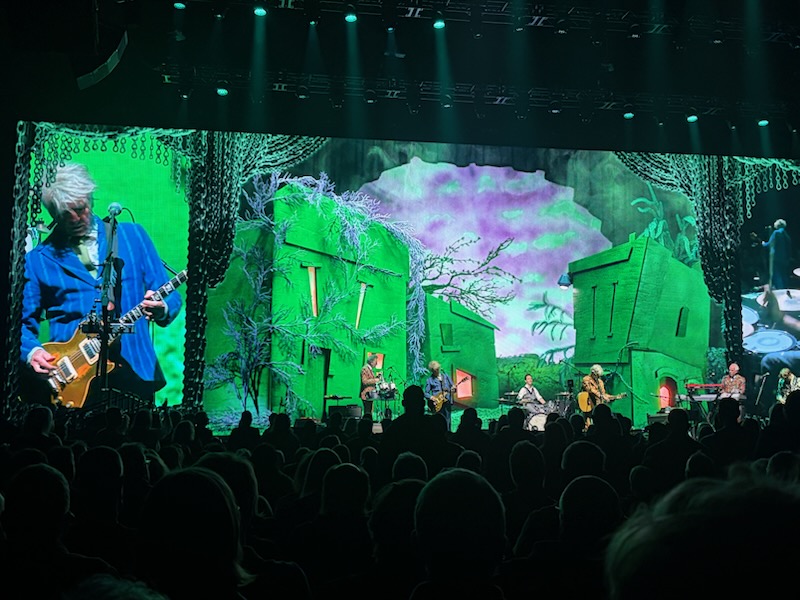
Fifty years. As T.S. Eliot wrote – our beginnings never know our ends. And who would have thought that such a whimsically ambitious project as Split Enz would be embarking on another victory lap celebrating fifty years of strangeness, arthouse sight and sound, and particoloured pop.
When, in the early 70s, I first saw a clip of Split Enz on GTK featured on ABC-TV just before the news hour, it seemed to me that this weird Kiwi band had somehow not received the style memo. Mistaking their off-kilter costumes and contorted choreography for Failed Glam, I wondered how on earth they got to be the opening act for Roxy Music -themselves just beginning their meteoric rise to Ferrydom.
It was only sometime in 1975 when I actually saw the Enz live. In the Matthew Flinders Theatre at Flinders Uni, for a lunchtime concert when touring their debut album, Mental Notes. To a crowd of maybe a hundred they delivered a full-dress performance. The band of seven, led by song writers Tim Finn and (the long-departed, now beleaguered) Phil Judd, with Eddy Rayner on keyboards, and Noel Crombie on costume design, living tableau, and spoons.
Everything about them was extraordinary and outlandish. The baggy pastel suits, the garish makeup, and the surreal topiary hairstyles- extruded into the twin peaks of Crombie, or, in Finn’s case, a pompadour with shaven sides that looked like a danger to low flying aircraft. Who, I wondered, in the pre-Punk, early Glam period (when hair was the epicentre of culture) would commit such travesty ?
The music was equally and brilliantly perverse with its fractured melodies, contorted tempos and convulsive rhythms, executed with antic precision and sung in a mix of recitative and suppressed panic. The songs - “Under the Wheel”, “Stranger than Fiction” and “Time for a Change” rang out as the players shifted and shuffled like the chorus in Peter Brook’s Marat/Sade.
This was the avant end of the avant garde. How good that members of Skyhooks saw them in Melbourne and phoned up Michael Gudinski - who promptly signed them up. And stuck with them through the financially bumpy, but highly creative, ride - until the arrival of Finn the Younger, and in 1980, the blazing hit success of True Colours.
Dialling forward five long decades, and Split Enz are again taking the stage at the Adelaide Entertainment Centre. It is the last show of their Forever Enz tour of Australia and New Zealand, playing to arena crowds – including two nights in Sydney and three in their adopted home base, Melbourne.
After a captivating opening set from Vika and Linda (capably backed by surefire trio, The Bullettes) showcasing new songs from their forthcoming album, Where do You Come From ? - it is time to begin, and the band to make their Enztrance.
The faded theatrical curtain (itself a digital simulacrum) parts like the Red Sea, an unwieldy polythene-wrapped heffalump blunders on to the stage, and from it (a reprise of the One Out of the Bag show for their 30th birthday in 2006) comes spilling the six members of the current iteration of Split Enz.
Of course they are wearing classic Crombie creations. Tim Finn (looking rather like Oscar Wilde) is dressed in brown with orange and blue windowpane designs, Eddy Raynor is in red and grey, Neil Finn sports blue and light blue stripes, and Noel Crombie has chosen a copper-coloured herringbone. They all spread across the stage in Vistavision against the massive digital screen which features an ever-morphing, brilliantly eccentric mess-en-scene which envelopes and illuminates the show for the next two hours.
Instead of the stark rectangular video closeups usual in music events the backdrop is festooned with all manner of unfathomable imagery. The soloists are surrounded by curtains of metal chain, there are projections of mesas and canyons like something David Lynch would conjure for National Geographic. There are coloured sprays of stage lighting and wisps of fog. Suddenly the images become Gormenghastly or like slime green Broomhilda cartoons. It is phantasmagoric eye candy.
The set begins on the front foot as Tim Finn leads in, head bobbing, snapping the lyrics of “Shark Attack”. The whole band is on red alert. Rayner jabbing the keyboard, Neil Finn hitching his guitar with purpose, and the much younger ring-in rhythm section – James Milne on bass and drummer Matt Eccles - laying down a formidable foundation for the entire show.
“History Nevers Repeats” follows – patently incorrect, given that Neil’s vocal is proving these songs (augmented by the crowd singalong) have never sounded fuller and better. “Poor Boy” from True Colours shines richly, Tim then continuing at the piano with “Give it a Whirl” and after an ominous Rayner keyboard intro, bursting into his mantra against depression - “Dirty Creature”.
“Time for a Change” is a return to the debut album, Mental Notes and a sole credit for Phil Judd. Tim’s solo piano and keening vocal is followed by a tsunami of Pink Floyd-esque chord changes and one of many searing guitar solos from Neil. Time for a change indeed. Melancholy doubt is then displaced by the upbeat “One Step Ahead”, roaring through the crowd, eager for the pop hits in large and stunningly clear 21st century arena sound.
They are also revelling in the plaintive Finn ballads – “Message to My Girl”, later, the tender “Stuff and Nonsense” and in the encore, “I Hope I Never”. Neil leads on several, although Tim’s singing in the final stages of the show (and in what is the band’s 1,113th performance over half a century) is starting to strain. Like McCartney, a once almost uniquely pure tone is quietly shredding in latter days, But it is even the more acclaimed by the Enz faithful, many dressed in replica costumes and draped in brand new merch. No Enz Days for them.
This splendid concert has many highlights. Eddy Rayner’s mid-set instrumental from True Colours, “Double Happy” is a definite. While he works his stack of keyboards with thrilling gusto, surrounded by a seismic rhythm section, the huge screen displays a myriad of Noel Crombie’s stage costume designs, arrayed like a regiment of psychedelic troops with the cameras then swooping in close enough to show the buttons, the stitching, the wit and whimsy of fifty years of theatrics. As Tim Finn declares- “We never had to worry about what to wear on stage.”
As they appear, the singles stir old memories – the Countdown clips and the radio rotations when Gudinski and the band began to gain the attention and payoff they deserved. “My Mistake”, “I Got You”, “I See Red” – turbocharged with the rich sound and still nimble vocals.
Fittingly the final song is “Strait Old Line” and His Crombieness makes a memorable cameo. Always key to the band semiotic, his droll other-worldly demeanour remains a delight. Standing all night at his percussion desk, he has added string whistles, pattering snare drums, and - amidst the thunder of electricity - resolutely tapped his triangle. His is the last word - follow the straight old line. And, after this concert’s joyful cacophony – his is the final note. The sound of two spoons clapping. This was no ordinary night.
Split Enz played at the Adelaide Entertainment Centre on May 25, 2026.
Published InDaily InReview May 26, 2026.
Ursula Yovich Sings Nina Simone
Published: 2026-06-06
Adelaide Cabaret Festival
Banquet Room
Aided and abetted by an excellent band, Ursula Yovich not only showcases the work of a musical legend, she artfully brings the lessons of the songs closer to home.
Written by Murray Bramwell
The more time passes, the more amazing is Nina Simone. Her musical gifts as both composer and performer are extraordinary and unique. Her legacy has been clouded in recent times with the preoccupation with the mental distress in her later years. The Netflix documentary What Happened, Miss Simone ? may have graphically reported on her decline, but it could not conceal her genius and commanding presence.
In 1970, Nina Simone confided to a New York audience how tiring performing had become - and that she hoped that night’s live recording (released as Black Gold) would be something people could still listen to when she was gone.
And what remarkable treasures those albums now are, especially the concerts when her precision and gift for improvising across genres and styles is so apparent. Apart from her own brilliant compositions, there are the covers – Broadway tunes, spirituals, blues standards, Bob Dylan, Leonard Cohen, Joni Mitchell, George Harrison and Burt Bacharach songs– all transmuted into Nina Simone originals.
In her captivating Cabaret Festival tribute, Ursula Yovich fondly recalls, as a youngster in Darwin, watching Simone video clips on Rage. That admiration has grown into a profound sense of kinship, an affiliation with this singer, and her willingness to bear witness. “It is the artists’ duty ,” says Yovich, “to reflect the times.” And she applauds Nina Simone as an artist, an activist, and “The High Priestess of Soul”
After an extended and outstanding career as both actor and singer, Yovich has in some ways echoed Simone’s own. Identified for exceptional talent she enrolled in theatre and music classes when very young. And her impressive bio includes more than 50 stage productions, including her own compositions, one person shows, high profile Australian films and TV, and multiple Helpmann and other prestigious awards- including, as of last Thursday night the Adelaide Gala Cabaret Icon award.
As soon as Ursula Yovich and her terrific four piece band take to the stage, the packed house in the Banquet Room is ready to roll. The show opens with ‘Sinnerman’, the diminutive Yovich filling the air with her powerful contralto, ‘Sinnerman where are you going to run to ?’ She doesn’t mimic Simone but is clearly a match for the repertoire.
Her vocal is urgent and in lock-step with the roiling piano and the snap sharp snare drum. The repetitions -call and response of “Power”- set a revival mood, but also syncopated handclapping and piano rhythms remind us that Nina Simone hearkened to such jazz stylings as Dave Brubeck’s ‘Unsquare Dance’.
In immediate contrast comes ‘Black is the Colour of My True Love’s Hair’, Simone’s variation on the widely revived Scottish ballad. With only piano accompaniment from Daniel Pilner, Yovich effortlessly captures the tenderness of the Highland original - but also the celebration of Black identity.
In the first of a number personal commentaries on the material chosen, she recalls first hearing the song and feeling she could at last cast off the crushing connotations of Black as “ugly and evil and dark.” It remains quietly implicit in this version, however, unlike the variation Nina Simone also recorded which proudly asserted- “Black is her body/ so firm and so bold/ Black is beauty/Her soul is gold.”
The pairing of Jacques Brel’s ‘Ne Me Quitte Pas’ with Gershwin’s ‘I Loves You Porgy’ which follows is not so much a mash-up as a sublime pairing of two compositions brought delectably to life. Ursula Yovich’s effortlessly phrased vocal captures not only the pensive Brel, but the gently mournful lilt and swing of Gershwin.
An almost reggae beat for ‘Don’t Let Me be Misunderstood’ brings a tempo change and the band get into stride. Musical director and bass player Adam Ventoura adds chorus vocals, and guitarist Daniel March contributes tasty flourishes also. The song’s title leads Yovich to reflect on the alienation and indifference of misunderstanding.
Throughout the performance, in the manner of Nina Simone, she reflects on the chaos and cruelty of the larger world and also within our own borders. By saying the quiet stuff out loud, she bears witness to racial injustices - not with generalities, but the names of First Nations men and women who have suffered and died with no consequence for the perpetrators.
This leads into the most confronting song in the setlist. ‘Strange Fruit’ a graphic depiction of two racist lynchings (written by Abel Meeropol and made famous by Billie Holliday and Nina Simone) opens with slow-march dirge chords on piano - and Ursula Yovich’s penetrating vocal. “Strange fruit hanging from the poplar trees/ Pastoral scenes from the gallant South.” It is, and should be, a grim pause in the proceedings.
Lovich and her excellent band then swing into Simone’s portraits of discrimination and defiance ‘Four Women’ and the upbeat hymn from the hippie musical, Hair ‘Ain’t Got No/I Got Life’ followed by Nina Simone’s most celebrated anthem (co-written by Weldon Irvine) ‘To be Young, Gifted and Black’, which took its title from a phrase coined by the African American playwright, Lorraine Hansberry. It could also describe the accomplishments of Ursula Yovich herself.
‘Stars’- Janis Ian’s musing on celebrity and self-worth, has the line “Truth tellers don’t fade” leading Yovich to celebrate and lament the tribulations of people such as Nelson Mandela and Charlie Perkins, among others. This segues into a concern for artists in a hostile world, and, in her own case as an actor, immersed in performances depicting and protesting dire human predicaments that are no more resolved now than ever. “Truth doesn’t protect you,“ she observes. “It can isolate you instead.”
Never letting the occasion to become fretful, however, Ursula Yovich and the band turn to another of Nina Simone’s rallying calls for revolution – ‘Everything Must Change’ –“nothing remains the same”. It is musically exhilarating, the players all lifting Yovich’s soaring vocal – Daniel Pilner on the ivories, Daniel March turning out tasty guitar riffs, Fabian Hevia on drums, closely matching Adam Ventoura on bass. These players can turn on a dime.
The final number is Nina Simone’s open question, about liberty and freedom from persecution, ‘I Wish I Knew How it Feels to be Free.’ For many of us in the audience it is probably not a statement we properly comprehend. Certainly not in the way that Ursula Yovich does. It has been her gift to the festival not only to engage generously, but to memorably conjure up the amazing music of a pioneer whose day is still ahead of us.
Ursula Yovich Sings Nina Simone plays one more performance in the Banquet Room, Saturday June 6 at 7pm.
Published InDaily June 6, 2026
Monsieur Camembert: Cohen Noir
Published: 2026-06-20
Adelaide Cabaret Festival
In another Cabaret Festival highlight, the excellent Monsieur Camembert celebrate the unique appeal of Leonard Cohen, and display their own musical flair in the telling.
Written by Murray Bramwell
“Ring the bells that still can ring/Forget your perfect offering/There’s a crack in everything / that’s how the light gets in.”
The poetic lines from Leonard Cohen’s ‘Anthem’ reverberate for the many admirers who have accumulated since he first swapped poetry for the Tower of Song with his debut album in 1967.
But in 2004, things had seriously cracked for Cohen himself. It was discovered that his manager, Kelley Lynch, had not only totally looted his life savings, but had sold off his publishing rights and artist royalties. Years of gruelling, largely futile, legal conflict were to follow.
In 2008, however, a whole lot of light shone in for fans everywhere. Cohen embarked on a series of world tours, not only hugely restoring his finances, but, at age 74, re-igniting his musical creativity.
Many in Adelaide will recall his Leconfield winery concert in January 2009 (I still have the ticket) and his return fixture at Thebarton the following year. Dapper in his suit and fedora, surrounded by a band of mostly Canadian talent, Leonard charmed and soothed and amused and captured audiences.
He also paved the way for more septuagenarian (now eighty something) legends to take up travelling minstrelsy, playing to the old crowd but also the new one. He may have been a sportsman and a shepherd (and a lazy bastard living in a suit) but he had created his own Renaissance.
Apart from live concert releases, Cohen recorded more albums – the marvellous Old Ideas and Popular Problems, the aptly named You Want it Darker (released just three weeks before his death in November 2016) and the posthumous Thanks for the Dance released in 2019.
Looking around, and over-hearing, the sell-out crowd at the Dunstan Theatre eagerly awaiting Cabaret Festival headliners Monsieur Camembert, it is evident that this is a chance to renew connection with Cohen’s music and persona – and also, perhaps, the precious and vivid memory of those peerless concerts earlier this century.
Monsieur Camembert’s number one cheese and co-founder, Yaron Hallis, calls this latest version of their Leonard shows (which began way back in 2007}, Cohen Noir. And, perhaps with more light than shade, it is a splendidly fashioned immersion in the life, works, and wry wisdom, of a remarkable poet musician.
With more years span than Brel or Gainsbourg, and more immediacy than Dylan, Leonard Cohen has described life in the seventh age, evoking memoranda from past lives, bringing old ideas and popular problems. As well as dance music with one foot in the grave. Or, maybe - eternity.
The first voice of the night we hear is Leonard Cohen himself. One of many fragments spread at intervals throughout the performance. Intriguing excerpts from interviews, speculations, confessions, aphorisms, jokes, and self-deprecations.
Sitting on a bar stool in a striped cap and a Leonard Cohen merch T-shirt under his jacket, leader, MC, vocalist and owlish narrator Yaron Hallis begins to croon – “If you want a lover …” The ten piece band saunters and swings, does the ragtime slowly. It is ‘I’m Your Man’ – one of many of Cohen’s slyly raffish musical masks, and a perfect opener for the set.
With “Where is my Gypsy Wife tonight ?” Hallis shifts the mood to Cohen dread – of rejection, and uncertainty. “This is the darkness. This is the Flood”. Matthew Ottignon provides mournful bass clarinet and Susie Bishop steps forward with a simmering violin solo.
In addition to Hallis’s well-judged, gruff low-key, Leonard vocals (which are never impersonations) Cohen Noir features four guest vocalists. Lyn Bowtell’s melodically expansive reading of ‘Bird on a Wire’ lifts the musical stakes and reminds us that the focus is not only on Cohen’s poetic lyrics, but the pleasure of his tunes. Bowtell unleashes her range with memorable effect.
Another early highlight follows. ‘Who by Fire’, the composition love child of Cohen and Janis Ian, opens with bowed bass from Mark Harris and more sublime piano from Daniel Pilner (who was also terrific in the band for Ursula Yovich’s Nina Simone tribute at the festival two weeks ago.) The singer is Timothy James Bowen. Bearded, with steel framed glasses, in denim and a Stetson hat, he captures in his keening vocal the very flame of one of Cohen’s great songs.
Then it is Susie Bishop’s turn to shine. Ushered in with Pilner’s trickling piano she sings –“It’s four in the morning …” Famous Blue Raincoat – famously covered by Jennifer Warnes and others - is made Bishop’s own. The band gradually joins – drums, a soaring sax solo on perfect cue – and then the curt, epistolary ending, “Sincerely, L. Cohen. “
The fourth singer, Diana Rouvas brings further vocal variation with a jazzy take on abject Leonard’s ‘Light as a Breeze’. Her agility and gospel inflections and phrasing nicely working the impish ironies between words and music.
The band returns with a breakneck jive take on ‘Jazz Police’ from the 1988 I’m Your Man album. They are a well-oiled unit, moving the focus among the players Charlie Meadows on jaunty guitar, a bass solo and scat attack from Mark Harris, and concluding with a saxophone seizure from Matthew Ottignon.
A set of Cohen songs has a multitude to select from and Monsieur Camembert choose well. Guided by pattering brushstrokes from Cameron Reid, strings and basslines, Timothy James Bown strums the opening lines of ‘So Long Marianne’- later to be joined with a dazzling violin solo from Ben Adler . Susie Bishop’s ‘Joan of Arc’ is a haunting slow blues with call and response from Yaron Hallis which rises, without excess, to operatic crescendo.
And the trio of Bowtell, Rouvas and Bowen doowop and sashay through ‘Memories’ another boisterous glimpse of Cohen’s view of courtship as the comedy of desperation.
For the final section of the two hour show, the fifty person Adelaide choir, Born on Monday (led by Ella and Anthony Pak-Poy) fill the stage to add majestic voice for a succession of Leonard Big Ones.
Lyn Bowtell’s reading of ‘If it Be Your Will’ is a lovely opener especially with the addition of a Mongolian throat singing interlude from band member Bukhu.
And of course, with fifty extra voices on hand there’s going to be ‘Hallelujah’, Cohen’s most covered song and, in the process – after Jeff Buckley, k.d.lang, John Cale, Willie Nelson, the execrable Rufus Wainwright, and every second contestant for The Voice – has lost some of its subtlety and satiric Cohen edge.
It is now unassailably “anthemic”, but tonight, astutely shared by Bowtell, Rouvas, Bowen and Bishop, and the harmonic full strength choir, it is reflective rather than bombastic - and an undoubted crowd favourite.
As is ‘Everybody Knows’. If ever a song spoke to the times, it is this paeon to outrage and profound disappointment, posing as cynicism. We sang the repeated mantra with some exhilaration. Everybody Knows. We see you.
The music is upbeat samba. Meadows sprightly Django on guitar, more scat from Harris, klezmer violin from Bishop. And a singalong, clap-along ending.
“A song is an anchor thrown into a foaming sea” Another Leonard observation comes from the disembodied ether. Present in another form. Time for ‘Anthem’. Ring the bells that still can ring, that crack in everything, the light let in.
Diana Rouvas sings it beautifully, the choir surges, and we cut away to Bukhu again. His throat singing singing is indescribably compelling, as is his solo on the ancient horsehair fiddle. The segue to Matthew Ottignon’s saxophone effortlessly lets even more music in.
So, there is nothing left but to Dance to the End of Love, which Monsieur Camembert, amiably and capably led by Yaron Hallis, proceed to do. It is the place to depart. Cohen in his late concerts made much of it, as he did ‘Anthem’.
It is another Leonard paradox. Very near the end, Yaron Hallis tells us, Cohen declared himself ready for death. A little later he corrected himself, saying maybe he was exaggerating. Whatever, he mused – “You’ll be hearing from me, Baby.” We certainly did tonight.
Cohen Noir, presented by Monsieur Camembert, has one more performance at the Dunstan Theatre on April 20 at 7.45 pm.
Published in InDaily InReview June 20, 2026,